DD
MM
YYYY

PAGES

DD
MM
YYYY

spot_img

PAGES

Home Blog Page 4179

Nvidia Hits $1trillion Market Cap, Becoming the First Chipmaker to Hit the Milestone

0

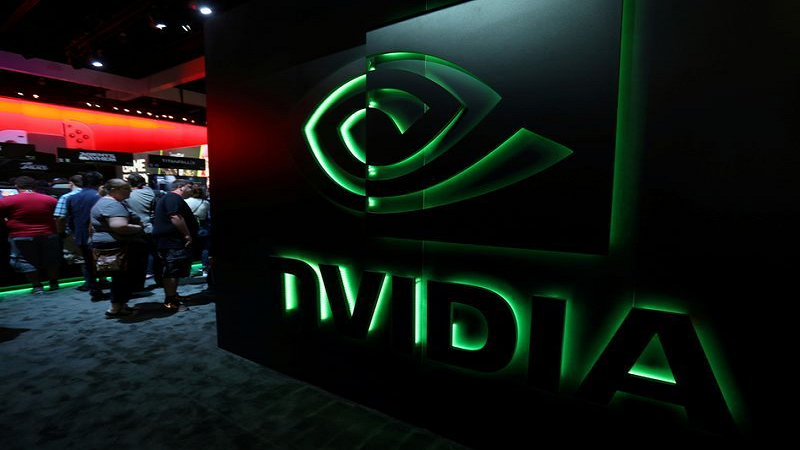
Nvidia has joined the league of trillion dollars companies after touching the $1 trillion market cap threshold at the market open on Tuesday.

Though the company shares have to hold above $404.86 to maintain that distinction throughout the day, it has become the first US chipmaker to hit the trillion dollar milestone.

“Generative AI drove significant upside in demand for our products, creating opportunities and broad-based global growth across all markets,” said Colette Kress, Nvidia chief financial officer and executive vice president on the company’s latest earning call.

Nvidia has sustained notable growth in recent weeks, erasing the past records of woeful market performances that saw the chipmaker lose its market dominance.

The $1 trillion market cap came as a result of surprising last week’s surprising market performance.

Nvidia’s stock rocketed about 25% last week after it posted quarterly earnings with top- and bottom-line numbers that significantly beat consensus estimates of $7.15 billion by more than 50%. The rally, which boosted AI-related stocks, dragged other chip stocks along, pushing the Philadelphia SE Semiconductor index to close on Friday at its highest in over a year.

Nvidia’s market forecast, which was described by Wall Street analysts as “unfathomable” and “cosmological”, places the company at about $1.6 trillion, on par with Google-parent Alphabet.

“Given the valuation is well above the long-term average, there will be significant pressure to deliver high growth on a consistent basis … there could be volatility in its share price to come,” Susannah Streeter, head of money and markets at Hargreaves Lansdown, said.

CNBC reports on factors boosting the chip rally that Nvidia is leading.

It’s been a banner year for chipmakers, parts of the tech industry and the Nasdaq, driven in part by the AI frenzy and the possibility of slowing Federal Reserve rate hikes. Alongside Nvidia, Alphabet, Meta and Microsoft were also buoyed in last week’s trading.

Nvidia’s graphics processing units, or GPUs, are critical to generative AI platforms like OpenAI’s ChatGPT and Google’s Bard. The company has historically been a leader in the so-called “discrete” or standalone GPU field, but until recently, many consumers thought of GPUs as primarily used for intensive gaming.

The advent of crypto mining and AI has upended that belief, and GPU manufacturers and suppliers, including Nvidia, AMD and TSMC, have seen share prices rise significantly over the last few months.

By contrast, Intel, which struggled with inventory issues and development challenges, has been historically focused on the chip market for central processing units, or CPUs. The company hasn’t shared, comparatively, in the wave of investor interest.

Nvidia shares were already up 166.5% year-to-date prior to Tuesday’s open.

As AI and crypto mining boost chip demand, Nvidia said on Monday it is expanding production – building Israel’s most powerful AI supercomputer to meet soaring customer demand for AI applications.

The chipmaker said the cloud-based system would cost hundreds of millions of dollars and be partly operational by the end of 2023.
The Central Bank of Nigeria (CBN) Solar Connection Loan Facility Framework

0

This article will be looking at the Central Bank of Nigeria (CBN) Framework on the Federal Government-backed Solar Connection Facility, which was released in September 2020 and is an initiative aimed at expanding energy access to 25 Million individuals (or 5 Million new connections) through the provision of Solar Home Systems or connection to a mini-grid, increasing local content in the off-grid solar value chain and facilitating the growth of the local manufacturing industry & incentivizing the creation of 250,000 new jobs in the energy sector. 

We will look at the provisions of this credit facility framework in detail.

What is the overall objective of this CBN & Federal Government initiative?

The Solar Connection Loan Facility Framework was created as part of its overall Economic Sustainability Plan (ESP) to support the economic recovery in response to the economic losses brought about by Covid-19 and the understanding of the Federal Government of the indispensability of power in economic development at any level.

What is the categorization of planned participants in the Solar Connection Loan Facility?

The CBN Framework divides participants in the loan scheme into :-

a). Upstream Participants

These are companies engaged in :-

  1. The manufacturing of solar components and balance of systems.
  1. The establishment/expansion/upgrade of solar manufacturing facilities.
  1. The assembly of solar components & balance of systems.
  1. The repair and maintenance of Solar Home Systems (SHS). 
  1. Any other off-grid solar value chain activity as may be prescribed by the CBN.

b). Downstream Participants

These are companies involved in :-

  1. The distribution and after sales support of Solar Home Systems (SHS).
  1. Mini-grid project development activities including site identification and assessment, design & planning as well as customer acquisition.
  1. Engineering, procurement and/or construction or mini-grids.
  1. Any other retail-based off-grid solar value chain activity as may be prescribed by the CBN.

What are the prohibited activities for these 2 participant categories?

Upstream Participants

– The facility shall not be used to finance the importation of fully assembled solar components and balances of systems.

Downstream Participants

– The sale or deployment of 100% imported Solar Home Systems (SHS).

– The deployment of mini-grid projects with 100% imported components and balance of systems with no proof of existing local content or local integration plans. 

What are the loans available for each participant category and their terms?

Upstream Participants

Project Financing Loans

  1. Loan amount :- Not more than 70% of the project total cost.
  1. Tenor :- A maximum 10-year tenor not exceeding the 31st of December,2030.
  1. Moratorium :- Depending on the type of project but shall not exceed 2 years or the construction/completion period, whichever is shorter. An additional 12-month period may be added to address completion delay risks.
  1. Interest Rate :- Not more than 9% per annum, but at first it was 5% per annum up to the 28th of February,2021.

Working Capital Loans

Tenor :- 1 year tenor with a maximum tenor of 3 years.

Downstream Participants

Term Loans (Expansion, Mini-grid Projects)

  1. Amount :- 70% of project cost.
  1. Tenor :- Up to 7 years.
  1. Moratorium ;- Up to 2 years.

Working Capital

  1. Amount :- To be determined as a percentage of the average of 3-year projected cash flows subject to a 500 Million Naira limit.
  1. Tenor :- 12 months subject to a 3 year maximum tenor.
  1. Interest Rate :- 10% .

Distribution/Retail Facility

  1. Amount :- Average amount of 3-year projected cash flows subject to a 500 Million Naira limit.
  1. Tenor :- Up to 5 years. 
  1. Interest :- 10% 
  1. Moratorium :- 6 months

CBN funding for SHS Retailers & Distributors under the proposed CBN-electricity market stabilization model .

What are the general requirements for securing these loan facilities?

Upstream Participants

  1. An application to a Primary Financial Institution (PFI).
  1. CAC (Corporate Affairs Commission) documentation including a certificate of incorporation and a copy of the applicant company’s Memorandum/articles of Association (MEMART).
  1. A business plan (with 3 year projections)
  1. An off-taker agreement with companies accredited by the Nigerian Electrification Project(NEP). 

Downstream Participants

  1. A NEP pre-qualification check. 
  1. An application to a PFI.
  1. A World Bank “No Objection”(for mini-grid developers).
  1. Site specific evaluation and approval.
  1. CAC Documentation.
  1. A 3-year actual cash flow statement/1-year for new companies.
  1. A business plan.
  1. A list of accounts domiciled with PFIs. 

For CBN SHS Retailer Funding :-

  1. Written agreements with the CBN and other stakeholders.
  1. A disclosure of all revenue accounts with banks and OFIs (Other Financial Institutions) to the CBN.
  1. A disclosure of all 3rd party revenue collection agents to the CBN.
  1. The appointment of a deposit money bank as a principal collection account bank.
  1. A proven arrangement to ensure that all revenues collected in a month are swept into a single account with the principal collection bank which must be CBN licensed.

Which Financial Institutions are deemed to be Participating Financial Institutions (PFIs) under this framework?

All banks in Nigeria licensed by the CBN are categorized as PFIs under the CBN Framework.

N2.8trn Debt: NNPCL Kyari Backs Tinubu to Remove Fuel Subsidy

0

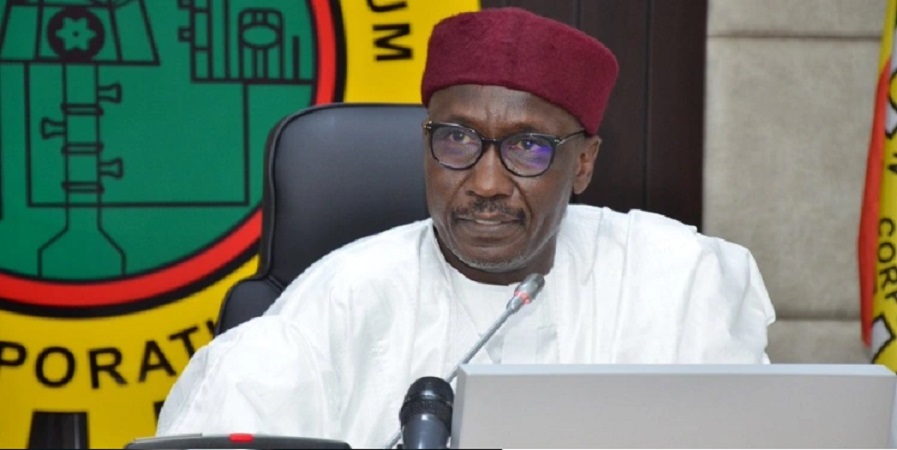
In the wake of the announcement by Nigerian President Bola Tinubu, that “there is no more fuel subsidy”, the Chief Executive Officer of the Nigerian National Petroleum Company Limited (NNPCL), Mele Kyari, has disclosed that the federal government is owing the company N2.8 trillion in fuel subsidy arrears.

Kyari made this known on Tuesday amid the fuel scarcity prompted by the president’s announcement. The chief executive told State House correspondents after a meeting with Tinubu at the Presidential Villa, Abuja, that the fuel subsidy regime is no longer sustainable.

Tinubu had in his inaugural address shortly after taking the oath of office at Eagle Square, Abuja, on Monday announced the end of the fuel subsidy, citing lack of funds to sustain the payments.

According to the president, subsidy payments are not factored in the budget left behind by former President Muhammadu Buhari’s administration.

Kyari, who had in February, lamented that the NNPCL’s cash flow was being severely impacted by over N400 billion it’s paying monthly to subsidize Premium Motor Spirit, supported the president’s announcement. He said given current economic realities of the country, making subsidy payment is no longer tenable.

“Today, we are waiting for them (federal government) to settle up to N2.8 trillion of NNPC’s cash flow from the subsidy regime and we can’t continue to build this.

“Since the provision of the N6 trillion in 2022, and N3.7 trillion in 2023, we have not have not received any payment whatsoever from the federation account.

“That means the federal government was unable to pay and we have continued to support this subsidy from the cash flow of the NNPC. That is when we net off our fiscal obligations of taxes and royalties.

“There’s still a balance that we are funding from our cash flow. And that has become very, very difficult and affecting our other operations.

“We are not able to keep some of this cash for investment in our core businesses. And the end result is that it can be a huge challenge for the company and we have highlighted this severally to the government that they must compensate the NNPC by paying the money that we have spent on the subsidy.

“So today, the country does not have the money to pay for the subsidy. There is an incremental value that will come from it. But it is not an issue of whether you can do it or not because today we can’t afford it and they are not able to pay our bills. That comes to how the federation owes NNPC now,” he said.

The fuel subsidy regime was scheduled to end by June, according to the provisions of the Petroleum Industry Act (PIA), but the preceding administration had bequeathed the implementation to its successor.

Tinubu said the fuel subsidy regime will be ending soon and the funds will be channeled to development schemes that will benefit Nigerians.

Containing the exigencies

Fuel prices went up as queues returned to filling stations across the country, following the announcement that the subsidy will be removed. Many filling stations have shut down operation while those open sell fuel for as much as N600 per liter.

With no provision from the government to cushion the effect of the subsidy removal on poor Nigerians, the economic impact is expected to be severe. Buhari’s attempt to borrow from the World Bank, $800 million that will be disbursed to poor households across the country as palliative, failed.

Against this backdrop, transport fares and the cost of goods and services are expected to go up across the country in the coming weeks. Nigerians are largely counting on the newly-launched Dangote Refinery to reduce the cost of PMS.

However, the Nigeria’s Independent Petroleum Marketers Association of Nigeria (IPMAN), has warned that while the launch of the Dangote Refinery would address Nigeria’s fuel import and scarcity issues, it will lead to initial increase in pump price, though it will decrease in the long run.

Products from the 650,000 bpd refinery are expected to hit the market by the end of July, a month after the subsidy payment might have ended.

Tekedia Capital – Our Commitment to Africa’s Entrepreneurial Capitalism

0

With great vision and mastery of the market system, we’re planting the seeds to grow unicorns in Africa’s economic farmlands. From fintech to energy, from agriculture to shopping, real estate to entertainment, and beyond, we’re funding and building the empires of the future. Learn what we do on this page


Buhari’s failure repeating itself all over again in Tinubu’s young Presidency

0

My fear now is that President Muhammad Buhari’s failure is about to repeat itself in double portions in President Bola Ahmed Tinubu’s administration. 

The failures which were catalyzed by making hasty decisions and introducing quick policies with no proper consultations or research which ended up causing unwarranted suffering to the masses. 

For instance, remember February this year when the presidency working together with the Central Bank of Nigeria introduced the new naira notes prohibiting the use of old naira notes without getting sufficient new naira notes into circulation. Well, that caused a lot of suffering and citizens revolted, the revolution caused the damage of properties and the loss of lives.

The same thing repeated itself yesterday during the inaugural speech of President Bola Ahmed Tinubu, he said specifically that “fuel subsidy is gone” and also said that he’s working on making sure that there is a unified exchange rate on foreign exchanges. I can bet that he said all those things out of excitement thinking that’s what people want to hear without him and his aides carrying out enough research into those topics; well those statements caused fuel prices at the petrol stations to jump from N194 to N600 naira per litre and it also caused long queues again at the petrol stations. Before his aides could issue a statement that the subsidy removal will not be happening immediately it was already late and the masses are already suffering from it. The same thing is happening with the price of dollars now. Because of the statement made on foreign exchange, the price of dollars at the black market also jumped up today.

Nigerian leaders do not know that whatever they say even jokingly always has an immediate and long-lasting effect on the economy. Tinubu barely spent 24 hours in office and he’s already causing suffering for people by what he said during his inaugural speech. 

Since we are finally back to this subsidy talk again, I have no problem with subsidy removal but what is the assurance that the money will be properly utilized, accounted for and not embezzled by political kleptomaniacs? Things as deep as subsidy removal should never be done in a hurry, it should be a gradual process because it is the fuel that drives the economy of Nigeria; only the panic that subsidy will be removed caused fuel to be sold at N600 per litre at filling stations and as a response to this, the price of Uber/ taxis also jumped through the roof. The cost of production will increase as well further causing the price of consumer goods to increase. It’s a ripple effect and it’s no magic. 

I wish President Bola Ahmed Tinubu’s administration well and I hope they won’t be making hasty decisions that will have brutal effects on the masses just like President  Buhari’s administration.