DD
MM
YYYY

PAGES

DD
MM
YYYY

spot_img

PAGES

Home Blog Page 4218

The hottest job in tech right now is in PROMPT ENGINEERING

2

The hottest job now in IT now is PROMPT ENGINEERING. What people may not have noticed is that the volume of consumers for products has increased astronomically and outside the cost of running businesses, it is increasingly complex now to deal with a lot of employees. This is the main reason why AI is here. It is not about replacing people. Managing a lot of people is something that does not align well with the mindset of IT, which is where everything is happening now.

We can see signs of the jobs of the future – and AI will enable or seed some of them. Goldman Sachs just noted that more than 300 million jobs could be displaced or distorted even as new ones are being created. This one which is emerging commands more than $300k per year.

I present here a video of my interaction with my internet provider. They promised to offer me 1.5G/s bandwidth but we determined that the video call quality is poor. We did speed test and what we got is 330mb/s. This obviously a breach. Now, to report this, assume there is over 1000 problems this organization has to deal with. It is expensive for them to engage every customer having one issue or the other, to eventually understand what the issue is. Here, with prompts engineering and AI, a customer can be directed to the right technical support prime. Also, by the time the tech support person is reached by this AI, the prime would have enough information to deal with the issue with minimal effort.

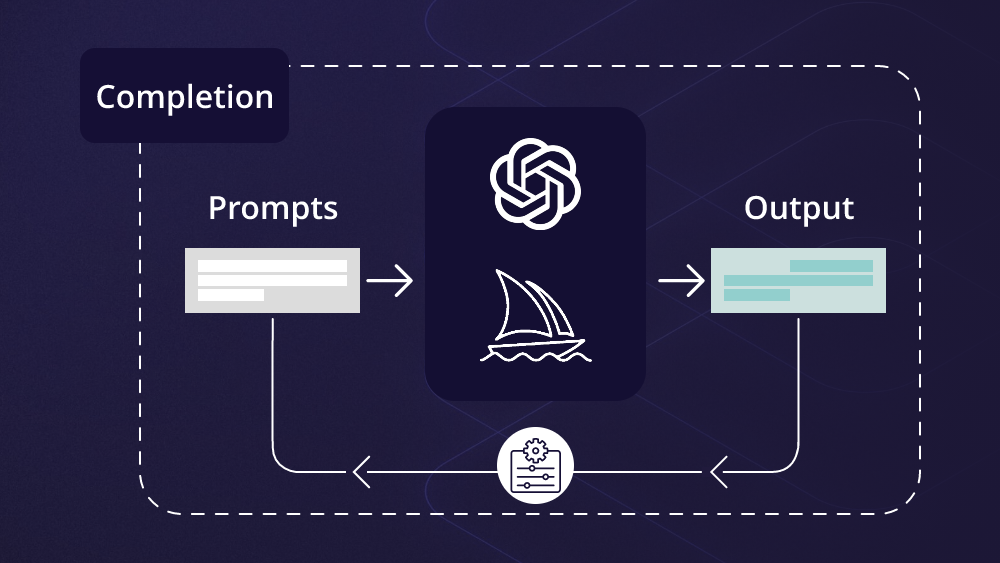
According to ChatGPT “…Prompt engineering is the process of designing effective and efficient prompts for generating high-quality responses from natural language processing models such as GPT-3. It involves the selection and combination of various text inputs that can help guide the model to produce specific outputs.

Prompt engineering requires a deep understanding of the underlying language model and the task at hand, as well as the ability to create prompts that are tailored to the specific needs of the user or application. The goal is to design prompts that provide sufficient context and direction to the model, while avoiding ambiguity or confusion that could result in incorrect or irrelevant responses.

Effective prompt engineering can significantly improve the accuracy and usefulness of natural language processing models, and is a critical component of many AI applications such as chatbots, language translation, and content generation…”
I have built systems support thousands of users. This is a big issue. I built forms for the users to provide the information needed to get help from me. This is essential because these are expert systems and getting the right skills and background to support them has been quite challenging. My forms go far but not far enough.

Prompt engineering is not only beneficial for troubleshooting or technical support. It is also very beneficial for actual technical work especially in manufacturing/production.

In a manufacturing execution system, there are routes for the following:

  • Workflow from starting step to ending step
  • Workflow for capturing genealogy (parent/child relationships) at applicable steps
  • Workflow for capturing parametric (measurement data at applicable
  • Workflow for reviewing and validating process instructions
I have built a platform that uses a workbench to perform the above leveraging a manufacturing data system (MDS) backbone. This solution has been operation for over 13yrs now and its value cannot be estimated accurately. This solution will benefit from enhanced prompts engineering with an AI plugin.

Healthcare can benefit from prompts engineering. We are advised not to use Google for self-diagnosis but a doctor can use prompt engineer on an AI plugin to make his work easier by getting more specific and details information from patients before they approach the clinic or hospital for treatment.

The list is endless. Prompt engineering is a process/tool that will benefit heavily from AI and the opportunity is limitless.


Ordinal Inscriptions is unraveling more use case for Bitcoin

0

Ordinals Inscriptions specializes in creating digital signatures for documents and transactions using blockchain technology. One of their main products is Ordinals Sign, a platform that allows users to sign and verify contracts, invoices, receipts, and other documents with Bitcoin.

Ordinals Inscriptions is unraveling more use cases for Bitcoin beyond digital signatures. In a recent blog post, the company announced that it is developing a new service called Ordinals Pay, which will enable users to make and receive payments in Bitcoin with low fees and high security.

Ordinals Pay will leverage the Lightning Network, a second-layer solution that aims to improve the scalability and speed of Bitcoin transactions. The Lightning Network allows users to create channels of payments between each other, without having to broadcast every transaction to the main blockchain. This reduces the congestion and costs of the network, while maintaining its decentralization and security.

Ordinals Pay will allow users to create and join payment channels with other users or merchants, and send and receive Bitcoin instantly and cheaply. Users will also be able to use Ordinals Sign to sign and verify their payment requests and invoices, creating a seamless and trustworthy payment experience.

Ordinals Inscriptions believes that Ordinals Pay will open up new possibilities for Bitcoin adoption and innovation. The company stated that Ordinals Pay will be compatible with any Lightning Network-enabled wallet or service, and that it will also integrate with other platforms and applications that use Ordinals Sign.

Ordinals Inscriptions is planning to launch Ordinals Pay in the second quarter of 2023. The company invites interested users and partners to sign up for early access on their website.

Samsung Challenges Staff to Use AI Within Company Guidelines

0

Giant tech and electronics manufacturer Samsung has restricted the use of Artificial Intelligence tools by employees after it discovered that they were being misused.

In a company-wide memo, it expressed concerns about vital data being shared on AI platforms and ending up in the hands of other users. The new policy introduced at Samsung is coming after reports revealed that some employees of the company had uploaded a sensitive internal source code on ChatGPT last month. Hence, Samsung is restricting the use of such AI Powered tools to prevent further sensitive info from being shared on such platforms.

Samsung wrote,

“Interest in generative AI platforms such as ChatGPT has been growing internally and externally. While this interest focuses on the usefulness and efficiency of these platforms, there are also growing concerns about security risks presented by generative AI.

“We ask that you diligently adhere to our security guidelines and failure to do so may result in a breach or compromise of company information resulting in disciplinary action up to and including termination of employment”.

Samsung further warned its employees to take precautions when using AI tools like ChatGPT, Bard, or other AI-powered tools, advising them to desist from entering any personal or company-related information into such services.

In a company-wide survey conducted last month, 65% of those who responded said there was concern about security risk when using generative AI services. This is a growing concern since the data shared on AI chatbots like ChatGPT are usually stored on servers owned by the companies that operate the services, like OpenAI, Microsoft, and Google, making it difficult to access the data or delete it forever.

The company is therefore reviewing its security measures to create a secure environment for employees to use AI. It is also worth noting that the electronics giant maker is developing its own internal AI tools for translation, summarizing documents, and software development. It is also exploring ways to block the uploading of sensitive information to external services.

Samsung joins the likes of other top companies such as Citigroup, Goldman Sachs, and JP Morgan Chase, to restrict employees from using ChatGPT over concerns about third-party software accessing sensitive information.

Meanwhile, ChatGPT maker OpenAI last month previewed the business plan for ChatGPT, and introduced new privacy controls. The company announced that users can now turn off chat history in ChatGPT, a privacy feature for the tool that hadn’t been offered before. To monitor for abuse, the company said unsaved chats will be retained for 30 days before they are permanently deleted.

OpenAI also revealed that it plans to introduce a new subscription tier for ChatGPT, tailored to the needs of enterprise customers. Called “ChatGPT Business”, OpenAI describes the forthcoming offering for professionals who need more control over their data as well as enterprises seeking to manage their end users. It’s an interesting decision from the company and will appeal to users to prioritize security over the best possible user experience.

“The Journey to Growth” – Tekedia Live

0

It is Tekedia Mini-MBA Graduation Week. Join us at Tekedia Live for the first lecture titled “The Journey to Growth”.  After our co-learning process over the last 12 weeks,  it is now time for execution. When we execute, we grow professionally. Zoom link in the Board . To join the next edition, go here 

Welcome! At Tekedia Institute, we co-learn with thousands of professionals and students, from 41 countries, on the mechanics of business, connecting innovation, growth and operational execution, across market territories and industrial sectors. Our Faculty members come from Microsoft, Google, Shell, Flutterwave, Nigerian Breweries, NNPC, Jobberman, Coca Cola, PwC, and other great organizations. Besides pre-recorded courseware, thrice weekly, we hold live Zoom sessions (Tue, Thur and Sat at 7pm WAT). REGISTER and join us! – Prof Ndubuisi Ekekwe, Tekedia Institute Lead Faculty.

Why Is HedgeUp (HDUP) Predicted to Replace Polygon (MATIC)?

0

With the increasing demand for decentralized finance (DeFi) solutions, many projects have emerged as viable alternatives to current protocols.

One project that has recently gained attention is HedgeUp (HDUP), a new protocol predicted by some experts to have the ability to replace Polygon (MATIC) in price.

HedgeUp (HDUP) may be the next big player in DeFi, given its potential. So what makes HDUP unique compared to other projects? And can it deliver on its ambitious goals?

Polygon (MATIC) – the facts

Polygon (MATIC) was designed to provide faster, cheaper, and more efficient transactions than its more established competitors. By leveraging the latest blockchain technology, Polygon (MATIC) gained traction as a platform ideal for developers and cryptocurrency enthusiasts.

One of the key advantages of the network is its ability to support various decentralized applications, providing users with a wide range of options for more sophisticated cryptocurrency interactions.

Additionally, Polygon (MATIC) has made significant strides in the ever-evolving world of NFTs, allowing creators to mint non-fungible tokens at a lower cost than other similar networks.

So, what’s the problem?

The main issue is outages. Polygon (MATIC) has gone down multiple times in the last year. On one occasion, it didn’t create a new block for nearly 12 hours. While this isn’t quite as bad as what Solana users have had to deal with, it’s pretty horrid compared to other blockchains.

Next, it’s not great to use. It can be slow and clunky. Users want a seamless experience that Polygon (MATIC) has failed to deliver on a consistent basis.

Lastly, the competition is too steep. Solana has the NFT throne, while Layer 2 solutions like Arbitrum and Optimism are proliferating and poised to dominate the landscape.

While Polygon (MATIC) is a top 10 coin with a market cap of nearly $9 billion, that number is unlikely to hold come the next bull run. Too many projects are doing amazing things for people to hold tokens belonging to outdated and slow protocols.

The answer – HedgeUp (HDUP)

What is HedgeUp (HDUP), and why can it surpass Polygon (MATIC) as a top token?

DeFI is growing in popularity. With the collapse of many centralized projects, users are moving into this previously unexplored ecosystem. HedgeUp (HDUP) is the right project at the right time. It lives on Ethereum, the biggest DeFI chain with plenty of users and liquidity.

It has put together a platform that allows users to invest in physical products — known in the TradFi world as alternative investments. This includes gold, wine, and even watches.

All DeFi platforms offer some sort of tokenomics, and HedgeUp (HDUP) will be one of the best in the game. They will provide deep liquidity on-chain, allowing users to reap the rewards of both token growth and extra yields through farming.

Conclusion

The bottom line is that HedgeUp (HDUP) can potentially replace Polygon (MATIC).

It provides users with a platform for DeFi investments, deep liquidity on-chain, and access to alternative investment products. The Ethereum blockchain offers greater access to investors than Polygon (MATIC) and greater reliability regarding network outages.

With these features in mind, HedgeUp (HDUP) could very well be the next big player in decentralized finance and displace Polygon (MATIC) as one of the leading platforms.

Find out more about the HedgeUp (HDUP) presale here:

  • Website: https://hedgeup.io/
  • Presale: https://app.hedgeup.io/sign-up
  • Telegram: https://t.me/HedgeUpChat
  • Twitter: https://twitter.com/HedgeUpOfficial