DD
MM
YYYY

PAGES

DD
MM
YYYY

spot_img

PAGES

Home Blog Page 4275

Panic in Google As Samsung Reportedly Plans to Make Bing Default Search Engine

0

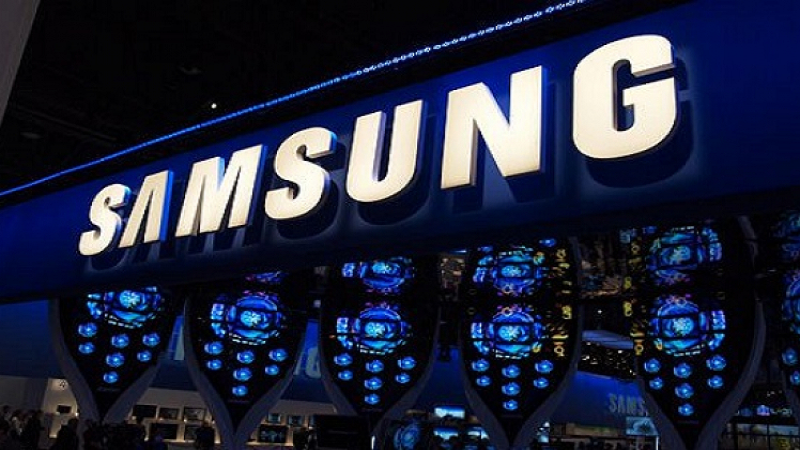
Samsung is considering ditching Google for Bing as its default search engine, following the integration of ChatGPT 3 by Microsoft’s web search arm.

Google has enjoyed being used in Samsung phones as the default search engine for 12 years. The smartphone maker’s move will likely set an unpleasant precedent for Google search business, which has over 90 percent dominance of the search engine market.

New York Times reported that there was panic within Google when employees reportedly found out that Samsung was considering switching to Bing last month.

Alphabet Inc’s shares dropped by nearly 4% on Monday following the news.

Microsoft incorporated ChatGPT 3 into Bing early this year, marking the company’s most innovative move to wrestle some shares of the search engine market off from Google.

The emergence of the AI-powered chatbot, which Microsoft has invested billions of dollars in, has become the game changer for Bing. Google issued ‘code red’ late last year following the emergence of ChatGPT 3. The tech giant has since announced its own AI-powered chatbot named ‘Bard’ but said it does not intend to incorporate it into Google search.

If Samsung goes ahead with the plan, Google will lose $3 billion out of its $162 billion annual revenue, according to the company’s internal messages.

ChatGPT 3 provides humanlike context to queries with its capability to take on a whole range of tasks – from writing poems to codes.

But unlike ChatGPT 3, which accumulated over 100 million users within three months, Bard failed to impress potential users at trial. In early February, Google lost $100 billion after Bard collated inaccurate information in its promotional video. The chatbot also suffered other setbacks prompting Google’s employees to write CEO Sundar Pichai, criticizing the hurried nature in which it was launched.

Though ChatGPT 3 has experienced the same challenge of inaccurate information, Microsoft is working to make the AI tool reliable on Bing. The software maker is also working on onboarding other AI features, including Bing’s image generator.

Google is reportedly working to create a new AI-powered search engine. Pichai said in an interview with Wall Street Journal early this month that the company plans to use Large Language Models (LLM) to elaborate search contexts with conversational features.

“Will people be able to ask questions to Google and engage with LLMs in the context of search? Absolutely,” he said.

Samsung’s move will likely force Google to hasten its plans to integrate AI chatbot into search, even though the company said it’s working to make search experience better for users by improving its algorithm.

Atlantic Equities analyst James Cordwell told Reuters that “investors worry Google has become a lazy monopolist in search and the developments of the last couple of months have served as a wake-up call.”

Now we learn that Google was again blindsided by Samsung reportedly considering whether it really wanted to renew its $3 billion-a-year contract to keep Google Search as the default search engine on its mobile devices—or to instead switch to Microsoft’s A.I.-happy Bing, which was until recently more of a punchline than anything else.

According to the Times piece, Googlers “reacted with emojis and surprise” when asked to knock together a pitch that might convince Samsung to stay on board, with one saying “Wow, OK, that’s wild.” That right there is the definition of complacency.

I can certainly understand what’s behind it—Google’s global market share has been at 90% or more since the late noughties—and I also appreciate that Google’s reluctance to go all-in on generative A.I. is partially motivated by a desire to keep search reliable and safe. But there’s clearly a degree of organizational inertia involved when employees are shocked at the suggestion of a key business partner re-evaluating the competition (Fortune newsletter)
Building Companies in the Open Banking Era – Tekedia Live

0

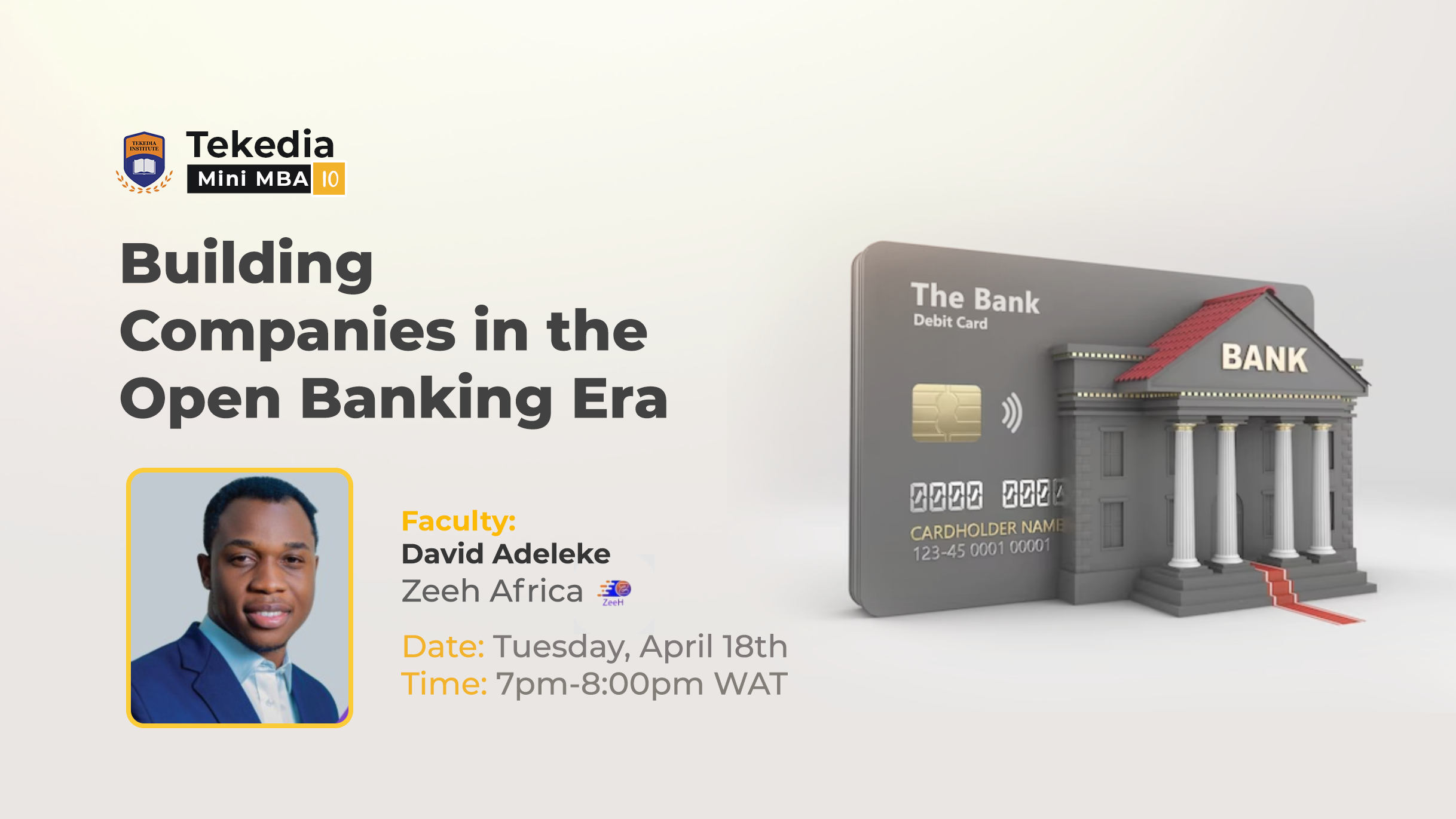
Join us tomorrow at Tekedia Institute Mini-MBA Live as we discuss open banking and how it will provide new opportunities in markets. Our faculty is from one of the leading companies in the domain, and currently provides solutions to some banks in Nigeria.

David Adeleke of Zeeh Africa will explain this promising future in Africa’s finest business school for the mastery of entrepreneurial capitalism. Come and learn how open banking could bring open opportunities for your business model.

If you have not picked your seat in the next edition of Tekedia Mini-MBA, go here before the early bird benefits end here 


Google Search, Samsung’s Bing Pivot, and Microsoft Word to Microsoft Phrase

1

In the past, I’d noted that Google was largely wasting money paying Apple to have its search engine as the default search in Apple products. My thesis was based on the construct that Google Search being the #1, Apple even without being paid would have used it. It was not really about Apple; it was about Apple delivering the best experience to its customers. An iPhone on Bing would not have given Apple that end-to-end great experience Apple had envisioned.

So, the estimated $20 billion Google sent to Apple in 2022 for its search position was not money well spent. Sure, you could argue that the money possibly included an incentive for Apple to stay away from developing an inhouse search engine. In other words, if you receive a cheque of $20 billion yearly, why would you bother building that product line? Apple pockets about $20 billion yearly, and punts for Google to own the world of search!

Google was the absolute search’s category-king, and remains the best as I write. But that is changing. How do you know? Buy a Windows laptop, get the system connected to the internet, you will likely do one of these two things within the first five things on Internet Explorer/ Edge: type Google.com or search “download Chrome” on the browser. In other words, most begin from the Microsoft browser to get Chrome, and quickly change the default browser to Chrome, with Google search the obvious choice over Bing.

But that is changing and Samsung dropped some hints: “Alphabet Inc shares fell as much as 4% on Monday following a report South Korea’s Samsung Electronics was considering replacing Google with Microsoft-owned Bing as the default search engine on its devices. The report, published by the New York Times over the weekend, underscores the growing challenges Google’s $162-billion-a-year search engine business face from Bing – a minor player that has risen in prominence recently after the integration of the artificial intelligence tech behind ChatGPT.”

Google now provides summaries for searches, to mimic one of the coolest elements of ChatGPT, cooking the food, instead of just providing the grocery of Internet links, and requiring  one to enter the kitchen to prepare the meal. But just like making short videos does not take TikTok out with its best-in-class AI system for video discovery and distribution, the only future for Google is the lab: it must create good AI to withstand the frontal assault which ChatGPT is bringing to its business.

Indeed, ChatGPT provides a real challenge to Google Search. On Friday, I noticed something with my Microsoft Word (within Microsoft 365). I was working on a document on economic development. As I typed, Word was not just suggesting words but phrases and clauses. It was systematically predicting me as I wrote. Then on Sunday, working on a courseware on Professional  Personal Branding for Tekedia Mini-MBA, I noticed that Word could extend my thoughts. Quickly, I shouted, “Microsoft Word has evolved to Microsoft Phrase and if it continues like this, we will have Microsoft Sentence and Microsoft Paragraph soon”!

Good People, AI will transform our world and rewire business empires. #gameON

@60minutes

“Holy cow!” exclaimed Scott Pelley as he used Bard, Google’s newly released artificial intelligence chatbot. The technology appeared to possess the sum of all human knowledge, with microchips 100,000 times faster than the human brain. #artificialintelligence #google #60minutes #chatbots

? original sound – 60 Minutes

Google’s reaction to the threat was “panic” as the company earns an estimated $3 billion in annual revenue from the Samsung contract, the report said, citing internal messages.

Another $20 billion is tied to a similar Apple (AAPL.O) contract that will be up for renewal this year, the report added.

In a response to Reuters, Google said it was working to bring new AI-powered features to Search without commenting on its association with Samsung. The South Korean consumer electronics major did not respond to a request for comment.

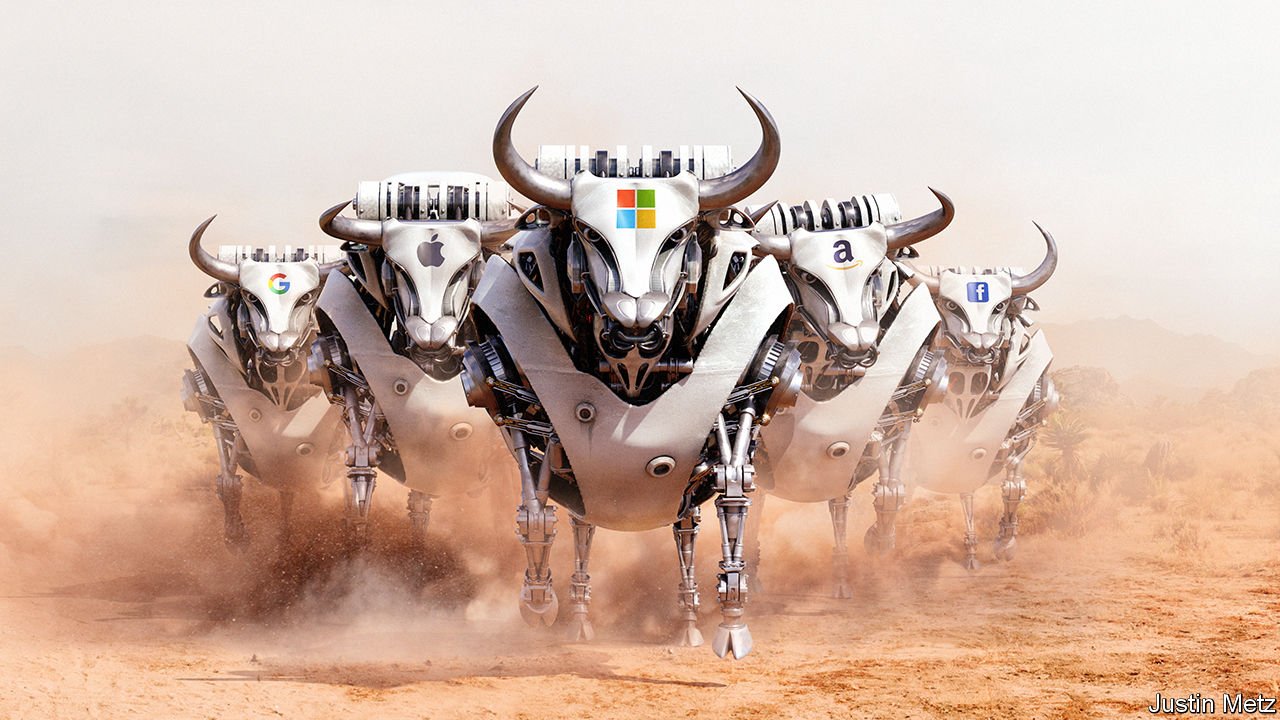
Google has for decades dominated the search market with a share of over 80%, but Wall Street fears the company could be falling behind Microsoft in a fast-moving AI race.

Parent firm Alphabet lost $100 billion in value on Feb. 8 after its new chatbot, Bard, shared inaccurate information in a promotional video and a company event failed to dazzle.

On Monday, the stock fell to $104.90 and erased nearly $50 billion from Alphabet’s market capitalization. Microsoft, meanwhile, outperformed the broader market with a rise of 1%.

Flutterwave Announces Nairobi, Kenya As East African Headquarters

0

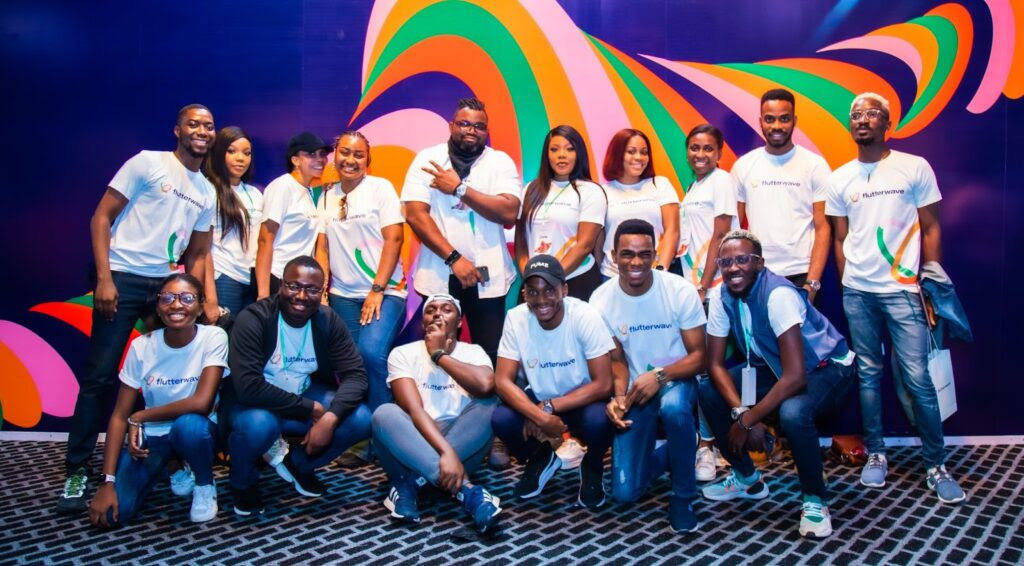
Flutterwave, Africa’s leading payments technology company, has chosen Nairobi, Kenya as its regional headquarter in East Africa, the company has announced.

The move comes barely one month after the payment giant secured additional licenses to expand operation in Rwanda.

Flutterwave’s chief regulatory and government relations Officer, Oluwabankole Falade made the announcement during last week’s third American Chamber of Commerce (AmCham) Business Summit held in Nairobi.

Per the press statement issued by the company, the event, which was graced by the AmChams across East Africa, a senior U.S. government delegation, U.S. investors convened by the U.S. Department of Commerce, the U.S. Chamber of Commerce’s Africa Business Centre, and East African businesses and officials, was designed to chart new paths for enhanced U.S. commercial engagement with Kenya and the East Africa Region.

More than 500 East African and American delegates participated.

“We recognize the invaluable role Kenya plays in the East African region and the country’s business-friendly environment and digital capability,” said Mr Falade. “As a business with African roots and headquartered in San Francisco, we are aware of the importance of empowering the small business owners, an objective shared by the Kenyan administration.”

The two-day programme was anchored by U.S. Ambassador to Kenya Meg Witman, who delivered opening remarks on ‘Why Africa, Why Kenya,’ and closed by President William Ruto, who announced new measures to enhance U.S. trade and investment in the country, including steps to support the small and medium enterprises (SMEs) sector, a key segment of Flutterwave’s business.

Flutterwave was a sponsor of the AmCham event, and it is a board member of the U.S. Chamber of Commerce’s Africa Business Centre as well as a member of AmCham in most markets in which it operates, including Kenya, Tanzania, Rwanda, Uganda, and Zambia.

Flutterwave’s strategy is well aligned with that of the East Africa region, ensuring that SMEs are provided with efficient, simple and affordable technology solutions that drive their businesses to profitability across borders.

Flutterwave’s key SME solutions, Flutterwave Store and Flutterwave Market, aim to support Kenya’s SME sector, which employs around 80 percent of Kenya’s population, creates 30 percent of jobs annually, and contributes three per cent to its national GDP. Kenya offers Flutterwave a gateway into the region and to a customer base of about 476 million people as of 2023.

“We are also glad of the support we have received from the Government of Kenya, AmCham stakeholders and leadership across the region, and we are proud to have chosen to support the Summit and see many other global firms who we work with, such as Amazon and Uber choosing to settle here as well. We are in good company,” closed out Mr Falade.

Flutterwave moved to Kenya in 2016, becoming the first East African market for the Nigerian startup. It has since then expanded to new markets.

However, in recent times, the high-flying fintech had been involved in allegations of fraud, money laundering and operating without license in Kenya. Last year, Flutterwave’s accounts were frozen by a Kenyan court after it was accused by the authorities of facilitating fraudulent transactions and operating without license from the Central Bank of Kenya.

It was cleared of any wrongdoing in February, after Kenya’s Asset Recovery Agency (ARA)  withdrew its case. The announcement that it is making Nairobi its East African regional headquarters shows the coast is all clear for the African fintech giant.

Fintechs in Nigeria to Witness Further Growth as Banking Services Slow

0
Nigerian naira banknotes are seen in this picture illustration, September 10, 2018. REUTERS/Afolabi Sotunde/File Photo

Fintechs in Nigeria have been predicted to witness further growth as banking services slow, a PWC report reveals.

The report titled “Growing the Nigerian Technology Ecosystem Through The Capital Markets”, revealed that the Nigerian fintech sub-sector has the biggest share of the number of Nigerian tech start-ups at 36%, with payments and consumer lending being the focus of almost half of the sub-sector.

The report further reveals that insufficient banking services particularly in rural areas, a young population, increasing smartphone usage, and regulatory efforts to increase financial inclusion, have created advantageous openings for fintech. These Fintechs have however not hesitated in seizing the opportunity to provide improved propositions across the value chain to address problems with affordable payments, Flexible savings, investments, quick loans, etc.

Despite the pandemic’s effect across all sectors of the economy, financial technology has been having a good run with positive results, making Nigeria Africa’s largest country by GDP. With more than 200 fintech companies currently operating in Nigeria which are driving innovation, the fintech ecosystem has witnessed new entrants carrying out four major financial services which include; Credit, Payments, Savings, and wealth management.

An economic intelligence report revealed that Nigerian fintech is branching out from payments into lending, wealth management, micro-investment, peer-to-peer transfers, and insurance. The report stated that payments and remittances are the most developed subsection to date, also stating that Nigeria has continued to see a surge of new and simplified apps to help merchants, businesses, and consumers.

While traditional banks are seeking to adapt to recent changes, fintech is driving more intrinsic innovations, whether by providing digital-first services themselves without any legacy issues, but also without the benefit of heritage customer bases or by providing the technology, platforms, and infrastructure that other service providers utilize.

The Central Bank of Nigeria disclosed that in the last ten years, Nigeria’s payment systems have experienced significant growth, especially with the development of a sound regulatory and supervisory framework, robust payment infrastructure, and the exponential rise in the number of fintech operating in the country.

The pressure from fintechs that is spreading rapidly in the country, has forced Nigerian banks to speed up their digital transformation in an effort to maintain market share. Several mainstream banks, initially slow to react to the digital era, have quickly adapted to offer apps and tools in areas like loans, while non-traditional players such as telecom companies and retailers are entering into the fintech space.

In a bid to ensure that fintechs cover the unbanked in the country, especially in rural areas, the CBN has issued licenses to several startups, allowing them to compete with commercial banks. While the pool of the very biggest commercial banks has changed relatively little over the past few years, the fintech sector is far more reactive, with companies being established, merging, growing quickly, or failing at a far higher speed.

Currently in Nigeria, major banks are going head to head against newcomers, as the growing financial services market is generating growth for all. As digital banks continue to evolve and become more accepted, offering users interesting banking experiences, the pressure has no doubt been mounting on traditional banks. It wouldn’t come as a surprise to see a more even playing field created in the longer term, with companies of various backgrounds providing a wide range of financial services.

This might likely bring about rapid change in the banking sector, forcing traditional banks to either work with current competitors, partner with them, copy their innovative approach, or face being sidelined. Finetchs emergence in Nigeria has no doubt redefined how payments are made, brought about ease of payment, and made banking seamless.