DD
MM
YYYY

PAGES

DD
MM
YYYY

spot_img

PAGES

Home Blog Page 4281

G7 nations Plan to Push For Tougher Crypto Regulation

0
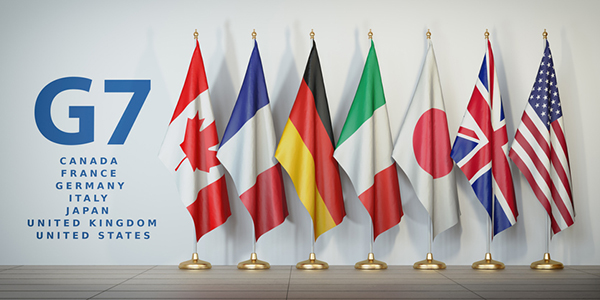
G7 summit or meeting concept. Row from flags of members of G7 group of seven and list of countries, 3d illustration

Recent reports reveal that G7 countries will advocate for stricter cryptocurrency laws globally at the upcoming 49th G7 summit which is scheduled for May 2023 and will take place in Hiroshima, Japan.

These countries will push for tighter regulation of the crypto sector, in the interest of consumer protection and greater business transparency, as the discussion about the implementation of these regulations is set to be the major highlight of the summit.

While at the summit, nations will present policies that would be directed at improving crypto transparency and increasing consumer protection while also addressing dangers that can negatively affect the performance of the global financial system. 

The G7 countries are hoping to take the lead in formulating global standards for virtual assets. Japan, which already has cryptocurrency regulations, and other members such as Britain, Canada, France, Germany, Italy, the United States, and the European Union are seeking to state their collective efforts in a leaders’ declaration.

The officials say that the G7 will accelerate the pace of related discussions toward a meeting of finance ministers and central bankers in mid-May, just days before Japanese Prime Minister Fumio Kishida hosts this year’s summit in Hiroshima. While the legal status of virtual assets and rules about them vary by country, the G7 is seeking to establish global standards.

Although before this, some countries have begun a charge to ensure proper crypto regulations are set. Japan recently announced that crypto assets are properties under the Payment Services Act (PSA). As a result, there is a mandatory registration process for crypto exchanges that want to operate within the country. Also, crypto exchanges must comply with the rules set in Anti Money Laundering/Combating the Financing of Terrorism (AML/CFT) law. 

Countries like South Africa and Belgium have launched policies mandating crypto ads to include risks attainable with crypto trading. Similarly, the United Kingdom has indicated its desire to regulate the space further.

Following the collapse of one of Crypto’s leading exchanges FTX which sent shock waves to the crypto sector and negatively impacted the cryptocurrencies, ever since, there has been a clamor for the regulation of cryptocurrencies to protect customers’ assets.

The regulation of cryptocurrencies according to analysts not only protects customers’ assets, it instills greater confidence in those trading in the market, and also increases the attractiveness of the industry, facilitating wider adoption of crypto services. According to them, rolling out clear regulatory guidance would see nations become more crypto-friendly and provide a welcoming environment for growing innovative companies.

This in turn will boost economic growth for the host jurisdictions, also controllers of digital asset firms will see the value in establishing their operations in these well-regulated jurisdictions, which will allow them to trade in a safe and certain regulatory environment with clear laws that also serve to protect consumers. 

There are arguments that any unregulated system has the ability to fund criminal acts. As a result, a client due diligence process akin to that of a bank is required. This can help in keeping track of investors’ real identities and verifying their locations when they are buying or selling cryptocurrencies. Any infringement of such norms should be met with severe sanctions.

First Citizen Acquires SVB from FDIC in A Near $200 Billion Deal

2
FILE PHOTO: First Citizens BancShares and SVB (Silicon Valley Bank) logos are seen in this illustration taken March 19, 2023. REUTERS/Dado Ruvic/Illustration/File Photo

US First Citizens Bank said Monday it has agreed to purchase all loans and deposits from collapsed Silicon Valley Bank (SVB), whose collapse triggered reverberating concern about the health of the banking sector across the globe.

First Citizens said in a statement that under the agreement, it will purchase “substantially all loans and certain other assets, and assume all customer deposits and certain other liabilities of Silicon Valley Bridge Bank.”

“The transaction is structured as a whole bank purchase with loss share coverage,” it added.

SVB collapsed earlier this month, trapping depositors’ fund and prompting the intervention of federal regulators. Authorities had moved in to protect depositors, announcing that all of the lender’s customers will be granted access to the entirety of their funds.

“Depositors will have access to all of their money starting Monday, March 13. No losses associated with the resolution of Silicon Valley Bank will be borne by the taxpayer,” The U.S. Treasury, the Federal Reserve and the Federal Deposit Insurance Corp., said then in a joint statement.

Silicon Valley Bank has served as a key lender to tech companies for decades, beginning from the 1980s. But run into trouble after selling part of its portfolio at a $1.8 billion loss and did not succeed in raising more capital. Its failure was the biggest in the US bank industry history since 2008. SVB was the country’s 16th-largest bank before its collapse.

SVB Financial, Silicon Valley Bank’s former parent company, filed for bankruptcy on March 17.

Regulators’ intervention cut across to the UK. HSBC reached an agreement to buy SVB UK for $1, securing about $8.1 billion of deposits.

First Citizens will take over Silicon Valley Bridge Bank, which was created from SVB by regulators following its collapse, from Monday. It said the 17 former branches of SVB will open on Monday in California and Massachusetts as “Silicon Valley Bank, a division of First Citizens Bank.” Its employees will automatically become employees of First Citizens.

“Admittedly, there has been a strong amount of runoff from the legacy Silicon Valley Bank this quarter. However, it is our intent to embrace the talents of our legacy SVB employees, embrace their business capabilities and then reiterate to their clients that First Citizens has an unwavering focus on holistic client relationships,” Craig Nix, the chief financial officer of First Citizens, said on a call with investors on Monday.

Also, the FDIC, which has been looking for a buyer for the bank, either in part or as whole, said Sunday the transaction covers $119 billion in deposits and $72 billion in assets, and depositors of SVB will automatically become depositors of First Citizens Bank. The regulator added that deposits will continue to be insured.

As part of the deal, the bank regulator will receive rights linked to the stock of First Citizens, which is said to be worth about $500 million, per the Times. It estimated that the cost of Silicon Valley Bank’s failure to the government’s deposit insurance fund would be around $20 billion.

First Citizens Bancshares is acquiring much of Silicon Valley Bank, the Federal Deposit Insurance Corporation announced late Sunday. The collapse of SVB a little more than two weeks ago was the U.S.’s largest bank failure since the fall of Lehman Brothers in 2008 and caused widespread panic across the financial sector. SVB’s 17 branches will open Monday as First Citizens’, with its clients becoming those of the latter’s, too. The deal includes the purchase of approximately $72 billion of SVB assets at a discount of $16.5 billion, while around $90 billion in securities and other assets were not included. The FDIC believes SVB’s failure will cost the government’s deposit insurance fund around $20 billion.

In addition, part of the agreement says that First Citizens and the FDIC will both bear the risk of losses on the loans included in the transaction. This type of arrangement is common in the sale of failed banks. For example, the FDIC has agreed to reimburse First Citizens for 50% of any losses exceeding $5 billion on the commercial loan portfolio that is transferred in the deal, according the Times.

In addition to the FDIC, the US Treasury and Federal Reserve have collaborated on a plan to ensure that SVB customers have access to their deposits. To prevent a recurrence of SVB’s sudden collapse, the Fed has also introduced a new lending tool for banks.

The Twitter’s Source Code Escape

1

Someone dumped Twitter’s source code  on GitHub, an ecosystem where geeks and developers share codes: “Parts of Twitter’s source code — a closely held trade secret — were leaked online, according to court filings. The social network moved Friday to have the code taken down by GitHub”. If you may ask me, the illegal play here is more consequential than a bank hack for a software company. Yes, if not that Twitter is an aggregator, it would be in serious trouble now. 

But as an aggregator whose value is in the user base or data created by the user base, the source code, while valuable, is not that killing, when leaked in this way, except the risk of bad guys seeing paths to hack the company. You can clone a better Twitter on software but without the users, you have no mission.

That is the deal: you can clone Facebook, Quora, LinkedIn and those aggregators, without their users, the products are not comparable. The value of the products come from the users within the tenets of network effect where the more the users, the better the value. The core value of Twitter is not just on the source code, but that it has users which are there.

Contrast this dump with say a Microsoft Office source code dump where the source code gives you the product, untethered from if another person is using it or not. Yes, when you use Microsoft Word or Excel, it is irrelevant if another person is using it. So, the source code creates massive business risks to Microsoft since any pirated one is a lost revenue. Laying hands on those codes can make bad actors build semi-versions of Office or Excel.

For Twitter, this is an escape because aggregators win through users. Of course you need to protect the source code to ensure you keep those users happy!

Twitter needs to close the flanks. No app. No browser. No right click. No disk interface. No savers. On machines with access to the server! Code Protection 101.

Parts of Twitter’s source code — a closely held trade secret — were leaked online, according to court filings. The social network moved Friday to have the code taken down by GitHub — the online forum where it was posted — and while GitHub took the code down that day, reports suggest it may have been public for months. Leaked code risks revealing software vulnerabilities to attackers and can also give competitors an advantage. The responsible party is believed to have left the company last year, The New York Times reports.

Roughly three quarters of Twitter’s staff were laid off or resigned since Elon Musk purchased the company in October. Twitter is looking to identify the user behind the account that shared the code and the information of all users who posted, downloaded or uploaded the data. Musk is offering employees stock grants based on a $20 billion valuation, less than half of the $44 billion he paid for the company last year.

As Twitter escapes, the US financial market may need the same luck: “Cash is leaving banks and flooding into money market funds at the fastest pace since the start of the pandemic, as businesses and investors seek safe havens following the collapse of Silicon Valley Bank. So far this month, more than $286 billion has moved into money market funds — which typically hold low-risk assets such as short-term Treasury bills. Corporations and small businesses, whose bank deposits may exceed the $250,000 covered by federal insurance, are likely leading the flight to safety, Axios reports.”

Proptech Startup HouseAfrica Raises $400,000 Fund to Deepen Its Technology And Grow Adoption

0
Zenvus Boundary real estate

PropTech company that enables people to buy shares in multiple properties across Africa and earn returns, HouseAfrica has announced the closing of a $400,000 fund to deepen its technology and grow adoption.

Speaking on the recent funds raised, the startup CEO Nnamdi Uba disclosed that the funding would assist the startup in deepening its technology and growing adoption and its team. He added that close to 95% of lands do not have verifiable titles, which expose genuine retail investors to fraud, hence, the startup solution will enable buyers to make informed decisions when buying land.

Also speaking on HouseAfrica’s remarkable offering is the co-founder of Andela Iyinoluwa Aboyeji who said, “HouseAfrica is helping to create and digitize private land registries. I always thought it was only the public land registries that were slow, inefficient and murky until I heard about the experience of a friend who had to pay two different sets of people to buy land within a private estate. I’m super excited about how by helping private landowners and estates digitize their land records they can start to help create transparency and value that should hopefully soon inspire government land registries to follow suit.”

Founded in 2018, HouseAfrica leverages blockchain & NFT in helping real estate companies issue verifiable certificates of land allocation with ease. In a bid to tackle problems around land ownership that lead to duplicate land titles and illegal sales, as well as low access to mortgages, HouseAfrica provides an immutable ledger alongside a visual map reference, ensuring the integrity of land titles and increasing access to credit.

The startup, which took part in last year’s Startupbootcamp AfriTech accelerator in Cape Town and was also one of the winners at AfricArena, has partnered the Nigerian Mortgage Refinancing Company to give it the opportunity to exclusively service 100,000 land titles across six states in the country.

Designed to be easy to use via a slick web app, HouseAfrica’s business model is based on fees for land title validations and commission on mortgage payments. The platform enables end users to buy, sell, rent, and manage properties and ultimately pay rent and utility bills.

Also, developers can use the platform to manage the construction supply chain from yard to development site. International investors will also have access to the growing African real estate market through the HouseAfrica platform property portfolio, and they’ll also be able to buy, sell and manage properties from anywhere in the world.

HouseAfrica’s transparent ecosystem fosters trust between sellers, buyers, renters and landlords with verified information. The startup easy-to-use, easy-to-handle platform is built for growth, ready and able to serve a diverse array of real estate projects.

Bridging the huge housing gap for over 100M people in the continent living in temporary structures, HouseAfrica offers what may well be the future model for the entire industry, effectively creating a whole new category of real estate investment and renting services.

US Lawmakers to Proceed with Legislation to Ban TikTok

1

Congress will move forward with legislation that will empower President Biden to ban TikTok and other apps perceived as potential threats to national security, the US Speaker of the House, Kevin McCarthy, said on Sunday.

“The House will be moving forward with legislation to protect Americans from the technological tentacles of the Chinese Communist Party,” McCarthy said on Twitter.

The decision came after the testimony of TikTok CEO Shou Zi Chew before House Committee on Thursday, denying that the Chinese government has access to the data of US TikTok users. Both McCarthy and several other members of Congress believe that Chew was not being honest in his testimony.

“It’s very concerning that the CEO of TikTok can’t be honest and admit what we already know to be true—China has access to TikTok user data,” the Speaker said on Twitter.

Chew told US lawmakers that although some TikTok employees in China still have access to some US data from the app, such access will be completely eliminated at the completion of “Project Texas;” a risk mitigation plan the company had activated to ameliorate the national security concern that has become an existential threat to its business in the West.

TikTok said Project Texas involves deleting data from servers in Singapore and Virginia, adding that once that data is deleted those employees will no longer have access to US user data from the app.

The concern that US user data is accessible in China and is subject to Chinese Communist Party (CCP) law which makes it compulsory for companies to turn in data to the government upon demand has fueled calls to ban TikTok.

In 2020, former US President Donald Trump moved to ban TikTok and other Chinese apps, including Wechat, seen as potential tools for Chinese surveillance. The move was halted by court.

The video-sharing app is perceived as a potential conduit pipe for Chinese espionage, and has been at the receiving end of the resulting apathy, which has seen governments outside the US implement a ban on the use on official devices. Canada, the UK, Belgium, Denmark and others, including the European Union Commission, have prohibited the use of TikTok on government-issued devices.

During the bipartisan hearing on Thursday, the House was keen to find out if Beijing is using TikTok to spy on its 150 million American users, including the government. Chew said “no”, that the Chinese government has never requested any data from the company.

TikTok’s ordeal is compounded by Beijing’s increasing espionage operation. In February, a Chinese spy balloon, which took off from China’s Hainan Island, was shot down by American fighter jets off the coast of South Carolina. There is also a report that employees of ByteDance, TikTok’s parent company, had improperly tracked the location of two journalists.

Republican Representative Neal Dunn had made reference to that during the hearing, even though TikTok said the employees were fired. Dunn asked Chew whether the incident means that ByteDance is spying. Chew answered by saying that he doesn’t “think that spying is the right way to describe it.”

Representative Michael McCaul, who chairs the committee that approved the legislation known as “the Restricting the Emergence of Security Threats that Risk Information and Communications Act”, had earlier described TikTok as “a spy balloon.”

“TikTok is a national security threat … It is time to act,” he said, adding that “anyone with TikTok downloaded on their device has given the CCP a backdoor to all their personal information. It’s a spy balloon into their phone.”

TikTok’s ordeal is largely tied to its ownership by Chinese tech giant ByteDance. The short-form video app said it has been working to untie itself from ByteDance by moving its data centers away from China. Its latest effort is “Project Texas.” The company said the project, which is being executed by Oracle, has about 1,500 full-time workers and has gulped more than $1.5 billion.

Unfortunately, these efforts have failed to mitigate the US-led apathy toward TikTok, which is increasingly exposing the app’s operation in the West to permanent ban.

“Rather than appease legislators’ concerns, Mr Chew’s appearance before Congress on Thursday actually increased the likelihood that Congress will take some action,” Representative Mike Gallagher, the Republican chairman of the House select committee on the Chinese Communist Party, told ABC News on Sunday.