DD
MM
YYYY

PAGES

DD
MM
YYYY

spot_img

PAGES

Home Blog Page 4289

Google Takes Down Hundreds of Loan Apps From Its Play Store in Kenya

0

Tech company Google has recently taken down hundreds of loan apps from its play store in Kenya since its policy last year that mandated these apps to submit proof of license to operate in the country, or risk removal from Play Store.

Google said, “Digital credit providers (DCP) should complete the DCP registration process and obtain a license from the Central Bank of Kenya (CBK). You must provide a copy of your license from the CBK as part of your declaration”.

Following Google’s guideline for loan apps, the Central Bank of Kenya in January 2023, disclosed that it received 381 applications since March last year from money lenders applying for a license. The CBK further revealed that only 22 loan apps were given licenses to operate, owing to the fact that they complied with all requirements from regulators and agencies.

Google’s recent action to curb unregulated loan apps in Kenya comes in the wake of similar efforts in India, Indonesia, and the Philippines, where the providers are also required to have requisite permits from authorities that regulate the financial services sector to be listed on Play Store.

It is interesting to note that Kenya and Nigeria are major tech hubs in Africa, which have witnessed the proliferation of loan apps, offering quick unsecured personal or business loans. Some of these loan apps operate with no regulation by the government, expired licenses, and in some cases, no licensing.

The interest rate for an average commercial bank loan in Nigeria is 24 percent each year. However, loan apps’ interest rates are between 75 percent and 395 percent per year. The lack of stringent regulations, and Google Play Store’s slack vetting process, have enabled the rise of rogue operators, necessitating authorities to take apt measures to protect citizens.

The proliferation of online loan apps in these countries by some fraudulent and unscrupulous profiteers has become a necessary evil for many low-income earners, who are coerced to borrow to cushion the effects of harsh economic realities.

Unfortunately, many of them get trapped in the unhealthy practices of some of these loan apps hosted on Google Play Store by individuals and companies. Users are expected to repay loans at astronomical interest rates within 3-7 days as against the 91 to 365 days claim on the Google Play store.

Once they default on payment of the loan, these apps go as far as illegally accessing their contacts to message them, requesting the payment of the loan which is a very illegal practice. In Nigeria, the Central Bank of Nigeria (CBN) Consumer Protection Regulation does not permit any financial institution to contact friends, employers, or relatives of a loan defaulter unless consent is granted.

Meanwhile, most of these loan apps flagrantly disregard consumer protection regulations and regulatory agencies. Loan apps have continued to grown in high prominence because of how tough it is to get a bank loan. However, with proper scrutiny of their operations from the right bodies/agencies, it will eliminate rogue apps thus eliminating unhealthy loan practices.
OneWeb, British Satellite Internet Company, Set to Launch Service

0

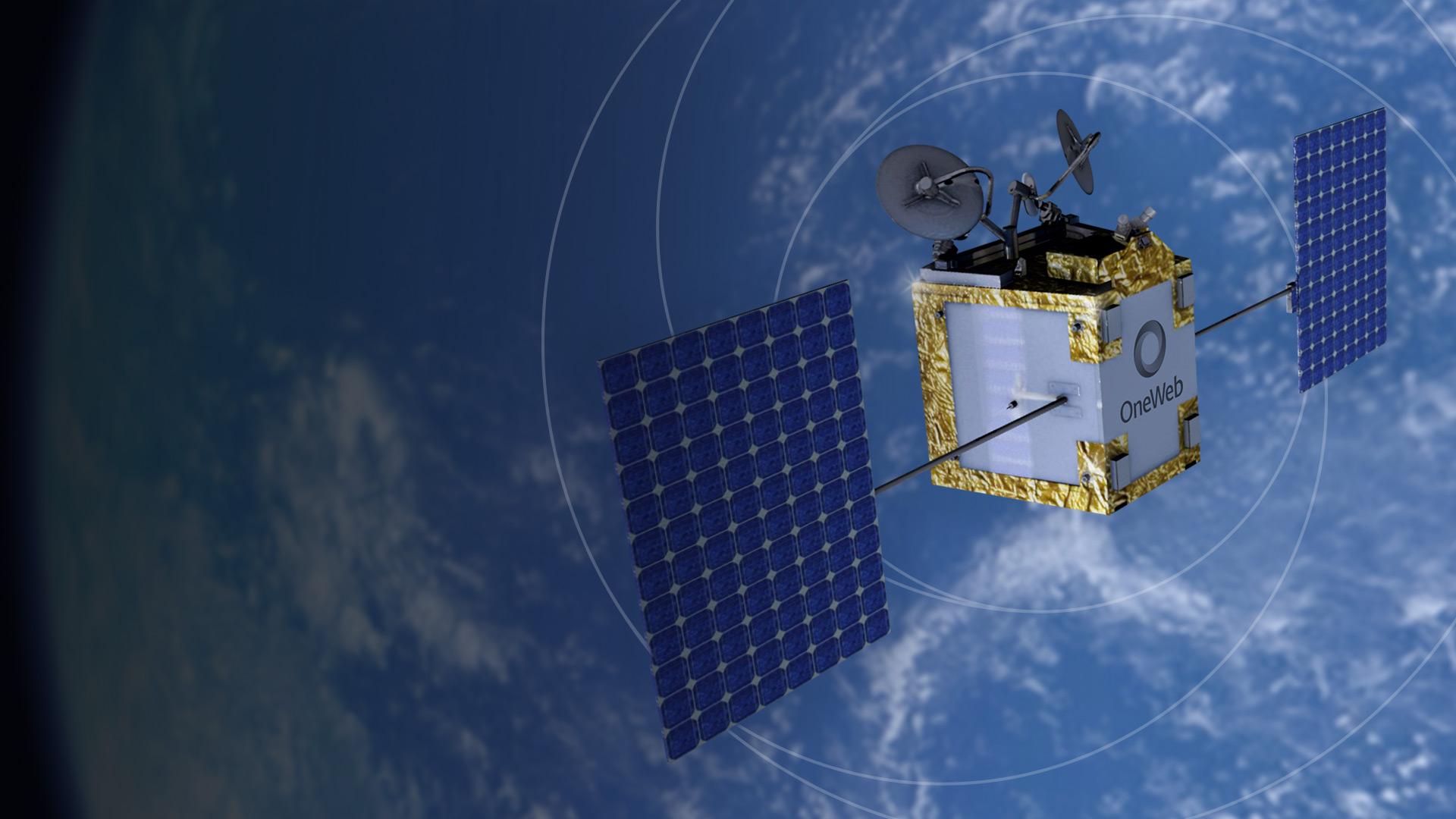
It looks like competition in the satellite internet industry is about to heat up as British satellite company OneWeb prepares to launch its final batch of internet satellites.

The launch will complete a constellation of more than 600 satellites in low Earth orbit. OneWeb said India’s heaviest launch vehicle LVM-3 will carry 36 OneWeb satellites, with liftoff slated for Sunday at 11:30 p.m.

The company has faced hiccups in its push to put the satellites up: They are centered mainly on the lack of its own launch pad. OneWeb was forced to make a switch from Russia to India to launch the latest batch of its satellite.

Gizmodo reported that OneWeb turned to the Indian Space Research Organization (ISRO) to launch its satellites using India’s heaviest rocket, after having to cancel its launches aboard Russia’s Soyuz rocket. In October 2022, the 143-foot-tall (43.5 meter) rocket launched with its first commercial payload, the first batch of 36 OneWeb satellites, on board.

Oneweb has since stuck with India, where it has made its first launch. The second launch will take place at the Satish Dhawan Space Centre in Sriharikota.

Having survived a bankruptcy scare in 2020, the $6 billion company has worked to expand its business with new investments. OneWeb was rescued by the UK government and the Indian conglomerate Bharti Global, who invested in it, half a billion dollars each.

The company is currently working through a merger plan with Paris-based Eutelsat, best known for distributing thousands of TV channels around the world, per the BBC.

Since 2020, OneWeb has tried to increase its internet constellation in low Earth orbit, pushing it to 579 satellites currently functioning in the orbit, according to statistics kept by Harvard-Smithsonian astrophysicist Jonathan McDowell.

The addition of 36 new units will raise the population of the constellation to about 615, completing the first orbital shell. The company had originally planned on building a 648-unit constellation, but says this final launch will cap it off and allow for global coverage, per Gizmodo.

Last year, the company was forced to halt the launch of its satellites after terminating its contract with Russia’s space agency Roscosmos.

Gizmodo tells the story: After relying on Russia’s Soyuz rocket to launch its satellites, OneWeb’s relationship with Roscosmos quickly deteriorated following the Russian invasion of Ukraine. In retaliation against the Western sanctions imposed against Russia, Roscosmos refused to launch OneWeb’s satellites unless the company agreed to a list of demands. OneWeb declined, prompting Russia to keep OneWeb’s 36 satellites at a storage facility in Baiknour, Kazakhstan.

The company was left scrambling to find alternative rides for its satellites. As a result, OneWeb signed contracts with its internet constellation rival SpaceX, as well as ISRO, for the six remaining launches required for its first generation satellites.

OneWeb’s partnership with India through Bharti Global’s investment, has paved the way for it to complete a satellite constellation. Sunday’s launch will complete OneWeb’s constellation, enabling it to initiate global coverage this year, according to the company.

But OneWeb plans to expand its network in the coming years to include bigger, more powerful spacecraft. The constellation is now expected to be kept under 1,000 individual satellites, contrary to earlier indications.

The next generation will provide ancillary services, such as signals that allow users to fix their position on the surface of the Earth or know the precise time, per BBC.

OneWeb said its system, which will require the necessary ground infrastructure to command and control all the satellites and link them to the internet, should be fully up and running by the end of 2023.

But unlike SpaceX, OneWeb is not selling broadband connections direct to the individual user. Its clients, principally, are the telecoms companies that provide this internet service. BBC noted that they might also be employing the connectivity to supplement, or expand, the infrastructure in their mobile phone networks.

S&P 500, TSLA Stock Top UK Google Search

0

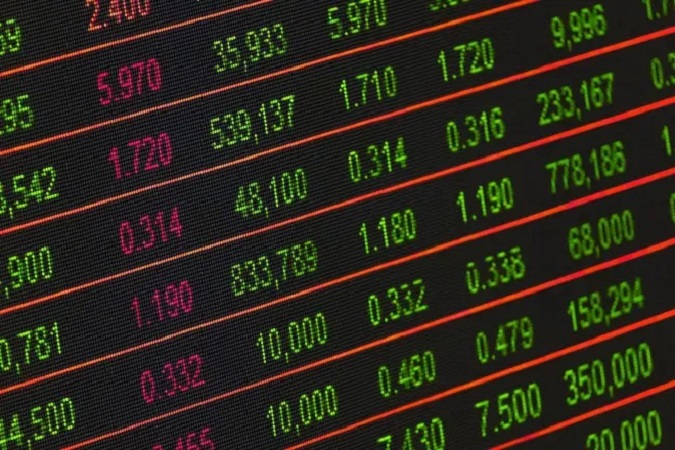
The study, conducted by the experts at Trading Browser, analysed Google Keyword data to establish the search volume for each S&P 500 stock in each UK area and combined the number of searches to determine which is the most popular.

According to the results, the five most Googled S&P 500 stocks in the UK are:

Tesla (TSLA)
Electric car manufacturer Tesla is named the most Googled S&P 500 stock in the UK. Tesla stock is searched for 260,180times a month on average by UK residents. Recognised not only for its various electric products but the company’s outlandish CEO Elon Musk, Tesla has rapidly become one of the world’s most valuable companies. As of March 2023, Tesla has a market cap of $621.77 billion which is the seventh highest in the world.

META (META)
Formerly known as Facebook, Meta is the UK’s second most Googled S&P 500 stock. META stock is searched for 84,310times a month on average by UK residents. CEO Mark Zuckerberg recently announced a paid monthly subscription to give Facebook and Instagram users a blue verification tick. Meta’s annual revenue for 2022 was $116.6 billion, which was a 1.12% decline from 2021.

NVIDIA (NVDA)
NVIDIA ranked as the third most Googled S&P 500 stock in the UK. NVDA stock is searched for 58,250 times a month on average by UK residents. The company manufactures high-end graphics units for PCs and game consoles. As of 2023, NVIDIA has just over 26,000 employees worldwide.

Google (GOOG)
Google ranked as the fourth most Googled S&P 500 stock in the UK. GOOG stock is searched for 35, 840 times a month on average by UK residents. Google is one of the most popular search engines in the world. Its parent company Alphabet Inc. measured more than 190,000 employees at the end of 2022, making it one of the top ten largest tech companies in the world.

Amazon (AMZN)
Amazon ranked as the fifth most Googled S&P 500 stock in the UK. AMZN stock is searched for 27,720 times a month on average by UK residents. Amazon is one of the world’s most valuable brands and one of the most recognisable. In 2022 for the first time in eight years, Amazon recorded a loss which amassed to $2.7 billion dollars.

A spokesperson for Trading Browser said: “More and more people are becoming interested in stocks, shares and investing in general. With so much information out there, especially on social media, it has become easier than ever to conduct research on the market.

“It’s no surprise to see Tesla top the rankings when it comes to the volume of Google searches. With Elon Musk at the helm, there are always new developments to be aware of before and after investing.

“With companies like these, where the CEO or founder has some sort of celebrity status, it is not uncommon for stocks to fluctuate in response to their actions. It’s also no surprise to see some of the biggest tech, manufacturing and oil giants amongst the top spots, as all of these industries are constantly undergoing change both socially and economically.”

Let’s talk about arts/ paintings/ sculptures and their legal ownership.

1
TEHRAN, IRAN - JULY 19: (RUSSIA OUT) Russian President Vladimir Putin leaves his presidential plane during the welcoming ceremony at the airport, on July 19, 2022 in Tehran Iran. Russian President Putin and his Turkish counterpart Erdogan arrived in Iran for the summit. (Photo by Contributor/Getty Images)

Some wealthy men are art collectors/ enthusiasts with priced art in their possession; this article is for them specifically. 

Due to the fact that art, paintings and sculptures from famous painters or sculptors are priced items with some of them being sold for millions of dollars, there’s always a likelihood that a copy or fake of some famous and expensive art is out there in the market with their dealers prancing on naive collectors to defraud.

How do you then make sure that you do not let yourself get defrauded in the art market by fraudster art dealers?

There is a legal document that is attached or associated with every art, painting or sculpture out there and it is called “provenance”.

Before you pay or even indicate an interest to purchase an artwork, ask the dealer to provide you with the art’s provenance, if the dealer cannot provide you with the provenance then that is a red flag; which can be interpreted that it is either the art although real was stolen or acquired through an illegal means or it is a copy or a fake art.

What then is Provenance?

Provenance is the ownership history of an artwork, from when it was first created by the painter or sculptor, indicating the date it was painted or sculpted and the details of the painter or sculptor indicating the first purchaser and other purchasers up until it got into the hand of the person who wants to sell it to you. Documented evidence of provenance for an artwork helps to establish that the art has not been altered and is not a forgery, a reproduction, stolen or looted art.

Some famous artworks date as far back as 1500. For instance, Leonardo Da Vinci’s Salvator Mundi which is one of the most famous and most expensive pieces of art currently in the world is believed to have been created around 1499-1510. This is to say that whoever dealer or collector wants to sell this prized piece of art must be in possession of the provenance dating as far back as 1500; indicating who was the first buyer or collector who bought this piece directly from Leonardo Da Vinci, and trace chronologically who and who have possessed the painting subsequently before it got to current collector’s museum or hand. Any collector or dealer who cannot present the provenance is either selling a fake copy of the artwork or stolen artwork. 

Provenance can as well be referred to as a chain of title in a more familiar legal term. The phrase, “chain of title” refers to the history of ownership of a piece of property, especially landed property, personal properties or other prized possession. Titles are normally registered and maintained with a centralized registry or authoritative body. The chain of title traces the historical transfer of ownership from the current owner back to the original owner or creator.
Keeping all these rigorous and accurate title records is important in order to establish ownership of a property or an asset especially when the property is a prized possession because once there is a hole or a break in the chain of title then it shows that you are not the legal owner of the property you are claiming or do not have the proper legal documents to establish you are the true legal owner of the property; you can as well be deemed to be a thief, a fraudster or an impostor.

The purpose of this piece is to protect our readers who are art collectors, dealers or enthusiasts. Once you are interested in buying an expensive piece of art or painting or even a sculpture, insist on the seller to provide you with the provenance or the chain of title of the work, that is the document that proves the seller has legal ownership over the artwork and therefore have the legal right to sell and can transfer the legal ownership of the art to you once you pay for it.

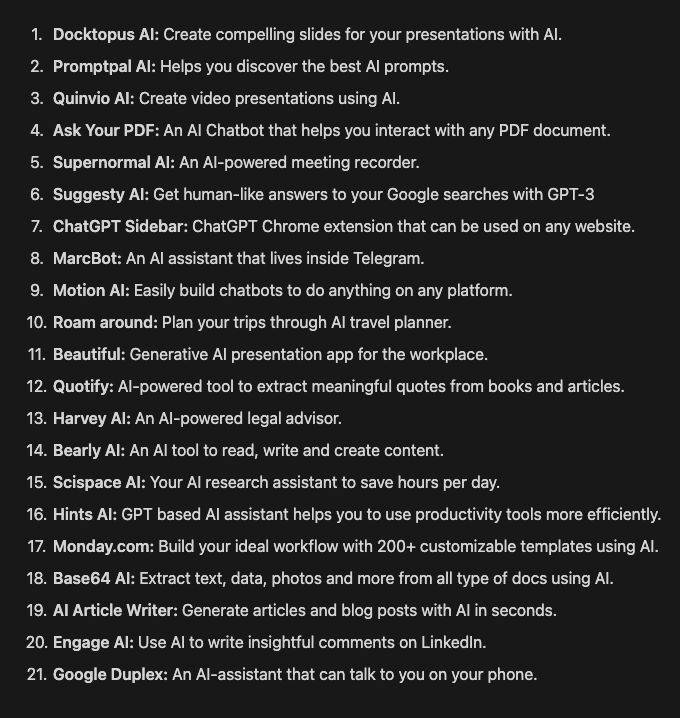
20 AI tools that will transform your productivity

0
TEHRAN, IRAN - JULY 19: (RUSSIA OUT) Russian President Vladimir Putin leaves his presidential plane during the welcoming ceremony at the airport, on July 19, 2022 in Tehran Iran. Russian President Putin and his Turkish counterpart Erdogan arrived in Iran for the summit. (Photo by Contributor/Getty Images)

Here are 20 AI tools that will transform your productivity forever. Yes, some species of AI and they will change our world.

Tekedia is offering a course on AI in the next Tekedia Mini-MBA.