Bitcoin’s repeated inability to sustain a breakout above the $100,000 mark has reignited a debate across the crypto community.
The crypto asset has traded within the $80,000 to $95,000 range since approximately November 21, 2025, a period of nearly 50 days. On Monday BTC surged as high as $94,764 reigniting hopes of a continued bullish momentum, before it retraced to $90,000 zone.
The price is currently trading at $90,052 at the time of reporting, with recent price action characterized by back-and-forth movement.
While many interpret the delay as a psychological hurdle, analysts suggest deeper market mechanics such as liquidity shifts, macroeconomic pressures, and institutional positioning are the real forces at play
Bitcoin could rally toward the $103,000–$105,000 range within the next few weeks, according to the latest market analysis, as a key technical indicator continues to flash bullish signals. Despite price action remaining rangebound, analysts point to a breakout on Bitcoin’s weekly Relative Strength Index (RSI) as a strong leading indicator of potential upside.
Trader BitBull noted in a post on X that Bitcoin’s weekly RSI broke out of a three-month downtrend in December and has continued to hold above its breakout level. The RSI, which measures whether an asset is overbought or oversold, had been in a downtrend since September before reversing direction near the close of 2025.
“This breakout mirrors a similar setup from earlier last year, which led to several months of gains following Bitcoin’s local low near $75,000,” BitBull said, adding that BTC could reach between $103,000 and $105,000 within three to four weeks.
On lower timeframes, data from TradingView suggests additional bullish signals. The four-hour chart shows a potential hidden bullish divergence, where RSI prints lower lows while price forms higher lows. This typically indicates weakening sell-side pressure and could support Bitcoin’s attempt to turn the $90,000 zone into a strong base.
However, not all analysts are convinced that BTC bearish move is over. Some continue to warn that Bitcoin may revisit lower levels as it searches for a more durable support structure. Among the more bearish scenarios is a potential return to April’s lows near $75,000, with some even predicting a dip below the 2026 yearly open.
Analysts say the next major catalyst could come from U.S. macroeconomic data, particularly the jobs report. Weak labor numbers could strengthen the case for further Federal Reserve rate cuts, which tend to benefit risk assets like cryptocurrencies. Lower interest rates make Bitcoin more attractive relative to low-yield assets such as bonds.
While Bitcoin has climbed close to $95,000 earlier this week, its highest level since November, analysts warn that this rebound may prove temporary. Bitcoin remains up more than 2% in 2026 but is still 29% below its all-time high above $126,000 recorded in early October.
Key Resistance and Support Levels in Focus
Bitcoin’s near-term outlook remains finely balanced between bullish technical signals and lingering macroeconomic uncertainty. While weekly and lower-timeframe RSI breakouts suggest momentum could soon tilt in favor of buyers, price action must still overcome key resistance levels to confirm a sustained trend reversal.
If bulls can successfully defend the $90,000 zone and reclaim the $93,000–$95,000 resistance band with strong volume, a move toward the $103,000–$105,000 range becomes increasingly likely. Such a breakout could attract sidelined capital and reignite broader market optimism, potentially setting the stage for a renewed test of all-time highs later in the quarter.
Outlook
Bitcoin’s next decisive move will likely be shaped by a combination of technical confirmation and macroeconomic catalysts, particularly U.S. inflation data, labor market trends, and signals from the Federal Reserve.
Until clearer direction emerges, traders should expect continued volatility, with both breakout and breakdown scenarios firmly on the table
The passage from the old year to the new, is a period when some people tend to reflect on the year just past, and think about how they can ‘do’ the next year a bit better. More expand it further, reflecting all that has passed, and thinking about how that can inform what is yet to come.
Normally I offer an End of Year, and New Year message focusing on the places that make me. That’s generally Trinidad, where I spent some childhood and as a youth, Ireland, where I was born, and Nigeria, which shaped close to the last 30 years.
There are common threads with all places pursuing an emergence from Colonial control and dealing with the normal ills and challenges of a young independent nation.
Up to the mid 1970s, a village pump was often the water supply for up to 100 Irish homes outside of major cities. Bigger farms often had their own borehole
Ireland had been in ‘servitude’ the longest, though ‘The Republic’, had full autonomy about 20 years earlier, and later benefited from one of the earliest admission support models of the EU.
Neither ECOWAS nor CARICOM had the same ‘uplift’ capacity.
But I remember a ‘challenging’ Ireland which shared ‘emergence’ features with both Nigeria and Trinidad.
Where is home? Well less than being about a place, for me, it’s more about being in a type of sunrise, or perhaps moon rise. A place where there is this 360 ° ecosystem in flux which is far beyond the insular thing you are mandated to do, or, the business you are in.
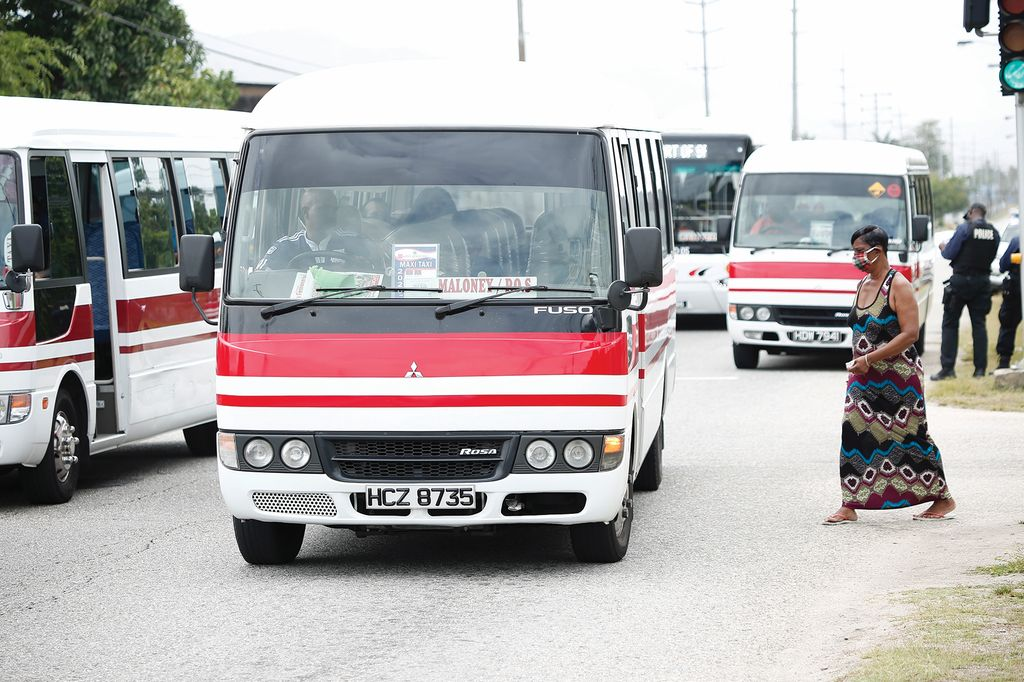
‘Maxi Taxis’ are individually owned public hire vehicles. They operate ‘hail and ride’ in Trinidad, generally without designated stops. The registration starts with ‘H’ for ‘Hire’
Anticipating that flux, and acting from that informed position is where the holy grail is. That decides what succeeds and what fails.
Ireland has lost most of it, Trinidad has lost a lot of it, Nigeria has probably accumulated a bit more of it than is ideal. There is the concept of ‘too much of a good thing’.
With nation emergence comes a certain degree of savagery. But remembering from early years, with it comes a sense of unified moral conduct. There are lines that would not be crossed, and places people would not go in their heads. Brutality and Amorality aren’t the same thing. In some ways these chaotic, mal-regulated environments with patchy and counter-intuitive policing, exhale some sense of societal innocence and an almost unified will to preserve certain values.
An agency representative is attempting to restore calm to an agitated and confused crowd which is amassing in a busy thoroughfare in Nigeria
Single Acts of mass violence that began with Barnett Davenport in 1790, through Anders Behring Breivik in 2011 and on to Stephen Paddock in 2017, didn’t happen in any part of the ‘Global South’.
This raises questions about the development of amorality in countries considered to be ‘developed’ and asks real questions about where exactly is ‘safe’. Feeling ‘safe’ is a significant ingredient in where people call ‘home’.
From reflecting on me to focusing on 9ja Cosmos
And so, we move on from the established style of a New Year message to where we are with the work of 9ja Cosmos.
We were established as an ‘Extra-Sovereign’ DNO (Decentralized Non Profit Organisation) in 2022.
Our mission works to level the playing field for youth of the ‘Global South’ through generating Web 3 products which are approachable, affordable, and can make solutions, such as highly programmable Web 3 ‘tokens’ available to be leveraged as doorways for completely new things.
Doorways were always there since the original emergence of Bitcoin, but historically it was only the geo-privileged could walk through them. 9ja Cosmos doesn’t try to stop anybody or provide a pipe where some people have been deselected. We simply widen the door!
The pivot gives a nod to legacy announcements at this time though the name ‘9ja Cosmos’ which says everything.
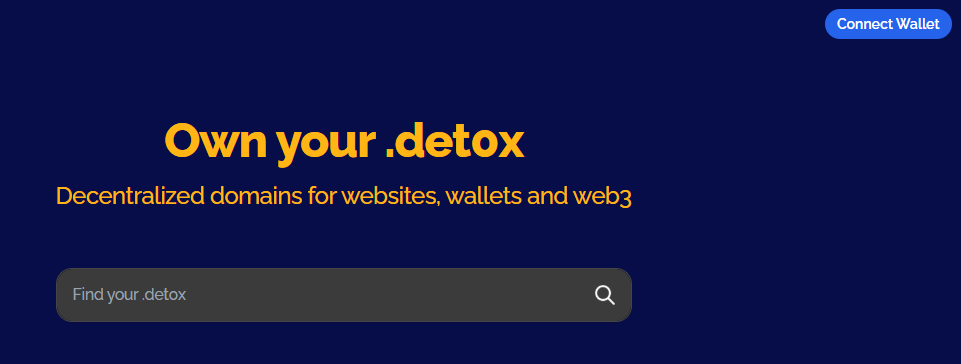
The shopfront page of 9ja Cosmos’ ‘det0x’ web3 names is at det0x.9jacosmos.com Products are priced in dollars but are paid for by connecting a wallet with Ethereum, and costs are deducted at current rates of exchange in Eth
Our Project List Since 2022:
9jacom
9javerse
Qatar 2002
Dinos
Sino Amazons/Sinosignia
.det0x names
Incorporating 9jaCosmos as ‘extra-sovereign’ using Programmable Handshake Tokens as Shares (Internal Project)
Det0xant Portfolio
>8.1 Original Det0xants Series
>8.2 Det0xant (overflow merch)
>8.3 Det0xants 3
>8.4 Det0xants – Fiendyard Fruit & Veg
>8.5 Det0xants – Banshee Baby Beauterin
Opaque Emotion Pathways
MiddelWorld GhostDancers
Sino Amazon Active
Det0xant Extensions
Recall while we were promoting the Web 3 names ‘.det0x’, we began giving away tokenized artwork which we named ‘Det0xants’. Det0x names have their backend and ‘root’ on Handshake. Handshake is a fork/copy of Bitcoin, the most secure blockchain in the world. The pioneering of Handshake was led by Joseph Poon, an original core-dev in pre-2008 Bitcoin development, also led on the ‘Lightning’ network, and later, co-developed Plasma with Vitalik Buterin.
We created the ‘front-end’ on the Optimism Network, which is EVM (Ethereum Virtual Machine) compatible. The EVM environment is known for being fairly ubiquitous but not the most secure environment out there. As a sense of identity and the ‘Web3’ successor to internet domains, Det0x names are safety and security in an unsafe ‘place’.
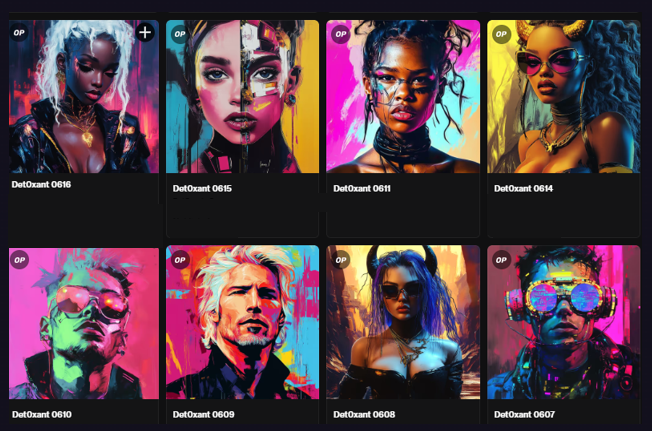
An excerpt from the ‘Det0xant’ tokenized artwork series. All the originals (which were free promos for .det0x name holders) are gone but can randomly appear on the ‘aftermarket’. Tokenized to Optimism
We got a lot of approaches, especially on X, making ‘proposals’ on the Det0xants, though they were not for sale, and had been given free to Det0x name owners and supporters of 9ja Cosmos.
We made several extensions to the Det0xant promotional work, keeping art fundamentals consistent, though deviating somewhat on theme. As always, all tokenized works have a supply of 1 (unique) and were manually laboured upon rather than being an ‘algo’ product.
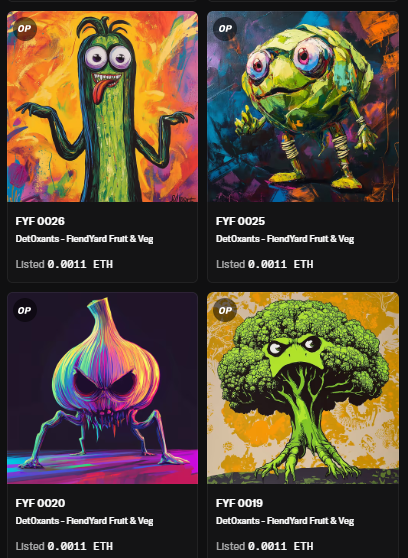
‘Fiendyard Fruit & Veg’ is a subsequent series within the ‘Det0xant’ tokenized art portfolio
They were also minted to Optimism in order to maintain interoperability with Det0x names and any future developments.
They were also released ultra-affordable in keeping with the raison d’être of 9ja Cosmos.
MiddleWorld Ghost Dancers
MiddleWord Ghost Dancers is a series of tokenized art (stills).. They are our second excursion into the surreal and abstract following the ‘Opaque Emotion Pathways’ series, but involve a loose interpretation of human form.
The series was first given public viewing in online platforms and the title ‘MiddleWorld Ghost Dancers’ was arrived at on LinkedIn.
Using the Optimism Chain continues with the technical theme of interoperability with the Det0x names.
MiddleWorld Ghost Dancers is a series of tokenized art (stills) on the Optimism Chain
Internal Project – 9ja Cosmos ‘Extra Sovereign’ Share System
The Share System of 9ja Cosmos allows full privacy and decentralized exchange of shares using ZKP (Zero Knowledge Proof) rather than KYC (Know Your Customer) methodology for shares to exchange, and to execute on shareholder decisions and entitlements.
It leverages the powerful programmability of Handshake Tokens (Handshake Names). They are embedded in the Handshake Blockchain in a manner similar to Bitcoin. Smart Contracts are not needed to create them.
Bitcoin Blockchain and Handshake Blockchain are so similar that BIPs (Bitcoin Improvement Protocols) can, and have been made to work on Handshake.
Right now, most of the ownership is with founding elements of 9ja Cosmos. Over time, that is expected to change.
As this fragments and devolves we expect to see ownership change more frequently, and shareholder activity to rise dramatically.
Aspects of the technical architecture which makes many things possible will have to change as activities scale.
This is an ongoing activity that needs to grow as the shareholding devolves.
Sino Amazon Active.
Beginning towards the end of 2022 and going right on to early 2024, we developed the Sino Amazon/Sinosignia series.
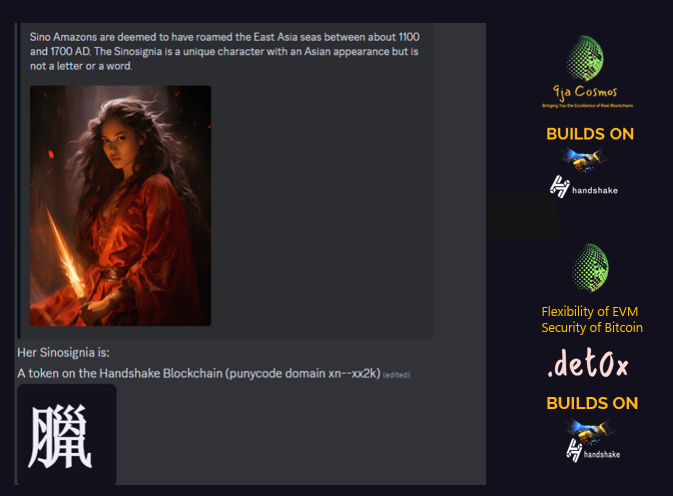
Based around ‘notional’ female sea pirates named ‘Sino Amazons’ . Sino Amazons are deemed to have roamed the East Asia seas between about 1100 and 1700 AD.
They are represented as a high-quality layered artwork which is then blockchain tokenized.
These were high quality ‘stills’ paired with a ‘Sinosignia’.
One of the original ‘Sino Amazons’ (Top). Sino Amazons are deemed to have roamed the East Asia seas between about 1100 and 1700 AD. They are represented as a high-quality layered artwork which is then blockchain tokenized. Her ‘Sinosignia’ a signature which represents her oath and bond, is pictured below. It is a Handshake Blockchain name (token) This specimen is represented by punycode token xn--xx2k, and can be checked on a Handshake Blockchain Explorer
The Sinosignia is a unique character with an Asian appearance. Each Sino Amazon has one unique to them, which they use as an identity in bonds and oaths.
The Sinosignia is a fully working Web3 Top Level Domain (TLD) off the Handshake Blockchain. It’s on a completely different chain to the Sino Amazon related to it.
The original Sino Amazon/Sinosignia dual product is minted to order. Creator cost is very high so displaying them on a retail platform is a financial risk. Instead, customers buy privately and choose the blockchain home for the Sino Amazon component themselves.
Moving on, we’ve developed ‘Sino Amazon Active’
These are animated versions of Sino Amazon originals – around 5 seconds long (in MP4 format) and then ‘tokenized’.
Again, we mint to the Optimism Chain. Sino Amazon Active are compatible with the Ethereum Ecosystem and with .det0x names.
No ‘Sinosignia’ accompanies a ‘Sino Amazon Active’ however they are fully traceable to the Sino Amazon ‘stills’ from which they originate, and their Sinosignia companion.
They can be checked against Explorers for the Handshake Blockchain and the Optimism Chain.
Development Challenges
9ja Cosmos experimented with different retail video output platforms.
Examples: Runway (Gen 3 Alpha Turbo), Google Veo, Image Studio, Sora 2, Luma, Pixverse, (non exhaustive list).
It made sense for us to keep with many of the strategies that worked fine with Web 3 domains, leveraging existing third party architectures rather than getting bogged down in creating our own. In this field it didn’t work.
Free plans pointless, only produced one or two results a day
Paid plans prohibitive. When tokenized, the cost the market would bear for the completed series wouldn’t pay a fraction of the cost of making them.
Almost impossible to get the cut down to a size exactly right for tokenizing/minting purposes > created lots of extra work.
Provider often insisted upon embedding their own logo
Video generating content providers generally work better from text prompts rather than by ‘animating’ existing stills.
The original Sino Amazons are a multi-layered work in themselves, and represent a sunk cost. Pricing is modelled on all input data being worth zero.
Overall, these programs only make sense for individual fun, illustrating social media posts, or for single use in advertising campaigns for something else. They retail GPU service, and trying to ‘retail’ retail won’t work. Margin can’t be realized
We finally found an upstream GPU services provider where we could scale usage fairly flexibly without breaking the bank.
Societal and Moral Value Challenges
Sino Amazon Active product is highly visual. From a moral standpoint we found difficulty in arriving at some kind of ‘universal right’, which encompassed valuing diversity, NSFW (Not Suitable for Work), violation threshold and various other socio-political notions.
On the one hand some lobbying comments suggesting the product was weighted towards false physique ideals and we would do better to include more subject variations. What should a ‘REAL’ female warrior of the ages ‘LOOK LIKE’? The phrases ‘fuller figure’ and ‘plus model’ were used. However, frequently, the censoring software bundled with the GPU service false flagged attempts to animate subjects more in keeping with the lobbyists requests.
Unlike stills, animations generate many frames, and frame analysis by censoring software may flag an instance the eye can’t see. Though generally, the stills of a ‘lobbyist friendly’ image appeared a more ‘compliant’ animation starting point, than some of the more athletic physique specimens.
The use of ‘traits’
Sino Amazon Active sees our first excursion into the use of ‘traits’ although they don’t resemble the model used by ‘pfp’ series with prescribed components (typically called NFTs). The hierarchy includes Trainees, Probies, (Asscendant) Battle Mages or Sea Mages, and then Grand Mage. Trainees and Probies have no traits yet. Rank and File carry organically grown traits. (Asscendant) Battle Mages or Sea Mages absorb traits of those they lead and mentor. A Grand Mage has all traits.
Trait List : Blade Doctor; Blur; Brutal; Chameleon; Cybernetical; Demonic; Dream Maker; Earth Quake; Firestorm; Force Field; Ice Storm; Junglist; Law Code; Light Path; Mechanic; Mind Warp; Necromancer; Sea Rage; Shape Shifter; Sorcerer; Sultre; Tempest; Time Nomad; Vanish; Vixen and Vortex.
Human impression shapes traits and not an algorithm. We don’t define trait influence on the subject, preferring to leave interpretation up to buyers.
2026 and Beyond
The direction of 9ja Cosmos 26 is intended to consolidate on existing product and see where we can bring improved workability, alignment, interoperability, value and quality. But more important, we want to touch people with what we do, and bring smiles to people.
With the devolution of activists they are just intentions. But the smiles are bankable.
President Donald Trump’s administration is considering payments to Greenland citizens for potential U.S. affiliation. The Trump administration is actively exploring ways to acquire Greenland, a self-governing Danish territory, with discussions intensifying recently.
Reports indicate officials have considered lump-sum payments to Greenland’s roughly 57,000 residents — ranging from $10,000 to $100,000 per person — as an incentive for them to support secession from Denmark and potentially join or align closely with the United States.
This approach aims to address strategic interests like national security, Arctic influence countering Russia and China, and access to minerals. The total cost could range from about $570 million to nearly $6 billion, depending on the final figure.
White House officials have emphasized that “all options” remain on the table, including diplomacy as the primary path, though military force has not been ruled out entirely despite pushback from NATO allies like Denmark, which insists Greenland is not for sale.
Secretary of State Marco Rubio is scheduled to meet with Danish and Greenlandic representatives next week to discuss the matter. Greenland’s leadership has strongly rejected the idea, with polls showing overwhelming opposition to joining the U.S., and European allies including France, Germany, and others issuing statements affirming that only Greenland and Denmark can decide their future.
This revival of Trump’s long-standing interest dating back to 2019 has sparked significant diplomatic tension, with Denmark warning that any forceful action would undermine NATO. Ordering the U.S. government to purchase $200 billion in mortgage bondsOn January 8, 2026, President Trump announced via Truth Social that he is instructing his representatives likely referring to Fannie Mae and Freddie Mac, the government-sponsored enterprises under federal oversight to buy $200 billion in mortgage bonds.
The goal is to drive down mortgage rates, reduce monthly payments, and improve housing affordability — part of broader efforts to address cost-of-living concerns ahead of midterms. Trump highlighted that Fannie and Freddie hold significant cash reserves which he credits to not selling them during his first term and blamed prior economic issues on the previous administration.
Federal Housing Finance Agency Director Bill Pulte appeared to confirm the plan would proceed through these entities purchasing mortgage-backed securities from the public market. Analysts note this echoes past Federal Reserve quantitative easing but on a smaller scale — it could modestly lower rates perhaps by 10–25 basis points.
Though its impact may be limited compared to broader factors like Treasury yields. Some view it as a demand-side boost for housing, with risks if market conditions worsen.
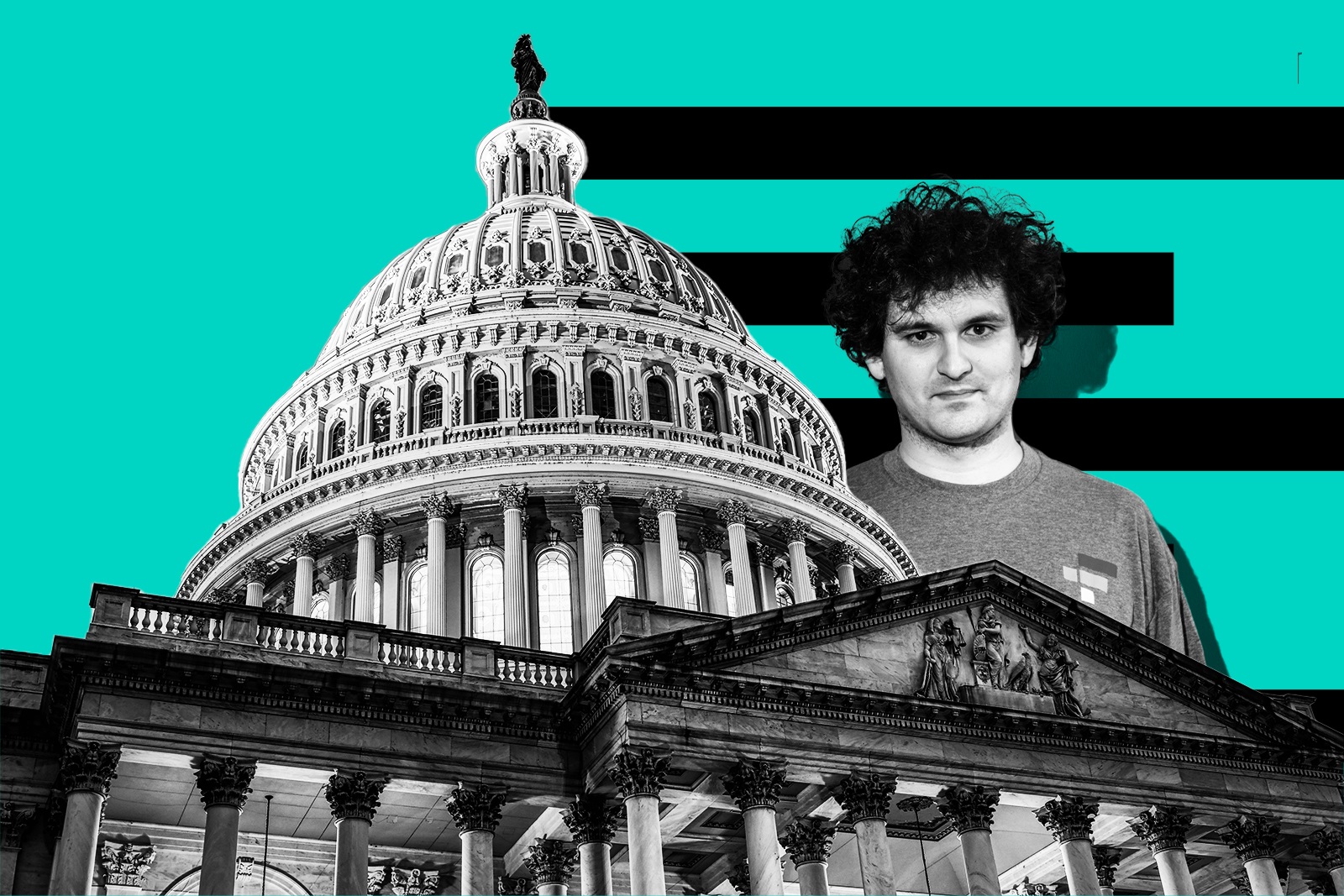
No interest in pardoning Sam Bankman-Fried
President Trump has explicitly ruled out pardoning Sam Bankman-Fried, the FTX founder serving a 25-year sentence for fraud and conspiracy related to the 2022 collapse of the crypto exchange where billions in customer funds were misappropriated.
This stance contrasts with Trump’s recent pardons of other crypto figures like Binance’s Changpeng Zhao and ends speculation about clemency for Bankman-Fried, despite his supporters’ reported lobbying efforts and his ongoing appeal.
These headlines reflect a mix of bold foreign policy moves, domestic economic interventions, and clear boundaries on executive clemency. The Greenland discussions in particular are drawing international attention and criticism.
The $BOT token for Wasabot, the AI trading agent built by Wasabi Protocol on the Virtuals Protocol platform launched. This marks the first “Pegasus” launch on Virtuals Protocol, a new experimental launch model following their Unicorn mechanism.
10% of the $BOT supply is being airdropped to eligible Wasabi Points holders based on recent snapshots, including Season 3. This serves as a reward for past participation in Wasabi’s leverage trading and yield activities.
The team—Wasabi Protocol purchased a significant portion of the supply upfront around 90% to control the float and support the agent. Additional allocations go to $VIRTUAL stakers (veVIRTUAL holders) and active Butler agent users via the standard Virtuals ecosystem airdrop mechanism typically 5% total per launch, split between stakers and participants.
The token is live on the Virtuals http://app.virtuals.io app, with trading and claims active. Wasabot functions as an autonomous on-chain trading agent: it handles leverage trades, yield optimization, take-profit/stop-loss, and execution across Base ecosystem assets—all via natural language commands or agent coordination.
It has already demonstrated real usage like millions in aGDP, thousands of jobs executed. $BOT is explicitly not the governance token for Wasabi Protocol itself—it’s the dedicated agent token for Wasabot within the Virtuals ecosystem. This launch has generated significant buzz in the AI agent and DeFi trading communities today.
As the first Pegasus-model agent token on Virtuals Protocol marks a significant milestone for AI agents in DeFi, particularly autonomous trading. Virtuals recently introduced three launch tiers (Pegasus, Unicorn, Titan) to address past issues like farming, low-quality projects, and insufficient capital for builders.
Pegasus prioritizes broad distribution and liquidity over team allocations or automated fundraising—nearly all supply goes to LPs and small ecosystem airdrops. Wasabot’s choice of Pegasus with the team buying ~90% upfront for control tests this model for established, usage-driven agents.
Success here could encourage more high-quality projects to use Pegasus, reducing low-effort launches, Virtuals also raised agent creation fee to 1,000 $VIRTUAL to deter spam. Wasabot is a proven trading agent: handles leverage perps, yield optimization, TP/SL, and natural-language commands on Base.
Already live with real metrics: ~81M aGDP, 14K+ jobs executed, 789 active wallets, growing revenue. Tokenization aligns incentives: $BOT holders co-own the agent, potentially sharing in revenue/fees from its trading execution.
This positions Wasabot as infrastructure for other agents—many Virtuals agents already route trades through it indirectly. Implications: accelerates “agentic GDP” growth, where agents autonomously trade/earn without human intervention.
10% airdrop to Wasabi Points holders from leverage trading/yield activities rewards loyal users and drives retention. Additional drops to $VIRTUAL stakers and Butler users tie it deeper into Virtuals ecosystem.
$BOT is not Wasabi Protocol’s governance token—points may unlock future rewards, a main Wasabi token, encouraging ongoing participation. Low initial float ~15-20% circulating at launch due to team/ecosystem locks could lead to volatility but supports price discovery based on usage.
Strong team backing, Wasabi has processed billions in volume historically signals confidence. Contributes to renewed hype in Virtuals, alongside other launches and AI agent momentum. Its demonstrates shift toward productive, revenue-generating agents over speculative ones.
Highlights convergence of DeFi leverage trading and AI agents—Wasabot bridges proven infra (Wasabi perps) with agent networks. High volatility in new launches; success depends on continued adoption amid competing agents.
Overall, this launch strengthens Virtuals as a leading AI agent platform, rewards real users/builders, and could catalyze more sophisticated on-chain trading agents. If Wasabot maintains traction, it sets a precedent for “infrastructure-grade” agents driving the next wave of agent economy growth.
Solana Mobile’s SKR Token Slated to Launch on January 21st 2026
Solana Mobile’s SKR token is set to launch on January 21, 2026, at 2:00 a.m. UTC. It serves as the native governance and utility token for the Solana Mobile ecosystem, centered around the Seeker smartphone, the successor to Saga and its decentralized app store.
SKR powers community governance, staking to “Guardians” delegated operators like Anza, Helius, Jito for platform security and app curation, incentives for builders/users, and rewards for participation. It aims to create an open alternative to traditional mobile app duopolies.
Total supply — fixed at 10 billion SKR, with post-launch inflation starting at 10% in year 1, decreasing 25% annually to a terminal rate of 2% emitted to Guardians and stakers. A snapshot has already been taken. Approximately 20%, 2 billion SKR is reserved for eligible Seeker device users and ecosystem developers from Seeker Season 1 which saw 9M+ transactions and $2.6B volume.
30% is allocated to airdrops and ecosystem incentives, fully unlocked at launch. Original Saga phone owners are not eligible. At launch, over 50% of supply will be circulating or unlocked immediately including airdrops, liquidity, treasury, and partial growth allocation. Staking and governance features launch alongside the token.
The Solana Seeker is the second-generation Web3 smartphone from Solana Mobile successor to the Solana Saga. Released in mid-2025 with global shipping starting August 2025, it’s an Android-based device optimized for the Solana blockchain ecosystem.
Priced at around $450–$500 depending on pre-order window, it’s designed for seamless crypto interactions, dApps, and on-chain activities while functioning as a capable mid-range everyday phone. It stands out with hardware-secured crypto features, making it ideal for Solana users who want secure, mobile-first Web3 experiences without relying on browser extensions or external wallets.
6.36-inch AMOLED, 2670 × 1200 resolution (460 PPI), 120 Hz dynamic refresh rate, brighter than Saga. 4,500 mAh with wireless charging. Rear: 108 MP main (with OIS) + 50 MP telephoto + 13 MP ultra-wide. Front: 32 MP. 73.5 mm width × 154.8 mm height × 9.3 mm depth lighter and more compact than Saga. 5G, nano-SIM + eSIM, Bluetooth 5.4, Wi-Fi 6. Power button fingerprint sensor integrated with Seed Vault. Android with updates, including security patches as of late 2025.
Performance is solid for daily use and most dApps/games, though it’s mid-range not flagship-level for intensive gaming. Built-in hardware-secure element (Trusted Execution Environment) for storing private keys. Supports fingerprint authentication and double-tap transactions, quick side-button double-tap + fingerprint to sign.
Developed with Solflare for seamless mobile crypto management—keys never leave the secure hardware. Solana dApp Store 2.0: Dedicated store with 100+ dApps (payments, DeFi, NFTs, gaming, DePIN, AI). Includes exclusives only on Solana Mobile, lower fees for developers, rewards tracker, and improved discoverability. Access to Google Play Store as well.
Seeker Genesis Token: Non-transferable soulbound NFT minted on-device. Unlocks exclusive rewards, airdrops, early access, and perks across Solana ecosystem projects. Seeker ID: Unique on-chain identity with a human-readable .skr domain e.g., yourname.skr for easier transactions and verification as a genuine device owner.
TEEPINArchitecture: Trustless security network for verifying hardware, software, and apps on-chain. SKR token integration: ties into the Solana Mobile economy for governance, staking, and incentives token will be launched in January 2026.
Built-in tool in Seed Vault Wallet to monitor on-chain transactions, dApp usage, and habits for better engagement. The Seeker emphasizes security and usability for crypto: transactions feel like mobile payments, with hardware protection against most attacks. It’s particularly rewarding for active Solana users due to ecosystem perks, but works as a standard Android phone otherwise.
Minnesota Governor Tim Walz made a sterling statement during a press conference addressing a fatal shooting involving a U.S. Immigration and Customs Enforcement (ICE) officer in south Minneapolis.
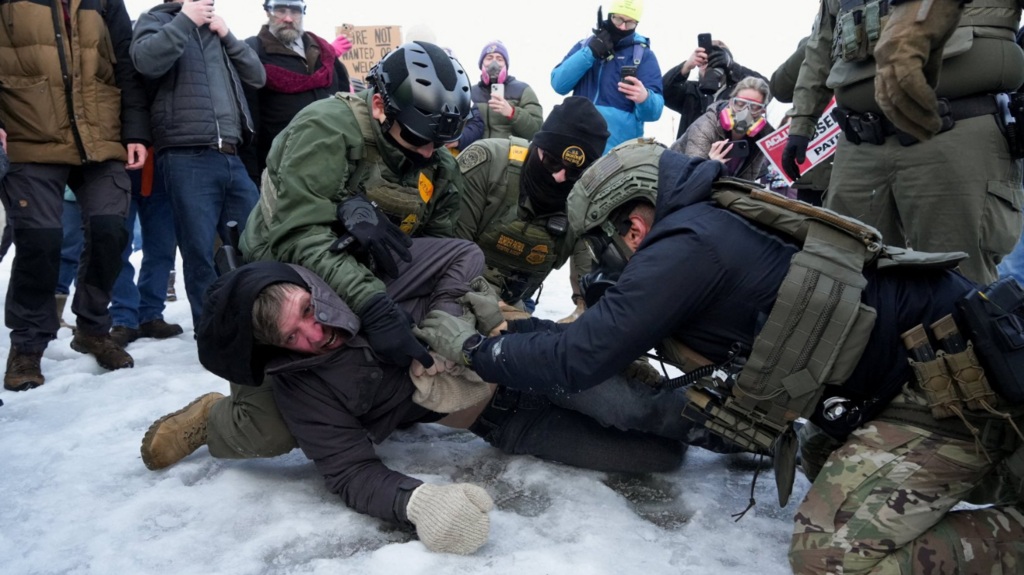
The incident occurred earlier that day when an ICE officer shot and killed a woman reportedly in her 30s during an immigration enforcement operation. Federal authorities (DHS) described it as self-defense, claiming the woman attempted to run over officers with her vehicle.
Walz and local officials disputed this account, with Walz saying he had seen video evidence and calling the federal narrative “propaganda.” He urged peaceful protests while criticizing the Trump administration’s escalated immigration operations in Minnesota, which involve thousands of agents targeting undocumented immigrants amid an ongoing welfare fraud investigation.
Walz issued a “warning order” to prepare the Minnesota National Guard for potential deployment if unrest escalates like riots similar to 2020. This is a preliminary alert for equipment checks and notifications—it is not a full activation or deployment. He also activated the State’s Emergency Operations Center.
In his remarks:
I’ve issued a warning order to prepare the Minnesota National Guard… these National Guard troops are our National Guard troops. Minnesota will not allow our community to be used as a prop in a national political fight.” He added context like: “We do not need any further help from the federal government… To Donald Trump and [DHS Secretary] Kristi Noem: You’ve done enough.
Walz emphasized the Guard would protect Minnesotans’ safety and rights, urged peaceful demonstrations, and said the state would not “take the bait” by allowing escalation into violence that could justify further federal intervention.
This comes amid heightened tensions from the Trump administration’s deployment of ~2,000 federal agents to Minnesota for immigration enforcement and fraud probes largely involving the Somali community. Protests followed the shooting, with some reports of unrest (e.g., damage to a federal courthouse), but no widespread riots as of now.
CBS Minnesota, confirm the quote and details, though interpretations vary: some view it as preparing to confront federal agents, others as standard precaution for public safety/order. No full Guard deployment has occurred.
Protests following the January 7 fatal shooting of a 37-year-old woman identified as Renee Good in some reports by an ICE officer have turned chaotic, with reports of rioters smashing doors at a federal courthouse and chants of “ICE OUT NOW!” Walz’s warning order prepares the Guard primarily for potential civil unrest, similar to precautions during the 2020 George Floyd protests.
He has repeatedly urged peaceful demonstrations, warning that violence could “take the bait” and justify further federal intervention. The “warning order” is a preparatory step—alerting ~13,000 Guard members for equipment checks and notifications—not an activation.
The State Emergency Operations Center is active, coordinating with local law enforcement. As of now, no widespread riots have been reported beyond isolated damage. Federal officials (DHS, ICE) claim self-defense, saying the woman attempted to run over agents.
Walz and Minneapolis Mayor Jacob Frey dispute this, citing video evidence, and call the federal account “propaganda” or “bulls**t.” Investigations by the Minnesota Bureau of Criminal Apprehension and FBI are ongoing.
Walz’s rhetoric—”We do not need any further help from the federal government… You’ve done enough” directed at Trump and DHS Secretary Kristi Noem—frames the ~2,000 federal agents’ presence as a “political fight” and public safety threat.
His emphasis on “these National Guard troops are our National Guard troops” asserts state control while the Guard remains in state status not federalized. This echoes sanctuary policies but stops short of direct interference with ICE operations.
Conservative sources interpret this as “civil war-style rhetoric” or potential obstruction of federal law (immigration enforcement). If unrest escalates and Walz deploys the Guard to prioritize local order over federal operations, it could lead to standoffs. President Trump could federalize the Minnesota National Guard under the Insurrection Act, overriding Walz—a move discussed in right-leaning media but not yet indicated.
The federal surge targets alleged multi-billion-dollar welfare fraud like child care and feeding programs involving Somali communities, with funds frozen and over 1,000 arrests reported. Walz views it as demonization; critics see state resistance as protecting fraud or sanctuary policies.
This could blueprint conflicts in other Democratic-led states/cities e.g., Chicago, LA facing similar surges. Walz called for solidarity among targeted areas. Increased fear in immigrant communities especially Somali-Minnesotans, potential for more protests, and strained local-federal coordination.
Neutral/local sources emphasize Walz’s focus on protecting constitutional rights and preventing 2020-style destruction. Political fallout: amplifies partisan divides—left-leaning views see federal actions as reckless and overreach; right-leaning as necessary law enforcement met with defiance.
No evidence of Walz intending Guard confrontation with feds; primary goal appears maintaining state control over public order. The situation remains fluid, with risks of escalation if protests intensify or federal operations continue aggressively.