DD
MM
YYYY

PAGES

DD
MM
YYYY

spot_img

PAGES

Home Blog Page 43

France Taps Mistral AI for Military Use, Marking a Strategic Shift Toward Sovereign Artificial Intelligence

0

France has taken a decisive step in reshaping how artificial intelligence is developed, deployed, and governed within its national security architecture, after formally awarding a framework agreement to domestic AI startup Mistral AI.

The deal grants France’s armed forces, defense agencies, and affiliated public institutions access to Mistral’s advanced AI models, software, and services, embedding the young company at the heart of the country’s military modernization drive.

The agreement, confirmed on Thursday by the Ministry of the Armed Forces, is being overseen by the ministry’s defense AI agency, an entity created to accelerate the operational use of artificial intelligence across defense planning, logistics, intelligence support, and administration. While financial terms were not disclosed, the strategic weight of the decision is unmistakable: France is signaling that control over AI infrastructure and data has become a matter of sovereignty, not convenience.

At the core of the arrangement is a non-negotiable condition that Mistral’s AI systems will be deployed on French-controlled infrastructure. In practical terms, this means sensitive military data will not transit or reside on foreign-owned cloud platforms, nor be subject to non-French legal jurisdictions. As governments grow increasingly wary of how and where data is processed, especially under U.S. or extraterritorial laws, France’s defense establishment is drawing a clear line around its most critical digital assets.

Mistral confirmed in a LinkedIn post that its models would be fine-tuned using defense-specific data to meet operational needs, suggesting applications that go well beyond generic chatbots or office productivity tools. These systems could eventually support everything from logistical optimization and maintenance forecasting to decision-support tools for commanders and analysts. The emphasis on customization underscores the military’s view that AI is no longer a plug-and-play technology, but one that must be deeply adapted to national doctrines and operational realities.

The defense ministry framed the partnership explicitly in terms of “technological sovereignty,” a phrase that has become central to French and broader European technology policy. In its statement, the ministry said the deal is intended to ensure the armed forces retain control over critical AI tools used across operations and administration. Bertrand Rondepierre, director of the ministry’s defense AI agency, described the agreement as “a major step” in strengthening generative AI capabilities while preparing the armed forces for future challenges without relinquishing control over the underlying technologies.

The agreement is a landmark endorsement for Mistral. Founded only in 2023, the Paris-based startup has risen at extraordinary speed, reaching an estimated valuation of $13.6 billion after announcing a 1.7 billion euro ($2 billion) funding round last year. Backed by global investors and staffed by alumni from leading U.S. and European AI labs, Mistral has consistently positioned itself as a credible European alternative to American heavyweights such as OpenAI, Google, and Anthropic.

That positioning now appears to be paying off. By winning a defense deal at home, Mistral sees support for its claim that Europe can build and operate cutting-edge AI systems without outsourcing control to U.S.-based platforms. The military contract also offers a powerful signal to other European governments wrestling with similar questions about data sovereignty, export controls, and strategic dependence on foreign technology providers.

The timing of the agreement is telling. Across Europe, policymakers are reassessing reliance on U.S. technology in sectors once assumed to be politically neutral, from cloud computing and semiconductors to AI itself. Concerns have intensified as generative AI becomes embedded in critical workflows, raising fears that access to key systems could be constrained by foreign policy shifts, regulatory actions, or geopolitical disputes beyond Europe’s control.

France’s move mirrors developments in the United States, where government agencies and the Pentagon have increasingly awarded contracts to domestic AI firms to support military and national security use cases. Recent U.S. engagements with companies such as OpenAI, xAI, Anthropic, and specialized defense startups reflect a shared understanding on both sides of the Atlantic: AI is now a strategic capability, and governments want closer alignment with the companies that build it.

Yet the French approach diverges in one important respect. While U.S. agencies often rely on commercial cloud infrastructure operated by American tech giants, France is emphasizing full national control over infrastructure, data, and customization. This distinction highlights Europe’s deeper unease about technological dependency, even on allied nations, and its desire to retain room for autonomous decision-making in a rapidly shifting geopolitical landscape.

The agreement offers access to advanced generative AI while preserving operational independence for the French armed forces. For Mistral, it delivers not only revenue and prestige but also an opportunity to refine its technology in one of the most demanding environments imaginable. Military use cases tend to expose weaknesses quickly, forcing rapid improvements in reliability, explainability, and security, areas where governments are often more exacting than commercial customers.

As generative AI becomes woven into military planning, intelligence analysis, logistics, and administrative systems, France’s decision to back Mistral underscores a broader recalibration underway in Europe. Performance alone is no longer sufficient. Control, jurisdiction, and alignment with national interests are now central to how governments choose their AI partners.

In that context, the Mistral deal stands as both a policy statement and a strategic investment. It suggests that France is no longer content to be a consumer of foreign AI systems in sensitive domains, and that it sees domestic champions as essential to maintaining autonomy in the age of intelligent machines.
Indian Stocks Sink for Fifth Straight Session as Trump Tariff Threats Spark Broad Risk-Off Mood

0

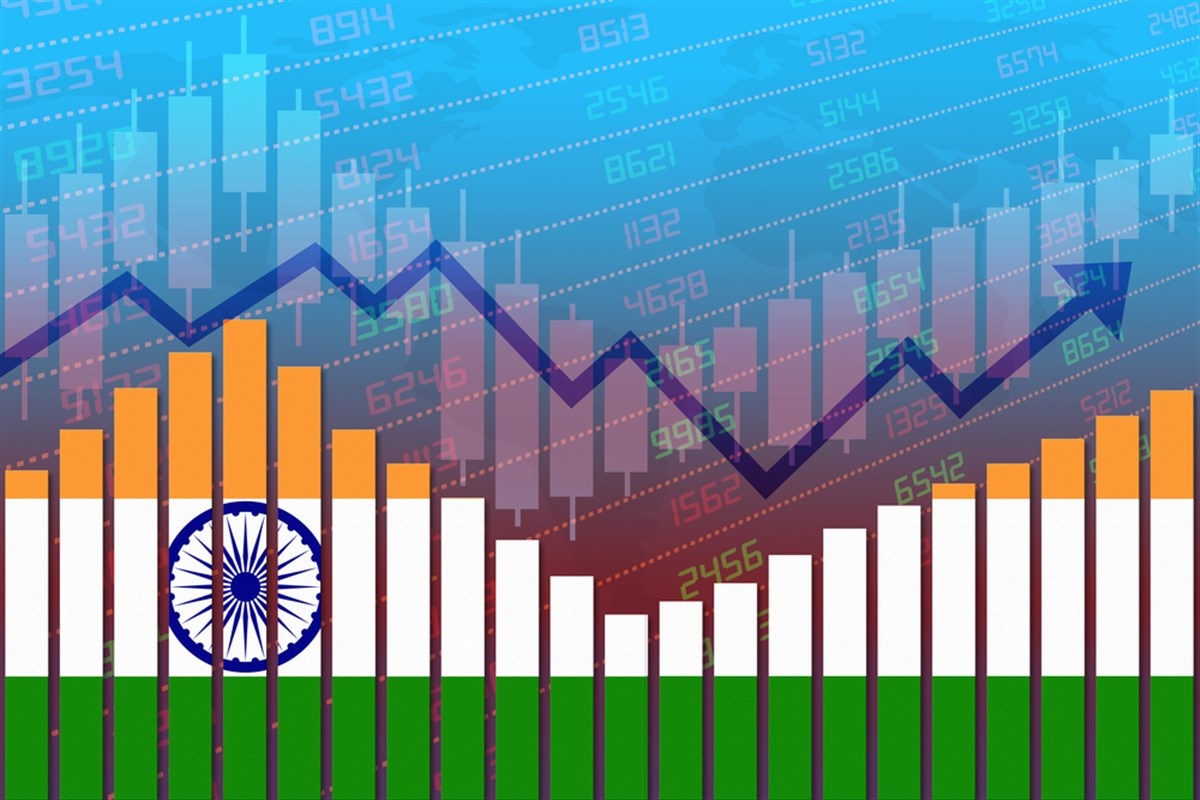
Indian equity markets ended the week under heavy pressure on Friday, with benchmark indexes logging their fifth consecutive session of losses and posting their sharpest weekly decline in more than three months.

Renewed fears over U.S. trade policy, particularly the risk of punitive tariffs tied to Russia-related transactions, unsettled investors and triggered broad-based selling across sectors.

The Nifty 50 fell 0.75% to close at 25,683.3, while the Sensex slid 0.72% to 83,576.24. Both benchmarks shed roughly 2.5% over the week, erasing gains built earlier in the quarter and underscoring a sharp deterioration in risk appetite.

Market breadth was decisively negative. Fifteen of the 16 major sectoral indexes declined during the week, signaling that the sell-off was not confined to a single pocket of the market. Mid-cap and small-cap stocks, which had been market leaders for much of the year, bore the brunt of the retreat. The Nifty Midcap 100 dropped 2.6% for the week, while the Smallcap 100 lost 3.1%, reflecting investors’ preference for safety amid rising global uncertainty.

The immediate trigger for the sell-off was renewed concern over U.S. tariffs after President Donald Trump backed a bipartisan bill that could impose tariffs of up to 500% on countries doing business with Russia, according to Republican Senator Lindsey Graham. The proposal has heightened anxiety in India, which has emerged as the world’s second-largest buyer of Russian crude after China since the start of the Ukraine war.

Market participants fear that even the threat of such measures could complicate India’s trade relations, disrupt energy supply chains, and weigh on capital flows.

“If such extreme tariffs are enacted, the immediate effect would be volatility in sectors linked to U.S. trade, pressure on export competitiveness, and renewed caution in foreign investor flows,” said Amit Jain, co-founder of Ashika Global Family Office Services.

He added that the prospect of sweeping tariffs would force investors to reprice risk across equities, currencies, and commodities.

Adding to the unease, the U.S. Supreme Court is expected to rule on the legality of Trump’s tariff actions later in the day, a decision that could have far-reaching implications for global trade dynamics and emerging markets.

Energy, banks drag the market lower

Oil and gas stocks led the decline among major sectors, reflecting their direct exposure to global trade and energy policy risks. Reliance Industries, India’s most valuable company by market capitalization, fell 7.4% over the week, marking its steepest weekly drop since October 2024. The slide followed the company’s disclosure that it does not expect any Russian crude oil deliveries in January, citing heightened uncertainty around tariffs.

The weakness in Reliance alone had an outsized impact on the benchmarks, given its heavy weight on both the Nifty and Sensex.

Banking stocks also came under pressure, amplifying the market’s losses. HDFC Bank, the country’s largest private-sector lender and the single biggest constituent of the Nifty, dropped 6.3% for the week — its worst performance in nearly two years. Investors reacted negatively to the bank’s quarterly business update, which raised concerns about slowing deposit growth at a time when competition for deposits remains intense.

The decline in HDFC Bank dragged the Nifty Bank index down 1.5% for the week, weighing on broader sentiment toward financial stocks that have been central to the market’s rally in recent years.

Within the consumer space, performance was mixed, highlighting how company-specific fundamentals continue to matter even in a risk-off environment. Clothing retailer Trent slumped 9.9% over the week as softness in revenue growth persisted into the December quarter, reinforcing worries about discretionary spending amid high inflation and uneven demand.

In contrast, jeweler Titan gained 3.7% for the week, buoyed by strong sales growth that signaled resilient demand for jewelry, even as broader consumption trends remain uneven.

Stock-specific shocks add to volatility

Beyond macro and sectoral pressures, stock-specific developments also contributed to intraday volatility. Manappuram Finance plunged 7.6% on Friday after Reuters reported that the Reserve Bank of India raised objections to Bain Capital’s plan to acquire a controlling stake in the gold loan provider. The report reignited concerns over regulatory scrutiny in the non-banking financial sector and rattled investor confidence in similar deals.

Looking ahead, investors are bracing for further volatility, with global cues firmly in focus. U.S. jobs data due later on Friday is expected to influence expectations around the Federal Reserve’s next policy moves, which in turn could shape capital flows into emerging markets such as India.

Analysts say sentiment is likely to remain cautious for now, as markets weigh the risk of an escalation in U.S. trade actions against Russia-linked economies, the durability of global growth, and the outlook for foreign investor participation in Indian equities.

Nuclear Stocks Rally as Meta Platforms Secures Up to 6.6 GW in Landmark Deals to Fuel AI Growth

0

Nuclear energy stocks experienced a significant surge on Friday following Meta Platforms’ announcement of sweeping agreements with three providers to secure up to 6.6 gigawatts of nuclear power by 2035, positioning the tech giant as one of the largest corporate buyers of nuclear energy in U.S. history.

The deals, aimed at powering Meta’s expansive artificial intelligence infrastructure, including the one-gigawatt Prometheus AI supercluster in New Albany, Ohio, highlight the escalating energy demands of AI development and Big Tech’s pivot toward reliable, low-carbon baseload power sources. The partnerships with Vistra Corp., Oklo Inc., and TerraPower LLC stem from Meta’s nuclear request-for-proposals (RFP) process initiated in December 2024, which sought 1 to 4 gigawatts of new nuclear capacity.

These agreements encompass long-term power purchase agreements (PPAs), uprates at existing reactors, and financial backing for advanced nuclear technologies, reflecting a comprehensive strategy to address both immediate and future energy needs. Under the 20-year PPA with Vistra, Meta will procure over 2.6 gigawatts from three operational plants: the Perry and Davis-Besse facilities in Ohio, and the Beaver Valley plant in Pennsylvania.

This includes funding for 433 megawatts of uprates—the largest such enhancements ever supported by a corporate entity—and license extensions to prolong operations.

Deliveries are slated to begin in late 2026, with additional capacity ramping up through 2034, providing Meta with stable pricing and reducing exposure to grid volatility.

Meta’s collaboration with Oklo, an advanced nuclear startup backed by OpenAI CEO Sam Altman—who stepped down as board chairman in August 2025—will support the development of a 1.2-gigawatt Aurora fast-reactor campus in Pike County, Ohio.

Through prepayments and development funding, Meta is enabling early procurement, site preparation, and phased deployment starting as early as 2030.

Oklo CEO Jacob DeWitte emphasized the deal’s role in realizing the company’s vision for next-generation nuclear powerhouses in Ohio, noting it as a “major step in moving advanced nuclear forward.”

The agreement with TerraPower, founded by Bill Gates, accelerates the rollout of up to eight Natrium reactors, delivering 2.8 gigawatts of baseload power integrated with 1.2 gigawatts of energy storage, potentially boosting output to 4 gigawatts.

Initial units, starting with two reactors generating up to 690 megawatts, are targeted for the early 2030s.

This modular design promises enhanced efficiency and flexibility for data center operations. These pacts build on Meta’s prior nuclear commitments, including a June 2025 deal with Constellation Energy to extend an Illinois reactor’s life for 20 years.

Combined, they underscore Meta’s strategy to mitigate the “primary bottleneck” of energy supply for AI advancement, as articulated by industry observers.

Market response was robust, with shares of directly involved companies leading the charge. Oklo surged as much as 20% in premarket trading, closing the day up 13%, while Vistra climbed 15% amid intraday highs reaching 18%.

The rally extended to peers: NuScale Power rose 6%, Constellation Energy gained 4%, and BWX Technologies advanced 5%. Broader nuclear exchange-traded funds, such as URA and URNM, also saw upward momentum.

Analysts viewed the news as “incrementally positive for the entire nuclear energy industry,” reaffirming hyperscalers’ commitment to new energy sources amid AI-driven power constraints.

The deals are projected to create thousands of construction jobs and hundreds of permanent positions, particularly in Ohio and Pennsylvania, while generating local tax revenues and bolstering clean energy workforces.

Urvi Parekh, Meta’s head of global energy, highlighted the agreements’ focus on preventing premature reactor closures and fostering early investments in new nuclear capacity. He said the deal enables the development of 1.2 gigawatts of nuclear energy in Southern Ohio, supporting Meta’s operations in the region—including our AI supercluster in New Albany.

Joel Kaplan, Meta’s chief global affairs officer, framed the initiatives as vital for U.S. AI leadership.

This move aligns with a broader industry trend, as AI’s energy-intensive nature—projected to drive substantial U.S. electricity demand growth—prompts tech firms to embrace nuclear for its 24/7 reliability and low emissions.

While financial terms remain undisclosed, the contracts could represent billions in revenue for providers, signaling a revival in nuclear investment amid competition from faster-to-build natural gas options.

Public reaction on social platforms echoed the enthusiasm, with traders and analysts noting the deals’ potential to cement Meta’s edge in AI while spurring nuclear sector growth.

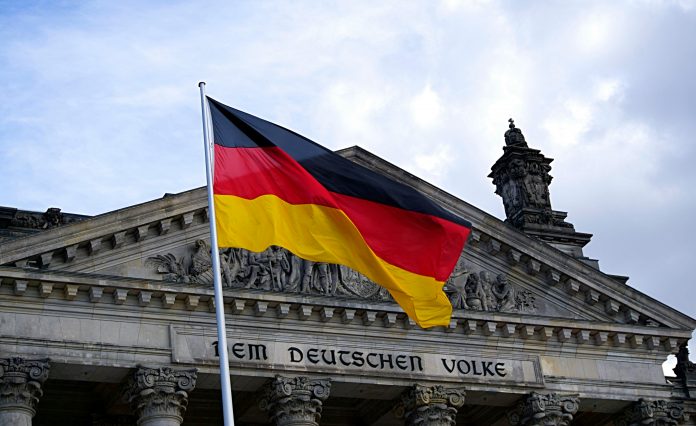
German Exports Slide 2.5% as Trade Pressures Mount, Even as Factory Output Shows Tentative Stabilization

0

Germany’s export sector showed renewed signs of strain in November, with overseas shipments falling unexpectedly, even as domestic industrial output recorded a third straight monthly increase, highlighting the uneven and fragile nature of Europe’s largest economy’s recovery.

Official data released Friday by the federal statistics office showed German exports declined 2.5% in November from the previous month, defying expectations of flat growth in a Reuters poll of analysts. The drop was driven largely by weaker demand from key markets, including other European Union countries and the United States, underlining how external headwinds continue to weigh on what was once Germany’s primary growth engine.

“This once again underscores how much this former growth engine of the German economy has begun to sputter,” said Marc Schattenberg, an economist at Deutsche Bank Research, pointing to the structural challenges confronting exporters amid slowing global trade and shifting geopolitical alliances.

The weakness in exports contrasted with a modest but notable improvement in domestic industrial activity. Industrial production rose 0.8% in November, beating expectations for a 0.4% decline and marking the third consecutive month of growth. Economists have been watching the production data closely for signs that Germany’s prolonged manufacturing downturn may be bottoming out after months of contraction.

“The prolonged downturn appears to have come to an end,” Schattenberg said, adding that the view was supported by a recent rise in incoming orders.

That assessment gained support a day earlier when data showed German industrial orders jumped 5.6% month-on-month in November, buoyed by large-scale contracts. The rebound in orders has offered some relief to manufacturers struggling with high energy costs, weak foreign demand, and lingering uncertainty around global trade rules.

Still, the sustainability of any recovery remains in question. Economists cautioned that improving factory figures may prove short-lived given tougher trading conditions, particularly those stemming from U.S. tariff policies under President Donald Trump.

Exports to both the United States and EU member states fell 4.2% on the month in November, while overall exports to non-EU countries declined 0.2%. On an annual basis, the picture was even more stark. Exports to the U.S. plunged 22.9% compared with November 2024 on a calendar- and seasonally-adjusted basis, underscoring how sharply trade relations have cooled.

“The relationship with our most important export market, the U.S., also remains problematic in the new year,” said Volker Treier, head of foreign trade at the German Chamber of Commerce DIHK. “It is only scant consolation that China is once again taking over the role of our most important trading partner.”

A 15% tariff on most EU goods agreed with the Trump administration in July has weighed heavily on shipments to the U.S., curbing demand for German cars, machinery, and industrial equipment. At the same time, Washington’s tariffs on Chinese imports have had a knock-on effect in Europe, diverting Chinese exports toward EU markets.

Friday’s data showed German exports to China rose 3.4% in November, while imports from China surged 8.0%, reflecting that shift in global trade flows. The stronger inflow of goods contributed to a narrowing of Germany’s trade surplus, which fell to 13.1 billion euros ($15.26 billion) in November, down from 17.2 billion euros in October and 20.0 billion euros a year earlier. Overall imports increased 0.8% on a calendar- and seasonally-adjusted basis.

The narrowing surplus underscores how Germany’s traditional trade model has come under pressure, as export growth falters and imports remain resilient. For an economy long reliant on foreign demand, particularly from advanced industrial markets, the change marks a significant adjustment.

Skepticism remains widespread among economists about whether the recent uptick in production marks a turning point. Franziska Palmas, senior Europe economist at Capital Economics, said the improvement seen around the turn of the year may not last, given the broader trade backdrop and longer-term structural constraints.

“Given the significant structural headwinds facing the sector, we doubt this is the start of a sustained recovery and still expect German industrial output to decline in the medium term,” Palmas said.

Together, the figures paint a picture of an economy caught between tentative domestic stabilization and mounting external pressures. While factories may be showing early signs of life, Germany’s export-dependent model remains exposed to tariffs, geopolitical tensions, and shifting global demand patterns that continue to cloud the outlook for Europe’s biggest economy.

Zcash Entire Developer Team at Electric Coin Company (ECC) Exits Over Governance Disputes

0

The entire team at Electric Coin Company (ECC) — the primary organization responsible for developing and maintaining Zcash ($ZEC) — collectively resigned due to a severe governance dispute with the overseeing nonprofit, Bootstrap (a 501(c)(3) entity created to govern ECC and support the Zcash ecosystem).

Former ECC CEO Josh Swihart described the situation as a “constructive discharge,” alleging that a majority of the Bootstrap board specifically members Zaki Manian, Christina Garman, Alan Fairless, and Michelle Lai engaged in actions misaligned with Zcash’s mission of building privacy-preserving digital money.

These actions reportedly altered employment terms, making it impossible for the team to continue effectively. The team plans to form a new independent company to continue advancing privacy-focused technology, potentially still tied to Zcash’s goals described as “unstoppable private money”.

The Zcash protocol itself remains unaffected: it’s open-source, permissionless, and continues to operate normally. No immediate risks to network security, transactions, or user funds have been reported. Founder Zooko Wilcox also reassured the community that the blockchain is secure and private regardless of organizational drama.

This comes after a strong 2025 for ZEC surging over 800% in some reports, peaking above $600-$700 but amid ongoing challenges like regulatory scrutiny on privacy coins.

Market Impact

ZEC price reaction: Sharp sell-off, with drops reported between 7-20% in the first 24 hours varying by source and timeframe. As of reports it’s trading around $400-$460, down significantly from recent highs near $500+. Some sources note year-to-date 2026 declines around 18%, exacerbated by this event.

This highlights governance risks in hybrid nonprofit/corporate crypto structures. Possible outcomes include: Continued development via the new company. Community-driven maintenance. Or a potential hard fork if rifts deepen. The situation is still unfolding, with uncertainty around future funding, upgrades, and roadmap coordination. Privacy coins like ZEC remain volatile due to such internal and external pressures.

Zcash (ZEC) is a cryptocurrency designed with optional privacy as its core feature, making it distinct from fully transparent blockchains like Bitcoin. It uses advanced zero-knowledge cryptography to allow users to choose between private (“shielded”) and public (“transparent”) transactions.

Zcash employs zk-SNARKs (Zero-Knowledge Succinct Non-Interactive Arguments of Knowledge) initially, and now primarily the Halo 2 proving system introduced with the Orchard protocol in 2022 via Network Upgrade 5.

These proofs allow the network to verify that a transaction is valid no double-spending, correct amounts without revealing the sender, receiver, or amount. With Halo 2, Zcash eliminated the need for a “trusted setup” a ceremonial process in earlier versions that carried theoretical risks, making the system more secure and trustless.

Zcash has two main types of addresses and value pools. t-addresses (start with “t”). Sender, receiver, amount fully public (like Bitcoin). Compliance, audits, exchanges, z-addresses (older) or Unified Addresses (modern, supporting multiple pools). Sender, receiver, amount hidden. High (fully private if both sides shielded). Everyday private payments, personal security.

Fully shielded transactions— shielded to shielded: Completely private – only the existence of a transaction is visible on the blockchain. Mixed transactions like transparent to shielded: Partially private hides the shielded side.

Coins move between transparent and shielded pools. As of late 2025, about 30% of ZEC supply is shielded, with the majority in the modern Orchard pool. Zcash has upgraded its privacy protocols over time for better efficiency, security, and usability: Sprout (2016 launch): First shielded pool, used zk-SNARKs with trusted setup.

Sapling (2018): Faster proofs, mobile-friendly, larger anonymity sets. Orchard (2022, current default): Uses Halo 2, no trusted setup, supports recursive proofs for future scalability, unified addresses, and “shielded by default” in many wallets.

Encrypted memos: Attach private messages e.g., notes or invoices to shielded transactions – visible only to the recipient. Optional selective disclosure – share a key to reveal specific transaction details for audits, taxes, or trusted parties without exposing everything.

Unified addresses (post-2022): Single address that bundles transparent and shielded options, simplifying UX while prioritizing privacy. Many modern wallets, like Zashi, ECC’s official automatically move funds to shielded pools for better default privacy.

Strongest when fully shielded: Provides anonymity comparable to cash – transactions are untraceable on-chain. Optional nature: Allows regulatory compliance, exchanges often use transparent addresses, distinguishing it from always-private coins like Monero.

Privacy improves with more users shielding funds, larger pool hides individual transactions better. Ideal for personal financial privacy, donations, or sensitive payments, while still supporting transparency when needed.

Zcash remains one of the most advanced privacy coins, balancing strong cryptographic privacy with flexibility. For the best privacy, use shielded addresses exclusively and modern wallets supporting Orchard/Unified Addresses.