DD
MM
YYYY

PAGES

DD
MM
YYYY

spot_img

PAGES

Home Blog Page 4306

Google Rolls Out AI-Chatbot “Bard”, Only Available to Limited Users

0

American multinational technology company Google has rolled out its AI-powered chatbot “Bard”, which is only available to limited users.

The company revealed that Bard is an experiment and may likely give inaccurate or inappropriate responses to users. To access the feature, Google has directed users in the U.S and U.K to its website to enable them join the waitlist and try it out. Users are mandated to drop feedback to help make Bard better.

The chatbot will be accessible via its web page, separate from Google’s regular search interface. It will offer three answers to each query, a design choice meant to impress users that Bard is generating answers on the fly and may sometimes make mistakes.

Speaking on the roll out of Bard, Google VP of Product Sissie Hsiao and Google VP of Research Eli Collins wrote in a blog post,

Today we’re starting to open access to Bard, an early experiment that lets you collaborate with generative AI. This follows our announcements from last week as we continue to bring helpful AI experiences to people, businesses and communities.

You can use Bard to boost your productivity, accelerate your ideas and fuel your curiosity. You might ask Bard to give you tips to reach your goal of reading more books this year, explain quantum physics in simple terms or spark your creativity by outlining a blog post. We’ve learned a lot so far by testing Bard, and the next critical step in improving it is to get feedback from more people.

Asked whether competitive dynamics were behind Bard’s rollout, Jack Krawczyk, a senior product director, said Google was focused on users. Internal and external testers have turned to Bard for “boosting their productivity, accelerating their ideas, really fueling their curiosity,” he said.

Google AI-chatbot Bard is powered by a research large language model (LLM), specifically a lightweight and optimized version of LaMDA, and will be updated with newer, more capable models over time. Bard, like OpenAI chatbot ChatGPT, will respond to questions about and discuss an almost inexhaustible range of subjects, showing humanlike understanding to users’ questions. In a conference in Paris, Google had explained that Bard would work particularly well for “NORA” queries questions to which there’s no one right answer.

Recall that in February this year, shares for Google’s parent company, Alphabet, dropped 9% after the AI chatbot, Bard, gave an incorrect answer. Google’s reportedly lost $100 billion in market value after its new artificial intelligence technology produced a factual error in its first demo.

Ever since the error of its chatbot, in a bid to redeem its reputation, Google has been working tirelessly to enhance Bard to ensure it operates at its maximum capacity, to ensure that the chatbot doesn’t repeat the same costly mistake like that of last month. The tech giant revealed that it knows the limitations of the technology, and so it wants to be very deliberate at the pace at which it will be rolled out.

Google also added that it will be closely monitoring Bard to make sure it adheres to its own “AI principles” which include avoiding the creation or reinforcement of bias. Bard will not be able to express opinions or take on a persona, although like ChatGPT it will be able to mimic the writing styles of others.

Ways to Launch AI Startups

0

We studied how mega consumer-based AI startups are launching into the markets; we identified three paths, and drawing on them to answer the learner:

  • Partner with a company with a large user base. OpenAI’s ChatGPT partnered with Microsoft which has millions of users. Microsoft is providing the feedstuff (yes, the data) to advance ChatGPT at scale.
  • Spend a huge amount of money via promos and advertisements to get data which will improve your AI models as quickly as possible. This is the Temu path; Temu uses AI to power shopping in its ecosystem. It spent $5 million for a 30-second advert during America’s Superbowl game. Without the data, it has no mission.
  • Bake AI into existing in-house data. If you are lucky, and you have the data as Google does, you can launch your Bard equivalent once your code is ready.

And note this: any consumer AI pitch deck that does not address how that data acquisition will be done is not complete! Indeed, without the data, your mission has limited value. In the consumer AI age, controlling or influencing demand is even more important than providing supply if the goal is to generate alpha!

From Hamlet’s “Words, words, words” to ChatGPT’s “data, data, data”, you can see why we have moved well past Shakespeare’s era.

Baidu Rolls Out AI-Powered Chatbot “Ernie Bot” to Enhance User Experience

0

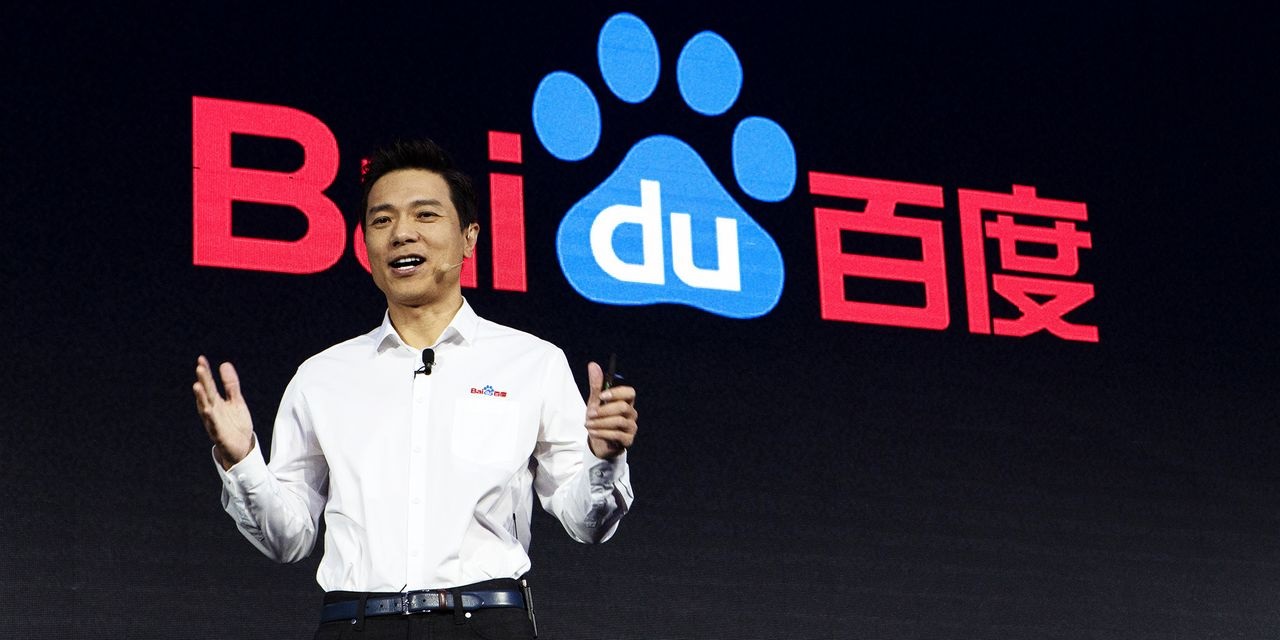
Chinese multinational technology company that specializes in Internet-related services, products, and artificial intelligence Baidu, has officially launched its much anticipated AI-powered chatbot known as “Ernie bot”, to enhance user experience.

According to the company, the chatbot is capable of comprehending human intentions and can deliver responses very close to human level.

At the launch, Baidu showcased five major capabilities of Ernie Bot, which are, Literary Writing, Business Copywriting, Algebra, Chinese culture, and multi-modal content generation. The company CEO Robin Li however disclosed that only the first three capabilities will be available.

As regards the recent unveiling of the chatbot, he said, “For sure we cannot say that it’s perfect, so why are we unveiling it today? Because the market demands it. Today’s announcement is a natural continuation of the hard work we have put in over the past many years”. He added that Baidu has seen expectations from the market that Baidu’s product could compete with OpenAi chatbot ChatGPT.

On Thursday, Ernie Bot will be open to an initial group of users with invitation codes, and companies can apply to embed the bot into their products via Baidu’s cloud platform. The CEO revealed that 650 companies have signed up to use Ernie Bot, which can be implemented in a variety of applications such as searches, AI cloud, autonomous driving and in smart devices.

The popularity of OpenAi chatbot ChatGPT, which is currently the rave of the moment, has no doubt triggered a frenzied rush among tech companies which has seen them integrate similar chatbots into their products to enhance user’s experience.

Baidu did not hesitate to jump to the forefront of the race after it disclosed last month that it was completing a chatbot using its AI-driven deep learning model, Ernie bot which means “Enhanced Representation through Knowledge Integration”.

According to the tech giant CEO Robin Li, he disclosed that Baidu has for over a decade persisted in investing in Artificial Intelligence (AI), and Ernie Bot is the result of many years of hard work after the first version was developed in 2019.

The chatbot has been described to be very suitable for Chinese users owing to the fact that it understands Chinese culture better than Western models. This implies that the chatbot is likely to enjoy a significant market advantage on its home turf over other similar products. Although, Ernie bot will also be trained on other languages in the future.

Baidu plans to use Ernie bot to transform its search engine, to give users an interesting experience, which will see the platform become the most used and dominant platform in China and across the globe.

The chatbot reportedly has 550 billion facts in its knowledge graph, but they’re mostly focused on the Chinese market. So while it will be able to list Chinese idioms for users, it may not be able to answer as many questions for certain subjects outside the region.

EU Observer Mission Said Organized Violence, Voter Intimidation, Others, Marred March 18 Nigeria Elections

0

The European Union Election Observation Mission (EU EOM) to Nigeria has published its second preliminary report of the Nigeria 2023 elections, supplementing the first report issued on 27 February.

In the report, the EU EOM lamented the pervasive violence during Saturday’s Governorship and House of Assembly elections, which it said claimed the lives of 21 persons across the country, due to various violent attacks relating to the election.

The mission has been present in Nigeria since 11 January and will continue to observe post- election developments.

In a press conference held in Abuja, the EU EOM decried voter apathy experienced during the governorship and State House of Assembly polls, which it attributed to infractions emanating from the Presidential and National Assembly elections. The mission said something must be done urgently to correct the situation in the future so as not to allow for a relapse in Nigeria’s democracy.

The EU EOM Chief Observer Barry Andrews said the mission observed that shortly before, and on election day, incidents of organized violence in several states created an environment of fear for voters. Andrews noted that the Independent National Electoral Commission (INEC), failed to win public confidence by not addressing the concerns raised by electorates.

He said the March 18 election was marred by thuggery and organized violence in states like Lagos, Rivers and Kano.

“Public confidence and trust in INEC were severely damaged on 25 February due to lack of transparency and operational failures in the conduct of the federal level polls. Up until the postponement, INEC continued to abstain from providing information, limiting its communication to a few press releases and ceremonial statements and hence failing to address public grievances and rebuild confidence in the electoral process,” Andrews said.

“From 11 March onwards, despite compressed timeframes, INEC introduced various corrective measures to render a timely delivery of electoral materials, efficient use of election technologies, and ensure prompt publication of result forms, some of which were effective.

“Overall, on election day, multiple incidents of thuggery and intimidation interrupted polling in various locations, primarily across the south but also in states in the central and northern areas. There were reportedly some 21 fatalities. In polling units in several states, violent incidents targeted voters, INEC personnel, citizen observers and journalists.

“Most polling units opened with materials and personnel deployed on time, although a dismal level of voter participation meant less pressure on INEC operations throughout the day. Vote-buying, also observed by EU EOM observers, further detracted from an appropriate conduct of the elections.

“The 18 March elections did not face the same problems with the use of the Bimodal Voter Accreditation System, BVAS, as on 25 February. Result forms for the gubernatorial races were uploaded and displayed for public scrutiny. At the time of the declaration of presidential results only.”

Andrews said the EU EOM observed that Nigerians have a great appetite for democracy and are keen to engage in various civic activities.

“However, in many parts of the country, their expectations were not met. Many were disappointed and we witnessed voter apathy that is in part a clear consequence of failures by political elites and, unfortunately, also by INEC,” he said.

Andrews further remarked that despite cases of violence, voter intimidation and thuggery, campaigns in state elections were competitive and fundamental freedoms of assembly and movement were largely respected. He said that however, insecurity impeded the canvass for votes in certain parts of the country and organized violent attacks shortly before the elections in several states led to a fearful atmosphere.

“Some states governors took executive actions, negatively affecting the campaign environment,” he said.

The mission also noted the misuse of administrative resources, including through various financial and in-kind inducements to voters, giving an undue advantage to the party in power. According to Andrews, the abuse of incumbency gave an undue advantage to the party in power in several states.

He said that EU EOM observers also received credible reports of pressure on civil servants by governors, citing Katsina state, where several high level officials were dismissed after a disappointing outcome for APC in the 25 February presidential elections and LGA officials were threatened to lose their jobs if they did not ensure victory in the upcoming polls, as an example.

“In the last week before 18 March, the governor of Rivers authorized the promotion of civil servants at all levels in the state and announced the recruitment of 10,000 youth employment positions in the administration.

Similar steps were taken by the Lagos State government and others.

The mission said misuse of state resources was evident, primarily through the promotion of social benefits and relief programmes, which significantly intensified between the polls.

“As noted by EU EOM observers and reflected in media reports, governors publicly provided inducements to voters, including significant grants for traders, distribution of vehicles, buses, and motorcycles (Yobe, Gombe, Adamawa); issuing cheques to different beneficiary groups (Nasarawa, Yobe, Kwara); inaugurating infrastructure projects and for campaign purposes (Ogun, Katsina); and the payment of 1.2 billion Naira in backlogged pensions to civil servants and the release of impounded vehicles to owners free of charge days before the elections (Lagos).”

Andrews pointed out that law enforcement agencies failed to prosecute persons who attacked, intimidated, or harassed journalists during or after the presidential polls in at least five southern states with fiercely contested state-level races.

“In two further states, police arrested two journalists on bogus charges. EU EOM observers confirmed 10 incidents involving media; only in one instance police opened a case. Impunity encouraged by police inaction is detrimental to freedom of expression, particularly as independent and trusted outlets are targeted. This does not accord with Nigeria’s regional and international commitments for protection of the media.

“On 15 February, the National Broadcasting Commission (NBC) sanctioned 41 media outlets, with excessive fines on 25 radio and TV stations for vaguely defined breaches. The NBC did not publish its decisions nor grant due process, effectively subduing critical reporting prior to the state elections,” he said.

The mission also reported that vote buying by or on behalf of APC and PDP was also observed by five EU EOM observer teams within the vicinity of polling units, including by the distribution of goods and money. It said it will present and publish its final report, including recommendations for improving the electoral framework in the next few months.

Growing SME Revenue By Digitizing Microtransactions – Tekedia Mini-MBA

0

Today, we continue our conversation on the mechanics of markets as we invite Afolabi Olamide of Touch and Pay, the creators of Cowry card in Lagos, to Tekedia Mini-MBA. In less than three years, they grew from 1,000 to more than 3 million users, demonstrating the power of innovation.

What do they do? They digitize small payments like N200, N300, etc, making sure that revenue is assured for merchants, owners, vendors and companies. And the vision has worked, maximally: if you take care of the kobos, the Nairas will take care of themselves.

They built by design a system which delivers more than 99% reliability through a closed network. And it is contactless which means the card lasts longer in the rain, sun, and harmattan. Olamide will speak and we will learn from him on why everything is open for a redesign!

They have big data: restaurants, danfo owners, bus drivers, shops, etc who digitize see bigger revenue. Yes, when leakages are blocked, revenue increases.

Tekedia Institute Mini-MBA >> the best teach here.