DD
MM
YYYY

PAGES

DD
MM
YYYY

spot_img

PAGES

Home Blog Page 4365

N3 Billion Hack: What’s Going on with Flutterwave?

0

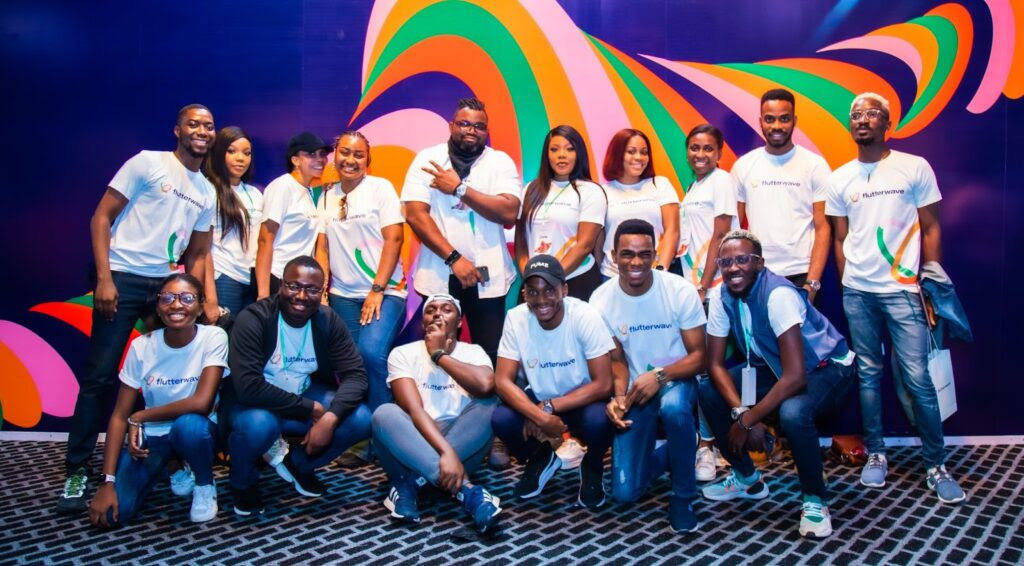
Africa’s largest fintech, Flutterwave, is once again enmeshed in a fraud scandal, which, this time, involves nearly N3 billion customers’ funds alleged to have been stolen by hackers.

TechPoint broke the news on Sunday, in a report which traced the matter back to early February 2023. According to the report, the incident was reported to the police while Flutterwave seeks to freeze the accounts that the hackers moved the funds to.

The report said: A motion to freeze accounts in 27 financial institutions in Nigeria, including Access Bank, Kuda, Zenith Bank, and OPay, was filled, with suit no. MISC/MC4/181/23, and later granted

According to documents seen by Techpoint Africa, ?2,949,557,867 has been illegally transferred from the accounts of African fintech unicorn, Flutterwave.

On February 19, 2023, Flutterwave’s legal counsel, Albert Onimole, reported the case to the Deputy Commissioner of Police, State Criminal Intelligence Department, Panti, Yaba, Lagos.

In an accompanying letter, Onimole stated that the hack on Flutterwave’s accounts occurred about two weeks ago from February 13. It was said that the money was initially transferred to 28 accounts in 63 transactions.

While the incident was reported to the police on February 13, 2023, with the list of accounts that had received the money, the police could not freeze the funds at the time. Onimole, in his letter, blames some commercial banks for allowing the money to be moved to other accounts, thus widening the money trail.

To further investigate accounts holding the stolen funds across various financial institutions in Nigeria, S.A. Adedesin, Legal Officer, State CID, Panti, Yaba, Lagos, filed a suit (MISC/MC4/181/23), dated February 27, at the Magistrate Court of Lagos (Yaba Magisterial District sitting at Yaba) to support Flutterwave’s claims. A motion ex-parte, it appears, was granted in favor of Flutterwave.

But the story took a twist on Sunday after Flutterwave issued a statement denying it was hacked. The African payment unicorn admitted that there was an unusual trend of transactions on some users’ profiles, but said no money was lost.

“We want to reassure you that Flutterwave has not been hacked. As a financial institution, we monitor transactions through our transaction monitoring systems and 24-hour fraud desk and review any suspicious activity. We collaborate with other financial institutions and law enforcement agencies to keep our ecosystem safe and secure.

“During a routine check of our transaction monitoring system, we identified an unusual trend of transactions on some users’ profiles. Our team immediately launched a review (inline with our standard operating procedure), which revealed that some users who had not activated some of our recommended security settings might have been susceptible.

“We want to confirm that no user lost any funds, and we take pride in the fact that our security measures were able to address the issue before any harm could be done to our users,” it said.

Despite this statement, some social media users have maintained that their bank accounts have been frozen because they were linked to the hack.

“I got a mail from my bank saying I’m a 4th beneficiary to this acclaimed fraud money. This was after over 5 days after a successful trade. My account is locked ?  can’t access fund inside. Pls is this right? It’s unfair I have zero business with flutter wave or the hack,” Twitter user @BiggyPrints tweeted.

Per the motion filed by Adebesin, which was noted in the report, 107 accounts in 27 financial institutions, including fifth beneficiaries of those accounts, are to be placed on lien/Post-No-Debit (PND).

However, Fluttewave’s rebuttal has created an argument on social media, with many taking the side of the payment giant even though some affected users have had to post evidence that liens have been placed on their accounts.

This is not the first time Flutterwave is being reported on over fraud. Last year, investigative journalist David Hundeyin reported that the fintech and its CEO Gbenga Agboola (GB) are immersed in gross malpractice. Also in mid last year, a Kenyan court indicted Flutterwave in a fraud and money laundering investigation conducted by Kenya’s Asset Recovery Agency (ARA).

It is not yet clear who is telling the truth about the N3 billion hack. But there is growing concern that continuous negative reports about Flutterwave will have its growth prospect. The $3 billion company had last year, moved to get listed on the Nasdaq stock exchange, a giant leap that may be scuttled by these controversies.

Amazon Digital Marketplace set to launch Amid Growing adoption of Polygon ZKEVM

0

The countdown has begun for Amazon. After months of development, and some delays, the world leader in e-commerce will launch its NFTs platform. The American giant is getting ready to sell NFTs on its website. About fifteen collections will be available from the launch. According to speculations, it will be online on April 24.

The platform, which was revealed by Blockworks in January, will be available on the site of the American giant via a tab “Amazon Digital Marketplace”. This tab will only be available in the United States at first. The platform will gradually be opened to the rest of the world, including Europe.

According to information, the launch of Amazon Digital Marketplace has been postponed twice in recent weeks due to the collapse of FTX. April 24 now seems to be the date, barring any new exceptional event.

Hype Around Polygon ZkEVM Intensify

Polygon is continuing to increase in value despite the ongoing crypto bear market. The project’s native token MATIC has surpassed Dogecoin (DOGE) in terms of market cap and is now the ninth largest crypto token.

Polygon MATIC’s market capitalization is currently $11.52 billion, according to data from CoinGecko. That’s higher than Dogecoin’s (DOGE) $11.33 billion market cap. That’s the highest market capitalization MATIC has seen since March of last year.

Polygon is also not far away from taking over Cardano (ADA), which currently has a $11.72 billion market cap. MATIC’s all-time high market capitalization is almost $19 billion, which it reached at the height of the last crypto bull market in December of 2021. Despite the harsh crypto winter that saw multiple tokens reach their all-time lows, MATIC is still up over 40,000% from its all-time low of $0.003 and is currently trading at $1.13.

While there are lots of reasons why MATIC has been so successful in holding its value over the past year, the rumors of its zkEVM scaling solution launching soon on Ethereum mainnet have probably contributed to Polygon’s recent success the most.

Polygon has been recently hyping up its zkEVM scaling solution, something that very few teams are currently working on.

That’s because zkEVMs are notoriously hard to develop. A zkEVM stands for zero-knowledge Ethereum Virtual Machine and is considered to be the holy grail of Ethereum scaling. zkEVMs improve throughput and decrease gas prices by computation and storage off-chain and generating zero-knowledge proofs to verify the validity of off-chain transaction batches.

There are currently no zkEVMs that are deployed on Ethereum mainnet but Polygon’s co-founder Sandeep Nailwal tweeted on January 17 that the team developing Polygon’s zkEVM has set a launch date and that it’s “soon.”

On top of that, Eduardo Antuña, Polygon zkEVM’s core developer, tweeted on Thursday that Polygon has managed to increase its zkEVM’s proving time and costs. Really excited about our results on the Polygon zkEVM Prover. Batchproof 2:30 (2min soon) ~500 or ~250 ERC20 tx/batch.

On a spot m6id.metal prover’s cost: $0.064/proof ($0.0001/tx) The fastest ZK tech and the first production-ready zkEVM. The prover is no longer a bottleneck. All of this indicates that Polygon’s zkEVM, at least in theory, will soon be deployed on Ethereum mainnet. That would be an achievement like none other and potentially take MATIC to new highs.

Tether Replies WSJ, As IntoTheBlock Shares Insights On LIDO Staking Derivative

0

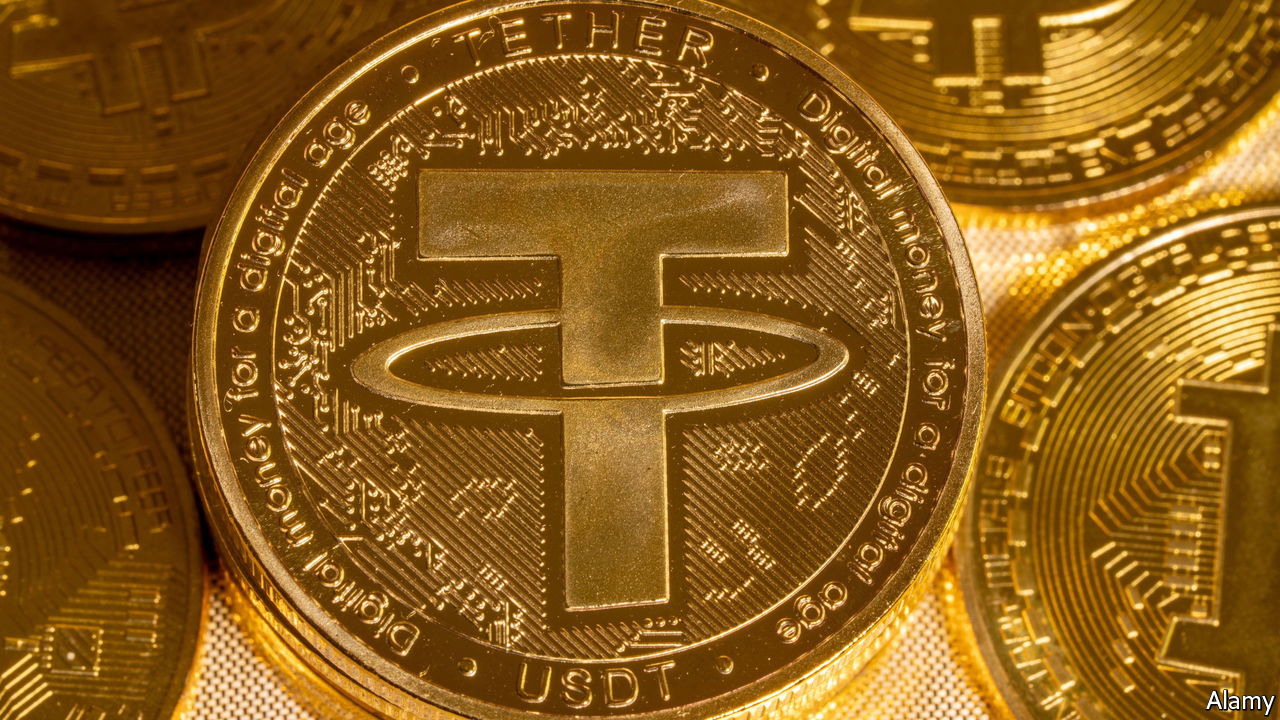
Tether, the issuer of stablecoin USDT has once again slammed mainstream media company; The Wall Street Journal, for publishing a report that claimed the firm and its affiliates falsified documents and shell companies to open bank accounts about four years ago. WSJ published the report on Friday, quoting emails and documents it received from Stephen Moore, one of the owners of Tether Holdings Ltd.

The WSJ claimed the incident happened after Crypto Capital Corp. went underwater four years ago, which was crypto’s premier shadow bank for years before authorities shut it down in 2018. It had ties with multiple crypto entities, including Tether and its sister company Bitfinex.

The WSJ alleged that Tether and its backers falsified invoices and contracts in late 2018 when they lost access to the global banking system, and the faked documents allowed them to create new bank accounts.

One of those intermediaries, a major tether trader in China, was trying to ‘circumvent the banking system by providing fake sales invoices and contracts for each deposit and withdrawal…’ Ultimately, the companies (Tether and Bitfinex) were able to open at least nine new bank accounts for shell companies in Asia over nine days in October 2018, the report said.

On Friday afternoon, Tether’s chief technology officer Paolo Ardoino debunked the report credited to WSJ on Twitter, saying the article was filled with a “ton of misinformation and inaccuracies.”

Shortly after Ardoino’s comments, Tether published an official response to the report, noting that it was nothing but more FUD from WSJ. The stablecoin issuer added the allegations from the media publication were inaccurate and misleading.

These unfair attacks will not distract us from continuing with those efforts and offering the most liquid and reliable stablecoin experience, which the market has clearly recognized by making us the leaders in the industry, Tether said.

It is worth noting that this is not the first time Tether has responded to WSJ for disinformation and FUD. In December, the stablecoin company responded to a WSJ report that called out Tether for having potentially unreliable reserves for its secured loans.

Tether denied the allegations, saying its loans were overcollateralized by “extremely liquid” assets and planned to reduce the secured loans to zero by the end of this year.

Meanwhile, the WSJ report came at a time when crypto firms are reliving how difficult it is for them to access banking services.

On Thursday, crypto-friendly bank Silvergate Capital Corporation became the subject of intense scrutiny amid operational issues. This caused several crypto firms, including Coinbase and Kraken, to abandon the bank and its service.

LIDO is Leading the Staking Derivative Market Frontier.

On-chain analytics firm IntoTheBlock has shared a peek into the Ethereum (ETH) Liquid Staking Derivatives market. Lido Finance is the current leader in liquid staking. According to IntoTheBlock, 33% of all staked ETH — 5.675 million ETH — is settled on the platform.

Curious about the $ETH Liquid Staking Derivatives market? LidoFinance dominates with almost 33% of all staked ETH, while Coinbase comes in second with a considerable margin. Keep an eye on these key players as the market continues to grow. ETH LSD DeFi investment.

Liquid Staking was developed to allow users to stake ETH with a liquid staking provider and receive a receipt token, also known as a liquid staked derivative, due to the lockup nature of ETH.

In the instance of Lido Finance, users deposit ETH on Lido’s staking website and are given the receipt token stETH, which Lido uses to represent the ETH staked.

Coinbase comes in second after Lido Finance with a considerable margin and has a total staked share of 6.58%, which amounts to 1.145 million ETH staked on the platform. Rocket Pool is the next largest ETH liquid staking protocol after Coinbase and has a total staked share of 2.3%, which amounts to 415,000 ETH staked.

Frax Finance recently launched an ETH liquid staking service to turn ETH into frxETH, an ETH LSD. According to IntoTheBlock, Frax accounts for 0.6% of the total staked ETH share, which is 106,000 ETH.

StakeWise, an open-source protocol for staking on Ethereum 2.0, accounts for 0.43% or 74,000 ETH staked.

In related news, Binance has announced a new promotion for all ETH 2.0 staking users. Eligible users would share a prize pool of $15,000 in BETH token vouchers in the promo, which runs until March 13.

INEC Assures Citizens of BVAS Top-Notch Functionality in The Governorship And State House of Assembly Elections

0

The Independent National and Electoral Commission (INEC) has assured Nigerians of the top-notch functionality of the Bimodal Voter Accreditation System, in the coming governorship and state house of assembly elections.

Following the abysmal performance of the machine in the just concluded presidential and national assembly elections which was marred by glitches, INEC has continued to review the system to ensure the smooth running of the machine in the forthcoming elections.

While at a meeting with States Resident Electoral Commissioners (RECs) in Abuja, the chairman of INEC  Mahmood Yakubu expressed confidence that going forward, the system will run optimally, while noting that the machine will once again be deployed for voter accreditation and result management in this weekend’s polls.

In his words,

As we approach the Governorship and State Assembly elections, we must work harder to overcome the challenges experienced in the last election. Nothing else will be acceptable to Nigerians. Election day logistics must be finalized days before the election and handled by the Electoral Officers (EOs) at the Local Government level.

“This has been our standard practice. Centralizing the process as was done in some States resulted in a delayed deployment of personnel and materials and late commencement of polls. RECs will be held responsible for any tardy arrangement or the failure to deploy electric power generators to collation centers or polling units where such facilities are needed. The Commission has enough facilities in all the States of the Federation. Failure to deploy them is simply inexcusable.

It would be recalled that glitches recorded in the machine in the just concluded 2023 presidential election caused a lot of chaos. There were reports of low battery, lack of internet data, and the failure of the machine to verify and accredit voters. The technology also faced technical challenges in transmitting results in some parts of the country, which raised concerns.

This forced some citizens at different polling units across the nation to offer power banks, and also share data with INEC officials. Some went as far as bringing generators to ensure the smooth operation of the machine. Following the failure of the machine to perform up to full functionality, this stirred up reactions, with some citizens stating that INEC Chairman, Prof. Yakubu Mahmoud, has damaged the credibility of the electoral system.

This is coming after INEC’s assurance of the top-notch functionality of the machines and its ability to seamlessly accredit voters and transmit results electronically on the day of the election. The Bimodal Voters Accreditation System replaced the smart card reader used in 2015 and offers dual capacity for fingerprint and facial authentication. INEC announced its intent to use the technology in April 2022.

With the recent reassurance of INEC Chairman that the machine has been reviewed to function well, hopefully, Nigerians don’t get to see a repeat of what transpired at the presidential election.

Tesla Slashes Prices of Model X and Y in the US to Increase Demand

0

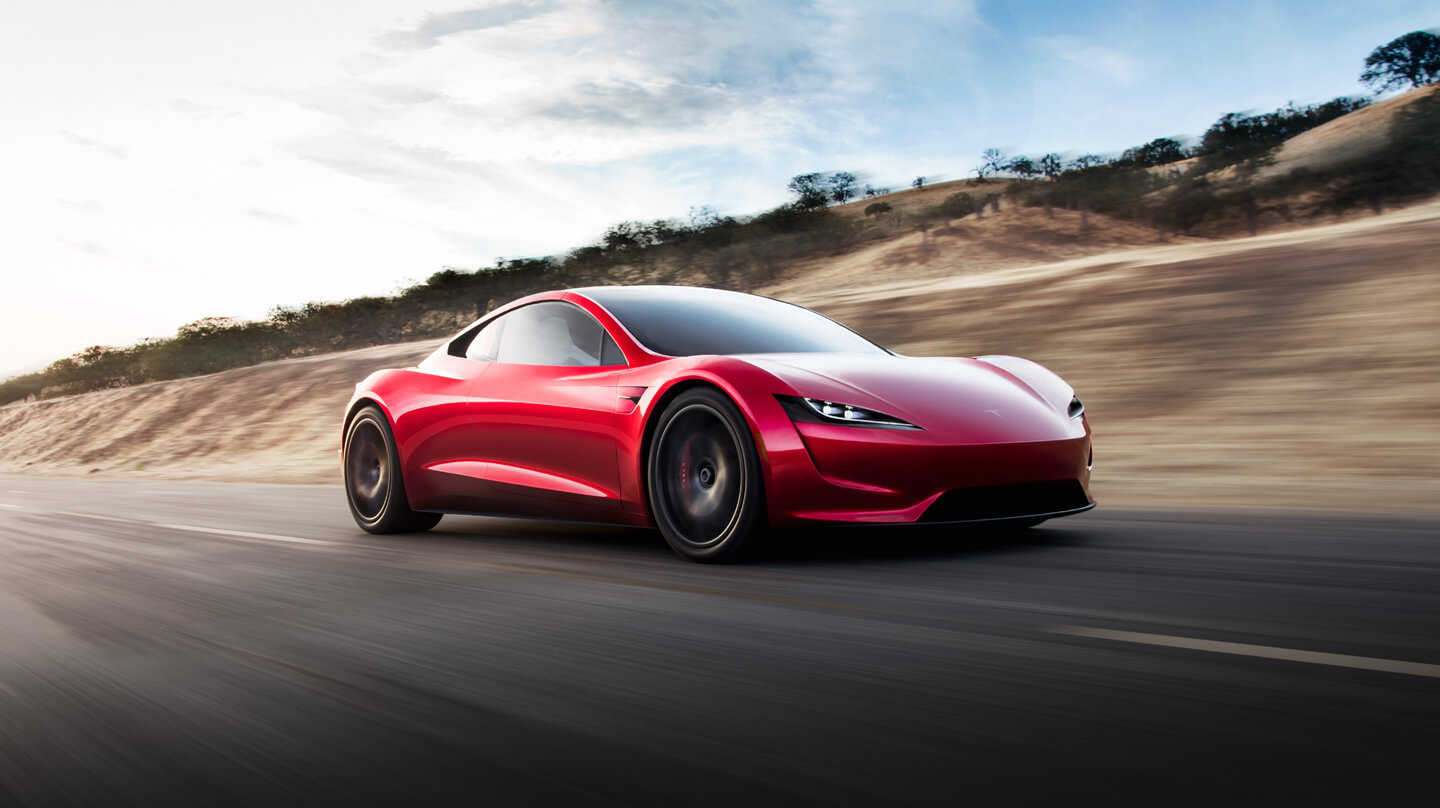
Automotive and clean energy company Tesla has slashed the prices of its Model X and Model Y in the U.S, as it seeks to boost demand.

The Model S AWD has been reduced to $89,990 from $94,990. The Model S plaid has been reduced to $109,990 from $114,990. The Model X AWD has been reduced to $99,990 from $109,000 and the Model X Plaid has been reduced to $109,990, from $119,990. The latest discount is Tesla’s fifth since the start of the year. 

The new price updates which are already reflected on the company’s website and social media handles comes days after the CEO Elon Musk disclosed plans to increase production at Tesla’s Shanghai facility in China, in order to meet the soaring demand caused by the previous cuts.

This is the second time this year that Tesla has made reductions in prices of some of its vehicle models. In January the EV automaker reduced the prices of its Model Y, Model X, and Model S vehicles to boost demand.

While speaking at Tesla’s Investor day last week, Musk and other executives at the company discussed the importance of efficient manufacturing and cost-cutting. Musk stated that the desire for people to own a Tesla is extremely high, unfortunately, the only limiting factor is their inability to pay for it.

Tesla has regularly adjusted the price of its vehicles over the last few years, having previously made increases across its entire range several times between 2021 and 2022. The company’s price cuts have been frowned upon by owners who feel cheated.

In January this year, Hundreds of Tesla owners convened at the automaker’s showrooms and distribution centers in China, demanding compensation  after the sudden price cuts, which they said meant they had overpaid for electric cars they bought earlier.

Many said they had believed that prices Tesla charged for its cars late last year would not be cut as abruptly or as deeply as the automaker just announced in a move to spur sales and support production at its Shanghai plant. The scheduled expiration of a government subsidy at the end of 2022 also drove many to finalize their purchases.

Meanwhile, Tesla reportedly slashed prices in China twice in three months amidst a slow demand for its vehicles. The discount comes at a time when the giant EV maker is struggling to maintain its sales in China, which is its biggest international market.

Last year, Tesla produced more cars than it delivered, which means its inventory has increased. This saw Tesla’s stock on Wall Street hit its worst day in two years, dragged down by weaker-than-expected sales data globally. The company’s shares ended in 2022 down 65%, greatly cutting into CEO Elon Musk’s net worth.

It is interesting to note that EV competition is  increasing domestically in China, with Nio, BYD, Xpeng, and other brands fighting for a smaller pie. Analysts disclose that Tesla needs to further cut prices and expand its sales network in China’s lower-tier cities amid aging models.

Tesla’s prices of the Model 3 and Model Y cars in China, are now 24% to 32% lower than those in the United States.