DD
MM
YYYY

PAGES

DD
MM
YYYY

spot_img

PAGES

Home Blog Page 44

Coinbase Listing of Limitless (LMTS) Marks a Great Turn for Prediction Market Tokens 

0

Coinbase is launching spot trading for the Limitless (LMTS) token. According to Coinbase Markets’ official announcement, spot trading for the LMTS-USD pair will go live on or after 9:00 AM PT provided liquidity conditions are met and in regions where trading is supported.

This includes availability on coinbase.com, the Coinbase app, Coinbase Advanced, and for institutional clients. Limitless is a decentralized prediction market platform built on Base. It allows users to trade on real-world outcomes; crypto prices, politics, sports, and other events with fast settlements, using a hybrid model combining off-chain order books for speed and on-chain settlement for security.

The LMTS token serves as the native utility token, supporting staking, fee discounts, governance, and ecosystem incentives like buybacks. The token launched around October 2025 and has seen significant interest, with the platform reportedly achieving over $12M in annualized revenue (ARR) recently.

As of recent data, LMTS trades around $0.15–$0.17 with volatility expected around the listing, a market cap in the $20M–$23M range, circulating supply of about 132M out of 1B total/max supply, and 24-hour trading volume in the millions. This listing is notable because:It’s on Coinbase’s own Base network, which often enables faster integrations for eligible tokens.

Coinbase Ventures previously backed the project alongside others like DCG, though this wasn’t emphasized in the listing announcement. Listings on major exchanges like Coinbase typically boost accessibility, liquidity, and visibility, often leading to short-term price momentum though crypto markets are volatile.

Community reactions on X highlight excitement about the move, with some viewing it as a major step for prediction markets going mainstream. Following the roadmap addition and listing announcement, the token dropped around 17% in one session with a 24% surge in trading volume, signaling profit-taking, skepticism, or positioning by holders amid a broader market dip.

This “sell the news” dynamic is common for smaller-cap tokens anticipating major exchange listings. It’s down substantially (75–82%) from its all-time high of ~$0.69–$0.717 at launch (Oct 22, 2025), but up significantly from lows ($0.048 in late Jan 2026).

Market cap hovers ~$20–$23M; circulating supply ~132M out of 1B total with 24h volume in the $4–$5M+ range—elevated but still modest. Coinbase listings often trigger high volatility: Initial pump from new retail/institutional inflows. Followed by potential dumps as early holders exit.

Historical patterns show rallies + profit-taking; the real sustained impact depends on whether platform adoption supports it. Listing on Coinbase provides access to its 100M+ users, institutional clients, and regulated environment—far beyond DEX liquidity on Base/Uniswap.

Deeper order books, tighter spreads, and better price discovery via arbitrage. Enhanced legitimacy for Limitless as a decentralized prediction market. Built on Base (Coinbase’s L2), this enables faster/cheaper integrations. Limitless has shown growth (e.g., >$200M notional volume in Jan 2026, up 56% MoM; annualized revenue in millions), with token utilities (staking, fees, governance, buybacks) potentially benefiting from more users.

Strengthens on-chain alternatives to platforms like Polymarket, especially with real-world event trading (crypto, politics, sports). Coinbase’s backing via Ventures funding Limitless adds irony/credibility—though not highlighted in the announcement.

High fully diluted valuation (~$120–$173M) implies future unlock/dilution pressure. Competition in prediction markets is fierce; sustained growth relies on adoption metrics. Mixed—excitement about mainstream exposure vs. concerns over past liquidity management or discretionary trading by project wallets.

X chatter includes spam/promotional posts and some critical takes on early behavior. This is a significant distribution and legitimacy catalyst for a small-cap token like LMTS, likely driving short-term hype/volatility but with potential for longer-term gains if Limitless delivers on platform traction. Crypto is highly speculative—prices can swing wildly, and this isn’t financial advice.

China Unveils ‘Childbirth-Friendly Society’ Plan as Population Decline Threatens Long-Term Growth

0

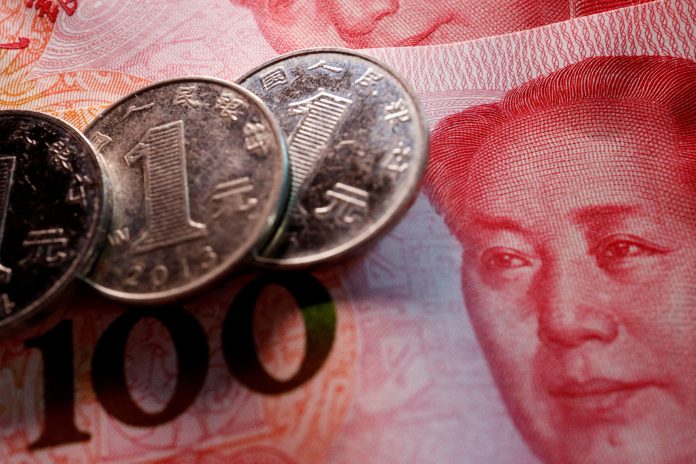
China has unveiled an ambitious strategy to create what it calls a “childbirth-friendly society” over the next five years, as policymakers confront a demographic slowdown that economists warn could reshape the country’s economic trajectory.

The proposal, outlined in an official government report released during the annual meeting of the National People’s Congress, lays out a sweeping set of social and financial policies aimed at reversing declining birth rates and stabilizing the country’s shrinking population.

For Beijing, the demographic challenge is no longer a distant concern. Population decline, rapid ageing, and a shrinking workforce are now central issues shaping the government’s long-term economic planning.

Authorities said the new strategy would focus on improving employment prospects, expanding access to education and healthcare, raising incomes, and strengthening social security in order to encourage couples to marry and have children. Officials also pledged to promote “positive attitudes toward marriage and childbearing,” while expanding housing support for families with children and improving population services nationwide.

The urgency of the policy shift reflects a stark demographic reality.

Official statistics released earlier this year showed that China’s population fell for the fourth consecutive year in 2025, while the birth rate dropped to its lowest level on record.

China’s population has been shrinking since 2022, marking a dramatic reversal for the world’s second-largest economy, which for decades relied on abundant labor to fuel industrial expansion and rapid economic growth. Demographers say the country’s fertility rate is now well below the replacement level of 2.1 births per woman, meaning the population will continue to shrink without sustained immigration or a significant rise in births.

For policymakers, the implications stretch far beyond demographics. A smaller population could weaken consumption, shrink the labor force, slow productivity gains, and place a growing strain on pension systems. The trend also complicates Beijing’s broader efforts to rebalance the economy toward domestic demand.

Massive financial support for families

To address the problem, the government is preparing a large-scale support programme aimed at reducing the financial burden of raising children. According to Reuters estimates, Beijing could spend around 180 billion yuan ($25.8 billion) this year on policies designed to boost births.

A key component of the initiative is a national child subsidy programme introduced last year, marking the first time the central government has offered direct financial support to families raising children across the country. Officials are also planning to eliminate medical costs associated with pregnancy beginning in 2026.

Under the new policy, women will face no out-of-pocket expenses during pregnancy, with all medical costs — including fertility treatments such as in vitro fertilization — fully reimbursed through the national health insurance system. Authorities say the move is designed to address one of the biggest barriers to childbirth: the rising cost of healthcare and fertility treatments. At the same time, the government will expand subsidized childcare services and continue implementing childcare subsidy systems across the country.

Pilot projects for affordable childcare facilities will also be expanded, particularly in urban areas where limited childcare options have discouraged many couples from having more children.

Tackling education costs and family pressure

Education costs have also become a major factor in China’s declining fertility rate. Many urban families cite the intense competition for schooling and the high cost of tutoring and education as reasons for limiting family size. The government report said China would refine policies on free preschool education and increase the number of places available in senior secondary schools.

Public spending on education will remain above 4% of GDP, officials said, signaling continued government investment in the sector. Improving education access is intended not only to reduce financial pressure on families but also to ease anxieties about children’s future opportunities.

The government also pledged to strengthen maternal healthcare and reproductive services. Officials said services for women during early pregnancy will be expanded, while reproductive health programmes will be improved nationwide. Efforts will also focus on improving screening and treatment for birth defects and enhancing medical services related to fertility and childbirth.

These measures aim to increase confidence among prospective parents while addressing health risks that may discourage couples from having children.

The rise of the “silver economy”

Even as Beijing works to increase birth rates, the government is simultaneously preparing for the reality of an ageing society. China’s population over the age of 60 is expected to grow rapidly in the coming decades, creating new economic and social challenges.

Officials said the government would promote the development of the so-called “silver economy,” referring to industries and services designed for older citizens. Policies will focus on expanding elderly care services, especially in rural areas where healthcare infrastructure is often limited.

Authorities will also introduce new financial services aimed at seniors, including pension finance, healthcare services, and wellness programmes.

The demographic shift is becoming an existential threat. By 2035, the number of people aged 60 and above in China is projected to reach around 400 million — roughly equivalent to the combined populations of the United States and Italy.

An ageing population presents serious fiscal and economic challenges. As more citizens retire, pension systems will face increasing pressure while the working-age population shrinks.

That imbalance could slow economic growth and reduce government revenue, making it harder to fund social services and infrastructure investments. In response, Beijing has already begun adjusting retirement policies.

The government recently increased retirement ages gradually, with men expected to retire at 63 instead of 60, and women at 58 instead of 55. The change is intended to keep more people in the workforce for longer and reduce pressure on pension funds.

However, economists say retirement reforms alone will not solve the demographic problem if birth rates remain low.

Long-term economic implications

China’s demographic transition is expected to have far-reaching implications for the global economy.

For decades, the country’s massive workforce supported its rise as the world’s manufacturing hub. A shrinking labor force could increase wage pressures and push companies to accelerate automation. It may also influence global supply chains, as manufacturers reassess production strategies in response to rising labor costs.

At the same time, slower population growth could weigh on consumer demand, affecting sectors ranging from housing to education and healthcare. Analysts say the government’s push for a “childbirth-friendly society” represents a recognition that demographic stability is now a central pillar of China’s economic strategy.

Yet reversing fertility trends may prove difficult.

Countries including Japan and South Korea have implemented generous pro-natalist policies for years with limited success, highlighting the complexity of changing social and economic behavior. Against that backdrop, the Chinese leadership now faces the challenge to balance short-term economic priorities with long-term demographic realities as it seeks to sustain growth in the decades ahead.

Backpack Opens Waitlist for its New “IPOs Onchain” product.

0

Backpack, the Solana-based crypto exchange and wallet founded by ex-FTX/Alameda team members, recently opened a waitlist for its new “IPOs Onchain” product.

This allows eligible users to access official IPO share allocations on-chain before shares hit public markets, providing direct equity ownership (tokenized on Solana) with features like potential dividends and real stock rights.

Early sign-ups get priority for the first IPO offerings, and Backpack uses waitlist demand as a signal to attract issuers during roadshows. This ties into broader token utility: Backpack previously announced that users staking their upcoming Backpack token for at least one year can swap it for equity representing 20% of the company at a fixed ratio, ahead of potential IPO plans.

The on-chain IPO access is positioned as an early 2026 rollout for token holders and active users. Community reactions on X highlight excitement about democratizing IPO access (no traditional gatekeepers) and real equity on-chain, with some calling it a game-changer for compliant tokenized assets.

This builds on Backpack’s push toward deeper integration of traditional finance with crypto, potentially boosting token value through utility and community alignment. Details on specific upcoming IPOs or exact allocation criteria are still emerging.

Superstate is a blockchain-based financial technology firm specializing in the tokenization of traditional financial assets, founded by Robert Leshner (the co-founder of Compound, a major DeFi protocol). The company focuses on bridging Wall Street with crypto capital markets by bringing real-world assets (RWAs) — such as equities, funds, and potentially other securities — on-chain in a compliant, regulated manner.

Superstate acts as the infrastructure provider and enabler for issuing and managing tokenized versions of traditional assets directly on blockchains like Ethereum and Solana. This means: Creating native tokenized shares that represent direct legal ownership not just synthetic derivatives or price trackers.

Handling regulatory compliance, including working with registered transfer agents, SEC-registered structures, and qualified purchasers. Maintaining official shareholder registries on-chain while ensuring features like potential dividends, voting rights, and settlement efficiency.

They emphasize pragmatic, regulation-respectful innovation to modernize capital markets, reduce intermediaries, enable faster settlement, and expand global access especially for non-U.S. users in many cases. Tokenized funds like USTB (short-duration U.S. Treasuries) and USCC, which have brought billions in traditional capital on-chain; tokenized treasuries exceeding significant AUM figures in reports.

Opening Bell, their platform for tokenized public equities and direct stock issuance. This allows companies to issue SEC-registered shares natively on-chain, supporting both existing public stocks and new issuances like IPOs.

Specific Role in the Backpack Partnership

In the context of Backpack’s “IPOs Onchain” waitlist, Superstate serves as the key infrastructure partner: Backpack handles the user-facing marketplace and access. Superstate empowers issuers (companies going public) to bring shares on-chain through Opening Bell.

This setup delivers real IPO share allocations as tokenized assets on Solana, giving eligible users direct equity ownership with potential perks like dividends and rights — before shares hit traditional public markets. The partnership builds on prior integrations where Backpack users could trade Superstate-tokenized stocks, positioning it as a compliant bridge between TradFi IPO processes and crypto-native users.

This collaboration aims to democratize IPO access (reducing reliance on institutional gatekeepers), use blockchain for transparent/ efficient distribution, and signal demand to attract more issuers. Superstate’s involvement ensures the tokenized shares are compliant and represent genuine ownership, not wrappers.

Superstate’s tokenization role is foundational in this emerging “on-chain public markets” space — turning illiquid or restricted TradFi assets into composable, accessible blockchain-native ones while prioritizing legal and regulatory soundness.

Nigeria’s Capital Market: The Biggest Business Opportunity of the Next Decade | March 7, 2pm WAT

0

“Since … April 2024, we have seen market capitalisation grow from about N55 trillion to over N123.93 trillion. [Capital market] contribution to GDP has moved from 13 percent to 33 percent.” – Dr. Emomotimi Agama, the Director General, Securities and Exchange Commission (SEC) Nigeria

Join me this Saturday in TEKEDIA OPEN Open as we discuss Nigeria’s capital market. In this TEKEDIA OPEN session, we will explore why the coming decade will become Nigeria’s Decade of the Capital Market, and what businesses, investors, and institutions must do to unlock that value and win. You’re invited.

Topic: Nigeria’s Capital Market: The Biggest Business Opportunity of the Next Decade — How to Unlock Value and Win

Speaker: Prof Ndubuisi Ekekwe

Date: Saturday, March 7, 2026

Time: 2-3pm WAT

Location: Zoom link 

South Korea’s KOSPI Index Experienced a Severe Plunge

0

The South Korean stock market (KOSPI index) experienced a severe plunge on March 4, 2026, closing down approximately 12.06% at 5,093.54 after intraday drops reaching as much as 12.65%.

This marks the largest single-day percentage decline in the KOSPI’s history since its inception in 1980, surpassing previous records like the post-9/11 drop in 2001 around 12.02% and recent sharp falls (e.g., 8.77% in August 2024). This followed a already steep 7.24% drop on March 3 (Tuesday), when the index closed at 5,791.91 after reopening from a holiday.

The two-day rout has erased massive value—over 817 trillion won roughly $550–$554 billion in market capitalization—and triggered circuit breakers multiple times, including a temporary trading halt after an 8%+ intraday slide today.

Key drivers include escalating geopolitical tensions from the US-Israel-Iran conflict with reports of Iranian retaliatory strikes impacting Gulf regions, which has driven oil prices sharply higher; Brent nearing $85/barrel in related reports, raising energy shock fears.

South Korea, a major oil importer and home to chip giants like Samsung Electronics and SK Hynix which fell 10–12% each, is particularly vulnerable to energy cost spikes, inflation risks, and global risk-off sentiment. This has hit tech-heavy holdings hard, with forced selling, margin calls, and foreign fund outflows exacerbating the decline.

The Korean won also weakened significantly, hitting multi-year lows amid the turmoil. Regarding Dubai equities (Dubai Financial Market/DFM and Abu Dhabi Securities Exchange), markets there reopened yesterday after a two-day suspension ordered by regulators due to Iranian missile/drone strikes on UAE targets including airports and ports.

Gulf markets that traded earlier saw sharp falls; Saudi Arabia -4%+ at open in prior sessions, and Dubai opened lower amid the regional fallout and oil supply disruption fears in the Persian Gulf.

This appears part of broader global market pressure, with Asian indices; Nikkei -3–4%, Taiwan -4%+ and spillovers to Wall Street reflecting energy and inflation worries potentially delaying rate cuts and raising recession risks. Authorities in South Korea have noted excessive volatility and may intervene to stabilize.

Samsung Electronics has been one of the hardest-hit stocks in the ongoing South Korean market rout, directly reflecting its outsized weight in the KOSPI index (as a major bellwether in semiconductors and consumer electronics) and South Korea’s extreme vulnerability to energy shocks from the escalating US-Israel-Iran conflict.

Samsung Electronics closed down 11.74% at 172,200 KRW approximately $117 USD, based on exchange rates around that time. This followed a sharp 9.88% decline on March 3 closing at 195,100 KRW, marking a brutal two-day drop of over 20% from its recent peak around 216,500–223,000 KRW in late February.

Intraday, it traded as low as 171,900 KRW and opened around 184,200 KRW, with high volume exceeding 89–92 million shares traded amid panic selling. This outperformed the broader KOSPI’s 12.06% plunge slightly in percentage terms on the day but contributed heavily to the index’s record fall due to its massive market cap weighting.

South Korea imports ~70% of its crude oil from the Middle East, making it highly exposed to disruptions in the Persian Gulf. Oil prices have surged, raising inflation risks, input costs for manufacturing and energy-intensive operations, and broader economic slowdown concerns. Higher energy prices erode corporate margins and delay anticipated rate cuts globally, hitting growth-sensitive tech stocks hardest.

The KOSPI’s earlier 2026 rally up significantly YTD, driven by AI and semiconductor enthusiasm led to overcrowded positions, high margin debt, and leveraged retail and foreign investor exposure. The sudden risk-off triggered margin calls, algorithmic selling, and foreign outflows, amplifying declines in heavyweights like Samsung. Only a handful of stocks closed higher market-wide.

As the world’s leading memory chip producer benefiting from AI demand earlier, Samsung faces amplified volatility. Rising costs could squeeze profitability in chips, displays, and consumer electronics. Additional news of delays in its US Texas foundry mass production compounded sentiment, widening gaps vs. competitors like TSMC.

The won weakened to multi-year lows breaching 1,500 vs. USD in some reports, increasing imported cost pressures for a dollar-denominated input-heavy company. Despite the carnage, Samsung remains fundamentally strong in AI and memory demand, though this event has unwound much of its 2026 gains.

Authorities may intervene via stabilization funds, and any de-escalation in the Middle East could spark a rebound. However, prolonged conflict risks sustained inflation and energy headwinds for Korea Inc. This has been a classic risk-off capitulation in an energy-vulnerable, tech-concentrated market—Samsung bore the brunt as both a symbol and driver of the selloff. Monitor oil trajectories and conflict updates closely for near-term direction.