DD
MM
YYYY

PAGES

DD
MM
YYYY

spot_img

PAGES

Home Blog Page 4419

Tekedia Investment & Portfolio Management Program Has Started

0

Dear Sir/Madam,

Greetings. Tekedia Investment and Portfolio Management program has started. The Week 1 modules are in the Board when you login.

On Saturday, the Live Zoom session will begin. Please note the time; the Zoom links are in the Board also.

I am providing the setup instructions again and please if you have any questions, let me know.

Regards,

Tekedia Institute Team

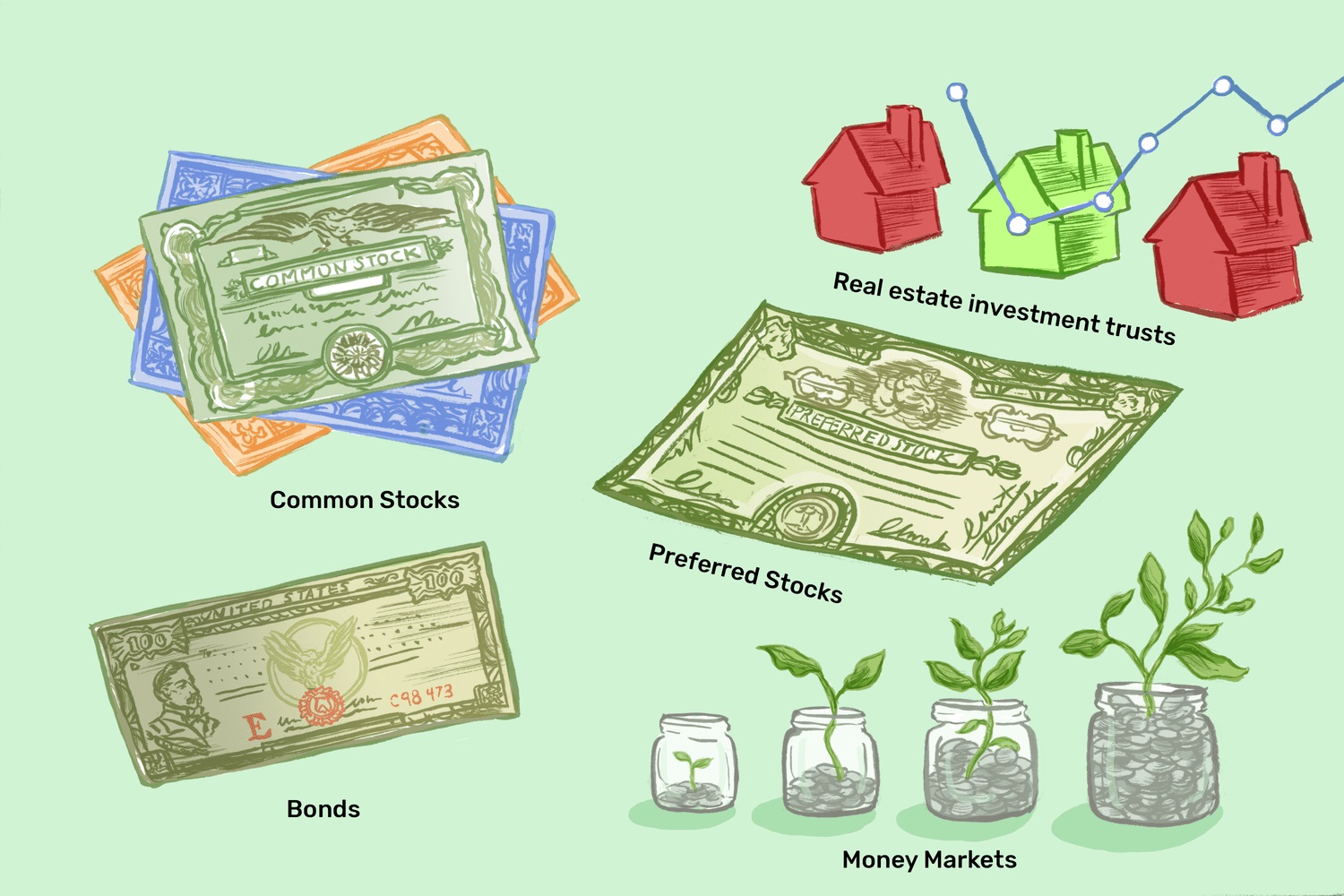
Registration continues here: Tekedia Investment and Portfolio Management program is designed to provide learners with hands-on experience in performing investment research, investing capital, and managing a portfolio during studies in Tekedia Institute. 

Tesla Recalls Thousands of Model Y Vehicles Over Concerns of Loose Bolts

0

Automotive and clean energy company Tesla is recalling 3,470 Model Y vehicles in the US over concerns that bolts securing the second-row seatback frames may not have been securely tightened.

According to the National Highway Traffic Safety Administration (NHTSA), it disclosed that a loose seat frame bolt may reduce seat belt system performance, increasing injury risks during a crash.

Although the automaker told the NHTSA that it has identified five warranty claims since December that may be related to these conditions. Tesla said it was not aware of any injuries or deaths that may be related to the recall issue.

It will therefore go ahead to inspect bolts securing second-row driver-side and passenger-side seat back frames to the lower seat frames and if needed tighten them to specifications. Tesla does not plan to issue any reimbursements because there are no warranty repairs related to these conditions.

Recall that Tesla last month also recalled 362,758 of its vehicles, after it admitted that it’s Full Self-Driving (FSD) beta software causes several crashes. The FSD Beta system is reported to act unsafe around intersections such as traveling straight through an intersection while in a turn-only lane, entering a stop sign-controlled intersection without coming to a complete stop, or proceeding into an intersection during a steady yellow traffic signal without due caution.

The models involved in the recall included the 2016-2023 Model X and Model S, the 2017-2023 Model 3, and the 2020-2023 Model Y with the FSD beta. The update of the software on these models will be done over the air to address the issues.

Tesla lets thousands of drivers try new and unfinished driver assistance features on public roads in the U.S. through FSD Beta. The technology does not make Tesla electric cars autonomous, or safe to drive without a human at the wheel ready to break or steer at any second.

Meanwhile, the CEO of Tesla Elon Musk and its customers have objected to the use of the term “recall” to describe safety defects or issues that can be fixed without a software update delivered over wireless internet. Musk said the word recall for an over-the-air software update is flat wrong.

According to a Forbes report, Tesla’s latest recall of over 360,000 of its vehicles put its total recall in the last year over 4 million, the second-most among U.S. automakers, though the vast majority of its recalls have been software fixes that haven’t required visits to shops.

Ford motors comes first among the top ten car manufacturers that have recalled the most cars since 2022 with 9,141,131 cars, and 72 recalls. Tesla occupies the second position with 4,132,303 cars, and 21 recalls and General Motors occupies the third position with 3,415,313 cars, and 34 recalls.

Deploy This Pricing Playbook To Boost Sales In Your Business In Nigeria

2

This is my playbook: Rwanda, Gambia and most less populated African countries are not great places to launch a business to consumer (B2C) startups  except in healthcare and broad food areas. In those countries, I only get interested if the company is in the business to business (B2B) space. I do think the population is small to provide numbers which can enable leverageable factors to compound towards scaling a business. In other words, in those countries, B2B could work but B2C will struggle as the scalable advantages are severely limited.

But when it comes to Nigeria, Kenya, and South Africa, anything is possible. You can launch a B2C or B2B because they have the numbers.

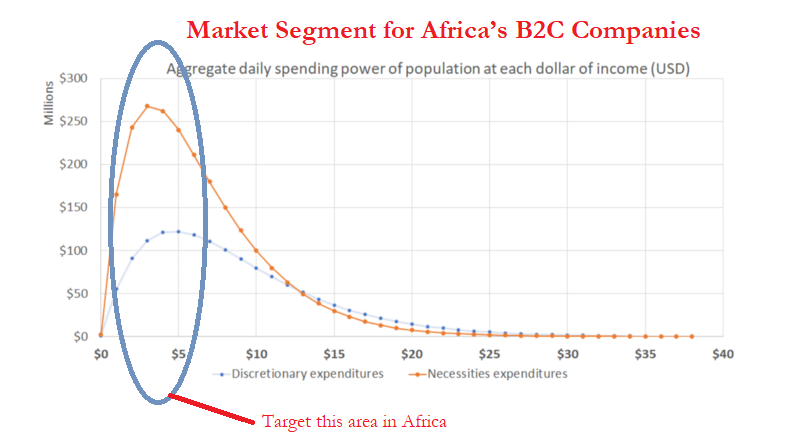
Now, you want to do business in the B2C space in Nigeria, the question is “where do you position the company”? From multiple data, the best range and the most promising is to target people making $4 — $8 per day. That income band holds the highest concentration of discretionary spending power in the nation. That is where Ariel, Cowbell, Bigi Cola,  La Casera, and other resilient brands in Nigeria operate.

Interestingly, that is also where I see a big percentage of my popular 30 million people who earn relatively decent income in Nigeria; those 30 million are the core of the consumer market. 

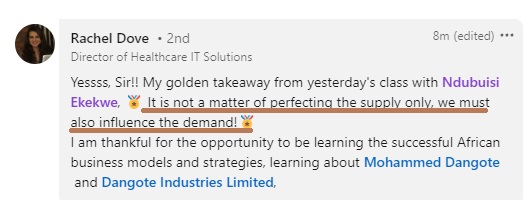
Now what if my product optimally should be in the range of $10 per day-consumer? Solution, go sachetization where you break the pricing in bands, making it easier for people to pay for what they can afford. We practice this; explore that in your business as Nigeria continues to recover from economic paralysis.

That is why you have Tekedia Mini-MBA (N90,000); with Homework review (add N10k), with Capstone (N20k), etc. We practice what we teach! Pricing-democracy, you come in at the size of your purse!

The Core Market Segment in Africa – Middle of the Pyramid

This may not be far from what The New York Times called premiumization.

Comfort Plus. Fast pass. Main cabin extra. Most of us are familiar with a corporate lexicon that gently coerces us to shell out for a little more legroom, free shipping or lower wait times. But the trend is now growing voraciously beyond airlines, The New York Times reports. A broad swath of America’s biggest companies want to exploit a buzzy new corporate catchphrase: “premiumization.” The paper notes that with soaring inflation testing many people’s spending levels, companies are aggressively targeting their affluent customers with the means to pay more.

The current earning season was dominated by talk of “premiumization,” The Times notes, with almost 60 earnings calls and investor meetings mentioning it over the past three weeks.

As more products become prohibitively expensive to more people, it’s more likely that “poorer consumers will be increasingly underserved.”

Tekedia Mini-MBA Testimonials – Read What Learners Say

0
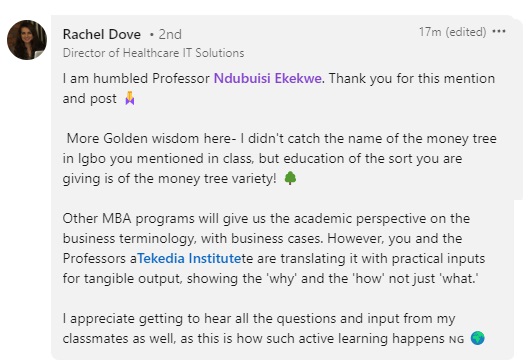
I run the largest business school in Africa. More learners will graduate here in 2023 than any university in Africa. We have learners from 41 countries. From CEOs to catholic priests, from professors to carpenters, from engineers to medical doctors, and beyond, we continue to thrive on how we can help people understand the physics of business.
 
Our learners out of Lagos, Nairobi, etc have gotten jobs in Microsoft, Google, and leading companies in the world. I am humbled when executives from global companies openly share their feedback. This is a public service and we will keep improving.

 
I invite you to register for Tekedia Mini-MBA; we just opened registrations for the next edition. Go here and begin a journey of transformation https://school.tekedia.com/course/mmba11/

For more testimonials, go here.

Nigeria’s ICT Sector Recorded a Significant Increase in 2022, Grew by 9.76%

0
Nigeria's minister of digital economy

Regarded as one of the fastest growing sectors in Nigeria, the contribution of the Information and Communication Technology (ICT) sector to the gross domestic product (GDP), grew by 9.76 percent in 2022, from 6.55 percent reported in 2021.

According to the executive secretary of the association of telecommunication companies of Nigeria (ATCON) Ajibola Olude, he stated that the ICT sector is reported to have grown significantly due to several factors. One of the reasons he mentioned is the steady awareness to move all services rendered by both the government and private sector online, which he believed led to an increased usage of more data by the organization.

In his words,

With the central bank of Nigeria on the quest to promote a cashless policy economy, more individuals and organizations are gradually embracing the use of USSD, mobile, and internet banking, and many others, this also tends to improve the ICT sector.

More money coming into the country via foreign direct investment in capital importation in the ICT sector, this also accounts for the growth in the Nigerian economy”.

According to Data reported by the industry, it indicates that the telecommunication and information sector reported the highest growth rate compared to other ICT sectors in the economy. On a year-on-year basis, the sector growth rate increased by 10.72 percent in 2022, higher than the 7.28 reported in 2021.

The ICT sector has provided 3 unprecedented contributions to the Gross Domestic Product (GDP) of the country in the last three years, which are 14.07 percent in Q1 2020, 17.92 percent in Q2 2021, and 18.44 percent in Q2 2022. It is interesting to note that each time, that has been the highest-ever contribution of the ICT sector to Nigeria’s GDP.

The growth recorded in the industry in the fourth quarter (Q4) of 2020, made it the fastest-growing sector of the Nigerian economy and the only sector to have grown by double digits. It was reported to have played a critical role in enabling Nigeria to exit the recession. 

Operators in the ICT Industry disclose that the sector growth can be attributed to the increasing number of internet service subscribers, mobile service subscribers, and the growth in broadband penetration.

In 2020, while speaking at the Digital Nigeria Day (DND) with the theme “Digital Transformation: A Path To Sustainable Digital Economy”, Nigeria’s Minister of Communication and Digital Economy, Prof. Isa Ali Pantami emphasized that the implementation of a digital economy policy accelerates digitalization and this, in turn, enhances the digital economy. 

The minister highlighted that digital platforms have engendered the digitization of business processes and led to significant savings. He, therefore, tasked stakeholders to persist in supporting the ministry to further accelerate the development of the digital economy sector.

Looking ahead into 2023, increased adoption of cloud computing is one of the potential trends that may shape the development of ICT. As businesses in Nigeria find means to reduce costs and improve efficiency, many citizens will turn to cloud computing solutions to store and process data.