DD
MM
YYYY

PAGES

DD
MM
YYYY

spot_img

PAGES

Home Blog Page 4447

Exploring Cryptocurrency Technology: 8 Facts to Learn About

0

Cryptocurrency is digital cash that prevents counterfeiting and double spending through special encryption. Most digital currencies rely on blockchain technology, essentially a distributed ledger monitored by several computers. Cryptocurrencies are not governed by any other body which distinguishes them from other currencies. Follow these interesting facts about cryptocurrencies to learn more.

  1. Cryptocurrencies Use Cryptography for Security

Cryptography principles are built for virtual currencies. The use of cryptography in cryptocurrency transactions makes them untraceable. This means neither side needs to reveal personal information to the other or rely on a trusted third party like a bank, credit card Company, government, or other financial institution. Crypto sites offer these platforms where you may buy assets without the involvement of a third-party institution. As you explore how cryptocurrencies work and read Crypto.com reviews, you will find that these platforms offer low fees when buying these digital assets, and the whole process happens on the platform without the bank’s interference. Your computer and the networks connected to it are continually encrypting and decrypting data, from the Google queries you perform to the emails you send. Cryptocurrencies employ public and private keys as a method of cryptography encryption.

  1. Prices of Cryptocurrency are Extremely Volatile

Bitcoin’s supply and demand, investor and user sentiment, government regulation, and media hype play a role in its ever-changing price. These elements produce price fluctuations. It is difficult to keep up with cryptocurrency news without hearing an investor’s or fan’s prediction for Bitcoin’s future price. The future of the cryptocurrency’s price is impossible to predict. Bitcoin is purchased through regulated cryptocurrency exchanges. Some crypto coins’ prices are extremely volatile such as Bitcoin, but is a good option to grow your wealth.

  1. Bitcoin is the Most Popular Cryptocurrency

Bitcoin mining is a digital operation that involves sophisticated hardware. Mining is shorthand for verifying and adding transactions to a public ledger known as the blockchain. A miner receives 6.25 BTC for adding a block of transactions to the network. That sum’s purchasing power in dollars varies with the price of Bitcoin. Bitcoin mining may appear complex initially, but it’s rather simple if you learn how the system works. The mining process boils down to a guessing game, with miners attempting to correctly predict a 64-digit hash. The term hash mining is used to describe this process, miners utilize high-powered computers to rapidly create guesses to predict the hash.

  1. Ethereum is More Than a Coin

Ethereum is more than just a cryptocurrency. It is used to carry out smart contracts, which formalize the conditions of an agreement between a buyer and seller. The program code is distributed throughout the blockchain network. In a decentralized blockchain system, the code and the agreements it contains are spread out. The code decides how things get done, and all transactions are viewed and cannot be undone. Smart contracts eliminate the need for intermediary third parties like banks or governments to enforce agreements and conduct business between unrelated parties. Blockchain technology is commonly associated with bitcoin, but its applications extend far beyond that digital currency.

  1. The Smallest Bitcoins Account Is 0.00000001 BTC.

One micro bitcoin or 0.000001 BTC is equal to one-millionth of a bitcoin. The Lightning Network supports transactions with a unit even smaller than the satoshi. However, the million satoshis, one thousandth the size of a satoshi, is not useable on the Bitcoin network. When dealing with very little bitcoin, using terminologies like satoshis or other small units allows users to avoid writing out strings of zeros. Despite the asset’s significant volatility, it is not recognized as an acceptable medium of exchange. Hence bitcoins must be divided into fractions to enable micro-transactions such as buying a coffee. Since the value of a single bitcoin increased to thousands of dollars, Satoshis has become a necessity. It also implies that potential investors don’t have to shell out hundreds of dollars to get a single bitcoin. New tokens are generated every 10 minutes, but they will eventually be measured in satoshis rather than bitcoin because the block reward halves roughly every four years.

  1. You Will Need a Crypto Wallet and a Crypto Buying Site To Purchase Cryptos

To send and receive cryptocurrencies such as Bitcoin and Ethereum, crypto wallets store and protect the private keys that serve as the passwords to your digital assets. Cryptocurrency may be stored and transferred in a wallet like a credit card is used online. Many different wallet options are available, from hardware wallets like Ledger to smartphone apps. Although they are sometimes used interchangeably, crypto wallets technically do not store your cryptocurrency. Your assets are stored in the blockchain, but you need a private key to get to them. You can’t make purchases or transfers using digital currency unless you have the corresponding keys. Private keys are the only way to access your funds. Therefore keep them safe at all costs. You must safeguard your hardware wallet or use a reputable wallet service.

  1. Bitcoin has been in use Since 2009

Satoshi Nakamoto created the cryptocurrency in 2008. When the code for creating the currency was made publicly available in 2009, its use spread. Bitcoin is a combination of bit and coin. Several global economies have approved of Bitcoin, while others have prohibited it. A select few governments have made use of bitcoin. It’s important to consider Bitcoin’s effect on the environment. Its proof of work method makes bitcoin mining computationally challenging, necessitating ever-increasing amounts of electricity, the production of which contributes to climate change.

  1. Blockchain Powers Cryptocurrencies

Blockchain technology records information that cannot be changed by unauthorized parties. A blockchain is a shared digital ledger that records and broadcasts all transaction confirmations to all nodes in a distributed network. Blockchain technology is a data format that keeps and distributes a public ledger of transactions in a series of linked databases called blocks and chains in a distributed, decentralized, and peer-to-peer network. The digital signature of the Ledger’s owner authenticates and protects each transaction by preventing their alteration after they have been recorded. As a result, the data stored in the digital Ledger is safe from prying eyes.

Cryptocurrency is a new technology that is being embraced in the modern world. Different currencies exist, with the main ones being Bitcoin and Ethereum. Many countries have embraced crypto coins, while others have banned them. You may need to invest in cryptocurrencies but first, learn the basics because the prices are volatile.
The Integration Race: Myspace and Facebook; Google and ChatGPT

2

MySpace faded because Facebook was born with integration capabilities, making it possible for merchants and creators to use plugins to convert their users into customers. For MySpace, everything was in its closed world. But Facebook gave you ways to login into websites, share your blog posts, link your feed and your website. Think about it, it was like using one stone to kill two birds – and because of that, Facebook won the crown.

As Google looks for a way to challenge ChatGPT, its biggest challenge is that many companies are already integrating ChatGPT; Opera made the call today.

Multi-platform web browser Opera is planning to integrate ChatGPT into its products.

Opera’s parent company Kunlun which made the disclosure did not reveal whether the functions would be available across Opera’s products which include Desktop and Mobile browsers for iOS and Android.

In 2017, Opera revealed that news reading grew exponentially among Opera mobile browser users because it developed its artificial intelligence (AI) engine to provide them with relevant content in a smart way.

The company revealed that the AI system studies users’ news-reading behavior in real-time and learns from it in order to provide them with a personalized news offering, this implies that users get faster and easier access to news and videos that interest them.

If these firms integrate and attain equilibrium, it would be exceedingly difficult for Google Bard to find an opening to compete. Yes, Google+ faded because Facebook was there and just fine, despite all the funds Google put into it, to take down Facebook.

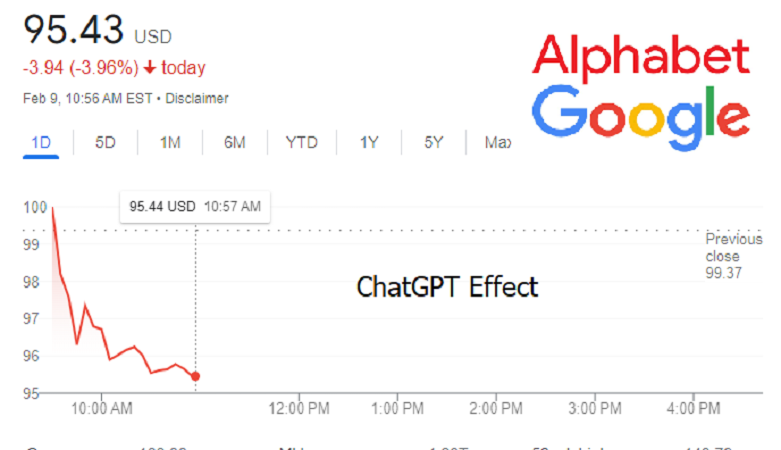
So, as you watch Google (yes Alphabet) stock, be informed that the race will not happen in years, but quarters, and if Google does not respond fast, a category will be won. In Tekedia Mini-MBA, we use this phrase – category-king company – which means a winner in that category. Most times, you do not have many winners per category (note, I did not say “sector”; Facebook, Tiktok, Instagram and Snapchat are winners in their categories).

I am waiting for a WordPress plugin to integrate Tekedia to ChatGPT and I hope every morning, it can tell me the exchange rate of Naira to US Dollars! Who knows, it can also tell me where to find new Naira notes; I want it handy!

Comment on Feed

Comment 1: Chatgpt is fantastic, it is just absolutely difficult for it to displace Google ecosystem, the best route it can go is what its already doing with Microsoft and yet, it still going to be difficult to do what Google does best, (email, map, Android, Gdrive. Gphoto, doc, slide, survey etc) and to be fair, it does different things entirely, it’s a buzz right now and it will go away when its fully integrated into different applications.

The competition for Google right now is Microsoft, Microsoft is gradually breaking Google’s ecosystem with their Microsoft 365 package.

Its going to be a marathon, GPT is just another tool.

My Response: Great point. It is not about supply but demand. ChatGPT made the right call by going with Microsoft. So, this is about Google and Microsoft at least in the search space.

Web Browser Opera Plans to Integrate ChatGPT Into Its Products

0
Opera (source: WSJ)

Multi-platform web browser Opera is planning to integrate ChatGPT into its products.

Opera’s parent company Kunlun which made the disclosure did not reveal whether the functions would be available across Opera’s products which include Desktop and Mobile browsers for iOS and Android.

In 2017, Opera revealed that news reading grew exponentially among Opera mobile browser users because it developed its artificial intelligence (AI) engine to provide them with relevant content in a smart way.

The company revealed that the AI system studies users’ news-reading behavior in real-time and learns from it in order to provide them with a personalized news offering, this implies that users get faster and easier access to news and videos that interest them. 

Reports reveal that the news and video service has witnessed a 50-fold growth since its introduction in the Opera Mini browser in January 2017. Also, usage data reveals that the average user now spends 40 minutes every day inside the Opera browser and engages with between 65 and 81 news stories per day.

This is as a result of Opera’s AI technology which increases exposure of their articles by delivering them to relevant people who are thus more likely to comment and share.

Opera’s recent disclosure to integrate ChatGPT into its products comes after Microsoft and Google announced plans to incorporate artificial intelligence chatbot technology with their search engines following the emergence of OpenAI chat or ChatGPT which is the rave of the moment.

Microsoft, which made a big investment in OpenAI last month, has started embedding GPT-3 across its products. GPT-3.5, for example, underpins several intelligent recap features in the new Teams Premium Microsoft 365 add-on.

Google is also reportedly racing to adapt Search and possibly other products to ChatGPT. The company is testing a chatbot called Apprentice Bard with similar capabilities, but embedded with Search.

OpenAI Chatbot ChatGPT has no doubt been a surprise sensation that has rattled and changed the routine of some tech companies, due to its fast-rising popularity, which analysts at Swiss bank UBS think it is also the fastest-growing consumer app in history.

It is however interesting to note that Opera’s parent company Kunlun began to lay out the AIGC field in 2020, where it invested tens of millions of yuan, to set up a research and development team of more than two hundred people, and developed the Chinese GPT-3 model with ten billion parameters from the end of 2020 to April 2021, and began to develop a dialogue robot based on its large text model in August 2021.

International Monetary Fund Urges Nigeria to Extend Feb 10 Deadline for Naira Swap

0

The International Monetary Fund (IMF) has joined voices in urging the Central Bank of Nigeria (CBN) to extend the February 10 deadline set for the implementation of the redesigned naira policy.

The IMF made the call on Wednesday when the Supreme Court of Nigeria issued an ex parte order restraining the CBN and commercial banks from enforcing the deadline until a pending suit on the matter, brought by Kogi, Kaduna and Zamfara states, is heard.

“In light of hardships caused by disruptions to trade and payments due to the shortage of new bank notes available to the public, in spite of measures introduced by the CBN to mitigate the challenges in the banknote swap process, the IMF encourages the CBN to consider extending the deadline, should problems persist in the next few days leading up to the February 10, 2023 deadline,” IMF Resident Representative to Nigeria, Ari Aisen, said in statement issued on his behalf by Laraba S. Bonnet, Office Manager for Resident Representation for Nigeria.

The CBN introduced the redesigned N200, N500 and N1,000 notes late last year, fixing the January 31 deadline for the old naira notes to be phased out. The deadline was later extended as the scarcity of the new naira notes significantly undermines the implementation of the policy. But the deadline extension didn’t cut it. Hiccups continue to trail the naira swap exercise, with economic experts warning of its adverse implication on the economy, especially the informal sector.

Despite these warnings, the CBN, backed by the federal government of Nigeria, said it’s not backing down on enforcing the February 10 deadline, a move that has been criticized from political corridors as part of larger ploy to scuttle the ruling All Progressive Congress (APC) chances of winning the February 25 election.

The naira redesign is believed to be President Muhammadu Buhari’s idea of curtailing moneybag politics ahead of Nigeria’s general elections, as it is also believed that politicians have stashed enough cash away, hoping to use it to influence the outcome of the election through vote-buying.

However, the poor circulation of the new naira notes has created a huge controversy around the implementation of the policy, giving rooms for lawsuits from political parties challenging it. Earlier, a coalition of political parties made up of Action Alliance (AA), Action Peoples Party (APP), Allied Peoples Movement (APM), and National Rescue Movement (NRM) had filed a suit challenging the policy, asking a federal high court to stop the CBN from implementing it.

The lawyer to the three states, Abubakar Mustapha, said they approached the Supreme Court because the policy is hurting the masses.

“The reason for it is that as well-intentioned as this policy of the Federal Government on this naira redesign, it is causing hardship all over the country. As we can all see, banks are being harassed, Nigerians are suffering, especially the downtrodden, even in the urban areas they are having difficulty, but it is more excruciating in the rural areas,” he said.

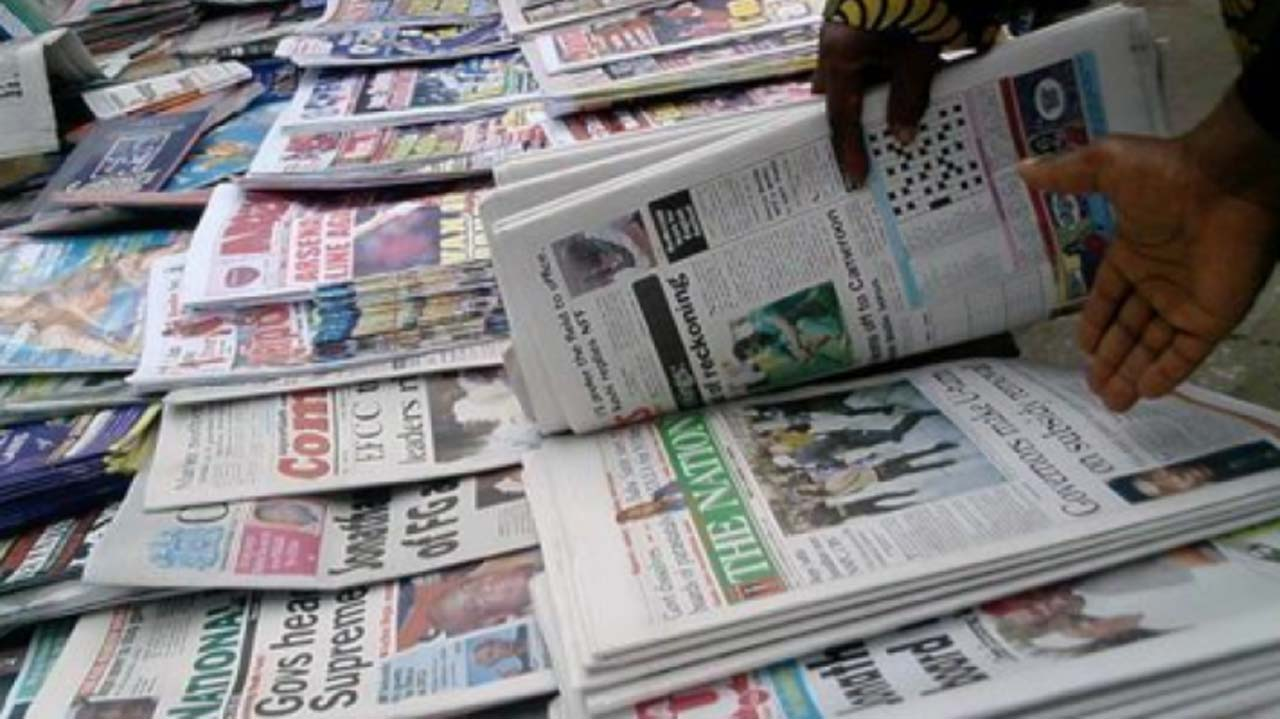
What Does Critical Media Concentration Look Like in Nigeria and Why Should We Be Concerned?

0

Nigeria has been playing significant roles in Africa’s economic and political development before and since her independence in 1960. In the area of media and communication, the first indigenous newspaper was established by a Nigerian. The newspaper was founded in 1859 and named “Iwe Irohin Fun Awon Egba ati Yoruba.” In Nigeria, the first television station was established in 1959 and was located in the western region. Some years later, the northern and eastern regions had their own television stations. The trends partially ended the British Broadcasting Corporation’s content distribution from London to the country through its African Broadcasting Service. It was partial because the new television stations still incorporated the BBC’s content as part of their international news for Nigerians.

The movement from the parliamentary system of government to the federal system ended the regional ownership of the stations. They became the Nigeria Television Authority and were dubbed the largest African television network because of their presence in almost all the states. During the military administration of General Ibrahim Babangida, the stations witnessed radical challenges through the implementation of public broadcast policies that enhanced organisational structures and employees’ capacity to deliver coordinated national information to the public. This continued throughout successive military and democratic administrations. However, President Olusegun Obasanjo’s administration’s implementation of neoliberalism policy in 1999, which allowed deregulation and privatisation to take centre stage in media development, opened up print and broadcast markets to a number of media entrepreneurs, and business and non-business corporate organisations now own media outlets across the country.

Similar to what is prevalent in other democracies such as the United States of America, the United Kingdom, Canada and some countries in the global south, our analyst examines Nigeria’s media concentration and ownership patterns and draws out critical insights from the emerging trends. The majority of the existing 677 media organisations (mainstream conventional television, radio, and newspaper) are concentrated in the south-west and north-central regions, with the north-east and south-east having low concentrations. State-by-state analysis indicates that of the 64.10% of privately-owned media organisations, Lagos has 10% of them, and the Federal Capital Territory follows with 6.10%. Kaduna (2.50%) and Lagos (2.20%) states have the highest levels of public ownership among the 677 media organizations, accounting for 35.80%. This public ownership includes the state and federal governments.

Analysis by media type reveals that the Nigerian media system has more radio and television stations than newspapers. From the 677 media organisations, 511 and 103 outlets are radio and television stations respectively. In the radio market, Lagos State has 5.90% of the outlets, while Oyo State also has the same percentage (5.90%). The FCT (4.60%), Kano (4.00%), Kaduna (4.00%), Ogun (3.70%), and Anambra (3.40%) follow. A state-by-state analysis reveals that television stations are overwhelmingly concentrated in Lagos State (2.10%) and the Federal Capital Territory (1.20%). The only two thriving magazines (The Tell and Newswatch) are situated in Lagos State. Four percent of the 61 newspapers are located in Lagos State. The FCT (1.50%) and Kogi (1.30%) State partially follow Lagos State in terms of the high concentration of newspapers.

Critical Media Concentration

Now, here are critical insights from our analysis, which informed the assumption that critical media concentration exists in Nigeria similar to what is available in other countries and markets. Of the 434 media outlets owned by private individuals and organisations, over 22% are located in the south-west region, while the north-central region follows with 13%. The north-west and south-south regions share the same percentage (8.60%) of private ownership, while the south-east region has 8.40%. The north-east is the only region with less than 5% (3%) of the outlets. Again, the south-west region dominates the public ownership pattern, with 8.70% of the 243 public media establishments across the country. The north-central region retains its second position with 6.90% of the outlets, while the north-west (6.40%), north-east (4.70%), south-south (4.70%) and south-east (4.40%) regions follow.

Why Should We Care

In all, the south-west region owns the media in Nigeria follows by the north-central region. This has several implications. While it is obvious that people would have access to different contents and possible diverse voices, the high concentration of media in the two regions indicates media dominance and the possible misrepresentation or framing of other regions. For instance, Sule, after analysing the coverage of various ethno-religious crises by the south-west newspapers, notes that Nigerian mass media played roles as diverse as protecting the interest of their owners and editors, geographical locations, ethnic and religious affiliations of the owners or editors. Abubakar and his colleagues reported how The Nation, a newspaper in the south-west region and privately-owned by a politician, reported ENDSARS protest by providing little spaces and publishing most of the stories using inside pages, while The Guardian, situated in the same region and privately-owned by a south-southern business man, provided much spaces for the coverage and used front pages.

In a study by Asekhamhe and others that analysed the reportage of the Indigenous People of Biafra (IPOB), a group agitating for the independence of Ibo ethnic group from Nigeria, only a few newspapers in the south-east provided adequate coverage of IPOB activities, while most of the newspapers in the south-west cited official sources towards representing agitators in line with their editorial philosophies and ownership interests, according to another set of researchers. The insights from analyses and findings from these studies reaffirm existing views that increase in media concentration hardly leads to diversity of voices. Instead, content fragmentation and polarization of groups are on the increase.