DD
MM
YYYY

PAGES

DD
MM
YYYY

spot_img

PAGES

Home Blog Page 45

The Lessons from the Billionaires, Make an A+ in Your Process in 2026

1

As the march to 2026 continues, I want to focus on PROCESS, the most important non-graded course in the university of life. It does not appear on any transcript, yet it determines the soul and purpose of education. Because education, at its core, is the liberation of the mind. And minds are liberated not just by content, but by the evolution of processes through which we learn, think, and act.

Across the world, a familiar question keeps coming up: why are many billionaires not the best graduating students in their classes? In the worlds of Dangote, Elumelu, Ovia, Gates, and Musk, I am confident none graduated top of their classes. Yet, they command empires. Meanwhile, Ndubuisi, who finished top of his university class, and set all-time academic records in his secondary school that remain unbroken, is not yet billionaire. Lol.

Why? Because Ndubuisi was excellent at passing the exams of classrooms, but not as great at passing the exams of markets. Simply, classrooms and markets run on different operating systems. An A in calculus does not guarantee an A in customer satisfaction for noodles. Academic grades are not destiny; at best, they are indicators of process. What truly matters is not the grade itself, but the discipline, effort, and tenacity that produced it.

Effort that earns a First Class in one university may not even secure a Second Class in another, because standards differ. In secondary school, I was not the most gifted mind, but I was relentless. What talent withheld, hard work delivered. One teacher called me “oku na egbu akwukwo”, the fire that consumes books, because if reading Modern Biology four times was the key to an A, I would light that fire.

I never apologized for being a bookworm. I was not constrained by WAEC subjects: even though I did not take Literature as a student, I acted in plays with Literature students. When Papa Iyke heard I had memorized The Lion and the Jewel (I read all the recommended books), he invited me to join. I became Lakunle, the teacher! In university, some classmates earned Bs effortlessly. I sweated for As. Effort became my equalizer. The smartest student I met at FUTO never finished first year. Brilliance without process is fragile. He missed exams out of nonchalance and was dismissed.

So, when you look at Ovia, Elumelu, Musk, Gates, and Dangote, do not look for their transcripts. Look for their processes: grit, resilience, curiosity, and the hunger to understand customers and markets. Yes, forget that connection nonsense we love to peddle in Nigeria. Connections only work when you have done the work. Ovia returned as a young man and built. Elumelu was a mid-level banker who raised money and bought a bank. Musk was an immigrant who found alpha. Unlike perfect classroom A-students like me, they developed superior market-processes to solve real problems and deliver products and services people would pay for. That is why they are billionaires.

Good People, here is the lesson: over a long horizon, a hardworking C-student often outperforms a complacent B-student, because process endures. If your process is great, even when grades stall because talent does not align with interest (for instance, you were pushed to study medicine instead of music), this world will still give you A-results somewhere.

So, as 2026 approaches, make this your daily resolution: I will score an “A+” in my PROCESS on productive things.
Bitcoin Set For A Decade-Long Climb – Bitwise CIO Matt Hougan

0

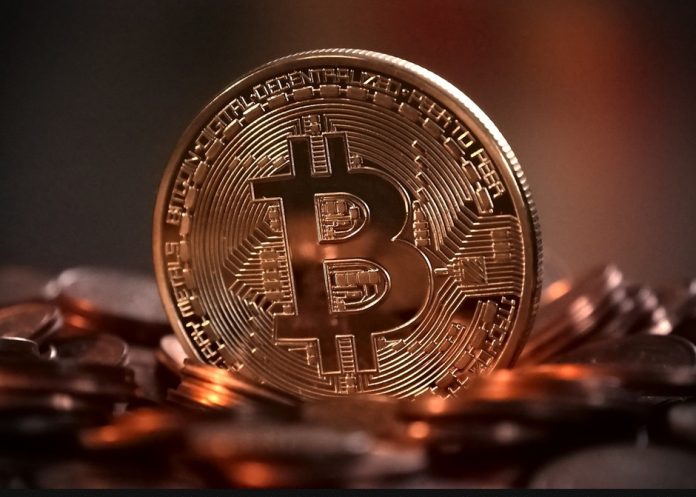
Bitcoin could be entering a new phase of sustained growth rather than explosive, short-term rallies, according to Bitwise Chief Investment Officer Matt Hougan.

He says increasing institutional adoption and a maturing market structure may support steady returns for Bitcoin over the next decade, even as volatility gradually declines.

Speaking on CNBC on Friday, the crypto expert said he expects Bitcoin to enter a prolonged period of gradual appreciation marked by lower volatility. He described the outlook as a “10-year grind upward” characterized by strong but unspectacular returns, punctuated by periodic pullbacks.

Hougan maintained his bullish outlook for 2026, reiterating a forecast he first shared in July months before Bitcoin surged to a new all-time high of $125,100 in October. “Next year should be positive,” he said, expressing confidence that the broader trend remains intact despite recent market weakness.

Using what he described as conservative assumptions, Hougan developed a valuation model that projects Bitcoin’s price could climb to as high as $1.3 million by 2035. His outlook reflects growing confidence that Bitcoin’s maturing market structure and increasing adoption could support sustained long-term returns, positioning it as a major investment asset rather than a speculative trade.

In recent times, Bitcoin’s market structure has significantly improved. Liquidity is deeper than ever, with high trading volumes across regulated exchanges and the presence of institutional-grade custodians and brokers.

The introduction of spot Bitcoin ETFs in major markets has further strengthened this structure, allowing traditional investors to gain exposure through familiar, regulated vehicles. These developments have reduced extreme volatility compared to earlier cycles and made price discovery more efficient.

Notably, institutional participation has reshaped Bitcoin’s investor base. Pension funds, asset managers, hedge funds, and publicly listed companies now view Bitcoin as a strategic allocation rather than a short-term trade. Many hold it as a hedge against inflation, currency debasement, and macroeconomic uncertainty, aligning Bitcoin more closely with assets like gold than with high-risk speculative instruments.

However, Bitcoin’s recent decline has reignited debate around the relevance of its traditional four-year market cycle. The crypto asset in October 2025 hit an all time above $126,000 before retracing to the $80,000 zone. BTC is currently trading at $87,627 at the time of this report.

Hougan attributed the recent sell-off largely to fast-moving retail investors who exited positions toward the end of the year in anticipation of a cyclical downturn. In contrast, he argued that Bitcoin’s downside has been cushioned by consistent institutional inflows. Unlike past cycles that saw drawdowns of up to 60%, Bitcoin’s current decline has been more contained due to what Hougan described as “persistent, slow-moving institutional buying.”

ReserveOne CIO Sebastian Beau noted that it remains unclear whether the cycle is still valid, pointing out that Bitcoin has fallen roughly 30% from its October peak to around $87,000 in a relatively short period. The timing of the October highs, which closely resembles peaks from previous cycles, has fueled speculation that 2026 could be a down year.

Still, caution remains among some market veterans. Renowned trader Peter Brandt has warned that Bitcoin could fall as low as $60,000 by the third quarter of 2026.

At the time of publication, Bitcoin was trading at $87,818, down 3.81% over the past 30 days, according to CoinMarketCap.

Outlook

Looking ahead, Bitcoin appears poised to transition into a more mature investment phase, where long-term fundamentals matter more than short-term hype.

If Hougan’s thesis holds, the coming years may be defined less by dramatic boom-and-bust cycles and more by steady, compounding growth supported by institutional demand, improved infrastructure, and broader acceptance within traditional finance.

Overall, the outlook suggests a Bitcoin market that is growing up less explosive, but potentially more resilient. For investors, this implies a shift in mindset, from chasing rapid rallies to positioning for long-term value creation in an asset increasingly viewed as a core component of the global financial system.

Improve This To Win The Year 2026

1

As we close 2025 and look ahead to the promises of 2026, here is a playbook to win. In our places of work, there is a truth we must first understand: the Human Resources department is not primarily established to help you; it is established to help the company and advance its mission. That is not criticism; it is simply how organizations are designed. HR will always interpret policies in favor of the firm before the individual. If no one has told you this before, read it here, as you prepare for a productive and profitable 2026.

This also means we must discard the illusion that the workplace is a family reunion square where everyone gathers daily and goes home happy. Companies are not built as family unions. They are platforms where people assemble to pursue a mission, to fix identified frictions in the market by mobilizing ideas, capital, and execution, to create products and services.

In that translation from mission to market, everyone must deliver. You must get your job done. Even in the most supportive organizations, if the mission no longer sees a path into the future with you, it will act accordingly, regardless of how anyone feels. The core objective is not to make individuals happy; it is to accomplish the strategic mission. In the tri-pillars of people, processes, and tools, if you are perceived as weak in the people pillar, you will be asked to move on.

What does this teach us about work, careers, and job titles? A lot. And it leads to one of the greatest forms of career liberation: do not allow your job title or workplace to define your identity. Titles and organizations are ephemeral. If you anchor your self-worth solely on them, the day they change or disappear, you will be miserable. You must matter to people because of who you are, not just where you work or what you are called.

So, pursue a positive professional personality. Personality does not expire in the minds of people, even when titles and workplaces do. In truth, the only permanent professional “title” any of us carries is our personality.

Indeed, when the moment comes, will a colleague recommend you for an opportunity? Will a classmate invest in a venture you are starting? In those moments, no one remembers titles. They remember how you treated people, how you showed up, and how you made them feel. And that is my challenge to you for 2026: getting people to recommend you in your absence because the best time to audition for a GREAT job is when none is advertised!

Build relationships anchored on respect, trust, and positive energy. That is a fountain from which you can draw living waters of abundance after job titles, companies, and workplace brands have faded.

People like to work, and do business, with people who bring positive vibes. If you become that person, your professional options will widen. May 2026 work for all of us. Have a truly great one ahead.

Best Crypto to Buy and Turn $100 into $10,000: Little Pepe (LILPEPE), Cardano (ADA), and Solana (SOL) Price Prediction Compared

0

Investors with small budgets are still seeking cryptocurrencies that can potentially generate significant returns, particularly those that can multiply $100 into as much as $10,000 during the next major market cycle. Established altcoins like Cardano (ADA) and Solana (SOL) still hold the top spots in the blockchain sector, but a new player, Little Pepe ($LILPEPE), is swiftly becoming the best choice for aggressive upside. Little Pepe (LILPEPE) is gaining the kind of momentum that early-stage investors seek when they aim to generate substantial returns quickly. Its presale has already raised more than $27.6 million and sold over 16.7 billion tokens.

ADA and SOL Solid Foundations but Slower Growth Potential

Solana???????????????? is great for decentralized finance, NFTs, and high-throughput applications. With the speed and low fees at which transactions are carried out, and more people joining, it is not surprising that Solana is going very well. Solana???????????????? is still a major player and is very popular, but it still has the potential to expand and develop further if more institutions take notice of it. However, the probability of it going back to its original value is not more than ????????????????50%.  There’s a lot of upside potential with smaller and newer tokens. Cardano is highly stable and predictable with its design. It will not change due to its scientific development. It has a steady shift toward smart contracts. ADA has strong growth and numerous opportunities in the design. Its large market is due to its strong base. It is still a good choice for continuous performance, but as the ecosystem has grown, it has become less capable of delivering a substantial 50x or 100x return. The ADA may be too slow for investors who want to quickly turn a small amount of money into a significant amount.

Little Pepe ($LILPEPE): Fastest-Selling Presale and the Best High-Upside Buy

Little???????????????? Pepe (LILPEPE) is a source of great fascination both for retail investors and crypto analysts, as it is seen as a project that can go up drastically in the early stages. That is why the presale has been a great success, attracting over $27.6 million in investments from patrons worldwide and selling more than 16.7 billion tokens. Little Pepe (LILPEPE) has raised a substantial amount of money in a very short time, placing it far ahead of most other early-stage projects and demonstrating that people have a great deal of confidence in its long-term vision. The fact that 97.2% of the stage 13 presale is already completed is an indication of how fast new buyers are entering the market. Early supporters are already receiving some tokens as the prices increase with each stage.

One of the strongest arguments for Little Pepe (LILPEPE)  as the best buy right now is the pace at which its presale is progressing. Early stages sold out quickly, giving investors who joined at lower price points clear profits as subsequent rounds increased in value.  The enthusiasm behind each step has continued to grow. As the project approaches its final stages and funding constraints tighten, demand has also increased. This means that new investors are rushing to get in on the action before prices rise significantly.  This generates a cycle of interest and upward pressure on valuation. On the other hand, Cardano and Solana have already gone through their early explosive phases; thus, it’s unlikely that they will experience such swift profit cycles.

Conclusion

Cardano and Solana remain strong blockchain giants, but neither offers the early-stage explosiveness that small-budget investors seek. Little Pepe (LILPEPE), with its $27.6 million raised, 16.7 billion tokens sold, 96.5% presale progress, and rapid stage-to-stage price growth, stands out as the most promising high-upside choice. For anyone aiming to turn a small investment into a potentially significant return, Little Pepe ($LILPEPE) is currently the strongest buy among the three.

For more information about Little Pepe (LILPEPE) visit the links below:

Website: https://littlepepe.com

Whitepaper: https://littlepepe.com/whitepaper.pdf

Telegram: https://t.me/littlepepetoken

 Twitter/X: https://x.com/littlepepetoken

 $777k Giveaway: https://littlepepe.com/777k-giveaway/

Germany’s Reduction in Air Travel Tax Will not Automatically lead to Cheaper Flights Tickets

0

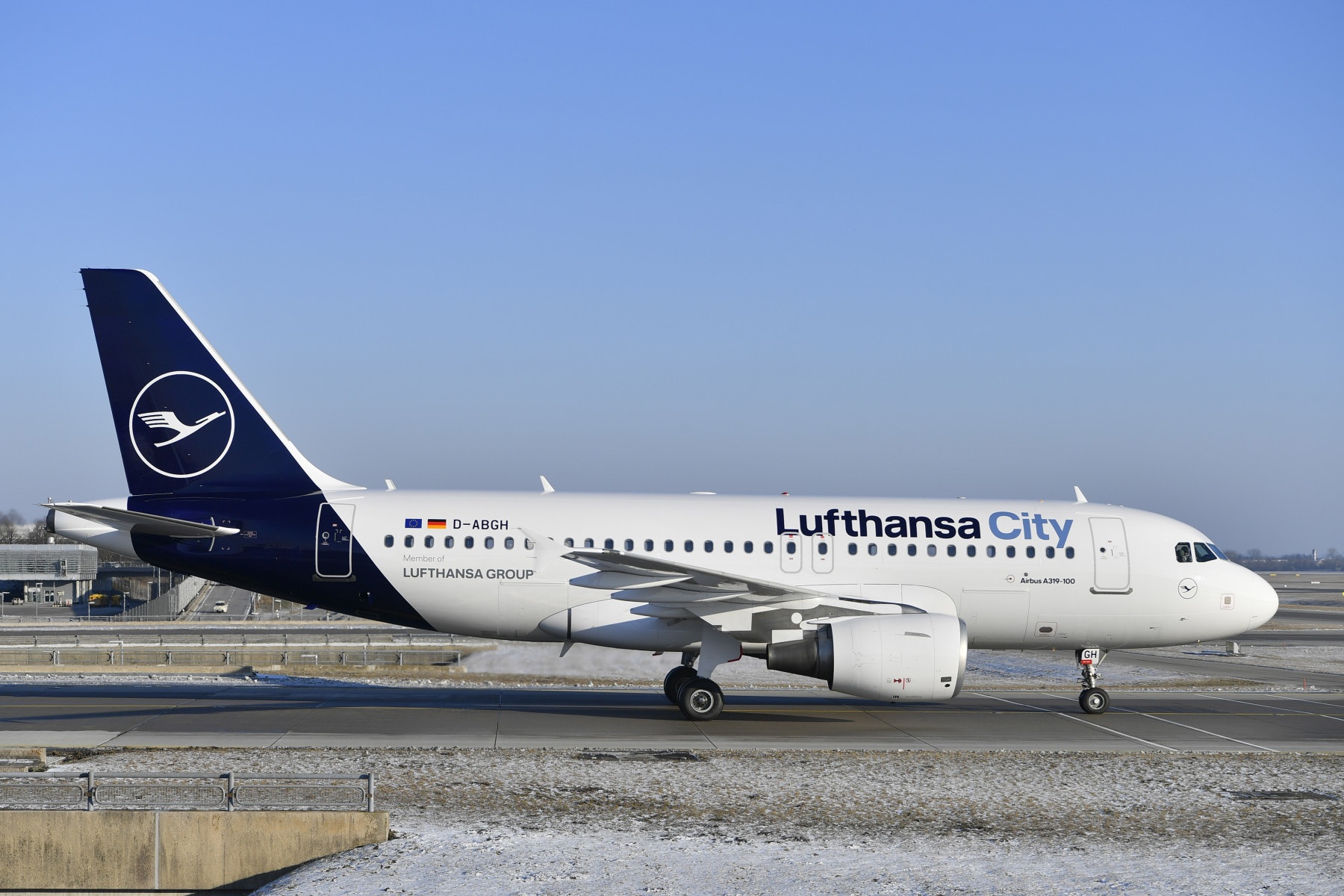
Germany’s Transport Minister Patrick Schnieder (CDU) has cautioned that the planned reduction in Germany’s air travel tax (Luftverkehrssteuer), set to take effect on July 1, 2026, will not automatically lead to cheaper flight tickets.

The primary goal of the tax cut is to boost the competitiveness of Germany as an aviation hub. German airports are currently handling passenger volumes at only about 90% of pre-pandemic levels, while many other European countries have exceeded those figures around 110%.

Schnieder emphasized that airlines decide their own pricing and routes, and the tax relief is meant to encourage them to maintain or expand operations in Germany rather than shifting flights elsewhere.

He told the Funke Media Group: “There is no automatic mechanism for lower ticket prices.” The head of the German Airport Association (ADV), Ralph Beisel, agreed, stating that the measure aims to strengthen Germany’s position in air travel competition, not directly lower fares.

This tax reduction reverses part of a 2024 increase introduced under the previous government. Earlier reports in 2025 suggested potential cheaper flights due to the cut, but airlines are not obligated to pass on the savings to consumers—they may use it to improve profitability or invest in routes.

This news broke amid ongoing discussions about Germany’s aviation sector lagging behind European peers. Taxation of aviation remains largely a national competence, with significant exemptions at the EU level driven by historical international agreements like the 1944 Chicago Convention and the Energy Taxation Directive (ETD, 2003/96/EC).

No EU-wide tax on kerosene— aviation fuel: Commercial aviation fuel is exempt from excise duties for intra-EU and international flights. This exemption applies across all member states, though domestic flights could theoretically be taxed none are as of late 2025.

No mandatory EU-wide ticket tax: Air passenger duties or “ticket taxes” are implemented nationally by some countries, varying widely in rates and structure. VAT on tickets: International flights are generally VAT-exempt; domestic flights may be subject to national VAT rates in some states.

Other mechanisms: Aviation emissions are addressed through the EU Emissions Trading System (ETS), which covers intra-EU flights and is expanding, rather than direct taxes. Proposals to introduce EU-wide kerosene taxation as part of the “Fit for 55” package (2021) have stalled due to lack of unanimous agreement in the Council.

Negotiations on revising the ETD remain blocked as of December 2025, with discussions around potential delays or exemptions for aviation fuel lasting until 2033–2045 or longer. ETD prohibits taxation except via bilateral agreements, none exist. Criticized as a subsidy worth €13–35 billion annually across the EU.

Ticket Taxes

No EU-wide harmonization; national only. Some calls (e.g., 2019 joint statement by 9 finance ministers) for uniform passenger taxes, but not implemented. VAT on international tickets exempted which aligns with international norms; domestic tickets may incur VAT in ~17 states.

EU ETS for Aviation; Applies to intra-EU flights; expanding to all departing flights. Market-based carbon pricing alternative to fuel taxes.

Several member states levy departure-based passenger taxes often distance-tiered. Rates are approximate and subject to change; Many countries e.g., Spain, Netherlands, Belgium have no or minimal passenger taxes. This patchwork creates competitive distortions, with airlines and hubs in low-tax countries benefiting.

Exemptions are seen as subsidies distorting competition with greener transport. Groups like Transport & Environment estimate a €35–47 billion annual “tax gap” if aviation were taxed like road fuels. Industry opposition: Airlines argue taxes reduce competitiveness, increase ticket prices without guaranteeing emission reductions, and duplicate ETS.

Stalled reforms: The 2021 ETD revision proposed phasing in kerosene taxes (2023–2033) with zero rates for sustainable fuels, but lacks consensus. Recent drafts suggest prolonged exemptions due to limited sustainable aviation fuel availability.

In summary, EU air travel taxation prioritizes exemptions to support connectivity and competitiveness, relying on ETS for emissions control. National variations persist, with no immediate shift toward EU-wide fuel or ticket taxes expected.