DD
MM
YYYY

PAGES

DD
MM
YYYY

spot_img

PAGES

Home Blog Page 4543

Roku’s Strategic Mistake By Going to Make TVs over being Streaming Operating System for TVs

2

As an MBA student, which one is a better business model?

A: Hire 10 great movie producers to produce 200 short videos for your digital platform over two years (Quibi like). (Quibi was a media company that developed media content designed for smartphones)

B: Allow tens of thousands of amateur creators, and use an AI to select the best videos daily, and distribute them massively in your platform (Tiktok like).

When Quibi launched, I wrote that it was a bad idea; yes, even though eBay and HP former CEO (Meg Whitman) was in charge, along with legendary producer, Jeffrey Katzenberg: “In 2000, Option A would have been a good business because the computing resources to run AI and crunch the numbers were not (commonly) available for Option B. But with cloud computing and the age of AI here, Option B wins. The probability of getting a hit video compounds in Option B while A is limited by the insights of just 10 people; virality is key for short movies. That is why Tiktok will remain a better business than Quibi”. Quibi had since collapsed.

This takes me to Roku which makes streaming software for TVs. The company now wants to make TVs. To understand this business, consider Taiwan’s TSMC which fabricates microchips for hundreds of companies around the world. Those companies merely design while TSMC fabricates. With that strong customer base, the probability of winning and having orders is close to “1” since all those design companies like Nvidia, ADI, TI, etc will end up coming to it, irrespective of who has the best circuit. Contrast  with old Intel which had a closed foundry (not sharing with any other firm); if Intel is off by design, its foundry will not have orders. In other words, if a product is not selling well, Intel will not have orders to use its expensive foundries. (Intel has recently opened its foundries for competitors to use, becoming like TSMC in the contract manufacturing business)

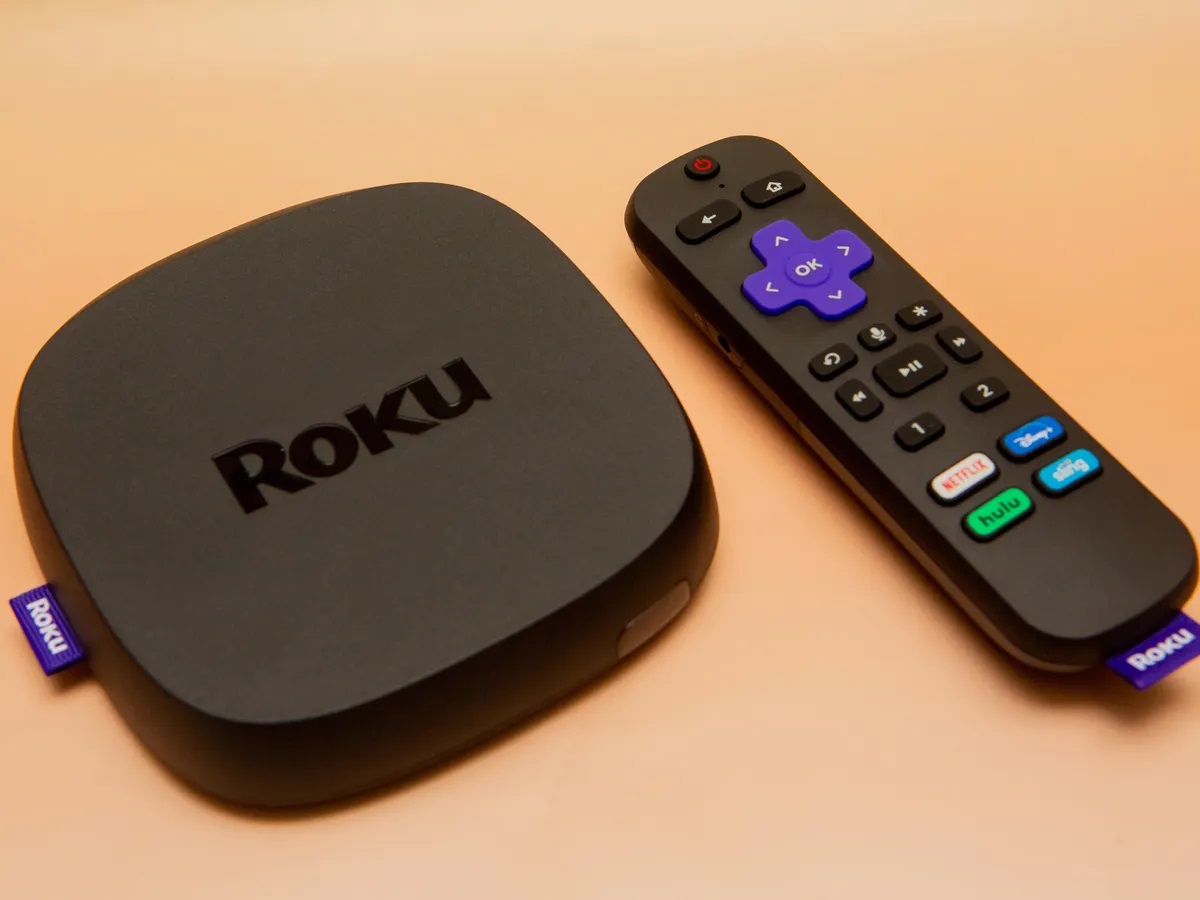
A third of all new televisions sold in the U.S. run Roku’s streaming software. Now the company is jumping directly into the small-screen space by launching its own line of Roku-branded TVs. Roku will offer 11 models, ranging from a 24-inch TV ($119) to a 75-inch screen ($999). The move into TV hardware “has been rumored for some time,” The Verge notes; rival Amazon began selling Fire-branded sets in 2021. Roku will need to move carefully to avoid alienating existing makers of Roku-loaded TVs, which could shift to the Google TV platform.

Roku software runs on 30% of new TVs sold in the U.S. Largely, it was emerging as a convergence for most TV makers. But as it moves to make its own TV, this will happen: most TV brands will move to other software brands, especially Google TV. When that happens, Roku has to win the TV hardware market (extremely tough) for its software to be relevant.

I do think Roku made a mistake on this playbook; you win on bytes, not atoms these days. Selling TVs seems off when you see the emerging convergence around software operating systems. As Android is to multi-vendor smartphones, Roku was poised to become the same in the TV world. But now, it has dropped its future; bad call there.

Yet,  I understand the pressure when your unit share has traded at $440 in the last 24 months, and now hovers around $40, anything becomes an effort.

Comment on Feed

Comment #1: me say if you are serious about software then you should make hardware. Wonder how this applies to them

Response: Possibly, the person was referring to Apple. The irony is that Apple was a hardware company which means it owned and had the customers before becoming an operating system in the Apple Store.  There is no record of any software company that transmuted from software to hardware and did well in the two-play consumer market. Why? Any successful consumer software company has been on some hardware. Any attempt to take over those hardware firms will damage the software. Even Google has been unable to move from being a software firm (Android) to make a great phone in Pixel.

Comment #1A: Ndubuisi Ekekwe I agree with that thesis sir.

If you start as a software company trying to win the hardware market too, it is harder. (e.g Android, Roku)

  • You’re producing for other hardware companies as your source of revenue.
  • You’re optimizing to be accepted by many brands
  • Trying to add hardware play serves as a threat to your initial primary customers
  • The consumers of your new hardware + software aren’t exactly getting any strong unique treatment because your software is available on other hardware brands (e.g. pixel, new Roku TV)

When you start as a hardware company on the other hand, there’s a clause to being able to replicate Apple’s success.

  • Started as a hardware company with a strong moat (Macintosh, Ipod, Iphone)
  • They had other hardware (phone) competitors in the market
  • By choosing to build their own software, instead of adopting from a provider; they created a unique experience for their users and hence extra moat for their own phone
  • The Clause (Their software is not open for for other hardware companies to integrate)

Tesla is the next to win the hardware -software play by continuing their leadership in the hardware (car) business whilst building their own car software.

Comment #2: As a newbie in Canada, I was having a tough time with my creditworthiness report, though minute, it was worrisome to me because I couldn’t fathom where the leakage was coming from especially as I can pay off my credit card uses and other debt obligations before due dates and other debt. This was not until I discovered a certain bank account I opened that I later disused and even delete the app. This bank kept on posting debits to the account in form of monthly service charges. Roku Tv may be a profit-eroding segment here.

Even though diversification helps to evolve and meet the demands of the times, I still think this idea is not a very ideal one especially in this era where competitiveness is extremely high in the marketplace.

If you find a niche, and you are able to grow it to a category king, build and sustain it (thanks to the Tekedia Institute’s mMBA). This will be tough with Sony, LG, Panasonic, and Hisense, just to mention a few. And if Roku TV has its parent company software segment as its main OPS, it may create a sense of choice limitations in consumers.

My Response: “If you find a niche, and you are able to grow it to a category king, build and sustain it (thanks to the Tekedia Institute’s mMBA).” – great perspective Alexander Oloriegbe (MBA student – Healthcare), Bsc. I am very happy that Tekedia Mini-MBA is expanding our business lexicons. We like having you here.

Comment #3: In every ecosystem, the OS is no doubt revered because she is the land. But it is the builders with the most popular housing estates that control the community. for without the builders, she would be a barren wasteland.

This scenario can be likened to the much hyped metaverse. No matter who first succeeds with the metaverse OS, it will be controlled by those who build the hardware gateway to it.

I hope Roku learns from the travails of Google with the Pixel and makes a U-turn to save what’s left of their business. Great Analogy, Professor.

Comment 4: Amazon, a competitor is already doing the same, is almost inevitable for Roku. Otherwise they might become another Nokia.

My Response: Amazon may not be a good example since Amazon has Prime which requires at least $120 per year membership. Amazon does not make money on the Fire business (it wrote down $billions) but it makes up on those membership fees.  It makes $25 billion from those memberships yearly and uses that money to subsidize everything, from TV to sports games! Roku does not have membership and will need to make money on its TV, and that complicates its business model.

Comment 5: It’s actually important to understand the workings of dependencies in the business world and build your model around it. I would rather remain in business, grow my numbers while servicing others and have them depend on me than going into their space, becoming a competitor, losing the market and dropping GMV. Know your place and appreciate it else you get pushed out of business.

Comment 6: Ndubuisi Ekekwe not only that, they’ll be taking on (or trying to take on) heavy CAPEX investment that either they cannot afford in the long term, cannot access, or are not structurally geared up to manage and mitigate risks. It’s like Tesla and making cars. Now VW has the ID range out in the market at a better price point, I feel it’s only a matter of time before Tesla may need to pivot into making EV platforms and leave the car makers (who have economies of scale and the distribution network) to make the overall car.

The Battle of Fire and Water: A fable of Leadership and Emotional Intelligence

0

A long time ago before the manifestation of the material forms, two spirits, fire and water had been designated to watch over the heavenly gate, and had in their custody a divinely sealed box which contained the plans and order of the material forms.

One day, the two spirits became very curious about the material world and their purpose in it. So they got into a squabble of superiority, each giving its own reasons why it should have more dominance and power in the material world.

Fire, easily irritated and angered, flared up amidst the argument and took the box and smashed it to the ground. Then all the material creatures sprang forth from the box, running determinedly and unstoppably outside the heaven’s gate.

The two spirits became confused about how to control the situation. Consequently, they resolved to take the matter to their master in the most elevated realm of the heaven.

Hearing this, the master felt disappointed about their incompetence, especially about the lack of emotional intelligence of Fire. So the master gave his verdict.

Fire was sentenced to life imprisonment and denied the right to having a definite space in the material world. However, due to its original inclusion in the order of the material form, fire was given the privilege to come to life only where it’s activated or ignited.

For its calmness and composure, Water was rewarded with a larger space and dominion in the material world, but this came with a burden for water to always seek to tame fire and order it back to the prison whenever the latter surfaces in the material world.

The moral of this legend: Anger and violence are destructive elements of life. And while we keep our calm as we watch our neighbour exhibit these destructive elements, we may not be totally absolved of the consequences.

Nigeria’s Next President to Inherit N77trn Debt – Debt Management Office

0

The Debt Management Office (DMO) has revealed that President Muhammadu Buhari’s administration will bequeath N77 trillion debt to the next administration, as it borrows more to fund budgets’ deficit.

Director General of the Debt Management Office Patience Oniha, disclosed this on Wednesday in Abuja, while addressing the press during the public presentation and breakdown of the highlights of the 2023 Appropriation Act. This came after the N819.5 billion 2022 Supplementary Budget and the N21.83 trillion 2023 Appropriation Bill were signed into law by Buhari on Tuesday.

The Appropriation Act has an overall deficit of N11.34 trillion for 2023, which represents 5.03 percent of Nigeria’s GDP. The total revenue available to fund the 2023 budget is estimated at N10.49 trillion, according to the Minister of Finance, Budget and National Planning, Zainab Ahmed.

She said the budget deficit would be financed mainly by borrowing. She said the federal government will borrow from domestic sources the sum of N7.04 trillion; foreign sources, N1.76 trillion; multilateral loan drawdowns, N1.77 billion; and privatization proceeds, N206.18 billion

“The gap between the revenue, additional financing and total expenditure, amounting to N553.46 billion is expected to be financed by additional revenue from spectrum fees and tax on the maritime sector,” Ahmed explained.

Earlier, Buhari had written to inform the National Assembly that the federal government will be taking additional N1 trillion from the central bank as part of its Ways and Means loan to fund the budget deficit. This would take the total Ways and Means loan from the CBN to N23 trillion. The federal government said it plans to convert it to a long term (40-year) bond.

But Oniha explained that the move by the federal government to securitize the Ways and Means loans would push the country’s debt profile up to about N77 trillion.

“There are a lot of discussions on the Ways and Means. In addition to the significant cost saving in loan service we would get by securitizing it, there is an element of transparency in the sense that it is now reflected in the public debt stock.

“Once it is passed by the National Assembly, it means we will be seeing that figure included in the public debt. You will see a significant increase in public debt to N77 trillion.

“The other area of the debt stock we are trying to highlight is to say the debt stock is also growing from the issuance of promissory notes, which are not true borrowing as such by the government,” Oniha said.

The Minister of Finance said the Ways and Means is currently running at interest rates averaging 18.5 percent. She however explained that with legislative backing, which will help stretch the repayment window to a 40-year period, the Ways and Means would have its interest rate dropped to about nine percent.

“Currently, the Ways and Means is running interest rates, which today is averaging 18.5 per cent. That’s a very, very harvest, so if this is not affordable, the interest rates accruing again and adding to the Ways and Means anything from N1.8 trillion to N2.2 trillion. So, that will be the consequence.

“I’m sure they will understand. So, once that approval is given, it will benefit from a lower interest cost of nine per cent and will benefit from a stretched initiated plan of 40 years with a three- year moratorium which will provide very significant relief to the federal government,” she said.

However, the minister reiterated that Nigeria does not have a plan to restructure its debt, adding that the country is committed to meeting its domestic and external debt obligations. But she said that Nigeria would continue to utilize appropriate debt management tools to streamline the cost and risk profile in the debt portfolio, including through concessional loans, spreading out of debt maturities to avoid bunching, and re-profiling of the debt maturities by refinancing short-term debt using long-term debt instruments.

Besides revenue shortfalls emanating from non-remittance of funds by revenue-generating agencies, Ahmed reiterated that the federal government lost N6 trillion to various tax incentives and waivers in 2021. To address that, the minister said the federal government would phase out the Integrated Corporate Income Tax, otherwise known as Pioneer Tax Incentives, for industries that had grown in the 2023 Appropriation Act.

Nigeria’s oil revenue has lost its steam to the non-oil sector which accounted for the larger percent of the federal government’s total revenue in 2022. This is believed to have prompted the government to increase attention given to revenue-generating agencies.

Ahmed said there would be tighter enforcement of the performance management framework for Government-Owned Enterprises (GOEs) in order to increase operating surplus/dividend remittances in 2023.

This has become necessary as more than 70 percent of the budget revenue is expected from the non-oil sector.

“Total revenue available to fund the 2023 budget is estimated at N10.49 trillion. This includes the gross revenues of 63 GOEs totaling N3.87 trillion.

“Of this, oil revenue share is projected at N2.29 trillion, non-oil taxes are estimated at N243 trillion, and independent revenues are projected to be N2.62 trillion. Other revenues total N762 billion. In aggregate, 22 percent of projected revenue is expected from oil-related sources, while 78 percent is to be earned from non-oil sources,” Ahmed said.

Nigeria is facing a double tragedy of rising debt amid dwindling revenue. The situation sets her up to a negative debt service-to-revenue ratio. The federal government spent 80.6% of its revenue on debt service in 11 months of 2022, which amounts to N5.24 trillion out of N6.5 trillion, according to Ahmed.

The 80.6 percent debt service-to-revenue ratio, which is far above World Bank’s suggested 22.5 percent for low-income countries like Nigeria, bequeaths a dire economic inheritance to whoever becomes Nigeria’s next president.

Cash flow vs Capital Gain Investing — Insights By Author and Business Coach, Robert Kiyosaki

0

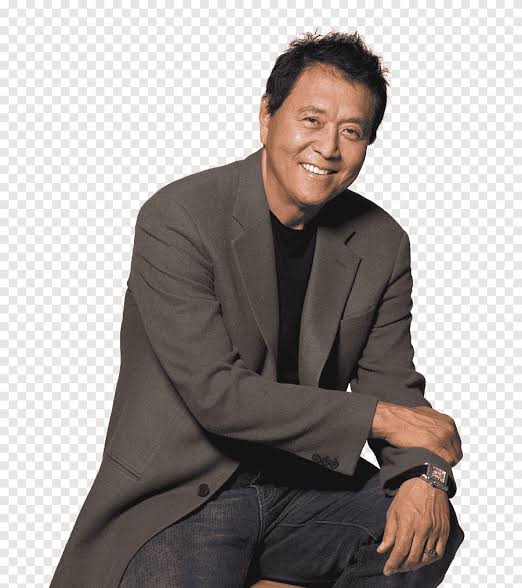
“One of the reasons so many people lose so much money investing, or think that investing is risky, is because they invest like ranchers. They invest to slaughter rather than to milk” — Robert Kiyosaki.

Knowledge of investing is an essential part of financial intelligence and financial success. However, despite the awareness of the role of investment in the financial and economic success of the individual, people often invest wrongly due to wrong orientation about money or they rather avoid investing their money due to lack of exposure to intelligence and proper mentorship.

The author of Rich Dad Poor Dad Robert Kiyosaki, offers interesting insight on how investment can be better perceived and approached. The following insights are courtesy of Robert Kiyosaki:

“I learned the difference between cash flow investing and capital gains investing from a herd of cows.

“When I was 16 years old, rich dad took his son and me to visit a cattle ranch. The ranch was a beautiful place to visit.

“On this visit to the ranch, we happened to see cowboys herding cattle from the feed yard to the slaughterhouse. Although rich dad took us away before we could see any cattle being slaughtered, we knew what was going to happen… and so did the cattle. It was an experience I will never forget.

“A few months later, rich dad took us to a dairy farm. Early in the morning, we saw the farmer herding his cows into the barn for milking. These cattle behaved very differently.

“The financial lesson rich dad wanted us to learn was that, while both the cattle rancher and the dairy farmer count their cattle as assets, they treat their assets differently, and they operate via different business models.

“The visits to the ranch and the farm were to emphasize the very important difference between two investing strategies: Capital gains versus Cash flow.

“Simply put, a cattle rancher can be compared to a person who invests for capital gains. He has to keep finding and raising new cows. It’s non-stop.

“A dairy farmer is more like an investor who invests for cash flow. He only needs to maintain his cows rather. It’s much easier work.

“One of the reasons so many people lose so much money investing, or think that investing is risky, is because they invest like ranchers. They invest to slaughter rather than to milk.

“I invest to milk. Milk makes ice cream” Kiyosaki said.

Foreclosure in Mortgage; ways to avert in Nigeria

0

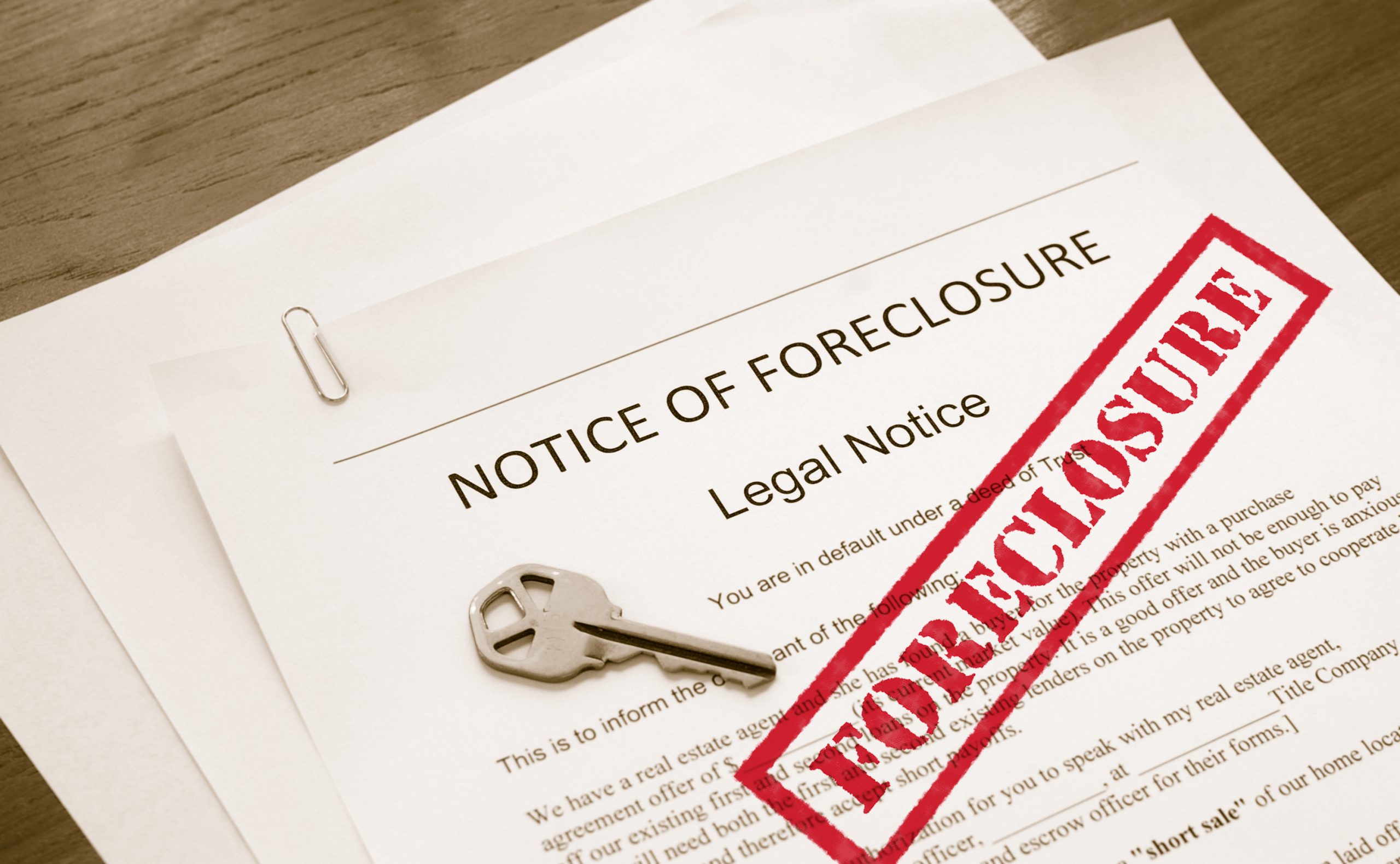
When you approach financial institutions to get a loan or grants i.e. financial facilities, most often than not they will ask you to present a property that is worth more than the loan you are requesting which will serve as collateral or security for the mortgage sum; the reason for collateral is because of the presumption that you may likely not want to pay back within the time frame you are given to pay back or you may elope with their money; so when you refuse to pay back within the time frame the collateral or security you presented will be foreclosed or taken over by the lenders. The money lender can either keep security for themselves or sell it off as a way of recovering back the money they lent to you.

The money you were given is called the loan or mortgage sum, the property you used to secure the loan is called the collateral or security, and the act of taking over your property i.e. the collateral by the lender for your failure to repay the loan within the expected time frame is called foreclosure.

Mortgage in a simpler term is a legal agreement by which a bank, building society, financial institutions, government etc lend money at interest in exchange for taking the title of the debtor’s property, with the condition that the conveyance of title becomes void upon the payment of the debt and the borrower have the right to repossess his property after repayment of the loan sum and the interest.

It is an agreement between a person and a lender that gives the lender the right to take over the borrower’s property if the borrower fails to repay the money he borrowed with the interest.

Foreclosure, on the other hand, is, therefore, a term for the processes used by a lender, mortgage-holders, or mortgagees, to take over a collateral or mortgaged property from a borrower who defaults on their mortgages.

You have no legal rights in law to stop or resist a lender from taking over your properties or foreclosing on the collateral when you have failed to pay back the mortgaged sum with the interest within the time frame you were given; although you may be granted extra time to pay and put a hold on the foreclosure, but that can only happen in the court of equity and not in the court of law. 

The purpose of this piece is to let you know that inasmuch as you are taking loans or financial facilities from financial institutions, agree on a repayment plan that will work for you because failure to pay back the loan on the expected time frame, the property you used as collateral will be foreclosed on by the lender and there is nothing you can do about it; you do not even have the legal rights to resist or stop the lender from possessing your property and the court of law cannot help you.