DD
MM
YYYY

PAGES

DD
MM
YYYY

spot_img

PAGES

Home Blog Page 4580

Meta and Google Have Lost their Digital Advertising Duopoly in U.S. Ad Market

0

There has been a shift in the world of digital advertising, taking the leaders off their position as newcomers emerge, disrupting the status quo.

Meta and Alphabet have ruled the world of digital advertising over the years, but are now watching their dominance usurped by growing competition by new entrants – Amazon, TikTok, Microsoft and Apple, the Financial Times reports.

The FT reports, citing data from research group Insider Intelligence, that the share of US ad revenues held by Facebook’s parent Meta and Google owner Alphabet is projected to fall by 2.5 percentage points to 48.4 percent this year, the first time the two groups will not hold a majority share of the market since 2014.

The duopoly has been recording a consecutive decline for five years, resulting in a fall of its market share that peaked at 54.7 percent in 2017 and is projected to fall further to 43.9 percent by 2024, the report said. The report noted that both Alphabet and Meta’s share has declined worldwide 1 percentage point to 49.5 percent in 2022.

While the decline is mainly attributed to growing rivalry, which Jerry Dischler, head of ads at Google, acknowledged when he told the Financial Times that fierce rivalry from new entrants reflects an “extremely dynamic ad market,” other factors have also impacted the duopoly.

In the report, the Financial Times listed the factors which include antitrust probes and Apple’s privacy policy change – which has more than halved Meta’s Facebook revenue.

How the duo lost their dominance – FT

Regulators in the US and Europe have added antitrust scrutiny such as pursuing Google for allegedly promoting its products over rivals.

In December, Facebook owner Meta was served with a complaint from the EU’s watchdogs over concerns that the social network’s classified advert service is unfair to rivals. Tech groups are fighting harder than ever for a share of the $300 billion digital ads market, even as companies worldwide are cutting their ad budgets in response to rising interest rates and high inflation.

Amazon and Apple have expanded their advertising teams. In July, Netflix announced it would partner with Microsoft to build an advertisement-supported tier of its streaming service.

Meta chief executive Mark Zuckerberg has blamed recent revenue falls on Apple’s privacy changes that make it harder to track users and target advertising, as well as the growing popularity of viral videos app TikTok, owned by Chinese parent ByteDance.

“Four years ago, you wouldn’t be talking about either [TikTok or Amazon] in advertising,” said Dischler. “So it’s really telling that more and more people are acknowledging that advertising is a great and scalable business model.”

Amazon’s foray into the digital ads world has played a big part in hitting Meta and Google’s dominance. After years of toying in the market, it ramped efforts up in 2015 and has since seen ad revenues skyrocket from less than $1 billion to an estimated $38 billion this year.

“Before I joined, I didn’t even know what Amazon Ads was,” said an Amazon executive who says they now run “a massive team—and I didn’t know this existed before the recruiter called.”

Paul Prior, chief operating officer of Undertone, a digital advertising company, said retail giants led by Amazon woke up to the realization that their extensive data on customers could be the basis for a massive advertising business with higher margins than the sale of goods online.

But Amazon then went a step further, expanding its on-site ads business beyond its own shopping site. “Across the wider digital universe, they use that data set to empower brands and the advertisers to buy better, to spend more effectively and drive return on ad-spend,” said Prior.

Apple has also emerged as a new threat. Its ad revenues have grown from under $2.2 billion in 2018 to more than $7 billion this year. Although that is just 1.2 percent of the global market, it is already more than Snapchat and Pinterest combined, and some estimates suggest Apple could reach $30 billion of ad revenue by 2026.

In September, the FT revealed that the iPhone maker plans to nearly double the workforce in its fast-growing digital advertising business. Its job ads describe ambitions of “redefining advertising” for a “privacy-centric” world.

Zuckerberg has repeatedly hit out at Apple’s “conflict of interest,” criticizing it for charging “monopoly rents” and stifling innovation. Apple’s privacy rules have made it difficult for Meta to tailor ads to people, contributing to its shares falling by about two-thirds over the past 15 months.

Google does not appear to have seen as much impact from Apple’s privacy changes, as it can tailor ads directly to users typing in search terms—giving it valuable “user intent” data that Meta struggles to attain

But Apple already has its own Google Maps rival, a search function on the iPhone, and it is building a nascent ads business—which analysts say could take on Google in future.

“Apple has a really strong brand that consumers trust and they have the devices that are used by the cream of the consumer crop,” said Josh Koenig, chief strategy officer at Pantheon, a digital marketing platform. “If they can figure out how to turn that into a real valuable network for advertisers, they’ll be able to charge a premium.”

Insider Intelligence has forecast that Google and Meta’s US ad growth in 2023 will be just 3 percent and 5 percent, respectively, while at least eight of its rivals are to experience double-digit gains.

It estimates that Amazon’s ads business will rise by 19 percent, Apple 26 percent, Spotify 30 percent, TikTok 36 percent and Walmart 42 percent. However, many of these groups’ market shares are currently small.

Dischler said Google was working hard on expanding its ads business in both ecommerce—where it is partnering with retailers—as well as in privacy-first advertising, where he argues Google can play a bigger role than Apple.

“I very much don’t see it as a zero-sum game,” said Dischler. “If Uber has an ad network—billboards on cars that previously didn’t have billboards, and is providing advertising opportunities when you’re getting groceries or food through restaurants—then they’re making the pie bigger.
Buenos Aires Adds Cryptocurrency Mining as Taxable Activity

0

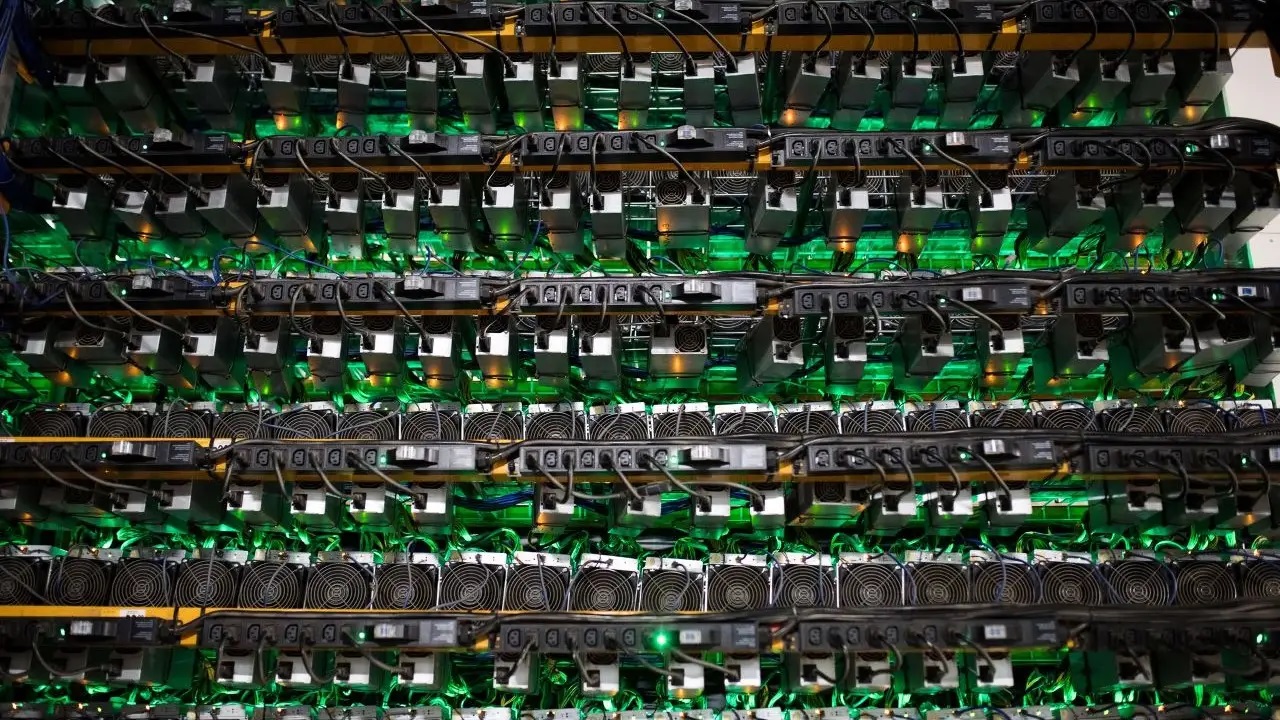
The Buenos Aires province in Argentina gave the go-ahead for a plan to include crypto mining as a taxable activity for the upcoming calendar year. 4% of the revenue generated by these operations will be required, according to a document presented by the province’s governor, Alex Kicillof, for the activity formally referred to as “Processing and validation services for crypto assets and/or cryptocurrency transactions (crypto asset and/or cryptocurrency mining)”

In the document, presented by the governor of the province, it establishes the “Processing and validation services for crypto assets and/or cryptocurrency transactions. However, it is yet unclear if Crypto Staking will be subject to taxation.

The taxes would be paid to the government of the province, and would not be related to any other taxes established by the Argentine national government. The document further clarifies that this tax will apply only when the hardware used to deploy this activity is located in the province’s jurisdiction.

This tax regime will begin to be applied in January, but there are still some elements undefined around the implementation of this new tax.

Doubts Remain

The doubts that analysts have about the application of this tax are related mainly to two areas. The first one has to do with the definition of the equipment that will be taxed. If the approved documents refer only to proof-of-work hardware, only ASIC miners and graphic cards will be considered for these taxes. However, if computers running staking nodes are also considered part of this hardware, staking could also be taxed.

Further, Marcos Zocaro, an Argentine accountant, has questions about the price at which the mined (or staked) cryptocurrencies will be taxed. The document states that these crypto assets will be taxed at “official or current value in place,” but fails to define the source of these values that vary from exchange to exchange. It is also unclear if this value will be calculated when the cryptocurrency is mined, or when the tax period is finished.

In April, Buenos Aires announced it would allow users to pay taxes with crypto this next year. The city also has a project to use a blockchain ID system and will host Ethereum nodes as part of its digitization and modernization push in 2023.

Bitcoin miners in Argentina are capitalizing on the inefficiencies of the country’s interventionist economy to reap outsize returns, fueled by memories of currency busts and powered by government-subsidized electricity.

The taxes would be paid to the provincial government and would not be related to any other taxes levied by the Argentine national government. According to the paper, this tax will only be levied in cases where the equipment used to carry out the operation is located inside the province’s borders.

The use of this new tax system will begin in January, but some details of its implementation are still up in the air. This means that crypto investors or traders in the city will stay away from any crypto mining to avoid getting taxed.

CBN Cash Withdrawal Policy Flawed, Needs to be Suspended – Nigeria Labour Congress

0

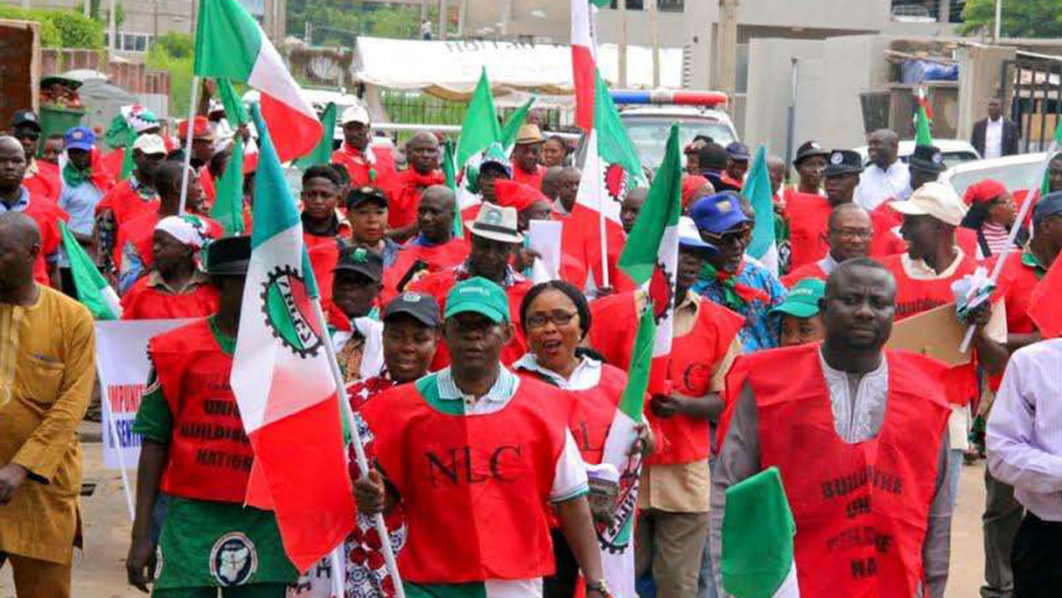
The Nigeria Labour Congress (NLC) through its president Ayuba Wabba has urged the Central Bank of Nigeria (CBN) to suspend its recent cash withdrawal policy noting that it poses so many implications to the majority of the citizens.

The union president via a statement disclosed that although the policy seeks to mitigate money laundering, and the likes, albeit it is flawed, as it will affect citizens most especially those in rural areas which makeup majority of Nigeria’s population.

The statement reads,

Fiscal policy which on paper appears to target the rich, especially unscrupulous ones who manipulate the system to launder money has now become a case of trying to kill a fly with a machine gun.

“The truth is that Nigerians, particularly rural dwellers, are the ones feeling the full punch of this policy. The reasons are not far-fetched. First, the Nigerian economy is largely informal and substantially rural as a far greater majority of our people live in rural locations.

The impact of this policy can be easily felt in rural markets where agricultural commodities, livestock, and farm produce are traded.

“Most rural dwellers and informal economy operators in areas starved of formal banking services rely heavily on cash for their daily business transactions. These cash transactions are usually conducted with Point of Sale (POS) machines.

The imposition of cash withdrawal limits by the CBN means that these businesses would suffer from cash starvation shock and most would not likely survive it. The implication is that many more Nigerians would be thrown under the poverty bus”.

Also, one major concern raised by the NLC is that the policy will land a big blow to pos businesses, which is very rampant in rural areas. This implies that many people will be pushed out of business making it difficult for them to cater for themselves and families.

In response to the policy, a group under the aegis of Point of Sale (POS) Operators has kicked against the withdrawal policy of the Central Bank of Nigeria, petitioning President Muhammadu Buhari and the National Assembly over the planned policy, also calling for the suspension of the policy to save 1.4 million bank agents from losing their means of livelihood.

Also, the Senate has asked the Central Bank of Nigeria to considerably adjust the cash withdrawal limits, as criticism trails the recently announced policy that is expected to take effect from Jan. 9, 2023.

Recall that on Tuesday, December 6, 2022, the Central Bank of Nigeria (CBN) issued a new directive to banks and other financial institutions to reduce cash transactions in the country.

According to the letter it sent to banks, the new order will reduce withdrawals at ATMs and PoS terminals to N20,000 ($27) daily and N100,000 weekly.

However, following continuing concerns expressed in many quarters, the apex bank, on Wednesday, reviewed the policy and now pegged the individual limits at N500,000 and corporate at N5 million per week.

Layoffs Still Ongoing at Twitter as Musk Terminates Employment of Few More Workers

0

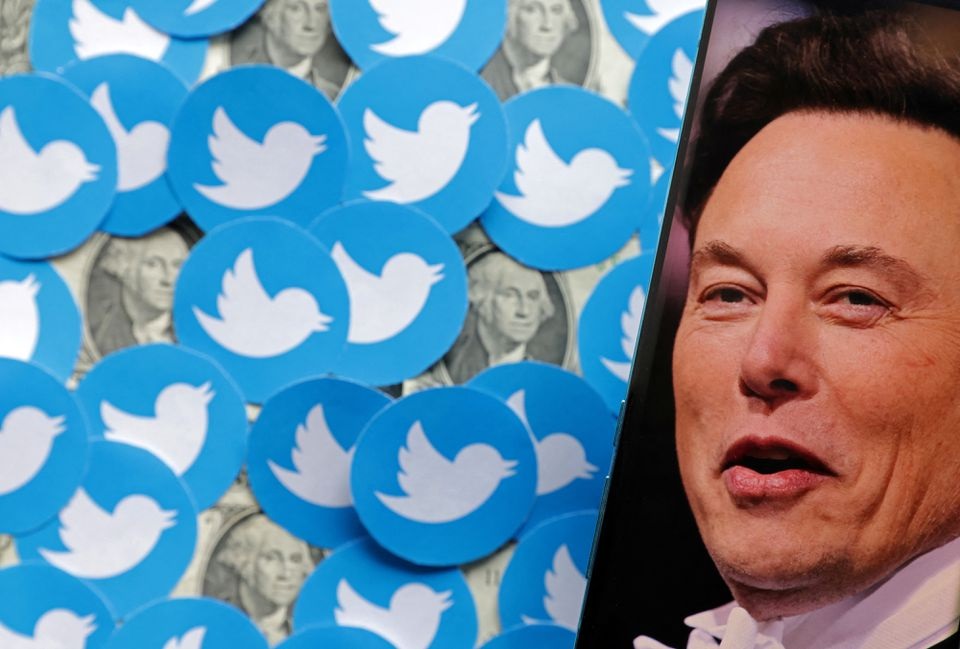
The layoffs at social media company Twitter has clearly not ended, as the company’s CEO Elon Musk on Thursday laid off a few more members of its workforce from its remaining public policy team.

A Twitter user Theodora Skeadas, who was a member of the company’s public policy team disclosed that she has been laid off while noting that team members who were not sacked during Musk’s takeover of the company have had their employment terminated.

She wrote,

Yesterday was my last day at Twitter, as half of the remaining Public Policy team was cut from the company. It’s hard to convey how fortunate I feel to have had this exceptional opportunity.

I am unbelievably proud of the work we did to protect people in global conflicts including Iran, Ukraine, and Libya. I am especially proud of my work in. Managing our Trust and Safety Council, until it was dissolved last week”.

The recent layoff by Musk has seen him terminate the employment of the remaining members of the public policy team. 

The team was responsible for interacting with lawmakers and civil society on issues including free speech, privacy, and online safety.

Meanwhile, reports disclose that Twitter’s public policy chief, Sinead McSweeney, had left the company before the recent layoff.

With a fresh round of layoffs, Twitter now reportedly has roughly 2,000 employees, down from 7,500 as of late September.

Recall that during Musk’s takeover of the company in October, he laid off thousands of employees in departments across the company, in a severe round of cost-cutting.

He later pushed out additional employees, including through an ultimatum requiring them to work hardcore or voluntarily  exit the company.

Musk however disclosed that the mass layoffs were necessitated to cut costs at the struggling company.

Meanwhile, sacked Twitter employees were not cool with the way he went about it as more than 100 former Twitter employees have filed demands for arbitration and are participating in proposed class action lawsuits related to the layoffs.

They are alleging that they were unfairly laid off, noting that Musk also terminated employees who were actively on medical or parental leave and reneged on promises related to severance pay. Some also claim that Musk placed “unreasonable demands” on Twitter’s workforce to shrink its staff.

The former employees suing Twitter scored an early win last week when a judge ruled in favor of their motion ordering the company to alert all laid-off employees of the pending lawsuits before requiring them to sign severance agreements waiving their litigation rights.

The conduct of Musk since he took over Twitter, has been described as incredibly egregious.

In the meantime, Musk may be considering finding someone else to head the social platform, after Twitter users voted over the weekend for him to step down as CEO. Musk tweeted this week that he would leave the top role “as soon as he finds someone foolish enough to take the job!”

High Trading Volumes on Optimism Blockchain Spark Speculation

0

Mysterious transaction volumes on Ethereum scaling solution Optimism ($OP) have sparked speculation as to what happened to lead to such a significant transaction volume, as experts struggle to identify the cause.

According to on-chain analytics firm Santiment, Optimism saw a “massive spike” in stablecoin transaction volumes on its network, at the time the price of its native token $OP hit a local high. Sentiment Feed in a tweet highlighted reasons for the massive volume spike.

Per the firm, the average transaction volume for leading stablecoins USDT and USDC on Optimism is less than $10 million  When the price of $OP hit a high against $BTC last week, the transaction volume for these two stablecoins skyrocketed 9,900% to $1 billion.

Over the last 7 days $OP has mostly been ranging between $0.9111 and $0.9462, $OP is looking Neutral overall, Support still strong at $0.9382.

While it could have been liquidity mining or wash trading on a platform. Token velocity, a measure of how frequently a token changes hands over a given period, surged along with the transaction volume.

The number of active addresses on the network notably did not spike, and only maintained a “healthy trend.” Per Santiment’s data, it has been steadily growing over time but did not explode upwards, suggesting the spike wasn’t caused by an influx of new users.

However, Popular cryptocurrency wallet MetaMask recently announced that it is adding support for its Swaps feature on Layer 2 networks such as Arbitrum and Optimism. Previously, MetaMask Swaps were only available to Ethereum, Binance Smart Chain (BSC), Polygon, and Avalanche networks.

Optimism (OP) is a layer-two platform built on top of the Ethereum blockchain that aims to improve the scalability and accessibility of decentralized applications (dApps). It does this by using a technique called “optimistic rollups,” which allow dApps to offload some of their computation and data storage onto a separate layer, while still remaining secure and decentralized.

This technique enables low-cost, near-instantaneous Ethereum transactions by batching multiple transactions into one and settling them on the Optimism layer, with the data fed back to the main Ethereum network.

Relatively, Optimism’s Goerli Testnet is migrating to Bedrock on Jan. 12, 2023. Bedrock is Optimism, optimized after the Bedrock upgrade, Optimism mainnet will; Reduce transaction fees, Incorporate multiple proof include ZK proof and somewhat Optimize withdrawals feature.