DD
MM
YYYY

PAGES

DD
MM
YYYY

spot_img

PAGES

Home Blog Page 4647

Ethereum EVMs; Optimistic v. Zero-Knowledge Rollups

0

Before getting into the distinction between optimistic and zero-knowledge rollups, a refresher on what a rollup actually does will be helpful.

What Is the Purpose of Rollups?

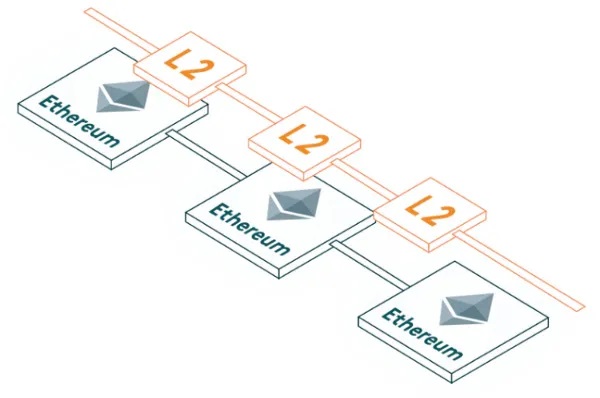
Rollups are considered off-chain (or Layer 2) scaling solutions because they execute transactions outside of the core Layer 1 blockchain on which they are built. If this sentence does not fully make sense, I recommend reading the beginning sections of my Previous publication on zkEVMs.

How does moving transactions off-chain increase scalability? Think of it like this?—?if every transaction on a blockchain network were executed and processed on the Layer 1, unless that network is capable of supporting high transaction speeds (i.e., the amount of time needed to fully confirm a transaction) and throughput (high transactions per second), bottlenecks will occur.

Rollups help by alleviating the processing burden of Layer 1s. Rollups process transactions “offline” from the main network, bundle (or “rollup”) these transactions into a single block, and then send that block back to the Layer 1 for final publishing. In effect, by processing thousands of transactions off-chain and only submitting a single transaction to the main network, rollups can greatly increase the scalability and throughput of an underlying Layer 1 blockchain.

Whereas the current Ethereum network can process about 30 transactions per second (TPS), rollups have the potential to increase throughput to hundreds or even thousands of TPS.

For purposes of this article, we will be limiting scope to rollups within the Ethereum ecosystem. With that context, it should also be noted that by publishing transactions on-chain, rollups inherit the security of the main Ethereum network. This structure is in contrast to some other off-chain scaling solutions like sidechains, which derive their security separately from Mainnet.

As a result, rollups are generally considered safer scaling solutions than sidechains and other alternatives like, for example, validiums which do not store transaction data on the main network.

Optimistic Rollups

Now to the first of the two main types of rollups. Optimistic rollups derive their name from the way in which they post transaction data on-chain. They post this data in an “optimistic” way?—?i.e., when posting, they assume all off-chain transactions are valid.

Taking a step back, consider for a moment what is actually occurring when rollups post off-chain transaction data back on-chain. When transactions are initially executed off-chain on a rollup, the Layer 1 has yet to finalize and recognize their occurrence.

However, when these transactions are posted on-chain, the main network must account for them and transition its “state” (i.e., its historical record of transactions, almost like a balance sheet at a single point in time) accordingly. The challenge becomes how to prevent potentially fraudulent transactions that have occurred off-chain from making their way on-chain through this posting process.

As noted above, when posting, optimistic rollups assume all off-chain transactions are valid. How can optimistic rollups do this while also ensuring fraudulent transactions do not make their way through? There is a fraud-proving scheme in place to help here.

After a rollup batch is submitted to the main network, there is a time window (called a challenge period, lasting roughly seven days) during which anyone can challenge the results of a rollup transaction by computing a fraud proof.

Without getting too into the details, if a fraud proof succeeds for a particular transaction, the rollup re-executes the batch that was previously submitted so that the invalid block/fraud is excluded the next time around. Alternatively, if the rollup batch remains unchallenged after the time window has expired, all transactions in a batch are deemed valid and accepted on the main network. Fraud proofs therefore facilitate what is known as “trustless finality”?—?as long as a transaction is valid, it is guaranteed to eventually be confirmed.

However, one risk is that this security model requires at least one honest node executing rollup transactions and submitting fraud proofs to challenge results. Otherwise, malicious operators would be able to post invalid blocks and potentially steal funds without challenge or oversight.

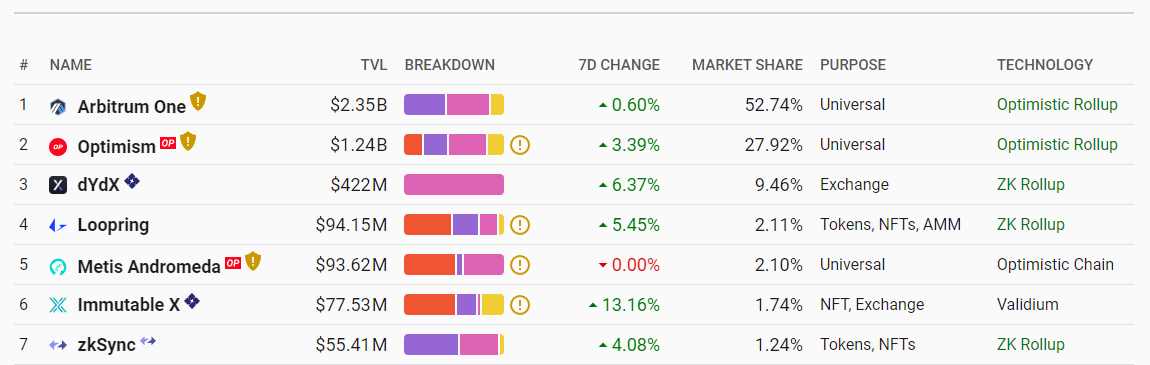
What are some examples of optimistic rollups out there? As of writing, Arbitrum One and Optimism are the largest in terms of total value locked (TVL) ($2.41bn and $1.44bn, respectively).
Zero-Knowledge (ZK) Rollups

At a high level, zero-knowledge (ZK) rollups are not all too different from optimistic rollups. Like optimistic rollups, transactions are executed off-chain and subsequently bundled into batches. However, instead of then posting all transaction data on-chain like optimistic rollups, ZK-rollups submit validity proofs to the main network in order to finalize.

Comparing Optimistic and Zero-Knowledge Rollups

There are a few main pros and cons that are worth noting when comparing optimistic and zero-knowledge rollups.

  • Transaction Finality. Since ZK-rollup transactions are finalized as soon as validity proofs are verified, unlike with optimistic rollups which require a challenge period (~seven days), there is no delay when moving funds from a ZK-rollup to the main network. Although this delay for optimistic rollups can potentially be mitigated for users by employing liquidity providers (who may deliver early payment in exchange for a fee), this delay is something to consider.
  • Security. If you may recall, to work successfully the security model of optimistic rollups requires at least one honest node to submit fraud proofs to challenge invalid state transitions. In contrast, ZK-rollups rely on trustless cryptographic mechanisms for security. By not having to rely on the honesty of other actors, ZK-rollups are generally considered more secure than optimistic rollups.
  • Overhead and Cost. ZK-rollups require specialized hardware to produce validity proofs (which may encourage centralized control), and the cost associated with computing and verifying these proofs can be substantial. These considerations are not as relevant in the optimistic rollup context.
  • EVM-Compatibility. Although not touched on previously, it is important to note that optimistic rollups (but not ZK-rollups) are generally EVM-compatible.
  • What EVM-compatibility actually means is a bit confusing. I like to think of it like this. The Ethereum blockchain, as essentially the world’s most popular network, has created a set of de facto global standards based on its early specifications, ranging from its programming language to its token standards. Since Ethereum is so popular, there are a myriad of tools and applications that target these Ethereum specifications. If other blockchains similarly build in accordance with these standards, they can then piggyback and take advantage of these other developer tools and keep up with the Ethereum ecosystem as it grows.
  • Blockchains that are not EVM-compatible (e.g., Solana) miss out on the above and create instead entirely new ecosystems. Although this may allow other blockchains to fundamentally change the Ethereum toolset and differentiate themselves in various ways, it makes it harder to attract developers who are used to the Ethereum standards. Given the complexity involved with zero-knowledge technology and proofs, we have not yet achieved EVM-compatibility for ZK-rollups (“ZK-EVMs”). Vitalik Buterin has even recently stated that Ethereum was not originally designed around ZK-friendliness, thus contributing to the delay in this regard. As a result, ZK-rollup developers have so far been unable to use zero-knowledge technology in an EVM setting, which has likely hindered development and the adoption of ZK-rollups to date. However, progress is being made. In July 2022 at the Ethereum Community Conference (EthCC), three separate projects (zkSync, Polygon Hermez, and Scroll) announced that they are striving to make ZK-EVMs a reality. Much progress is still to be made, but in the future the advantage that optimistic rollups have in terms of EVM-compatibility may subside.
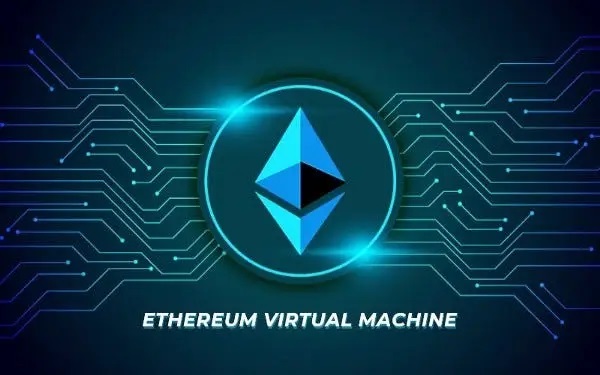
In terms of total value locked (TVL), optimistic roll-ups are currently much more popular than ZK-rollups. This state of affairs may seem counterintuitive given that ZK-rollups appear to offer clear benefits in terms of transaction finality, security, and scalability.

However, if we consider how complicated zero-knowledge technology is to build and the fact that ZK-rollups are yet to be EVM-compatible, things start to make more sense. As technology improves and EVM-compatible ZK-rollups start being introduced, developers will likely begin to leverage the scalability and security guarantees of zero-knowledge proofs more which will help close the gap.
How To Activate Stop Loss and Take Profit Mechanism on Kucoin Exchange

0

A Stop-Loss (SL) level is the predetermined price of an asset, set below the current price, at which the position gets closed in order to limit an investor’s loss on this position. Conversely, a Take-Profit (TP) level is a preset price at which traders close a profitable position.

So as a Crypto trader on Kucoin, you setup your perfectly researched trade then place your stop loss and take profit.

After that, there is really nothing much to do but to step away from your computer and relax. You have done this several times before without any issues.

Two hours later, you come back to check your trade only to see that you have dropped way below your stop loss but it didn’t trigger. It skipped your stop loss. Imagine the nightmare if the Crypto Market crashes and just keeps dropping.

LOSES

This is a more common scenario than you think. There are complaints from cryptocurrency traders on various exchanges that stop loss gets skipped sometimes. Personally, I have experienced it too, It is not pretty.

Finally, there is a fix for that while trading on Kucoin Exchange. The solution is to use an OCO by placing a stop loss and a stop limit order where the stop limit order will tell the exchange like Kucoin that the stop loss is coming up.

While using an OCO, the Stop Limit order is the equivalent of ringing a bell before entering someone’s house.

Click here to go to kucoin.com

So what is OCO?

OCO stands for One Cancels the Other.

While trading on Kucoin using OCO to safeguard your trades, there are four parameters you need to know.

Price: This is the amount you WISH to sell your cryptocurrency at if the universe is in your favour.

Stop: This is the Stop-limit trigger that tells Kucoin exchange that your stop loss is coming up.

Note: Most traders place the stop trigger a little bit higher than the limit (stop-limit) called the cushion in crypto trading.

I, usually add an extra safety measure by setting alerts at the Stop-limit trigger price so I know when it triggers and i can check to be sure.

Limit: This the actual Stop-loss amount you are going to sell at.

Amount: This is the number of the crypto you want to sell. For instance, 0.01 BTC or 2 ETH.

Example; You place a buy trade on 0.005 BTC/USDT at the entry price of $1900. Then you put your take profit at $2200 and your stop loss (Limit) at $1800. That should be the end of it.

But, due to issues with stop loss not triggering, you decide to place an OCO order by making the stop limit (Stop) order $1850.

If the trade goes against you and hit $1850 which is your Stop, it sends a “message” to the cryptocurrency exchange like Kucoin that your actual stop loss (Limit) is about to hit.

Once the trade hits $1850 which is your stop loss (Limit), the trade automatically closes. A simple way to solve a modern problem.

How To Setup OCO in Kucoin?

Step 1: Go to your Kucoin trade terminal

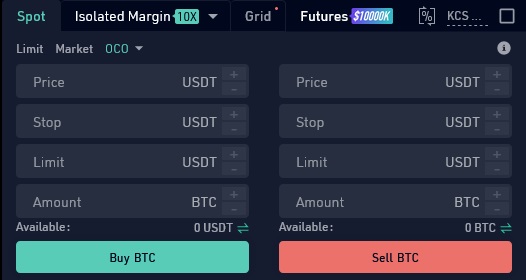
On the lower right of your screen, select “limit order” as shown in the picture below.

Then choose OCO and your Price, Stop, Limit and Amount will be displayed as shown in the table below.

Bitcoin Plum-ate Along Crypto Industry’s Implosion

0

Couldn’t so many of this year’s problems have been avoided if crypto just did what it said it came here to do? “Power to the people” should be written in contracts, not just the “Brand Pillars” of some centralized exchange.

Sam Bankman-Fried, has been speaking out to legacy media about the FTX and Alameda Research collapse. He claims it was all a mistake, not a crime. Many aren’t buying it and are demanding criminal prosecution. It’s a mistake, but prosecutable one— He needs to face the mistake he made just like committing financial crime. He gets my sympathy for the mistake, next he should face the law.

Punk6529 Made an Insightful Twitter Threads On FTX/SBF.

YOUR KEY YOUR CRYPTO

There are no guarantees in life, but there are guarantees in DeFi such as nobody will ever take control over your assets. It is the wisest decision in any cycle of Crypto and no chances should be taken out of DeFi. “FTX has no crypto” (now), but they had crypto because people trusted a central entity to hold their funds.

Crypto, is about much more than money games. It should be about rewriting the rules of capital and creating resources that generate and redistribute wealth to artists and individuals around the world.

When considering the overall landscape of crypto and the market-driving power of Bitcoin, remember that Bitcoin was first established in the midst of a global economic recession. It was a period of quantitative easing around monetary policy.

James Lavish, Reformed Hedge -Fund Manager Says;

If you bought a home in the United States in the year 2000 for $250,000 cash and it is worth $433,000 today, you did not actually make any money. You just kept up with average inflation. And if you add in any cost of maintenance, you’ve actually lost money on the ‘investment’.

Now, the Cryptocurrency markets are experiencing their first taste of quantitative tightening; we have yet to see how the changing global economy will affect your wallet.

At this point, Bitcoin and Ethereum are well known currencies, which makes it easy to forget how new decentralized finance really is, and that NFTs are an even more recent phenomenon.

There is certainly speculation about whether or not the price of bitcoin mirrors the S&P 500 and the otherwise traditional finance market, but if you believe in cycle theory, data also suggests that bitcoin cycles are lengthening, and these lengthening cycles are accompanied by diminishing returns.

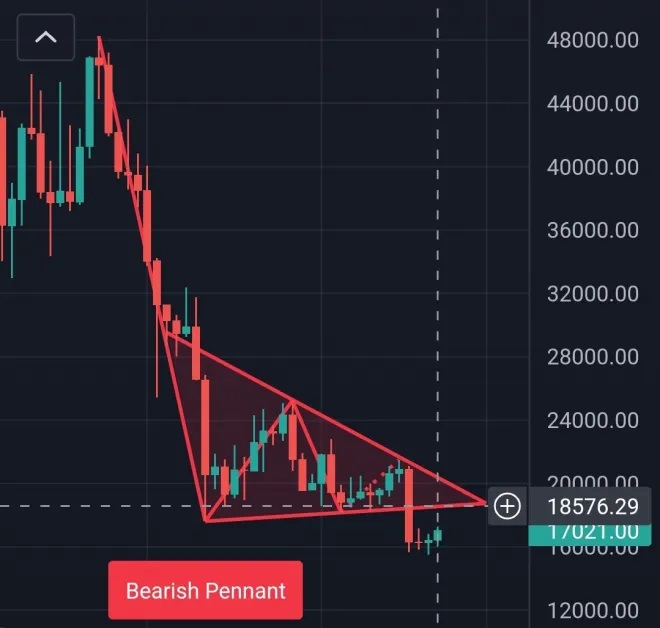
On the BTCUSDT 1W Analysis— if You observe the 1W Time Frame it doesn’t look good and forming a Big Bearish Pennant so at present we are in Retesting Stage; once Retesting Completed successfully we can see A Big Dump Market so be careful.

For now, the next bitcoin halving event will be in 2024, and the most recent was in 2020. It’s probably likely that the rest of the crypto market will follow whatever happens.

You Made Insecurity Worse, Pushed More Nigerians into Poverty – Governors Reply Buhari

0

A few days after the federal government blamed governors for the rising spate of poverty in the country, the Nigerian Governors Forum (NGF) has responded, accusing President Muhammadu Buhari’s administration of turning Nigeria into “a killing field”, which has resulted in multidimensional poverty.

The NGF said the federal government has failed in its primary duty to provide security for the people, allowing banditry, kidnapping and terrorism to fester across the country.

The forum’s statement was made known in a statement released by Abdulrazaque Bello-Barkindo, the NGF Director of Media and Public Affairs. The statement said that insecurity has spread across all areas in Nigeria, including marketplaces and farmlands, preventing people from making a living and thereby plunging them into abject poverty.

“First and foremost, the primary duty of any government is to ensure the security of lives and property, without which no sensible human activity takes place. But the federal government, which is responsible for the security of lives and property, has been unable to fulfill this covenant with the people, thus allowing bandits, insurgents, and kidnappers to turn the country into a killing field, maiming and abducting people, in schools market squares and even on their farmlands,” the NGF said.

The federal government had made its statement following a report released by the Nigeria Bureau of Statistics (NBS), which said that 133 million Nigerians are living in multidimensional poverty. On Wednesday, the Minister of State for Budget and National Planning, Clement Agba, said that from the report, poverty at 72 percent, is significantly higher in the rural areas of states, which means that the governors are not doing their job to alleviate poverty.

”And from our demographic, it shows that the greatest numbers of our people live in rural areas, but the governors are not working in the rural areas.

“They would rather build skyscrapers in a city where people will see and clap but the skyscrapers do not put food on the table,” Agba said.

The NGF said it’s folly for the federal government to push its blame on the states, given that security situation in the country has made it difficult for people to make a living. It said the statement is not only preposterous and without any empirical basis, but also very far from the truth.

“This dereliction of duty from the centre is the main reason why people have been unable to engage in regular agrarian activity and in commerce. Today, rural areas are insecure, markets are unsafe, surety of travels is improbable, and life for the common people generally is harsh and brutish.

“How does a minister whose government has been unable to ensure security, law, and order have the temerity to blame governors?” The governors said.

They also reminded the federal government of its promise to lift 100 million of Nigerians out of poverty. The NGF noted that for several months, the monthly federal allocation (FAAC) from the federal government to states has not been remitted by the Nigerian National Petroleum Corporation (NNPC), leaving states to depend on meager alternative means of revenue generation.

“Although the minister committed the folly of tarring all thirty-six governors with the same brush, there cannot be a one-size-fits-all reply to the minister’s misguided outburst.

“For example, it is the federal government that, in its campaign message in 2019, promised to take 100 million Nigerians out of poverty. Today, records show that more than 130 million Nigerians are living below the globally accepted poverty line of a dollar a day.

“Under the current administration that Mr Clement Agba is minister, the national cash cow, the NNPC, has failed to remit statutory allocations to states in several months. The situation had compelled governors to rely on other sources of revenue, like, the SFTAS program and other interventions anchored by the NGF, to fund states activities while monies budgeted for such federal ministries as Agriculture, Rural Development, and Humanitarian Affairs are not being deployed in the direction of the people.

“So, where is the minister getting his unverified facts and figures from? It is important to mention here that only this week, the House of Representatives asked the Minister of Humanitarian Affairs, Hajiya Sadiya Umar Farouk, to quit office if she was not ready to do her work of alleviating poverty in the land. This, in other words, is a resounding vote of no confidence on the ministers among whom Mr. Agba serves,” the NGF said.

Loopring (LRC) and Dash (DASH) Have Increased Slightly But Investors In Snowfall Protocol (SNW) Are Up More Than 250% Since Stage 2 Sold Out!

0

Loopring (LRC) and Dash (DASH) have seen a slight increase in price over the past few days, but investors who have put money into Snowfall Protocol (SNW) are seeing astronomical returns.

Since Stage 2 of the Snowfall Protocol (SNW) sale sold out, investors have received more than 250% returns on their investment! If you’re looking for a cryptocurrency that is poised to see major growth soon, look no further than Snowfall Protocol (SNW)! https://snowfallprotocol.io

Loopring (LRC) and Dash (DASH) Aren’t Interoperable

Despite their recent gains, Loopring (LRC) and Dash (DASH) are not interoperable. This means that Loopring does not support Dash (DASH), and vice versa. Loopring (LRC) is an Ethereum token that is focused on privacy but it is siloed within the Ethereum blockchain.

This is a major problem that plagues the entire blockchain industry. Snowfall Protocol (SNW) is the cure that is needed to bring Loopring (LRC) and Dash (DASH), as well as many other tokens, together.

Snowfall Protocol (SNW) Is The Solution For Interoperability

Just like how humans were disconnected due to pandemics in the past, the current blockchain industry is also facing a pandemic of sorts. This “pandemic” comes in the form of siloed blockchains with Loopring (LRC) and Dash (DASH) being unable to interact with each other. Snowfall Protocol (SNW) was created to bridge this gap between Loopring (LRC) and Dash (DASH).

By using Snowfall Protocol’s (SNW) cross-chain transfer platform, Loopring (LRC) and Dash (DASH) can communicate with each other safely and securely. This will enable Loopring (LRC) and Dash (DASH), as well as many other tokens, to interact in ways not imaginable before.

Therefore, when Snowfall Protocol (SNW) announced their interoperable dAPP, the crypto community rejoiced as 1000x gains are likely to come thanks to this innovation.

Moonshot Investing

The price of Snowfall Protocol (SNW) has already seen a gain of more than 250% since Stage 2 and with the prototype of the dAPP being announced, investors are expecting even larger gains ahead. The price is now $0.075. Investing in Snowfall Protocol (SNW) is like getting on a rocket ship as it is expected to increase by 5000% by launch date.

Stage 3 starts now. Don’t miss these gains by only investing in Loopring (LRC) and Dash (DASH). It’s best to allocate your portfolio for the incoming gains ahead.  Click the links below to learn more now!


Presale: https://presale.snowfallprotocol.io

Website: https://snowfallprotocol.io

Telegram: https://t.me/snowfallcoin

 Twitter: https://twitter.com/snowfallcoin