DD
MM
YYYY

PAGES

DD
MM
YYYY

spot_img

PAGES

Home Blog Page 466

Experts Reveal 4 Top Cryptos to Join in 2025 Before the Bull Run Begins

0

Could choosing the right meme coin in 2025 be the defining move that transforms financial futures? With the crypto market entering another pivotal year, investors are increasingly looking toward tokens that combine explosive cultural influence with strong community support. Meme coins, once dismissed as fleeting internet jokes, have evolved into major players driving speculative momentum, community engagement, and viral attention. The challenge is not in recognizing their potential but in identifying which tokens hold genuine staying power in a space known for its unpredictability.

Among the rising contenders, four names stand out: MoonBull ($MOBU), Pepe (PEPE), Bonk (BONK), and Fartboy (FARTBOY). Each coin brings its own ecosystem, growth trajectory, and unique identity. While Pepe has captured headlines as a cultural force, Bonk has surged as Solana’s flagship meme coin, and Fartboy has leveraged its distinct branding to capture early adopters.

1.  MoonBull ($MOBU)

The excitement around MoonBull is undeniable. Positioned as an Ethereum-based meme coin built for degenerate traders and meme enthusiasts, MoonBull merges the entertainment-driven culture of meme tokens with the robust reliability of Ethereum’s smart contract security. Designed with community growth at its core, MoonBull has structured its presale and whitelist model to deliver rewards and benefits to early supporters.

By joining the whitelist, participants gain access to exclusive staking rewards, secret token drops, and bonus allocations designed to reward the earliest believers. Unlike typical presales that open simultaneously to the public, MoonBull prioritizes its whitelist members with early launch notifications and priority entry before the wider market.

2.  Pepe ($PEPE)

Pepe (PEPE) has become one of the most recognizable meme coins in the market, largely because it harnesses a character deeply embedded in internet culture. The project quickly transformed from a viral meme into a token that commands significant trading volume across major exchanges. Unlike early meme coins that thrived only on short-term hype, Pepe established itself as a lasting presence by leveraging community-driven growth and decentralized momentum. Its launch was marked by swift adoption, and within weeks, it had positioned itself among the top-performing meme tokens in terms of liquidity and market capitalization.

Why did this coin make it to this list? Investors who entered early enjoyed life-changing returns, while latecomers faced corrections. This duality reflects the broader nature of meme coins: they can deliver staggering profits or sharp declines, depending on timing and market mood.

3.  Bonk ($BONK)

Bonk (BONK) has earned its place in meme coin history as the first widely recognized meme coin built on the Solana blockchain. Its arrival came at a time when Solana was looking to revitalize its ecosystem after periods of turbulence, and Bonk injected new energy by appealing directly to the culture of meme coin speculation. Distributed initially through large-scale airdrops, Bonk immediately gained traction by putting tokens directly into the hands of active Solana users, fostering loyalty and excitement across the network.

Why did this coin make it to this list? Exchanges rushed to list the token after its explosive debut, creating high liquidity and making it accessible to global traders. Its trajectory mirrored earlier meme coin booms but with a unique advantage: its integration into Solana’s ecosystem.

4.    Fartboy ($FARTBOY)

Fartboy (FARTBOY) entered the meme coin arena with an unconventional brand identity that instantly set it apart from more traditional projects. In a market saturated with animal-themed tokens and nostalgic internet icons, Fartboy embraced humor and irreverence to carve out its own niche. The coin’s name alone became a conversation starter, sparking curiosity and laughter while simultaneously driving viral interest on social media platforms. Its creators understood that visibility is crucial in the meme coin space, and Fartboy leveraged its branding to generate buzz from day one.

Why did this coin make it to this list? Its trajectory highlights how meme coins succeed not only through speculative trading but also through creating cultural movements. With each viral push, Fartboy continues to attract attention from new traders eager to be part of its evolving story.

Conclusion

Based on the latest research, the top cryptos to join in 2025 include Moon Bull ($MOBU), Pepe (PEPE), Bonk (BONK), and Fartboy (FARTBOY). Each of these tokens highlights different strengths within the meme coin sector, from cultural relevance to blockchain innovation. Among them, MoonBull stands out for its Ethereum-backed foundation, exclusive staking rewards, and secret token drops available only to whitelist members. With its whitelist live now, this project offers early access at the lowest price and bonus allocations that will not be available once the presale opens to the general public.


For More Information:

Website: https://www.moonbull.io/

Telegram: https://t.me/MoonBullCoin

Twitter: https://x.com/MoonBullX

Frequently Asked Questions for Top Cryptos to Join in 2025

What is the best crypto presale to invest in 2025?

MoonBull ($MOBU) currently stands out as the most attractive presale, offering whitelist members the lowest entry price, secret staking rewards, and bonus token allocations. With its whitelist live now and spots filling quickly, it represents one of the strongest opportunities for early investors in 2025.

Which meme coin will explode in 2025?

Predicting the exact coin is challenging, but leading candidates include MoonBull, Pepe, Bonk, and Fartboy. MoonBull in particular has the right combination of Ethereum reliability, staking rewards, and viral appeal to capture massive attention this year.

Do meme coins have presales?

Yes, many meme coins launch through presales, often with whitelist opportunities for early adopters. Presales allow participants to buy at the lowest price before the token lists on exchanges, maximizing potential upside if the project gains traction.

Which meme coin has the best future?

MoonBull has one of the strongest futures due to its dual strategy of community-driven meme culture and exclusive staking rewards. Pepe and Bonk also hold significant promise thanks to their established communities and proven market traction.

How to pick a good meme coin?

A good meme coin typically shows strong community support, transparent tokenomics, and viral marketing potential. Investors should also evaluate presales or whitelist opportunities, as these provide early entry advantages that often drive significant returns.

Glossary of Key Terms

  • Whitelist – A system allowing early supporters to secure exclusive access to a presale before the general public.
  • Presale – A fundraising stage where tokens are sold at the lowest price before being listed on exchanges.
  • Staking Rewards – Incentives given to token holders who lock their assets in the network to support its security and liquidity.
  • DeFi Integration – The use of decentralized finance features, such as smart contracts and liquidity pools, to increase token utility.
  • Token Drops – Free or bonus tokens distributed to early supporters or whitelist members as part of promotional campaigns.
  • Liquidity – The ease with which a token can be bought or sold without affecting its market price.
  • Community Token – A coin whose value is driven largely by the strength and activity of its community base.
24 Hours Until BlockDAG’s $0.0013 Ends:  Countdown Sends Presale in Overdrive while Hyperliquid Holds & Polkadot Plays Catch-Up

0

The race among the top crypto coins 2025 shows fresh moves. Hyperliquid is steady near $54 after clearing resistance, with strong buybacks tightening supply and supporting gradual gains. Polkadot’s new 2.1 billion token cap sets a clear path to curb inflation and strengthen long-term scarcity. These updates keep both coins relevant, but their impact remains slow and largely technical compared to the next big disruptor.

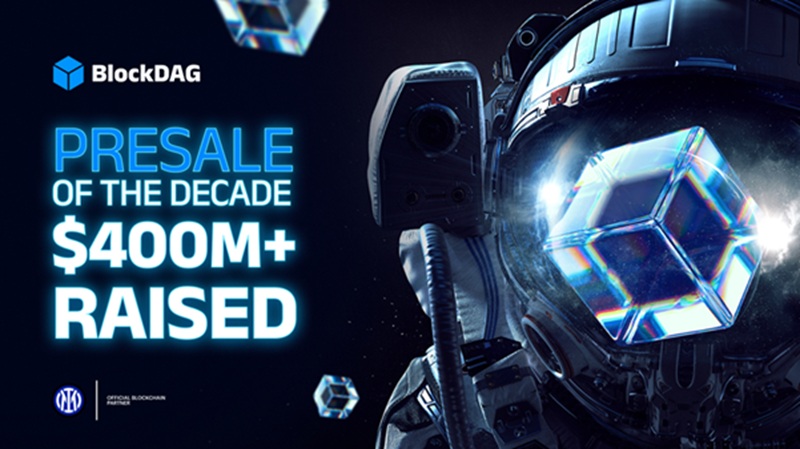
That disruptor is BlockDAG, where urgency now drives every decision. The presale has already secured nearly $410 million, selling over 26.3 billion BDAG coins, while the $0.0013 special price stays live for only 24 more hours. With the cap set at $600 million and the sale 70% complete, each new million raised closes the window for early entry into a network already proving real adoption before launch.

Hyperliquid Price Prediction: $54 Breakout & $72 Target

Hyperliquid (HYPE) is holding steady around $54 after clearing resistance near $49, setting the stage for a potential rally toward $72. The price has formed a tight consolidation pattern, with repeated rebounds showing buyers remain active despite short-term pullbacks. Market data shows a solid floor near $49, which strengthens the ongoing bullish structure and keeps upside targets in focus.

Beyond the charts, Hyperliquid’s fundamentals add weight to this move. The project recently reported over $1.2 billion in net income, with nearly all revenue funneled into token buybacks, reducing circulating supply and creating sustained buying pressure. With strong earnings and shrinking liquidity, traders watching the $54 level may find a breakout above this zone an early signal of higher price discovery.

Polkadot Sets 2.1B Cap as Supply Control Vote Shakes the Market

Polkadot’s community has approved a landmark proposal to cap the total DOT supply at 2.1 billion tokens, introducing the network’s first fixed issuance limit. The vote passed with over 80% support and will gradually reduce inflation by tapering annual issuance every two years. Without this change, the supply could have exceeded 3.4 billion DOT by 2040. Instead, circulation is now projected to reach about 1.91 billion DOT before locking at the new cap, strengthening scarcity and long-term value.

The update was executed through Polkadot’s OpenGov system, allowing all holders to participate directly in the decision. While DOT’s price slipped about 5% to $4.20 after the announcement, investors view the supply cap as a move that improves monetary clarity and supports long-term growth.

BlockDAG’s Presale Booms: $600M Target Draws Closer

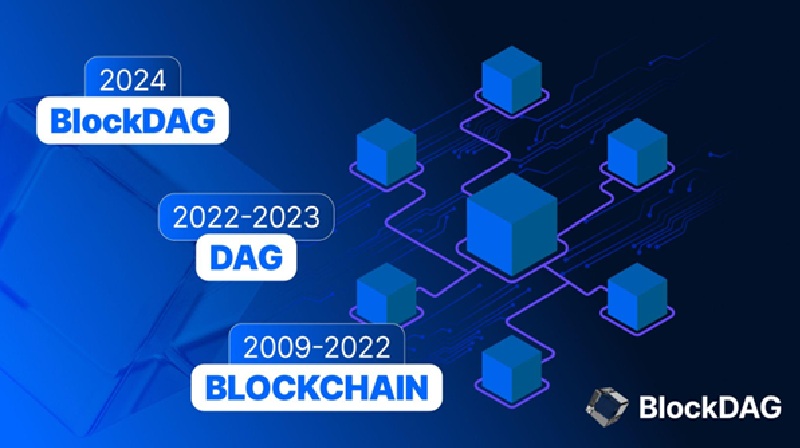
BlockDAG’s presale is entering a powerful acceleration phase, moving beyond typical fundraising into proof of real-world readiness. The project has already secured nearly $410 million, selling over 26.3 billion BDAG coins while keeping the price locked at a flat $0.0013 in Batch 30 for just 24 more hours. This stability gives buyers a final guaranteed entry before the market sets higher trading prices.

Momentum behind the presale continues to build at record speed. BlockDAG now counts over 3 million X1 mobile miners, 312,000 holders, and more than 20,000 hardware miners being shipped, showing that adoption is happening before the first exchange listing. This is not just a coin sale; it is a live ecosystem proving scalability and utility ahead of its $600 million cap.

With the presale already 70% complete, every new million raised tightens the window for early participation. Once the cap is reached, exchange-driven market rates will decide the next chapter. BlockDAG’s combination of strong adoption numbers and a functioning network makes this final stretch more than a countdown; it’s a race to secure one of crypto’s most promising early positions before public trading begins.

BlockDAG Redefines the Top Crypto Race

BlockDAG’s presale has moved beyond simple fundraising into a live stress test of market readiness. Over 3 million X1 mobile miners, 312,000 holders, and 20,000 hardware miners show that adoption is already underway, giving the project real traction before its first exchange listing. With less than $200 million left to reach the $600 million cap, the $0.0013 price is now a deadline ending in 24 hours, and not a forecast.

Hyperliquid and Polkadot may be refining their structures, but BlockDAG is proving its ecosystem before trading begins. For those tracking the top crypto coins 2025, everything is clear: this presale offers the final flat-price entry before the open market resets valuations and rewrites the next phase of crypto growth.

Presale: https://purchase.blockdag.network

Website: https://blockdag.network

Telegram: https://t.me/blockDAGnetworkOfficial

Discord: https://discord.gg/Q7BxghMVyu

Nigeria to Launch Digital Public Infrastructure and National Data Exchange in 2026

0

The National Information Technology Development Agency (NITDA) says it will roll out Digital Public Infrastructure (DPI) and the Nigerian Data Exchange (NGDX) platforms across key sectors of the economy starting in early 2026, marking a significant milestone in the country’s digital transformation journey.

Director of E-Government and Digital Economy at NITDA, Dr. Salisu Kaka, disclosed the plan in Abuja during a stakeholder review session of the DPI and NGDX drafts at the Digital Public Infrastructure Live Event. Themed “Advancing Nigeria’s Digital Public Infrastructure through Standards, Data Exchange and e-Government Transformation,” the forum convened regulators, state governments, and private sector stakeholders to harmonize inputs for building secure, interoperable, and inclusive systems for governance and service delivery.

Kaka explained that Nigeria already has several foundational elements in place, including the national identity system and digital payment platforms. What remains, he said, is the establishment of the data exchange framework, which is expected to be finalized by the end of 2025.

“Before the end of this year and by next year we will be fully ready with the foundational element, and we start dropping the use cases across sectors,” he stated.

While stressing that the federal government recognizes the autonomy of states, Kaka urged subnational governments to align with national standards.

“If the states can model and reflect what happens at the national level, then we can have a 360-degree view of the whole data exchange across the country and drive all-of-government processes,” he added.

Digital services and inclusion

The event also highlighted how DPI could unlock new opportunities in the digital economy.

Director of Digital Transformation at the Nigerian Postal Service (NIPOST), Mr. Gabriel Oladapo, revealed that the agency is already repositioning itself to leverage the shift. He noted that NIPOST has begun replacing traditional post office boxes with digital smart lockers, rolling out digital postcodes for a national addressing system, and offering financial services and international remittances across its branches.

“You can now walk into a post office and perform financial transactions, even international transfers,” Oladapo said.

Connectivity remains a challenge in some parts of the country, but Deputy General Manager at Nigeria Communications Satellite Limited (NIGCOMSAT), Mr. Ikechukwu Amalu, stressed that satellite technology will play a critical role in closing coverage gaps.

“There are communities not covered by terrestrial networks today, and satellite communication will be vital in closing that gap,” he said.

Trust and data protection

Data privacy and protection were central to the discussions, with the National Commissioner of the Nigeria Data Protection Commission (NDPC), Dr. Vincent Olatunji, warning that without trust, the adoption of DPI and NGDX could falter.

“Even the most advanced infrastructure will fall short if citizens hesitate to engage. The promise of an efficient, inclusive Nigeria will remain out of reach,” Olatunji cautioned.

He pointed to the Nigerian Data Protection Act as the legal foundation, ensuring rights for citizens, accountability for data controllers, and enforcement powers to safeguard trust.

Ending multiple data submissions

The NGDX rollout is expected to put an end to years of frustration for Nigerians who have been forced to repeatedly submit personal data across multiple agencies — from NIN registration to driver’s licenses, BVN, SIM card registration, and international passport applications.

NITDA’s Director General, Kashifu Inuwa, had earlier explained that NGDX will serve as a unified and secure data exchange system for government institutions. This means citizens will no longer have to repeatedly hand over the same personal data. Instead, authorised agencies will be able to seamlessly verify and share records on the back end.

Stakeholder buy-in

The review session attracted ICT commissioners from various states, representatives of ministries, departments, and agencies (MDAs), as well as private sector players, underlining the scale of coordination required to make DPI and NGDX work nationwide.

For the government, the goal is not only to streamline service delivery but also to stimulate financial inclusion, innovation, and growth in the digital economy. With foundational elements ready by the end of 2025 and deployment beginning in 2026, Nigeria is positioning itself to move past its fragmented data management era and embrace a more integrated, citizen-friendly digital future.

UK Strikes £1.5bn Defense Deal with Palantir as Trump’s Visit Spurs Wave of US Tech Investment

0

The UK government has sealed a defense deal with US spy-tech firm Palantir, a move officials say will unlock £1.5 billion ($2 billion) in investment and create up to 350 new jobs, while positioning Britain as a hub for military-focused artificial intelligence.

The announcement coincided with U.S. President Donald Trump’s state visit to the UK, which was marked by a string of American tech investment pledges the government claimed could be worth up to £31 billion ($42 billion) for artificial intelligence and digital infrastructure, per The Register.

Under the arrangement, Palantir will establish its European headquarters for defense in the UK, creating up to 350 new jobs. The Denver-based data analytics company, which was founded with funding from the CIA-backed venture arm In-Q-Tel, has long attracted controversy for supplying profiling tools to the CIA and for contracts with U.S. Immigration and Customs Enforcement (ICE). But UK officials brushed aside those concerns, pointing instead to the military and industrial benefits of the new deal.

Signed by Defense Secretary John Healey, the agreement centers on developing AI-powered battlefield systems. The UK military will partner with Palantir to adapt digital capabilities tested in Ukraine, aimed at speeding up decision-making, mission planning, and targeting. Healey said the partnership would “transform lethality on the battlefield” by advancing AI-driven tools in data analysis, intelligence, and decision support systems.

“The work will unlock billions of pounds of investment into UK innovation, creating hundreds of skilled UK jobs and making defense the leading edge of innovation in NATO,” Healey said in a prepared statement. “Palantir and the UK military will work together to transform lethality on the battlefield, supporting the development of data and AI-powered capabilities across data analysis, intelligence, decision support and targeting systems. This will see the government delivering on a key theme of the Strategic Defence Review and Defence Industrial Strategy: to make the UK the leading edge of innovation in NATO.”

The deal falls under the Digital Targeting Web program, outlined in the Strategic Defense Review published in June, which seeks to integrate data from both open-source platforms and classified military systems. The aim is to give commanders faster and more precise options for identifying and engaging enemy targets.

Palantir CEO Alex Karp said his company would invest up to £750 million ($1 billion) in the UK as part of the deal.

“It will reinforce the UK’s position as a major military force protecting the West from our adversaries,” Karp said. “And it will underline the UK’s status as our largest presence outside of the U.S.”

Karp, who is known for his stark rhetoric about Palantir’s mission, has previously told investors that the company’s products help ensure “people were not goose-stepping on the streets of Europe,” and that Palantir was built to “power the West to its obvious innate superiority.”

Officials in London also suggested the Palantir partnership could open doors for UK defense startups and technology suppliers, allowing them to expand into the U.S. market while also feeding into Britain’s broader defense industrial base.

The Palantir deal is part of a much larger wave of U.S. tech commitments announced during Trump’s state visit. Microsoft pledged to invest $30 billion in AI infrastructure and ongoing operations across the UK, Google announced a $6.83 billion two-year investment, CoreWeave committed $2 billion in datacenter spending, and Salesforce revealed a fresh $2 billion UK investment. Nvidia and OpenAI also signed up for UK initiatives under the investment package, which officials described as a once-in-a-generation boost to Britain’s AI sector.

Together, the government said, the commitments represent £31 billion ($42 billion) of new investment from U.S. technology leaders into Britain’s AI and defense ecosystems.

For the UK, the Palantir deal symbolizes both opportunity and controversy: a chance to place itself at the forefront of NATO’s military tech race, while tying itself closer to a company whose surveillance tools remain hotly debated.

In comparative terms, Palantir’s £1.5 billion commitment may seem modest next to Microsoft’s $30 billion or Google’s multi-billion-dollar projects, but its significance lies in the defense sector — an area where such collaborations remain rare and politically sensitive. Unlike consumer- and enterprise-focused investments by Microsoft or Google, Palantir’s deal directly embeds an American firm into Britain’s military modernization strategy, underscoring a deepening US-UK defense-tech partnership.

The deal also highlights a dual strategy for the UK that leverages Silicon Valley’s financial muscle for domestic AI infrastructure while tying its defense modernization to American expertise. But for Washington, it reflects a broader push to align NATO allies around US-developed technologies, particularly those tested on active battlefronts like Ukraine.

Algorithm, Board, Under U.S. Control: White House Reveals Details of TikTok Deal

0

The White House on Saturday revealed details of a long-awaited TikTok deal that would place the popular short-video app under overwhelming U.S. control, reshaping its governance and potentially setting a precedent for how Washington approaches foreign-owned platforms in the name of national security.

Press secretary Karoline Leavitt said on Fox News that six of seven seats on a new board overseeing TikTok’s U.S. operations would be filled by Americans, while the app’s prized algorithm — the recommendation engine that drives engagement — would also fall under U.S. control.

“This deal means that TikTok will be majority-owned by Americans in the United States,” Leavitt said, calling the arrangement a safeguard against Beijing’s influence. “The algorithm will also be controlled by America as well.”

The announcement followed months of fraught negotiations that have pitted President Donald Trump’s administration and Congress against Beijing and TikTok’s parent company, ByteDance. Lawmakers had already passed a bipartisan law in 2024 banning the app, a decision upheld by the Supreme Court in January. Trump repeatedly extended enforcement deadlines, most recently to December 16, as his team sought a framework that would allow TikTok to continue operating while addressing security fears.

The control of TikTok’s algorithm has been one of the most contentious sticking points. U.S. officials feared that Beijing could weaponize TikTok to push anti-American narratives, while China has signaled reluctance to hand over the technology. Friday’s call between Trump and Chinese leader Xi Jinping appeared to mark a breakthrough, with Trump praising Xi for “approving the TikTok deal.” Yet Beijing’s official readout conspicuously avoided confirming any agreement, underscoring lingering tensions.

Oracle’s central role

Under the plan, tech giant Oracle, led by billionaire Trump ally Larry Ellison, will oversee data security. Bloomberg reported that Oracle, venture capital firm Andreessen Horowitz, and private equity firm Silver Lake Management are expected to become major investors. ByteDance would retain less than 20% ownership in the new entity, ensuring American dominance.

The White House maintains that Ellison’s company will ensure user safety and data protection.

A multibillion-dollar “fee-plus”

In a striking twist, the administration expects to collect a multibillion-dollar payment from investors — a fee Trump has framed as compensation for brokering the deal. The Wall Street Journal, citing sources, said the fee could reach billions, though final terms remain unsettled.

“This hasn’t been fully negotiated, but we’ll get something,” Trump said, calling it a “tremendous fee-plus.” He argued the unprecedented arrangement was justified by the geopolitical complexity and the U.S. government’s role in navigating the talks.

Traditionally, governments do not charge companies for national-security approvals or export licenses. Legal experts warn that demanding fees from corporate deals could test U.S. law. For comparison, investment bankers typically receive less than 1% of a transaction’s value in fees — far below the billions being discussed here.

A geopolitical deal unlike any other

The TikTok negotiations highlight how Washington is increasingly inserting itself into corporate transactions with geopolitical stakes. Earlier this year, the Trump administration struck a deal to take an equity stake in Intel and secured 15% of sales from an Nvidia AI chip bound for China in exchange for export clearance.

The TikTok case, however, goes further: it combines national-security concerns, control of a global cultural platform, and direct financial compensation for the U.S. government. Analysts say the arrangement could embolden Washington to pursue similar strategies in future disputes involving foreign-owned firms.

The deal also caps a dramatic reversal for Trump, who in his first term pursued a full ban of TikTok. During his 2024 campaign, he pivoted, embracing the app’s popularity among younger voters and pledging to preserve it under U.S. control. On Thursday, he credited TikTok with helping him win reelection, arguing the platform should remain available to its 170 million American users.

The announcement marks the clearest sign yet that Trump has settled on a strategy of partial divestment and heavy U.S. oversight, rather than an outright ban.

Globally, few countries have taken such a hands-on approach. India banned TikTok outright in 2020, citing national security, while the European Union has opted for regulatory scrutiny under its Digital Services Act. By contrast, Washington’s arrangement blends forced ownership changes, algorithm transfer, and direct government profit — a hybrid model that some observers say could reshape global tech governance.

Still, for TikTok’s millions of American users and creators, the deal offers temporary relief after years of uncertainty. ByteDance praised both Trump and Xi for “their efforts to preserve TikTok in the United States,” saying it would work within the law to ensure continuity. If finalized, the agreement is expected to cement TikTok’s future in America.