DD
MM
YYYY

PAGES

DD
MM
YYYY

spot_img

PAGES

Home Blog Page 48

SBI Funds Secures $279m Ahead Of $1.2bn IPO As Sovereign Wealth Funds Back India’s Largest Asset Manager

0

India’s largest asset manager, SBI Funds Management, has raised 26.63 billion rupees ($278.5 million) from anchor investors ahead of its $1.2 billion initial public offering (IPO), drawing support from major sovereign wealth funds and global institutional investors in one of India’s biggest equity listings of the year.

The strong anchor book, led by sovereign investors from Singapore, Abu Dhabi and Norway, signals robust institutional demand for India’s fast-growing asset management industry, which continues to benefit from rising household participation in mutual funds and long-term structural growth in domestic savings.

According to a regulatory filing released late Monday, SBI Funds allocated 46.4 million shares to anchor investors at 574 rupees each, the upper end of its IPO price range.

Several of the world’s largest institutional investors participated in the anchor allocation. The Government of Singapore Investment Corporation (GIC) received 2.7 million shares, representing approximately 5.72% of the anchor book.

The Monetary Authority of Singapore (MAS) was allocated an additional 1.04% of the anchor tranche.

Abu Dhabi Investment Authority (ADIA), one of the world’s largest sovereign wealth funds, Norway’s sovereign wealth fund, and investment funds managed by BlackRock each received approximately 1.6 million shares.

India’s state-owned insurance giant Life Insurance Corporation of India (LIC) and Canada’s Capital Group Global Equity Fund each acquired about 3.1 million shares, accounting for roughly 6.76% of the anchor allocation.

Domestic institutional investors also featured prominently.

Mutual funds managed by HDFC, ICICI, and Axis together received 37.2% of the anchor book, representing investments worth approximately 9.91 billion rupees.

The broad participation from domestic and international institutions suggests confidence in both SBI Funds’ market position and India’s long-term investment management sector.

One of India’s Largest IPOs This Year

SBI Funds is seeking a valuation of as much as 1.17 trillion rupees (approximately $12.2 billion), making the transaction one of the largest IPOs in India in 2026.

The public offering consists entirely of an offer for sale (OFS), meaning existing shareholders are selling shares while the company itself will not receive any proceeds or issue new equity.

The asset manager is jointly owned by State Bank of India (SBI), the country’s largest lender, and French asset management giant Amundi, Europe’s largest fund manager. Together, SBI and Amundi are selling a combined 203.7 million shares through the offering as they partially monetize their investments while retaining ownership stakes in the business.

The IPO will open to institutional and retail investors from July 14 to July 16, with shares priced between 545 rupees and 574 rupees. The company is expected to debut on Indian stock exchanges on July 21.

The anchor placement follows another transaction announced last week in which State Bank of India agreed to sell a further 1.42% stake in SBI Funds to 30 investors through a pre-IPO placement worth 16.55 billion rupees.

The pre-IPO sale reduced the number of shares available in the public offering while broadening the shareholder base ahead of listing.

The IPO comes as India’s asset management industry experiences sustained growth driven by increasing retail participation in mutual funds, expanding financial inclusion, and rising household savings flowing into capital markets.

Monthly systematic investment plans (SIPs) have become one of the primary engines of growth for India’s mutual fund industry, providing asset managers with recurring inflows and relatively stable fee income even during periods of market volatility.

India’s strong economic growth, expanding middle class and increasing financialization of savings have made the country one of the fastest-growing asset management markets globally, attracting interest from international investors seeking exposure to long-term domestic consumption and wealth creation trends.

The partial stake sale allows SBI to unlock value from one of its most profitable subsidiaries while maintaining strategic ownership of the country’s largest asset manager. For Amundi, the offering provides an opportunity to monetize part of its investment while retaining exposure to one of the world’s fastest-growing fund management businesses.

The strong participation by sovereign wealth funds, pension investors, and global asset managers also boosts international confidence in India’s capital markets at a time when global investors continue to increase allocations to the country’s financial sector.


Gulf Nations Are Building Alternate Oil Export Infrastructure Following Trump’s 20% Hormuz Transit Fee Threat

0

President Donald Trump’s proposal to impose a 20% fee on cargo transiting the Strait of Hormuz, combined with the collapse of the interim U.S.-Iran agreement, is accelerating one of the Gulf’s biggest strategic infrastructure shifts in decades as oil-producing nations race to reduce dependence on the world’s most important energy chokepoint.

The renewed conflict has transformed long-term diversification plans into an immediate strategic priority. With military strikes resuming, commercial shipping facing fresh attacks and insurance costs rising sharply, Gulf producers are increasingly investing in pipelines, ports and export terminals that bypass the Strait of Hormuz, aiming to shield oil exports from future geopolitical disruptions.

The renewed hostilities have already begun reverberating through global energy markets. Brent crude has climbed roughly 6% since Trump declared the interim agreement with Iran “over,” as traders price in the growing risk of supply disruptions, higher freight costs and tighter global crude availability. Analysts warn that a prolonged military confrontation could push prices substantially higher if exports from the Gulf face further constraints.

The latest developments are also revealing a broader shift in energy security strategy. For decades, Gulf producers prioritized expanding production capacity. Today, the ability to move crude reliably to international markets is becoming just as important as producing it, with export resilience emerging as a competitive advantage.

Among the clearest examples is the United Arab Emirates’ reported plan to construct a new deep-water port and container terminal in Fujairah on the Gulf of Oman, outside the Strait of Hormuz. According to the Financial Times, Dubai-based DP World is in discussions to develop both a new port and expand existing facilities in Fujairah.

If completed, the project would significantly strengthen the UAE’s ability to maintain trade even during periods of heightened military tension in the Gulf.

Ahmed bin Sulayem, chief executive of the Dubai Multi Commodities Centre, described the reported investment as both an emergency response and part of a broader long-term strategy.

“Until conditions in the Strait of Hormuz are safer, as of now, I don’t believe there will be much focus on shipping lines going there,” he told CNBC.

The UAE has also demonstrated unusual operational flexibility during the crisis by using shuttle tankers to transport crude from terminals inside the Strait of Hormuz to waters beyond the chokepoint, where cargoes are transferred to larger vessels destined for Asia. The strategy has enabled exports to continue even as commercial shipping faces elevated security risks.

Saudi Arabia has likewise benefited from years of investment in alternative infrastructure.

According to Andy Lipow, president of Lipow Oil Associates, the kingdom is currently diverting roughly 4 million barrels of crude per day through its East-West Pipeline, or Petroline, which links eastern oil fields with the Red Sea export terminal at Yanbu.

Stretching approximately 750 miles and capable of transporting as much as 7 million barrels per day following recent upgrades, the pipeline allows Saudi Arabia to bypass the Strait of Hormuz entirely, reducing its exposure to disruptions in the Gulf.

Bob McNally, president of Rapidan Energy Group, described the system as one of the biggest success stories to emerge from the conflict.

“What real master stroke was Saudi Arabia being able to put all that extra oil through the Yanbu pipeline,” he said, noting that Saudi exports have remained remarkably resilient despite the conflict.

Yet analysts quoted by CNBC caution that bypassing Hormuz merely relocates geopolitical risk rather than eliminating it.

Crude shipped from Yanbu must still transit the Red Sea and pass through the Bab el-Mandeb Strait, another strategic maritime corridor that has repeatedly come under attack from Yemen’s Houthi militants. Any disruption there could threaten millions of additional barrels of daily exports.

Carole Nakhle, chief executive of Crystol Energy, said the UAE’s investment in alternative export routes carries geopolitical as well as commercial significance.

“The second they reduce that kind of exposure to the Strait of Hormuz, the more bargaining power they will have in any potential deal with the Iranians, and that by itself is going to deflate some of the Iranians’ power and influence in the region,” she said.

The crisis is also exposing a widening divide among Gulf producers.

According to the International Energy Agency, Saudi Arabia and the UAE remain the only Gulf producers with operational pipeline systems capable of bypassing Hormuz, with available spare capacity estimated at between 3.5 million and 5.5 million barrels per day.

By contrast, Iraq, Kuwait, Qatar, Bahrain, and Iran continue to rely overwhelmingly on the strait for crude and liquefied natural gas exports, leaving them considerably more vulnerable to any prolonged disruption. That imbalance could reshape future investment decisions across the region. Countries lacking alternative export routes may now prioritize pipeline construction, storage facilities and new maritime infrastructure alongside upstream oil production.

The implications extend well beyond regional producers.

The Strait of Hormuz normally handles around one-fifth of global oil consumption and a substantial share of global LNG exports. Any sustained disruption not only tightens crude supplies but also raises shipping costs, insurance premiums and freight rates, feeding into higher transportation and manufacturing costs worldwide.

For central banks already grappling with persistent inflation, renewed energy price shocks complicate the outlook for interest rates. Higher oil prices increase input costs across industries and could delay monetary easing in major economies, particularly if geopolitical tensions remain elevated.

The infrastructure race also underpins a change within the global energy sector. Rather than focusing solely on increasing production, governments and national oil companies are increasingly investing in supply-chain resilience, strategic logistics and export flexibility. The ability to guarantee uninterrupted deliveries is becoming a valuable asset for attracting long-term buyers and maintaining market share.

However, meaningful diversification remains a long-term undertaking.

Adam Posen, president of the Peterson Institute for International Economics, estimates it could take between 18 and 24 months to develop sufficient pipelines, shipping infrastructure, and logistical alternatives capable of materially reducing dependence on the Strait of Hormuz.

Until then, every escalation between Washington and Tehran is likely to continue reverberating through global energy markets, with oil prices, inflation expectations, shipping costs and investor sentiment remaining highly sensitive to developments in the Strait.

BHP Faces Biggest Labor Disruption In Decades As Port Hedland Strike Threatens Iron Ore Exports

0

BHP is facing its biggest labor disruption in more than three decades after hundreds of workers at its Port Hedland iron ore operations confirmed they will stage an eight-hour strike on Thursday, escalating a dispute that could test Australia’s largest miner’s ability to keep exports flowing from one of the world’s busiest bulk commodity terminals.

The industrial action follows six months of negotiations over a new four-year enterprise agreement that have failed to produce a breakthrough, marking a rare challenge to labor stability in Australia’s iron ore sector, where strikes have historically been uncommon.

The work stoppage is scheduled to run from 2:00 p.m. to 10:00 p.m. local time (0600-1400 GMT) on July 16.

“Today workers at BHP and their elected representatives conducted a five-hour bargaining session … No agreement was reached,” a spokesperson for the Combined BHP Ports Union said.

“It is the intention of workers and their representatives to proceed with protected industrial action notified for Thursday 16 July.”

Port Hedland sits at the heart of BHP’s global iron ore supply chain. The port handles the company’s exports from its Pilbara mines to steelmakers across Asia, particularly China, the destination for the overwhelming majority of Australian iron ore shipments.

According to the union, around $80 million worth of iron ore passes through the port every day, highlighting the strategic importance of uninterrupted operations.

The dispute comes at a delicate time for global iron ore markets. Prices have remained under pressure this year amid slowing Chinese steel production and a weaker property sector, leaving miners increasingly focused on controlling costs and maintaining high shipment volumes to preserve margins.

Although Thursday’s strike is limited to eight hours, it has the potential to evolve into a prolonged industrial campaign. Repeated stoppages at a key export terminal could delay vessel loading schedules, disrupt supply chains and potentially tighten seaborne iron ore availability if negotiations continue to deteriorate.

For BHP, whose iron ore division contributes the majority of its earnings, maintaining smooth logistics through Port Hedland is as important as sustaining production at its mines. Any bottleneck at the export terminal can ripple across the company’s integrated mining, rail, and shipping network.

The planned strike represents the most significant industrial action at BHP’s iron ore operations in at least 30 years and reflects a broader push by Australian unions to strengthen their bargaining position in the country’s highly profitable mining industry.

Australia’s Pilbara region is home to some of the world’s lowest-cost iron ore operations and generates billions of dollars in export revenue each year. Workers’ representatives are seeking to secure improved employment conditions at a time when mining companies continue to benefit from strong long-term demand for steelmaking raw materials, even as commodity prices fluctuate.

The dispute also comes as labor relations across Australia’s resources sector have become more complex following workplace reforms that have strengthened collective bargaining rights and expanded unions’ ability to organize protected industrial action.

BHP acknowledged that Tuesday’s negotiations had shown encouraging progress but expressed disappointment that the unions would proceed with the strike.

“Given the positive progress today, it is disappointing the unions have decided to proceed with their planned industrial action on Thursday,” the company said in a statement.

“As with all potential disruptions to our business, we have plans in place to ensure operations can safely continue.”

The company did not elaborate on its contingency measures, though major miners typically rely on stockpiles, operational flexibility and staggered logistics to minimize the immediate impact of short-term disruptions.

Negotiations between both sides are scheduled to resume on July 21, suggesting the strike may be intended as a pressure tactic rather than the start of an indefinite shutdown. However, the absence of an agreement leaves open the possibility of further protected industrial action if talks remain deadlocked.

The timing is particularly significant because BHP is due to release its quarterly operational update on Thursday. Investors are expected to focus not only on production and shipment figures but also on management’s assessment of labor relations and whether the dispute could affect guidance for iron ore exports.

Any prolonged disruption would have implications beyond BHP. Australia accounts for more than half of global seaborne iron ore exports, with BHP, Rio Tinto and Fortescue supplying the bulk of shipments to international steelmakers. Sustained interruptions at Port Hedland, one of the world’s largest bulk export ports, could therefore influence global supply dynamics, freight markets and iron ore prices, particularly if Chinese steel demand begins to stabilize later in the year.

Microsoft Offers Up to 39 Weeks of Pay in Latest Round of Layoffs

0

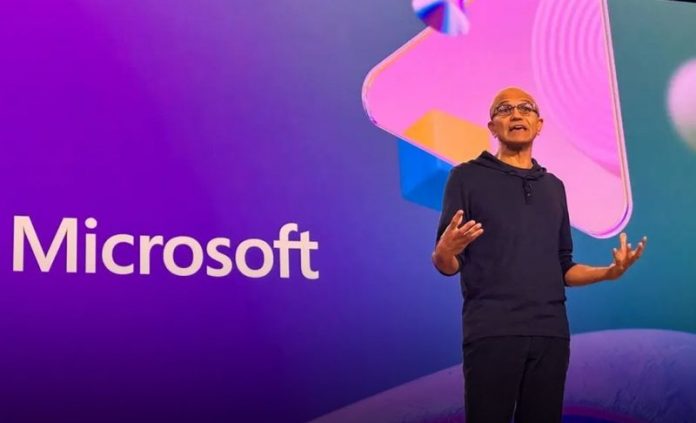
Microsoft’s decision to lay off approximately 4,800 employees, representing around 2.1% of its global workforce, highlights the increasingly complex reality facing the technology sector.

Despite strong revenues, significant investments in artificial intelligence, and a dominant position in enterprise software and cloud computing, the company has joined a growing list of major tech firms implementing workforce reductions while simultaneously reshaping their strategic priorities.

The company’s severance package, offering most affected US employees up to 39 weeks of base pay, reflects an effort to balance cost restructuring with support for displaced workers.

The layoffs come at a pivotal moment for the global technology industry. Over the past several years, large technology firms expanded aggressively, hiring tens of thousands of workers to meet surging demand for digital services during and after the pandemic.

As market conditions normalize and artificial intelligence transforms business operations, companies are reassessing organizational structures and workforce requirements. Microsoft’s latest job cuts are not necessarily a sign of financial distress.

On the contrary, the company remains one of the world’s most valuable corporations, benefiting from strong demand for Azure cloud services and growing adoption of AI-powered products such as Copilot.

The rapid rise of artificial intelligence is changing how companies allocate resources. Significant capital expenditures are now being directed toward AI infrastructure, including advanced data centers, semiconductor procurement, and strategic partnerships.

The decision to offer up to 39 weeks of base pay to laid-off employees demonstrates Microsoft’s recognition of the human impact of restructuring. Compared with many corporate layoffs, the severance package appears relatively generous and may help affected employees transition into new roles during a period of industry uncertainty.

Such compensation can provide financial stability while workers seek opportunities in emerging sectors, particularly in AI, cybersecurity, and digital infrastructure. However, the layoffs also raise broader questions about the future of employment in the technology industry.

As artificial intelligence becomes increasingly capable of automating coding, administrative tasks, and analytical functions, companies may require fewer employees in certain roles while demanding new skills in others. This transformation could lead to a significant reshaping of labor markets, with workers facing pressure to continuously adapt and reskill.

Another important aspect of Microsoft’s layoffs is the message it sends to the broader market.

Investors often view workforce reductions as evidence of management discipline and a commitment to improving operational efficiency. By reducing expenses and streamlining operations, companies can potentially improve profit margins and redirect resources toward high-growth initiatives.

In Microsoft’s case, this likely includes accelerating its leadership in generative AI and maintaining competitiveness against rivals such as Google, Amazon, and emerging AI-focused firms. Repeated rounds of layoffs across the technology sector may also have unintended consequences.

Employee morale can suffer, productivity may decline, and concerns about job security can affect talent retention. Moreover, the perception that artificial intelligence is replacing human workers could intensify debates surrounding responsible innovation and the social obligations of large corporations.

Microsoft’s workforce reduction and accompanying severance offerings illustrate the ongoing transition within the global technology industry. The company is positioning itself for an AI-driven future while attempting to mitigate the immediate impact on affected employees.

As artificial intelligence continues to reshape business models and competitive dynamics, similar restructuring efforts may become increasingly common, marking a new era in which technological advancement and workforce transformation proceed hand in hand.

New York Becomes First U.S. State To Halt Major AI Data Center Construction, Boosting Case For Elon Musk’s Space-Based Infrastructure Vision

0

New York has become the first U.S. state to temporarily halt the construction of large new data centers, marking a significant shift in the debate over the infrastructure needed to support the artificial intelligence boom.

The one-year moratorium emerged from growing concerns that the rapid expansion of AI facilities is straining electricity grids, increasing utility bills, consuming vast amounts of water and sparking opposition from local communities.

The move also lends fresh credibility to Elon Musk’s long-term argument that the future of AI infrastructure cannot rely solely on land-based data centers. Musk has repeatedly outlined a vision in which computing capacity moves into space, powered by solar energy and supported by SpaceX’s satellite and launch capabilities. That concept has become an important part of the investment narrative surrounding the company’s expected initial public offering.

New York Governor Kathy Hochul announced on Tuesday that the state would suspend permits for new data centers consuming 50 megawatts or more of electricity for one year while regulators develop statewide environmental standards governing the facilities.

The moratorium positions New York at the forefront of an intensifying national debate over how to balance AI-driven economic growth with mounting pressure on electricity networks, water resources and local infrastructure. While technology companies continue racing to build data centers to support increasingly powerful AI models, lawmakers across dozens of U.S. states are considering restrictions aimed at limiting their impact on power grids, utility costs and surrounding communities.

“As data center development threatens to hike up utility bills, deplete our natural resources, and create uncertainty for New Yorkers, it’s my responsibility to take action and lead,” Hochul said.

She also announced plans to pursue legislation eliminating sales tax exemptions currently available to large data center projects.

Under the policy, New York’s Department of Environmental Conservation will stop issuing discretionary permits for qualifying projects unless applications have already been deemed complete.

State agencies have also been directed to prepare a Generic Environmental Impact Statement (GEIS), which will establish uniform environmental standards for future AI data centers and assess their cumulative impact on natural resources, electricity demand and surrounding communities. The construction freeze will remain in effect until those standards are finalized.

The decision underscores one of the biggest emerging challenges facing the AI industry. Large language models and AI agents require enormous computing clusters equipped with thousands of advanced graphics processors, dramatically increasing electricity consumption.

Utilities across the United States have warned that AI is creating the strongest surge in electricity demand in decades after years of relatively flat consumption. Grid operators are increasingly struggling to connect new data centers because transmission infrastructure and power generation are not expanding quickly enough.

According to the New York Independent System Operator, more than 12 gigawatts of large electricity-consuming projects, including AI data centers, were waiting to connect to the state’s power grid as of May. For comparison, that amount of demand is comparable to the generating capacity needed to power millions of homes.

The issue has also become increasingly political as residential electricity bills climb. New York already has the eighth-highest residential electricity prices in the United States, according to U.S. Energy Department data.

Public opposition has also intensified. A recent Reuters/Ipsos survey found that only about one-third of Americans support the current pace of data center construction, while most respondents said they would oppose building such facilities in their own communities.

New York’s legislature last month approved legislation intended to impose additional safeguards on data centers, although Governor Hochul has not yet signed the bill, saying further work with lawmakers is required because of its complexity.

Maine considered a similar moratorium earlier this year, but Governor Janet Mills vetoed the proposal, making New York the first state to implement a statewide pause.

A Broader Warning for Big Tech

The New York decision underpins a growing realization that AI infrastructure expansion is becoming constrained not by demand for computing power but by access to electricity, water and permitting.

Major technology companies, including Microsoft, Amazon, Alphabet, Meta, and OpenAI, have collectively committed hundreds of billions of dollars to AI infrastructure over the coming years. However, many projects increasingly face delays because utilities cannot provide sufficient electricity or because local governments are becoming more cautious about approving energy-intensive developments.

Industry analysts describe electricity as the next major bottleneck for AI, alongside shortages of advanced semiconductors and high-bandwidth memory chips. Recent reports have also shown that data centers could account for around 11% of total U.S. electricity demand by the end of the decade, nearly doubling their current share, forcing utilities to accelerate investments in generation capacity, transmission networks and energy storage.

Musk’s Space Data Center Vision Gains Credibility

The New York moratorium also strengthens one of Elon Musk’s more ambitious long-term ideas: moving portions of AI computing infrastructure beyond Earth’s increasingly constrained power grid.

Musk has argued that space-based computing powered by continuous solar energy could eventually overcome many of the physical limitations confronting terrestrial data centers, including electricity shortages, land constraints, permitting delays and environmental opposition.

The concept is closely linked to SpaceX’s long-term strategy. The company is already building the world’s largest satellite network through Starlink and developing Starship, the fully reusable launch system designed to dramatically reduce the cost of transporting heavy payloads into orbit.

Industry observers now see orbital data centers as a potential future business alongside satellite broadband and launch services. If launch costs continue falling, space-based computing facilities powered by uninterrupted solar energy could become commercially viable for some of the world’s largest AI workloads.

While the concept remains years away from commercial deployment, mounting regulatory restrictions on terrestrial data centers are making alternative infrastructure strategies appear increasingly credible.

The timing is notable because SpaceX has just recorded the largest IPO in history, with investors paying closer attention to long-term growth opportunities beyond launch services and satellite internet. A successful expansion into AI infrastructure would significantly broaden the company’s addressable market and strengthen its position within the global AI ecosystem.

Although space-based data centers face substantial engineering, cooling, and deployment challenges, the constraints emerging on Earth are making previously futuristic concepts receive more serious consideration.

What Happens Next?

The New York moratorium is likely to encourage similar policy debates elsewhere in the United States, particularly in states experiencing rapid data center expansion and rising electricity demand.

Rather than slowing AI development itself, the decision may accelerate investment in alternative power sources, nuclear energy, advanced cooling technologies, and distributed computing architectures. It could also encourage companies to diversify where they build computing infrastructure, including regions with abundant renewable energy or lower regulatory hurdles.