DD
MM
YYYY

PAGES

DD
MM
YYYY

spot_img

PAGES

Home Blog Page 48

How Online Gaming Login Systems Work in Nigeria

0

Access to online sports betting and casino platforms in Nigeria starts with a secure login process. Whether users want to place sports bets or explore digital casino games, the ability to sign in safely has become a core part of the experience. Many Nigerian players are familiar with platforms such as PinUp Africa login, which is often mentioned as an example when discussing how modern betting account access works across sports and casino environments. The focus, however, is not on one platform, but on understanding how login, registration, and verification systems support online play in Nigeria.

Why Login and Account Access Matter

A login system is more than just a username and password. It is the gateway to a personal betting account where balances, game history, and preferences are stored. In Nigeria, where mobile usage dominates digital activity, fast and secure sign in account processes are essential for user trust.

Key reasons login systems are important include:

  • Protection of personal and financial data
  • Control over betting account access
  • Compliance with local and international regulations

After logging in, users can access sports betting markets, mobile casino games, or live casino sections without repeatedly entering details.

Registration and First-Time Access

Before login is possible, users must complete PinUp Africa registration or similar sign up betting account steps on other platforms. This usually involves providing basic personal information and confirming contact details.

Typical registration steps include:

  1. Creating a username and password
  2. Verifying email or phone number
  3. Accepting platform terms

These steps are standard across the industry and help platforms manage responsible gaming and fraud prevention. Once registration is complete, users can sign in from desktop or mobile devices, including Android apps commonly used in Nigeria.

Account Verification and Security

Account verification is a critical part of online gaming ecosystems. It confirms that a user is real and legally allowed to play. According to Statista, Africa’s online gambling market has grown steadily since 2022, increasing the need for stronger identity checks (Statista, 2024).

Verification often includes:

  • Identity document submission
  • Age confirmation
  • Payment method validation

Although this process may take time, it reduces risks linked to unauthorized access and supports safer play online casino Nigeria environments.

Mobile Access and Convenience

Most Nigerian users access platforms through smartphones. The rise of the mobile casino Nigeria segment reflects this trend. Data from the Nigerian Communications Commission shows that mobile internet subscriptions exceeded 160 million in recent years, making mobile-first login systems a necessity.

Mobile login benefits include:

  • Faster access via saved credentials
  • Compatibility with casino apps and browsers
  • Easy switching between sports and casino sections

This convenience supports seamless play casino sessions without repeated authentication steps.

Sports and Casino Access After Login

Once logged in, users can move between different gaming categories. Sports fans may focus on live betting, while others explore slots or table games in a mobile casino environment. Casino bonus offers and casino Nigeria bonus features are typically visible only after login, reinforcing why secure access matters.

In many cases, players: “Prefer platforms where logging in feels as easy as opening a messaging app, without compromising safety.”

This balance between simplicity and security defines modern betting platforms.

Looking Ahead to 2026

As Nigeria’s digital economy grows, login systems will continue evolving. Biometric authentication, two-factor verification, and app-based security are becoming more common. These changes aim to make betting account access smoother while maintaining strict control.

For users, this means fewer barriers to play online casino experiences and more confidence in how personal data is handled.

Login systems are the foundation of online sports and casino gaming in Nigeria. From registration to account verification, each step supports secure and organized access to digital platforms. While names like PinUp Africa login are often referenced as examples within industry discussions, the broader story is about how technology enables Nigerians to play, explore, and manage online gaming accounts safely in 2026 and beyond.

Hyundai and Kia Bet on Hybrids to Drive 3.2% Growth in 2026 as EV Momentum Softens

0

South Korea’s Hyundai Motor and its affiliate Kia are setting their sights on a modest but telling rebound in 2026, targeting a combined 3.2% increase in global vehicle sales to 7.51 million units, as the industry recalibrates around hybrids amid slower electric vehicle adoption.

The two automakers, which together rank third globally by sales, delivered 7.27 million vehicles in 2025, a marginal 0.6% rise from the previous year. The outcome left them just short of their annual targets, underscoring how volatile demand has become as government incentives fade and consumers reassess the cost and practicality of fully electric cars.

In the United States, Hyundai and Kia found an anchor in hybrids. The end of EV subsidies in September cooled demand for battery-powered vehicles, but hybrid sales accelerated, helping cushion the impact on overall volumes. Hyundai, which generates roughly 40% of its revenue from the U.S. market, said it posted a fifth consecutive year of record retail sales there in 2025. Electrified vehicles made up 30% of its retail mix, with hybrid sales jumping 36%, while EV sales rose 7%.

That performance highlights a broader shift underway in the auto sector. Carmakers that once framed EVs as the singular future are now leaning into hybrid technology as a bridge between internal combustion engines and full electrification. For Hyundai and Kia, the strategy appears less about retreat and more about timing: meeting consumers where demand is strongest, while keeping longer-term electrification plans intact.

Kia followed a similar playbook, prioritizing hybrid growth in the U.S. and reinforcing its position in Europe through higher EV volumes. The company pointed to an uncertain operating environment shaped by U.S. tariff policies and uneven regional demand, factors that have made flexible production strategies more valuable than aggressive volume pushes.

Looking ahead, Hyundai set a 2026 sales target of 4.16 million vehicles, slightly below its 2025 target but above its actual 2025 result of 4.14 million units. Analysts read that guidance as a sign of caution rather than retrenchment. Kim Chang-ho of Korea Investment & Securities said the target suggests management is bracing for a tough business climate rather than chasing headline growth.

Kia, by contrast, is seen as having more immediate upside. The updated Telluride model is scheduled to be produced and sold locally in the United States, shielding it from U.S. auto tariffs and potentially improving margins and competitiveness in one of its strongest markets.

Competition in hybrids remains intense. Toyota, the dominant player, held close to half of the U.S. hybrid market as of November, according to S&P Global data. Hyundai Motor’s share stood at about 13%, leaving room for expansion but also highlighting the scale of the challenge. Analysts argue that expanding U.S.-based hybrid production will be central to narrowing that gap, especially as Toyota already manufactures several hybrid models domestically.

Hyundai has signaled it understands the stakes. The company plans to launch new electrified models and ramp up advanced manufacturing capacity, including an EV-dedicated plant in Ulsan and its Pune facility in India, to better align output with regional demand patterns. In September, Hyundai also said it aims to produce more than 80% of the vehicles it sells in the U.S. within the country by 2030, a move shaped by tariff considerations and supply chain resilience.

Taken together, Hyundai and Kia’s 2026 outlook points to an industry in transition rather than retreat. Hybrids are emerging as the near-term growth engine, offering automakers volume, profitability, and regulatory flexibility, while EV strategies are recalibrated for a market that has turned more selective. In the wake of US President Donald Trump’s apathy toward green energy, the road to full electrification is proving longer and more uneven than once assumed, and automakers are beginning to adapt accordingly.

Understanding Startup Incentive Construct, a Framework by Ndubuisi Ekekwe

0

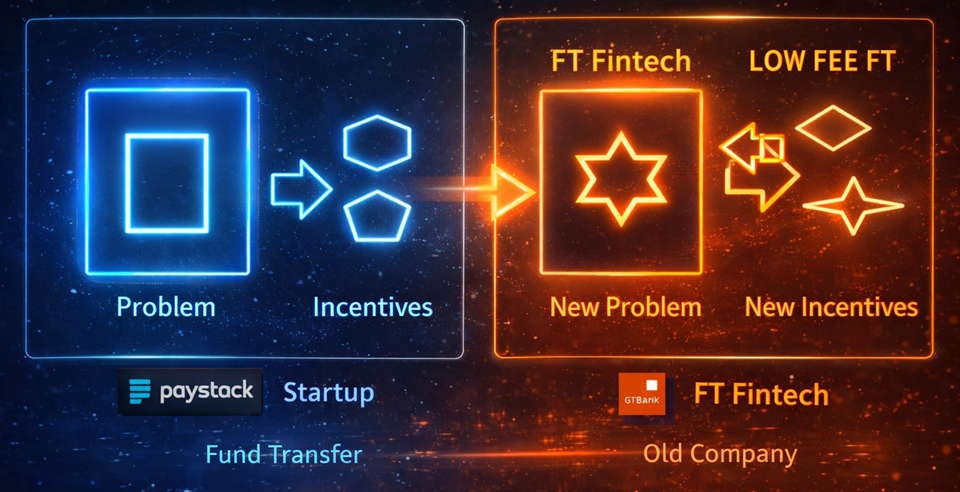
The competitive landscape of modern business often presents a paradox where small, underfunded startups consistently outperform established corporate giants that possess massive resources and decades of history. This phenomenon is explained through the Startup Incentive Construct, a framework I introduced, highlighting how success is driven by the alignment of incentives rather than just capital or legacy. At the heart of this construct is the realization that large companies often suffer from “Innovation Hangover” which creates a profound structural inertia.

This hangover occurs when a company’s existing, highly profitable revenue streams prevent it from pursuing new innovations that might cannibalize those very profits. For instance, a traditional bank generating significant revenue from a specific treasury operation would find it culturally and financially difficult to adopt a disruptive fintech solution that offers the same service at a fraction of the cost. Because the incumbent is incentivized to protect its current bottom line, it often ignores or suppresses innovations that would benefit the consumer but harm its own short-term earnings.

Consequently, when faced with new market frictions, these established organizations tend to adjust the problem to fit their legacy business models instead of solving the original friction. This misalignment means they end up solving a different, secondary problem that preserves their existing structure but fails to meet the actual needs of the consumer as effectively as a new entrant might.

In contrast, startups operate with an entirely different set of incentives because they have no legacy systems to protect and nothing to lose by being disruptive. They are inherently aligned with the original friction of the market, allowing them to focus on pure problem-solving without the burden of a profit hangover.

While a major corporation might add complex features to a product just to justify a premium price and maintain its margin, a startup can win by focusing on the core simplicity and cost-effectiveness that users actually need. This agility enables new ventures to navigate the strategic blind spots of industry leaders, ultimately transforming an incumbent’s greatest strength, its current profitability, into its most significant competitive weakness.

For entrepreneurs, especially those in emerging markets, this framework serves as a strategic roadmap, proving that focused alignment with market needs can reliably overcome the sheer scale of established players.

Read more my thesis here with video

The Startup Incentive Construct

BlockDAG Draws $0.30–$0.40 Market Buzz as Presale Nears Its January 26 Finish! AVAX Stays Under Pressure & ETH Stabilises

0

Crypto market signals are beginning to adjust, though not all projects are moving in the same direction. Ethereum is showing early signs that selling pressure is slowing after several weeks of decline. This change has led traders to watch closely to see if support levels can stay firm and help bring steadier sentiment back into the market.

Avalanche is moving on a separate path. Even with fresh expansion updates in the background, its charts still suggest caution. The main question now is whether long-term fundamentals can eventually overcome the current technical weakness showing on price charts.

Alongside these moves, BlockDAG (BDAG) is gaining attention for reasons not linked to short-term chart action. As its presale moves closer to ending, discussions are already forming around how its first trading phase could shape up once the presale finishes.

Ethereum Update: Signs of Balance After Heavy Selling

Focus has returned to the Ethereum price prediction as new market data points to early stabilisation. Binance Net Taker Volume has shifted notably, moving away from strong selling pressure toward a more even setup. This change suggests buyers are slowly stepping back in instead of rushing to exit positions. Several large holders have shared similar views, noting that Ethereum may have already set a base after weeks of steady accumulation.

From a chart view, ETH continues to trade near the $3,100 range after failing to break resistance close to $3,470. This price behaviour keeps the Ethereum price prediction neutral rather than clearly positive. Momentum tools are no longer deeply oversold, but they also lack the strength needed to confirm a clear upward move.

At present, Ethereum remains one of the top crypto coins under close watch. Holding key support levels could help calm market sentiment, but until resistance is regained, the Ethereum price prediction still points toward sideways movement instead of a sharp breakout.

Avalanche Update: Growth Efforts Face Short-Term Pressure

Recent headlines placed Avalanche in focus after it announced a new DLT Foundation in Abu Dhabi, aimed at building stronger regional ties and wider adoption. This step adds long-term credibility to the network. However, the Avalanche price continues to reflect near-term caution rather than optimism. AVAX is trading well below earlier highs, and indicators suggest cooling momentum instead of a confirmed reversal.

Weekly charts show higher volatility, with Bollinger Bands widening and support forming toward the lower range. The RSI sits close to oversold levels but has yet to signal a clear bounce. Market analysts point out that the Avalanche price remains locked in a broader downward channel, meaning any recovery attempt would need a strong breakout to change the trend.

Despite current weakness, Avalanche still ranks among the top crypto coins linked to wider ecosystem growth stories. For now, price action suggests patience, as the market waits for stronger confirmation before shifting direction.

BlockDAG Signals Strong Opening Range as Presale Ends Jan 26

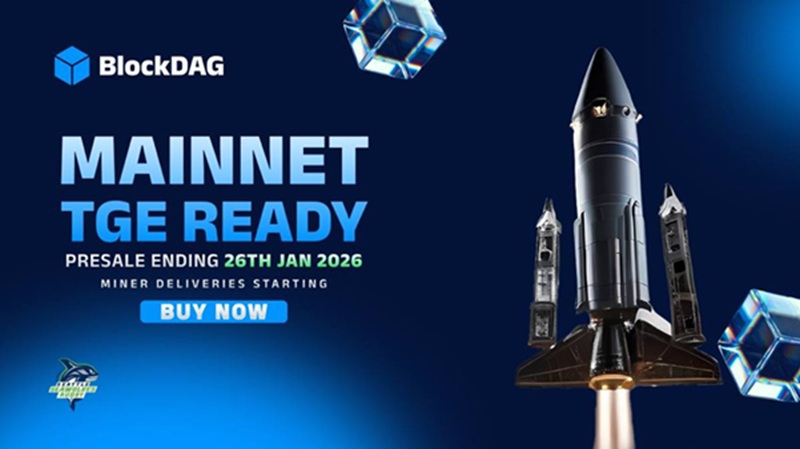
Market participants are closely watching BlockDAG as its presale approaches its January 26 finish. Unlike short-term chart moves, interest here is centred on supply structure, demand levels, and how early trading conditions may unfold once the presale ends. Current projections suggest strong early activity once trading begins.

For a limited time, BlockDAG coins are available at a special presale price of $0.003 per coin. This price level represents a final entry window before pricing changes. If BlockDAG reaches a $0.05 level after presale completion, this reflects a 16.67× difference from the current price, translating to a +1,566% upside. Once this stage ends, this price is gone with no extensions or resets.

The numbers behind the presale help explain growing attention. BlockDAG has raised over $441 million so far, with roughly 3.5 billion coins remaining. The presale is now in Batch 34, and urgency has increased as the final days approach. Demand has remained strong while available supply continues to narrow.

Market makers note that opening price levels are shaped by real buy and sell activity rather than reference figures. With limited supply available at the start and liquidity already prepared, early pricing could reflect strong demand conditions. These factors together are driving continued focus on BlockDAG as the presale clock runs down.

How Top Crypto Coins Shape the Week Ahead

Ethereum and Avalanche continue to reflect different stages of market adjustment. The Ethereum price prediction now leans toward consolidation, with buyers returning just enough to ease selling pressure but not yet strong enough to reclaim major resistance zones.

Avalanche remains limited by technical weakness, as recent expansion efforts have not yet translated into a clear shift in the Avalanche price trend. For both assets, near-term movement still depends more on price structure than on headlines alone.

BlockDAG stands apart as its presale moves into its final stretch, backed by over $441 million raised and a clearly defined closing date of January 26. With a special price of $0.003 and a projected +1,566% upside to $0.05, attention remains firmly on how demand and supply may interact once the presale ends.

As Ethereum and Avalanche work through their consolidation phases, BlockDAG’s current setup places it among the top crypto coins being closely watched ahead of their next major move.

Presale: https://purchase.blockdag.network

Website: https://blockdag.network

Telegram: https://t.me/blockDAGnetworkOfficial

Discord: https://discord.gg/Q7BxghMVyu

Comcast Spin-Off Versant Enters Public Markets as Investors Weigh Cable TV’s Future

0

Versant Media Group, the newly independent portfolio of cable television networks and digital assets carved out of Comcast, officially joins the public markets on Monday, stepping into an industry still grappling with structural disruption and shifting viewer habits.

The debut is seen as a live stress test of whether legacy cable television assets, repackaged with selective digital bets and lighter leverage, can still command investor confidence in an industry undergoing one of the most disruptive transitions in its history.

When Versant begins trading on the Nasdaq under the ticker “VSNT,” it enters a market that has become deeply skeptical of traditional media. The slide in its “when-issued” shares from $55 in mid-December to $46.65 by Friday’s close underscores that skepticism. Investors are clearly demanding proof, not promises, that cable-heavy portfolios can stabilize revenues and generate durable cash flows in an era defined by cord-cutting, streaming fragmentation, and volatile advertising markets.

At a valuation of roughly $6.8 billion, Versant sits in an awkward middle ground. It is neither a high-growth streaming pure play nor a deeply distressed asset trading at fire-sale multiples. Instead, it is being positioned as a cash-generative, operationally disciplined media company that can slowly pivot toward digital while extracting value from still-profitable linear networks. That framing will likely define how the market judges the company over the next 12 to 24 months.

The composition of Versant’s assets matters. Networks like CNBC, USA, Golf Channel, and MS Now anchor the portfolio in news and sports-adjacent content — two areas that continue to draw live audiences and premium advertising dollars even as entertainment viewing shifts on demand. Live programming remains harder to replicate or fully displace with streaming, giving Versant some insulation compared with general entertainment-focused cable groups.

Still, the numbers reveal the scale of the challenge. Revenue has declined steadily from $7.8 billion in 2022 to $7.1 billion in 2024, a trajectory that mirrors the broader contraction of the U.S. pay-TV ecosystem. Net income has followed the same downward slope. While profitability remains intact, the trend highlights how much pressure management faces to arrest decline rather than simply manage it.

Debt, however, is where Versant tries to differentiate itself. Ratings agencies flagged the company’s BB credit rating, but they also emphasized its relatively conservative leverage compared with peers. In a sector where companies like Warner Bros. Discovery continue to wrestle with heavy debt loads inherited from mega-mergers, Versant’s balance sheet is being pitched as a strategic advantage. Management believes this flexibility will allow the company to pursue targeted acquisitions in digital media, ticketing, sports technology, and data-driven platforms without jeopardizing financial stability.

The one-time $2.25 billion cash distribution to Comcast, funded through new debt issuance, has drawn scrutiny. For some investors, it reinforces the perception that the spin-off primarily served Comcast’s balance sheet rather than Versant’s long-term growth. For others, the remaining liquidity and manageable leverage provide a clearer runway than that available to more encumbered rivals.

Strategically, Versant’s future hinges on execution rather than scale. Unlike Netflix or Disney, it is not trying to win the streaming arms race outright. Instead, it is betting on incremental digital expansion layered onto legacy strengths. Properties like Fandango and Rotten Tomatoes already provide touchpoints with digitally native audiences, while platforms such as GolfNow and Sports Engine offer data, community, and transactional revenue streams that extend beyond traditional advertising.

The broader industry context also shapes Versant’s prospects. Media consolidation has accelerated as companies search for scale, cost savings, and negotiating power with advertisers and distributors. Versant’s independence could make it both a consolidator and a target. Its focused asset base, predictable cash flows, and lighter debt profile may appeal to private equity firms or strategic buyers seeking exposure to news and sports without the complexity of sprawling entertainment studios.

Investor sentiment toward the sector remains fragile. Newsmax’s volatile post-IPO performance serves as a cautionary tale, reinforcing how quickly enthusiasm can fade when growth narratives collide with structural decline. Versant’s early share-price weakness suggests markets are reserving judgment until management demonstrates credible progress on digital growth, cost control, and revenue stabilization.

However, the company stands as a bellwether for traditional media’s next phase. Its public-market journey will help answer a central question facing the industry: can cable-era assets, reorganized and financially disciplined, still generate sustainable shareholder value — or are they destined to be harvested for cash while audiences and advertisers continue to migrate elsewhere?

The answer will not emerge in a single quarter. But as one of the few media companies brave enough to test the IPO waters amid ongoing disruption, Versant’s performance will be closely watched as a proxy for the sector’s long-term investability.