DD
MM
YYYY

PAGES

DD
MM
YYYY

spot_img

PAGES

Home Blog Page 4811

No Movement on Election Day in Nigeria is Unlawful and Unconstitutional

0

Nigeria is just a few more months to the 2023 presidential/ general election and it is pertinent to remind INEC and other agencies of the government that are in charge and control of elections in Nigeria once more that restricting movements on Election Day is unconstitutional, unlawful and contravenes the fundamental freedom of movement of citizens as provided in S.41 of the Constitution of the federal republic of Nigeria and subsequently provided for in Article 12(1) of the African Charter on Human and Peoples’ Rights (Ratification and Enforcement) Act, Cap A9, Laws of the Federation of Nigeria, 2004. 

The Nigerian government has a penchant for declaring “no movement” on Election Days and those found moving around are sometimes arrested, harassed, intimidated, and brutalized by state security agencies for “loitering” and this should never be the case. 

Elections should be like every other day in Nigeria, it is the day the citizens exercise their franchise and the government should not in its quest to get the citizens to exercise a fundamental right abuse another critical fundamental right. Elections should never be a ground where citizens’ freedom of movement is restricted. 

Freedom of movement should be unqualified and the only instance when a citizen should be denied this freedom is when he has been restrained by the order of the court because he is being tried for a crime he is accused of or if he has been sentenced to committal/ detention as a punishment for a crime he is been found guilty of or when the government declares state of emergency to curb and quell insecurity and disorderliness. These are the instances known to the law that a citizen’s right to movement can/should be restricted, any other instance, be it elections, is totally unlawful and unconstitutional. 

In the case of Mallam Nasir Ahmad el-Rufai V. State Security Service (SSS) & the Attorney General of the Federation, The federal high court sitting in Awka held that the government nor its security agencies have no power or right to restrict a citizen’s movement thereby denying a citizen his fundamental right of movement on the bases of the election. Any act of the government or its security agencies restricting the movement of citizens merely because it is Election Day is totally unlawful and unconstitutional. 

In the above case, in November 2013 during a governorship election in Anambra state, Mallam Nasir Ahmad el-Rufai (who is currently the executive Governor of Kaduna State) was an official of the APC and was sent by his party to Anambra state to monitor the governorship elections and feedback reports to his party, when he got to Anambra state, the State Security Service told him that he is not allowed to move out of his hotel room stating that it is the directive from “above” that no citizen is allowed to move around in the state; moving around is only for the purpose of a person going to his polling unit to cast his vote, any other form of movement other than that is totally prohibited.

After the incident, Mallan Nasir Ahmad el-Rufai was aggrieved and he decided to enforce his fundamental human right to movement as provided in section 41 of the Constitution of the federal republic of Nigeria, the court while laying emphasis on the fact that restricting citizens’ movement merely on the bases of election is unlawful and unconstitutional awarded damages on his behalf
Five Key things to note about the New Nigerian Startup Act

0

The president assented to the Nigerian Startup Act, yesterday, the 19th of October, 2022. This new law basically, is to ameliorate the huddles technology innovation and tech-centric startups have been facing in Nigeria and make that sector highly attractive for investors both foreign and local investors to invest in it.

These are five key points of the new act that you may want to pay much attention to:

In order to attract foreign investors, the act provided in S.40 for easy repatriation of capital and profits by foreign investors. One of the major hurdles foreign investors encounter while investing in a Nigerian business is the repatriation of their capital and gains back to their home country. This law has made provisions to ensure that foreign investors will no longer encounter this challenge.

This new act provides for Tax reliefs and other fiscal incentives like pioneer status schemes for tech startups in Nigeria. Although there are condition precedents before you can enjoy these incentives. Tech startups can enjoy tax breaks for a period of four after their inception/labeling years while their founders can also enjoy some tax reliefs. This is the provision of S. 24 of the act.

This new act established Startup Investment Seed Fund to provide capital/ seed funding for tech startups that may have struggles with raising seed capital for scaling. Every labeled startup is qualified and eligible to apply for this seed fund and this is the provision of S. 19 of the act.

Tech startups have access to grants and loans from CBN and other financial institutions of the government. Some of these loans are interest-free while some attract minimal interest and a flexible repayment period. This loan and grant are totally different from the seed funding we earlier talked about. This is the provision of S. 28 of the act.

Finally, for the purpose of driving technological innovations to the grassroots in Nigeria, this new act proposed the establishment of tech hubs and innovation parks across the 36 States of the federation and the federal capital territory. This is the provision of S. 43.

Brexit and The Making of the Ungovernable UK

0

You may wonder why this village boy from Nigeria is wasting time on UK matters? People, it is a free world. And with that, this was my post (May 2019) after Brexit when I predicted largely what is happening in the UK now – . May I note that if you check this piece on LinkedIn, many pushed hard against my largely pessimistic near-term future of the UK leadership.

“UK Prime Minister Theresa May resigns. I do not know why it took so long. The fact is this: the world that United Kingdom wants will not happen in the very near future. So, they better be changing leaders because no one can take them to their designed equilibrium point. In the past, it used to be The Rise of Me Only; today, it is now The Rise of All.

“That means – if you expect the world as it was 100 years ago, you are living in an illusion. UK benefited from the world, ravaging empires from Asia to Africa; now, it wants to sleep under its pillows happily, out of the world. That will not happen. Gone David Cameron, gone Theresa May, bring the next person. It will not change UK until it realizes that the new world is The Rise of All and citizens must make adjustments for that reality.

Next please…Boris Johnson, possibly. He will experience the same thing: sobering resignation. By the time markets begin to work on Brexit, UK will understand the world has changed…”

Comment on LinkedIn Feed

Comment: Prof., it’s amazing how you accurately foretold the current happenings. But would be a possible solution, Sir?

My Response: You see my photos with the UN Secretary General, Bill Gates, Richard Branson, etc. There is a reason that happens. If a boy has a talent, the kings and queens will call to the palace. On the solutions, we do not focus on political solutions since that does not make sense. But we focus on the solutions for investors and companies. I will be in Saudi Arabia in Feb and we will discuss some of the solutions. I am thankful to God for His Grace.

Cement Manufacturer Lafarge Pleads Guilty of Sponsoring ISIS, Fined $778 Million

0

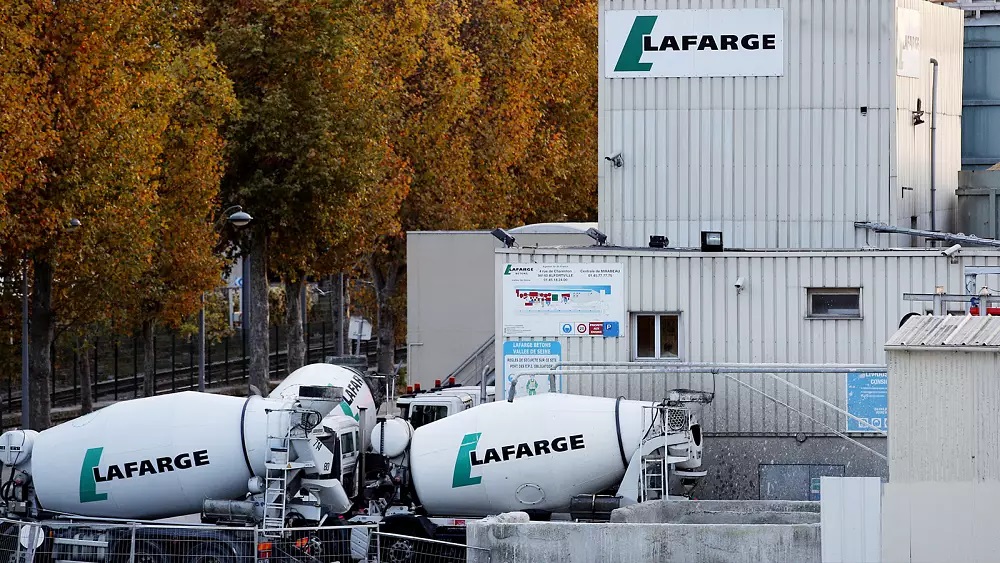
French cement giant Lafarge is set to pay a $778 million fine after it pleaded guilty to sponsoring the dreaded terrorist group ISIS.

After much investigation, Lafarge acknowledged that in 2013 and 2014, it paid millions of euros to the Isis group to keep its Syrian cement factory running, long after other firms had pulled out of the country which the U.S justice department described as an “unthinkable choice”.

Earlier this year, a French court ruled that the company was aware that much of the money had gone to finance Islamic State operations.

U.S Attorney Breon Peace while commenting on Lafarge’s actions in a Justice Department statement said, “In the midst of a civil war, Lafarge made the unthinkable choice to put money into the hands of ISIS, one of the world’s most barbaric terrorist organizations, so that it could continue selling cement.

“The defendants routed nearly six million dollars in illicit payments to two of the world’s most notorious terrorist organizations ISIS and al-Nusrah Front in Syria at a time those groups were brutalizing innocent civilians in Syria and actively plotting to harm Americans.

“Lafarge did this not merely in exchange for permission to operate its cement plant  which would have been bad enough but also to leverage its relationship with ISIS for economic advantage.”

“There is simply no justification for a multi-national corporation authorizing payments to designated terrorist organizations”.

The cement company was then awarded a $778 million fine for its sponsorship of the ISIS group.

Commenting on the bargain plea, The chief executive of Lafarge, Magali Anderson who was present at the court stated that all those involved with the conduct are no longer with the company. 

He also noted that Lafarge “accepted responsibility for the actions of the individual executives involved, whose behavior was in flagrant violation of Lafarge’s code of conduct.”

Following Lafarge’s recent trial due to its involvement in sponsoring a terror group, the company’s stock price has so far depreciated.

Lafarge Africa Plc stock price depreciated by 2.13 percent to N23.00 per share yesterday, from the N23.50 it opened on the Nigerian Exchange Limited (NGX) following reports that its parent company, Lafarge SA has agreed to pay a financial penalty of nearly $778 million and also pleaded guilty to a United States federal court of conspiring to provide material support to ISIS and another terrorist organization.

The stock price of the cement-producing company on the Nigerian stock exchange (NGX) had remained flat since September 21, 2022, but depreciated to N23 per share yesterday.

A capital market analyst said the sanction imposed on its parent company was going to affect its performance on the NGX.

UK Prime Minister Liz Truss Resigns

0

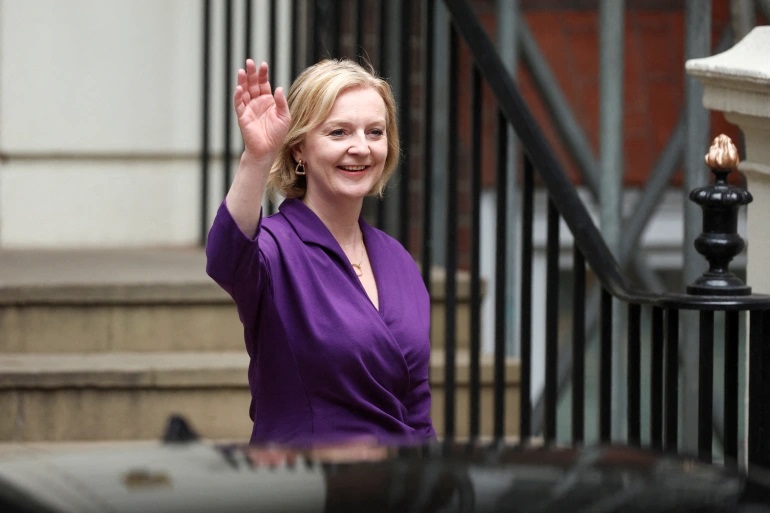
U.K Prime Minister Liz Truss has recently revealed that she is resigning from her position after spending about six weeks in office.

In her resignation speech, Truss disclosed that a contest would take place within a week, although the exact process for the contest is yet to be revealed, as it seems unlikely that there will be a repeat of the two-month marathon contest that followed the toppling of Boris Johnson.

While giving her speech Liz Truss said outside the 10 Downing Street, the official residence and the office of the British Prime Minister, she said, “I came into office at a time of great economic and international instability with a mandate to change this. Families and businesses were worried about how to pay their bills.

“I recognise though given the situation, I cannot deliver the mandate on which I was elected by the Conservative Party. I have therefore spoken to His Majesty the King to notify him that I am resigning as leader of the Conservative Party.

“This morning, I met the chairman of the 1922 committee, Sir Graham Brady. We’ve agreed that there will be a leadership election to be completed within the next week.

Following her resignation after spending six weeks in office, Liz Truss is set to become Britain’s shortest-serving prime minister ever after what is termed a “disastrous tenure”.

Truss’s government was earlier told it had 12 hours to turn the ship around by Conservative lawmaker Simon Hoare, after a vote on whether to ban controversial fracking for shale gas escalated into chaos.

Lawmakers reported that aides for Truss manhandled MPs into the voting lobby to force them to vote against the ban. The government initially presented the vote as a confidence motion in Truss’s government, but confusion remains about whether it was.

A Downing Street spokesperson said on Thursday that Conservative lawmakers who didn’t participate in Wednesday evening’s vote will face disciplinary action.

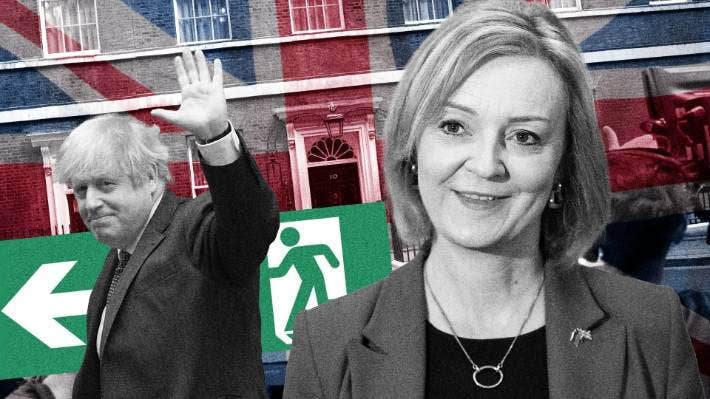
Truss took over from Boris Johnson who resigned from his position as Prime Minister in July over a series of scandals.

Liz Truss’s resignation brings to an end her catastrophic tenure in Downing Street, which

was ravaged with challenges ever since her flagship economic agenda sent markets into panic and led to a fall in the value of the pound.

Truss won support from Conservatives members by promising low-tax, pro-growth policies derided by her critics as a lurch towards trickle-down economics but within weeks of coming to power, she disavowed the plans in a humiliating pivot, firing her Chancellor Kwasi Kwarteng and ditching virtually all of the fiscal agenda in the wake of a market backlash.