DD
MM
YYYY

PAGES

DD
MM
YYYY

spot_img

PAGES

Home Blog Page 4912

Are you permitted to kill a person to increase your chance of survival?

0

In the year 1884, Tom Dudley, Edwin Stephens, Edmund Brooks, and Richard Parker were stranded on a ship for days until they ran out of food and water and there was no hope of getting rescued. In order not to die of hunger they decided to kill one of them and feed on the meat and drink the blood. They all decided to kill the youngest and the weakest amongst them who was Richard Parker, a 17 years old cabin boy who was already in a coma and sick out of the ordeal they are facing on the ship. 

So in the quest for survival, they killed Richard Parker and devoured his flesh and drank his blood, days later they were rescued and sailed to the shore. 

They were subsequently arraigned for the murder of Richard Parker, the 17 years old crew member they fed on and their defense was that they killed Richard out of necessity. Their quest for survival necessitated the murder of the 17 years old lad and if they haven’t killed him and fed on him all of them could have died of hunger. 

So according to them, the act of killing Richard Parker was just collateral damage; sacrificing the youngest and weakest crew member who is already sick and might die anyway in order to save the rest three crew members. 

In criminal law, there is a principle known as the doctrine of necessity. The doctrine of necessity is the basis on which extra-constitutional or criminal actions by both administrative authorities or individuals which are designed to restore order or attain power on the pretext of stability, are considered to be lawful even if such action contravenes established constitution, laws, norms, or conventions of the state. It can as well be an instance where some criminal acts are allowed or accommodated in as much as the situation necessitates or calls for the action. 

The doctrine of necessity and collateral damage is an infamous principle in war times. A soldier is permitted to kill as many people as possible in the quest of killing or capturing their target. Although they always claim to have accessed or calculated the collateral damage before they order or carry out the attack, this collateral damage may involve killing children, women, the sick, or non combatant civilians. 

The legality and morality behind this principle are still the subjects of debate. 

In the story narrated earlier, the issue before the court for determination when the rest crew members were arraigned for trial is; “whether the act of the crew members murdering one of them can be justified by the doctrine of necessity”. 

This case shone some light on the area of morality, ethics, and legality of taking another man’s life in order to increase your own chance of survival. Is this act legal, is it ethical or is it morally justifiable? 

If A & B are being chased by a lion, is A justified to push B over to the lion to give him (A) the chance and opportunity to escape while the lion devours B? Mind you, if one of them is not sacrificed they will both be devoured by the lion!

If a boat is overloaded, and it’s causing the boat to sink, will the boat captain be justified to throw some people into the sea to lift some weight off the boat, sacrificing the lives of a few to save the lives of many others in the boat, bear in mind that if the captain does not throw some people overboard the boat will sink and they will all die? 

The decision of the court in the above case was divided. The judges were of different opinions; while some judges justified the killing of the weakest crew member in order to increase the chance of survival of the rest crew on the doctrine of necessity, some other judges begged to differ stating categorically that you cannot kill another man or cause the death of another man in order to increase your own chance of survival. 

But before I tell you the decision of the majority of the judges and the outcome of the case, what will be your own opinion on this; is one justified out of necessity to sacrifice the life of a few in the quest of saving the majority? 

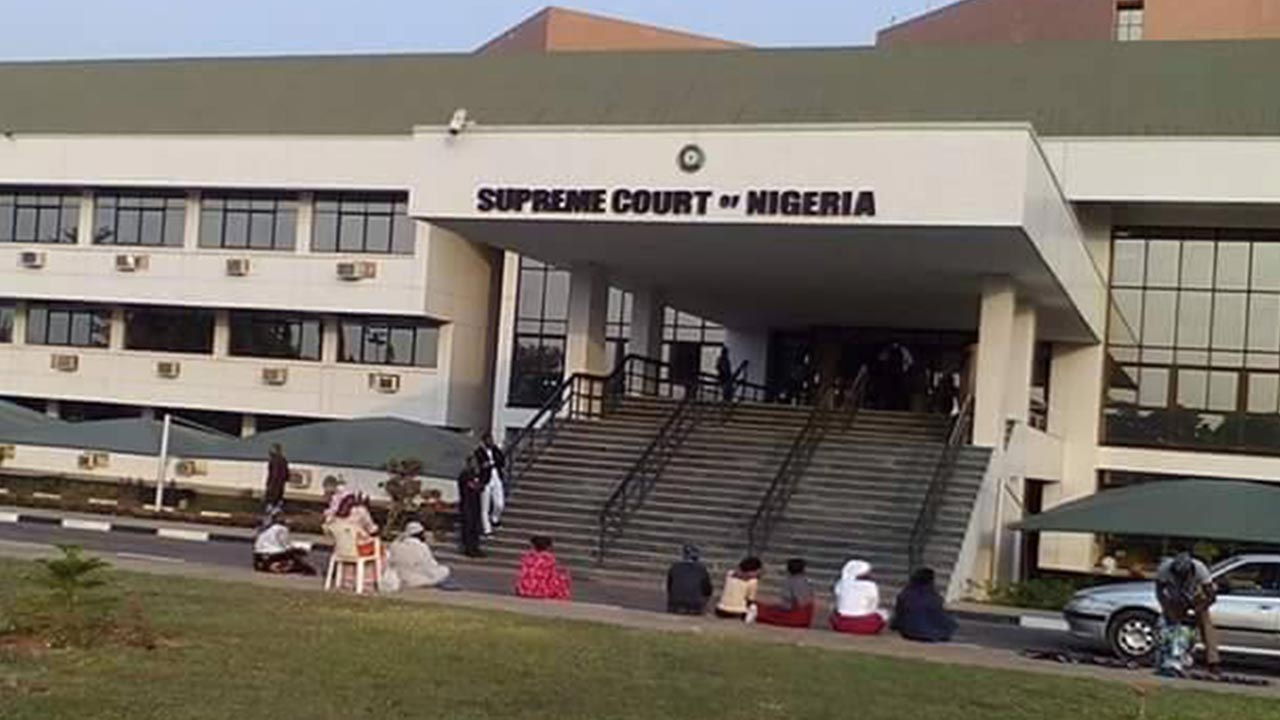
R v Dudley and Stephens 14 QBD 273, DC
 

A Lesson for Nigeria from London on Readiness To Serve on Day 1

5

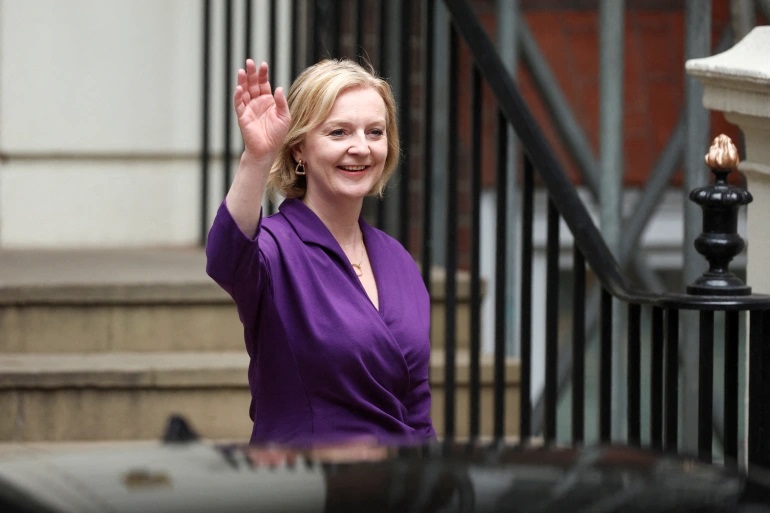
She got the job on Monday. Hours later, she was crowned the Prime Minister of the United Kingdom. Before the nightingales could begin to sing their melodies on Tuesday, some key members of her cabinet were announced. Give her extra 72 hours, her core team would be set!

Contrast with Nigeria, you are elected in February to be sworn in late May. Yet, after that swearing, it will take another 3-7 months to form a cabinet!

Why? The governor or the president has no clue what the job entails – and consequently does not know those who can help. That is possible because he has NEVER thought about the issues he was elected to fix. He was only prepared on the verbosity of electioneering with soundbites to appeal to bases. 

People, until Nigeria amends the Constitution and requires Gubernatorial and Presidential candidates to debate (minimum of 5 debates) , men and women  who have no roles to be near seats of power will continue to find their bodies therein. The last debate will be on a blackboard with chalk, and it will focus on Flowcharting the Future. You give the candidate a chalk, and ask him to flowchart how he will fix a specific problem.  Have that in the constitution, many politicians will call in sick or withdraw from the contest. . But we need that to improve the playbook.

I was the Library Prefect in secondary school and the official leader of the school debate team. Once the topic was announced, the next was to read about that topic. Without the debate, there was no incentive. Nigeria needs mandatory debates in our democracy. 

Liz Truss became the third female prime minister in British history on Tuesday and pledged to immediately set about tackling the United Kingdom’s spiraling cost of living crisis, saying she was confident that “together we can ride out of the storm” of economic problems facing the nation.

Truss, 47, took office on a day of ceremony that saw her scandal-plagued predecessor Boris Johnson bow out in a defiant speech at Downing Street in London before both politicians flew to meet the Queen in Scotland for a transfer of power.

Comment on Feed

Comment 1: I don’t share the opinion that debate will help anything in that Nigeria of a country.

First of all, before debates, most Nigerians have already decided who they will be cheerleading. Once that decision is made their mind is clouded by those things and they won’t even hear anything else.

Secondly, look at the pool of options currently on the table they are not the best communicators nor are they particularly good at leadership strategy. Read the manifesto of those who have one, and you will understand.

As for amending the constitution, most of those who have the intellect, the will, and the passion to effect such, are either dead, or confined in positions miles away from the legislative chambers. Again thanks to accepting misplacement of resources as way of life.

I don’t always like to comment about Nigeria, because I don’t understand why the creator chose to concentrate most of the non-human thinking humans in one geographic location.

Comment 2: Step on their necks sir. Enough is enough. We condone a lot of mediocrity and use the cliché quote that annoys me so much, “This is Nigeria and it’s how we do it here.” ????? Thank God people like you who can speak boldly about the ills of governance and not fear reproach. I celebrate you sir.
Comment 3: There is no credible evidence that debates sway voters. A Harvard Business School research data indicates debates really do not determine election outcomes. According to that study, 72% of voters make up their minds more than two months before the election, often before candidates square off. And those who shift to a different candidate closer to the election don’t do it following TV debates. Pew research pegs the number of voters who make up their minds based on debates at about 10%. American voters are informed, skeptical and engaged. A typical Nigerian voter is cynical and disengaged. According to INEC data, less than 35 percent of Nigerians vote. PMB was voted by less than 35 percent of Nigerians. And a vast majority of that number were told who to vote for or had their votes bought. 2019 elections had the lowest turnout post return to democracy in Nigeria. Rather than debates, I expect informed Nigerians, like you Professor Ekekwe, to articulate the issues and help frame them for voters. I expect the media to hold the feet of the candidates to fire. And to endorse candidates openly. It is treasonous to sit on the fence. According to Abraham Lincoln, “God loves ordinary people. He made a lot of them”. But they vote; blindly.
My Response: “There is no credible evidence that debates sway voters. ” – you got it wrong. I did not write that you need debates to win elections. Your premise is off my piece. I am saying that debates push leaders to think over issues, not get votes. Read my focus again.

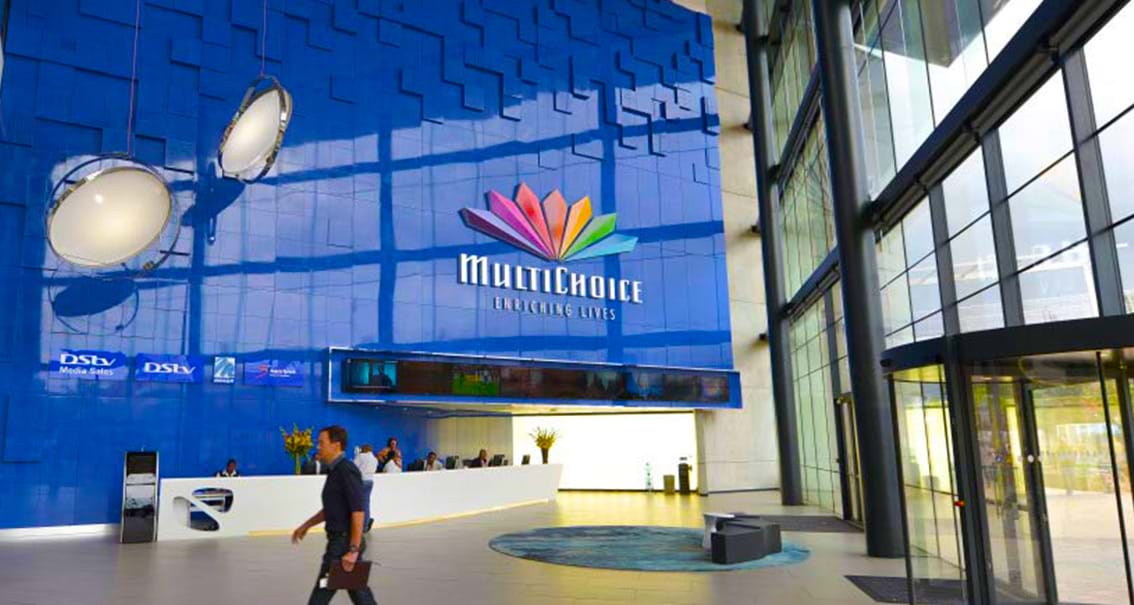
The MultiChoice (DStv, GOtv) Win And Why The Tribunal Made The Right Call

1

I commend the tribunal for being driven by facts in making this call: “MultiChoice Nigeria Limited, the embattled operator of DStv and GOtv cable services, has won the legal suit brought against it by some Nigerian consumers over an increase in its service tariff.” Taking MultiChoice to a tribunal for raising the prices of its packages is not fair for an “imported” product. 

The English Premiership has increased its TV deals. La Liga has done the same. The Naira has continued to lose value against major currencies. Inflation is ravaging the football world that Messi is close to earning for himself alone the budget of Abia State.

Yet, people want me to believe that MultiChoice (DStv, GOtv) must have prices frozen. Who has not increased prices on imported products in Nigeria? Provided people are not paying DStv to watch Enyimba, Kano Pillars, etc, they must be ready to open their purses. This is not entirely on MultiChoice!

Sure – this is not to say that DStv is not padding margins. Nonetheless, you do not change that equation in the court, you take your flight and outbid MultiChoice in London for premiership games, and then return to Nigeria and make bazaar!

But remember – Nigeria has more important things than the next episode of Zee World!

MultiChoice Nigeria Limited, the embattled operator of DStv and Gotv cable services, has won the legal suit brought against it by some Nigerian consumers over an increase in its service tariff.

The Competition and Consumer Protection, CCPC, Tribunal sitting in Abuja, on Tuesday, dismissed the suit for lacking merit.

Earlier in the year, a legal practitioner, Festus Onifade, backed by a coalition of consumers, had instituted the case against MultiChoice over its attempt to hike the tariff of subscription bouquets.

Onifade instituted the suit, which has MultiChoice as the first respondent and the Federal Competition and Consumer Protection Commission, (FCCPC) as the second respondent, before the CCPC in March, praying the tribunal to stop the tariff hike billed to take effect April 1.

Tribunal Dismisses Suit Brought Against MultiChoice (DStv, GOtv) Over Subscription Tariff

Tribunal Dismisses Suit Brought Against MultiChoice (DStv, GOtv) Over Subscription Tariff

0

MultiChoice Nigeria Limited, the embattled operator of DStv and Gotv cable services, has won the legal suit brought against it by some Nigerian consumers over an increase in its service tariff.

The Competition and Consumer Protection, CCPC, Tribunal sitting in Abuja, on Tuesday, dismissed the suit for lacking merit.

Earlier in the year, a legal practitioner, Festus Onifade, backed by a coalition of consumers, had instituted the case against MultiChoice over its attempt to hike the tariff of subscription bouquets.

Onifade instituted the suit, which has MultiChoice as the first respondent and the Federal Competition and Consumer Protection Commission, (FCCPC) as the second respondent, before the CCPC in March, praying the tribunal to stop the tariff hike billed to take effect April 1.

The tribunal had ordered MultiChoice to suspend the planned tariff hike pending the outcome of the suit.

“The 1st defendant/respondent is hereby restrained, either by itself, agents, representatives, officers or privies, howsoever described, from carrying out the impending increase in tariffs and cost of its products and services intended to take effect from 1st April, 2022 until the hearing and determination of the motion on notice already filed before this Honourable Tribunal.

“The 1st defendant/respondent is hereby mandated to maintain status quo pending the hearing and determination of the motion on notice,” the tribunal had ruled.

But in its final judgment, the three-member panel tribunal headed by Thomas Okosun, dismissed the suit, which includes amended originating summons that Onifade filed in June, praying the tribunal to order MultiChoice Limited to implement a pay-as-you-view model of billing for all its products and services in the country.

The plaintiff also prayed the court to award damages against MultiChoice at the tone of N10 million, besides the other prayers.

In disapproval of the satellite company’s planned tariff hike, Nigerian lawmakers had backed consumers asking for stable subscription fees or pay-per-view pricing model.

But in defiance, MultiChoice had allegedly implemented the tariff hike on its bouquets both on DStv and Gotv. The company also challenged the jurisdiction of the CCPC Tribunal to entertain the case. But the tribunal held that it has the requisite jurisdiction to hear the suit.

However, in the final ruling, the tribunal held that plaintiffs failed to establish that MultiChoice abused its dominant market position, making the price increase valid.

It also held that the claimants failed to adduce any evidence or to establish how they suffered psychological trauma, hardship or how their rights were violated as a result of the price hike. The litigants were also unable to show evidence of hardship suffered by the consumers of MultiChoice’s services and products, the panel ruled.

In addition, the panel ruled that neither the claimants, including the FCCP, the tribunal itself nor any other body apart from the president has the power to regulate price.

“Only the President has the powers to regulate or fix prices of goods and services under stipulated circumstances which do not apply in this instance”, it ruled.

With this ruling, it is expected that the controversy that has trailed MultiChoice’s attempt to increase tariff, in line with market trends, will be finally laid to rest. The South African-based company had cited forex scarcity and increasing cost of running business in Nigeria as the reasons behind its move to increase subscription fees.

Nigeria generates N600.1 Billion from VAT in Q2 2022

0
FIRS signpost

A report from the National Bureau of Statistics (NBS), reveals that Nigeria generated N600.15 billion as value-added tax (VAT) in the second quarter of 2022. 

This figure represents a 1.96 percent increase from the N588.96 billion generated in the first quarter of 2022.

According to the report , local payments of VAT amounted to N359.12 billion in Q2 2022, on a quarter-to-quarter basis, while electricity, gas, steam, and air conditioning supply, recorded the highest growth rate with 116.47 percent.

On the other hand, activities of extraterritorial organizations and bodies had the lowest growth rate with 42.39 percent.

The report reads;

On the aggregate, value-added tax (VAT) for Q2 2022 was reported at N600.15 billion, showing a growth rate of 1.96 percent on a quarter-on-quarter basis from N588.59 billion in Q1 2022.

“Local payments recorded were N359.12 billion, while foreign VAT payment contributed N111.13 billion in Q2 2022. On a quarter-on-quarter basis, electricity, gas, steam and air conditioning supply recorded the highest growth rate with 116.47 percent, followed by accommodation and food service activities with 42.44 percent”

“On the other hand, activities of extraterritorial organizations and bodies had the lowest growth rate with 42.39 percent.

This was followed by activities of households as employers, undifferentiated goods- and services-producing activities of households for own use with 36.57 percent.

“In terms of sectoral contributions, the top three largest contributors in Q2 2022 were manufacturing with 33.08 percent, information and communication with 18.98 percent, and mining and quarrying with 10.60 percent.

On the other hand, activities of households as employers, undifferentiated goods- and services-producing activities of households for own use recorded the least share with 0.03 percent.

“This was followed by activities of extraterritorial organizations and bodies with 0.05 percent; and water supply, sewerage, waste management and remediation activities with 0.13 percent.”

The main VAT rate in Nigeria is 7.5%, which was raised from 5% on 1st February 2020.