DD
MM
YYYY

PAGES

DD
MM
YYYY

spot_img

PAGES

Home Blog Page 497

OpenAI to Share Only 8% of Revenue with Microsoft, Eyes $50bn Earning Boost as Partnership Terms Shift

0

OpenAI is preparing for a significant shift in its financial relationship with Microsoft, potentially retaining a greater share of its revenue in the coming years. According to The Information, the company projects that by the end of the decade, it will be sharing just 8% of its revenue with commercial partners such as Microsoft, down from the roughly 20% it currently hands over.

The gap between those figures represents more than $50 billion in additional revenue that OpenAI could keep for itself, though the report noted it was unclear whether that estimate was cumulative or annual.

At the heart of the matter are ongoing negotiations between the two companies over the cost of cloud computing resources. OpenAI rents servers from Microsoft’s Azure platform, and the terms of that agreement are under review as the partnership evolves.

On Thursday, both companies disclosed they had signed a non-binding agreement to reshape their relationship, a deal that could pave the way for OpenAI to fully restructure into a for-profit enterprise. Under current arrangements, OpenAI’s nonprofit arm is slated to receive more than $100 billion — approximately 20% of the $500 billion valuation it is targeting in private markets. That makes it one of the most heavily funded nonprofit entities in the world, according to a memo from Bret Taylor, chairman of OpenAI’s nonprofit board.

The new financial model would mark a significant recalibration in one of the most closely watched corporate partnerships in technology. Microsoft has been both OpenAI’s largest investor and its essential infrastructure provider, pouring billions into the startup and integrating its models across its software ecosystem. A reduction in Microsoft’s revenue share would allow OpenAI to capture more of the returns on its own growth while still relying heavily on Microsoft’s cloud services to scale its operations.

Across Silicon Valley, Big Tech firms are rewriting the rules of AI partnerships as generative models become central to business strategies. Google, for example, invested billions in Anthropic while structuring its stake to maintain some degree of competitive distance, offering Anthropic access to Google Cloud without binding it exclusively to Google’s ecosystem. Amazon has taken a different approach, securing a minority stake in Anthropic and tying the deal closely to its AWS infrastructure, effectively using its cloud dominance as leverage to lock in AI growth.

These divergent models underline how partnerships are shaping the future of tech companies in Silicon Valley. Microsoft’s early and deep integration with OpenAI has given it a head start in embedding generative AI into products like Office and Bing. But as OpenAI seeks more independence, the renegotiated terms could reshape Microsoft’s influence over its trajectory. Meanwhile, competitors like Google and Amazon are spreading their bets across multiple AI startups, balancing investment with flexibility.

The broader implication is that the financial underpinnings of AI development are now as competitive as the technology itself. For OpenAI, reducing revenue-sharing obligations could provide breathing room to chart a more autonomous course. For Microsoft, the recalibration underscores the challenges of betting so heavily on a single partner at a time when others are intensifying their push to set the pace of AI advancement.

OpenAI has generated nonstop buzz, secured substantial funding and committed billions to infrastructure, but its next step might be the toughest — paying for its ambitions. Massive deals with Oracle and Broadcom topping $300 billion are shining a spotlight on the AI pioneer’s relatively paltry revenues. The company expects to make $13 billion this year, per The Information, before generating anticipated revenues of $100 billion by 2028, The Wall Street Journal reports, citing an anonymous source. That can’t happen without millions of new paying customers.
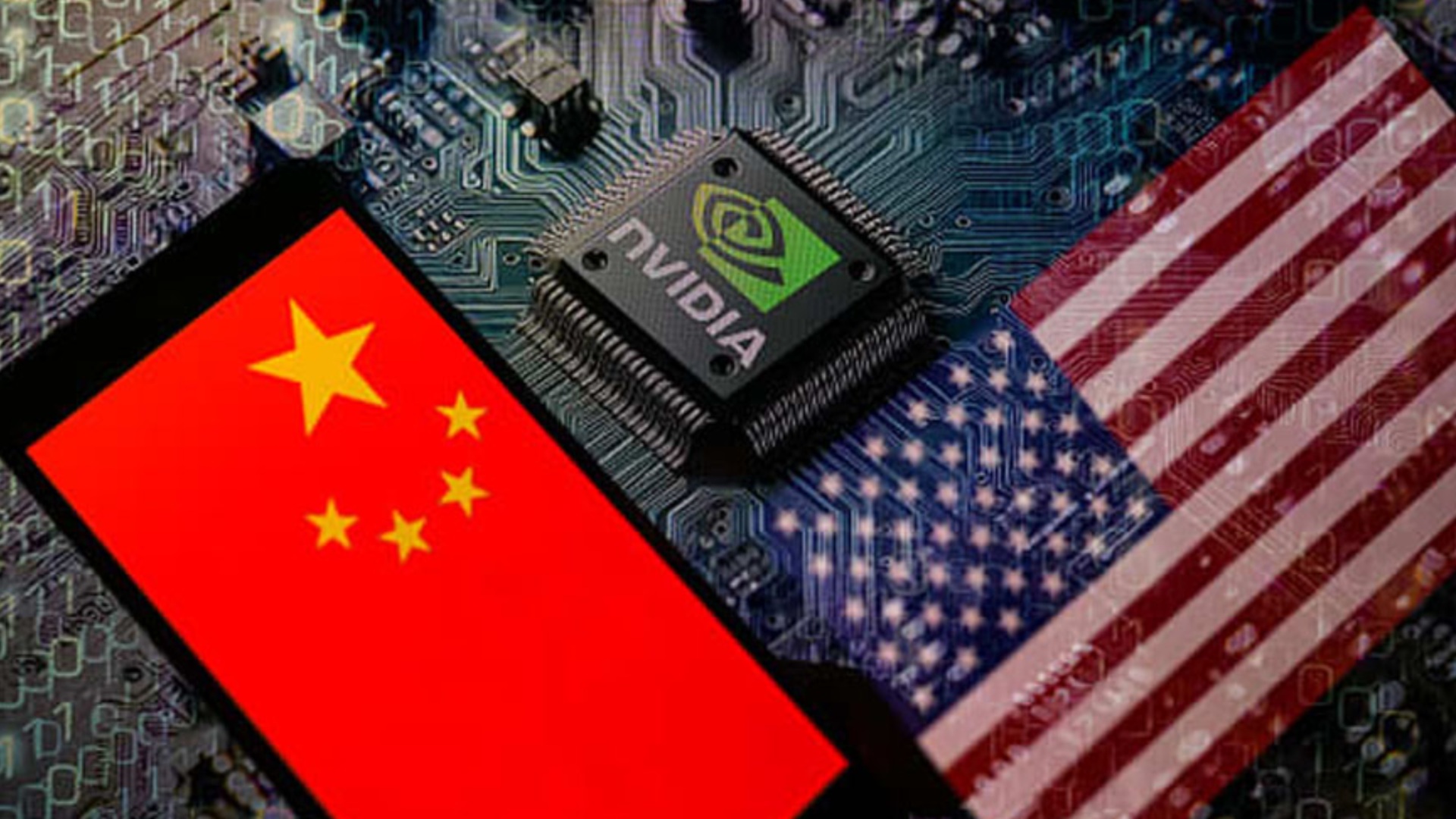

China Opens Dual Probes into U.S. Chip Trade Practices as Madrid Talks Loom

0

China has sharpened its challenge to Washington’s semiconductor restrictions, announcing on Saturday two new investigations into U.S. trade practices: one into alleged discrimination in chip policy, and another into suspected dumping of analog chips, just as both sides prepare for another round of trade talks in Spain.

The Ministry of Commerce said the first probe will examine whether Washington’s policies discriminate against Chinese companies in the trade of chips. The second will scrutinize imports of certain U.S. analog chips, such as those used in hearing aids, Wi-Fi routers, and temperature sensors, to determine whether dumping practices have harmed China’s domestic industry.

According to the ministry, the United States has in recent years imposed a series of restrictions on China’s access to advanced semiconductors, including export controls and trade discrimination inquiries. These “protectionist” practices, it argued, are designed to “curb and suppress China’s development of high-tech industries such as advanced computing chips and artificial intelligence.”

Talks to Start in Madrid

Chinese Vice Premier He Lifeng is set to lead a delegation to Madrid from September 14 to 17 for another round of economic dialogue with Washington. Beijing said discussions will focus on tariffs, the “abuse” of export controls, and the contentious issue of TikTok.

In a statement released Saturday, the ministry questioned Washington’s strategy, saying: “What is the U.S.’s intention in imposing sanctions on Chinese companies at this time? China urges the U.S. to immediately correct its erroneous practices and cease its unwarranted suppression of Chinese companies. China will take necessary measures to resolutely safeguard the legitimate rights and interests of Chinese companies.”

Only a day earlier, the U.S. Commerce Department had added 32 entities to its restricted trade list, 23 of them Chinese. That list included two firms accused of acquiring U.S. chipmaking tools for Semiconductor Manufacturing International Corp (SMIC), China’s leading contract chipmaker.

The Madrid talks will mark the fourth major in-person meeting this year between the two economic powers, part of a fragile trade truce that has seen both sides reduce retaliatory tariffs and restore U.S. access to Chinese rare earth minerals. After meetings in Geneva and London, negotiators in Stockholm agreed in late July to extend a tariff pause by another 90 days. President Donald Trump formally approved the extension on August 12, setting a new deadline of November 10.

TikTok remains a flashpoint. The short-video app, owned by China’s ByteDance, faces a looming U.S. ban unless it moves into American ownership. Trump has extended TikTok’s divestment deadline to September 17. U.S. lawmakers argue the platform could expose American user data to Beijing’s control.

China’s official People’s Daily sought to counter that claim in a weekend editorial, declaring: “The Chinese government attaches great importance to data privacy and security and has never and will never require companies or individuals to collect or provide data located in foreign countries for the Chinese government in violation of local laws.”

The paper warned that Beijing will “take necessary measures to safeguard national interests and the rights of Chinese companies” if Washington proceeds with further restrictions.

The Semiconductor Frontline

The flare-up highlights how semiconductors have become the frontline in a broader struggle for technological dominance. U.S. restrictions aim to choke off China’s access to high-end chips critical for artificial intelligence and advanced computing, while Beijing responds with counter-investigations to challenge the legitimacy of Washington’s rules.

What makes this standoff particularly sharp is its resemblance to earlier disputes with other major economies. Europe has also been pressing Washington over export restrictions, wary that American policies might unfairly tilt supply chains. But China’s move is more aggressive: by invoking “anti-discrimination” rules and dumping probes simultaneously, it signals that Beijing is ready to use WTO-style mechanisms to challenge U.S. dominance in chip infrastructure.

Backstory: Echoes of Past WTO Battles

China’s latest actions fit a familiar pattern in its trade confrontations with Washington. In 2012, Beijing lodged a WTO complaint accusing the U.S. of discriminatory tariffs on Chinese steel pipes and solar panels. That same year, the U.S. filed a counter-complaint alleging that China had unfairly subsidized its rare earth industry. Both cases dragged on for years and underscored how the world’s two largest economies used the WTO’s anti-dumping and anti-discrimination mechanisms to press their case.

Similarly, in 2016, the U.S. imposed duties on Chinese cold-rolled steel, alleging dumping at below-market rates. China retaliated with its own probe into American broiler chicken exports, eventually winning a WTO ruling in its favor. These battles revealed a tit-for-tat dynamic: when Washington targeted Chinese industrial exports, Beijing often countered by focusing on U.S. agriculture or technology products.

Thus, China is effectively reviving this playbook by opening fresh probes into American chips just before the Madrid meetings. The difference this time is scale: unlike steel or poultry, semiconductors are now the backbone of both economies’ technological ambitions. The dispute is no longer about commodity goods but about who controls the building blocks of artificial intelligence, cloud computing, and next-generation defense systems.

The backdrop of earlier WTO disputes shows why Beijing is doubling down. For years, it used WTO rulings to push back against what it saw as U.S. protectionism, with mixed success. But now, with Washington taking steps outside WTO structures—through export controls and entity lists—China is blending WTO-style investigations with political pressure to push back harder.

Solana (SOL) Could Rally Past $250 in 2 Weeks, But Little Pepe (LILPEPE) Might Skyrocket 15000% and Dominate the Rest of 2025

0

Crypto investors are watching two stories unfold this September. On one side is Solana (SOL), one of the strongest altcoins of 2025, currently trading near $203. If momentum holds, analysts believe it could push past $250 in just two weeks. On the other side is Little Pepe (LILPEPE), a presale project that combines meme energy with real-world infrastructure, which many believe could surge by 15,000% before the end of the year.

Solana (SOL) Nears Breakout Territory

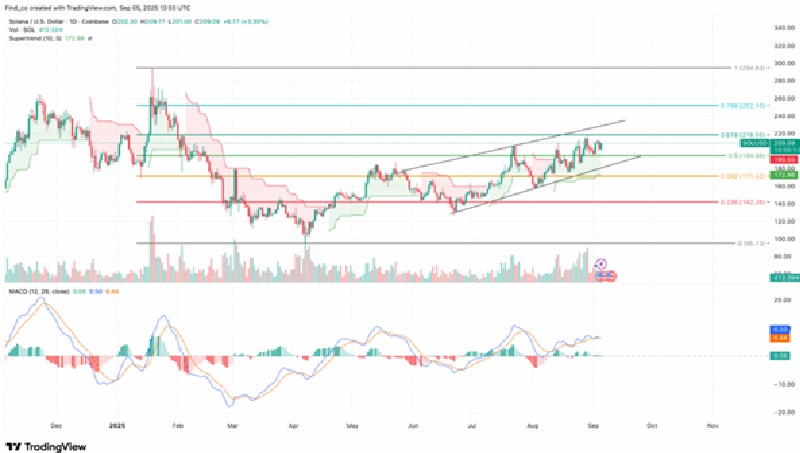
Solana has been one of the most consistent performers in the market this year. According to CoinMarketCap, SOL is priced around $203 with daily highs just above $203.9. Technical patterns suggest that the trend remains intact. Chart watchers point to an ascending channel that has held strong for weeks. The Supertrend indicator remains green under price action, while the MACD momentum indicator continues to favor buyers. SOL is also trading well above both its simple moving averages. In simple terms, the uptrend remains alive, and buyers are in control. This technical strength is backed by real activity on the chain. In August alone, Solana processed about 2.9 billion transactions, with active addresses doubling to 83 million. Whale wallets have quietly added more than 2.5 million SOL, showing confidence among bigger players. Cointelegraph also reported that open interest in Solana derivatives has reached an all-time high of over $13 billion, which could fuel even sharper price movements. If resistance around $210 to $220 breaks, a clean move toward $250 looks possible within weeks. Some traders are even targeting higher zones if market sentiment continues to rotate into altcoins.

Source: Tradingview

Little Pepe (LILPEPE) Presale Momentum

While Solana builds on its technicals, Little Pepe is making noise for different reasons. The project is currently in Stage 12 of its presale, priced at $0.0021 per token. According to CoinTelegraph, the presale has already raised more than $24 million, with 97.9% of Stage 12 tokens sold. Early backers from Stage 1 have already doubled their money with about 110% gains, and those joining in Stage 12 could still see a 43% upside at the planned launch price of $0.0030. This early ROI is drawing comparisons to meme giants like Dogecoin and Shiba Inu in their breakout years.

Ecosystem Strength and Tokenomics

What sets LILPEPE apart is its unique blend of meme culture and real-world infrastructure. Built on its Ethereum-compatible Layer 2 chain, the project promises low fees, faster transactions, and a launchpad designed just for meme tokens. It also includes sniper bot protection to ensure whales cannot dominate early supply. The tokenomics look designed for stability. Out of a total supply of 100 billion, 26.5% is allocated to presale buyers, 30% is reserved for chain growth, 13.5% for staking, and 10% for marketing. A three-month cliff followed by 5% monthly vesting ensures a smoother release rather than sudden dumps. The Certik audit added credibility, while a listing on CoinMarketCap gave it visibility.

Community Incentives

Community campaigns have fueled momentum. The biggest highlight is the $777k giveaway, where 10 lucky winners can each take home $77k just by buying tokens and finishing a few easy social tasks. Additionally, the team has recently announced a Mega Giveaway between Stages 12 and 17, offering more than 15 ETH worth of prizes to big buyers. These campaigns keep LILPEPE visible across social platforms, pulling in new holders every day.

Why Analysts Talk About 15000%

LILPEPE is starting at zero market cap, which is a major advantage. Nothing has been priced in yet, leaving room for upside as listings go live. For context, if the project reaches a modest $300 million market cap, each token could be worth about $3. That would translate to a 15000% return from its presale price of $0.0021. Upcoming listings on two top-tier exchanges could provide the liquidity needed to support such moves. With meme culture still thriving, and Little Pepe trending higher than Dogecoin, Shiba Inu, and PEPE in search volumes this summer, the cultural momentum is clearly in its favor.

Final Word

Thanks to strong on-chain metrics, technical patterns, and whale confidence, Solana may rally toward $250 in the next two weeks. However, the bigger story for risk-takers could be Little Pepe (LILPEPE). With its almost sold-out presale, its Layer 2 features, fair launch design, and strong community campaigns, it is shaping up as one of the most interesting meme meets utility plays of 2025. Early buyers could see 15,000% gains from today’s presale price if the project is delivered on its roadmap. For anyone considering an entry, this may be the window before listings make tokens harder to access. To join the presale before the final listing:  Website | Telegram | Twitter | Giveaway


For more information about Little Pepe (LILPEPE) visit the links below:

Website: https://littlepepe.com

Whitepaper: https://littlepepe.com/whitepaper.pdf

Telegram: https://t.me/littlepepetoken

 Twitter/X: https://x.com/littlepepetoken

Nestlé Investors Push for Chairman Bulcke’s Exit Amid Second CEO Ouster in a Year

0

Nestlé is facing mounting pressure from its shareholders after the abrupt departure of a second chief executive in just over a year, with investors calling for Chairman Paul Bulcke to step aside.

The Financial Times reported Saturday that several shareholders expressed frustration over the dismissal of Laurent Freixe, Nestlé’s former chief executive, and the handling of investigations into his conduct. They argue the episode has amplified concerns over corporate governance at the world’s largest packaged food maker and cast doubt on Bulcke’s judgment.

“I don’t think Bulcke will move on before April but he should have left when Mark Schneider was forced out,” Alexandre Stucki, founder of AS Investment Management, which represents Nestlé’s founding family investors, told the newspaper.

The Swiss food giant abruptly dismissed Freixe in early September for failing to disclose a romantic relationship with a subordinate — a violation the company said was a “clear breach” of its code of conduct.

Freixe’s removal followed the sudden departure of his predecessor, Mark Schneider, a year earlier, and came just 2½ months after Bulcke announced plans to step down in 2026. Nestlé stressed to the Financial Times that the two CEO departures were unrelated.

Bulcke, a 70-year-old Belgian and Swiss national, has been with the company since 1979. He led Nestlé as CEO between 2008 and 2016 before becoming chairman in April 2017.

For many investors, patience with Bulcke has worn thin. Shareholders argue that repeated leadership upheaval points to deeper structural governance problems that go beyond individual cases of misconduct.

Support for Bulcke had already been slipping. In April, he was re-elected with 84.8% of shareholder votes, a sharp drop from the nearly 96% approval he received when he first took the chairmanship in 2017.

Doubts have also lingered over Nestlé’s ability to recover post-pandemic. In 2023, sales volumes flagged even as the company hiked prices to offset rising raw material costs, raising questions about consumer demand resilience in its core markets.

The unrest at Nestlé mirrors challenges faced by other consumer goods giants, where governance lapses and abrupt executive exits rattled investor confidence. Unilever, for instance, faced shareholder discontent in 2022 over strategy missteps tied to its failed bid for GSK’s consumer health unit. Danone also saw its CEO ousted in 2021 under pressure from investors frustrated with weak returns.

In Nestlé’s case, two successive CEO exits in such quick succession, compounded by governance questions around oversight and accountability, risk undermining long-term strategic clarity. For a company managing a global footprint of brands spanning Nescafé to KitKat, consistency in leadership is often viewed as critical for navigating inflationary pressures, shifting consumer demand, and competition from agile newcomers in health-focused food sectors.

Nestlé’s boardroom challenges place Bulcke under growing scrutiny ahead of his planned departure. If investor agitation intensifies, pressure could build for an earlier leadership transition to restore stability.

At stake is not only governance credibility but also Nestlé’s ability to reorient itself after a turbulent two years of rising costs, weaker sales, and questions about whether the group can reinvent its growth model in the face of changing consumer habits.

Two abrupt CEO exits in a short span have elevated governance from a boardroom risk to a near-term strategic one. Nestlé’s global scale and portfolio give it resilience, but analysts believe restoring investor confidence will require visible changes: tighter ethics enforcement, a clear succession plan, and a persuasive path back to volume growth. Without those moves, the company risks a drawn-out period of shareholder activism and operational distraction that would make executing long-term strategy far harder.

Supreme Court Case on Trump’s Tariffs Could Cost U.S. Up to $1tn – Legal Experts

0

The United States may face an unprecedented financial reckoning if the Supreme Court overturns President Donald Trump’s sweeping emergency tariffs.

Legal experts who spoke to Business Insider said the government could be liable for refunds totaling between $750 billion and $1 trillion, making it one of the largest potential reversals of federal revenue collection in U.S. history.

Despite the staggering figure, trade lawyers stress that the Supreme Court’s decision should hinge on the Constitution, not fiscal consequences.

Two lower courts have already ruled the tariffs illegal, holding that the administration exceeded its authority under the International Emergency Economic Powers Act (IEEPA). But on Wednesday, the Supreme Court agreed to hear and expedite the case, setting up a showdown that could redefine the scope of presidential power over trade.

Trump’s legal team warned in its petition that unwinding the tariffs could be “ruinous” to the economy if refunds are ordered. Treasury Secretary Scott Bessent, in a filing to the Court earlier this month, cautioned that “delaying a ruling until June 2026 could result in a scenario in which $750 billion – $1 trillion in tariffs have already been collected, and unwinding them could cause significant disruption.”

Still, William Reinsch, Scholl Chair in International Business at the Center for Strategic and International Studies, said the Court is likely to deliver a decision by year’s end.

“My experience with the Supreme Court is that when it comes to an economic issue, they don’t always break along typical ideological lines. The economic stakes here are significant in addition to the foreign policy stakes,” he told Business Insider.

“I don’t think it’ll be unanimous,” he added, “but I wouldn’t rule out the possibility that this is the first big case where they go against the president.”

The Trillion-Dollar Problem

Since February, Trump’s administration has invoked the IEEPA—a 1970s law designed for national emergencies and economic sanctions—to impose wide-ranging tariffs. Aside from a few sector-specific duties, nearly all of the measures, from a cumulative 245% tariff on China (briefly in place) to sweeping April tariffs on more than 75 trading partners, fall under the emergency statute.

Small businesses have led the charge in challenging the tariffs, arguing that the Constitution gives Congress, not the president, the power to set duties. Both the Court of International Trade and a federal appeals court sided with challengers, striking down the tariffs as unconstitutional. Yet, the duties remain in place because lower courts declined to grant an injunction halting their enforcement.

Will Planert, a trade attorney at Morris, Manning & Martin LLP, said some conservative justices may balk at granting such broad economic power to the executive branch.

“In Biden’s attempt to modify the student loan program, for example, those justices have been very skeptical of the idea that Congress can confer very broad economic powers on the president or the federal agencies,” he explained.

Planert also questioned the government’s warning of economic ruin. “I doubt that the government losing the sum of money it did not have just half a year ago would be ‘ruinous.’ Any amount of fiscal disturbance should not be taken into consideration when the decision should rely on the Constitution,” he said.

The Tax Foundation estimates that Trump’s tariffs would raise $2.3 trillion in revenue over the next decade, though at the cost of reducing U.S. GDP by 0.9%—a drag that could worsen once foreign retaliation is factored in.

“If the tariffs are illegal, then they are illegal irrespective of fiscal impact,” Planert stressed. “In that case, the government would have collected a very large amount of money that it’s not entitled to, which would be all the more reason to have it returned.”

Refund Precedent

The U.S. has faced large-scale tariff refunds before, albeit on a far smaller scale. In 1998, the Supreme Court struck down the Harbor Maintenance Tax on exports, forcing the government to refund over $1 billion.

Robert Shapiro, chair of international trade practice at Thompson Coburn LLP, said the logistics this time would be daunting. Normally, companies must file a protest for each customs entry to receive a refund.

“Having customs do the work twice for everything just doesn’t make sense,” he said. “It may eventually be up to the Board of International Trade to decide how to do the refunds.”

And the fallout could ripple beyond importers. Shapiro noted that “since many companies were explicit that they had to raise prices due to tariffs, customers may want their money back, too, if importers are getting theirs.”

The case is shaping up as a constitutional stress test of presidential authority in economic policy.

If the Court rules against the administration, it would force the Treasury to undertake the largest tariff refund program in U.S. history, with consequences for both businesses and consumers. If it sides with Trump, the decision could cement a new precedent: giving future presidents sweeping unilateral powers to reshape global trade under the guise of emergency law.

Either way, the ruling could reverberate across decades of U.S. trade policy, setting a marker for how far executive power can extend into the nation’s economic life.