DD
MM
YYYY

PAGES

DD
MM
YYYY

spot_img

PAGES

Home Blog Page 497

Meme or Stable? 3 Best Cryptos to Buy Before 2026

0

The crypto market is changing fast as 2026 gets closer: big institutions are quietly investing more, DeFi and Layer-1 networks are getting stronger, and utility tokens are starting to meaningfully breakout.

Among all that, three very different projects are standing out for their potential upside: DigiTap, which combines banking and crypto; Shiba Inu, which expands its DeFi ecosystem; and PEPE, which stays strong in the meme coin crowd. It seems that these three cryptos are worth keeping an eye on before 2026.

DigiTap: Banking Meets Crypto in One Platform

Anyone who’s tried using both regular banking and crypto knows the hassle. It’s app after app – check the bank balance here, move crypto there, swap currencies somewhere else. Digitap figured out how to stop all that switching around. Everything sits in one app now. Dollars, bitcoin, euros, Ethereum—it’s all there together. This is how money should look in the modern age, and Digitap’s omni-banking services are ready to disrupt global value flows worth trillions of dollars annually.

The TAP token has a fixed supply of 2 billion tokens. No additional tokens will be created. Team tokens are locked for five years. The platform features deflationary mechanisms that result in token burns through platform usage. Half the profits from transaction fees and currency exchange spreads are used to fund these burns.

The platform uses enterprise-grade encryption and multi-signature wallet protection. Account abstraction features mean users don’t need to manage private keys directly. Compliance frameworks support cross-border operations. Offshore banking options provide additional privacy features for eligible users.

The presale is currently active with TAP tokens priced at $0.0125 USDT each. Early buyers get access to the highest staking rewards and can claim their tokens within 72 hours after the presale ends.

SHIB: From Meme to Multi-Billion DeFi Ecosystem

SHIB has grown far beyond its initial meme coin origins. The project now includes ShibaSwap decentralized exchange and Shibarium Layer-2 blockchain. The ecosystem provides multiple services for DeFi users.

Recent data shows whale accumulation of 4.66 trillion SHIB tokens worth around $64 million. The burn rate has increased dramatically, with spikes exceeding 80,000% in recent weeks. These burns permanently remove tokens from the total supply.

The charts started looking interesting for SHIB in September. Traders got excited when they saw a golden cross form—that’s when the short-term price trend crosses above the long-term one. It’s one of those patterns that often means prices might start climbing higher.

PEPE: The Meme Coin That Keeps Delivering

PEPE has established itself with a market cap of approximately $4.44 billion. Recent performance shows over 10% gains in the past week. The token has maintained its position since its launch in April 2023, and importantly, PEPE has withstood competitive pressure from new meme coins.

Major exchange listings continue expanding access. Binance.US added PEPE in December 2024, bringing increased liquidity and legitimacy. The token leverages the Pepe the Frog meme, which has maintained internet popularity for over a decade. This cultural foundation provides brand recognition advantages over newer alternatives.

Which is the Best Option?

Memecoins were excellent trades in 2024, but now the market is telling investors it wants utility. It wants projects that will help onboard the next billion users into crypto, and projects like Digitap are leading this race.

Its omni-banking services are already live, and it leverages blockchain rails to solve painpoints affecting billions of people globally. The next era of crypto looks very different and $TAP is the obvious choice as the best crypto to buy before 2026.


Learn more about Digitap ($TAP) here:

Presale: https://presale.digitap.app

Social: https://linktr.ee/DigiTap.app

How AI Startups Are Building to Win: No Fun, No Sleep, No Booze

0

LinkedIn News: I read your note on how AI startups have chosen the path of “leave no time for fun” and quoted Emily Yuan, a co-founder of Corgi, which Tekedia Capital invested in. Emily asked, “Why would I go drink at a bar if I can be building a company?” As an investor, I commend the tenacity and unalloyed dedication and absolute commitment the Team has demonstrated. I mean they largely sleep in the office and put uncommon level of personal sacrifice to WIN.

And they’re winning because Corgi is the world’s fastest growing insurtech company today. I also posit that it is the world’s first AI-native insurance company. With insurance and reinsurance licenses baked with category-defining technologies, Corgi is growing rapidly. Since I have been in this business, Corgi is the fastest growing company we have ever invested in.

The quote from Emily is what we’ve seen. As investors we are proud of Corgi because founders are expected to work harder than investors since you only give your money to people who are going to work harder, think better, and grow money faster than you. If not, why the investment?

And that brings me to the conclusion: building startups is not a vacation job. Most fail because they’re lazy. I mean, in all the companies we have invested, there is a clear correlation between outcome and uncommon personal sacrifices. Work-life balance is an illusion and can work in BIG established companies. But in these startups, no chance specially in the fledgling AI era where changes are happening weekly, not quarterly!

The “996” culture may be taking root in the U.S. While the number refers to a tendency among employees in China to work from 9 a.m. to 9 p.m., six days a week, signs are it’s popping up in San Francisco. According to data from fintech company Ramp, corporate card spending on meals has ticked up on Saturdays this year. It suggests that more employees are on the clock that day — a trend centered in but not limited to Big Tech companies based in the city.

OpenAI to Share Only 8% of Revenue with Microsoft, Eyes $50bn Earning Boost as Partnership Terms Shift

0

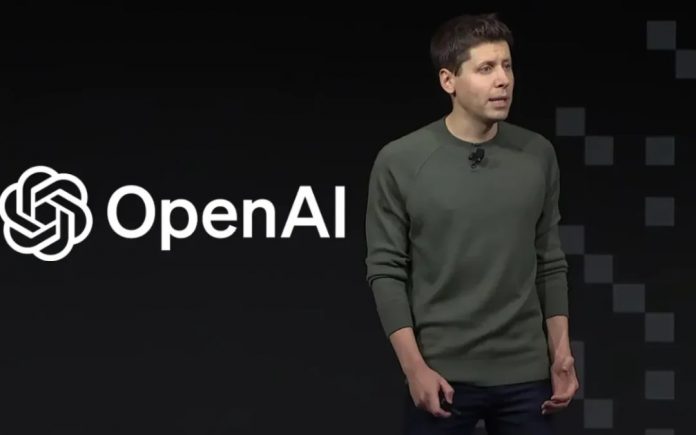
OpenAI is preparing for a significant shift in its financial relationship with Microsoft, potentially retaining a greater share of its revenue in the coming years. According to The Information, the company projects that by the end of the decade, it will be sharing just 8% of its revenue with commercial partners such as Microsoft, down from the roughly 20% it currently hands over.

The gap between those figures represents more than $50 billion in additional revenue that OpenAI could keep for itself, though the report noted it was unclear whether that estimate was cumulative or annual.

At the heart of the matter are ongoing negotiations between the two companies over the cost of cloud computing resources. OpenAI rents servers from Microsoft’s Azure platform, and the terms of that agreement are under review as the partnership evolves.

On Thursday, both companies disclosed they had signed a non-binding agreement to reshape their relationship, a deal that could pave the way for OpenAI to fully restructure into a for-profit enterprise. Under current arrangements, OpenAI’s nonprofit arm is slated to receive more than $100 billion — approximately 20% of the $500 billion valuation it is targeting in private markets. That makes it one of the most heavily funded nonprofit entities in the world, according to a memo from Bret Taylor, chairman of OpenAI’s nonprofit board.

The new financial model would mark a significant recalibration in one of the most closely watched corporate partnerships in technology. Microsoft has been both OpenAI’s largest investor and its essential infrastructure provider, pouring billions into the startup and integrating its models across its software ecosystem. A reduction in Microsoft’s revenue share would allow OpenAI to capture more of the returns on its own growth while still relying heavily on Microsoft’s cloud services to scale its operations.

Across Silicon Valley, Big Tech firms are rewriting the rules of AI partnerships as generative models become central to business strategies. Google, for example, invested billions in Anthropic while structuring its stake to maintain some degree of competitive distance, offering Anthropic access to Google Cloud without binding it exclusively to Google’s ecosystem. Amazon has taken a different approach, securing a minority stake in Anthropic and tying the deal closely to its AWS infrastructure, effectively using its cloud dominance as leverage to lock in AI growth.

These divergent models underline how partnerships are shaping the future of tech companies in Silicon Valley. Microsoft’s early and deep integration with OpenAI has given it a head start in embedding generative AI into products like Office and Bing. But as OpenAI seeks more independence, the renegotiated terms could reshape Microsoft’s influence over its trajectory. Meanwhile, competitors like Google and Amazon are spreading their bets across multiple AI startups, balancing investment with flexibility.

The broader implication is that the financial underpinnings of AI development are now as competitive as the technology itself. For OpenAI, reducing revenue-sharing obligations could provide breathing room to chart a more autonomous course. For Microsoft, the recalibration underscores the challenges of betting so heavily on a single partner at a time when others are intensifying their push to set the pace of AI advancement.

OpenAI has generated nonstop buzz, secured substantial funding and committed billions to infrastructure, but its next step might be the toughest — paying for its ambitions. Massive deals with Oracle and Broadcom topping $300 billion are shining a spotlight on the AI pioneer’s relatively paltry revenues. The company expects to make $13 billion this year, per The Information, before generating anticipated revenues of $100 billion by 2028, The Wall Street Journal reports, citing an anonymous source. That can’t happen without millions of new paying customers.

China Opens Dual Probes into U.S. Chip Trade Practices as Madrid Talks Loom

0

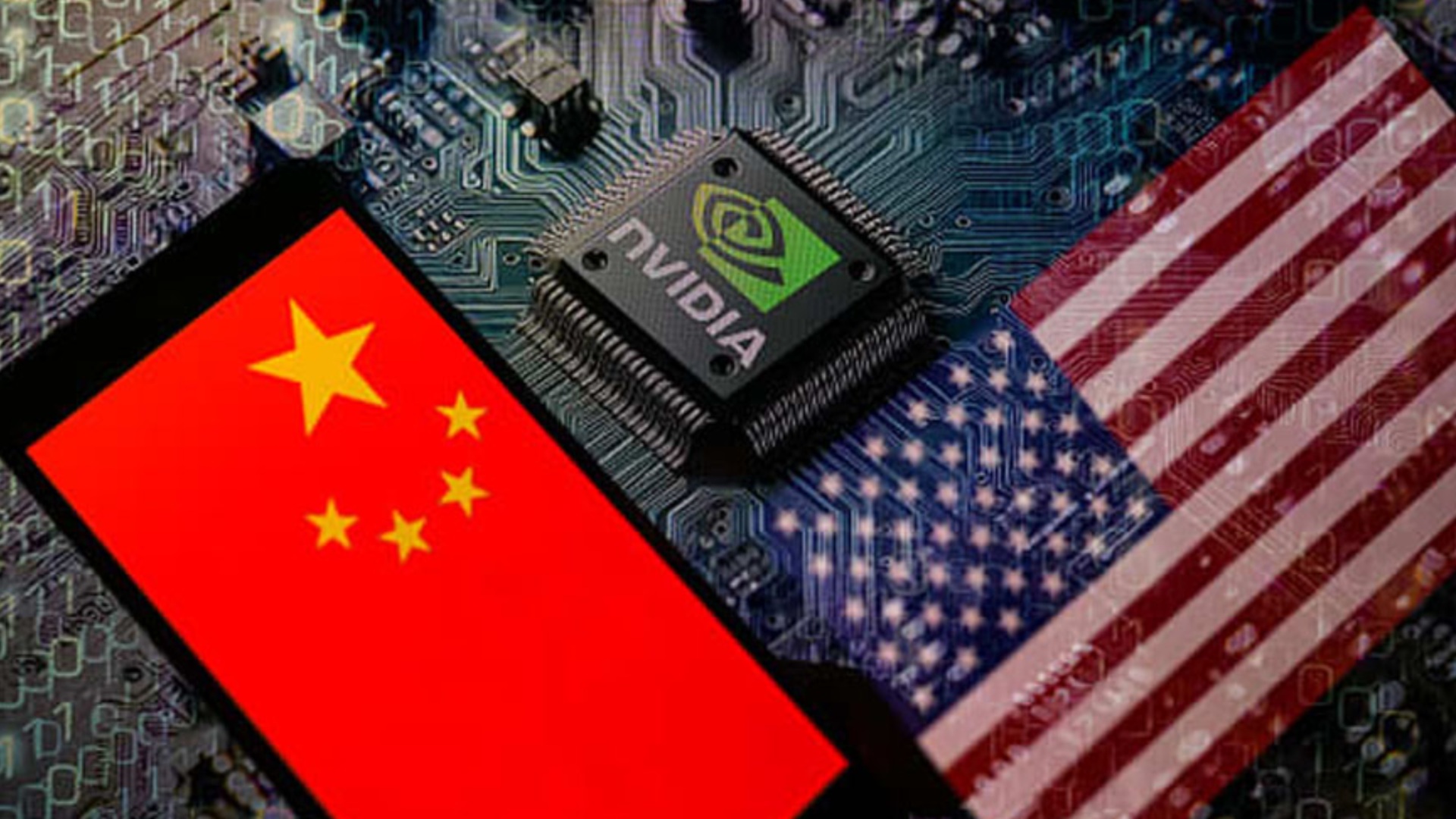
China has sharpened its challenge to Washington’s semiconductor restrictions, announcing on Saturday two new investigations into U.S. trade practices: one into alleged discrimination in chip policy, and another into suspected dumping of analog chips, just as both sides prepare for another round of trade talks in Spain.

The Ministry of Commerce said the first probe will examine whether Washington’s policies discriminate against Chinese companies in the trade of chips. The second will scrutinize imports of certain U.S. analog chips, such as those used in hearing aids, Wi-Fi routers, and temperature sensors, to determine whether dumping practices have harmed China’s domestic industry.

According to the ministry, the United States has in recent years imposed a series of restrictions on China’s access to advanced semiconductors, including export controls and trade discrimination inquiries. These “protectionist” practices, it argued, are designed to “curb and suppress China’s development of high-tech industries such as advanced computing chips and artificial intelligence.”

Talks to Start in Madrid

Chinese Vice Premier He Lifeng is set to lead a delegation to Madrid from September 14 to 17 for another round of economic dialogue with Washington. Beijing said discussions will focus on tariffs, the “abuse” of export controls, and the contentious issue of TikTok.

In a statement released Saturday, the ministry questioned Washington’s strategy, saying: “What is the U.S.’s intention in imposing sanctions on Chinese companies at this time? China urges the U.S. to immediately correct its erroneous practices and cease its unwarranted suppression of Chinese companies. China will take necessary measures to resolutely safeguard the legitimate rights and interests of Chinese companies.”

Only a day earlier, the U.S. Commerce Department had added 32 entities to its restricted trade list, 23 of them Chinese. That list included two firms accused of acquiring U.S. chipmaking tools for Semiconductor Manufacturing International Corp (SMIC), China’s leading contract chipmaker.

The Madrid talks will mark the fourth major in-person meeting this year between the two economic powers, part of a fragile trade truce that has seen both sides reduce retaliatory tariffs and restore U.S. access to Chinese rare earth minerals. After meetings in Geneva and London, negotiators in Stockholm agreed in late July to extend a tariff pause by another 90 days. President Donald Trump formally approved the extension on August 12, setting a new deadline of November 10.

TikTok remains a flashpoint. The short-video app, owned by China’s ByteDance, faces a looming U.S. ban unless it moves into American ownership. Trump has extended TikTok’s divestment deadline to September 17. U.S. lawmakers argue the platform could expose American user data to Beijing’s control.

China’s official People’s Daily sought to counter that claim in a weekend editorial, declaring: “The Chinese government attaches great importance to data privacy and security and has never and will never require companies or individuals to collect or provide data located in foreign countries for the Chinese government in violation of local laws.”

The paper warned that Beijing will “take necessary measures to safeguard national interests and the rights of Chinese companies” if Washington proceeds with further restrictions.

The Semiconductor Frontline

The flare-up highlights how semiconductors have become the frontline in a broader struggle for technological dominance. U.S. restrictions aim to choke off China’s access to high-end chips critical for artificial intelligence and advanced computing, while Beijing responds with counter-investigations to challenge the legitimacy of Washington’s rules.

What makes this standoff particularly sharp is its resemblance to earlier disputes with other major economies. Europe has also been pressing Washington over export restrictions, wary that American policies might unfairly tilt supply chains. But China’s move is more aggressive: by invoking “anti-discrimination” rules and dumping probes simultaneously, it signals that Beijing is ready to use WTO-style mechanisms to challenge U.S. dominance in chip infrastructure.

Backstory: Echoes of Past WTO Battles

China’s latest actions fit a familiar pattern in its trade confrontations with Washington. In 2012, Beijing lodged a WTO complaint accusing the U.S. of discriminatory tariffs on Chinese steel pipes and solar panels. That same year, the U.S. filed a counter-complaint alleging that China had unfairly subsidized its rare earth industry. Both cases dragged on for years and underscored how the world’s two largest economies used the WTO’s anti-dumping and anti-discrimination mechanisms to press their case.

Similarly, in 2016, the U.S. imposed duties on Chinese cold-rolled steel, alleging dumping at below-market rates. China retaliated with its own probe into American broiler chicken exports, eventually winning a WTO ruling in its favor. These battles revealed a tit-for-tat dynamic: when Washington targeted Chinese industrial exports, Beijing often countered by focusing on U.S. agriculture or technology products.

Thus, China is effectively reviving this playbook by opening fresh probes into American chips just before the Madrid meetings. The difference this time is scale: unlike steel or poultry, semiconductors are now the backbone of both economies’ technological ambitions. The dispute is no longer about commodity goods but about who controls the building blocks of artificial intelligence, cloud computing, and next-generation defense systems.

The backdrop of earlier WTO disputes shows why Beijing is doubling down. For years, it used WTO rulings to push back against what it saw as U.S. protectionism, with mixed success. But now, with Washington taking steps outside WTO structures—through export controls and entity lists—China is blending WTO-style investigations with political pressure to push back harder.

Solana (SOL) Could Rally Past $250 in 2 Weeks, But Little Pepe (LILPEPE) Might Skyrocket 15000% and Dominate the Rest of 2025

0

Crypto investors are watching two stories unfold this September. On one side is Solana (SOL), one of the strongest altcoins of 2025, currently trading near $203. If momentum holds, analysts believe it could push past $250 in just two weeks. On the other side is Little Pepe (LILPEPE), a presale project that combines meme energy with real-world infrastructure, which many believe could surge by 15,000% before the end of the year.

Solana (SOL) Nears Breakout Territory

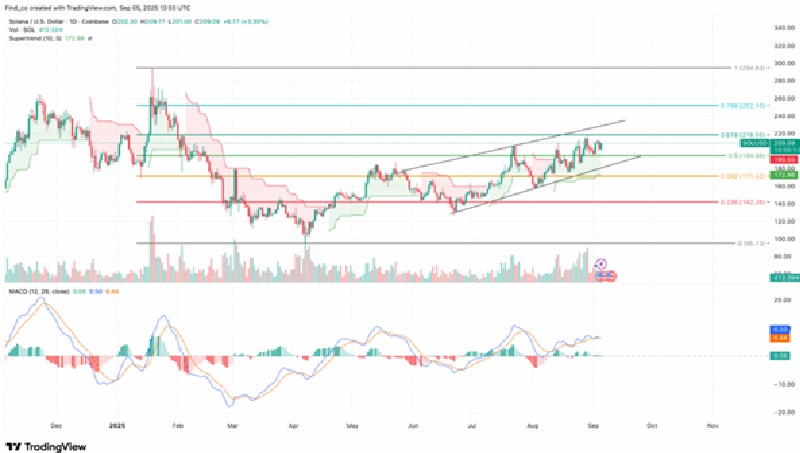
Solana has been one of the most consistent performers in the market this year. According to CoinMarketCap, SOL is priced around $203 with daily highs just above $203.9. Technical patterns suggest that the trend remains intact. Chart watchers point to an ascending channel that has held strong for weeks. The Supertrend indicator remains green under price action, while the MACD momentum indicator continues to favor buyers. SOL is also trading well above both its simple moving averages. In simple terms, the uptrend remains alive, and buyers are in control. This technical strength is backed by real activity on the chain. In August alone, Solana processed about 2.9 billion transactions, with active addresses doubling to 83 million. Whale wallets have quietly added more than 2.5 million SOL, showing confidence among bigger players. Cointelegraph also reported that open interest in Solana derivatives has reached an all-time high of over $13 billion, which could fuel even sharper price movements. If resistance around $210 to $220 breaks, a clean move toward $250 looks possible within weeks. Some traders are even targeting higher zones if market sentiment continues to rotate into altcoins.

Source: Tradingview

Little Pepe (LILPEPE) Presale Momentum

While Solana builds on its technicals, Little Pepe is making noise for different reasons. The project is currently in Stage 12 of its presale, priced at $0.0021 per token. According to CoinTelegraph, the presale has already raised more than $24 million, with 97.9% of Stage 12 tokens sold. Early backers from Stage 1 have already doubled their money with about 110% gains, and those joining in Stage 12 could still see a 43% upside at the planned launch price of $0.0030. This early ROI is drawing comparisons to meme giants like Dogecoin and Shiba Inu in their breakout years.

Ecosystem Strength and Tokenomics

What sets LILPEPE apart is its unique blend of meme culture and real-world infrastructure. Built on its Ethereum-compatible Layer 2 chain, the project promises low fees, faster transactions, and a launchpad designed just for meme tokens. It also includes sniper bot protection to ensure whales cannot dominate early supply. The tokenomics look designed for stability. Out of a total supply of 100 billion, 26.5% is allocated to presale buyers, 30% is reserved for chain growth, 13.5% for staking, and 10% for marketing. A three-month cliff followed by 5% monthly vesting ensures a smoother release rather than sudden dumps. The Certik audit added credibility, while a listing on CoinMarketCap gave it visibility.

Community Incentives

Community campaigns have fueled momentum. The biggest highlight is the $777k giveaway, where 10 lucky winners can each take home $77k just by buying tokens and finishing a few easy social tasks. Additionally, the team has recently announced a Mega Giveaway between Stages 12 and 17, offering more than 15 ETH worth of prizes to big buyers. These campaigns keep LILPEPE visible across social platforms, pulling in new holders every day.

Why Analysts Talk About 15000%

LILPEPE is starting at zero market cap, which is a major advantage. Nothing has been priced in yet, leaving room for upside as listings go live. For context, if the project reaches a modest $300 million market cap, each token could be worth about $3. That would translate to a 15000% return from its presale price of $0.0021. Upcoming listings on two top-tier exchanges could provide the liquidity needed to support such moves. With meme culture still thriving, and Little Pepe trending higher than Dogecoin, Shiba Inu, and PEPE in search volumes this summer, the cultural momentum is clearly in its favor.

Final Word

Thanks to strong on-chain metrics, technical patterns, and whale confidence, Solana may rally toward $250 in the next two weeks. However, the bigger story for risk-takers could be Little Pepe (LILPEPE). With its almost sold-out presale, its Layer 2 features, fair launch design, and strong community campaigns, it is shaping up as one of the most interesting meme meets utility plays of 2025. Early buyers could see 15,000% gains from today’s presale price if the project is delivered on its roadmap. For anyone considering an entry, this may be the window before listings make tokens harder to access. To join the presale before the final listing:  Website | Telegram | Twitter | Giveaway


For more information about Little Pepe (LILPEPE) visit the links below:

Website: https://littlepepe.com

Whitepaper: https://littlepepe.com/whitepaper.pdf

Telegram: https://t.me/littlepepetoken

 Twitter/X: https://x.com/littlepepetoken