
DD
MM
YYYY

PAGES

DD
MM
YYYY

spot_img

PAGES

Home Blog Page 498

Ripple and Toncoin in the News Again, While BullZilla Makes it to the List of Top 1000x Crypto Presales in 2025

0

The cryptocurrency landscape in 2025 continues to evolve at a breakneck pace, and investors are hungry for high-potential opportunities. Meme coins, presales, and established cryptos are all competing for attention, but few projects are capturing both hype and measurable growth. Missing out on the early rounds of popular coins can feel like a lost fortune, leaving investors anxious and cautious.

Amid this turbulence, BullZilla ($BZIL) has emerged as a standout. Its presale has created a unique window for early investors to participate in a structured ecosystem where every stage reduces supply and maximizes potential gains. The excitement is palpable as over $360k has already been raised, and the community grows daily.

While Bull Zilla steals the spotlight with its presale mechanics and explosive ROI potential, coins like Ripple (XRP) and Toncoin (TON) provide stability and context for the broader market. Ripple continues to be a leader in cross-border payments, while Toncoin offers blockchain utility and integration with decentralized apps. Together, these coins represent a spectrum from established infrastructure to high-risk, high-reward opportunities.

BullZilla: Explosive Presale and Next 1000x Opportunity

BullZilla presale is currently in Stage 2D, priced at $0.00005241. With 1,200+ token holders and over $360k raised, early participants are already seeing impressive gains.

The presale operates on a structured 24-stage system where prices increase every 48 hours or once $100,000 is raised. This ensures scarcity while maximizing rewards for early adopters. Analysts and community members alike are closely watching, labeling BullZilla as one of the top 1000x crypto presales in 2025.

BullZilla is more than just a token; it’s a cinematic ecosystem fueled by storytelling, community, and lore. For investors looking for the best crypto to buy today with explosive upside, BullZilla represents an unmatched opportunity.

BullZilla Presale Information

Metric Details
Current Stage 2D (Dead Wallets Don’t Lie)
Phase 4
Current Price $0.00005241
Presale Tally Over $360,000 Raised
Token Holders Over 1200
Tokens Sold 23.4 Billion
   

How to Buy BullZilla

Investors eager to join the BullZilla ($BZIL) Presale can participate directly through the official website. The process typically involves:

  1. Connecting a Wallet (such as MetaMask or Trust Wallet).
  2. Selecting the Payment Option (ETH)
  3. Purchasing BullZilla Tokens at the current presale price.
  4. Claiming Tokens once the presale stage concludes.

Ripple (XRP): Market Leader and Stability

Ripple has established itself as a reliable leader in cross-border payment solutions. Its 24-hour trading volume exceeds $1.8B, and it maintains market dominance. Unlike high-risk presales, Ripple provides investors with infrastructure-level stability, a global user base, and predictable adoption trends.

XRP’s role in the financial ecosystem continues to expand with partnerships and integrations, making it a benchmark for institutional adoption. While it doesn’t offer the explosive presale upside of BullZilla, it remains a strong comparative coin for investors seeking stability within the best 1000x crypto presales in 2025 narrative.

For portfolio diversification, Ripple offers a bridge between high-risk meme coins and established cryptos, helping balance potential returns against volatility.

Toncoin (TON): Utility and DeFi Growth

The TON blockchain powers decentralized apps and integrates with NFT marketplaces, providing utility and a growing user ecosystem. While it lacks presale excitement like BullZilla, Toncoin’s adoption and network activity make it a coin worth keeping an eye on.

Investors tracking the best 1000x crypto presales in 2025 can consider Toncoin as a reference point for utility-driven growth in the market. Its consistent price movement and integration within the blockchain ecosystem offer comparative insight into more speculative presale assets, such as BullZilla.

With a balance of adoption, real-world use, and moderate volatility, Toncoin represents a solid counterpart to BullZilla’s high-risk, high-reward proposition.

Conclusion

BullZilla, Ripple, and Toncoin collectively showcase the diverse opportunities in 2025’s crypto market. BullZilla’s presale is a rare chance to participate in a structured, cinematic ecosystem with extraordinary ROI potential, making it the top 1000x crypto presale in 2025. Ripple and Toncoin, meanwhile, provide context and stability, demonstrating the range from established networks to explosive presale tokens.

For investors seeking the best crypto to buy today, BullZilla’s Stage 2D presale offers the potential for next 1000x gains, while Ripple and Toncoin serve as solid portfolio anchors. Strategic entry, monitoring presale stages, and understanding market context are crucial for maximizing returns in 2025.


For More Information:

BZIL Official Website

Join BZIL Telegram Channel

Follow BZIL on X  (Formerly Twitter)

FAQs

Why is BullZilla considered a top 1000x crypto presale in 2025?

BullZilla combines structured presale stages, community engagement, and a projected ROI of over 11,000%, offering early investors unmatched potential.

What role do Ripple and Toncoin play in comparison?

Ripple provides market stability and adoption in cross-border payments, while Toncoin offers blockchain utility and DeFi integration, giving context to BullZilla’s presale growth.

How should investors approach these coins?

Consider BullZilla for high-risk, high-reward presale exposure, while using Ripple and Toncoin to balance risk and maintain portfolio stability.

Summary

BullZilla’s presale in Stage 2D represents one of the best 1000x crypto presales in 2025, offering structured stages and potential exponential ROI. Ripple and Toncoin provide stability and utility, highlighting the spectrum of opportunities for 2025 investors. Combined, these coins show how both high-risk presales and established networks can complement a strategic crypto portfolio.

Disclaimer

This article is for informational purposes only and does not constitute financial advice. Cryptocurrency investments are highly volatile and carry significant risk. Always conduct independent research and consult a licensed financial professional before making investment decisions.

The NUPENG Disruption: A Case Study of Dangote Logistics as One Oasis

0

I often utilize the “One Oasis” strategy to highlight a company’s crucial, often overlooked, foundational element. This core component, like a vital oasis in a desert, provides the essential resources and infrastructure that enable all other parts of the business to flourish. For the Dangote Group, the “One Oasis” is unquestionably its logistics unit. Without its massive and highly efficient logistics network, the entire conglomerate, from cement to sugar and now petroleum, would simply not be able to function at its current scale or dominance in Nigeria. No Dangote Logistics, no Dangote Group!

The Logistics Backbone of an Industrial Empire

The Dangote Group’s business model is built on manufacturing and distributing essential goods across a vast and often challenging Nigerian landscape. The group’s success isn’t just about building factories; it’s about getting the products from those factories to millions of customers. This is where the logistics unit shines. It comprises a fleet of thousands of trucks, a robust network of warehouses, and the operational expertise to move large volumes of goods efficiently. This unit isn’t just a cost center; it’s a strategic asset that provides the group with a significant competitive advantage.

Consider the cement business, a cornerstone of the Dangote Group. A competitor might have a technologically advanced cement plant, but if they cannot efficiently transport their product to construction sites nationwide, they will fail to compete with Dangote. The group’s logistics network ensures a consistent supply chain, reduces reliance on third-party transporters, and maintains control over distribution costs and timelines.

The NUPENG Disruption: A Case Study in Strategic Logistics

The opening of the Dangote Refinery and the launch of its own fleet of petrol tankers for distribution provides a powerful case study for why logistics is the “One Oasis.” For decades, the Nigerian Union of Petroleum and Natural Gas Workers (NUPENG) has held immense power in Nigeria’s petroleum sector, particularly through its control of tanker drivers. This has traditionally given NUPENG the leverage to influence fuel supply, sometimes leading to strikes that cripple the national economy.

However, the Dangote Group, through its strategic foresight, has effectively sidestepped this potential disruption. By building its own vast fleet of petrol tankers, as seen in videos showcasing the distribution readiness of the refinery, it has created a direct-to-customer channel. This move fundamentally alters the power dynamic. Dangote can now distribute its products to gas stations and bulk buyers without the traditional reliance on NUPENG members. This is the ultimate expression of the “One Oasis” concept: the logistics unit is not just a facilitator; it is a strategic tool that mitigates risk, bypasses powerful gatekeepers, and ensures business continuity.

NUPENG’s traditional positioning is now under threat. The union’s power was largely derived from its control of the “last mile” of distribution. With Dangote’s in-house fleet, that control is now significantly diminished, if not outright obsolete, for Dangote’s products. This strategic positioning makes the Dangote Group less vulnerable to labor disputes and supply chain disruptions, reinforcing its dominance and proving that the logistics unit is not just important—it is the indispensable foundation upon which the entire industrial empire is built.

Question: what is the “One Oasis” in your business? Read my piece in Harvard Business Review to understand why you need the “One Oasis” Strategy.

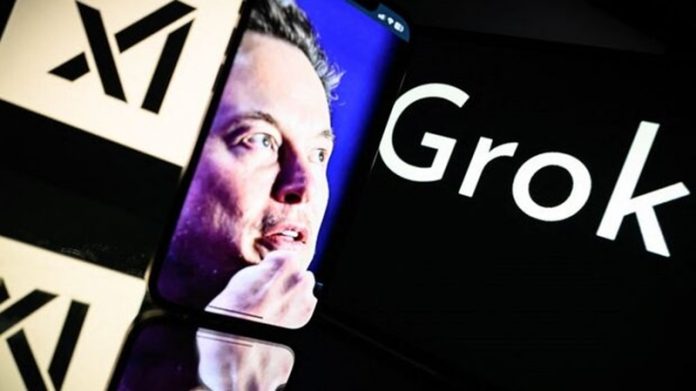
Elon Musk’s xAI Lays Off 500 Annotators in Shift to Specialists, Echoing His Twitter Playbook

0

Elon Musk’s artificial intelligence company xAI abruptly laid off at least 500 workers from its data annotation division on Friday night, marking one of the sharpest pivots yet in its effort to refine Grok, the company’s flagship chatbot.

The move, focused on replacing generalist AI tutors with domain-specific specialists, mirrors Musk’s earlier approach at Twitter (now X), where he slashed headcount soon after taking over in 2022 and refocused operations around a smaller core team.

Emails sent to employees and reviewed by Business Insider confirmed the restructuring.

“After a thorough review of our Human Data efforts, we’ve decided to accelerate the expansion and prioritization of our specialist AI tutors, while scaling back our focus on general AI tutor roles. This strategic pivot will take effect immediately,” the email read. “As part of this shift in focus, we no longer need most generalist AI tutor positions and your employment with xAI will conclude.”

Affected staff were told they would remain on payroll until the end of their contracts or November 30, but their access to company systems was cut off immediately.

Cutting the Backbone of Grok

The layoffs struck at xAI’s largest team. Annotators have played a central role in Grok’s training, teaching the model how to contextualize raw data and categorize information for human-like responses. Before the layoffs, the main Slack channel for annotators counted more than 1,500 members. By Friday evening, screenshots showed that the figure had dropped to just over 1,000 and continued to fall as accounts were deactivated.

After publication of the layoffs, an xAI spokesperson pointed to a company post on X announcing plans to “surge our Specialist AI tutor team by 10x,” with openings in areas such as STEM, finance, medicine, and safety.

“Specialist AI tutors at xAI are adding huge value,” the company said, linking to its careers page.

A Week of Signals

The decision capped off a turbulent week. Days earlier, several senior-level employees, including the head of the annotation unit, had their Slack accounts deactivated. Workers were then told to expect a team reorganization.

On Thursday night, newly appointed leader Diego Pasini — who joined xAI in January and is currently on leave from his undergraduate studies at the Wharton School of Business — instructed staff to complete tests to determine their fit for specialist tracks.

The assignments covered traditional fields like coding, STEM, and finance, as well as Grok-specific areas such as “personality and model behavior” and even “shitposters and doomscrollers.” Some tests focused on chatbot safety, including “red teaming,” while others assessed skills in audio and video annotation.

Pasini’s post asked annotators to complete at least one test by Friday morning. More than 200 workers marked the message with a green check emoji, while over 100 left questions and comments. One worker criticized the late-night timing: “Doing this after people have gone home for the day is pretty shady.” That employee’s Slack account was deactivated soon after, multiple workers said.

Musk’s Management Playbook

The sudden downsizing and sharp pivot recall Musk’s early days at Twitter. After acquiring the platform in late 2022, he laid off thousands of employees — including engineers, content moderators, and product managers — and leaned heavily on smaller teams tasked with specific missions. The strategy, while controversial, was designed to cut costs and concentrate resources on projects Musk deemed vital.

At xAI, Musk appears to be repeating the formula, betting that a leaner, specialist-heavy workforce will push Grok closer to his stated goal of building “truth-seeking” artificial general intelligence.

A Wider AI Industry Divide

The layoffs also highlight diverging strategies among leading AI developers. OpenAI, Anthropic, and Google DeepMind continue to rely heavily on broad annotation workforces, often supplemented by external contractors in Africa, Asia, and Eastern Europe. These generalist annotators handle wide-ranging tasks such as content moderation, labeling, and basic language training.

But xAI’s pivot suggests Musk sees diminishing returns in that model. By doubling down on domain specialists — from medicine to finance to safety — xAI is prioritizing higher-quality, expertise-driven training data. Proponents believe this will help reduce hallucinations and boost performance in critical, high-stakes fields. Critics counter that the company risks losing the breadth of data and human context that generalist annotators provide.

For xAI, the gamble is to cut costs, streamline teams, and scale up expertise. The risk is equally apparent. Shedding hundreds of annotators means shedding institutional knowledge of how Grok has been shaped to date. Whether the 10x surge in specialists can offset that loss remains to be seen.

Tekedia Mini-MBA Begins on Monday

0
Mini MBA begins monday

Great People, All Nations: Tomorrow, Tekedia Mini-MBA begins another academic festival. Yes, on Monday, the gates of knowledge will swing wide, and together we will journey into the mechanics of markets and the chemistries that power category-king companies. We will decode how firms fix frictions by building capabilities in people, strengthening processes, and mastering tools.

Tekedia Mini-MBA is where knowledge meets execution, where insights become innovation, and where ordinary professionals rise as market makers.

As our elders will say, wisdom is learned so that wisdom may be applied. Let us gather this wisdom and deploy it to reshape industries, strengthen communities, and create wealth that endures.

Join us: tomorrow, a new festival of possibilities begins to understand Indomie Noodles, Microsoft, TSMC and startups. From Oriendu Market Ovim to Wall Street trading desks, Tekedia Mini-MBA is a temple to unlock the alpha moments of the future. If you have not picked your seat, go here right now and do.

Nigeria’s Trade Surplus Jumps 44% in Q2 2025 as Exports Outpace Imports

0

Nigeria recorded an upswing in its external trade position in the second quarter of 2025, as the country’s trade surplus widened by 44.3% to N7.46 trillion, up from N5.17 trillion in the previous quarter.

This is according to the latest Foreign Trade in Goods Statistics report by the National Bureau of Statistics (NBS), which highlights how buoyant export earnings outpaced import pressures in Q2 2025.

Nigeria’s total exports stood at N22.75 trillion in Q2, a 10.5% increase from Q1 and 28.4% higher than the same period in 2024. Imports slipped marginally by 0.9% quarter-on-quarter to N15.29 trillion, creating the wider surplus that has boosted Nigeria’s external account.

Crude oil, which contributed N11.97 trillion or 52.6% of total exports, posted a decline of 5.1% year-on-year and 7.6% compared to Q1. The fall was, however, offset by strong growth in other petroleum products, which nearly doubled year-on-year to N7.74 trillion, reflecting gains from gas exports and refined petroleum products. Non-oil exports also proved resilient, rising to N3.05 trillion, representing 13.4% of total exports.

A closer examination of sectoral performance reveals that manufactured goods exports were one of the standout stories of the quarter. The sector expanded to N803.8 billion, a 173% increase from Q1 and a 67% rise compared with the same quarter of 2024. Key manufactured exports included vessels, floating platforms, and aluminum alloys, shipped largely to European and Asian markets.

Solid minerals also strengthened their contribution, with exports jumping by 31% from Q1 to N77.3 billion, led by shipments of cement clinkers and mineral substances to destinations like China and Cameroon.

This performance highlights a gradual diversification of Nigeria’s export base beyond hydrocarbons, though oil and gas still accounted for more than 85% of total exports.

Imports remain heavy as China tightens grip

On the import side, Asia dominated with N7.65 trillion, representing 50% of total imports. China remained Nigeria’s largest import partner, supplying N4.96 trillion worth of goods — more than double that of the United States, which followed with N2.16 trillion. Other key import sources included India, the Netherlands, and the United Arab Emirates.

The bulk of imports comprised machinery, refined petroleum products, wheat, and pharmaceuticals. Manufactured imports were particularly weighty, at N7.88 trillion, showing Nigeria’s continued reliance on foreign industrial inputs. Agricultural imports also grew to N1.18 trillion, driven by wheat imports from Canada and Russia.

Key trading partners

Spain retained its position as Nigeria’s largest export destination in Q2, receiving goods worth N2.47 trillion, or 10.9% of total exports. It was followed by India with N1.98 trillion, France with N1.62 trillion, the Netherlands with N1.54 trillion, and Canada with N1.43 trillion. Together, these five countries accounted for nearly 40% of Nigeria’s total exports.

Regionally, Europe remained the top export market, absorbing 38% of Nigeria’s shipments. Asia followed with 33%, the Americas accounted for 16%, while Africa took 13%. Within Africa, ECOWAS countries stood out with exports worth N1.93 trillion, dominated by petroleum products such as crude oil, kerosene, jet fuel, and gas oil.

On the import side, Asia maintained its dominance, supplying half of Nigeria’s total imports at N7.65 trillion. China led the way with N4.96 trillion worth of goods, more than double the United States at N2.16 trillion. Key imports included refined petroleum products, wheat, and telecommunication machinery, highlighting Nigeria’s reliance on external supply for essential goods.

Key transport hubs

Maritime transport continued to dominate Nigeria’s trade logistics, carrying 99% of exports and 95% of imports.

Apapa Port retained its primacy, handling N17.93 trillion worth of exports and N6.96 trillion worth of imports.

The Lekki Deep Sea Port also emerged as a growing hub, accounting for over 10% of exports and 16% of imports, pointing to its increasing role in easing Nigeria’s port congestion.

Past deficits and missed opportunities

The sharp rise in Nigeria’s trade surplus contrasts with its struggles in the previous decade. Between 2019 and 2021, the country consistently recorded trade deficits as falling crude prices, COVID-19 disruptions, and surging import bills eroded its external balance. In 2020 alone, Nigeria posted a trade deficit of N7.38 trillion, its worst on record at the time.

While the rebound into surplus since 2022 has offered some relief, economists argue that Nigeria has significantly fallen behind its peers since 2015. South Africa and Egypt have since overtaken Nigeria to claim the first and second spots of the African economy, respectively. Nigeria’s economy is still heavily dependent on oil, which still makes up more than four-fifths of its export earnings.

Both the IMF and the World Bank have consistently urged Nigeria to diversify its economy by prioritizing manufacturing and non-oil exports. The current upswing in manufactured goods and solid minerals exports hints at early progress, but analysts caution that these gains remain small compared to the scale needed to close the gap with peers.

The trade surplus offers Nigeria breathing space to strengthen its foreign reserves and reduce pressure on the naira. The positive balance is expected to help stabilize the macroeconomic environment, though the dominance of petroleum in export earnings leaves the country vulnerable to external shocks.

Looking ahead, analysts say the outlook splits along two paths. If Nigeria consolidates gains from non-oil sectors and reduces dependence on imported refined fuel, the surplus could become a foundation for more sustainable growth. But if oil prices weaken further or industrialization continues to lag, Nigeria may find itself repeating the cycle of temporary surpluses followed by deeper deficits.