DD
MM
YYYY

PAGES

DD
MM
YYYY

spot_img

PAGES

Home Blog Page 4981

MTN Launches Home Broadband Services, Targets 43 Million Households

0

As Nigeria continues to grapple with low broadband, which has undermined the growth potential of the telecom sector along with businesses depending on the internet, telcos have been working to address the challenge by upgrading broadband penetration across the country.

Nigeria has the lowest broadband penetration in the world compared to its population, creating a need for the facilitation of larger telecom infrastructure to bridge the gap.

In 2019, the Minister of Communication and Digital Economy, Dr. Isa Ali Pantami, unveiled the Nigerian National Broadband Plan Committee. The committee was expected to support the national digital economy and ensure that Nigeria attains 70% broadband target by 2025.

It is in line with the National Broadband Plan that MTN Nigeria Communications Plc has announced the launch of Home Broadband services, to accelerate broadband penetration, making it available to millions of Nigerians.

Chief Operating Officer, MTN Nigeria Communications Plc, Hassan Jaber, said during the launch in Lagos that the company’s investment in broadband is buoyed by the belief that the internet is a right.

“At MTN, we believe that everyone deserves the benefits of a modern, connected life; hence our investment in industry-leading connectivity operations,” he said.

With MTN’s Fibre-to-the-Home (FTTH) and the latest Fixed Wireless Access (FWA) Home Broadband services, millions of Nigerian households, with approximately 50% located in rural areas, will have access to reliable and ultra-fast broadband services to enjoy unlimited data plans, ability to connect multiple devices and share data across remote locations for online learning, working from home, streaming, gaming, smart home solutions among others.

General Manager, Fixed Broadband, MTN Nigeria Communications Plc, Onyinye Ikenna-Emeke, said the Home Broadband will yield a lot of benefits to customers.

“Customers now have enhanced access to dedicated 24/7 support and online channels to place orders for MTN Home Broadband with options for home delivery.”

“They can also enjoy truly Unlimited Data bundles, longer tenure data plans with flexibility to share data with multiple users remotely as well as enhanced data subscription channels including myMTN App,” she said.

The backdrop of low broadband penetration in Nigeria has put its number of internet users below par with other African countries.

With over 200 million people, Nigeria currently boasts of approximately 44.3% internet connectivity, whereas other African countries, such as South Africa, Egypt, and Kenya, are at 68, 74, and 48% internet penetration, respectively.

This is a disadvantage to Nigeria’s economic growth as it dampens business opportunities in the country.

Global technology statistics closely link internet connectivity to sustainable economic growth rates. On average, the internet accounts for almost four percent of GDP across the large economies that make up 70% of global GDP. UNICEF also projects that nations with low broadband connectivity have the potential to realize up to 20% GDP growth by connecting schools to the internet.

MTN said it currently connects over 70 million Nigerians (over 7% 4G population and 89.8% coverage nationwide). The launch of the Home Broadband is expected to boost the number of subscribers under MTN platforms.
“We Are in A Mess” – Former CBN Governor Sanusi Decries Nigeria’s Worsening Condition

1

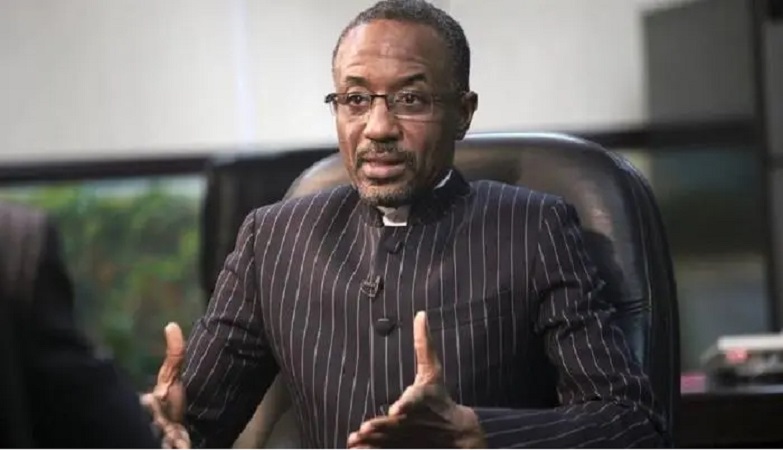
Former Central Bank of Nigeria’s governor Sanusi Lamido Sanusi has become the latest voice to express concern over the country’s worsening economic and security situation.

Sanusi, who spoke at the Akinjide Adeosun Foundation (AAF) leadership colloquium, held in Lagos on Thursday, said the APC-led government has allowed Nigeria’s economic and security situation to deteriorate, becoming far worse than what it was in 2015.

The former Emir of Kano, who was critical of the past administration led by Goodluck Jonathan, decried Nigeria’s rising debt. He said the country has already become bankrupt, describing the situation as being in a “deeper hole.”

“We were in a deep hole in 2015. And between 2015 and now, we have been digging ourselves into a deeper hole. We thought we had a big problem in 2015. 2015 is nothing compared to what will happen in 2023,” Sanusi said.

“We have terrorism, we have banditry, we have inflation, we have an unstable exchange rate, and the worst thing is that those in leadership actually think we are going to thank them when they leave office, that we are going to appreciate them. There is no change,” he added.

His criticism follows the throng of other voices condemning the lukewarm attitude of President Muhammadu Buhari’s government in the face of the “mess.”

Sanusi said Nigeria’s bankruptcy is masterminded by its inability to cash in on the oil windfall orchestrated by the Russia-Ukraine conflict.

“Nigeria is the only oil-producing country that is grieving at the moment when oil prices have gone up as a result of the Russia/Ukraine war,” he said, adding that the nation’s inability to service its debt is evidence that “we are in a mess,” he said.

Nigeria’s public debt portfolio has significantly risen above N41 trillion due to massive revenue drop from oil export, creating a huge debt to revenue ratio disparity.

“Our total revenue is not able to service our debt. And if anybody does not understand that we are in a complete mess, we are. There is no sense of urgency. If you are running a company and your sales revenue cannot pay interest, you know you’re bankrupt. When the total revenue of the federal government cannot service debt, we are smiling,” Sanusi added.

Last month, the Minister of Finance, Zainab Ahmed announced that the cost of servicing debt surpassed the federal government’s retained revenue by N310 billion in the first four months of 2022, confirming the fear that Nigeria’s debt is no longer sustainable.

Buhari pledged to diversify Nigeria’s economy with focus on agriculture. However, the president has failed to redeem that pledge due to terrorism and banditry raging in the north, which have greatly jeopardized farming activities in the region.

Besides this, the government has been criticized for enacting policies that have been detrimental to the country’s economic well being. For instance, in 2019, Buhari announced the closure of Nigerian land borders, and subsequently the import ban of food items including the staple rice. The decision has been fingered as the major reason why Nigeria’s inflation rate has risen above 18%, compounding the nation’s poverty situation.

The Making of Taiwan 2.0 And What African Leaders Must Learn

0

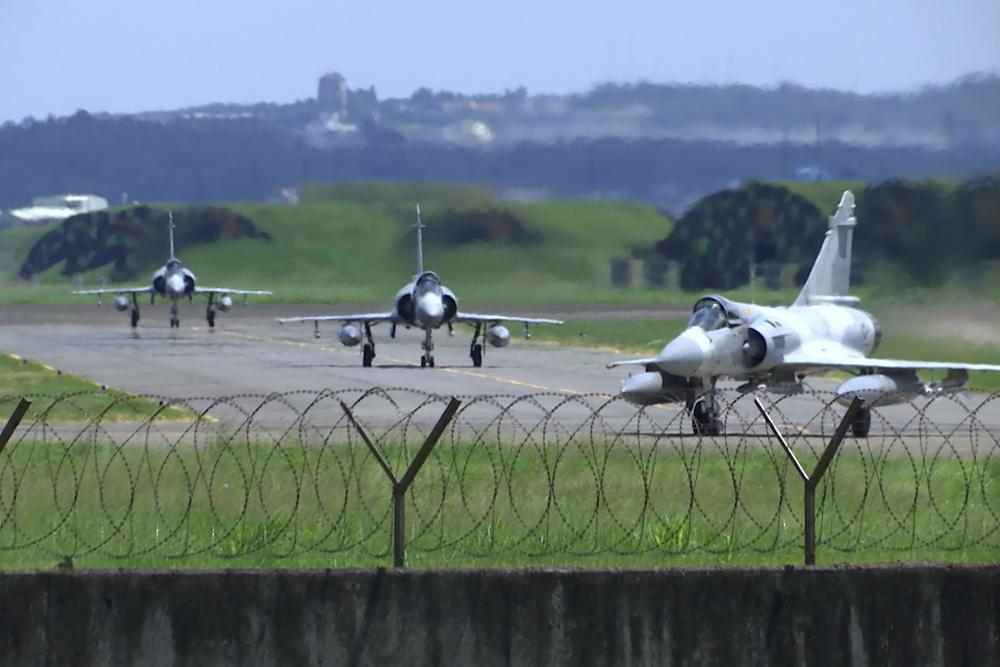
Everywhere is HOT – Israel/Palestine, China/Taiwan, Russia/Ukraine, and the regulars with failing states and failed states. Yes, if you look deeper, one thing is evident: prosperity in an absolute economic sense may not bring peace in this world. I would not have imagined that China would do live military drills around Taiwan, even as I remain flummoxed on the real purpose of US House speaker Nancy Pelosi’s mission in Taiwan. 

China does not like the visit: “a severe impact on the political foundation of China-U.S. relations, seriously infringed upon China’s sovereignty and (territorial) integrity and … undermines peace and stability across the Taiwan Straits.” And China is cutting many bilateral relationships with the US. In ancestral Africa, when leaders of two kingdoms stopped talking, unease would envelop the subjects.  Why? Silence during war is the loudest noise possible! The world is not better when the US and China are not speaking with each other. 

Top Chinese military officials have not returned multiple calls from their American counterparts this week as a crisis erupted in the Pacific over House Speaker Nancy Pelosi’s visit to Taiwan, according to three people with knowledge of the attempts.

Beijing’s ghosting of Defense Secretary Lloyd Austin and Joint Chiefs Chair Gen. Mark Milley comes as China continues launching missiles and positioning warships and aircraft in unprecedented military drills around Taiwan. Officials and experts say China’s silence is a shortsighted and reckless move that increases the risk of escalation in an already tense situation.

On that trip, what is the cost-to-benefit analysis for the Taiwanese people who could be under ruins if China miscalculates? As you look deeper, you will notice that humans are unique: our stable state is confusion and confrontation.

This brings me to a suspicion: Africa’s mess may not be that we’re not a rich continent but rather, our paralysis is a designed state to balance the metastasis of the global confusion. Indeed, only fools will allow superpowers to stimulate them into crazy decisions. Ukraine wants to join NATO; now, it is under ruins. Taiwan hosts a special visitor for two days; now, it has given China valid reasons (real, perceived, justified or otherwise) to cause confusions in its lands.

Across all indicators, it is now Taiwan 2.0 even as Madam Speaker will be in her house tasting a  new meal from McDonalds. If China stops sending silica to Taiwan’s TSMC, the economy of Taiwan will be rattled and its global importance will fade. 

African leaders must be strategic to ensure we do not ignorantly stimulate avoidable confrontations, scoring unnecessary own-goals!

 China cut off contacts with the United States on vital issues Friday — including military matters and crucial climate cooperation — as concerns rose that the Communist government’s hostile reaction to House Speaker Nancy Pelosi’s Taiwan visit could signal a lasting, more aggressive approach toward its U.S. rival and the self-ruled island.

China’s move to freeze key lines of communication compounded the worsening of relations from Pelosi’s visit and from the Chinese response with military exercises off Taiwan, including firing missiles that splashed down in surrounding waters.

After the White House summoned China’s ambassador, Qin Gang, late Thursday to protest the military exercises, White House spokesman John Kirby on Friday condemned the decision to end important dialogue with the United States as “irresponsible.”

The White House spokesman blasted China’s “provocative” actions since Pelosi’s trip to Taiwan, which China claims as part of its territory. But Kirby noted that some channels of communication remain open between military officials in the two countries. He repeated daily assurances that the U.S. had not changed its policy toward the Communist mainland and the self-ruled island.

A Key Global Company On The Path of US and China Battle for Supremacy

Tobi Amusan Qualifies for Finals at the 2022 Commonwealth Games

0

Nigerians look forward to an extension of record as Tobi Amusan qualified to the finals of the women’s 100m Hurdles at the ongoing 2022 Commonwealth Games with yet another brilliant performance which clocked 12.40s.

The defending champion from the 2018 Commonwealth Games which was held in Gold coast, Australia will on Sunday race to maintain her title at the Alexander Arena, Birmingham.

Amusan had left Oregon for Birmingham shortly after winning a gold medal at the women’s 100m hurdles final at the 2022 World Athletics Championship which made her the first ever Nigerian Athlete in history to win a world title at the World Athletics Championships.

Tobi Amusan has been recently dubbed the trailblazer after her sensational record at Eugene, Oregon was immediately followed by back-to-back success stories of other Nigerian athletes performing in their respective fields. Her victory was such a morale booster for many other athletes.

On Sunday, hundreds of thousands of Nigerians will hope to witness an extension of  record by the graceful athlete and Nigerian pride at the Alexander Arena, Birmingham.

Trends and Pattern Heralding the Great Global Stagflation

0

Since the Covid19 pandemic outbreak, the global economy has been agitated and shaped by an array of social, socioeconomic and political forces which require an ability to quickly adapt to the new normal. Following the global supply chain disruption which brought about operational frictions and monetary loss of most businesses that had yet to fully integrate digital technology, the great labour attrition which became rampant at least in greater parts of the United States and some parts of Europe stemmed from an attitudinal change to work due to a short period of remote working. The ensuing campaign of the hybrid work rule is a way of gradually adjusting to the new normal.

In early 2021 when the world had barely begun to recover from the Covid shock, a sharp increase in global demand for food and non-food items met with shortages due to the global supply chain that was still reviving slowly. Consequently, food price and general price inflation increased considerably later in the year while unemployment remained high in many parts of the world.

Thus, in June 2022, the World Bank slashed its global economic growth forecast to 2.9 percent from 5.7 in 2021, warning that the world economy is vulnerable to a period of intense stagflation reminiscent of the 1970s.

Stagflation which stems from the fusion of two words, “stagnation” and “inflation” is defined as an economic state where there is fixation in growth level due to increasing unemployment and inflation. The term was coined by Iain Macleod, a British politician, in 1965.

Earlier, the concept had been challenged by many economists who had doubted that unemployment and inflation could coexist since both are mutually exclusive — for instance, price levels are usually driven by an economy’s level of demand, and unemployment generally falls when demand booms. However, certain events later emanated in the US economy in the 1970s that underscored the possibility of Stagflation.

According to historical accounts by analysts, in 1971, President Richard Nixon’s aggressive position to the US balance of payment pressure by taking the US off the gold standard allowed the value to float. This led to the subsequent fall of the US Dollars and aggravated inflationary pressures locally. In 1973, the placement of embargo on the US and other nations that supported Israel in the Yom Kippur war by the Arab members of the OPEC led to a surge in oil prices. Due to supply shock, the US businesses passed along those costs and went out of production which led to inflation by making goods scarcer while unemployment also increased. Also, the US Federal Reserve’s decision to raise interest rates led to a spike in the misery index from 19.9 percent in 1975 to 22 percent in 1980.

The ongoing Russian-Ukrainian war has really aggravated fears of impending stagflation globally. Russia’s invasion of the Ukrainian’s territory has triggered a global shortage in cereal and gas supply and consequently, higher food and energy prices worldwide. Analysts have also linked the increase in price of bread, wheat and cereals amidst double digit inflation reported in Nigeria to this territorial warfare between Russia and Ukraine. The war was said to have compounded the Covid pandemic induced damage to the global economy which according to the World Bank may be a “protracted feeble growth and elevated inflation”.

The increasing global inflation accounts for a mass layoff across industries. In another Tekedia’s article, it was reported that as of July 2022, more than 30,000 tech workers were laid off by big tech companies including Microsoft, Tesla, Twitter as well as Fintech and Crypto-exchange platforms due to increasing inflation and decrease in users of those platforms.

Many Governments across economies had begun to increase interest rates to address the skyrocketing global inflation. Analysts noted that the decision by fed and the Bank of England to begin aggressive interest rate hikes and by the European Central Bank to prepare to raise interest also added to the Stagflation worries. Many believed that the odds of Stagflation were higher in the European Union and the United Kingdom than in the United States where economic recovery from the pandemic had been stronger.