DD
MM
YYYY

PAGES

DD
MM
YYYY

spot_img

PAGES

Home Blog Page 4981

11 Factors that Contributed to the Fall of Crowdfunding Platforms in Nigeria

11

Access to funds or financial resources constitutes a major challenge to Startups and Small and Medium Enterprises (SMEs). The inability of most Startups and SMEs to meet their financial needs through the traditional financial system such as the Banks, the Capital market and Personal savings necessitated an alternative financial system now known as Crowdfunding. Crowdfunding is an innovative social financing, mostly facilitated on the digital platform, whereby the entrepreneur raises funds for a project or venture through small contributions in the form of donation, pre-selling or pre-ordering, reward or sponsorship, debt or equity from a large number of people who may or may not have technical knowledge of the project or venture.

Though Crowdfunding is a relatively new concept in business and investment management, the practice of collecting contributions from the people towards a bigger social course dates back to history. A typical example often referenced is the platform for Sculpture of Liberty. In 1885, Joseph Pulitzer, publisher at the New York World championed a campaign requesting people to contribute financially to the erection of the great Statue in the New York City. He then chose to print the names of the contributors at the back of his newspaper. Within five months, the sum of US$102,000 was raised through the campaign, and 80 Percent of the donors were people that contributed less than $1 of the total amount. Also, the concept of Esusu in the traditional African societies provides a lofty background to the modern practice of Crowd funding.

The term Crowdfunding in the modern sense of it was introduced by Michael Sullivan, the founder of Fundavlog, an online social platform that involves simple blog funding features for projects. Sullivan defined funds from the crowd as the base on which everything else depends. Since 2007, Crowdfunding has begun to gain theoretical and technical relevance in Europe and America and has spread significantly to the developing countries. The concept became especially important after the 2008 financial crisis. In response to the challenges faced by the early-stage enterprises, business leaders began to look inward in search of an alternative means of generating funds to sustain their businesses. Thus, Crowdfunding developed as a viable option.

Crowdfunding has three major components, namely; the business enterprise, the crowd funders and the digital platform that connects funders to the enterprise. Since funds are raised mainly online, it allows entrepreneurs to circumvent the barriers of geographical location and promote the financial inclusion of all classes of people that can be reached on the internet.

Crowdfunding became popular in Nigeria in late 2015 and early 2016 when it was adopted by Startups and SMEs mostly in the agriculture and agribusiness sector. One of the early adopters of Crowdfunding in Nigeria is Farmcrowdy now Crowdyvest. Farmcrowdy and others raise funds from interested investors and use the funds to develop digital technologies that enhance the capacity of the smallholder farmers to operate optimally towards achieving increased food production and sustainable food security in the country and across the continent. Investors are rewarded with profits, interests and media mention etc.

The following are factors that impacted Crowdfunding in Nigeria:

1. Bandwagon: Since the introduction of Crowdfunding into the Nigerian corporate ecosystem, the model has been widely adopted by emerging Statups and existing SMEs. Thus, the practice became a big cash cow for most companies and the success rates of early adopters inspired the development of new businesses which focus solely on Crowdfunding as a means of finance. This led to oversaturation of the market, high likelihood of fraud and the need to regulate the market.

2. Oversubscribed Investment: Since Crowdfunding has very limited barriers to funders and mostly thrive on people’s emotions such as trust, greed and immediate gratification, many Crowdfunding platforms witnessed massive response rate of funders and therefore took in more money than they could naturally handle or manage.

3. Cash-flow Trap: The Cash flow trap entails a false consciousness that a business is doing well due to massive inflow of cash and availability of funds from increasing investment that are debt or equity-based. This kind of mindset is responsible for the lavish tendencies of most business leaders that operate the Crowdfunding model.

4. Covid-19: The Pandemic came with a great economic shock and financial crisis for most enterprises. The global supply chain downtime in the wake of the lockdown affected the operations of most of the Crowdfunding businesses, especially those in the agriculture and agribusiness sector. In the agriculture industry, much of the funds that were raised in the early Covid period could not be channelled into operation due to movement restriction. Thus, many of the affected businesses had to divert funds to other aspects of the business such as administration, adverts and PR etc. with the hope of recouping after the pandemic.

5. Crowdfunding Regulatory Policy: The Crowdfunding regulatory policy by the Security and Exchange Commission came at a very unfavourable period for most of the Crowdfunding businesses. It was a time that most businesses were barely coming out of the Covid19 shock and were expected to put up resilience and adapt to the new normal. Without proper transitioning, some of the platforms endeavoured to change their business models or move from investment to the capital market in order to circumvent the policy. But this resulted in further delays and constant defaulting by these platforms to meet investors’ expectations.

6. Poor Investment Management System: A lot of the Crowdfunding companies are self-sabotaged by poor investor relations and public communication in terms of constant engagement with investors when they have internal or external issues and the impacts of the external challenges on their process, people, technologies and products. Analysis of customers’ reviews on Google and social media reveals that some of the platforms experienced high rate of investment liquidation or investor turnover due to failure to effectively communicate challenges to investors and secure their empathy.

7. Overspending on Media: Since the digital platform is the primary medium through which funds are raised from the public, most Crowdfunding business focused too much attention and resources on the digital media, especially digital marketing and social events for social media engagement usually at the expense of the core operational activities of their businesses. Thus, it was not uncommon of Crowdfunding enterprises to sponsor shows and social media campaigns.

8. Unrealistic ROI: Due to oversaturation of the Crowdfunding ecosystem, it became expedient for Crowdfunding businesses to offer competitive returns on investments to win over potential investors or sponsors rather than considering the economics of production. Some offer as high as 50 percent returns to investors which culminated in a backlog of debts of these platforms.

9. Unspecific Investors: Crowdfunding does not have a specific investor in mind; rather it targets any individual that is willing and capable to fund a project for profits or interest as returns. However, high level of illiteracy and unfamiliarity of most of these investors with certain disruptions in the market are responsible for their lack of empathy and patience capital needed at the trying times.

10. Value-Strategy Misalignment: Studies find that there is a great gap in the value proposition of most of the Crowdfunding businesses and their strategies in achieving those values. For instance, while companies believe in positioning people to create value, they tend to pay less attention to how their people could generate profits through their portfolio. There is also an indication that companies are more interested in market, products and profits, while there is least concern for employees, public image and philosophy.

11. Ponzi/Pyramid Scheme: Many of the companies were already out of business due to unrealistic return on investment. Hence, they resorted to Ponzi scheme in settling investors which in any case only aggravated their debt backlog.

Shell To Protect Its Nigerian Pipelines With Drones

0

Nigeria for a long time has been experiencing some of the worst crude oil theft in its history, which is being perpetrated by some unscrupulous people. The country loses about 100,000 barrels per day at $100 per barrel, which is equivalent to $10 million per day.

This year, Nigeria lost a staggering $1 billion in revenue in the first quarter of 2022, jeopardizing the nation’s economy. Due to the incessant vandalization of pipelines without any proactive response from the federal government, Shell Petroleum Development Company (SPDC) took it upon themselves to put in measures to protect its pipelines in Nigeria.

The company revealed that it has signed a contract for drone acquisition to protect its pipelines in the Niger Delta from oil theft as Nigeria continues to tackle rising oil theft which has seen the country lose $1 billion in the first quarter of the year. This was disclosed by Shell’s General Manager, External Relations, Mr. Igo Weli in Portharcourt. He added that Shell Petroleum Development Company also builds cages and installs technology to protect its wellheads.

Mr. Weli revealed that this decision by the company to protect its pipeline with drones is due to the frequent attacks on its pipelines by oil thieves, leading to huge losses.

In his words, “Oil thieves punctured SPDC pipelines and wellheads, and thereafter, redirected crude oil to their illegal refining sites. To this end, we have signed a contract and soon we will start using drones to monitor our pipelines, wellheads, and other facilities. 

“Shell does so much to protect its assets in Nigeria, even when we see illegal refineries, we cannot do much other than draw the attention of the authorities to it. The SPDC builds cages and installs technology to protect its wellheads just like we put burglary proof in our homes to ward off robbers. 

This is worrisome and should be of concern to everyone, understanding that oil and gas are where the country generates huge forex and creates employment for millions”. 

Due to the frequent attacks on pipelines, Shell reveals that one of the extraordinary things the company does, is that they fly helicopters daily to check the pipelines which comes at a very huge cost to the company. The SPDC manager disclosed that the company is collaborating with security agencies through the sharing of data on the locations and activities of illegal bunkers and refining sites.

As the demands of these oil companies continue to fall on deaf ears of the federal government to put in place measures to curb oil theft, they have stopped being hesitant and waiting endlessly as they have set up strategies to ensure that the company’s pipelines are properly secured to curb vandalization.

As the incessant vandalization of pipelines has been a cause of concern, different experts continue to proffer solutions to brazen oil theft in the country. In a recent publication on Tekedia, erudite Professor Ndubisi Ekekwe posited a very interesting solution to the federal government whereby a technological product will be deployed to put a stop to leakage, zero diversion guaranteed on fuel subsidy and fuel distribution.

It might interest you to know that his solution is not just theoretical, as the technology has already been built which has been tested by filling stations and other players in the downstream oil and gas sector, as there has been an accomplishment of reconciling fuel volume/Naira from depots via trucks to pumps and shifts courtesy of the technology.

Hopefully, the federal government will be proactive in adopting this technological solution, to ensure that there is less or zero theft of oil in the country. This incessant oil theft has made the country produce lesser barrels of oil falling against the OPEC quota.

Given that Nigeria thrives on a monolithic economy with heavy reliance on the oil sector, it is ideal that the government addresses every problem ravaging the sector, as well as closing every loophole that poses a threat to the nation’s economy.

Nigeria Could Run out of Cash in Five Months!

1

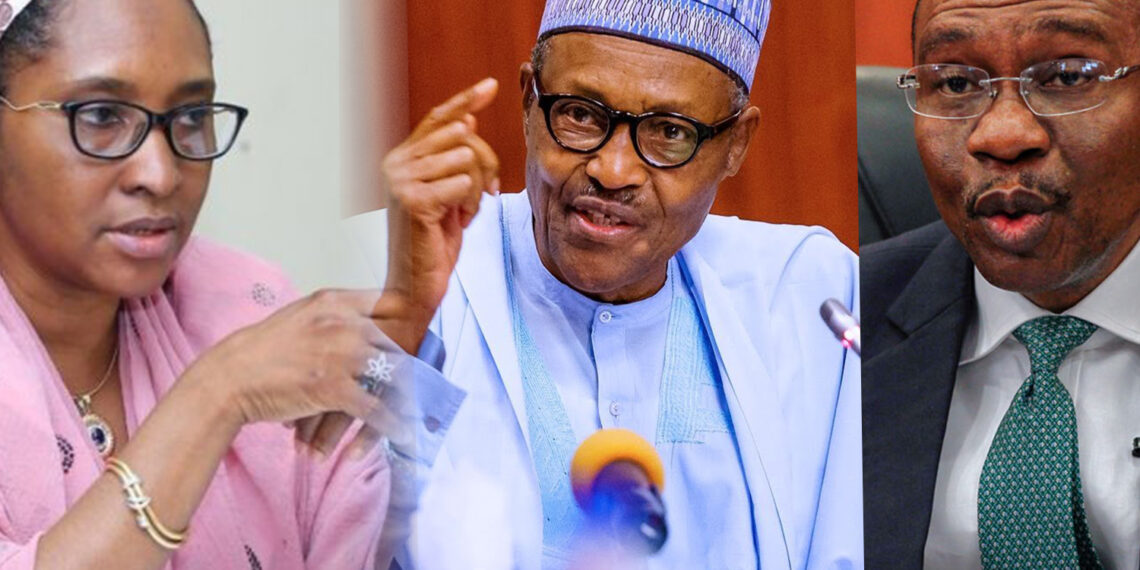
Nigeria is now at the risk of running out of cash in five months, according to a report by Premium Times: “Nigeria nears economic collapse; external reserves down to $15 billion contrary to CBN’s $36 billion claim”. It is not rocket science: if NNPC does not pay into the reserves, the numbers will not improve since we hardly make money from any other source. The biggest challenge is that many citizens still think that Nigeria has a positive financial positioning. 

May I tell ASUU and the striking university professors, the probability that the government will fund (fully) whatever you are asking for is close to zero. In short, as you strike, you are making it easier for your line items to be removed from some of the problems at hand.

The minister of labour, Chris Ngige, was blunt: ““I can tell you that Nigeria is broke. There is no money to fund capital projects next year. As you can see, the dollar that has been hovering around N500 and N600 is now above N700. The truth is that there is no money anywhere. The National Nigerian Petroleum Company Limited (NNPC) no longer remits money to FAAC. So, the situation calls for patriotism from all Nigerians. The lack of money to fund capital projects would have implications on capacity to create jobs. If jobs are not created, poverty will increase in the country.” With debt servicing absorbing the little revenue we generate in Nigeria, we have crises ahead.

(Of course, it is hard to believe the government when it still has enough funds to buy vehicles for politicians in the neighbouring Niger Republic.)

But get this from me: provided you plan to vote in 2023, there is HOPE. In FUTO, we skipped meals to balance our budgets as students. But one day,  we started working in the bank, and they paid tons of money – and that past immediately became a distant one. A new leader can fix Nigeria even though it may take a lot of work. #believe

As Nigeria prepares for general elections next year that promise to be one of the most keenly contested in its history, evidence is emerging that the economy faces a double whammy: an empty treasury and rapid decline.

Government officials and business leaders knowledgeable about the situation say there have been concerns in Abuja and Lagos after an elected official drew the attention of the Central Bank of Nigeria governor, Godwin Emefiele, to the fact that Nigeria’s external reserves amount to only $15 billion, well below the $36 billion balance on the gross external reserves claimed by the bank.

With the country spending N5.9 trillion on imports in the first quarter of the year, irrespective of the preferred exchange rate, reserves of $15 billion would barely cover four months of import.

Financial analysts claim this would not have mattered much but for recent difficulties in different sectors of the economy, especially the export constraints that have seen the nation’s petroleum monopoly unable to add to the reserves in the last six months.

The NNPC’s inability to remit oil sales receipts to the CBN, despite elevated crude oil prices, is seen as one reason why the naira has nose-dived recently in the parallel market.

Debt Servicing Gulped N310bn More Than Revenue Generated by Nigeria in First Four Months of 2022

Rufai Oseni: Lagos road usage laws you should know

0

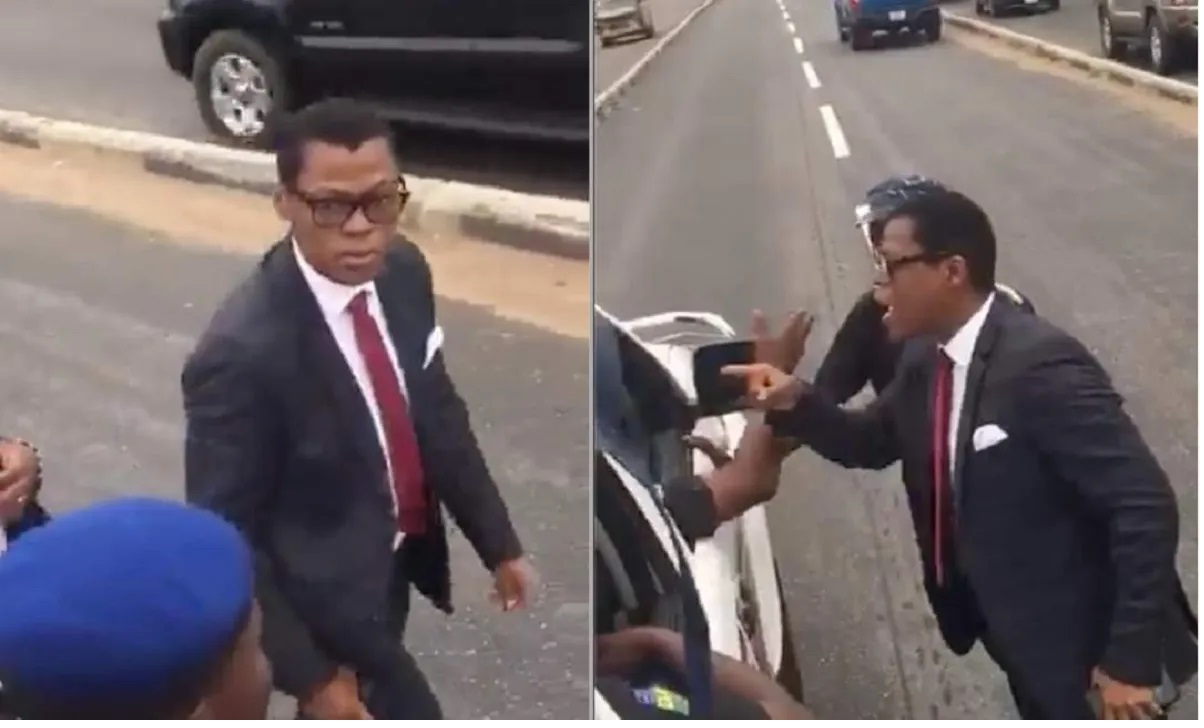
The law is not a respecter of anybody, despite your social status or popularity. It was a welcomed development that a popular Arise news analyst was charged to court for breaking the Lagos law on road usage and appropriate punishment was duly melted on him. 

Mr. Rufai Oseni, a popular face on Nigerian tv was on the news on Monday for having a heated dance-off with some police officers and other traffic officers of Lagos state authority. He was double-crossed and his car seized for having driven on a BRT lane. BRT lane is a special lane on roads in Lagos state reserved specifically for BRT buses and other motorists are totally prohibited from using that lane despite the excuse or circumstances whatsoever.

The Lagos state transport (sector reform) law of 2018 is the extant law that prohibits motorists from driving on the BRT lane and it provides for the punishment of impounding the offender’s vehicle and a fine of N70,000 is to be paid by the offender before the vehicle will be released back to him. In some cases, the driver could be detained alongside the vehicle.

Mr. Rufai Oseni was charged to court for this offense and he was found guilty of contravening Lagos State Transport Law (2018) and was thereby fined Seventy Thousand Naira. 

Ignorance of the existence of these laws is not an excuse to prevent you from being prosecuted if you are found wanting. There are numerous traffic and road usage laws in Lagos state which were made with the intent of bringing some decorum to Lagos roads and minimizing the traffic gridlock to some greater extent. Some of these laws that readers, especially Lagos state residents should take to heart include; 

Driving without a roadworthiness certificate is an offense and the punishment is Impounding the vehicle.

Driving Kabu Kabu without a permit is an offense and the punishment is Impounding the vehicle.

The act of Disobeying a LASTMA Officer (despite the reason or excuse) is an offense and it attracts a fine of N30,000, in some cases, the vehicle may be Impounded and the offender detained.

Neglecting traffic direction light is a strict offense that carries the punishment of 3 months jail term.

Smoking, drinking, or eating while driving is an offense with the punishment of N30,000 fine. 

Physically assaulting a traffic officer/warden is a serious offense that carries both a fine of N50,000 and 6 months jail term and compensation to the assaulted officer.

Driving without full light attracts a fine of N50,000.

Driving with a worn-out tire or without a spare tire attracts a fine of N30,000.

Driving without a fire extinguisher attracts a fine of N30,000.

Driving One way attracts a 3 years jail term.  

Driving without a fastened seat belt attracts a fine of N30,000.

Driving on a pedestrian walkway attracts a fine and Impoundment of the vehicle. 

Reversing or making a U-turn on the highway & parking on walkways attracts a fine of N50,000.

Obstruction of free flow of traffic attracts a fine of N20,000.

While Picking/Dropping passengers at illegal Bus stops attracts a fine of N50,000.

These are some of the salient road usage violations and their punishments that motorists based in Lagos state or visiting Lagos state should take to heart.

It is important to state that this law is peculiar to Lagos state alone as other states have their different road usage laws governing their individual states.

A police officer or any other officer of authority can arrest and detain anybody found violating any of these laws without a warrant. The law has given officers the power to go ahead and arrest, detain, and impound the vehicles of offenders without warrants. 

Tekedia Capital’s AjoMoney and TAP Win Seedstars’ Migration Entrepreneurship Prize 2022

0

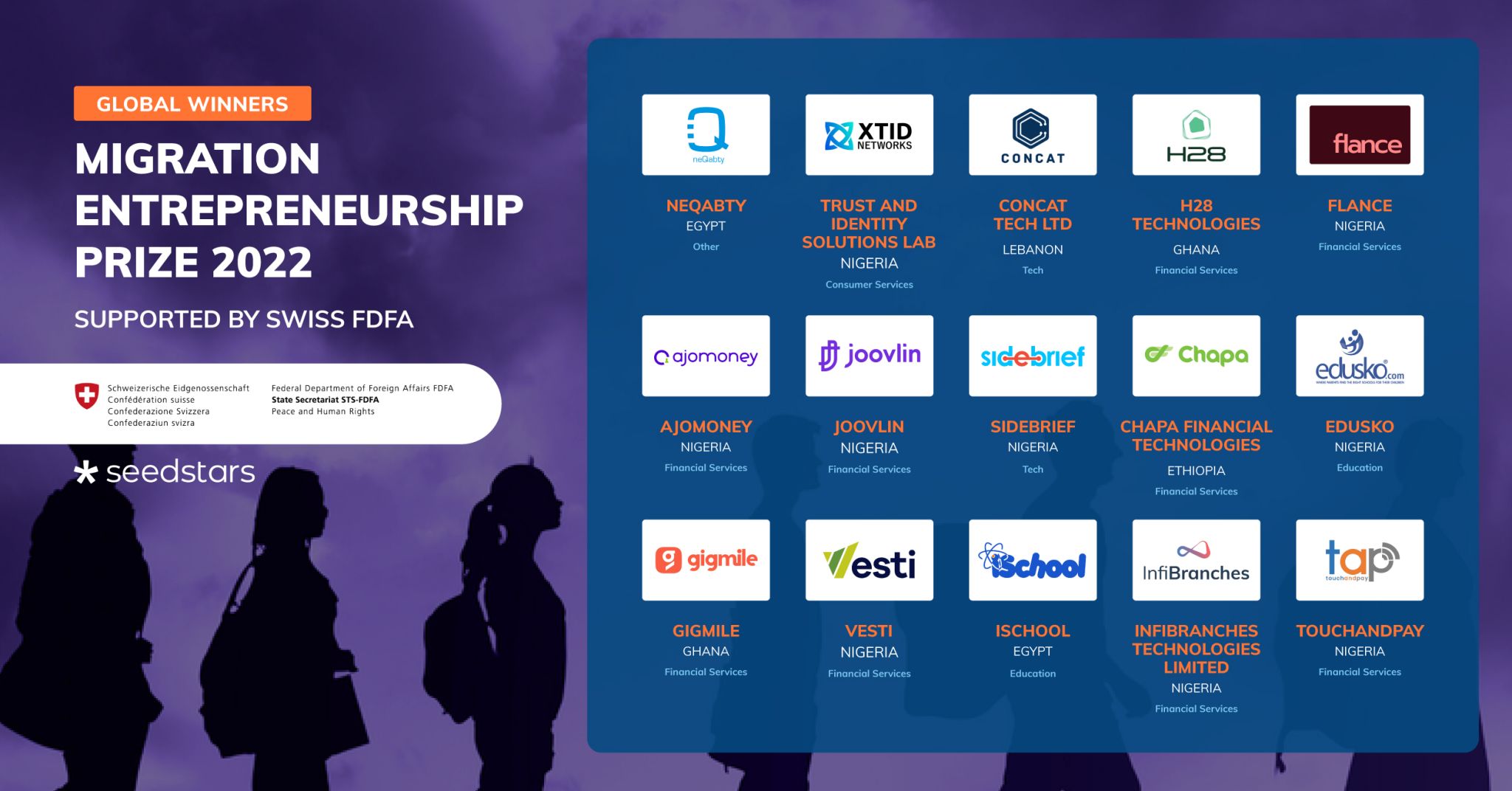
Tekedia Capital congratulates our portfolio companies – AjoMoney and Touch and Pay Technologies Ltd (YC W22) – for winning the Geneva-based Seedstars’ Migration Entrepreneurship Prize 2022.  The prizes are supported by the Federal Department of Foreign Affairs FDFA , Switzerland. At Tekedia Capital, we continue to discover and nurture category-king companies.

Since we began operations, we have been sending companies to Techstars, YCombinator, and now Seedstars, demonstrating and validating our abilities, to discover transformational companies even when they are young. The next #winners are here!

Learn more about Tekedia Capital here.