DD
MM
YYYY

PAGES

DD
MM
YYYY

spot_img

PAGES

Home Blog Page 4988

Apply Military OODA Framework in Your Business Growth

0

We can learn many things from the military. They move battalions. In markets, we move and control factors of production. At Tekedia Institute, I teach a course on the OODA Framework, picking perspectives from the military on how to build fast-growth companies.

Protect your flanks and move the columns, being aware of frontal attacks. Join us and learn from the kid who grew up in Ovim – the “land of generals” – and thrive in your business and career.

Zoom link in the Board. Register for the next edition here.


On 2023 Elections, Many Nigerian Electorates are Prone to Involuntary Disenfranchisement Due to Stolen and Cornered PVCs

0

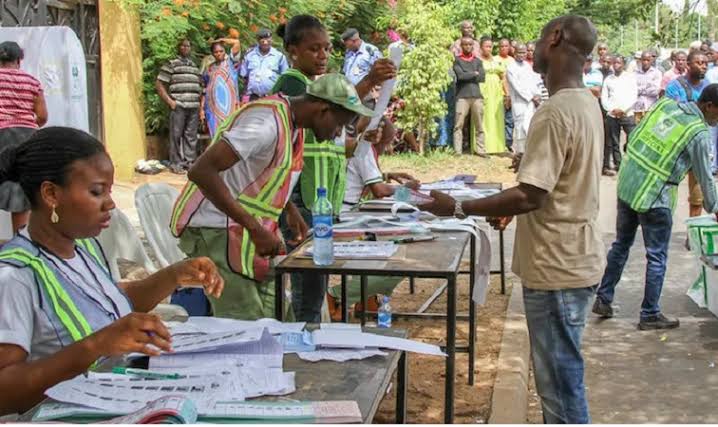
Since the beginning of the year, electioneering towards the 2023 general elections has been on the increase and the campaign for voters’ registration and Permanent Voters Card collection has been gathering momentum across the social media platforms. The PVC campaign which is a movement championed by the Nigerian youths has one major objective which is to ensure a mass involvement of the youth population in the forth coming elections in February 2023.

For so long the Nigerian young electorates, especially youths in the southern regions of the country have been associated with political apathy which has also been connected to the political gridlock being experienced in the country today. Thus, the PVC campaign aims to change the narrative. Many celebrities, religious leaders and other key personalities have also joined in the campaign with some of them declaring ‘’no pvc no show’’ ‘’no pvc no appointment’’ or ‘’no pvc no admittance into the church’’. Some employers have also been teased to consider such position while implementing their pay roles. Thus, the PVC has been a major means of identification and recognition among the Nigerian youths. And it seems to be working effectively considering the recent statistics of the Nigerian registered voters by the Independent National Electoral Commission (INEC) which revealed the youth population is at the forefront of the voters’ list.

However, there has been a growing concern about how the movement may be thwarted by some politically driven actions and thus prevented from achieving its intended objective.

A few weeks back, a Facebook user posted on his page advising the Nigerian electorates to be careful with how they handle their permanent voters cards which have become highly valued commodities at this period of elections. The poster expressed fear that soon PVCs will be a major target of theft banditry and public harassment in the country. According to the poster:

‘’If you already have your PVC, please leave it at home or go and deposit it in a bank safe…Them fit start to dey raid now, and instead of collecting money and phones, dem go collect your pvc’’
‘’if you want to use it to get any discount, just snap am for your phone, use am do screen saver’’

The post which was obviously intended for humour generated some affirmative responses in the comment section. Someone responded as follows:

‘’dem don kuku collect my own…abeg where dem dey do new one for island?’’

Another person responded, “una neva see something.”

This revelation on the social media on the 13 June 2022 would later appear as an insightful premonition of what Nigerians stand to experience through out the coming elections.

On Thursday 28 July 2022 it was reported that no fewer than 320 PVCs were discovered in an uncompleted building in a forest in a community in Bayelsa state. The PVCs were said to have been recovered by members of the Nigerian Hunters and Forest Security Service during their routine patrol in the area on Tuesday.

While delivering the recovered PVCs to INEC, the leader of the local security group claimed they had noticed some hoodlums in the bush who had possession of the PVCs. As soon as the hoodlums sighted them, they scurried away, and they were able to recover the PVCs.

Meanwhile, earlier on July 14, the Cable had reported citing a trending video that a number of PVCs were allegedly buried somewhere in Imo state.

The repeated cases of stolen and cornered PVCs have been a major cause for concern about the security of the voting rights of Southern Nigerians and the credibility of the forthcoming election.

Reacting to the problem, INEC said it does not take the allegations lightly and it is currently investigating into the matter and will ensure the culprits are brought to justice. “We will not allow retrogressive elements to sabotage the ongoing efforts towards having a free and credible elections come 2023” it says.

INEC also said that while the Continuous Voters Registration has been impressive due high turn up from the electorates since the second quarter of this year, the rate of PVC collection has not been encouraging. According to the electoral commission, PVCs have been printed for all valid registrants in Nigeria up to 14th January 2022 and delivered to all states of the federation for collection by the voters. The commission also said it will soon start road shows and inter state tours to ensure registered voters collect their PVCs.

Cheap And Functional Mobile Phones, Affordable Internet Access, Necessary For Digital Finance In Developing Economies – World Bank

0

The president of the World Bank, David Malpass, has disclosed that cheap and functional mobile phones as well as affordable internet access are necessary for the expansion of digital finance in developing economies.

He disclosed that the covid-19 pandemic influenced a digital revolution that has catalyzed the increase in access to and use of financial services in developing economies, which has transformed how people borrow, save, make and receive payments.

While stating in a World Bank blog titled, ‘Aiding the digital revolution on global financial inclusion’, he disclosed that the digital transformation has made it easier for people to send remittances to family members, and pay for goods and services.

In his words, “These changes are strikingly evident in the latest edition of the Global Findex database, compiled from a survey of more than 125,000 adults in 123 economies, covering the use of financial services throughout 2021.

“The survey found that 71 percent of adults in developing economies now have a formal financial account whether, with a bank, another regulated institution such as a credit union or microfinance lender, or a mobile money service provider compared to 42 percent when the first edition of the database was published a decade ago. 

In addition, the difference in the share of men and women in developing economies who own an account has fallen for the first time, from nine percentage points to six. This digital transformation makes it easier, cheaper, and safer for people to receive wages from employers, as well as send remittances to family members, and pay for goods and services.

“Mobile money accounts can better handle a high volume, small-denomination transactions, which help users to access financial services and save in order to cope better with a crisis. Individual accounts also give women more privacy, security, and control over their money”.

No doubt, the system of digital banking has made a tremendous impact on economies globally. The huge development in the E-Commerce sector is largely attributed to the phenomenal growth of various digital payments.

Research reveals that some adults in developing economies who make use of digital payment grew from 35 percent in 2014 to 57 percent in 2021, and 39 percent of mobile money account holders in sub-Saharan Africa use their accounts to save money.

Expanding people’s access to digital payments has been proven to help mitigate economic setbacks in developing economies. Through the mobile phone digital banking, it saves time and eliminates the idea of going to queue at financial institutions just to make payments.

The lower cost and convenience of mobile services, make them accessible to more people, including those living in rural areas. Economies that switched to digital payment systems, have been proven to be more successful as doing so can boost a nation’s annual GDP by as much as 3 percentage points.

For example, in Bangladesh, it’s Bkash digital payment system which enables transfer via mobile phones, has spurred growth and boosted finances in the country. There has been a massive growth in the adoption of smartphones for digital banking across the globe.

The World Bank has revealed its plans to expand financial inclusion through digitalization, as it will aid millions of people to own accounts to connect them to a financial system that will build a country’s economic resilience.

Join Ndubuisi Ekekwe At Deeper Life’s Impact Academy Tomorrow

0

Tomorrow, I will be teaching with Pastor W.F. Kumuyi on the theme “Unlimited Potentials”. I invite you to make time and attend this year’s Impact Academy. I will speak on Against All Odds and will draw heavily from Romans 8 with practical cases. Good People, “in all these things we are more than conquerors through him who loved us”. We’re all WINNERS with unlimited potentials. May His Grace be with you!

Schedule here 

Ndubuisi Ekekwe To Speak in Pastor W.F. Kumuyi’s Impact Academy

India Bans Battle-royale Game

0

India is revisiting its scrutiny on game apps with Chinese ties. The South Asian giant had in 2020, moved to curtail the proliferation of Chinese apps in its markets, following a conflict between the two countries that resulted in the death of many Indian military personnel.

The sweeping action saw several Chinese apps removed from Indian markets, where they had thrived for long.

Now, TechCrunch reports citing sources, that Google has pulled the popular battle royale game Battlegrounds Mobile India, more popularly known as BGMI, from Play Store in India after a New Delhi order.

The decision is coming a year after developer Krafton launched the app. The BGMI game has also been delisted from Apple’s App Store in the country.

“On receipt of the order, following established process, we have notified the affected developer and have blocked access to the app that remained available on the Play Store in India,” a Google spokesperson told TechCrunch.

The report below, highlighting the swiftness of both Google and Apple in implementing the order, indicates that it follows the 2020 conflict-based trajectory.

The app was delisted by Google from the Play Store; a person familiar with the matter told TechCrunch that Krafton delisted the app from Apple’s App Store Thursday evening. The iPhone-maker didn’t immediately respond to a request for comment. A Krafton spokesperson acknowledged the delisting and said the company was seeking clarification.

The development follows a growing tension between India and China, two nuclear-armed neighboring nations that have been especially at odds since deadly skirmishes along the Himalayan border in 2020. India reacted to the move by banning hundreds of China-linked apps including PUBG and TikTok, both of which counted India as their largest overseas market by users.

Of the hundreds of apps that New Delhi banned in the country, Krafton’s PUBG was the only title that made a return — though with a completely revamped avatar.

Krafton said it had cut ties with its publishing partner Tencent and pledged to invest $100 million in India’s gaming ecosystem. Krafton — which has backed a number of Indian startups including Nodwin Gaming, Loco, Pratilipi and Kuku FM in the past one and a half years — told TechCrunch earlier this week that it was on track to deploy about $140 million in the country by next month.

The South Korean-headquartered firm said earlier this week that over 100 million users had signed up for the game in India in the past one year since launch. According to Sensor Tower, Battlegrounds Mobile India had amassed over 16.5 million monthly active users in the country.

It was unclear why the Indian government had ordered to block Battlegrounds Mobile India.

Last month, a local media report — whose authenticity has been questioned by many — claimed that a child had killed his mother under the influence of the game. The report gained wide popularity on social media and reached the nation’s parliament this month. India’s Junior IT Minister Rajeev Chandrasekhar said last week that law enforcement agencies were investigating the subject.

Indian authorities have raided the local offices of Chinese phonemakers Xiaomi, Vivo and Oppo in recent months and levelled charges of tax fraud against them. China’s embassy in India criticized Indian authorities earlier this month for “frequent investigations” into the local units of the phonemakers and warned that such moves “impede the improvement of [the] business environment” in India and “chills the confidence and willingness” of other foreign nation’s businesses to invest and operate in the South Asian nation.