DD
MM
YYYY

PAGES

DD
MM
YYYY

spot_img

PAGES

Home Blog Page 5

Register for Tekedia AI Lab, Next Edition Begins June 6

0

We are excited to announce that Tekedia Institute has opened registration for the next edition of Tekedia AI Lab: from Technical Design to Deployment. In this program, you will learn how to build AI agents such as WinSupport, WinJob, WinLearn, etc. You will also master how to deploy such in your personal domain like mywebsite.com. 

Tekedia AI Lab: From Technical Design to Deploymentis a hands-on program designed to empower learners with the practical skills needed to design, develop, and deploy AI systems and agents. Moving beyond theoretical concepts, the AI Lab focuses squarely on tangible implementation, ensuring participants gain real-world experience in bringing AI innovations to life. It has four-Saturday practical Zoom sessions and an 8-week business component running simultaneously.

Program Date: Next edition begins June 6, 2026 

It has four Saturday practical Zoom sessions and an 8-week business component running simultaneously.

The Live Zoom sessions are held on Saturdays at 3-6pm WAT, on four Saturdays from June 6, 2026 to June 27, 2026.

How To Register and Pay

The cost is $500 or N350,000 and you can pay at the program website here. We support Naira bank transfer, PayPal, Stripe, Zelle, etc. 

In this program, we will teach how you can deploy agents on your local computer; such will include:

  • AI chatbot
  • Web SEO keyword & title page analyzer
  • Structured data classifier
  • Web content summarizer
  • Essay writer and story planner

More so, Tekedia will educate you on how you can create a personal AI chatbot on your computer, and how to deploy agents in virtual private servers. Every knowledge you need to connect AI foundation models like Google Gemma 3, DeepSeek, etc to power codes your local machine and VPS environments, you will learn. No coding or programming experience is required and this is not a coding program. The full program syllabus is here.

While the AI Lab focuses on code-based, open source model framework, Tekedia AI in Business Masterclass which comes at no additional cost for registration has case studies on how to use no-code, natural language prompting to create AI agents.  With our two programs, you will have the knowledge needed to thrive in this AI era.

Upon completion, we award Advanced Diploma in AI Technical Design and Deployment, and Advanced Diploma in Artificial Intelligence (AI) in Business certificates.

Flutterwave Secures Full Nigerian Banking License After 10 Years, to Accelerate Payment Efficiency

0

Flutterwave, Africa’s leading payments technology company, today announced that it has been granted a full Nigerian banking license by the Central Bank of Nigeria (CBN). This achievement marks a defining moment in the company’s decade-long journey to create a robust financial infrastructure for the continent.

According to Flutterwave, the license enables it to hold funds and deposits directly, strengthening its financial infrastructure across its largest market and enabling more efficient financial services and settlement flows for consumers, businesses, and enterprises.

By securing this banking license, the fintech gains greater control over how funds move within its ecosystem, including the ability to hold deposits and manage financial flows across its platform.

While Flutterwave will continue to work closely with banking partners across the broader financial ecosystem, the license enables the company to internalize key elements of its financial value chain, improving operational efficiency and supporting faster product development. This shift strengthens operational autonomy and allows Flutterwave to capture more value from the transactions processed within its ecosystem.

Speaking on securing a banking license, Flutterwave founder and CEO Olugbenga Agboola said,

“This milestone allows us to make our infrastructure more efficient and deliver faster, more reliable financial services. By operating directly within the financial system, we can streamline money movement, accelerate settlement for merchants, and build products that support sustainable long-term growth.”

The new banking license comes on the heels of Flutterwave’s acquisition of Mono, Nigeria’s pioneering open banking startup, earlier in 2026. This strategic move has significantly strengthened the company’s capabilities in account connectivity, data infrastructure, and seamless bank-linked payments.

With this license, the company is bringing that same infrastructure into a new generation of banking built for:

  • Consumer Financial Services: Seamless accounts, transfers, and payments for everyday users within the SendApp ecosystem.
  • Business Financial Tools: Accounts, payouts, payroll, and multi-currency capabilities for businesses of every size.
  • Enterprise Treasury Infrastructure: Tools to manage complex financial operations, treasury, and liquidity.
  • Digital Platforms: Embedded financial services for marketplaces and platform operators.
  • Developers: Programmable financial infrastructure enabling the creation of financial products through APIs.

Integrated Financial Solutions

The banking license enhances Flutterwave’s core payments business by allowing the company to optimize settlement flows and manage funds more efficiently within its ecosystem.

  • SendApp Users: Over a million people using SendApp will now access enhanced financial services, including personal account numbers and instant transfers, without switching apps.
  • Flutterwave for Business: Over 2 million businesses can now open accounts, manage payouts, run payroll, and access multi-currency capabilities.
  • Smart Financial Tools: Flutterwave will introduce data-driven financial services, including working capital financing and merchant lending powered by real transaction data, alongside treasury and savings products.

Founded with a vision to fix fragmented payment systems where transactions often failed, settlements were slow, and businesses had to rebuild infrastructure for every new market, Flutterwave has steadily connected the dots across Africa’s financial ecosystem.

The fintech has consistently expanded its regulatory footprint, holding over 50 licenses across more than 35 countries, making it one of the most licensed non-bank fintechs globally. To date, it has processed over $40 billion in payments and enabled more than 1 billion unique transactions.

Notably, Flutterwave continues to explore new technologies, including stablecoin-enabled settlement, to improve global payment efficiency further and connect African businesses to the global economy.

The recent banking license development, positions Flutterwave to deliver faster, smarter, and more scalable banking experiences tailored to the realities of African businesses. By combining its extensive payments network with Mono’s open banking technology and the new banking license, the company aims to reduce friction, improve trust, and unlock greater financial inclusion across the continent.

Anthropic’s Second Major Leak in Days Exposes Internal Source Code for Breakout Claude Code Tool

0

Anthropic has suffered another embarrassing operational slip, confirming Tuesday that it inadvertently released a substantial chunk of internal source code for its popular AI coding assistant, Claude Code.

The exposure occurred through a source map file bundled into version 2.1.88 of the tool’s npm package, a debugging artifact that effectively unminifies the production code and maps it back to its original TypeScript structure. The file contained roughly 512,000 lines spanning about 1,900 separate modules, offering an unusually granular view into how the agentic system orchestrates complex developer tasks.

Anthropic moved quickly to yank the package from distribution. In a statement, the company stressed that “no sensitive customer data or credentials were involved or exposed.” A spokesperson described the incident as “a release packaging issue caused by human error, not a security breach,” and said the firm is already rolling out additional safeguards to prevent recurrence.

The code did not include the underlying large language model weights or training data, but it has already been mirrored widely on GitHub, where it has drawn tens of thousands of forks and stars within hours. Developers and researchers are now sifting through it for clues about unreleased capabilities, including what appears to be a Tamagotchi-style virtual pet that reacts to coding activity, references to an always-on background agent codenamed “KAIROS,” and detailed insights into the tool’s memory architecture and task-orchestration logic.

One internal comment even flagged the added complexity of a memoization technique whose performance payoff remained uncertain.

This marks Anthropic’s second high-profile data mishap in less than a week. Just days ago, thousands of unpublished internal documents, including a draft announcement for the company’s powerful next-generation model, referred to internally as both Claude Mythos and Capybara, were discovered sitting in a publicly accessible data cache.

Founded in 2021 by a group of former OpenAI executives and researchers, Anthropic has carefully cultivated an image as the more deliberate, safety-focused player in the frontier AI race. Yet these successive lapses are testing that reputation at a moment when the company is scaling rapidly and generating serious revenue.

Claude Code, rolled out to the general public last May, has become one of the breakout products in the agentic AI category. It helps developers write features, debug code, automate repetitive tasks, and even manage entire workflows.

Adoption has been explosive. By February, the tool’s annualized run-rate revenue had climbed above $2.5 billion, more than double the level at the start of the year, with enterprise and business subscriptions leading the surge. Some analysts estimate that it now accounts for a meaningful share of all public GitHub commits.

That success has, predictably, drawn intense competition. OpenAI, Google, and Elon Musk’s xAI have all accelerated work on rival coding agents, turning the space into one of the most fiercely contested battlegrounds in artificial intelligence.

The leak is particularly awkward for Anthropic because Claude Code has always been positioned as closed-source. While the exposed material does not hand over the crown jewels of the underlying model, it does provide competitors and the broader developer community with a detailed roadmap of the agent’s inner workings — how it handles context windows, maintains long-term memory, coordinates multi-step reasoning, and manages tool use.

In an industry where every incremental edge matters, that kind of visibility could shave weeks or months off rival development cycles.

The incident also highlights the growing pains of hyper-growth AI startups. Even a company that markets itself on caution and rigorous processes can stumble when shipping complex software at breakneck speed.

Enterprise customers who pay premium prices for Claude Code precisely because of its perceived reliability and security may now be asking tougher questions about internal controls.

Anthropic has built its brand on responsible development and careful deployment. These back-to-back operational slips risk undermining that narrative just as the company prepares for what could be one of the most anticipated public offerings in the AI sector.

The leaks may prove minor in the grand scheme; neither appears to have been a malicious breach. But they feed a narrative that even the most disciplined labs can be tripped up by basic execution errors in the rush to stay ahead.

Developers who pulled the affected package have been advised to switch to Anthropic’s native installer and review any locally cached repositories. In the meantime, the AI community is already dissecting the exposed code with the kind of enthusiasm usually reserved for major open-source drops.

For a company whose entire value proposition rests on trust, precision, and superior execution, Tuesday’s episode is more than a technical footnote. Anthropic now faces the task of proving these incidents are isolated growing pains rather than symptoms of something deeper.

Jim Cramer: Three Ways the Stock Market Could Flip When the U.S.-Iran War Ends

0

Tuesday’s rally on Wall Street may have been more than a fleeting burst of optimism. It may well have offered investors a preview of how markets are likely to reprice once the U.S.-Iran war finally winds down.

That is the central thesis advanced by CNBC’s Jim Cramer, who argued that the trading session effectively served as a “dry run” for a post-war market environment. The move in equities, bonds, and commodities strongly supports that view.

The S&P 500 climbed 2.91 per cent, while the Nasdaq Composite surged 3.83 per cent, as traders responded to signs that hostilities in the Middle East could ease. The rally followed reports that President Donald Trump had told aides the conflict may end within weeks, fueling hopes that one of the biggest geopolitical risk overhangs on global markets could soon begin to fade.

“Today we saw what would happen when you give peace a chance,” Cramer said. “Maybe this dialogue with Iran is really nothing more than an exchange of messages. Maybe it’s meaningless. So, consider today a dry run of what will ultimately occur when the war winds down.”

More importantly, the market reaction revealed where investors are likely to rotate capital once the war premium starts to unwind.

The first and perhaps most immediate shift would be in the bond market.

Treasury yields, particularly the benchmark 10-year note, have been elevated for much of the conflict as markets priced in inflation risks tied to soaring oil prices, disrupted supply chains, and reduced expectations of Federal Reserve rate cuts. On Tuesday, yields edged lower as optimism over de-escalation prompted traders to pare back those inflation bets.

This is critical because the war’s inflation impact has extended far beyond crude prices.

The disruption of flows through the Gulf has lifted the cost of fertilizers, petrochemicals, aluminum feedstock, and industrial plastics, all of which feed into consumer prices through food, manufacturing, and transport channels. A reopening of the Strait of Hormuz or even a credible path toward de-escalation would likely ease these pressures and bring yields down further.

That, in turn, would materially alter the valuation environment for equities.

“They [will] go down noticeably,” Cramer said of rates. “They go down because we now realize that there’s a huge amount of inflation stemming from the war. Not just from oil going higher – we saw that at the pump – but from the ancillary products that came out of the Gulf: fertilizer, polyethylene and aluminum.”

He continued, “We didn’t know going into the war that our farmers were gonna need to raise prices to us because the price of fertilizer would go much higher. You allow the fertilizer to come back down, you stop the pernicious food inflation.”

The second major shift Cramer points to is a sharp comeback in growth stocks, and Tuesday’s session already provided a glimpse of that rotation.

“Money managers believe that price-to-earnings multiples — how much we’ll pay for a company’s earnings – have been horribly compressed by the war,” Cramer added. “If the war’s over, we’ll start paying more for the stocks of companies that were never gonna skip a beat to begin with.”

Large-cap technology names and AI-linked semiconductor stocks led the advance as investors moved back into duration-sensitive assets. This is a textbook response to falling yields.

When rates move lower, future earnings become more valuable in present-value terms, which typically supports higher price-to-earnings multiples for growth companies. During the war, many of these names have seen valuation compression not necessarily because of deteriorating fundamentals, but because the macro backdrop had turned hostile.

Once geopolitical stress begins to ease, attention returns to earnings momentum, AI demand, and capital expenditure cycles. That is why the market reaction in names tied to artificial intelligence infrastructure has been so pronounced.

What investors are effectively doing is pre-positioning for a return to a lower-rate, higher-multiple environment.

The third leg of the post-war trade is likely to be financials, particularly large investment banks.

Major lenders and dealmakers rallied strongly during the session, reflecting expectations that an end to hostilities would revive corporate activity, mergers and acquisitions, debt issuance, and public listings.

War and geopolitical instability tend to freeze risk appetite at the corporate level.

Boardrooms delay strategic decisions, capital raises are deferred, and deal pipelines slow materially. Once that uncertainty lifts, investment banks are among the first sectors to benefit as advisory mandates, trading revenues, and underwriting activity begin to recover.

This makes financials one of the clearest cyclical beneficiaries of a peace-driven market reset.

What makes this analysis more compelling is that the relief rally was not confined to U.S. equities.

Global stocks also moved higher, while oil prices eased on hopes that supply disruptions may not persist indefinitely. Reuters reported that Wall Street ended higher on speculation that the conflict could wind down, reinforcing the idea that investors are already beginning to price in a peace scenario.

Still, caution remains warranted.

Markets have shown a tendency in recent weeks to rally on unconfirmed headlines around diplomacy, only to reverse when tensions re-escalate. As some analysts have warned, investors may be celebrating signals that have yet to translate into concrete diplomatic progress.

That said, Tuesday’s session was revealing.

It showed that once the war premium starts to fade, the market’s likely path is clearer: lower yields, stronger technology valuations, revived financial stocks, and a broader return of risk appetite.

In effect, Wall Street may already have shown its hand.

Bank of England’s Bailey warns investors not to count on UK rate hikes

0

Bank of England Governor Andrew Bailey on Wednesday cautioned investors against getting carried away with expectations of near-term interest rate hikes, arguing that financial markets are moving ahead of policymakers as Britain grapples with the economic fallout from the Iran war.

In an interview with Reuters at the central bank’s London headquarters, Bailey made clear that while the Bank remains prepared to tighten policy if inflation risks intensify, its immediate priority is to avoid compounding the damage already being inflicted on growth and employment by the surge in global energy prices.

The remarks amount to the clearest signal yet that the Monetary Policy Committee is in no rush to validate market expectations for multiple rate increases this year, even as the conflict in the Middle East continues to fuel fresh inflationary pressures through higher oil and gas costs.

“We will have to, obviously, act on monetary policy if we think it’s appropriate to do so,” Bailey said. “But it strikes me, and it still strikes me today, that the most important thing to do is to tackle the source of the shock.”

He added that the Bank’s inflation mandate requires it to respond in a way that “causes the least damage in terms of activity in the economy and in terms of jobs,” underscoring a growing concern within Threadneedle Street that an aggressive policy response to imported inflation could deepen an already weakening domestic economy.

Markets had been pricing in as many as four rate hikes earlier in the crisis and are still factoring in two increases before year-end. Bailey, however, suggested those expectations are excessive.

“(The market)’s still pricing us to raise rates … I think they’re getting ahead of themselves,” he said.

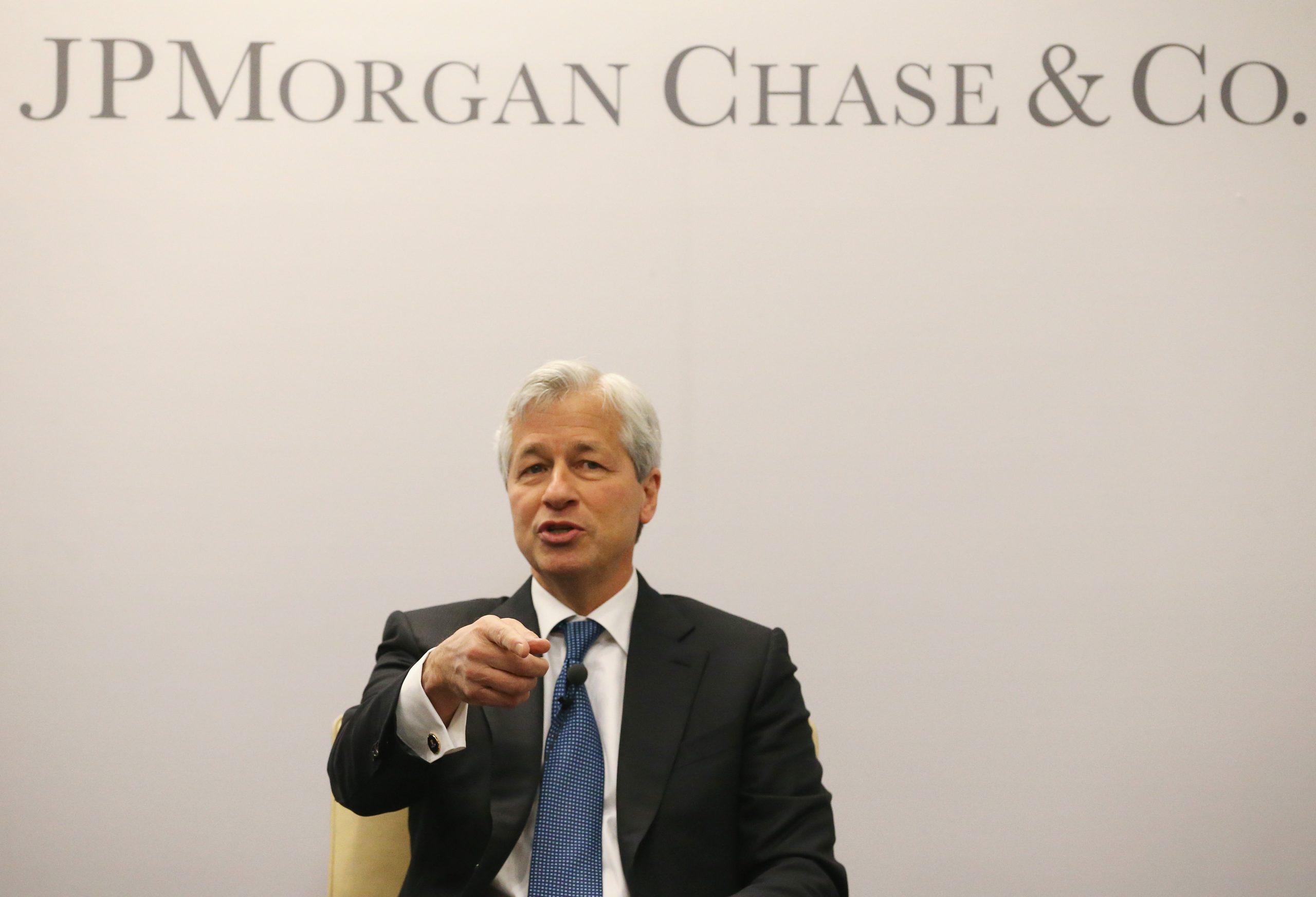
The comments briefly lifted British government bond prices as traders pared back bets on imminent tightening. In a swift response, JPMorgan revised its forecast, now expecting only one Bank of England rate hike in 2026, likely in June, rather than the previously anticipated moves in April and July.

The Bank last month voted unanimously to keep the benchmark Bank Rate unchanged at 3.75%, a notable shift from earlier divided votes that had exposed internal debate over whether easing should resume. The unanimous hold reflected the extraordinary uncertainty unleashed by the war and the sharp repricing of global energy markets. The next MPC decision is due on April 30.

Bailey’s intervention highlights the difficult balancing act facing the central bank.

On one side is inflation, now expected to rise to 3.5% in the third quarter of 2026, well above the BoE’s 2% target, largely because of the jump in oil and gas prices following supply disruptions in the Middle East. On the other is a visibly softening economy, where labor market conditions are deteriorating, and business demand remains weak.

Britain is especially vulnerable to the inflation shock because of its heavy dependence on natural gas for electricity generation and household heating. The Bank has already warned that the conflict has heightened broader financial stability risks, from sovereign debt markets to private credit and leveraged funds.

Bailey said policymakers are watching a recent jump in household inflation expectations “very carefully,” but stressed that conversations with businesses suggest limited pricing power across the economy.

“Businesses consistently say to me that they’re operating in a context of an absence of pricing power,” he said.

That assessment significantly suggests firms may struggle to fully pass rising energy costs on to consumers, potentially limiting second-round inflation effects that would ordinarily justify tighter monetary policy.

While some pass-through is still expected, Bailey noted that the present environment differs markedly from the inflation surge triggered by Russia’s invasion of Ukraine in 2022, when demand conditions were stronger, and firms had greater scope to raise prices.

“The context at the moment is of a softening labor market,” he said. “We think activity is a bit below potential, so a bit of an output gap is opening up.”

That widening output gap, a classic sign of spare capacity in the economy, may strengthen the case for patience rather than pre-emptive tightening.

Bailey also invoked comments made by former Governor Mervyn King during the 2011 inflation spike, when the Bank argued that policy should absorb supply-side shocks in a way that minimizes harm to households and businesses.

The implication is that the BoE may be willing to tolerate above-target inflation for longer if it judges the shock to be externally driven and temporary, rather than rooted in domestic wage-price dynamics.