Today the Worldcoin price sits near $0.33, showing a minor recovery that keeps WLD far from significant market strength despite planned reductions in daily token releases. Meanwhile, each Polygon price prediction this month remains locked in debates over minor pennies, as POL stays stuck near $0.07 while technical indicators offer mixed signals everywhere. Currently, neither asset displays enough upward momentum to place itself onto any top crypto gainers roster in the immediate future right now.
The performance of BlockDAG requires clear arithmetic rather than simple speculative guessing. Initial stage pricing sits at $0.002 against an intended launch target of $0.10, establishing a built-in 50x gap prior to any public exchange entries.
Additional features like network utility, expansion plans, and ecosystem tools build upon this foundation, explaining why investors may search for BlockDAG alongside other top crypto gainers when the initial presale phase finishes completely very soon.
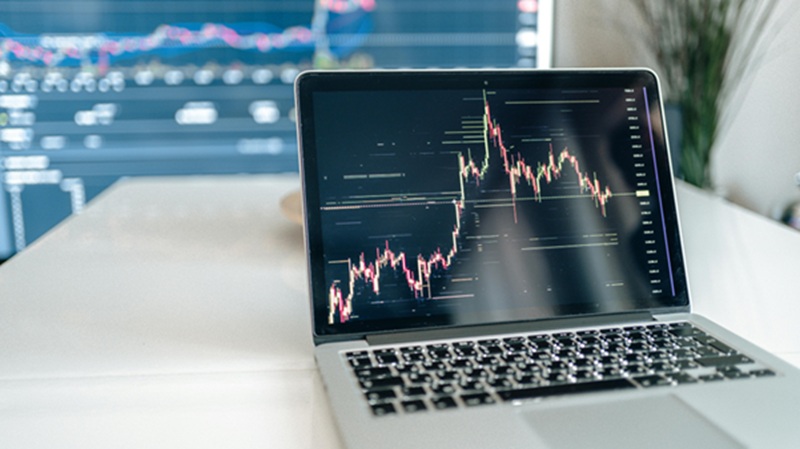
BlockDAG Entry at $0.002: Stage 1 Math Driving Initial Growth
Consider the primary figure that stands out: $0.002. This marks stage 1 across BlockDAG’s 25-stage presale, measured against an expected launch point of $0.10, creating a 50x difference set inside the starting price before exchange trading begins. Few projects in the current market present such clear calculations during their early development phases today for early participants.
Supporting this valuation is a functional product network rather than temporary concepts. The active creation of the Super App aims to unite mobile mining via the X1 Miner, staking incentives, and card usage within one central portal upon release, offering BDAG holders real utility instead of passive price tracking on charts alone.
Furthermore, BlockDAGX is readying its standalone trading platform; zero tokens are reserved for team members from the total 150 billion supply, and $100 million in launch liquidity is planned. This foundational setup can potentially position BDAG among top crypto gainers as trading commences, establishing a lasting presence rather than brief price surges often seen across temporary market movements right away.
This mix of measurable math, solid structure, and ecosystem expansion distinguishes BlockDAG from assets struggling over minor price changes. Phase 1 offers an early advantage that remains rare in the current sector, explaining why BlockDAG continues gaining attention in discussions about potential top crypto gainers across the market as overall participant interest grows rapidly over time today.
Worldcoin Price Increases Following Reduced Token Supply
The Worldcoin price experienced a modest rise recently, moving close to $0.33 with a 4% weekly gain after World Network decreased daily WLD unlocks by 43% on July 24, dropping supply expansion from 5.1 million down to 2.9 million tokens daily.
Reduced token output provides temporary relief to price movement after several months, although trading volume stays relatively low when compared with activity seen earlier this year in the broader crypto space overall.
Institutional backing also remains visible as Eightco Holdings, a public Nasdaq firm, owns around 302 million WLD tokens valued at around $96 million as digital identity exposure. However, Worldcoin price stays over 97% under its historical peak, showing that a short bounce from slower token releases does not guarantee a complete long-term market trend reversal at this point.
Polygon Price Prediction Shows Mixed Market Signals
Recent Polygon price prediction analysis encounters conflicting data, as daily charts suggest positive movement while weekly charts show downward pressure near $0.0717, reflecting a 2.3% daily decline and 33% monthly loss.

Although the Ithaca hard fork finished on July 29 to enhance transaction flow stability across the network, token valuation showed minimal response following the technical update, leaving market participants uncertain about upcoming price direction in the short term period ahead now.
Meanwhile, the Open Money Stack reached technical preview status on July 27 as network fee structures burn almost 1 million POL tokens daily, providing deflationary support aligned with Gigagas’ goals of 100,000 transactions per second. Nevertheless, standard Polygon price prediction viewpoints treat $0.07 as a support line to protect rather than a starting base for a fresh upward rally right now.
Final Conclusion: Math Outperforms Passive Waiting
The Worldcoin price experiences brief stability due to reduced supply releases, while current Polygon price prediction discussions focus on tiny fluctuations driven by conflicting market trends. Both initiatives maintain active technology frameworks, yet neither provides an immediate structural framework capable of turning initial entries into substantial portfolio gains in the current market environment for crypto traders today overall.
In contrast, BlockDAG offers stage 1 pricing of $0.002 against a $0.10 reference target, creating a 50x ratio before listing. Supported by zero team token allocations, $100 million in liquidity targets, and ongoing ecosystem expansion, BlockDAG could enter every top crypto gainers list when trading opens, delivering sustained visibility rather than short-lived market spikes over the coming months.
Presale: https://purchase.blockdag.network
Website: https://blockdag.network
Telegram: https://t.me/blockDAGnetworkOfficial
Discord: https://discord.gg/Q7BxghMVyu