DD
MM
YYYY

PAGES

DD
MM
YYYY

spot_img

PAGES

Home Blog Page 5

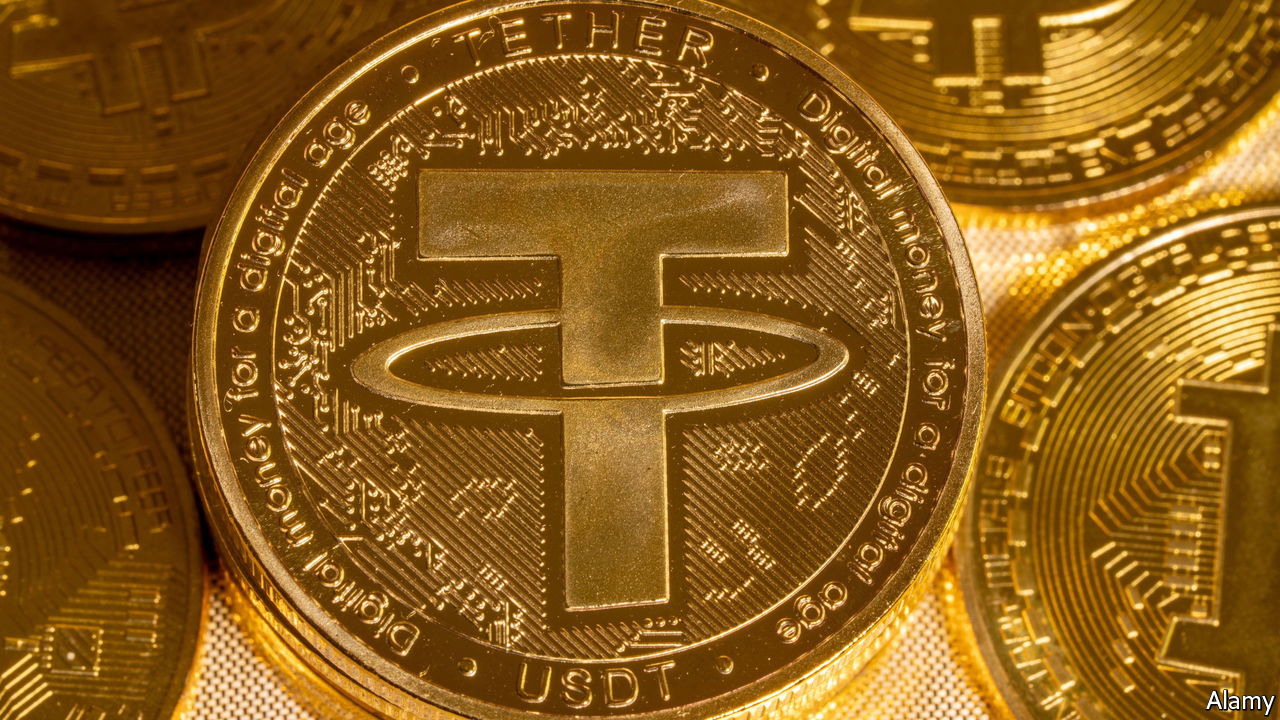
Tether Mints $1B on the Tron Blockchain as Market Interest Deepens 

0

Tether via its Treasury just minted 1 billion USDT on the Tron network today, April 30, 2026. The mint occurred around 15:45 Beijing time, as reported by on-chain monitoring services like Whale Alert and confirmed across multiple crypto news outlets and X posts from accounts tracking large transactions.

Tron’s Role in Stablecoins

Tron has become one of the dominant blockchains for USDT due to its low fees, high speed, and efficiency for transfers, trading, remittances, and DeFi activity. Large mints like this often reflect sustained or growing demand for USDT liquidity on the network, where a significant portion of daily stablecoin volume already settles.

Tether doesn’t mint USDT speculatively. New supply is typically issued when there are buyers often institutions, exchanges, or large traders depositing fiat usually USD or equivalent reserves. Some mints also replenish inventory for anticipated redemptions or issuances. CEO Paolo Ardoino has noted that certain mints support future demand.

This adds to Tron’s already substantial USDT holdings previously in the $80B+ range in recent months, depending on the exact date. Tether USDT supply is well over $150B across all chains, with Tron frequently hosting a large and active share alongside Ethereum and others. Earlier 2026 mints on Tron and occasional ones on Ethereum have followed similar patterns during periods of market activity or liquidity needs.

These billion-dollar mints are relatively common for Tether in bull phases or when on-chain demand spikes—they’re a signal of capital inflow preparation rather than an immediate price catalyst. Markets often interpret them as bullish for liquidity, though the actual deployment determines the impact.

This is not random printing. Tether mints when there is real demand — typically from exchanges, OTC desks, traders, or institutions depositing USD or equivalents. The new supply acts as prepared liquidity that can quickly flow into trading, DeFi, remittances, or lending.

Tron already hosts the largest share of USDT recently ~$86.7B, around 45-50% of total USDT supply. Low fees and high speed make it the preferred rail for high-volume, everyday stablecoin activity. Another big mint underscores continued preference over Ethereum for transfers and settlements.

Large stablecoin mints often precede increased on-chain volume, tighter spreads, and potential risk-on moves. They reflect capital positioning rather than immediate price pumps, but sustained minting especially alongside Circle points to expanding stablecoin usage and overall market liquidity.

The tokens often stay in the Tether Treasury or move gradually. Immediate price reaction is usually muted unless followed by visible inflows to exchanges or large transfers. Historically, these events are interpreted as supportive infrastructure news rather than direct catalysts. With total USDT supply already well above $150B–$190B range in 2026, this fits a pattern of steady supply growth tied to real-world adoption in payments, trading, and emerging markets.

Positive for Tron’s utility and overall crypto liquidity, but not a guaranteed immediate rally. Watch for subsequent movements from the Tether Treasury address and on-chain volumes for clearer signals. Tether doesn’t mint randomly. Large mints like this one typically happen when exchanges, OTC desks, traders, or DeFi protocols are drawing down existing USDT balances for trading, transfers, remittances, or lending.

The new billion acts as a buffer or patch to restore liquidity on Tron without causing shortages that could widen spreads or push USDT off its $1 peg. Tron has become the go-to chain for high-volume, low-cost USDT activity often 45-50%+ of total USDT supply, recently around $86B+. It handles everyday settlements, emerging-market transfers, and efficient DeFi flows far better than higher-fee chains for many users.


Neutral to mildly bullish for activity: It signals expected or ongoing demand. The new USDT often sits in the Treasury initially, then flows gradually to exchanges or wallets. This can tighten liquidity conditions if deployment is slow, or support higher volumes and spreads if it hits trading venues quickly.
In volatile or pullback periods, such mints can act as a liquidity backstop — preventing dry-up in pools or order books. It’s not always an immediate risk-on catalyst but keeps the engine running smoothly.

Paloma Partners Cuts Nearly a Dozen Staff, Including Top Strategy and Marketing Executives, After Major Overhaul

0

Paloma Partners, the decades-old hedge fund founded by Donald Sussman, is laying off nearly a dozen employees, including several senior executives, as the firm moves to create a leaner operation following a major multi-year restructuring.

Among those departing are chief strategy officer Kristin Cohen, chief marketing officer Louis Molinari, and deputy chief compliance officer Anjali Kamat, according to people familiar with the matter cited by Business Insider. The cuts come shortly after Paloma completed a broad overhaul of its leadership, technology, operations, and investment platform in the first quarter of this year.

A company spokesperson confirmed the streamlining effort, framing it as a logical next step after a period of significant expansion and modernization.

“After doubling our manager roster and completing a full overhaul of our investment infrastructure over the past year, streamlining the organization is the natural next step toward a leaner, more efficient platform for our investors,” the spokesperson told Business Insider.

The firm now manages approximately $1.1 billion, according to a March filing with the Securities and Exchange Commission, reflecting a notable decline in assets in recent years amid ongoing redemption pressure from investors.

Performance has been uneven. Paloma was down 2.9% through the end of March 2026 but had recovered slightly to a 0.1% gain through mid-April, a person close to the firm said. The fund posted a stronger 8% return for the full year 2025.

Founded 45 years ago, Paloma earned a reputation as an early and astute backer of emerging hedge fund talent, making prescient investments in firms such as D.E. Shaw, Squarepoint Capital, LMR Partners, and Sona Asset Management. However, the firm has also experienced setbacks, including its investment in Jonathan Graham’s Aquatic Capital, a 2019 quant launch that has struggled to generate returns.

Paloma is currently in the process of redeeming its capital from that fund.

After a failed reboot attempt in 2023 under former CEO Neil Chriss, Paloma undertook a second major overhaul in 2024. The firm brought in new leadership, naming Ravi Singh, a veteran of Credit Suisse’s asset management division and Goldman Sachs, as CEO. He was later joined by Mike DeAddio, the former chief operating officer of WorldQuant.

The new team has focused on reshaping the investment side of the business, pruning underperforming teams while adding 11 new external managers in 2025. The firm has positioned itself as more founder-friendly than larger multi-strategy platforms, offering portfolio managers greater flexibility and ownership of their intellectual property.

Recent additions to Paloma’s stable include nVerses Capital, a systematic fund launched by ex-Jump Trading quant JB Kim; Avicene Asset Management, a long-short equity strategy led by former Citadel portfolio manager Moiz Khan; and Castiglione Capital, a London-based systematic trading firm.

Singh highlighted the firm’s approach in an earlier interview with Business Insider this year.

“This model has supported a strong track record of successful launches and reinforced our reputation as a founder-friendly capital partner,” he said.

Kristin Cohen had been a central figure in Paloma’s recent transformation. She joined in 2024 as head of business development after working at Walleye Capital, where she focused on sourcing and recruiting investment talent. She was later promoted to chief strategy officer. Louis Molinari, a longtime Barclays executive with extensive experience in hedge fund consulting and capital raising, joined Paloma a year later; he is also Cohen’s father.

Anjali Kamat, who previously worked in compliance at the Securities and Exchange Commission and joined Paloma from PwC in 2019, also left as part of the cuts. The firm currently employs roughly 110 people, including 22 investment teams.

With the heavy lifting of the operational and technological rebuild now largely complete, Paloma appears to be entering a new phase focused on efficiency and cost discipline. The challenge ahead will be stabilizing its asset base and convincing investors that the revamped, more streamlined platform can deliver consistent risk-adjusted returns in a highly competitive multi-manager environment.

The latest round of cuts signals that, despite its long history and storied pedigree, Paloma is still very much in transition as it seeks to adapt to today’s tougher fundraising and performance landscape.

Apple Delivers Strong Quarter Result Ahead of Leadership Transition as Services Surge to Offset iPhone Weakness

0
An Apple logo is seen at the entrance of an Apple Store in downtown Brussels, Belgium March 10, 2016. REUTERS/Yves Herman/File Photo

Apple delivered quarterly results that topped Wall Street expectations, powered by accelerating growth in its high-margin services business and a rebound in China sales, as investors begin assessing the company’s next chapter under incoming chief executive John Ternus.

The company reported fiscal second-quarter revenue of $111.18 billion, ahead of analyst expectations of $109.66 billion, while earnings per share came in at $2.01 versus estimates of $1.95. Revenue rose 17% from a year earlier, marking one of Apple’s strongest quarterly growth performances in recent years.

Yet beneath the headline beat, the report also highlighted a deeper transition underway inside the company. iPhone revenue, long the core engine of Apple’s business, narrowly missed expectations for the second time in three quarters, reinforcing investor concerns about whether the company can sustain hardware-driven growth in an increasingly mature smartphone market.

iPhone sales totaled $56.99 billion, slightly below forecasts of $57.21 billion, even as overall iPhone revenue rose 22% year-on-year. The mixed picture suggests Apple continues to benefit from pricing strength and customer loyalty, but is facing a more demanding environment for unit growth globally.

The earnings release also marks Apple’s first quarterly report since the announcement that Tim Cook will step down after 15 years leading the company. Cook is scheduled to become executive chairman in September, with longtime hardware chief John Ternus taking over as CEO.

That leadership transition is drawing unusual scrutiny because it comes at a pivotal moment for Apple. The company is confronting several simultaneous challenges: slowing smartphone replacement cycles, intensifying competition in artificial intelligence, supply chain constraints, and growing investor pressure to define its long-term growth strategy beyond the iPhone.

Cook sought to reassure investors during the earnings call, saying, “We have the right leader ready to step into the role,” adding that Apple possesses the talent and structure to realize the “promise of this company.”

Much of Wall Street’s focus is now shifting toward how aggressively Ternus intends to reposition Apple around artificial intelligence.

Earlier this quarter, Apple announced a partnership with Google to integrate the Gemini AI model into Siri, a notable move for a company historically reluctant to rely heavily on external platforms for core consumer experiences. The partnership was widely interpreted as an acknowledgment that Apple has fallen behind rivals in generative AI development.

Unlike competitors such as Microsoft and Meta, which have spent aggressively to embed AI across products and infrastructure, Apple has taken a slower, more cautious approach. Investors are now looking for clearer signs that the company can translate AI adoption into consumer demand and ecosystem expansion.

But Apple’s services division continues to emerge as the stabilizing force within the business.

Services revenue climbed nearly 16% year-on-year to $30.98 billion, surpassing expectations and reinforcing the importance of recurring subscription income to Apple’s broader strategy. The segment includes iCloud, Apple Pay, AppleCare, and entertainment subscriptions, all of which benefit from the company’s vast installed base of active devices.

The significance of services extends beyond revenue growth. It is also central to Apple’s margin expansion.

Gross margin rose to 49.3%, ahead of expectations and significantly above levels historically associated with hardware-heavy consumer electronics companies. Apple’s ability to extract more revenue from existing customers through software, payments, and subscriptions is increasingly helping offset slower growth in core devices.

The company’s improving profitability profile also underscores why investors continue assigning Apple a premium valuation even as hardware sales mature.

Another bright spot came from China.

Revenue from Greater China rose 28% year-on-year to $20.5 billion, rebounding sharply from the prior year’s weakness and easing concerns that Apple was losing ground permanently in one of its most strategically important markets. China remains Apple’s third-largest regional business after the Americas and Europe.

The recovery is notable given intensifying domestic competition from Chinese smartphone makers and rising geopolitical tensions between Washington and Beijing. Apple has faced mounting pressure in China both commercially and politically, making the rebound an important signal for investors monitoring the company’s international resilience.

Meanwhile, Apple’s spending profile points to a company investing heavily for its next phase.

Research and development expenses jumped 33% year-on-year to $11.42 billion, far outpacing revenue growth. The increase underlines major industry dynamics, where major technology firms are racing to strengthen AI capabilities, semiconductor design, and next-generation computing platforms.

Apple is also navigating broader supply chain challenges tied to the AI infrastructure boom. Executives noted that global memory shortages, driven by surging demand for AI systems, are affecting availability and costs across the electronics industry. Similar pressures were recently highlighted by Microsoft and Meta as both companies increased capital expenditure forecasts.

In consumer hardware, Apple introduced several new products during the quarter, including the iPhone 17e, refreshed iPad Air models, and the MacBook Neo, a lower-cost laptop targeted at students and budget-conscious consumers. The Neo, priced at $599, signals Apple’s attempt to widen its addressable market at a time when consumers globally are becoming more price sensitive.

The company also announced an additional $100 billion share repurchase authorization and raised its quarterly dividend by 4% to 27 cents per share, reinforcing Apple’s continued emphasis on shareholder returns.

For investors, however, the central question increasingly revolves around Apple’s identity in the post-Cook era.

Under Cook, Apple evolved into one of the world’s most profitable and operationally disciplined companies, expanding far beyond hardware into services and ecosystem monetization. Ternus now inherits a company that remains financially dominant but faces greater uncertainty about where its next transformative growth engine will emerge.

Nvidia Expands AI Empire With Investment In Swedish Legal Tech Startup Legora

0

Nvidia is expanding its influence far beyond chips and data centers, moving deeper into the fast-growing world of enterprise artificial intelligence with a new investment in Swedish legal technology startup Legora at a valuation of $5.6 billion.

The investment, made through Nvidia’s venture arm NVentures, formed part of a $50 million extension to Legora’s Series D fundraising round, lifting the total raise to $600 million after an earlier close in March. The extension also attracted participation from Atlassian, Adams Street Partners, and Insight Partners, underscoring how aggressively investors are pursuing companies positioned to commercialize generative AI in specialized industries.

The deal is notable not simply because of the valuation, but because it marks Nvidia’s first major known investment in legal technology, a sector that until recently was viewed as relatively insulated from automation due to its reliance on expertise, regulatory complexity, and human judgment.

That assumption is now rapidly changing.

Legora is building AI agents designed to automate legal workflows, from document review and drafting to research and compliance tasks. The company is part of a broader wave of startups attempting to transform professional services industries through what is increasingly being called “agentic AI” — systems capable not merely of assisting workers, but executing multi-step tasks autonomously under human supervision.

Its chief executive, Max Junestrand, described the shift as a new phase for enterprise AI, where the focus is moving from raw model capability toward practical deployment inside large organizations.

“The real breakthrough is in how they’re applied, where AI doesn’t just assist, but executes autonomously with the right level of human oversight,” he said.

The significance of Nvidia’s involvement extends beyond capital. Over the past two years, the chipmaker has emerged as one of the most influential power brokers in the AI economy, using investments to deepen ties with startups that are likely to become major consumers of its infrastructure. NVentures has increasingly functioned as an ecosystem builder, linking Nvidia’s hardware dominance with the software companies shaping the next generation of AI applications.

That strategy has become especially important as competition intensifies across the AI stack. While firms such as OpenAI and Anthropic dominate attention around frontier models, Nvidia is positioning itself as the enabling layer underneath the entire ecosystem, ensuring that whichever companies emerge as winners are likely to remain dependent on its computing architecture.

Legal technology is becoming one of the clearest examples of how generative AI is spreading into high-value white-collar industries. Historically, automation transformed repetitive industrial labor first. The current AI cycle is instead targeting knowledge work, particularly sectors built around document-heavy processes and specialized research.

That has triggered both enthusiasm and anxiety within the legal profession. Supporters argue AI tools can dramatically improve efficiency, reduce costs, and free lawyers from routine administrative work. But critics warn that rapid deployment raises questions around confidentiality, hallucinations, regulatory liability, and the erosion of junior-level legal training traditionally built around manual review tasks.

The surge in capital flowing into the sector is seen as an indication of investor conviction that these risks will not prevent adoption. Global funding for AI-focused legal technology firms reached $3.7 billion in 2025 and is on pace to match or exceed that level again this year. In March, U.S.-based rival Harvey raised $200 million at an $11 billion valuation, intensifying competition for dominance in the emerging market.

Legora’s growth trajectory illustrates how quickly the sector is scaling. The company expanded from 40 employees to 400 within a year, establishing operations across Europe, North America, Asia, and Australia. It says it has surpassed $100 million in annual recurring revenue, a milestone increasingly viewed by venture investors as proof that enterprise AI adoption is moving from experimentation to large-scale deployment.

Its customer base also signals the direction of the market. Legora now serves major corporate legal departments, including Barclays, alongside international law firms such as Linklaters and White & Case. The involvement of established firms suggests that AI adoption in legal services is becoming less of a fringe innovation and more of a competitive necessity.

The broader backdrop is a global race to dominate applied AI. European startups, long overshadowed by Silicon Valley, are beginning to attract record levels of capital as investors search for commercially viable AI businesses beyond foundational model developers. According to Dealroom data, European AI startups have already raised more than $15 billion this year and are on track to surpass last year’s record.

The Legora investment is another indication that Nvidia sees the next phase of the AI boom extending well beyond infrastructure. The early phase of the cycle was defined by the scramble for chips, computing power, and large language models. The next phase is increasingly about industry-specific applications capable of generating durable, recurring revenue.

Legal services, once considered resistant to technological disruption, are now becoming one of the latest battlegrounds in that transformation.

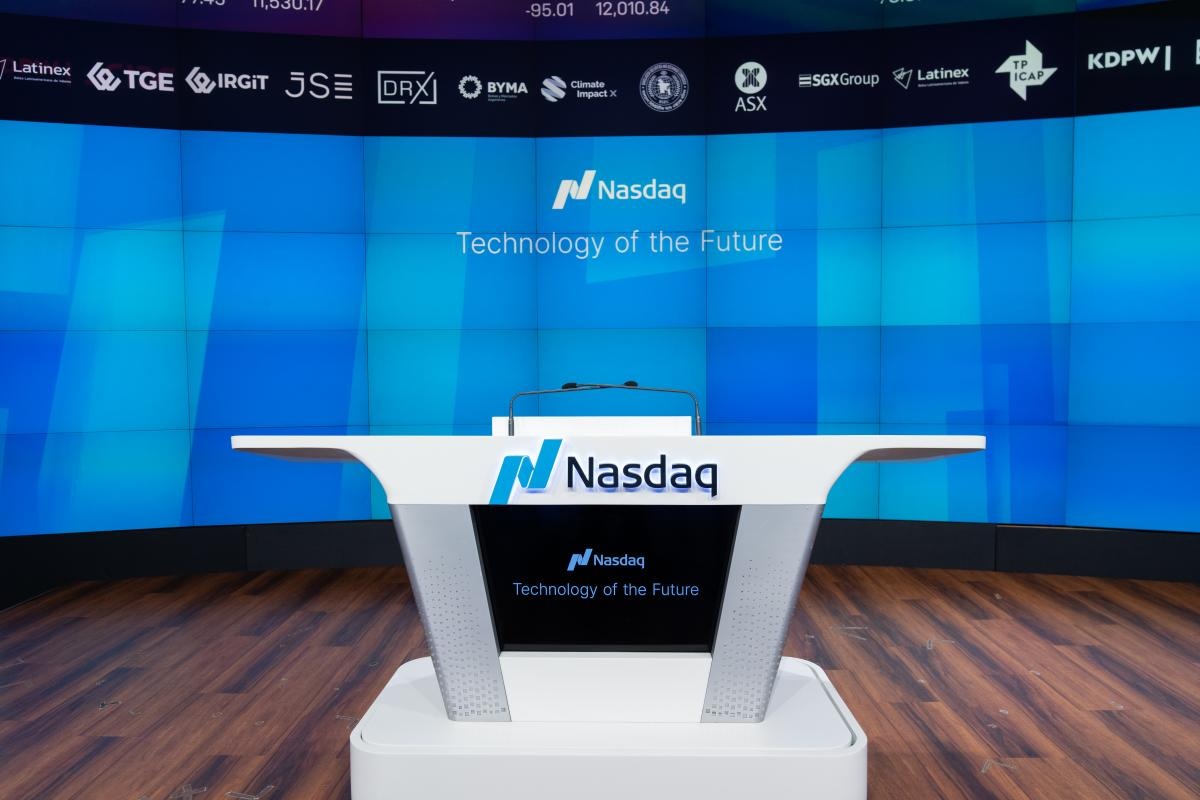
Nasdaq Posts Strongest Month Since Pandemic As AI Spending Frenzy Reignites Tech Rally

0

The tech-heavy NASDAQ Composite staged its most powerful monthly rally since the early days of the Covid pandemic, surging 15.29% in April as investor confidence returned to artificial intelligence-linked technology companies after a turbulent start to 2026.

The rebound marks a dramatic reversal for a sector that entered the year under pressure from concerns about stretched valuations, slowing enterprise software demand, and fears that rapid advances in AI could destabilize existing business models. By the end of March, the Nasdaq was still down roughly 7% for the year. One month later, it had swung back into positive territory, now up about 7% year-to-date.

The rally was largely driven by renewed conviction that the AI investment cycle remains far stronger and more durable than many investors had feared earlier this year. Earnings from major technology companies reinforced that narrative. Alphabet, Amazon, and Microsoft all exceeded expectations on revenue and cloud growth, easing concerns that corporate AI spending might be slowing after a period of unprecedented capital expenditure.

Alphabet rose 10% following earnings and finished April up 34%, marking its strongest monthly performance since 2004, the year the company went public. The scale of the gain underscores how aggressively investors are rewarding firms viewed as central beneficiaries of the AI economy, particularly those with dominant cloud and advertising ecosystems capable of monetizing generative AI tools at scale.

Amazon climbed 27% during the month as investors responded positively to continued acceleration in Amazon Web Services growth and management’s commitment to expanding AI infrastructure. Microsoft also benefited from sustained demand for cloud computing and enterprise AI services, cementing the view that hyperscalers remain the backbone of the global AI buildout.

Even where investor reactions were mixed, the underlying theme remained intact. Meta fell sharply after announcing a fresh increase in capital expenditure, but still ended the month nearly 7% higher. The reaction underlines growing investor sensitivity to the enormous cost of building AI infrastructure, particularly data centers, networking systems, and custom silicon.

That tension is becoming one of the defining features of the current market cycle. Investors remain enthusiastic about AI-driven growth, but are increasingly scrutinizing whether the billions being poured into infrastructure will translate into sustainable profit expansion.

The strongest gains were concentrated in semiconductors, where the AI boom continues to strain global supply chains and drive demand for advanced computing hardware.

Advanced Micro Devices surged 74% in April, while Micron Technology jumped 53% as investors bet that demand for memory and AI accelerators will remain elevated for years. Broadcom gained 35%, benefiting from its exposure to networking infrastructure essential for hyperscale AI clusters.

Nvidia, whose chips remain the foundation of most advanced AI systems, rose about 14%, its best month since June. While smaller than some peers’ gains, Nvidia’s rally is significant given its already enormous market value and dominant role in the AI ecosystem.

Perhaps the most striking move came from Intel, whose shares doubled in April, marking the strongest month in the company’s 55-year history. The rally suggests investors are reassessing Intel’s position amid efforts to rebuild its manufacturing capabilities and participate more aggressively in AI-related chip production after years of falling behind rivals.

The rebound in chip stocks also underpins a structural shift underway in technology markets. Earlier waves of digital transformation were driven largely by software. The current AI cycle is increasingly hardware-intensive, requiring massive investments in processors, memory, networking equipment, and energy infrastructure.

That shift is reshaping capital allocation across the industry. Major cloud providers are committing hundreds of billions of dollars toward AI infrastructure, while semiconductor companies are racing to expand production capacity amid persistent supply shortages.

The rally also comes against a backdrop of growing geopolitical tension and rising energy costs linked to the ongoing conflict involving Iran. Higher oil prices have injected inflation concerns back into markets, yet investors appear willing, for now, to look past macroeconomic risks in favor of AI-driven earnings momentum.

Still, questions remain about sustainability. Valuations across parts of the tech sector have returned to elevated levels, and the sharp rise in capital expenditure by major firms has revived debate about whether the industry may eventually face diminishing returns on AI spending.