DD
MM
YYYY

PAGES

DD
MM
YYYY

spot_img

PAGES

Home Blog Page 5036

Tekedia Partnership, Programs and Costs

0

Tekedia Institute serves companies (all sizes and types), professionals, students and governments through different training programs. We’re looking for the following:

  • Growth makers and partners (individuals and companies) to help our expansion across Nigeria, Africa and beyond. The compensation is via revenue share. We are seriously looking for partners with offline linkages, networks and structures in major cities as we are already well established online. 
  • Program Resellers: if you run a school or training institution, we have different licenses that will enable you to use our courseware to educate your students and learners.

If interested, email tekedia@fasmicro.com .  


You can find all Tekedia programs and their descriptions here.  In the tables below, we have provided the programs and their associated costs, along with how to pay.

Tekedia Programs and Costs

How To Pay for Tekedia Programs

After payment, contact tekedia@fasmicro.com for your login.

Tesla Hit By New Lawsuit Alleging Racial Abuse Against Workers

0

American multinational automotive and clean energy company, Tesla has been slammed with a lawsuit after fifteen Black former employees of the company filed a lawsuit, alleging that they were subjected to racial abuse and harassment at the factories.

The workers disclosed that they were subjected to derogatory racist slurs, and weird behavior from colleagues, managers, and human resources employees on a regular basis which was disclosed in a lawsuit filed in a California court.

Most of the harassment is said to have occurred at Tesla’s factory in California, which include the use of N-word and terms such as “slavery” or “plantation” or making sexual comments, which the lawsuit claims.

It also alleges that the company’s “standard operating procedures include blatant, open and unmitigated racial discrimination”. Also in the lawsuit, some of the plaintiffs were assigned to the most physically demanding past in Tesla or passed over promotions.

Tesla is currently facing at least 10 lawsuits on the allegations of racial discrimination, and sexual harassment, which includes one by a California civil rights agency. Although the automaker has previously denied all these allegations, stating that it has policies in place to prevent and address workplace misconduct.

Just recently, a federal judge in California issued a fresh trial on the damages Tesla owes to one of its black factory workers who accused the company of racial discrimination after he turned down a $15m award.

Also, a Tesla shareholder has filed a lawsuit accusing Elon Musk and Tesla’s board of directors of neglecting workers’ complaints and fostering a toxic workplace culture. It might interest you to know that this is not the first time Tesla is being accused of racial discrimination against its black workers.

The CEO of the company, Elon Musk who recently took over Twitter met with employees of the platform at a virtual meeting and stated that people should be allowed to say racist things. He also issued a disclaimer that despite the free speech policy, it doesn’t in any way mean Twitter would promote hate speech.

One would be tempted to ask, why would Elon Musk permit people to say racist things on the platform in the first place? Doing such alone, already goes against the free speech policy, all under the guise to promote racial slurs.

After his purchase of the platform, many black users expressed their concerns due to how Elon Musk treated black workers at his company, which they feel he would replicate on the platform. They disclosed that it is probably an end for black Twitter.

They recounted how in the past before his takeover, how Twitter had given them hashtags that turned into movements, like the #BlackLivesMatter and also the #OscarsSoWhite movement that led to pressure for changes at the Academy of motion picture arts and sciences.

With Musk’s takeover, they are skeptical that these movements will either be silenced or not amplified to gain massive recognition, due to his weird perception of blacks. Some have described Musk as a Billionaire BusinessMan with questionable ethics.

OSUN 2022: Voters Hint at Skipping APC, PDP as Parties Compete on Personality Disparagement and Ignoring Issues

0

With 14 days till the Osun 2022 governorship election, Positive Agenda Nigeria revealed in its weekly report on campaign monitoring that among over 1 million voters expected at various polling units on July 16 some are probably not considering the ruling party and the main opposition. This is based on the main conclusions from the eight week of monitoring of campaign activities of political parties in the state.

According to the report, “When PAN asked the potential electorate about policy programmes that would determine their votes, they identified education, economy, health, workers’ welfare and employment as well as security, infrastructure, agriculture and social programmes (in that order). That is, the majority of the sampled respondents (97.40%) would not vote for candidates and political parties that failed to address these issues and/or needs of the people in their campaign messages.

“We also found that candidates and political parties that disparage personality would not be considered during the poll. This is also applicable to political parties and candidates found to have engaged political thugs before and during the election to cause violence across the state. Though the percentage is small, some sampled electorate are likely to vote candidates and political parties that induce them with them money and materials.

“The findings have validated our hypothesis that the closer the 2022 election, the more the political parties use verbal attacks as a campaign strategy. The level of attacks kept on increasing from week six of the monitoring, though the eighth week recorded the highest level of verbal attacks. This is an indication that the political actors in Osun State still believe in using the strategy as a campaign approach to de-market their opponents and woo potential voters to the side of their candidates.

In addition, as the election approaches, this 8th issue found out that politicians defected from one party to another. Despite their defections, each party, particularly the two main political parties, showed confidence in winning the July 16 election. Nonetheless, they kept canvassing votes and dissuading potential voters from thuggery and violence before and during the election. Although the parties preached against violence in their campaign messages, one then wonders about the level at which the two main parties accused each other of sponsoring violence and thuggery in some areas of the state.

Although policy-engaged messages in week eight were at their lowest since the monitoring periods, messages around infrastructure as well as workers’ salaries, welfare and employment dominated (most of which emanated from the ruling party). However, Osun digital natives were more interested in information about road construction, security, health and education (in that order) throughout the week,” the report pointed out.

The report says during the week, vote-buying and electoral malpractice resonated. “Although the two main political parties accused each other of sponsoring political thugs and planning to disrupt the election with thugs, the main opposition political party accused the INEC and security agents of planning to rig the election in favour of the ruling party. Its accusations mostly appeared in national newspapers and on Twitter.”

Download the full report here

First Bank Launches Single-Digital Loan Scheme For Women, To Strengthen Gender Inclusion

0

In a bid to promote female entrepreneurs in the country, First Bank of Nigeria has announced the launch of FirstGem fund, a single-digit loan scheme, exclusively designed to put women at an advantage in contributing to the socio-economic development of the country.

The FirstGem loan scheme is designed for female-owned or partnered SMEs in the following sectors; Catering and Restaurants, Transportation, Beauty and Cosmetics, Confectionery, Packaging, and Agric/Agro-Allied.

The loan comes with an interest rate of 9% per annum, and a collateral-free loan that is available to the bank’s existing and prospective female customers. Customers can be able to access loans from N500,000 to N3,000,000.

Speaking at the launch of the First Gem fund loan scheme, the group head of First Bank Folake Ani-Mumuney had this to say, “we are delighted with the role our First Gem product plays in creating an avenue to enlarge the business activities and endeavors of female entrepreneurs across the country. Our First Gem value proposition offers real solutions to constraints encountered by female entrepreneurs and working professionals, as it exposes women to opportunities for the advancement of their business.

We implore every female business-minded individual to take advantage of the First Gem loan as it puts them at an advantage to contribute their quota to the economy”

This is not the first time First Bank is supporting women, earlier this year, it partnered with CDC/BII to support women and small business owners with a US $100 million credit facility. In Africa, the gender gap in access to financial loans is believed to be driven by women entrepreneurs’ self-perception.

Worldwide, women’s access to financial loans is disproportionately low. After serious of questions as to what fuels the gender disparity in access to financial loans that particularly affects women. It was discovered by a few economists that one of the factors that excluded women from the credit market is due to high-interest rates and collateral requirements.

High-interest rates discourage a lot of female entrepreneurs from applying for loans, also a lot of women do not own properties to be used as collateral to get loans, unlike their male counterparts.

Even when these women eventually gain access to these loans, they are faced with more stringent rules. Unfortunately, in Nigeria, the ability of women in accessing loans is discouraging, as their contributions to the economy have been undermined, also resulting in gross underestimation of women’s socio-economic contribution to the economy.

These women are faced with financial loan constraints at the small and medium-scale enterprises, which often limits them from expanding. Although the narrative is gradually changing, as a report disclosed that women in Africa are reported to be in charge of a majority of businesses on the African continent.

These women own and operate around one-third of all businesses in the formal sector and they also represent a majority of businesses in the informal sector. Women have been proven to be more entrepreneurial when they are exposed to opportunities, coupled with access to resources.

Despite the low access to financial loans, few women still thrive despite all odds to be successful. Some of them have dominated certain industries like Agriculture and Fashion. This shows that with greater access to financial loans, many Nigerian/African women entrepreneurs will see their businesses blossom which will also impact the country’s economy.

Anomie and the Political Disalienation of the Youth Population in Nigeria

4

From the brutish and nasty state of the dark ages, societies have evolved and experienced growth and development according to the strength of their institutions. To achieve social order and peace, societies set cultural goals and rewards and create institutions through which people must progress to attain those goals. The medical profession is an example of a cultural goal since it has economic benefits and social prestige, but for one to join this vocation, one has to pass through rigorous trainings and be certified as competent by a medical college or related institutions.

However, when people fail to achieve the cultural goals despite the institutionalized means, illegitimate means invariably develop from a forceful configuration of the people’s survival instincts which leads to social crisis and a breakdown in the regulatory structure of society. This is anomie, a state of chaos or the recalibration of society into its brutish, nasty state.

In 1897, Emile Durkheim, a French classical sociologist, first used the concept of anomie in his book (Suicide) to describe the prevalence of suicide in Europe due to the breakdown of the collective values which led to a feeling of despair and hopelessness in the people. However, in 1954, Robert K. Merton, an American Sociologist, developed the concept into a model that analyses the five personality types that respond to anomic conditions in the society which include; the Conformist, the Innovators, the Ritualists, the Retreatist and the Revolutionary.

According to Robert Merton’s Strain theory, the conformists play by the social rules and invariably seek the politically correct means of achieving the cultural goals. The innovators identify the blind spots in the social system and develop unconventional means of achieving the cultural goals. The Ritualists abandon all hopes of achieving the cultural goals due to a repeated experience of failure but still adopt the institutionalized means. The Retreatists become completely disinterested in both the cultural goals and the institutionalized means; they often come off as sociopaths withdrawn to drugs, alcohol, and suicidal thoughts. And the Revolutionary seek to disrupt the existing system and replace it with a perceived better system.

In Nigeria, several conditions of anomie have evolved into social crisis which make major headlines on the news and the social media on a daily basis. Incidences of increasing inflation, poverty and youth unemployment contribute daily to a surge in crime and want of peace in the country. Thus, from banditry to kidnapping, cyber fraud to drug trafficking and social media bullying to ritual killings, Nigeria has been included in the league of unsafe countries to live in the world, with the country ranking 146th out of 163 countries in the 2021 Global Peace Index, according to the Institute for Economics and Peace (IEP).

Consequently, there are a growing number of social innovators in the country who leverage technology and the new media to develop alternative means of economic survival. These emerging innovators are largely ensconced in the youth population and are mostly tech savvy with deep knowledge of the dark web. Cybercriminals such as the yahoo boys, the benefit boys, the black-hat hackers etc. belong in this disruptive cohort. Recently, a significant part of the cohort has developed political consciousness through an alliance with the revolutionary to influence a major upheaval in the country.

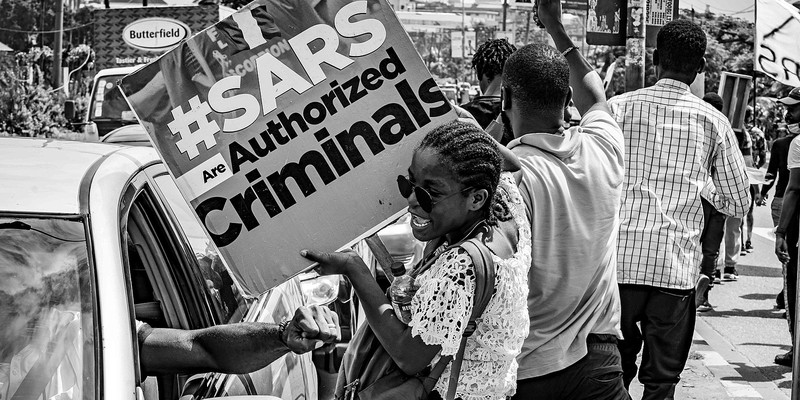
This played out during the End SARS campaign against the police brutality and oppression of the youth in October 2020. During the campaign, agitated Nigerian youths were able to massively mobilize and crowd-fund intellectual resources and foot soldiers through the social media platforms, especially Twitter, and the decentralized financial market’s block-chain system. Thus, the innovators exhibited the cunning of the fox and the revolutionary engaged the bravery of the Lion to execute one of the most successful campaigns in the history of social movement in the world.

On the 11th of October 2020, the Nigerian government dissolved the Special Anti-Robbery Squad. However, this was followed shortly by a national ban on crypto-currencies which according to the Governor of the Central Bank of Nigeria, Godwin Emefiele, were being used to sponsor illegal activities in the country. More so, on 5 June 2021, Twitter was banned in Nigeria over a deleted tweet of the president of the country from the platform but on 12 January 2022 the ban was lifted after Twitter reached an agreement with the Nigerian Government. However, many believe that the twitter ban was a reprisal of the government on the #endsars movement.

There are also indications that the #endsars memories will continue to shape the political consciousness of the Nigerian youth. One veritable example is the #PVC campaign that currently floods the internet and the social media platforms to influence a great number of the youth to get their permanent voters cards towards the 2023 general elections in the country. Never before in the history of Nigerian politics have Nigerian youths shown this much political awareness and social will to power, analysts remarked.

There are many ways to conceptualize the myriads of problems with Nigeria. But for the strain theory analysts, two conditions are evidently insidious to social progress in the country — one is the absence of accountability and the other is a crooked reward and punishment system which overtime have supplanted the moral fabric of the nation. These conditions are mainly due to the failure of the Government institution which determines and enforces the collective value system. The other social institutions such as religion, education and family can only struggle to perform their function of promoting the collective values where the Government institution has failed to enforce those values. Thus, social rehabilitation must be approached top-down — that is, from the Government institution down to the family institution.

Contrary to many people’s belief that social and attitudinal change must be approached bottom-up or from the micro to the macro levels, the strain theorists consider such an approach utopian due to the effect of the law of social gravity. Hence, it must be stated that the Nigerian Government needs to prune itself of corruption and promote sanity across its agencies to build a society where accountability and fairness in reward and punishment determine the political and socioeconomic relations. Only afterward can the bottom-up approach yield significant results.