DD
MM
YYYY

PAGES

DD
MM
YYYY

spot_img

PAGES

Home Blog Page 5105

Women Farmers In Nigeria Seek Seperate Budget For Their Farming Needs

0

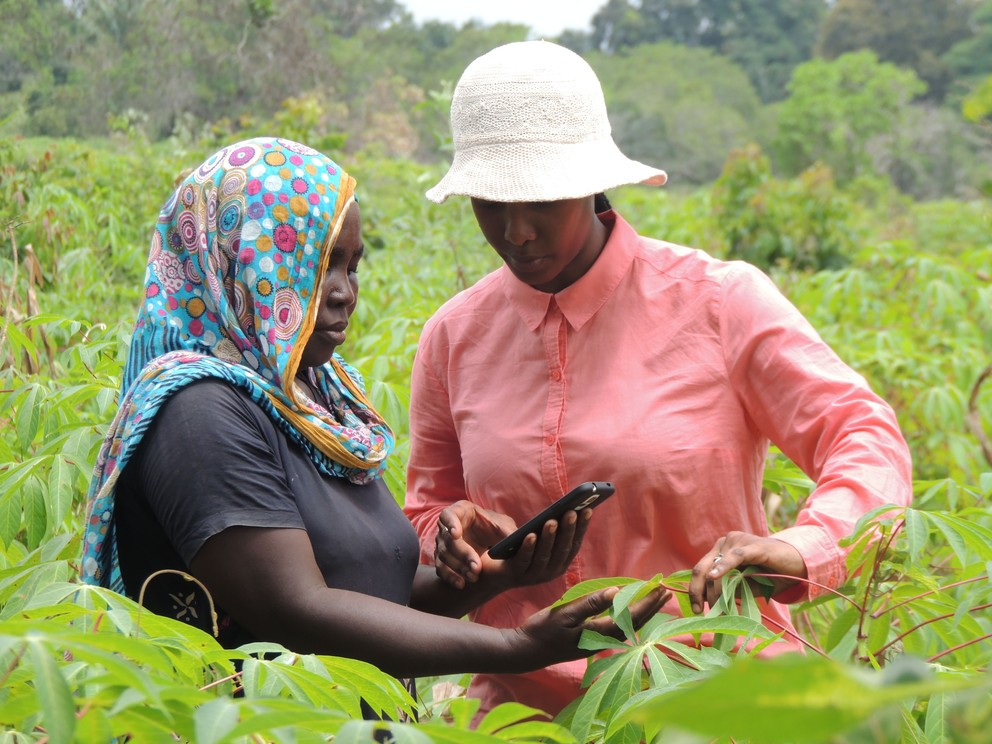
According to statistics, it indicates that in Africa, about 80 percent of the agricultural production comes from small-scale farmers who are mostly women. Even though women comprise the largest percentage of the workforce in the agricultural sector, they are still faced with challenges such as lack of proper funding, limited access to land, and other critical production factors and resources.

This financial funding gap in the Agricultural sector has prompted the Smallholder women farmers in the country, to call on the government to design a specific budget that takes care of the Agricultural needs which will enhance their productivity.

While speaking at the capacity building workshop to reposition small-scale women agro-business enterprises, the national treasurer of small-scale women farmers organization in Nigeria (SWOFON) Mrs. Hannatu Soni addressed the government on the need to include women in the agricultural budget allocation.

In her words, “We are advocating for a specific budget for women as that would make it easier to track where the funds go. Government can come to our aid by linking us to the proper markets and also by providing equipment used in processing the produce. We want to be empowered to process our products which will add value to our products, thereby having more income to take care of our families”.

Having noticed the unfair gender gap in the agricultural sector in the country, in a bid to tackle agriculture’s $15.6 billion gender financing gap, Nigerian fintech firm HerVest, founded by Solape Akinpelu has been on a mission in empowering female farmers in the country.

Apart from providing credit financing for women farmers In Nigeria, HerVest is currently in partnership with different CBN licensed platforms, such as flutterwave, VFD Microfinance Bank, and FBN QUEST which enables the start-up to operate an easy-to-use digital platform for savings and investment.

It is interesting to note that HerVest has impacted over 5,000 female farmers across the different states in Nigeria, with ongoing efforts to onboard more female farmers across the country.

Indeed through her support, a lot of female farmers who contribute over 70 percent of Nigeria’s food production, can produce more and ensure proper food security in the country. It is really disheartening that women in the country are faced with a financing gap in the agricultural sector, meanwhile, experts have said that female farmers are the backbone of the development of rural and national economies, as they comprise 43 percent of the world’s agricultural Labour force.

It’s high time such gender bias is jettisoned because women are the majority players in the agricultural sector. Research has shown that women hold more traditional knowledge of water adaptation mechanisms of traditional farming practices that can enhance crop yield and help agricultural activities to adapt to adverse conditions such as flooding and the like.

Therefore, poor funding of female farmers in the agricultural sector will no doubt affect the production of food in the nation, which might spell doom for the nation when a food crisis arises. According to the popular saying, ” What a man can do, a woman can do better”, indeed women according to statistics have proven that they are even capable of superseding the male farmers.

Such an unbalanced gender financing gap in the Agricultural sector in Nigeria will only do more harm to the nation’s economy because these women are faced with unnecessary constraints that reduce productivity output. No wonder the sector continues to underperform.

Women around the world are already making remarkable giant strides in the agricultural sector, thereby transforming agriculture to be more resilient and reliable. Proper allocation of funds to female farmers in Nigeria will not only increase food production in the country but also ensure food security which will make the country immune to food crises.
Atiku Gets PDP Flag for Presidency – And The Battle Ahead with Obi, Tinubu

5

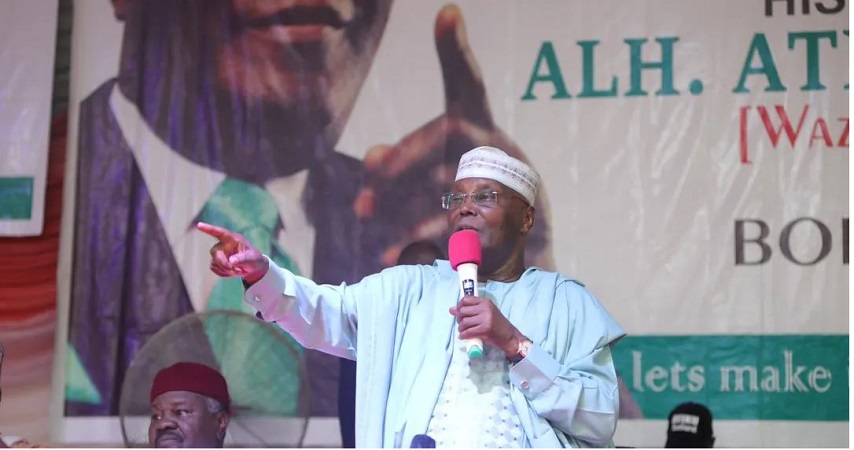
As expected, Atiku Abubakar, Nigeria’s former Vice President, will hold the PDP presidential flag in the 2023 election. As I monitored this all day, when Aminu Tambuwal, governor of Sokoto State, asked his delegates to support him, I knew Atiku had a strong chance. Without Tambuwal, only Nyesom Wike, governor of River State, was remaining since former Senate President, Bukola Saraki, was not really there. (Atiku, Wike, Saraki received respectively 371, 237 and 70 votes).

I had predicted that Atiku would be the 2019 nominee, and even last week, I noted that it was for him, for 2023, when the party refused to zone it. From my permutation, there was really no reason NOT to zone it, if Atiku was not interested! PDP designed everything for Atiku.

In APC, I had noted that Bola Tinubu would get the ticket and would likely pick the governor of Ebonyi State, Engr David Umahi. In the Oct 2018 piece, I had noted that Engr Umahi will win governorship in Ebonyi but will decamp to APC within months: “The present governor of Ebonyi state will likely be his running mate. Engr David Umahi will win with PDP in 2019 but will decamp to APC shortly.”

That APC postulation will change now. With Atiku holding it for PDP, even Bola Tinubu’s candidate is severely wounded. (I had assumed, naively, that PDP would maintain its zoning policy of North and South.)  So PDP is going cold in the Southeast but may be strong in Southsouth as Atiku will likely pick Wike as his running mate.

Something big will happen to the APC ticket now. They will need to defend North and also play offense in the South since it is evident that most voters will move PDP in the north. 

From all angles, Tinubu will have to make a decision: expect him to call Peter Obi, the most popular politician in Southeast, for suggestions. I expect a third force because there are many victims that will go on a political revenge here.

Nigeria’s former Vice President, Atiku Abubakar, has again emerged the presidential candidate of the Peoples Democratic Party (PDP).

Mr Abubakar defeated 12 other candidates in a keenly contested presidential primary election held at the Moshood Abiola Stadium in Abuja on Saturday.

Of the over 763 ballots at the election, he polled 371 votes while his closest challenger, Governor of River State, Nyesom Wike, came a distant third with his 237 votes.

Nigeria’s former Senate President, Bukola Saraki, scored 70 votes to come a distant third while the Governor of Bauchi, Bala Muhammed, came fourth with 20 votes.

While Atiku’s victory at the Abuja stadium Velodrome was his second successive attempt, it also marked his fifth shot at the presidency. He has had other unsuccessful contests for the seat under both the All Progressives Congress (APC) and his current party, the PDP.

The Adamawa-born politician also secured the ticket of the PDP in 2019 but lost at the general elections to the incumbent, President Muhammadu Buhari of the APC.

The former vice-president will again face whoever emerges from the forthcoming presidential primaries of the APC.

Comment on Feed

Comment 1: SE do not have voting strength. Their total votes is equivalent to just one state’s votes(Kano/Rivers). The highest total votes of SE was in 2019 and was almost equivalent to the votes of Kano/Rivers. Moreover, looking at the handwriting on the wall, Atiku is picking someone from SS as VP.

My Response: “SE do not have voting strength. ” – You are actually wrong. The most potent voting block in Nigeria is SE. After the indigenous tribe, the next ethnic block in all regions in Nigeria outside SE is Southeast. Your model is not supported by data. Those votes you count in Lagos belong to SW have a HUGE component of SE. So, do not look at the absolute votes in SE, look at the spread across Nigeria.

Open Banking in Nigeria – A New Tekedia Mini-MBA Course

0

Open Banking Nigeria played a major on the latest redesign in our banking ordinance. Yes, the Central Bank of Nigeria (CBN) has published operational guidelines for open banking, a framework which will make it possible to securely share relevant customer data, via APIs, in the ecosystem. We expect this playbook to have impacts in the financial sector.

Consequently, Tekedia institute Mini-MBA has added a course on Open Banking in Nigeria for our next edition which begins June 6th. Open Banking Nigeria’s Chigozie Madubuko and Malaika Ademola-Majekodunmi will teach the course. Come and understand the promises of open banking and how it could affect your business, career, etc.

We invite you to the modern school  where courses are relevant, fresh and useful. Register here.

Nigeria Activates Digital Tracking System For Passport Application

0

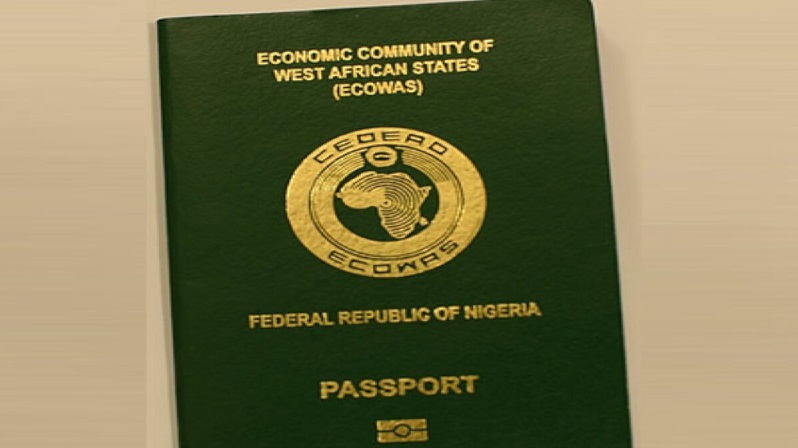
The Federal Government of Nigeria has activated a passport tracking system that allows applicants to monitor and know the status of their application online.

The Minister of Interior, Rauf Aregbesola disclosed this during the passing out parade of the 47th Basic Superintendent Course, 2021/2022 at the Nigerian Immigration Service (NIS) training school in Kano State on Tuesday, 24th May 2022.

He said, “One of the challenges of the NIS in the recent past is in the issuance of the Nigerian passport. I am, however, happy that we have overcome this and have now put in place a seamless passport administration system.

“We have also activated a tracking system that allows applicants to monitor and know the status of their application online.”

The minister who was represented by the Commissioner of the Civil Defence, Customs, Fire Service and Immigration Board, Emmanuel Bassey further stated that before the end of the year, the NIS would boast of a fully digital application system that would remove any stress in the process.

“Let me reiterate my appeal to Nigerians to follow laid down regulations on passport application by going through the NIS online portal.

“Those who go through touts and unscrupulous NIS officials are undermining our effort to eliminate corruption and institute a stress-free application system.

“It is, therefore, your patriotic duty to go through the official channel and avoid any practice that subverts the due process.”

The Minister hinted that their engagement with the NIS reaffirmed the government’s commitment to strengthening internal security of which the country’s borders were an integral part.

According to him, without secure borders, no security measure could work, saying external criminally-minded persons can infiltrate the country and escape at will if the borders are not well secured.

He equally observed that diseases spread from one country to the other through cross border movements.

Aregbesola urged the personnel to put the training and indoctrination to use in manning the border.

“You need to know what the organization you have joined, the NIS, is all about. As you have been taught, your main mission is to man the nation’s borders.” he added.

He therefore lauded President Muhammadu Buhari for his support to the ministry and by extension, the NIS.

The Minister also commended the Acting Comptroller General of Immigration (CGI) of the NIS for his professionalism, diligence, patriotism and the sterling way he had handled the affairs of the Service since his assumption of duty.

Earlier on the occasion, the acting CGI, Idris Jere advised the officers to always be guided by the rules governing the operations of the Service premised on honesty and professionalism.

Jere thanked the Minister of Interior and the Government for the continuous support accorded the Service in its operations and manpower development activities.

Speaking also, the Commandant of the School, Comptroller Ado Rano, stated that the 548 cadets were taken through modern Border Security and Migration Management training, including physical drills to make them fit for the tasks ahead.

He stressed that members of the directing staff of the school demonstrated uncommon commitment during the course and thanked the CGI for the opportunity.

It’s noteworthy that heads of various security agencies, traditional rulers and members of the public graced the occasion.

The introduction of a passport digital tracking system is indeed a welcome development, to assert the least. It couldn’t have come at a better time than now the global community is drastically switching into the digitized sector.

However, such a measure shouldn’t stop at merely pronouncing its existence. Hence, the government and all relevant authorities, such as the NIS, must make efforts to ensure apt implementation as well as adequate sustenance in the long run.

Buhari, African Leaders Donate To African Union Over Humanitarian Issues

0
African Union

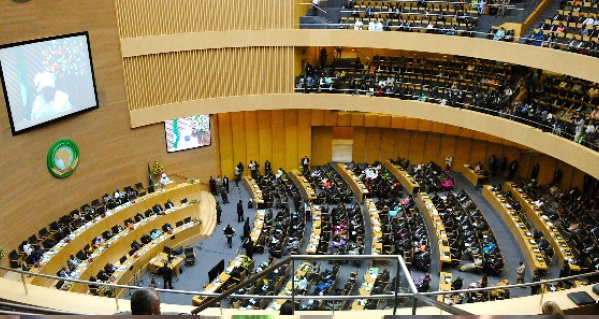
President Muhammadu Buhari has pledged to donate $3 million to the new humanitarian agency set up by the African Union (AU). 

He made this known on 27th May 2022 at the ongoing AU Summit in Malabo, Equatorial Guinea.

The summit tagged ‘extraordinary humanitarian summit and pledging conference’, as well as the ‘extraordinary summit on unconstitutional changes of government in Africa’, is being held from May 25 to 28, 2022.

According to a statement by the Special Assistant to the President on Media, Garba Shehu, at the 16th AU extraordinary session, Buhari remarked that more than five million people had been displaced in the Lake Chad region, with 70 percent of them mostly Nigerians.

The president said in tackling this menace, his administration created the Ministry of Humanitarian Affairs, Disaster Management and Social Development, to respond to the growing issues relating to displaced persons.

“This is in line with the Kampala Convention for the protection and assistance of internally-displaced persons.  I am glad to inform your excellencies that the Ministry of Humanitarian Affairs of Nigeria has continued to live up to its mandate in responding quickly to all situations of displaced persons and disaster management.” he said.

Reacting to the establishment of the new humanitarian agency by the AU, Buhari opined that the development would help Africa to effectively coordinate and respond to crises on the continent.

The president therefore pledged to donate $3 million for the commencement of operations at the newly-created AU humanitarian agency, as he called the attention of the Union to rising global warming issues across the world.

Having stated that Africa needed to focus on preserving its aquatic and ecological systems, Buhari said, “We cannot deny the fact that we have a very dangerous humanitarian crisis in our hands.”

“The rationale for the establishment of this agency is to forge a common African position on humanitarian effectiveness and to create an appropriate continental architecture to effectively respond and coordinate humanitarian crises on the continent.

“You will agree that this conference could not have come at a better time, considering the challenges posed by the increasing rate of Internally-Displaced Persons, Refugees and Returning Migrants, to our various countries and the continent at large.

“As you are aware, Mr Chairperson, the world is confronted by emerging threats, such as climate change, resulting in global warming, rising levels in waters, in some climes shrinking of rivers and lakes.

“All these lead to distortions in our aquatic and consequently ecological systems.  Conflicts, violent extremism and terrorist attacks, including herdsmen-farmers clashes and banditry lead to the displacement of whole communities, thus rendering thousands of people homeless.”

On his part, the President of Senegal and AU Chairman, Macky Sall also pledged $3 million on behalf of his country and asked other African leaders to contribute to the establishment of the agency.

In a related development, the President of Equatorial Guinea, Teodoro Mbasogo who hosted the summit, also promised the sum of $4 million. He said half of the money would go to the agency, while the other half would go to Mozambique.

The gesture as recorded at the AU Summit was commendable and a way forward. But the major plight being usually faced by the continent remains misappropriation of public funds, hence the need to create a measure that would ensure accountability in the long run.

However, it could be mind-boggling that Buhari has been busy donating to several for a across the globe while the various unions in Nigeria’s education sector remain on strike.

African leaders must acknowledge they are expected to tackle the numerous internal crises bedeviling their respective countries before considering the external ones, so their followers wouldn’t end up casting spells on them.