DD
MM
YYYY

PAGES

DD
MM
YYYY

spot_img

PAGES

Home Blog Page 5114

Nigeria’s Presidential Zoning Limit

4

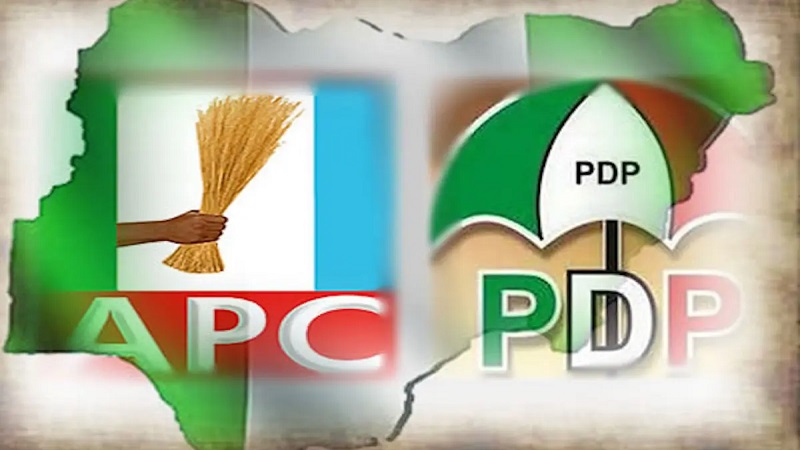
APC should not be pressured to zone its presidential ticket to the South since Southwest and Southsouth are unable to subzone it to Southeast. Indeed, no politician from Southsouth and Southwest must hide on equity and fairness while arguing for zoning APC ticket to South when the same people cannot subzone to Southeast.

It is the same call for PDP: when it refused to zone it to the Southeast, there was no need wasting time zoning it to the South. Atiku has the ticket now.

I expect APC to keep this in the North because Southsouth and Southwest provided strong reasons that Nigeria has “matured” and “outgrown” zoning and quota system. This is a major precedent. At the end of everything, I want to see this applied in all domains of Nigerian existence including admission, business permits, etc where quota, natural and artificial advantages, comparative disadvantages, etc would be muted and discarded for the “best” to emerge. 

I am beginning to feel like the 2023 election may begin the turning point in Nigeria. Kill zoning for politics. Kill quota in everything. Let competitive spirit return in the land.

Comment on Feed

Comment 1: Prof don’t you think you’re being unfair to the other south zones?They can’t be held responsible for the failures of that zone to get their act together.When Buhari contested,there was nothing like this zone in the North must get the ticket.Let the SE fight for it.

My Response: You are rewriting history. The SE politicians are just like SW and northern politicians. SW did not support OBJ, that did not stop him from winning. Northern delegates voted for GEJ in 2011 even when they had many from the North; they voted for GEJ.. Everything you wrote against SE is disinformation. It would be bad if all the SE politicians are aligned 100% – I am happy some are in APC, PDP, etc.

Buhari did not win because of North; he won because of SW. Never think it is about any region getting “act together”. If North decides it is SE, it will happen irrespective of SW. SW decided it was North in 2015 and it happened. That is how it works.

… He is making it look like Kwakwanso was not running when Northern delegates voted for Jonathan. He was making it look like Buhari would have won without SW or there was a magical strategy on unification why Buhari won. That SE delegates voted for other regions is typical: Northern delegates voted for GEJ and Nigeria voted for OBJ even when SW did not accept him. 

Comment 2: Ndubuisi Ekekwe , what do you think of this statement credited to former minister of Aviation – Osita Chidoka?… “No other group did more damage to the idea of zoning than the 80 out of 95 Igbo delegates to the last Peoples Democratic Party (PDP) convention who cast their votes against Igbo aspirants. The 80 delegates and their sponsors, in a tragic display of lack of group consciousness and primacy of personal interest, sent the country a clear and loud message: zoning is not an issue dear to Ndigbo. Igbo PDP delegates told Nigerians that a President from the Southeast is not a priority and not an issue of justice and fairness. The country heard them”. 

My Response: Chidoka is wrong and I think his political sagacity is limited. I would be more worried if Igbo delegates just vote for SE. The Northern delegates in 2011 voted for GEJ against their own. Nigeria voted for OBJ in 1999 even when SW rejected him. Chidoka should see the big picture. We cannot win by being local. We win by arguing at the big picture. That picture is that Nigeria must consider since we cannot win via “numbers” because they are not there. We need our own quota. Period.

Comment 3: Prof ,you forgot to add that USD changed hands for the votes that went to the north . So the south east was a major beneficiary of GEJ regime ,so they should have combined to give the south south , their votes and make demands. What do l know about politics sef !

My Response“So the south east was a major beneficiary of GEJ regime ,so they should have combined to give the south south ,” – incorrect. You would have said that SE was the political beneficiary of GEJ govt but went ahead to build other regions, driving on the Igbo spirit of not to be seen as favouring itself. Okonji Iweala, Pius Anyim, etc who held all those big positions for 5 years built zero road, rail tracks, airport, anything in SE but of course developed other areas. That is the Igbo spirit so that we do not take advantage to corner opportunities. In Igbo tradition, the elders serve drinks to Nwa-ada before the sons of the soil.

On SE delegates, that is not a problem. The Northern delegates voted for GEJ in 2011 even though they had politicians from the North. This is typical in politics. SW rejected OBJ but Nigeria elected him. Can APC pick Onu, Umahi and do what PDP did in SW for Obj? That is the issue.

Comment 4: Prof. the two references both in 1999 & 2011 are won through the ballot even though we all knew it wasn’t free and fair due to the massive electoral malpractice but all the candidates campaigned/lobbied in almost all the 36 states of the federation. The only time we can say the Nigerian presidency was negotiated was when IBB handed over to Shonekan.

One particular region in the south has created hatred even among the Southerners claiming marginalization.

We all know the election process everywhere in the world is about lobby and campaigning.

My Response: Elections in Nigeria are mostly won at the primaries, out of the powers of the citizens! Hope you know that. Delegates determine more than 90% of everything. (In America, citizens determine 100% because it is OPEN primary.). 1999 was negotiated as Nigeria decided in all major parties to nominate SW flagbearers due to Abiola case.

In 2011, GEJ was anointed and all delegates, north and south voted for him. SS governors were not even happy. But Nigeria overruled them.

Without Tinubu who brought SW, Buhari would not have won in 2015. The delegate system reduces the choices and 2 parties use that to shape the options. If APC nominates Ndubuisi Ekekwe tomorrow, magically that is the option even though you have your preference. That is the power of delegates. You general ballot has limited impact as it is a secondary phase reaction.

Nigeria 2023: PDP Throws Presidential Ticket Open, No Zoning

A short story about automating your business payments and processes

0

I stumbled on something in a Facebook business group and thought there were one or two lessons we could draw from it.

Mr. A works a regular 9-5 job and has a small drink store on the side, which he attends after work hours and on weekends. He has a salesperson who works full-time while joining in after work and on weekends. Mr. A noticed that from his sales records and inventory that the store records a lot more sales when he is around than on those days he is unable to make it to the drink store.

At first, he dismissed it to mean that people get more drinks in the evening after work and on weekends, but the situation gets worse such that he has to question having a salesperson at all. His inventory shows him that his salesman is not stealing his goods, of course, but something seems to be wrong somewhere. Why keep the store open from 9 am to 6 pm with only four sales, where you make almost a hundred sales from 6 pm to 10 pm? One weekend, Mr. A decides to install a CCTV device in the store without informing the salesperson. And over the next two weeks, he finally figured out what was going on.

The CCTV monitor showed Mr. A that his salesperson makes many sales during the day without entering them into the sales record books. He then leaves the store between 4:00 pm and 5:00 pm to buy those drinks at a wholesale outlet close by and replaces them, pocketing the difference for himself. He could sell six bottles of wine and replace four while putting 2 in the sales record. Devilishly brilliant, huh?

This may not qualify as outright theft, but the fact is, his employee was robbing him of his business profits. He pays the rent, utilities, and even the salary for the employee, without having enough income to justify the investment. And given that this employee stays in the drink store for almost 10 hours, you can imagine the magnitude of the loss for Mr. A.

A lady recounted how her salesgirls were inflating the price of frozen foods when she was not around and pocketing the difference. She only got to know because some of the customers complained about the price difference. In this case, they were not stealing from her. They were adding a little something for themselves, but this was injuring her business integrity.

Many small and medium businesses find themselves in the same ditch. Some may never even figure out what is going on. They may feel that business is not moving as smoothly as it should. This is not limited to companies selling products; even service providers find themselves in this cage. (I will talk more about that in a subsequent post).

Automating business payments and records is something that needs not be preached. Everyone already knows that it is essential to keep business records, but are you still using books and papers? Do your customers get a receipt when they make payments? Or do you package their goods and send them on their way?

Why are your payment and processes not wholly automated if you sell services or digital products? Why have you not installed a system where the goods can be scanned and documented and a receipt generated? You may not get an entirely foolproof method, but automating payments and procedures will reduce the incidence of fraud and theft and make it easier to do your inventory. We will talk more about the part of the services in a subsequent post.

Do you have a similar experience? Please share what cases of employee theft you have seen. How are you using automation to improve your business output? I will have my eyes on the comment section.

Investors’ Interests In Nigeria Decline Amid Rising Insecurity

0
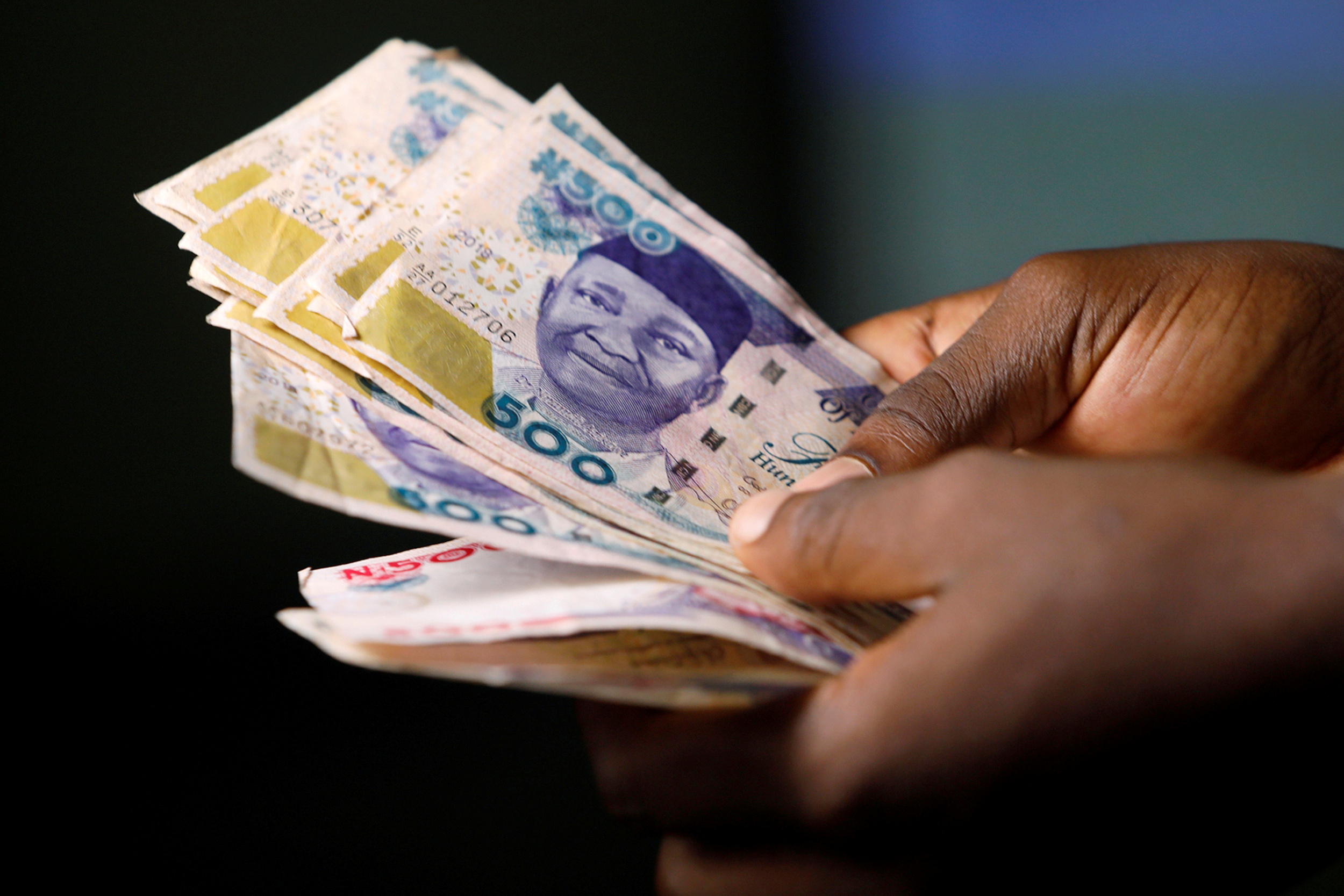
Nigerian naira banknotes are seen in this picture illustration, September 10, 2018. REUTERS/Afolabi Sotunde/File Photo

The Nigerian investment promotion commission (NIPC) has revealed that the value of investment announcements in the first three months of 2022 was $8.41 billion. This is a 69 percent or $2.58 billion lower than what was announced in the first quarter of 2021.

The rising effects of insecurity in Nigeria has also affected the ease of doing business in the country, as a 2019 world bank annual ratings on the ease of doing business ranked Nigeria 131 among 190 countries.

The challenge of insecurity keeps getting worse each passing day, which has no doubt constituted a threat to lives in the country. Such challenge has hindered business activities and has also discouraged local and foreign investors from investing in the country which has stifled and retarded the economic development of Nigeria’s economy.

A world bank report suggested that many Nigerians had fallen below the poverty line adding that the effect of the insecurity challenges took a toll on the country’s economy. The insecurity crisis greatly affected the cost of production which disrupted companies from planning for the future.

Such a security challenge has led to the emigration of companies and the shutting down of local manufacturing companies. This will no doubt pose a very big challenge to Nigeria’s economy because when companies leave the country, production is also taken away which will negatively affect the country’s GDP.

Domestic investment has also been affected, for example in the agricultural sector, farmers cannot cultivate on farmlands for fear of being killed which has disrupted agricultural activities leading to the reduction in the production output that is already harming the country’s economy as well as threatening food security.

In oil-producing states, the insecurity challenge has led to the exit of some oil companies. Oil theft, pipe vandalism, and illegal refinery has hindered Nigeria from contributing its quota to the Organization of Petroleum Exporting Countries (OPEC).

The insecurity challenge has also given a negative perception of the country to foreigners which have seen investors lose interest in wanting to do business in Nigeria as the risk involved is so enormous. The disheartening thing about insecurity is that it has a ripple effect on almost every sector in the country.

It has no doubt affected the creation of jobs and the generation of tax revenue. Unemployment rate has increased because some of these companies that left the country, had some Nigerian citizens who were working for them, and now due to their departure, these individuals are left jobless.

In the capital market, insecure investments with foreign investors pulled out about N1.64 trillion from the market in three years. There has been a huge outflow of capital that has led to concerns about their impact on the Nigerian economy.

Analysts have predicted that the precarious state of the stock market could worsen if the factors impeding the nation’s economic growth are not tackled immediately. It’s high time the government tackles the insecurity crisis that is ravaging the whole country, which is already affecting the country’s economy as well as preventing foreign and local investors from investing.

Unfortunately, till date, there has been no visible measures taken or put in place to abate the insecurity challenge across the four corners of Nigeria. For as long as the prevailing insecure environment subsists, the country will continue to reap its unpleasant consequences.

Nigerian Court jails Chinese for two years for Naira mutilation: The Ratio Decidendi.

0

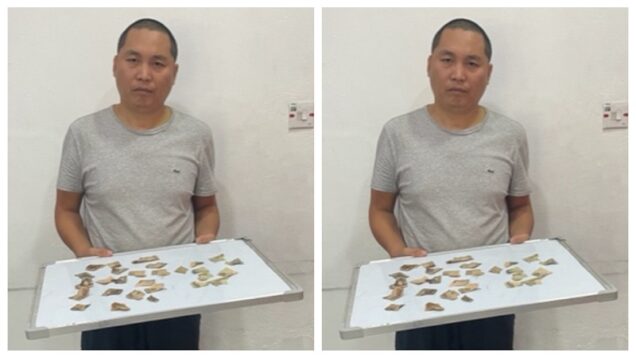
It was reported in the news last week that on Tuesday, May 31, 2022, the Federal High Court sitting in Ikoyi sentenced a Chinese National to two years imprisonment for the offense of mutilation of the Nigerian currency.

Questions have been thrown by laymen and those interested in learning about the ratio decidendi behind the prosecution and sentencing in this case; can currency mutilation land anybody in jail? Is mutilating the Nigerian currency a jailable offense under any Nigerian law?

This is what the law says in this regard and hence what formed the legal backing behind the prosecution and conviction of the Chinese national.

The convict was arraigned on a four-count charge bordering on tampering with the Nigerian currency, an offense contrary to and punishable under Section 21(1) of the Central Bank of Nigeria Establishment) Act.

One of the counts reads: “That you, Li Lei Lei, on or about the 17th day of May 2022, at the Murtala Muhammed International Airport, Lagos, within the jurisdiction of this Honorable Court, tampered with One Thousand Naira (N1,000) Note, with serial number 947882 issued by the Central Bank of Nigeria and thereby committed an offense contrary to and punishable under Section 21(1) of the Central Bank of Nigeria Establishment) Act, Cap C4, Vol.1, Laws of the Federation of Nigeria, 2010.”

Section 21(1) of the CBN act provides thus: A person who tampers with a coin or note issued by the Bank is guilty of an offense and shall on notes and coins imprisonment for a term not less than six months or to a fine not less than N50,000 or to both such fine and imprisonment.

Subsection 2 of this section went further to explain what the previous subsection meant by the phrase “tampering with currency” and this is the explanation:

(2) A coin or note shall be deemed to have been tampered with if the coin or note has been impaired, diminished, or lightened otherwise than by fair wear and tear or has been defaced by stumping, engraving, mutilating, piercing, stapling, writing, tearing, soiling, squeezing or any other form of deliberate and willful abuse whether the coin or note has or has not been thereby diminished or lightened.

On this note, a person is guilty of tampering with the Nigerian currency when the person has treated the currency in a dishonorable manner or has disrespected or abused the currency in any way like squeezing it, writing on it, piercing it, defacing it, spraying it, stumping on it, etc. Any act whatsoever done to the Nigerian currency which is dishonorable or has subjected the currency to abuse is said to be tampering and that is an offense that carries a jail term of not less than six months as provided under S 21(1) of the CBN act.

The Nigerian currency is a symbol of identity and it is to be treated with utmost respect and honor, any disrespect or dishonor done to the Nigerian currency is said to have been done to Nigeria as a nation and this is highly frowned upon and punished by law.

Do This And Your Bank/Fintech Will Reduce Occurrence of Common Frauds

0

I just read this piece where the author lamented the increasing fraud in the digital payment ecosystem. First, Nigerian banking security  from the customer-facing side is one of the most intriguing banking structures in the world. It is only in Nigeria that you have to put your debit card number, expiration date, last 3 digits and then password to pay for most items. Nigeria’s banking system is more secure than even the US banking system. I mean, we all post our bank account numbers online in Nigeria! Our banks are really solid on security: companies do not post account numbers online in America.

Yet, Nigeria needs to do a really good job in the backend. And that means on the bankers and the systems they work on! If you do not clean that weak point, you expose the bank to vulnerability.

As a former bank’s system automation engineer with admin access to the bank’s general ledger, how you structure logs – no matter how benign – will help in hardening your system. This goes beyond spending more money on technology. 

The #1 rule is this: under no circumstance should you allow a “generic” user which many people can use to login into the bank’s architectures. (In the bank, my responsibility included deepening digital security from the software side.)

Banks and fintechs:  tell the IT unit to do one thing: deactivate all generic users in branches and HQs, and create the accounts with approved privileges for each user.  Branches are some of the weakest links in a bank’s operations. The server is kept in the branch system room and banks with poor security awareness create one user with admin rights. You need that user to do many things like backup, etc. The problem is that many people end up having access to that account (think of Head of Operations, Branch Internal Control, Branch Manager, Regional IT, etc).

Because anyone can login and do whatever he/she wants via that account, accountability post fraud becomes challenging. To deal with that, systems must apportion rights to users with privileges they need and delete generic users. Then have a solid logging structure which ensures you can trace what everyone is doing when logged in. 

If you execute Rule #1 with an all-log regime; those debit card frauds, etc will drop.

Banks Customers Lament Increasing Fintech/Banking Fraud