DD
MM
YYYY

PAGES

DD
MM
YYYY

spot_img

PAGES

Home Blog Page 5119

Microsoft Announces Plan To Support 10,000 Start-Ups In Africa

0

Under the aegis of its recently established Africa Transformation Office (ATO), the global Information Technology (IT) giant, Microsoft, in March 2022, graciously announced new initiatives to accelerate the growth of 10,000 African start-ups and fast-track investment on the continent’s ecosystem over the next five years.

Microsoft’s recently launched global Founders Hub will now be available to African start-ups through the ATO.

It’s noteworthy the Founders Hub is a self-service venture that provides start-ups with a wide range of resources, including access to mentors, skilling content, tools like Microsoft Azure and GitHub, and go-to-market and business support.

Microsoft is also creating new partnerships with accelerators and incubators across Africa, including Grindstone, Greenhouse, FlapMax and Seedstars to provide industry-based start-ups with access to markets, technical skills and funding opportunities.

These partnerships would provide African start-ups with access to skilling programs and markets, including opportunities to co-sell with Microsoft, as well as access to technology, with support from Microsoft’s engineering and product teams for co-innovation opportunities.

To enable start-ups to rapidly scale through using investment funding, Microsoft is establishing industry alliances and partnerships with venture capital investors that would facilitate access to $500 million in potential funding for African start-ups.

This funding would reportedly come from a network of venture capital investors, who would dedicate a portion of their financial support to start-ups in the Microsoft network.

It would interest us to note that Microsoft had already established partnerships with several key venture capital investors, including Banque Misr, Global Venture Capital and Get Funded Africa, and the intention was to grow this network of venture capital investors in the next five years to increase funding and enable them to scale up and drive economic growth.

Microsoft believes the vibrant African start-up market is well placed to become a cornerstone of the continent’s digital economy, supporting local innovation through relevant solutions to societal challenges.

The Managing Director of the Microsoft ATO, Wael Elkabbany said, “Investments into Africa’s start-up ecosystem are growing at an exciting pace. According to the Organisation for Economic Co-operation and Development (OECD), there are more than 640 active tech hubs across Africa, accelerating innovation and creating employment, particularly among the youth.”

“However, currently the African start-up market represents less than one per cent of total investments worldwide. This needs to change.”

He reveals that Microsoft’s endeavour to dramatically scale its impact would be driven by an overarching strategy with three key focus areas.

Elkabbany concludes, “There is huge potential for Africa to become a thriving hub of digital innovation on the global start-up landscape. Our ambition is to see an explosion of local inventions that will contribute positively, not just to Africa’s digital economy, but to global society.”

On his part, the Start-ups Lead of the Microsoft ATO, Gerald Maithya further disclosed that Microsoft was establishing partnerships with venture capital investors, primarily those with global reach and regional bases, who are interested in one or more regions within Africa.

He said, “Our goal in establishing these partnerships with venture capital investors is to extend the network of potential partnerships between Microsoft, venture capital investors and start-ups, thereby increasing the funding made available to eligible start-ups.”

“We understand that each start-up is unique and exists beyond the limitations of a one-size-fits-all partnership model. This is why Microsoft will tailor each partnership to the needs of individual start-ups, providing support and access – whether to technology, markets and co-sell opportunities, funding or digital skills – to enable them to grow and contribute to the wider economic growth of Africa.”

What was more of interest in Microsoft’s report, where it mentioned that ‘currently the African start-up market represents less than one per cent of total investments worldwide’ having acknowledged that the continent could boast of more than 640 active tech hubs.

This is to say that the concerned authorities on the African continent aren’t doing enough as expected of them, hence the compelling need to expedite actions in a bid keying into the needful.
Eight Months After AbokiFX Forex Shut Down, Naira Hits N610/$1

2
Nigeria Naira US Dollar

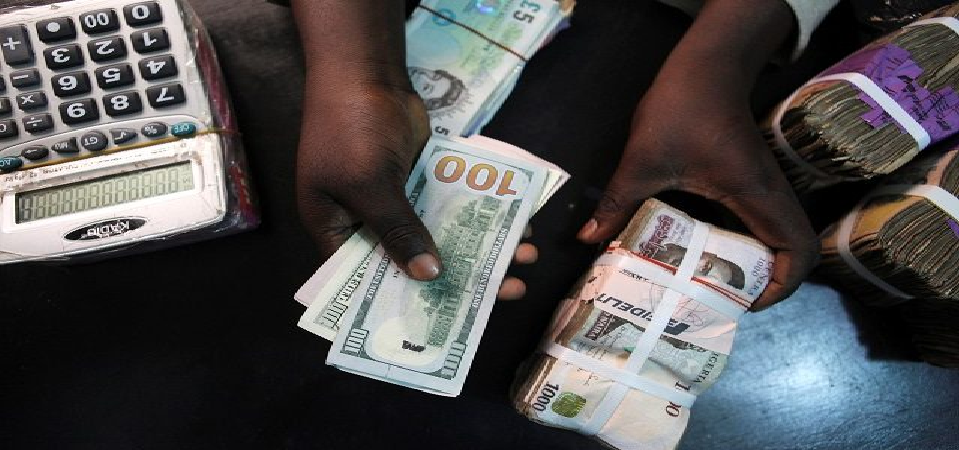
Naira has hit its lowest rate in history at N610/$1 in the parallel market, stoking fresh concern that Nigeria may be heading toward another recession as inflation has begun to increase its numbers again.

Since about seven years ago, the Central Bank of Nigeria (CBN), has been pointing accusing fingers at many factors for naira’s free fall. Among the factors that the apex bank has blamed as the naira nosedives are Bureau de Change (BDCs) and the most controversial, AbokiFX – an online exchange aggregator that publishes daily exchange rates and has become popular among Nigerians.

The CBN governor Godwin Emefiele had accused the outlet of manipulating the foreign exchange market, thereby undermining Nigeria’s economy. That was in September last year. AbokiFX was forced to shut down operation as Emefiele unsubstantially made his claims and vowed to go after the aggregator. The naira was exchanging around N570/$1 then.

It has been eight months since then and Nigerians eagerly want to know why the naira has further fallen N40 below its then position against the dollar.

“$1 is truly N610? I thought since Aboki Fx has been banned, $ should be trading at N100 or less,” Wale Adetona tweeted.

The CBN also stopped forex supply to BDCs, accusing them of inflating exchange rates and stirring dollar scarcity. The launch of eNaira weeks after AbokiFX was shut down was touted by the central bank as a panacea to the naira’s ordeal. But these measures taken by the apex bank have fallen short of the solution to naira’s weakness.

”$1 is officially N610 in Nigeria. So was Aboki Fx the problem? Godwin Emefiele connived with President Buhari. Both men destroyed the Naira. CBN Governor’s E-Naira was another Air Nigeria Scam,” Nefertiti, another Nigerian Twitter user wrote.

The resulting consequence of naira’s free fall – inflation, is pushing Nigerians to the edge. As of March, inflation rate has risen to 15.92%, a five-month high that has further shot up the cost of living in Nigeria.

As lack of dollar liquidity, which experts have rightly blamed for naira’s downfall, persists due to economic headwinds emanating from oil market’s crisis and recently, Russia-Ukraine war, the call for Nigeria to diversify its economy from oil hasn’t been louder. The CBN governor Godwin Emefiele admitted last year that Nigeria is spending about 40% of its forex on petroleum import due to lack of functioning refineries in the country.

Though recently, crude oil price has risen above $100, Nigeria’s foreign reserve has yet to increase its volume to retain sustainable forex liquidity that will upset the current status of the naira against the dollar. This is because the Nigerian government is paying fuel subsidies that have gulped up to N7.5 trillion of the 2022 budget.

While the current situation of Nigeria’s FX market has exonerated AbokiFX, Nigerians are worried that Emefiele’s blame game and other inconsistencies will further harm the naira and Nigeria’s economy before 2023. The CBN governor has been politically active, instigating calls for his resignation.

Early this month, Emefiele made a baffling move to run for president, defying the CBN act that prohibits its officers from being political. Though he has withdrawn his interest, including the lawsuit he filed seeking a legal backing to presidential aspiration, the development has added to the concern that the naira in the care of Emefiele, will see more dips.

Experts Advocate The Use Of Technology To Curb Post-Harvest Issues

0
Commercialize Agriculture Ideas

Agricultural experts in the country have called for the use of the right policy and technology to curb post-harvest issues to boost food production and lower the prices of foodstuffs in Nigeria. The experts made this statement at a seminar on ‘Feed Up Africa’ which was held in Ibadan, Oyo state.

Having observed the wastages on farmlands and those wasted after production, which has greatly contributed to increasing prices of Agricultural produce and food shortage in the country, these experts, therefore, advocated for the use of technology to reduce these losses.

With the use of technology in the Agricultural sector, it will encourage food processing as these wastages on farmlands rather than being thrown away, will be processed into other products. It is therefore pertinent to say that one of the effective ways of ensuring food security in Nigeria, is for effective implementation of technological facilities, which will ensure that there is a drastic reduction of post-harvest losses.

According to statistics, Nigeria loses N3.5 trillion to post-harvest losses annually which is not good for the country’s economy. Some analysts have disclosed that problems such as inadequate storage facilities for harvest exist in the Nigerian agricultural sector because it has failed to evolve.

The problem of post-harvest losses poses serious implications for food security in Nigeria. In order to curb such losses, the government must ensure the establishment of farm produce processing industries and standard equipment which will ensure that there is efficient harvesting, handling, and sorting, application of non-toxic chemicals, improved storage systems, etc.

Also, cost-effective technologies can be invented as they will go a long way to stem the tide of available losses in the agricultural sector. One beautiful aspect of the use of technology is that it can efficiently preserve vegetables, grains, seeds, and other farms’ produce for a long duration, without damage.

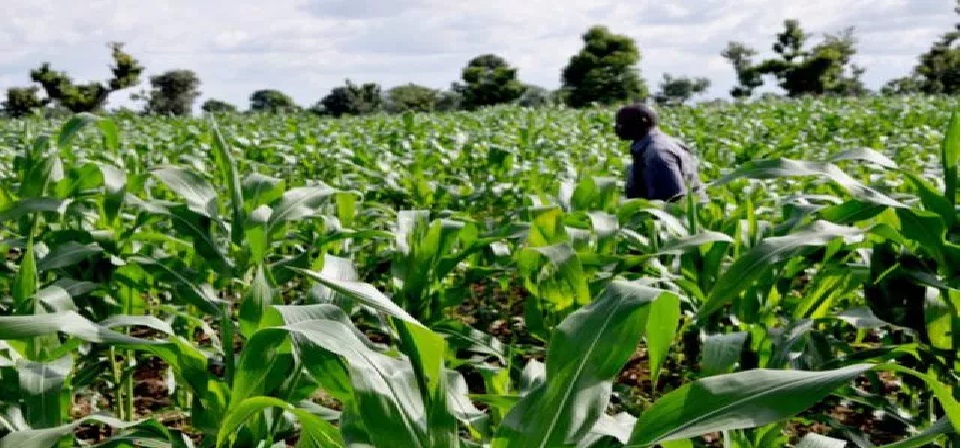
For instance, countries in Southern Africa use maize as their staple food, and post-harvest maize losses significantly contribute to the region’s food insecurity. Therefore, to address the issue, some farmers in the region used “Purdue Improved Crop Storage” (PICS) bags to properly store their maize grain. This bag enabled the maize grains to have a longer shelf-life.

It is therefore pertinent for the government to properly introduce technological equipment that will aid farmers to limit post-harvest losses because such technologies can enhance the country’s food security.

Asides from the implementation of technologies, the government should also ensure to build standard roads, because due to inappropriately built roads, the process of transporting these farms’ produce becomes very long as some crops will begin to spoil before it gets to the market.

One negative impact of food security on the nation is that it causes malnutrition, especially in rural communities, and also leads to a huge loss of revenue which affects the country’s economy. Therefore the government must ensure the mobilization of human, technical and financial resources to enhance post-harvest losses management.

Tekedia Mini-MBA Introduces A Course On Open Banking

0

Open Banking Nigeria, the key organization which has championed the open banking initiative in Nigeria, will lead a session on Open Banking during the next edition of Tekedia Institute Mini-MBA which begins June 6th. The Central Bank of Nigeria (CBN) recently published operational guidelines for open banking in the country; you can read the guidelines here.

Nigeria’s Big OPEN: The Age of Open Banking Is Here and New Opportunities Await

Mastercard Partners with OPay to Boost Financial Inclusion in Middle East and Africa

0

Mastercard has continued to use partnership as a strategy to win more market shares as competition hits up in the payment industry.

The New York-based payment firm and fintech giant OPay have entered a strategic partnership to drive wider financial inclusion and boost economic prosperity by opening up digital commerce to millions of people across the Middle East and Africa.

The collaboration enables OPay consumers and merchants in the region – including Algeria, Morocco, Egypt, Nigeria, Ethiopia, Kenya, Pakistan, South Africa, and the UAE – to engage with brands and businesses anywhere across the globe, thanks to a Mastercard virtual payment solution linked to the OPay eWallet.

This partnership is the latest milestone in Mastercard’s emerging market strategy where the technology company is collaborating with growing Fintech’s such as OPay to expand access to digital payments, enable multiple lifestyle services, create new pathways to financial inclusion and support the next generation of super-apps.

“As the leading fintech in the Middle East and Africa, we are delighted to be partnering with Mastercard as we continue on our journey to promote financial inclusion, helping to open up the global economy to more consumers and businesses across the Middle East, and Africa,” Yahui Zhou, CEO of OPay, said.

Consumers are increasingly looking for seamless user experiences on a single platform offering easier interactions to complete various day-to-day needs, including sending and receiving money, ordering food and groceries, organizing transport, lending, investing and listing items they wish to sell.

In the initial phase of this partnership, OPay customers will benefit from the Mastercard virtual payment solution linked to their OPay wallets, to shop at well-known global brands for leisure, travel, accommodation, entertainment, streaming services and more. The service is available regardless of whether or not the customer has a bank account. It also allows small business owners to purchase from suppliers abroad and pay with the secure virtual payment solution.

Mastercard has partnered with different payment outlets across the globe, including cryptocurrency platforms – a strategy Amnah Ajmal, Executive Vice President for Market Development, Mastercard EEMEA, said will help to create an interconnected global payments ecosystem.

“At Mastercard, our innovation strategy is rooted in partnerships to support inclusion at scale. Our partnership with OPay demonstrates our commitment to supporting payments providers across the world to create an interconnected global payments ecosystem that benefits an array of consumers with unique needs,” he said.

Since its operations started in 2018, OPay’s active users have grown to 15 million in dozens of markets in which it operates. The company processes millions of transactions per day on average. In Nigeria alone, where OPay takes a significant market share, users have saved billions of US dollars in the last four years through credit-linked savings accounts from their mobile wallets and small loans from lenders that use its platform.

Plans are in place to launch OPay services in other markets in the next three to five years, significantly driving the growth of digital inclusion and digital commerce, while at the same time widening OPay customer inclusion into the global economy.

Mastercard has made a worldwide commitment to financial inclusion, pledging to bring 1 billion people and 50 million micro and small businesses – with a focus on 25 million women entrepreneurs – into the digital economy by 2025. With OPay’s market share in the MEA regions, Mastercard has a high chance of attaining its 2025 goal.