DD
MM
YYYY

PAGES

DD
MM
YYYY

spot_img

PAGES

Home Blog Page 5132

Deepening Nigeria’s Cultural Diversity

0

On the 21st of May each year, the global community celebrates the World Day for Cultural Diversity. Hence, the 2022 edition of the laudable commemoration was marked two weeks back.

In 2001, the United Nations Educational, Scientific and Cultural Organization (UNESCO) adopted the Universal Declaration on Cultural Diversity; hence in December 2002, the United Nations (UN) General Assembly in its unanimous resolution, declared May 21 annually to be the World Day for Cultural Diversity for Dialogue and Development. The Day provides us with an opportunity to deepen our understanding of the values of cultural diversity and to learn to live together better.

Heritage is described as the inheritance such as buildings, monuments, or any property of an individual or a society. Whilst cultural heritage, are the inherited qualities, traditions, ideas, or style of living of an individual or a given society, which have continued over many years, especially when they are considered to be of historical importance.

On the other hand, cultural diversity is defined as the situation whereby the cultural heritage of a person, group or society varies or consists of different conditions, qualities, or types. In other words, the diversity of a given culture is the state at which it comprises or is made up of varieties.

Undoubtedly, cultures such as dancing, masquerading, dressing, sewing, hunting, fishing, singing, wrestling, molding of sculptures, painting, and so on, are essential developmental tools in any country. Culture is strongly connected with identity; and identity expressed through culture is a necessity for all human developments. It creates the fundamental building blocks in our respective personalities and in the ties that link us to various communities as well as any nation we find ourselves in.

Culture plays a unique and crucial role in a development policy especially issues relating to human rights. A free and staunch cultural heritage has the tendency of promoting other rights and values to include freedom of expression, diversity and debate about needs in a society. In the same vein, culture is a key player in the link between freedom of expression and democratization.

Culture can also encourage the economic growth of either a nation or an individual. For instance, a country that’s tremendously gifted with swimming, which is a globally recognized lucrative sporting activity, can substantially boost its Gross Domestic Product (GDP) if a meaningful attention is given to such heritage.

Creative areas including music, paintings, drawings and sewing, can equally serve as revenue sources. In fact, the encounter between culture, creativity, technology and economy embodies a great potential in creating work places and increasing exports, and also contributes to social inclusion.

Culture can equally assist in checking socio-political crises or differences. It ensures unity during crisis, and influences identity, debate and dialogue; thus, it is needed for nation building, and for peace and reconciliation. Needless to say, it inspires change, which we all anticipate. Survey indicates that cultural cooperation is one of the most equality-oriented forms of co-operations in existence.

The entertainment industry cannot be left out while discussing the impact of cultural heritage in nation building. Similarly, the tourism of any country cannot be discussed without mentioning the country’s cultural diversity.

It is obvious that the cultural heritage of any society contributes over sixty-five percent (65%) of its tourist sector, which remains one of the paramount Internally Generated Revenue (IGR) sources of any developed society.

Surely, tourism is one of the backbones or engine rooms of any developed country in the world, and this cannot be possible without the impact of cultural diversity of the country in question.

This implies that Nigeria, which is made of over two hundred and fifty (250) ethnic groups in which each of the groups is endowed with different cultural resources, can as well consider harnessing her tourist sector as she is currently thinking of economic diversification or beyond oil and gas.

There is a compelling need for us to acknowledge that our cultural diversity is a stimulator of creativity, and investing in creativity can transform societies. Hence, it is our civic responsibility to develop education and intercultural skills in our young ones as well as learn to live together in the diversity of our cultures, languages and religions in order to bring the desired change.

So, at such a time like this, the Nigerian government needn’t be reminded that it’s a moment to look inwards toward rejuvenating the country’s cultural heritage in its entirety with a view to boosting her tourism industry that’s currently seemingly moribund.

In view of this, there is no gain reiterating the fact that it is high time the Nigeria’s cultural heritage is reviewed by the appropriate quarters or authorities, so that, credible ones would be sustained or harnessed via institution of cultural carnivals by both federal and state governments, promotion of the various existing communal cultural festivals, establishment of museums, and other related practices.

By doing so, the unacceptable ones would either be addressed or completely abolished, with a sole motive of boosting the country’s tourism industry as well as encouraging human empowerment.
Improve your rural business strategy in Nigeria because disruption is coming

0

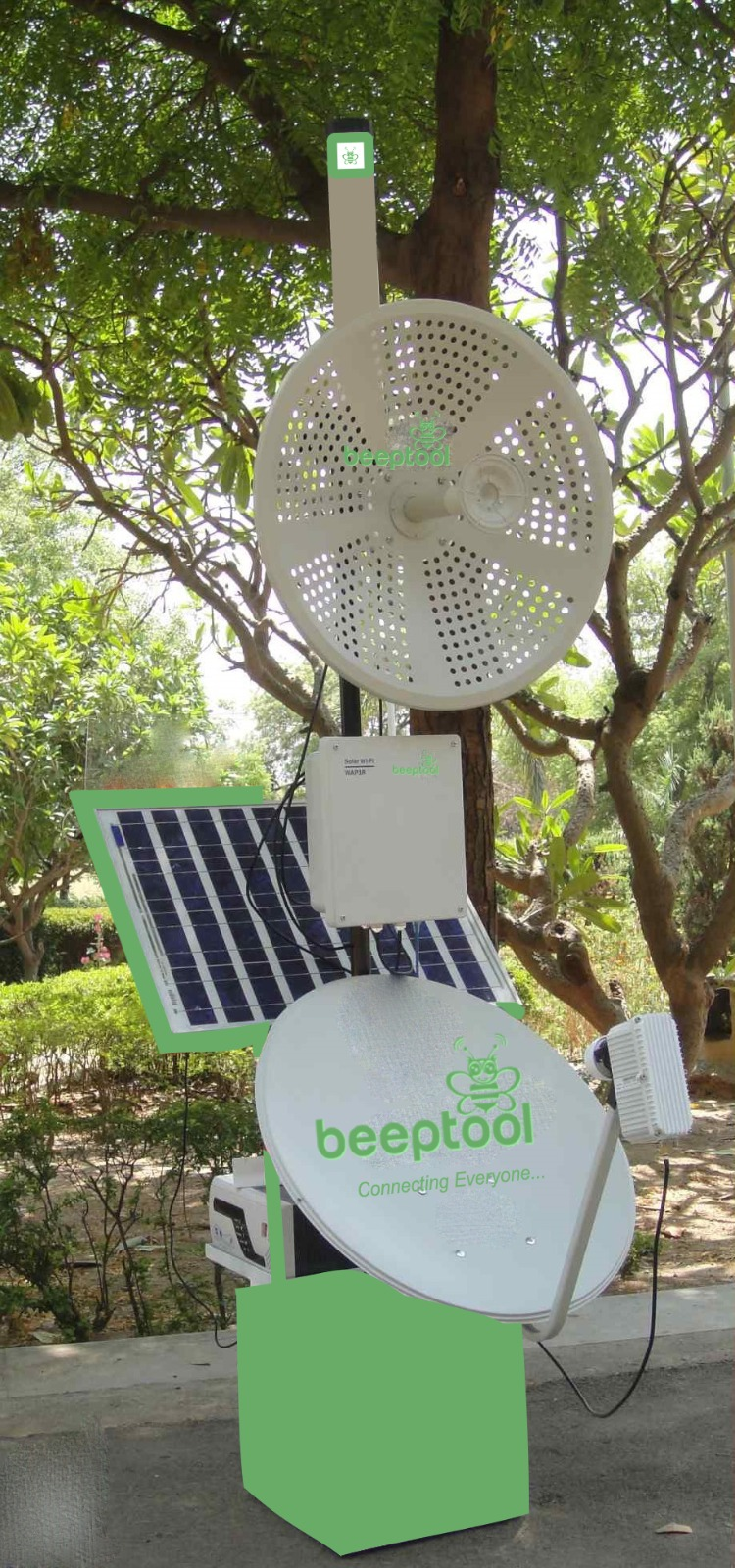
Rural education. Rural agriculture. Rural healthcare. Rural economy. As Starlink arrives, some startups in the satellite space will begin to make progress in the Nigerian rural business space. Beeptool has been working with Starlink on the master license. We believe that an improved network quality, not necessarily cost, will shift the upper tier market. 

If the network is reliable in Dutse, why do you need to be in Abuja to create that software which is going to be distributed via the internet? If you can link that school in Ovim with reliable internet, the Auntie in London can teach the kids how to master calculus after school. Expect more possibilities.

Improve your rural business strategy in Nigeria because disruption is coming. Watch my video; I predicted the moment is 2022!

Nigeria Approves Elon Musk’s Starlink for Satellite-Based Internet Services

Join Us – “The Mission and Purpose of Firms – Unlocking Market Opportunities via Innovation”

0

At 12 noon WAT on June 6, 2022 (next Monday), the 8th edition of Tekedia Mini-MBA will begin. It will run for 12 weeks, ending on Sept 3, 2022. I want to welcome our co-learners to this academic excursion.

Login for the course portal will go out on June 1. All partners across Africa and beyond, helping with enrollments, please do all to send member lists to Admin. If you registered via BusinessDay, FinQuest Finance, ASIF India, LI South Africa,  etc; they will work with Admin to ensure you have your login on time.

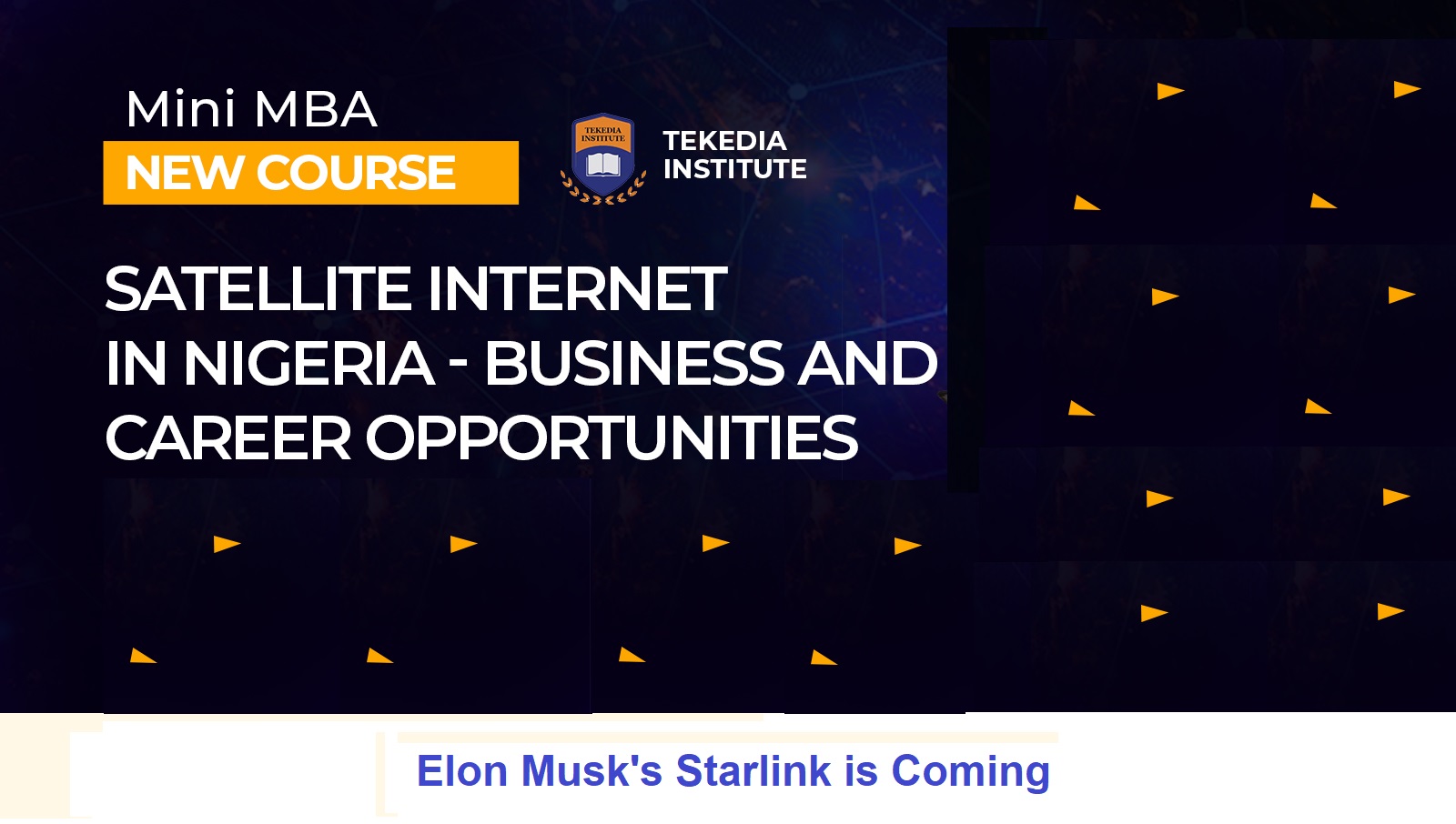
I specifically welcome those who are joining us for the special courses on satellite and open banking –  “Satellite Internet – Business and Career Opportunities” and “Open Banking Era”. For the satellite, the pre-recorded courseware will go live and the Live Zoom session is scheduled for July 16. More info will be provided in the Board.

We’re Tekedia Institute, we know the physics of business, and we’re truly honoured for the opportunity to co-learn with you. WELCOME!

If you have not registered, do so and join us. I will begin the live class with a presentation titled “The Mission and Purpose of Firms – Unlocking Market Opportunities via Innovation”

https://school.tekedia.com/course/mmba8/


NDUBUISI EKEKWE, BEng (Owerri), MTech (Akure), MBA (Calabar), MS (Tuskegee), MSE(Baltimore), PhD Finance (Turks&Caicos), PhD Engineering (Baltimore)

  • Professor and Lead Faculty, Tekedia Institute

CONTROVERSIAL BOOK: Unjust Profit, Intellectual Right Theft, Neocolonialism Dominate Conversation as Nigerians Express Mixed Feelings About Soro Soke Book

0

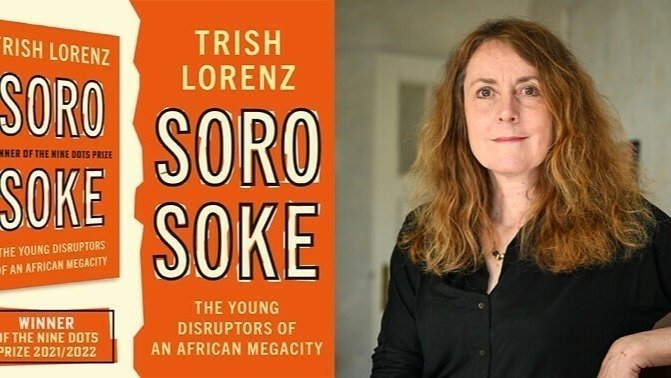
Our analyst has discovered undeserved profit generation, intellectual right theft, and the global north’s reintroduction of colonialism through intellectual property rights of the people in the global south as three dominant topics of discourse in the physical and virtual platforms since yesterday as Nigerians, especially the youths, continue to express mixed feelings about Soro Soke, a book written by Trish Lorenz.

Hundreds of posts on Twitter, Facebook, Instagram, and WhatsApp demand that the book be withdrawn from various online bookstores, and that the book’s publisher, Cambridge University Press, not make the paperback version of the book available to the public. The use of Google Trends to track public searches reveals a significant amount of interest in learning more about the author, Trish Lorenz, as well as “soro soko” parlance.

Apart from the fact that Nigerians voice their dissatisfaction mostly through social media, one of the youths has also established a petition on Change.org, a global internet platform that allows people to write petitions, get them signed, and have them acted upon by relevant stakeholders. Our analyst identified a total of 131 signatories to the petition, which calls for the book to be removed from online bookstores and the author to be prosecuted for intellectual property theft and the revival of colonialism through book publishing.

In the petition, the petitioner stated two critical areas the publishers and concerned stakeholders should pay attention to and address immediately. According to the petitioner, “This book is intellectual property theft and gross disrespect to Nigerians. It is pouring salt on our open wound. Therefore, publishing must be halted and it should be pulled from all bookstores. (This has been done before when the book “Bad and Boujee: Toward a Trap Feminist Theology written by Jennifer M Buck, was pulled for cultural appropriation and intellectual property theft.). Public and written apology to Nigerians from Trish Lorenz. This is the right and responsible thing to do. Anything less is complicity in theft erasure and racialized neocolonial violence.”

Our analyst adds that, based on the number of reviews (107) on Google Book, conversation appears to be producing beneficial consequences, as all of the evaluations were negative to the book and publishers. Similar patterns of discourse were discovered by tracing analysis of the evaluations on social networking sites. Because the author was not in Nigeria during the EndSARS demonstration, the majority of Nigerians and other Africans who evaluated the book stated that the author could not do credit to Nigerian youth hopes and resilience. One of the reviewers stated that it is impossible for someone who walked through the streets of Lagos, particularly Lekki (the protest’s site), after the protest to claim complete knowledge of what occurred and the audacity to claim she coined the Yoruba slang for scolding an interlocutor during a conversation.

“Trish Lorenz has been a journalist for more than 15 years. She is a regular contributor to titles including The Guardian, The Financial Times, and The Telegraph, among others. Formerly a design columnist at The Independent and the Lisbon correspondent for Monocle magazine, she covers subjects ranging from design, art and culture to travel, politics and human interest pieces from around the world.”

We’re Establishing Africa Fintech Interconnectivity Network (AFIN) To Help Fintechs, MFBs, etc Connect via Satellites

2

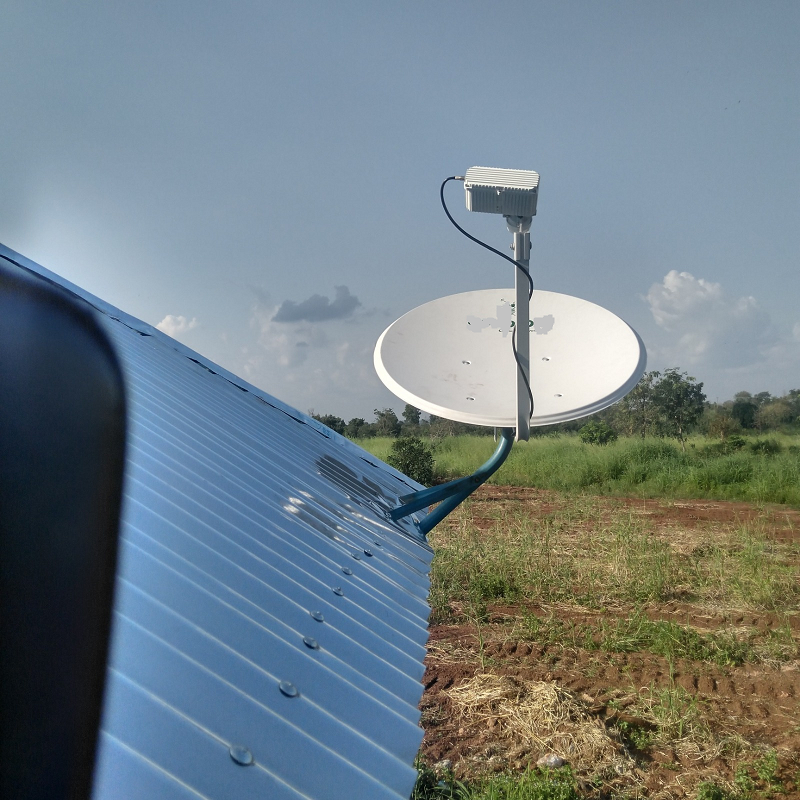
We have been using the SpaceX Starlink system in Nigeria for months, and the thing works. The uptime is good.  We bought it in  the United States and deployed it on a farm in Nigeria, to help in our agriculture business. As Starlink arrives in full, we now want to move to the real reason we have been running experiments in the satellite space.

Our big project is to build the Africa Fintech Interconnectivity Network (AFIN) to make it possible for fintechs  to transmit financial data across any location in Africa through a reliable network. We will begin in Nigeria and then expand to Africa. Focus will be at the connectivity layer (not monetary value layer) and the linkages will be built at the satellite level (with radio supporting where necessary), not just at the internet level. I think you can build massive wealth at the satellite-satellite level but some devices will be needed here and there.

We think that fintechs, microfinance, small banks, exchanges, etc will need this solution if they plan to serve not just urban Africa but rural Africa. Our network will help you link all your systems across Nigeria.

On July 16, 2022 at 6-8pm WAT, Tekedia Institute will present a live session of our course on Satellite Internet in Nigeria: Business and Career Opportunities. We will present setups and more insights on how this technology can unlock opportunities for many. We will show the Starlink system and how it works with some technical insights. You can register to join here.  More so, we will also share more insights on AFIN.

(Masked the brand logo to avoid problems with the regulators. But for you to know, some of us use networks without any relationship with the GSM networks in Nigeria.)