DD
MM
YYYY

PAGES

DD
MM
YYYY

spot_img

PAGES

Home Blog Page 5176

Campaign Promises By Nigerian Politicians

0

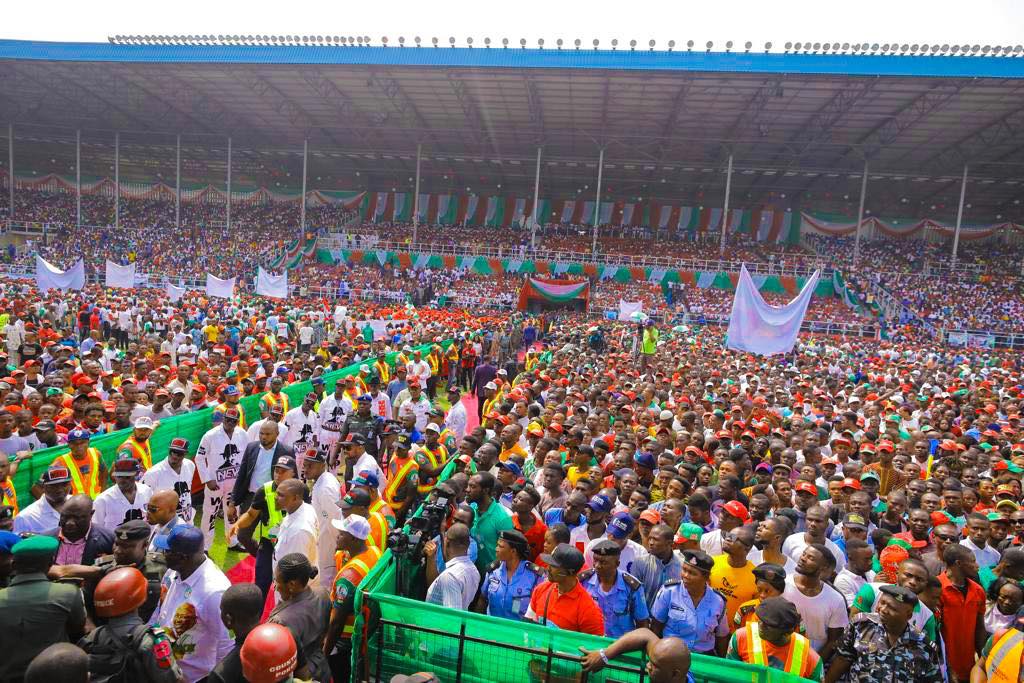
As a typical Nigerian who has been to several campaign grounds where different politicians relate their manifesto to the electorates, one thing is very common. Their campaign Is usually made up of promises, where only a very low percentage of them when elected into office go ahead to fulfill those promises.

These politicians are so blessed with the gift of oratory, that they use enticing words to mesmerize the electorates to believe whatever they have to say, only for them to get voted into office and do otherwise.

They have no qualms promising the absurd and outright possibilities to a populace that, though already weary with the poor performance of politicians, are yet to show a real preparedness to hold them accountable for their failure to make good on previous electoral promises.

Although the issue of lie telling is not only synonymous with Nigerian politicians as it pervades the whole planet. Aside from the lies told on campaign grounds, we have had several cases of Nigerian politicians who go as far as presenting falsified documents to show that they are eligible to contest and occupy a certain position. Imagine the effrontery!

Nigerians are constantly taken for a ride during election periods by these politicians who continue to spew out lies in the name of promises in their desperation to garner votes. These politicians have continued to make empty promises ever since the country got independence, yet things have not fared any better.

This shows that the majority of them just declare these empty promises to cajole the electorate to vote for them, only to end up disappointing them. A case study of President Muhammadu Buhari who got into office as the president of Nigeria with the promise of eliminating corruption in the country.

Just recently, he pardoned two Ex-Governors with some other governors who were already serving jail terms for misappropriation of public funds. This act by the president already goes contrary to the promise he earlier made before becoming President to stop corruption in the country.

Nigerians have become familiar with some of these vague promises made by these politicians, such as; the construction of roads, the creation of jobs, the tackling of insecurity, etc. There are also a few examples of promises made by these politicians and their parties, with no attempt to explain how they intend to achieve them.

It’s high time the electorates come to the understanding that these politicians need to be engaged where they will be asked critical questions regarding their electoral promises and how they intend to achieve them. Once they observe that their explanations are not reasonable enough, then it is left for the electorates to disregard such an aspirant and vote for the one who is competent enough.

In 2021, former chairman of APC Kwara state, Iyiola Oyedepo released a book “21 lies Nigerian politicians tell the electorate”, in which he disclosed that he exposed the common lies told by these politicians and also educated the electorate on how to vote for candidates seeking their franchise.

He further added that if the electorate votes wrongly, they will have to live with it for four years. In the book, he disclosed that politicians must tell lies as it has become a part of them, but it was left to the electorate to identify a lie from genuine promises during campaigns.

He disclosed that the only way to defeat the political lies told by these politicians is through round sensitization for consciousness among the electorates. It is therefore imperative to say that the consciousness of the people is an extremely crucial factor in a democratic setting because It gives them insights into assessing the performances of the government to determine whether it has been able to accomplish its responsibilities to the citizenry or not. When the electorates are conscious, it will be very hard for them to fall for the lies of promises made by politicians during electoral campaigns.
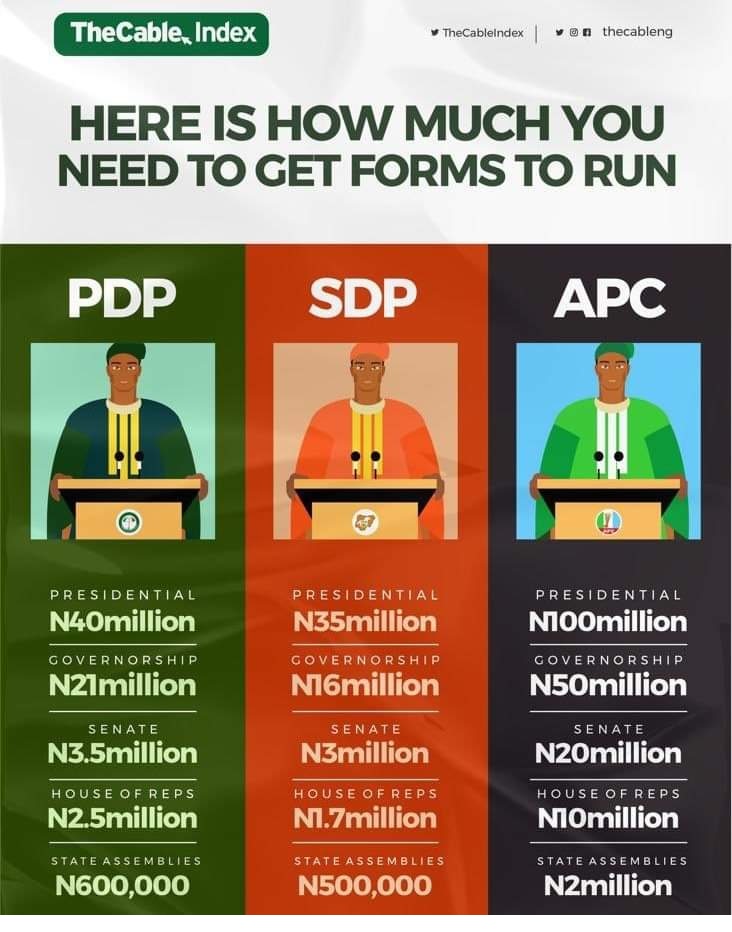
On The Disclosure That 250 Female Aspirants In Nigeria Obtained PDP Forms

0

Ahead of the 2023 general elections in Nigeria, on 25th April 2022, the National Women Leader of the leading opposition platform in the country, the People’s Democratic Party (PDP), Mrs. Stella Effah-Attoe disclosed in Abuja that about 250 female aspirants for various political positions had purchased the party’s Nomination and Expression of Interest forms.

Mrs. Effah-Attoe stated this at a meeting she had with some of the aspirants at the party’s Wadata Plaza, national headquarters. She however urged the women to aim at winning elections and not stop at merely picking the forms and participating in the exercise.

She added that her office was already working with party leaders and stakeholders to ensure a good number of the female aspirants emerged as the party’s candidates, while advising the aspirants to be well-prepared to face the primary elections so as not to heap blame on the party afterwards.

She equally frowned, “Some of us don’t even relate with our wards, not to talk about our local government chapters. And when the bell rings to buy the forms, we just run and pick the forms. Politics is not practised that way. You have to prepare yourself, especially for the primary.”

Mrs. Effah-Attoe further disclosed that the meeting was to strategize on how more women would merge as candidates at the primary elections.

“I desire to leave no stone unturned to ensure that our women participate meaningfully and win elections. We have always thought about women coming out to participate.

“We have been doing that over the years. We have been participating but the issue now is coming out to win elections. This kind of meeting is unprecedented.’’ she said.

The National Women Leader said the meeting was also designed to enhance female aspirants’ approaches and tactics as they go to the field.

“You must understand the pros and cons inherent in our political pursuits with a view to proffering solutions to them and you must monitor the achievements of female aspirants and plan for the future.’’ she stressed.

In her remarks, former National Women Leader of the party and also former Minister of Women Affairs, Mrs. Josephine Anenih, advised the aspirants to do soul-searching on whether they wanted to contest to win or to just participate.

She noted that sometimes, because the form is almost free, women just obtained it to bargain for something or earn the title of aspirant, and not for the purpose of winning elections. Hence, advised the aspirants to work to win, saying, “Do not just rely on 35 percent affirmative action for elective positions.’’

Mrs. Anenih equally charged the aspirants to respect party structures and leaders, including zoning, and to connect with people at the grassroots

“If you are not qualified and nobody knows you in your place, you won’t get the seat you are looking for.

“If we ask some of us now when last they attended ward, local government or state meetings, they would draw a blank and they now want to be House of Representatives members or governors or senators. It’s a tall order.

“This is not to discourage anybody, but to let you know that there is no point wasting your time or that of party leaders. The 35 percent affirmative action we are clamouring for is not magic.

“We must work hard for it. Don’t give PDP a bad name by saying women are marginalized. If you are qualified, you will be given a chance.’’ Mrs. Anenih said.

She also advised the female aspirants not to underestimate the influence of party leaders, that of governors and the media, while advising them to get campaign sponsors and put other factors that could assist them in place.

On her part, another former PDP National Women Leader, Mrs. Inna Ciroma enjoined the women to prove that they could do it.

Mrs. Ciroma, who claimed that her husband never influenced her participation in the election, advised them to be united and dogged to get the party’s tickets.

Nigerian women have really and obviously made politics to be laughable. Each election year in the country, you would observe thousands, if not millions, of them purchasing nomination and expression of interest forms as if they are buying food stuffs in their local markets.

But in the long run, none, or only a few, of them would clinch the tickets of their respective parties. This has become a recurring decimal in Nigeria’s political space, yet the game plan of the said set of individuals apparently remains the same.

Funnily enough, whenever they failed to win primary elections, they would be crying foul, demanding that the party should grant them a certain percentage of its tickets, as if tickets are mere ‘tissue papers’ given to any beggar on the street.

Time has actually come for these women to learn how best to play politics. They have all its takes to win elections, because they can boast of the majority, yet they would always allow the menfolk to deceive them.

They need to come together and form a formidable coalition irrespective of their affiliations. They must speak with one voice, rather than pull her down syndrome, if they truly desire any tangible position in the country.

Discover the right course at Tekedia Institute and enjoy these 25 cases

0

Join us at Tekedia Mini-MBA, Tekedia Startup Masterclass, Tekedia Practice or Tekedia Industries, and learn from these “25 Startup Innovation Cases (10 Africa, 5 USA, 5 India, 5 China)”. Click here and see all our courses at Tekedia Institute.

The ASUU Strike and the Cost of Producing Graduates in Nigeria

0

Apart from primary schools, where citizens are expected to acquire basic knowledge and skills for the nation’s benefit in all ramifications, higher educational institutions are other places where citizens are expected to acquire advanced knowledge and skills for the nation’s benefit. Throughout history, unions and pressure groups in the global north and south have put pressure on political leaders and those in charge of providing the correct processes for citizens’ development and acquisition of advanced and basic knowledge and skills. The argument was that a nation cannot progress if education is treated in a terse manner.

Various university unions used strike as a key instrument of calling government’s attention to age-long decay in the university system from the administration of Military President Ibrahim Babangida to the short civilian interim government headed by Late Earnest Shonekan and the civilian administration of Chief Olusegun Obasanjo, including his military rule. This device was not only employed throughout the administrations mentioned, but it is also in use today.

However, our analysis reveals that unions have utilised the device more frequently after 1999, the year the country reverted to democratic governance. All of the unions, particularly the Academic Staff Union of Universities, desire a better teaching, learning, and research environment in public universities across the country. In addition to these, academics should be highly compensated in comparison to what is available in other African countries, if not in the global north.

While this piece recognizes the importance of addressing the issues presented by unions over time, it is also important to note that the cost structure of training and graduating students should be reconsidered. This is necessary as public universities continue to offer courses at costs that are not commensurate with amount being paid by the students. It is important to stress that the suggestion does not imply that institutions should charge expensive tuition fees or other fees without taking into account the socioeconomic circumstances of parents, guardians, and students. Recalculating the costs of training, according to our analysis, would assist interested stakeholders in the system in appropriately remunerating academics and other employees.

According to Statista, using various sources, “the most expensive federal university for undergraduate programmes in Nigeria is the Nigeria Maritime University. In 2019, the average annual tuition fee for its bachelor programmes was N81,050, around $198. The Federal University Oye-Ekiti followed with N69, 000, some $167.”

Examining these rates against those charged by other institutions reveals no discernible difference, even with the 2021 fees, in terms of charging fees that provide the necessary value to students, academics, and the government. When academics are paid pitiful salaries and receive meagre supervision fees, producing quality graduates and postgraduates will remain elusive. Our analyst discovered that PhD supervisors at one of the federal universities are paid less than N10,000 per year, while supervisors of undergraduate students are paid much less.

Central African Republic Goes Cryptocurrency As A Legal Tender

0

Cryptocurrency has continued to witness institutional adoption even though the market’s frenzy seems to have died down since last year. Besides financial institutions adding cryptocurrency to their payment structure, governments around the world are seriously considering how to onboard cryptocurrency or adopt it as a legal tender.

Last year, El Salvador became the first country in the world to adopt bitcoin as a legal tender, setting the pace that other countries are now following or considering.

On Monday, the National Assembly of The Central African Republic (CAR) voted on the Draft Law Governing Cryptocurrency, which was adopted favorably by acclamation and unanimity, FX Empire reported. The CAR thus becomes the first African country to adopt crypto as a legal tender.

The legislation was introduced into the Assembly by the minister of finance and budget, Calixte Nganongo, and the minister of the digital economy, postal services, and telecommunications, Gourna Zacko.

This would establish the legal framework for cryptocurrency regulation in the country while also establishing Bitcoin as an officially accepted currency.

The purpose behind the approval of the legislation was twofold. One was to introduce and create a legal framework governing cryptocurrency and the establishments handling these currencies (ex. – exchanges, lending and borrowing platforms, etc.).

And secondly, through the bill, a favorable environment for the financial sector will be established that will be set to meet the needs of the profession in this sector and all economic actors.

Commenting on the reason behind introducing the bill, Gourna Zacko said: “With crypto-currency, there is no more control of the Central Bank. You have your money, you send it to an investor for a business, you receive it in any currency, you can dispose of it in Dollar, Euro, CFA, or Naira”.

The effect that El Salvador had on the world and the crypto world with the adoption of Bitcoin as legal tender and the policies introduced favorable to the same is visible in this decision as well.

Other Governments Accept Crypto Too

While the Biden administration of the United States of America is yet to give a concrete status to cryptocurrencies, many leaders of the States have already implemented changes in their power.

Recently as reported by FXEmpire, the Governor of Colorado, Jared Polis, announced that the state would begin accepting payments of taxes in cryptocurrency by this summer.

And following him, the State Senator of California Sydney Kamlager laid down a proposal for accepting cryptocurrencies for payments for the provision of government services.

Unlike the CAR, other African countries are yet to create a policy framework on crypto. Some like Nigeria have made crypto transactions illegal even though the West African country is one of its biggest markets.

Although the global crypto market continues to trend downwards, the expanding adoption of cryptocurrencies is expected to help in recovery, boosting economies along the way.