DD
MM
YYYY

PAGES

DD
MM
YYYY

spot_img

PAGES

Home Blog Page 5198

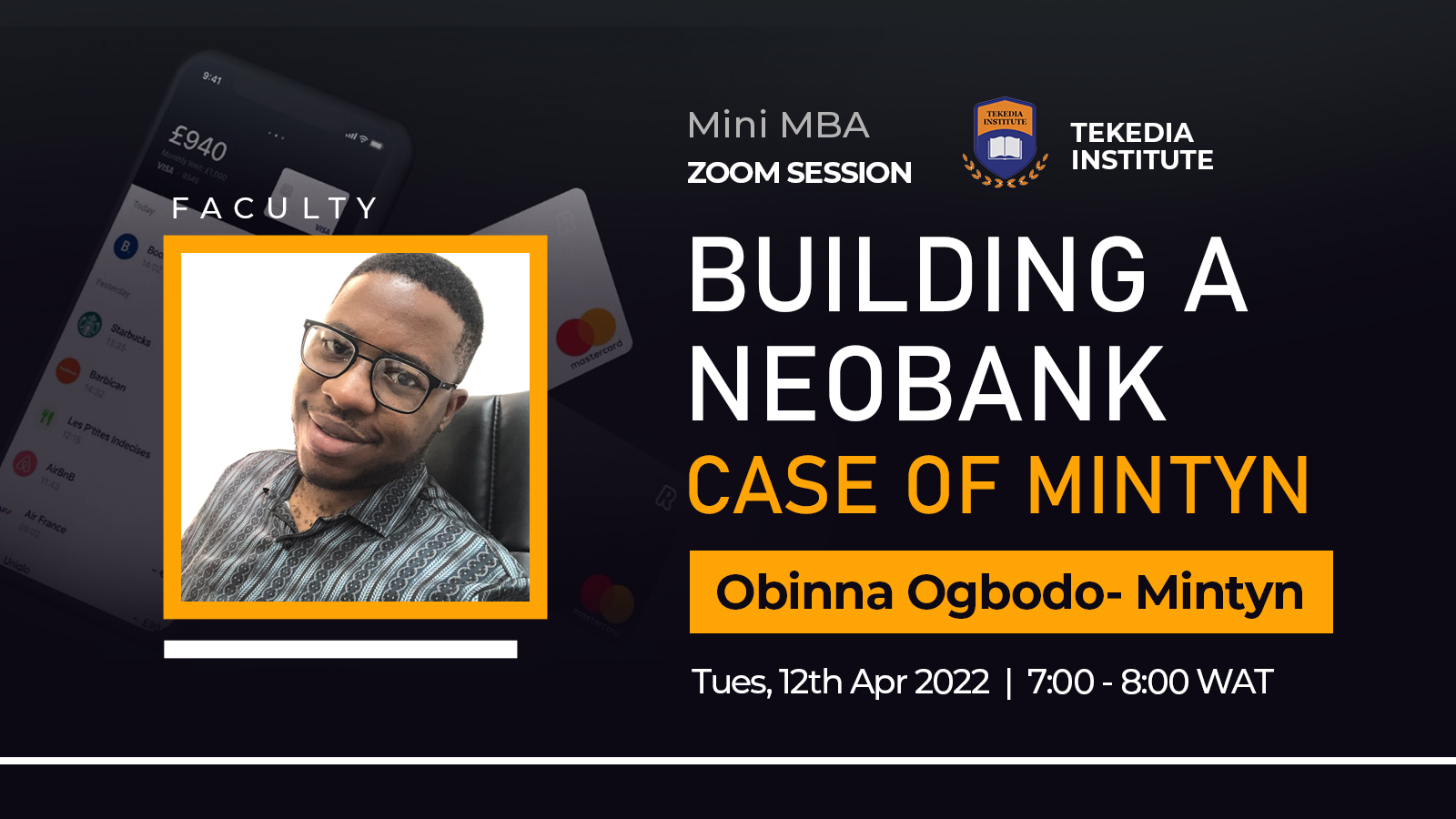
Tekedia Live: Building a Neobank – Case Study of Mintyn

0

They are brilliant innovators, and they are coming to Tekedia Institute: Obinna Ogbodo, Nnazilim Egbuonu and EZE AMUCHIE will anchor Tekedia Live to discuss how to build a new company using their Mintyn | Online Banking, a Lagos-based digital bank, as a case study. They have a great pedigree; they built Oya which Wakanow acquired. They also created a very popular career portal which Jobberman acquired.

How can the money in your Mintyn bank account deliver more value than the same amount in another bank? It comes down to Mintyn Trade: you can indicate what you want to buy in the Mintyn Trade section.

Within hours, the app will match you with other people who want to buy the same thing. Yes, all of you can pool the funds and buy in bulk.

Mintyn Logistics works with partners to provide the item in churches, mosques, markets, club houses, real estates, etc. If $5 would have given you 10 cups of rice, you can go home with 20 cups due to the aggregated bulk purchase, optimized by tech. That is your digital bank looking out for you!  It’s magical; – you can triple, 4x, 5x your Naira depending on the bank you use!

I expect it to be an amazing session as always. Tekedia Mini-MBA >> learn from the best. Register for the June edition here .


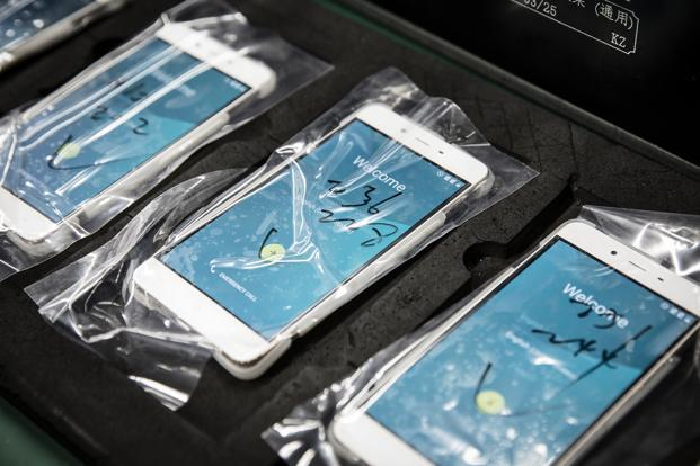
Dissecting Telecom Gadgets And Societal Effects

0

Telecom is the short form of telecommunication. The term is often used in its plural form, telecommunications, because it involves many different technologies.

Telecom is the transmission of signs, signals, messages, writings, sounds and/or images via wire, radio, or optical system, among other electromagnetic systems. It enables communication to take place between two parties that are separated by a certain distance.

Telecommunication occurs when the exchange of information between two or more communication participants involves the use of technology. In other words, it is the apt use of tech effects to initiate communication between individuals situated in different localities..

It is transmitted either electrically over physical media such as cables, or via electromagnetic radiation. Suchlike transmission paths are usually divided into communication channels, which afford the advantages of multiplexing.

It’s noteworthy that there are several modern telecom devices in existence. Telecom devices are those equipment that are being used by end users through telecom networks. Telecom networks could be any such network as mobile, exchange, and dedicated networks, or point to point links.

In the present days’ societies, common examples of telecom devices are computers, fax machines, radio cum television sets, satellites, masts, transmitters, trackers, and cell phones, among others.

This piece was informed by the compelling need for the overall users of the aforementioned devices to acknowledge how best to handle, or stay around, them towards avoiding numerous dangers inherent in their respective uses and functionalities.

For those involved in fields requiring radio communication, such as security, aviation, or maritime, it becomes even more essential to learn more about radio etiquette to ensure clear, efficient, and respectful exchanges. Not only will proper etiquette lead to better communication and understanding, but it can also prevent accidents and save lives.

It’s worth noting that the continued wrong use cum handling of these devices has caused an untold harm to the human body and the society at large, although their impact on societal wellbeing and growth cannot be overemphasized.

Each of these devices comprises Electromagnetic Field (EMF) that emits Electromagnetic Rays/Radiation (EMR) while they are in use. Many people worldwide are yet to realize they are chronically exposed to something that can deteriorate their health, because EMR is invisible and odourless, and cannot be felt by anyone.

This implies that unless EMR is duly identified and remediated, it can lead to countless health complications as well as premature death. It would shock you to note that millions of individuals have already died owing to their exposure to the said effect that could best be described as a silent killer.

The hidden truth is that EMR exposure, which is reckoned to be the silent enemy endangering the lives of millions of individuals and professionals across the globe, is far worse than cigarette smoke than we could imagine. It is a proven fact and equally verifiable scientifically.

Keep in mind that all health issues would be affected to an extent by exposure to EMR, since it weakens the immune system, stresses the body and damages healthy cells. The higher the frequency of the radiation, the more damage it is likely to cause to the body.

Common diseases caused by EMR are, but not limited to, cancer, chronic fatigue, constant headache, migraine, asthma, cardiovascular diseases, chest pain, insomnia, allergies, electrosensitivity (ES), high blood pressure, brain fag, leukemia, birth defects, miscarriages, and stress.

Others include nausea, multiple sclerosis, rheumatoid arthritis, skin conditions like burning, rashes and pain, as well as tinnitus, and erratic pulse. While the most acute exposures to harmful levels of EMR are immediately realized as burns, the health effects due to chronic or occupational exposure may not manifest for months, or even years.

Safekeeping of the cell phones in one’s trousers’ pocket can harm the person’s reproductive organs owing to the EMR being emitted by the phone, and such experience can make the person sterile if apt and drastic attention isn’t given to the victim.

People aren’t advised to keep any phone in their pockets. It is called a handset, so keep it in your hand. The truth is that EMR can penetrate through any part of the human skin, thus even when the gadget is in our hands, we should ensure that it is kept in a special pack or casing that can reduce the frequency of its radiation. We ought to be informed that the rate of the radiation depends mainly on the type and mechanism of the phone in question.

If we are at home or in the office, we ought to endeavour to keep them away from our body. For those who can engage in a chat for several hours, you really need to cut down the excesses, because you are inadvertently endangering your health. The point is that, you shouldn’t overuse the phone at a time.

The broadcasting/telephone masts mounted amidst residential settlements have caused tremendous harm to the affected residents, unknowingly to them. Wherever a mast is mounted, no one is expected to live anywhere around it. Dwellers are required to live at least a kilometer (1km) away from any mast in use. Even offices are not advised to be located near a mast.

Those working at broadcasting stations should keep off from where the FM/TV transmitter is kept, unless when they want to make some changes on the machine. This warning is invariably boldly inscribed on any transmitter and even in the manual, but several users still end up relegating the instructions to the background.

Similarly, don’t stay very close to your radio/TV set when they are in use. Aside your TV/phone screen that can damage your eyes’ retina, the EMR emitted by these gadgets is far more dangerous to health. The children must be guided in this regard.

Computers such as laptops are not left out. They are called laptops, but that doesn’t imply you are meant to place them directly on your bare skin. Place a tangible material on your laps before putting a laptop on them. The desktop shouldn’t equally have direct contact with the user’s body.

Away from body contact, towards avoiding fire outbreak, endeavour to keep those devices away from flames or flammable zones like gas cookers, filling stations and power lines, because EMR is highly inflammable.

Though these tech effects are real and unavoidable, you are only requested to apply caution while making use of telecom gadgets, not to see them as enemies to mankind.

MTN Granted License For Mobile Money Banking Service In Nigeria

0

Multinational mobile telecommunications company MTN has been granted the license to operate a mobile money banking service in Nigeria. Their license was approved by the Central Bank of Nigeria for its Mobile Money (MoMo) payment service bank in Nigeria, extending its services to wider operations.

The CEO of MTN Ralph Mupita disclosed that granting the company the approval to commence the MoMo bank was an important milestone for the company’s ambition 2025 strategy unveiled a year ago. In January MTN revealed that its mobile money service had attracted 9.4 million active users since launching in August 2019, a growth the company said provided a solid foundation for the upcoming establishment of the bank. The volume of transactions performed through the service rose by 167% to 137.5 million in the 2021 full financial year.

It is also important to note that Nigeria, which has the largest population in Africa, is still MTN’s largest market. Witnessing the Fintech boom in the country, with Nigerian fintech startups raising an estimate of $800 million in 2021, it is obvious that many mobile communications companies also want to tap into the resources in the region, as a lot of them are already venturing into various fintech based services primarily to diversify their income, with banking services being a key area for growth.

Not only has MTN decided to introduce a banking service, but telecommunications company Airtel has also disclosed plans to venture into the fintech space to offer mobile money services (smart cash) in Nigeria. After Airtel issued its first set of payment service Bank (PSB) licenses to local telcos in August last year, the Central Bank granted an approval in principle to Airtel Africa. It is pertinent to note that despite the fintech boom in Nigeria, the fintech ecosystem has only scratched the surface, as it is estimated that about 40 million adult Nigerians are still unbanked.

With telecommunications companies launching their mobile money service, this will catalyze the inclusion of poor people especially those in the rural areas of the country who do not have access to financial services, to transact quickly and conveniently. There has been an estimate that Airtel Africa could double its mobile money revenues when it finally commenced its operations in Nigeria.

A local newspaper, business day stated that the telecom grant to operate mobile banking could earn an additional $405m, an estimate it arrived at by multiplying the telco’s average mobile money revenue per user in the African markets where it already operates by the potential number of mobile money users the telco have in Nigeria. Banking in Nigeria is indeed a very lucrative sector because, despite the fintech boom in the country, there is still a vast majority of underserved consumers.

A lot of people in the country still lack access to financial services, which has spurred a few telecommunications companies to diversify into mobile banking to make profit, as well as bridging the gap between those who have no access to financial services in mobile banking. With few telecommunications companies venturing into the fintech space, no doubt these companies could pose a significant challenge to some fintech startups, including some incumbents because these telecom operators already have a large user base and also sit on a trove of data that could help them hit the ground running on time with ease.

Improving The Nigeria’s Labour Market Via Tech

0

 Despite the frantic efforts of successive governments to ensure they aren’t trapped in the pothole cruelly dug by joblessness among the teeming citizens, they still overtime encounter its ruthless scourge, apparently signifying that their effort isn’t good enough or that something is really wrong somewhere.

      However, my last visit to one of the West African countries lately made me understand that Nigeria isn’t exceptional while discussing unemployment or that the term is not peculiar to the acclaimed giant of Africa.

      But, it seems the degree at which it parades its tentacles and elbows in Nigeria is so enormous that the country is ostensibly taking the lead in the comity of nations. This is the sole reason many are deeply concerned and bothered over the anomaly, hence the need for drastic measures towards cushioning the excruciating effects.

      It’s noteworthy that unemployment is not a personal plight but a general one, thus the essence of a societal approach in a bid to tackle it. This is why countless schools of thought have overtime shown great concern over the lingering nature of the cankerworm as well as aired their views on how best to tackle it.

      Though unemployment isn’t a convincing excuse to indulge in any crime, hence no discerning mind encourages people to resort to it, it’s worth noting that its scourge remains one of the prime reasons all sorts of criminal activities have escalated in recent times.

      Another disturbing occurrence that’s apropos of unemployment is the employability status of our present days’ graduates. It’s not anymore news that most of these youths are obviously unemployable, thus posing a threat to the labour market and their chances of being meaningfully employed.

      The plight as stated in the above paragraph is mainly attributable to lack of adequate knowledge as acquired from their respective institutions of learning, or inability of our various undergraduates to stick to the needful while on campus.

      Taking a painstaking study of all these issues, it’s needless to assert that the ongoing unemployment crisis in Nigeria is not unconnected with dilapidated learning environment cum facilities, decline in the country’s value system, and insufficient employers of labour, among others.

      Though nepotism is highly condemnable and unacceptable, those who attribute unemployment to it might be making a big mistake because if there are sufficient firms or employment opportunities, such a practice like favouritism or what have you would hardly be detected by anyone.

      Before now, or in the olden days, Nigerians were gainfully engaged with various works simply because the jobs were readily available and the population was conspicuously far lesser than what we could witness now.

      But with the growing lack of sustainability of various government-owned establishments coupled with the astronomical growth of the country’s population, the job spaces abruptly became overwhelmed by the number of people in the labour market.

      A lot has really gone wrong in the system, but the good news is that, we can once again get it right if the needful is done by the relevant authorities. This can only be actualized by revisiting the drawing board.

      It would be very wonderful for the government to comprehend that the endless unemployment issues can aptly be addressed by truly comprehending the real value of technology, hence embracing its measures. It’s worthy of note that only technological approach could significantly alleviate all crises that are apropos unemployment.

      First, we need to revamp the country’s education sector. The current educational system of the Nigerian society has really deteriorated that an urgent, candid and apt measure is required towards its revitalization.

     We must be ready to train our young ones with a view to becoming self-reliant in their respective abilities. Since the population is growing by the day and the firms aren’t increasing meaningfully, there’s a compelling need to prepare these Nigerians so they could emerge as entrepreneurs or employers of labour rather than seekers.

       Our various technical colleges, which have apparently gone into moribund, must be revived in earnest to keep the ground running. Those days, graduates of these institutions – even without proceeding to a higher level of learning – could stand on their own as well as comfortably raise wonderful families with their earnings.

       The governments at all levels ought to endeavour to equip the various tertiary schools in their respective jurisdictions, so that, the graduates can defend themselves in any setting and equally start up something meaningful without ‘giraffing’ for the availability of any form of white-collar job as it is currently the case.

      In view of the above, the schools’ authorities must strengthen the value of the ongoing Students Industrial Work Experience Scheme (SIWES), which was primarily set up by the government to aid the technical upbringing of the learners irrespective of their disciplines.

      Hence, it’s high time the Industrial Training Fund (ITF), the body imbued with the powers to service the SIWES and sustain its viability, started doing the needful. The authority must endeavour to face priorities squarely at the expense of frivolities, as I rightly mentioned in my previous works.

      They must deploy a functional mechanism that would ensure thorough monitoring of the industrial trainees from time-to-time as long as the training lasts. This proposed task mustn’t be shortchanged for any reason whatsoever if we truly want the SIWES to be result-oriented.

      Our engineering graduates, just as it’s being observed in the medical and law fields, ought to be mandated to undergo a compulsory one-year national programme strictly on further industrial workshop training. This should serve as a prerequisite to the ongoing National Youth Service.

      Inter alia, the governments need to provide an enabling environment to enable all tech-driven talents to thrive as well as ensure that the available patents of the numerous institutions domiciled in their jurisdictions are duly commercialized. Research works in any quarter must also be given due attention since technology is strictly dependent on research.

     Conclusively, it would be sacrilegious to beat about the bush while discussing tech-driven matters, because technology is all about facts. Hence, the government needs to acknowledge that the suggested measures can never yield significant and tangible results if we continue to relegate the power supply issue to the background.

      We must understand that only uninterruptible electricity can encourage entrepreneurship to a great extent as desired by the people. Therefore, this technological factor requires the highest sincere attention.  

My “3T2030 Plan for Greater Nigeria” Will Unleash Prosperity, Strong Rural Economy and Abundance for All

2

Good People, never doubt the capacity of Nigerians to fix the current paralysis in the nation. This nation used to work. Many things seem like fictions these days but just decades ago, we were on the path to the mountaintop. Remember, decades ago, Nigerian scientists were creating vaccines approved by WHO (check cholera) out of our universities. Today, we have to wait for Pfizer, Modena, etc to save us! We will fix that because we’re as smart as those guys.

As I welcome Prof Osinbajo (he declared for Presidency this morning)  and other politicians into the arena for the next President of Nigeria, I make it clear that Nigeria can cut poverty by half, deepen industrial competitiveness, elevate rural Nigeria,  etc within 4 years. I have no party affiliation but “running” for a federal ministerial position. In my 3T2030 Plan for Greater Nigeria, I posit that we can create millions of low middle class citizens in Nigeria within two years. How?

Go back to any plot of gross world product (aggregate of global GDPs) over the last 2,000 years. There is one thing that is consistent: property rights. No nation has developed without property rights and until nations have built that capacity, they cannot advance. The efficiency of the utilization of factors of production has always tracked strengthening of property rights.

My plan is simple: expand the national balance sheet by unlocking dead assets in rural Nigeria. We will put property rights on all lands, farmlands and properties, enabling transferable velocity in them.

I will do that within the first few months, using startups to grow and map lands. Each local government area will use its young people to do this job, and we will provide a market-driven process that will not cost the government anything. The plan is to make it easier for people with land assets to have access to credits even as we improve the ease to buy and sell these assets.

The ministry of lands under the existing land use act will receive immense technology evolution by bringing innovators to drive property rights in Nigeria. I expect to unlock massive wealth and open new vistas for a dynamic rural economy in Nigeria. Yes, anyone with land  or property will suddenly become rich! I want those properties to show in the national balance sheet; today, they are invisible!

If we do that, I expect at least 5 million families to move into the low middle income class. Imagine inheriting 100 hectares of land which will now show up in the national “balance sheet” of Nigeria giving you the opportunity to access credits in your local bank for your business, or even easily sell one hectare to educate your children.

More so, with stronger property rights, developments will come to rural areas and agriculture will blossom. How do you expect someone to invest long-term in assets he does not have legal rights? Part of the problems with agriculture could be traced to our property rights. That would be fixed.

As Your Federal Minister, I Will Fix Nigeria’s Educational System