DD
MM
YYYY

PAGES

DD
MM
YYYY

spot_img

PAGES

Home Blog Page 5309

Once Again, India Bans 50 Chinese Apps on National Security Ground

0

India, like the United States, is wary about Chinese apps. The South Asian country has been on a ban spree to limit the operation of Chinese apps that have for years dominated its market.

The ban intensified in 2020, following a territorial conflict between India and China, but slowed down after several Chinese apps were permanently banned. Now, the Indian authorities are once again, shutting apps with Chinese links.

India has banned Tencent’s Xriver, Garena’s Free Fire, NetEase’s Onmyoji Arena and Astracraft and 50 more apps with apparent links to China, the latest in a series of similar blockings over the past one and half years on national security grounds. TechCrunch has the report.

Some of the newly prohibited apps, which include Sweet Selfie HD, Beauty Camera, Viva Video Editor, AppLock and Dual Space Lite, are clones or rebrands of many of the over 300 apps affiliated with Beijing that New Delhi has banned since mid-2020 amid escalating geopolitical tension among the two neighboring nations over protracted border dispute.

The South Asian nation’s Ministry of Electronics and Information Technology, citing the Section 69a of the IT ACT, 2000, placed the order, according to a person familiar with the matter.

In a statement, a Google spokesperson acknowledged the order and said the firm was complying.

“On receipt of the interim order passed under Section 69A of the IT Act, following established process, we have notified the affected developers and have temporarily blocked access to the apps that remained available on the Play Store in India,” a Google spokesperson said Monday.

“Garena’s Free Fire: Illuminate,” which has already been pulled from Google Play Store and Apple’s App Store in India, appears to be the most popular app to be blocked in the latest batch.

The Southeast Asian giant Sea-owned battle royal game had over 40 million of its 75 million globally monthly active users in India in January, according to analytics firm App Annie, data of which an industry executive shared with TechCrunch. Sea, which counts Tencent among its largest backers, is quietly also testing its social commerce Shopee in India.

The news of the ban has come as a surprise to Garena’s team in India. The firm was chasing deals with tournament organizations to further promote its game and attract more users and high-profile gamers in the country, a person familiar with the matter told TechCrunch. Sea did not have an immediate comment on the development.

The series of app blockings in India began in late June 2020 when the world’s second largest internet market banned TikTok, Alibaba’s UC Browser and Tencent’s WeChat and dozens of other apps with links to China over national security concerns.

New Delhi, which has never explicitly mentioned China in these announcements, did not make an official statement on its move Monday. With most of the previous bans, New Delhi has said the way the apps have compiled, mined, and profiled users’ data posted risks to national security and defense of India.

In the past one and a half years, the Indian government has banned over 300 Chinese-linked apps including popular title PUBG. That game remains the only known app that has made a return to Google Play Store and Apple’s AppStore in India in some way.

Several other firms and app operators have attempted to address New Delhi’s concerns, but the Indian government retained its decision early last year after deeming the responses inadequate.

India is by far the largest market globally by app installs. Last year, the South Asian nation clocked over 25 billion downloads, according to App Annie.

US giants as well as firms from other nations including China and South Korea aggressively focused on India in the past decade as they looked for the next great growth region. In comparison, only a handful of Indian firms operate in China.

After India refused to revoke its ban on TikTok, ByteDance (the app’s parent firm) laid off the vast majority of its employee base in India and recently shut down its edtech business in the country, TechCrunch reported.

TikTok’s ban in India, which prompted several local startups to launch short video apps, gain traction and raise over $1 billion, did not make much impact on ByteDance’s revenue as the firm made deep inroads in several other overseas markets. Indian social network ShareChat and on-demand streaming service MX Player said last week they were merging their short-video apps in the country in what TechCrunch reported is a $900 million deal.

Flutterwave Raises $250M at Valuation of $3B to Become Nigeria’s Largest Financial Institution

2
CEO of Flutterwave

It is now official: Flutterwave is the largest financial institution in Nigeria. Yes, its valuation is bigger than any bank in Nigeria by at least a billion dollars. Just this weekend, in Tekedia, I dropped this potential $3 billion number, as I discussed innovation, and creating a new basis of competition in markets.

Yes, this morning, Flutterwave announced that it has secured $250m in Series D funding led by B Capital Group, resulting in a valuation of over $3bn. I left a message on WhatsApp to CEO Olugbenga ‘GB’ Agboola with “Your continent salutes you…Nations rise when great entrepreneurs emerge. Thank you for changing your nation and continent.”

In the past five years, Flutterwave has been on a mission to create endless possibilities for customers and businesses in Africa and the emerging markets. To date, the company has served over 900,000 businesses, processed over 200M transactions worth over USD $16B across 34 countries in Africa. With the Series D funding, Flutterwave will accelerate customer acquisition and growth through M&A as well as develop complementary products.

The next destination: ringing the bell by next year in New York. This type of ascension will become common because 9 new unicorns are joining by Dec 2023 in Africa. Yes, the digitization of Africa’s economies will be decades-long.

==Press Release======

Flutterwave, a leading technology company, announced today that it has raised USD $250 million in Series D funding, valuing the company at over $3 billion as the brand continues to transform the way Africans transact on the continent and worldwide

Flutterwave has become the highest valued African start-up with this investment. It is a validation of African talent, innovation and its young inspiring people. It is also a huge endorsement in the growth of the business, innovation and technology landscape in Africa.

Flutterwave’s latest backers include some of the world’s most respected investors led by B Capital Group, and with participation from Alta Park Capital, Whale Rock Capital, Lux Capital, among others. Several existing investors who also participated in previous rounds also followed this round, including, Glynn Capital, Avenir Growth, Tiger Global, Green Visor Capital and Salesforce Ventures. The new funds will drive Flutterwave’s ambitious expansion plan to accelerate customer acquisition in existing markets and growth through M&A, and develop complementary products while encouraging new innovations in its products and services development.  The Company will share more details during the Flutterwave 3.0 event.

Since its inception in 2016, the Flutterwave team has been on a mission to create endless possibilities for customers and businesses in Africa and the emerging markets. The Series D fundraise comes on the back of an impressive run of five years in which Flutterwave has processed over 200M transactions worth over USD $16B to date across 34 countries in Africa. It also follows a year of rapid growth for the brand which now serves over 900,000 businesses across the globe.

In 2021, Flutterwave launched a range of new products including Flutterwave Market for merchants to sell their goods via an online marketplace and, most recently, Send, a remittance service that empowers customers to seamlessly send money to recipients to and from Africa. Flutterwave has also partnered with leading global and pan-African technology and telecommunication companies such as PayPal, MTN, Airtel Africa to drive financial inclusion on the continent and create endless possibilities for customers who can build customisable payment applications through its APIs.

Olugbenga ‘GB’ Agboola, Founder and CEO of Flutterwave, said “Our story is that of resilience and hard work. Our growth so far is due to the support of our customers, our partners, the banks, the public, the regulators, and importantly our people. The Central Bank of Nigeria, under the leadership of Dr. Godwin Emefiele, laid the vision of a transformational Payment System in Nigeria, provided the framework for innovation in this space, and has continued to create regulations that have enabled us to grow and thrive. We are grateful to them and to all the other Central Banks in all the countries where we operate. We set out to build a platform that simplifies payments for everyone and today, our solutions are used across the globe to connect Africans to the world and the world to Africans. We are delighted that investors believe in us and our story and are committing their resources to this belief. This latest funding demonstrates the conviction of some of the world’s leading investors in both our business model, team and the Africa technology market. It gives Flutterwave the much-needed support to deliver on our plans to provide the best experience for our merchants and customers around the world.”

Matt Levinson, Partner at B Capital said, “At B Capital, we seek to back generational companies with broad platform potential. Flutterwave has a unique opportunity to accomplish this as the dominant payments infrastructure provider across Africa. In addition to their emergence as the leading enterprise payments processor for the continent, Flutterwave is innovating at breakneck speed with novel fintech solutions for large corporates, SMEs and consumers. I’ve had the pleasure of backing this world-class team since 2017 and couldn’t be more thrilled that B Capital is leading their Series D. Flutterwave may ultimately build one of the most consequential fintech business in the world, enabling hundreds of thousands of merchants to transact online and connect Africa to the global economy.”

David Glynn, Managing Partner of Glynn Capital, said: “We believe the digitization of payments globally is one of the largest and most important trends in technology. Having been investors in Flutterwave since 2017, we have had a front row seat in seeing Flutterwave establish itself as a leading payments company in Africa as it drives adoption of seamless digital payments experiences for merchants and consumers alike. We look forward to supporting the company as it addresses its significant growth opportunity in the years ahead.”

This latest fundraising has seen Flutterwave’s valuation more than triple since its last funding round in March last year when it became one of Africa’s fastest-growing Unicorn.

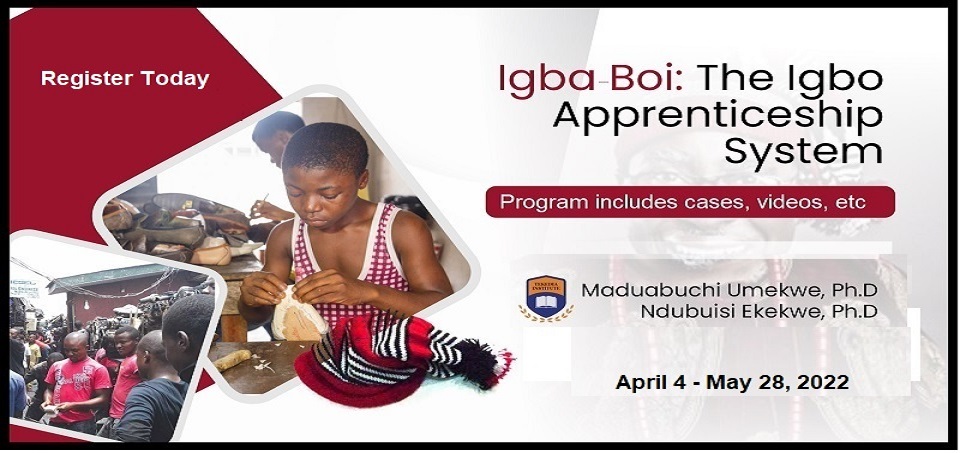
Register for Tekedia “Igba-Boi: The Igbo Apprenticeship System” Program

0

The first academic program on “Igba-Boi: The Igbo Apprenticeship System” has been unveiled by Tekedia Institute. Check the academic curriculum. Program will run April 4 – May 28, 2022

Tekedia Institute has opened registration for “Igba-Boi: The Igbo Apprenticeship System”. The program is designed to run for 8 weeks, and is structured to prepare learners on the mechanics of the Igbo business worldview philosophy of entrepreneurial stakeholder capitalism where everyone rises, and not just a few. The program includes pre-recorded videos, written materials, cases, etc.

Click and check the full curriculum. It  will begin April 4 to end May 28, 2022. The cost is $100 or N45,000. Register here.

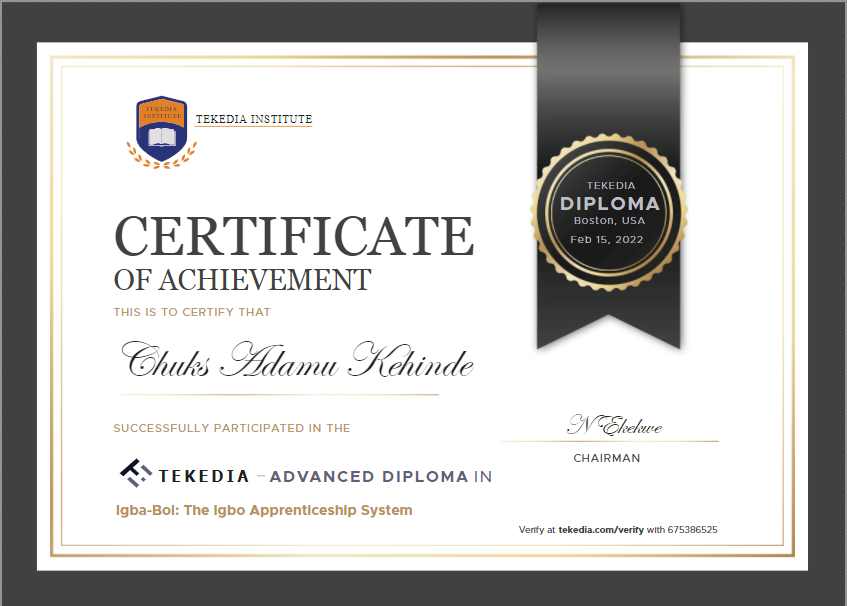
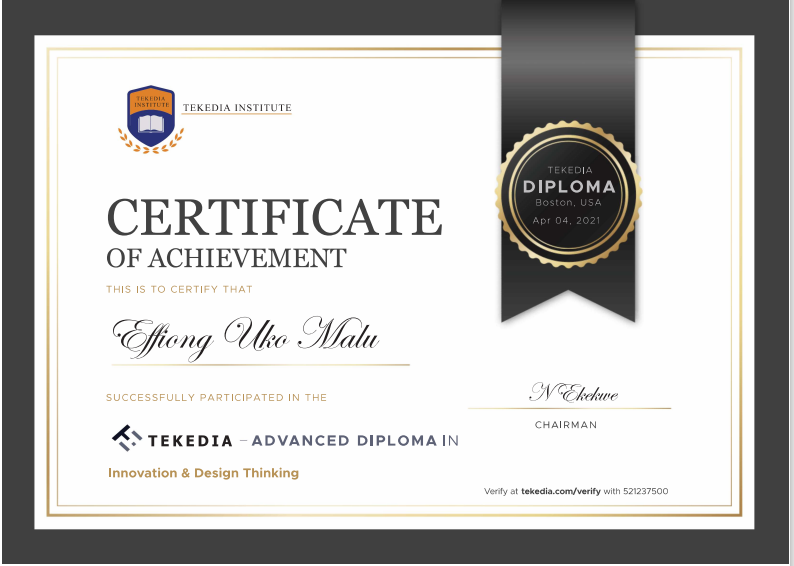
Upon graduation, we will award Tekedia Institute Advanced Diploma in Igba-Boi: The Igbo Apprenticeship System.

“The Igbos in Africa have been practicing for centuries what is today known as stakeholder capitalism”, we wrote in Harvard Business Review. In Tekedia Institute, we recognize that as the Umunneoma Economics (economics which works for all) and it looks more promising than Adam Smith Economics. This program will provide the tools, processes and elements necessary to not just understand Igba-Boi, but practice it in markets, in modernized ways.

7th Edition of Tekedia Mini-MBA Begins, Registration Continues…

0

Welcome to Tekedia Institute. We run an amazing business school which has attracted professionals and students from 39 countries. Our Faculty members come from Microsoft, Shell, Flutterwave, Nigerian Breweries, Jobberman, Coca Cola, and other great organizations. Thrice weekly, I personally coordinate live Zoom sessions on the mechanics of business systems. We bring our Faculty and Guests on those sessions, covering industries and business domains. REGISTER today and join us! – Prof Ndubuisi Ekekwe, Lead Faculty.

Invent, innovate and drive organizational transformation, performance, and growth. Capture emerging opportunities in changing markets while optimizing innovation and profitability. Digitally evolve your business or functional area, turning digital disruption into a competitive capability and advantage. Master the concepts of building category-king companies, and thrive.

Registration for the 7th edition of Tekedia Mini-MBA (Feb 7 – May 7, 2022) opens. Tekedia Mini-MBA, from Tekedia Institute, is an innovation management 12-week program, optimized for business execution and growth, with digital operational overlay. It runs 100% online. The theme is Innovation, Growth & Digital Execution – Techniques for Building Category-King Companies. All contents are self-paced, recorded and archived which means participants do not have to be at any scheduled time to consume contents. Our programs are designed for ALL sectors, from fintech to construction, healthcare to manufacturing, agriculture to real estate, etc.

More so, the sector- and firm-agnostic management program comprises videos, flash cases, challenge assignments, labs, written materials, webinars, etc by a global faculty coordinated by Prof Ndubuisi Ekekwe. When we finish, we will issue a certificate from the Tekedia Institute, Boston USA.

Register and join us. You will emerge transformed with tools and capabilities that engineer confidence, performance and growth.  Accelerate your leadership ascent with us! Here are our programs and costs.

How To Register

Group Registration Benefits

For bulk registration, the following benefits exist:

  1. Discount: Discounts based on number of participants.
  2. Growth Hour: A private Zoom session with your team and Lead Faculty, mainly on how you can grow, using frameworks in our program.

Curriculum for Tekedia Mini-MBA


More Registration Benefits

Capstone Program

Here are the 12 tracks:

The program is completely capstone-based. Tekedia capstone is a research paper or a case study exploring a topic, market, sector or a company. It is the project component of Tekedia Min-MBA.

Important Links

ALL Tekedia Programs and Costs Here

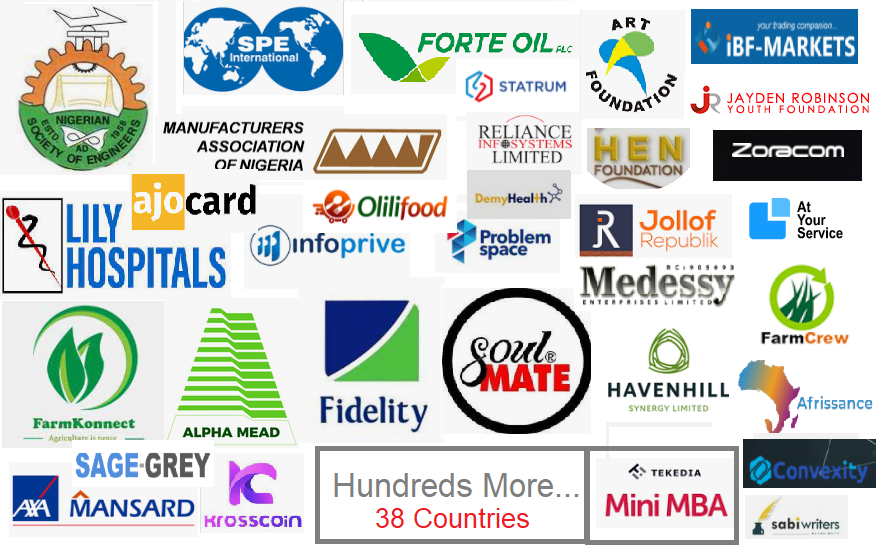
Selected Tekedia Mini-MBA Corporate Clients


Tekedia Mini-MBA Syllabus

Theme: Innovation, Growth & Digital Execution – Techniques for Building Category-King Companies

Introduction

Over the last few decades, digital technology has emerged as a very critical element in organizational competitiveness. It has transformed industrial sectors and anchored new business architectures, redesigning markets and facilitating efficiency in the allocation and utilization of factors of production. The impacts have been consequential: continents like Africa are moving towards knowledge-based economic structures and information societies, comprising networks of individuals, firms and states that are linked electronically and in interdependent relationships. In this program, we will examine this redesign within the context of fixing market frictions and deploying growth business frameworks in a world of perception demand where meeting needs and expectations of customers are not enough.

Program Time: Feb 7– May 7, 2022

Venue & Format: Online via videos, articles, webinars, and flash cases. Program is self-paced which means you consume the materials at your own time and pace. It is completely online. Where you live or your time zone would not be an issue as program is not live-delivered.

Cost: US$140 (N50,000 naira). We have a payment plan, i.e. installment payment plan (email us for details)

Target Audience: This program is designed for professionals and students across functional areas like sales, marketing, technology, administration, legal, strategy, finance, etc across all business sectors and domains.

Learning Objectives: To innovate is to set a new basis of competition in an economy, business sector or market. Sometimes, it results in disruption. This program is designed for private (large, SMEs, startups, sole businesses), public and government institutions, and individuals. Participants will:

  • Master the mechanics of growth – the reward of innovation – through frameworks, cases and evolving strategies.
  • Understand how to undergo transformation journey that is fully aligned with corporate objectives through measurable and realizable benchmarks.
  • Acquire business capability tools that do not just RUN their firms but can TRANSFORM them.
  • Design corporate growth experiments in Lab sessions based on One Oasis Strategy, Aggregation Construct, Double Play Strategy, Accumulation of Capability Construct, and more.
  • ETC

Tekedia Live Sessions

We run optional three Live Zoom sessions (two weekdays and one Saturday). This provides a way for our members to ask our Faculty and experts live questions and get feedback.

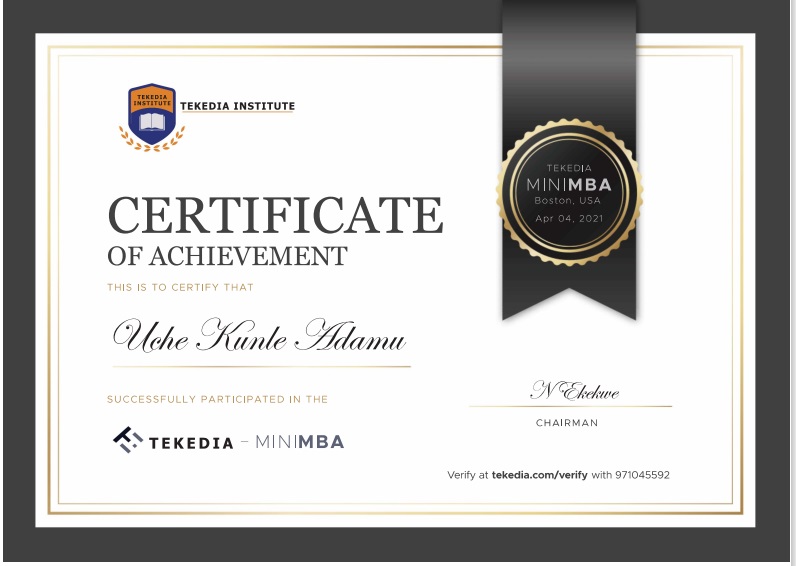
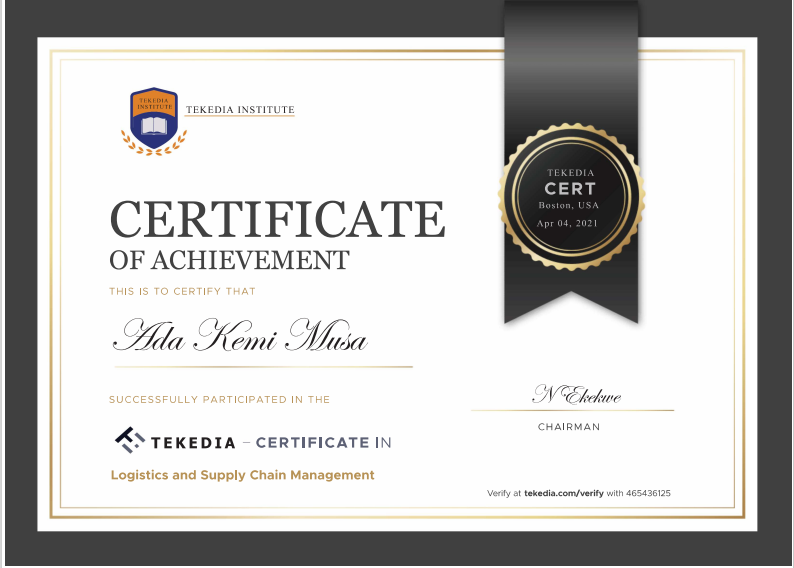
Tekedia Mini-MBA certificate sample


Tekedia Diploma program certificate sample


Tekedia Capstone program certificate sample

Special Weeks

Tekedia runs two special annual programs – Tekedia Career Week (not designed for finding jobs but rather planning careers) and Tekedia Innovation Week for our members. Admission is that member must have attended a Tekedia Mini-MBA program in that year. The dates are announced in our program curriculum.

Our Career Week is not designed for finding jobs. Rather, it is structured to TRANSFORM workers, founders & professionals into business leaders and champions of innovation in their companies. The sub-theme is Nurturing Innovators: Career Planning & Resilience During Disruption. It is packaged under the Tekedia Mini-MBA theme of Innovation, Execution & Growth. Our knowledge experts for the Week include human resources experts and leaders from MNCs and startups, across industries and global regions:

Other Tekedia Institute Programs

Our Contact Email: tekedia@fasmicro.com
Refund policy is full refund within 6 days from start of a program; after that, none but we can defer as requested.

Lead Faculty of Tekedia Institute

Prof Ndubuisi Ekekwe is the Lead Faculty of Tekedia Institute

  • PhD, Electrical & Computer Engineering, Johns Hopkins University, USA
  • MBA, University of Calabar, Nigeria
  • BEng Electrical & Electronics Engineering ( Federal University of Technology, Owerri, Nigeria)

Prof Ndubuisi Ekekwe invented and patented a robotic system which the United States Government acquired assignee rights. Dr Ekekwe holds two doctoral and four master’s degrees including a PhD in engineering from the Johns Hopkins University, USA. He earned undergraduate degree from FUT Owerri where he graduated as his class best student. While in Analog Devices Corp, he co-designed an accelerometer for the iPhone. A recipient of IGI Global “Book of the Year” award, a TED Fellow, IBM Global Entrepreneur and World Economic Forum Young Global Leader, Prof. Ekekwe has held professorships in Carnegie Mellon University and Babcock University, and served in the United States National Science Foundation Committee.

The South African press called him “a doctor of innovation” for helping organizations on the mechanics of business innovation, strategy, and growth. Since 2009, the Chairman of Fasmicro Group which controls many startups and entities has been writing in the Harvard Business Review. He was recognized by The Guardian as one of 60 Nigerians Making “Nigerian Live Matter” on Nigeria’s 60th Independence Day (Oct 1, 2020).

Selected Faculty & Testimonials

We have more than 85 Faculty members; see the full list here.  For selected testimonials on our program, click here.

Learn Procurement Management At Tekedia Mini-MBA

Learn The Mechanics of AfCFTA At Tekedia Institute

ebook Free for early registrants
Free for early registrants

As food costs reach 58.9% of Nigeria’s household income, why regulatory price control won’t work

1

I read an article a few days ago on LinkedIn suggesting that Nigeria needs a ‘price control policy’.

The post postulated that FGN need to ‘ to set minimums and maximums for the prices of goods and services in order to make them more affordable for consumers’.
A reference was made to California State law, (US) which limits the price raising to 10% after the market has been impacted by crisis phenomenon.

The law is intended to prevent ‘price gouging’ which creates inflation, reducing the purchasing power of the masses, and then leads to poor people getting poorer.

The question is, would it work? I’m thinking, with a few provisos and caveats that I am leaning in the direction of ‘NO’.

One of the reasons is the profound difference between doing business in California and Nigeria

Ease of Doing Business Index

The Ease of Doing Business Index was operated by The World Bank. Even if an investor has never done business in a country, the index provides a headline estimation of challenges, difficulties and risks (obstacles to profitability) condensed to a rating out of one hundred (x/100).

It’s changed its methodology multiple times. Iterative methodology regimes are signified by ‘DB’ followed by a year abbreviation… so DB10 started in 2010, DB15 in 2015 and DB17 in 2017.

The overall trend across successive methodologies has been to ‘mark upwards’, so it is dangerous to pick a particular country and celebrate how its index has improved between 2010 and 2017 as the results involve being measured by very different ‘yardsticks’.

What has been more credibly retained across methodology evolution, is the RELATIVE EDB rating between different global geos.

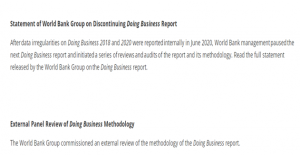
World bank notice on its EDB service suspension

World Bank suspended its ‘Ease to Do Business’ reports following some methodology inconsistency discoveries in 2020.  2021 reports were not published. A statement on their website suggests they have  completed a process in which ‘historical data up to Doing Business 2020, (were) revised to correct data irregularities’

They are currently working on a new framework called Business Enabling Environment (BBE), which is yet to be launched.

Nevertheless, they are still the defacto reference point for macro data like this.

Nigeria rarely, if ever, gets out of the bottom 10 in EDB ratings. The system does not provide ratings for different internal states, but does provide for some metropolis. The Lagos rating is only 56.5 against a Los Angeles rating of 82.2 and a Pan-US rating of 84. By comparison, war torn Yemen is 38.4. (2020).

To approximate, the gulf of business amenability between California and Nigeria is comparable to a preference for Nigeria over Yemen!

In a country where draconian import bans, killer herdsmen inhibiting backward integration and other supply chain challenges inhibit regularizing both cost of production and cost of sales, unregulated pricing is probably one of very few tools left to stop many businesses running at a loss.

Governance Inefficiency

There are three types of Governance in Nigeria.

The first is the duly elected representatives both at state and federal level; The Presidency; State Governors,  The two houses; and then the civil and military institutions over which they preside.. army, navy, air-force, police, immigration, customs, civil departments … the list goes on.

The second type are Nigeria’s various traditional structures, with different leadership titles depending on the tribal culture. There are titles such as Emir, Igwe, Oba, Oniru, and Sultan depending on what part of Nigeria.

With the advent of colonial rule, traditional leadership structures became fractured and with the gaining of independence, a very fudged version of constitutional monarchy completely lacking any form of federal uniformity emerged.

A myriad of mini-dynasties sprawled the land, each with their own powers of granting non-hereditary honours for notable ‘acts of service’ or from achieving esteemed notoriety in ‘far away lands’.

The third form of Governance is the unregulated governance structures.

This covers a wide range from terrorist organisations to self determination groups, bandit organisations, agbero and local ‘area boys’. They developed either out of control gaps in the other forms of Governance in certain parts of Nigeria, or, because of disaffection with their performance. In some cases they become introduced under funding of foreign actors. From time to time, reports appear in media alleging links and tacit approval from elements within the previously mentioned formal structures. Some of the actors appear to have religious objectives.

But, recall this passage from my New Years’ article on ’11 predictions of the decade’:

‘While a religion is often a significant generator of armed conflict both in the past and in the present, the two principal causes of human warfare are in fact culture and greed for territory, resources or power’   –  Meic Pearse – Author of: ‘Why the Rest Hates the West: Understanding the Roots of Global Rage’

This ‘third sector’ Governance however has predictable ‘civil authority’ hallmarks, such as the imposition of standardized behaviours by ‘control’; (varied levels of) restrictions on personal and autonomous freedoms, extracting income from subjects (taxes) without providing any free market type product or service; and lack of consumer choice or the means to opt out!

Corruption

I don’t like using the C word. It exists. It will always exist. Anywhere in the world it has always, does now, and will always exist. I try not to get involved in too many discussions about it.

The main reason is that the ‘go to’ topic is a sort of dismissive and resigned hopelessness, and I prefer a position that acknowledges the potential for ways forward.

Ultimately it matters less that it exists, and more that ‘continual improvement’ can happen in spite of it.

Theft, for instance, is a form of societal corruption. Modern trade and retail outlets don’t ‘break their brains’ trying to achieve zero theft. They just find a way of factoring it in as a cost of sales, as long as it doesn’t impact sales volume and hurt profit.

What matters is not achieving squeaky clean Governance. What matters is that Governance profits its people.

Irrespective of the nature of Governance, the reality is the overall collective cost of it in Nigeria is too high, and some serious slashes need to be made collectively across the sector to align its cost meaningfully against GDP.

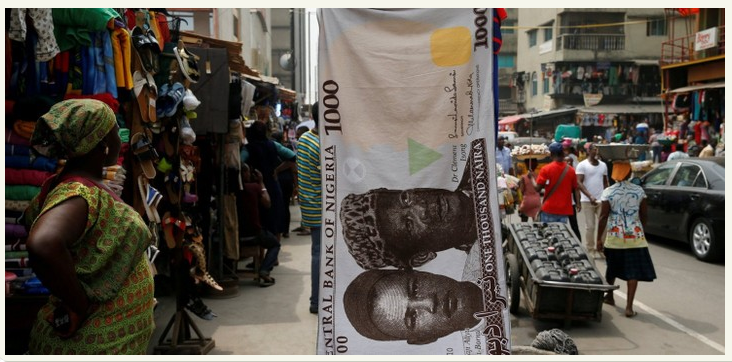
Nigeria currently has the highest average percentage of household expenditure on food in the world (58.9%), with the US (8.6%) being the lowest.

Reduction in the cost of food as a percentage of household income, not only improves quality of life, but it also stimulates the business intellect in the economy, by freeing up extra disposable income to be spent on individuals, improving their value prospect in the job market, contract or entrepreneurial space.

The reality is nobody in Nigeria would complain of ‘corruption’ if Governance was delivering an economy in which food only accounted for 8.6% of the income of households among ‘the masses’.

A ‘price control policy’ will not work, as driving food producers bankrupt would translate a market with foodstuff price challenges, to a market with no foodstuffs at all.

The only area which holds some flexibility is an assault on the cost of Governance as a proportion of GDP, which in turn would bring flexibility to reduce various taxations, generating more demand in the free job market and other improvements.

Please visit my site www.johnmckeown.eu

URLs and online content were referenced between February 12 and 15 2022

brandspurng.com/2019/06/17/nigerian-consumer-inflation-edges-up-to-11-4-in-may-nbs/

theeasternupdates.com/2020/09/23/the-disregard-for-chhieftancy-titles-in-igbo-land/

www.refworld.org/docid/41501c3a15.html

www.worldatlas.com/articles/countries-with-the-highest-expenses-on-food-relative-to-household-expenses.html

www.ers.usda.gov/data-products/chart-gallery/gallery/chart-detail/?chartId=76967

guardian.ng/features/tackling-basic-challenges-in-nigerias-food-production-industry/

www.worldbank.org/en/programs/business-enabling-environment/doing-business-legacy

dailypost.ng/2022/02/10/climate-change-threatening-food-production-supply-in-nigeria-expert/