This article likely veers away from the normal zeitgeist and common thinking of the moment; that fintechs are going to disrupt banks, that banks may not even exist in the next couple of years from now, and that fintechs may even begin to acquire banks.
While it is clear that fintechs are definitely disrupting our conventional payment and finance ecosystem and giving the banks a run for their money, understanding the value proposition of banks, what really matters to them and what makes them tick is key to understanding the role banks play in our emerging ecosystem.
The reports of my death have been greatly exaggerated – Mark Twain
Retail Banking
Let’s start by understanding who and what banks are really in the business of serving. The growth of digital banks has largely created some kind of seemingly assumed exodus of customers from everyday banks to digital banks (neobanks). While the value proposition and strategy of most digital banks is clear, it is important to note that traditional banks are not weak players that should be underestimated.
For starters, only DMBs can issue BVNs, therefore digital banks cannot necessarily go for the unbanked and will likely target those with some kind of bank account or the other. In other words, most digital banks are largely relying on a displacement strategy.
Digital Banks like Kuda Bank, Sparkle, etc hold certain promises; some promise to free you from the shackles of conventional banking, while others are focused on a kind of “Business banking for SMEs” proposition.
A key move some digital banks have decided to embrace is the idea of free transfers. Free transfers is a strategy designed to lure in a crop of users who are seemingly tired of paying transfer fees on transactions and would prefer to have that jettisoned. While conventional thinking postulates that a user who is drawn to the idea of free transfers is likely broke and may not be the ideal user a digital bank may be looking for, this may certainly not be the case. Kuda Bank which is one of the key promoters of the free transfers strategy is more than just a “free brand” it has leveraged a compelling brand strategy (coupled with the millions of US dollars it has raised in venture capital) to position itself among other things as some kind of bank for millennials and the “cool kids” bank. There are a good number of people who literally downloaded the Kuda Bank app primarily because of this.
Digital banks also allow users download, signup, and get a bank account without the need to visit a banking hall or make any physical interactions with any person. While, it is likely that the majority of banking in the future will take after this manner, and users definitely appreciate the convenience this brings, customers also desire the ability to walk into a banking hall, hold a teller/customer care rep by the shirt and cause a scene when they receive a strange debit alert on their bank account they can’t understand. How else will the bank know you’re serious without you displaying some degree of madness here and there right? The challenge with doing this with digital banks like Kuda Bank and the likes is that proper anger cannot be dissipated over a phone call or an email, and by the time you drive down from Lekki to Kuda’s office in Yaba, the anger would have likely dissipated.
The core purpose and value of retail banking to banks is access to cheap deposits for loan/credit purposes. Fees from card maintenance/usage, bank transfers, bill payments, and other services feed the bottom line no doubt, but the real business is corporate banking, that’s what the banks are focused on, and that’s where the money really flows.
If you have N200,000 (Two hundred thousand Naira) in your bank account, your bank may not care too much about you. N200 million and your bank has likely assigned a dedicated person to handle your account in case you need to reach someone. Add one or two more zeros to that and you can call your bank manager in the middle of the night because you don’t like the way your pet cat Milo is meowing and he’ll give you a listening ear. You’re a valuable customer (at least from the float perspective), and the bank doesn’t want to lose you.
The majority of other services (Insurance, credit, Investments, proper savings) fintechs offer bank customers are largely offerings banks could have offered their retail users to bolster ARPU (Average Revenue Per User) but decided not to because they felt it may not have been profitable to do so.
Banks and Innovation
One of the major reasons banks tend to be slower in adopting innovative offerings isn’t because they aren’t smart, it’s primarily because of the inherent culture in banking. Banks (DMBs and the likes) are heavily regulated entities (one of the reasons it would be somewhat foolhardy for a startup to think of acquiring one) and are therefore forced to adopt the “ask for permission” route to innovation as against the ‘”beg for forgiveness” route which the majority of startups choose to adopt.
While banks may not always appear in the media for their innovative solutions, they do have the ability to innovate. Those that can’t usually end up acquiring smaller startups that can give them the much-needed technical talent they may require to execute certain strategies.
The truth remains that banking in Nigeria is really some kind of copy and paste game, one bank starts it, the others follow, and it becomes the industry norm. Fidelity Bank and GTBank were the first to launch USSD channels in 2014, followed by FirstBank, then Stanbic IBTC, it has now become the industry standard today. Diamond bank first allowed users to deposit money in one bank branch, and withdraw it in another before the majority of banks followed suit, and the first bank to launch an Internet banking application was First Atlantic Bank (which got merged twice and is now a part of FCMB).
Banks will not disrupt themselves, and neither will fintechs. While savings apps (PiggyVest, CowryWise, etc) are poised to have a negative effect on bank floats as more users adopt their solutions, mental models and the pre-requisite confidence (not trust) users have in institutional banks may see less user attrition and a good number of people sticking with these more predictable ways of holding money as against fintechs for years.
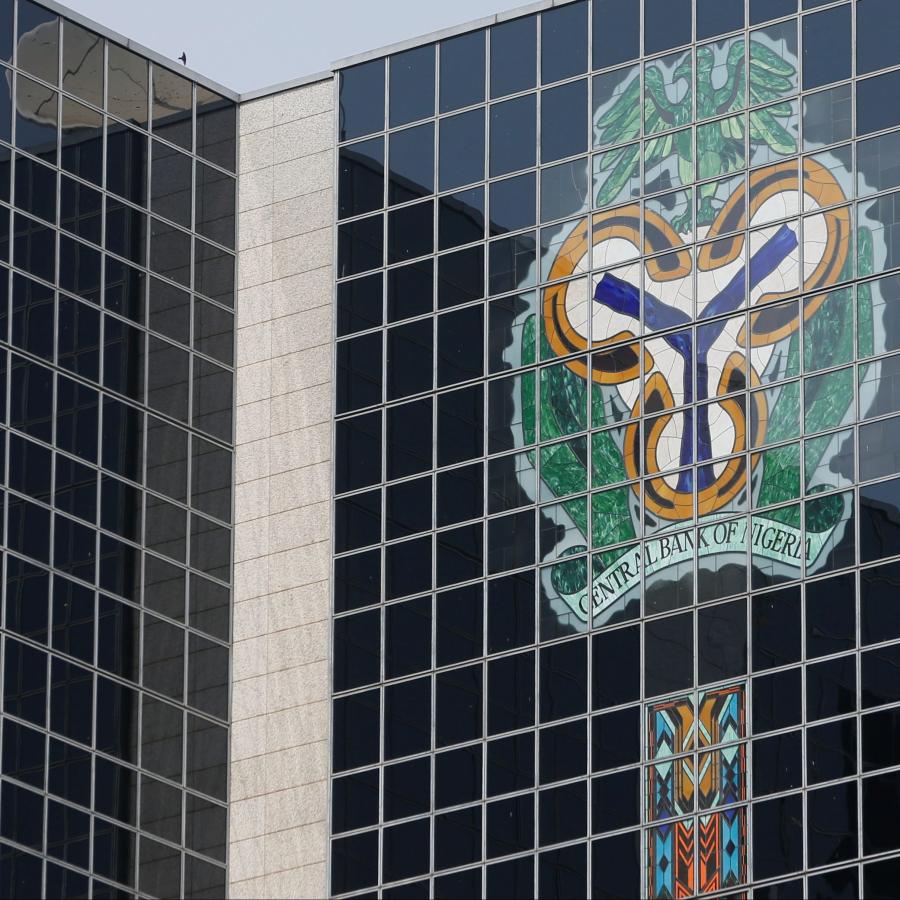
The truth is the only entity that can really disrupt the banks is the CBN. CBN did it in 2005 (Banking industry consolidation) and reduced the number of DMB (Deposit Money Banks) from 89 to 25, and then 23. CBN also did it in 2014 when they introduced the BVN as a means to curb money laundering and to promote transparency in the banking industry, the CBN is also largely responsible for banks morphing into holding companies to offer non-banking services and will continue to have an overarching effect on the banks till kingdom come. CBN has a protracted interest in seeing the banking system work, they’re not going to fold their hands and let upstarts destroy their crown jewels. If your claim as a fintech is the total and complete disruption of the banking system, be rest assured that the Central Bank (who also regulates you) is paying close attention to you. Be guided.
Subjective Valuations
The next key thing people have identified as a way fintechs disrupt banks is valuations. In 2021 alone, more than US$4.7 billion was raised by startups in the African space building for all kinds of problems. Fintech represented around 62% of that number. In Nigeria alone, the total disclosed funding for fintech startups in 2021 was more than US$400million. While these numbers are definitely impressive and signal the sporadic growth of the ecosystem, it is also clear that valuations are subjective and do not necessarily represent the value of a business.
Kuda Bank raised US$55million in August 2021 to secure a US$500 million valuation. Kuda’s Post-Money valuation of US$500 million makes it the third biggest bank in Nigeria by market capitalization. While on paper Kuda’s valuation is impressive, the idea that Kuda could be worth more in real terms than Sterling Bank and UBA combined sounds a little bit outlandish. NeoBanks tend to be unprofitable for a while, so while Kuda Bank may likely not be profitable, It’s unclear whether it generates up to seven-figure USD in revenues and if it does what its path to profitability (beyond lending) may look like. To be clear, I consider Kuda to be a great product (I am a Kuda user myself and a big advocate too), I however disagree with the idea that Kuda Bank is worth more than FBN Holdings (in real terms).
VC Valuations also do not speak to the true value of businesses. One clear indicator of this is the fact that both Flutterwave* and Interswitch are valued as US$1billion companies. While Flutterwave is a great company that offers payment infrastructure for businesses and has an international remittance solution, Interswitch Group has one of the most dominant transaction switch’s in Nigeria (responsible for switching almost 60 – 70% of all ATM transactions in Nigeria), the most dominant card scheme in Nigeria (Verve) and the second most visited Biller Aggregation Portal in Nigeria (second to Remita.net off course). Valuing these two businesses as the same may not necessarily speak to the true value of these businesses. Pegging the value of a fintech when compared to a bank based on its valuation alone may not necessarily speak to the true value of either entity being compared.
Banks As Infrastructure Providers
I wrote an article sometime last year on why companies fail at forward integration, you can read that here, Banks are largely required to integrate forward (become more consumer-facing) to be able to compete in this new era of fintechs, however, banks still have certain inherent advantages, one of which is their native ownership of millions of users who may (or may not) have more confidence in them than they do in third party solutions. Native ownership of millions of users creates a huge cross-sell opportunity for the banks and is one I expect them to take.
As an infrastructure provider, banks hold the APIs that allow for interoperability and promote financial inclusion and better credit access by allowing users “carry” their financial data from one player to another. The growth of the non-bank (alternative) lending market creates an opportunity for banks to profit off exposing APIs to fintechs building in this space and allowing them to spool their user’s transaction data while the bank gets a fee per API call for doing nothing more than providing APIs. Between the three major players in the OpenAPI space, more than 200million API calls have been made from 2020 to date. That goes to show you how much the banks are making on API calls for just providing APIs and doing nothing.
Banks are also key players and benefactors in the digital payments space. While the majority of banks don’t necessarily own payment gateways, banks are poised to profit off the growth of digital payments based on their static position as issuers, acquirers, and in some cases payment terminal providers in the digital transaction chain.
If you’re aware of how card payments work (web payment), you’re aware that your average card payment costs around 1.5% standard (cost usually carried on by the merchant). The value chain for card payments involves but isn’t limited to:
- Issuer Bank (The Bank that issued you a card),
- Payment Gateway/Processor
- Card Network (VISA, MasterCard, etc.),
- Transaction Switch
- NIBSS (for settlement purposes)
- Acquirer Bank (The bank that holds the funds for settlement at the stipulated time).
Banks are positioned to benefit from being issuer and acquirer banks, whether directly or indirectly, and will continue to generate revenue from card transactions and also charge the card-holder monthly/quarterly maintenance fees (for a card he keeps in his pocket and maintains himself)
Consolidation
The truth is that the fintech industry in Nigeria is gradually getting bloated with multiple companies offering similar solutions. Some reports stipulate an estimated 200 fintech startups in Nigeria alone, the endgame will eventually be market consolidation where bigger players (banks, telcos, institutional companies, other fintechs) thinking of playing or expanding their play in the fintech space begin acquiring players in the hopes of bolstering their positions and market capitalization. This is actually good for the market, acquisitions of this sort reduce market and data silos and also enrich founders and investors from successful acquisitions to build the next big thing (or at least buy new white Bentleys).
While banks are largely risk-averse and have cultures that don’t allow them take on too much risk in the name of innovation, I half expect the banks to begin to integrate forward by morphing certain aspects of their businesses to become more fintech oriented. Who are you more likely to take a loan from? Your bank at a 1.5% interest rate or an alternative lender? Banks naturally have the native advantage in this space if they decide to push it. And for the banks who may not embrace an organic growth strategy, they may just go ahead and acquire some fintech creating the kind of solutions they need to embed in their offerings to better serve their customers.
The truth is that banks are actually more likely to acquire fintechs than the other way around, and that’s a reality most people will need to learn to embrace. The market will eventually begin to consolidate, and nothing is stopping the banks from playing an active role in that consolidation.
Conclusion
While the growth of fintechs may look like a serious threat to the growth of banks in the long run (especially from a retail perspective), the banks are in no way sitting ducks or handicapped. They have a lot in their arsenals to position themselves to recapture and be not just formidable, but profitable players in the fintech ecosystem.
Inspired By The Holy Spirit
*Flutterwave announced its US$250million Series D today (16/02/22) valuing it at US$3billion, 3 times its previous US$1billion valuation. Part of Flutterwave’s Series D will be used to feed its inorganic growth strategy (M&A). We may see the fintech market consolidation we talked about happen earlier than we think.
Like this:
Like Loading...