DD
MM
YYYY

PAGES

DD
MM
YYYY

spot_img

PAGES

Home Blog Page 5316

Towards a More Perfect Igba-Boi And Establishing Igba-Boi Commission

1

Very painful on the businessman side – and a great commendation from the young men who demanded action when a businessman settled his boy with $200 after serving him for 9 years. The man’s action is absolutely condemned in all dimensions – and he must be made to settle the boy!

Yet, you do not throw a baby away with dirty water, says our elders. The spirit of apprenticeship remains across communities and can only be strengthened. This individual does not demonstrate the decency, honor and values which have enshrined this heritage in Africa and especially in the Igbo Nation.

As Tekedia Institute unveils a new course on “Igba-Boi: The Igbo Apprenticeship System”, on Monday, we are pushing reforms and templates to help the boys and the masters. We call for establishing an Igba-Boi Commission to serve as a custodian of records, references and enforcements under Ohanaeze with academic coordination from  Abia State University, to ensure that the young people are protected.

This Commission does not need to get the government wholly involved before it becomes so formalized that the masters may see it as a pure business play, diminishing the incentives and spirit behind the whole construct. But we need to have a certain framework that will be catalytic to rekindle that spirit of “onye aghala nwanne ya” [do not leave your brethren behind].

Tekedia Institute hopes to use our course to inform and educate towards a more perfect Igba-Boi by co-learning with our communities. Udo diri unu [Peace to all].


Urgency of Reform As Man Settles His Apprentice With 100k ($200) After 9 Years

Urgency of Reform As Man Settles His Apprentice With 100k ($200) After 9 Years

0

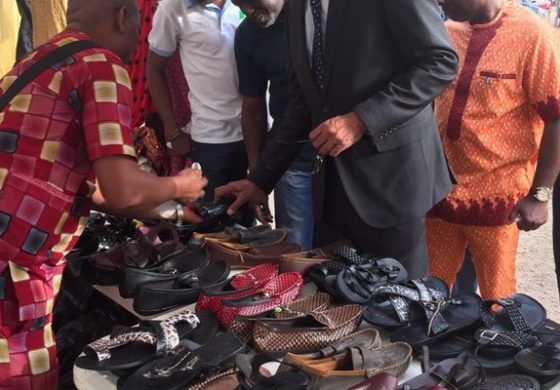
Just recently, there was a massive outrage on the street of Onitsha, Anambra state where some traders at the electrical International villa market staged a protest against a businessman who is also a colleague at the market over an amount of money he gave to his apprentice of so many years. The man is alleged to have given his apprentice a hundred thousand naira as appreciation after the apprentice served him for 9 years.

This system is the Igbo apprenticeship system which is very prevalent among the igbo’s which is known as “Igba-boi”. This system is whereby a well-established businessman goes to the village to pick up a young boy he would love to help who is idle. The normal duration for the service is usually 6 years, but lately, some have begun to extend it to 8-9 years. Although the Igbo apprenticeship system has helped in establishing so many young men to become established on their own.

But I will not fail to talk about some of the shortcomings of the Igbo apprenticeship system which is gradually becoming a norm. Lately, Some established Igbo businessmen are gradually becoming manipulative towards their apprentice. There are rising cases of Igbo businessmen refusing to settle their apprentice for a reasonable amount of money for the time of their service, just like the story above-mentioned. Some even go as far as not paying them anything, even to the extent of laying accusations on them in a bid to deny paying them for the years they served.

Although some apprentices are not genuine, during their years of service they steal money from the business, some even go as far as saving the stolen funds in a bank. Most times when their boss gets to find out about their illegal activities, during the time of settlement they begin to disclose that they were aware of those illicit acts carried out but chose to ignore them. Their ” oga” then go ahead to settle them with a small amount of money or no amount at all.

But what this article focuses on is the prevalent manipulation of what some Igbo businessmen are doing to their apprentice. Some go as far as accusing them of something they never did to deny settling them. I know a story of an apprentice that served his boss for 7 years, but when it was time for his settlement, he was accused of stealing from the business which automatically disqualified him for settlement. He was sent empty-handed.

These acts by Igbo businessmen need to be stopped especially when the apprentice is genuine. This is not what the Igbo apprenticeship is known for. I commend the fact that there was a protest against the man who settled his apprentice with 100k condemning the act. There needs to be a check on this evil practice before it ravages the system. Some greedy Igbo businessmen are using this as an avenue to manipulate their apprentice, in the process abusing the system.

Youths who want to pass through the system have become less interested due to the stories they have heard. Looking at the Igbo apprenticeship generally, although it has some shortcomings, it has elevated a lot of individuals and families from poverty. It is these practices that make the Igbo society retain its wealth, beauty, and pride. It has helped the youths not to resort to crime and other vices in society. Youths at young ages are taught how to manage a business which develops them to do better in their business when they are settled. The Igbo apprenticeship system needs to regain its true nature.

As Nigerian Senate Looks for N3 Trillion via MDAs

1
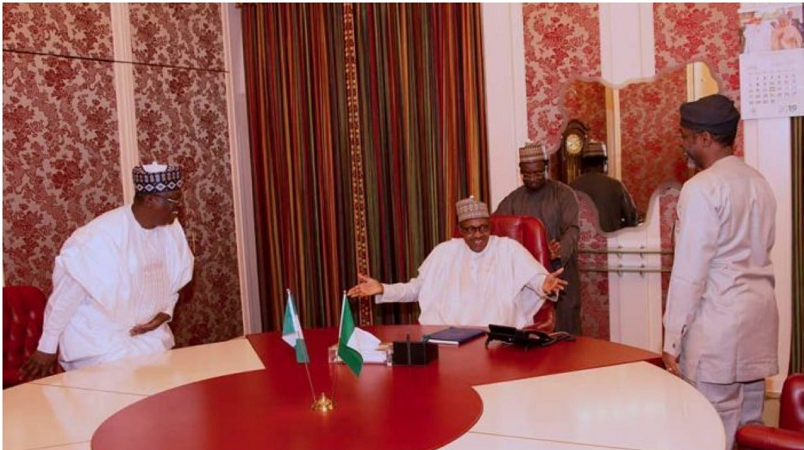
President Buhari of Nigeria

It is a double whammy because Nigeria’s fuel subsidy remains: you make it possible for the petrol mafias to keep smiling, and you also give the government an excuse to ramp up fees in revenue generating agencies. So, at the end, the Nigerian people continue to keep believing. Now that the Senate wants the revenue generating agencies to help, expect fees to go up in any transaction interaction with the government. 

The Senate has spoken to MDAs (ministries, departments and agencies of government): “The Nigerian Senate has said that it will be up to revenue-generating agencies of the Federal Government to generate the needed N3 trillion.

The Nigerian Senate has said that it will be up to revenue-generating agencies of the Federal Government to generate the needed N3 trillion. The Senate president Ahmed Lawan said the agencies are capable of generating the sum annually if the resources are prudently spent.

Lawan said this on Monday, while declaring open an interactive session on the need to improve internally generated revenue of the Federal Government and Revenue Projections of the agencies as stipulated in the Appropriation Act 2022.

He explained that the meeting, which was between the Senate leadership, members of the Senate Committee on Finance led by Senator Solomon Adeola, and revenue-generating agencies of government, was to explore means of increasing government revenue.

Donald Trump was not my person but I respected the boldness he had to kill certain policies in his country. Because he did those, future presidents will benefit. Nigeria needs outliers who can be “stubborn” and get this country fixed. It turns out that President Buhari is just like the rest; no difference. Maybe we need some out-fashioned bulldozers to fight for the Nigerian people, and stop the own-goals.

Think about it: you will spend $7.3 billion to subsidize fuel when that money could have helped you fix  some of your refineries and deal with the root cause, recording positives for the nation! Tufiakwa.

Nigerian Senate Moves to Help Revenue-generating Agencies Fund N3trn Revenue Deficit

Nigerian Senate Moves to Help Revenue-generating Agencies Fund N3trn Revenue Deficit

0

As the prolongation of the timeline for fuel subsidy removal opens a N3 trillion vacuum in the 2022 national budget, setting Nigeria up for more borrowing, the National Assembly has unveiled a plan to fill the vacuum.

The Nigerian Senate has said that it will be up to revenue-generating agencies of the Federal Government to generate the needed N3 trillion. The Senate president Ahmed Lawan said the agencies are capable of generating the sum annually if the resources are prudently spent.

Lawan said this on Monday, while declaring open an interactive session on the need to improve internally generated revenue of the Federal Government and Revenue Projections of the agencies as stipulated in the Appropriation Act 2022.

He explained that the meeting, which was between the Senate leadership, members of the Senate Committee on Finance led by Senator Solomon Adeola, and revenue-generating agencies of government, was to explore means of increasing government revenue.

Part of the aim of the Senate according to Lawan, is to strictly cut down on wastage while boosting revenue generation.

Lawan said the National Assembly would be rigid on ensuring increased revenue, cutting down on the country’s budget deficits, borrowing, and preventing wasteful expenditures by agencies of government. In addition, he said that the Senate would provide the needed support via legislation to ensure that revenue agencies meet and surpass their targets.

“In 2022, National Assembly assumed and rightly so, that our government-owned enterprises can generate up to N3 trillion if we are of the mindset that we can achieve that and, of course, ensure that we oversight to stall any possibility of unwarranted expenditures by agencies of government.

“But that does not mean in any way that it is going to be some kind of investigation on what you do, but an encouragement of what you need to do.

“In this meeting and subsequent ones, there should be no holds barred on discussions. Where an agency feels it is encumbered in any way from achieving its target, it should say so, so that we are able to prescribe the right solutions for it to perform.

“As a National Assembly, let me say that the Senate particularly will be stiff on generating more and more revenue.

“We will be rigid, we will continue to insist because we believe that this is one sure and guaranteed way of reducing our deficit and borrowing,’’ he said.

During the meeting, the height of infrastructural decay in the country was decried by Senator Adeola, who largely attributed it to budget deficit.

Lawan said the National Assembly will seize this opportunity to save the country from poor budget implementation by helping government agencies to enhance their revenue generation, thereby facilitating infrastructural development.

“This committee is modified because the leaders of the Senate believe that we can do far better and we have seen signs when last year some of the agencies performed beyond expectation.

“So, it is an opportunity for us to save and enhance our economy and, of course, make Nigeria achieve more infrastructural development which is the goal of this administration and every Nigerian.

“We believe that when you (revenue agencies) generate the money, we (National Assembly) appropriate it.

“Prudence is of essence here, when we spend our money. And when we borrow, like the National Assembly has always tried to do, we borrow to treat specific projects and programmes of government,’’ he said.

However, there is concern that the move will compound Nigeria’s inflation, currently at 15.63%. The major challenge with revenue-generating agencies in Nigeria is corruption. With many of the agencies riddled with cases of embezzlement and malfeasance, the onus is on the Senate getting them to be transparent in remitting generated revenue.

Nigerian agencies are required by extant law to remit 25% of generated revenue to the federation account. However, their sincerity in remitting their generated revenue has been under serious question. Late last year, the House of Representatives, during the 2022 budget defense by Ministries, Departments and Agencies (MDAs), rejected the budget proposals of many government agencies for failing to provide evidence of 25% remittance of their generated revenue into the federation account.

In 2021, the Nigerian Custom Service generated N2.3 trillion, which its 25% amounts to five hundred and seventy five billion. Although other MDAs may not have exerted the same vigor in their revenue generation, it is believed that if 25% of their collective generated revenue is sincerely remitted to the federation account, it will beat the target N3 trillion.

Therefore, the National Assembly is expected to focus on ensuring transparency in the MDAs. The concern remains that setting new revenue targets for government’s revenue-generating agencies will result in further hardship for Nigerians, since it will mean them imposing additional charges on services which will in turn reflect on the cost of goods and services.

Nigerians are currently grappling with 17.37% food inflation, and can’t afford the hardship that will emanate from further increment in the cost of goods and services.

61 Years On: Should Nigerians Celebrate?

0
The coat of arm of Nigeria

Nigeria, the acclaimed giant of Africa, graciously clocked 61 on October 1, 2021. I gathered the Independence anniversary has instilled mixed feelings among the teeming Nigerians.

In some quarters across the Nigerian State, many have argued that the commemoration deserves no iota of applause let alone celebrating it. Whilst, some are, on the contrary, of the view that the country has gone too far, hence ought to be celebrated by all and sundry.

It’s imperative to take into cognizance that at such a time like this, diverse opinions are usually obtained among the concerned entities and individuals at large. But no matter the way we try to view the scenario, we aren’t meant to forget that facts are invariably sacrosanct.

Before we draw our conclusion as regards where Nigeria is at the moment, it would be very pertinent for us to painstakingly take reference from the history book towards ensuring that derailment isn’t encountered in the process.

Nigeria became a British protectorate in 1901. The colonization lasted till 1960 when the country succeeded in gaining her independence. She first became a republic in 1963 but succumbed to military rule three years later, which emerged through a bloody coup d’état.

Furthermore, a separatist movement agitated for the Republic of Biafra in 1967, leading to the three-year civil war. The country returned to a republic after a new constitution was drafted and ratified in 1979. Pathetically, the second republic was short-lived when the military seized power again four years down the line.

Subsequently, a third republic emerged in 1993 but was fiercely dissolved by yet another military interruption led by General Sani Abachi. The said army general passed on in 1998. Consequently, a fourth republic was established the following year being 1999, which ended three decades of intermittent autocratic leadership.

Nigeria has really gone a long way. She has thus far squarely faced the numerous challenges life could bring. She has been able to outshine a few of the barriers but is yet to overcome some other critical ones, particularly those that are severely staring at her beautiful physiognomy.

Just like a man or any human who was born on a certain day. And as he grows, he learns that life, which could be described as unfair, presents mankind with two glaring options namely: the choice to live or to pass away. If such a man is truly determined to live despite all odds, then he must be ready to look the challenges right in their faces, hence ought to be willing to withstand them at all cost.

But if he feels he cannot make a reasonable life out of his existence here on earth, he would definitely give up in the long run. And as time progresses, he might even decide to take his life by himself. It’s noteworthy that despair, which often leads to suicidal mission, remains the worst thought a man could nurture.

In the case of Nigeria, she has hitherto proven to everyone her utmost desire to survive. She has obviously displayed a high level of gallantry toward her readiness to not just sustain survival but soar beyond the sky in spite of the outpouring hindrances.

For instance, to have been able to steadily sustain democracy since the emergence of the fourth republic in 1999 till date is enough reason to applaud her efforts. Notwithstanding the population, which is currently over two hundred million, Nigeria has in recent times been relatively able to accommodate her teeming subjects as one indivisible member of a given nation.

Aside from politics, Nigerians as a people are doing marvelously well in various fields of human endeavour, both at home and in the Diaspora. The citizens of the country residing abroad have on different occasions made the country proud by writing their names in gold. These and many more are the obvious reasons Nigeria deserves to be genuinely celebrated at 61.

However, as we ostensibly celebrate Nigeria, the leaders mustn’t fail to take note of some socio-political and economic plights that ought to be given a thorough attention if the country intends to record successes in its thrive towards survival and greatness.

Nigeria, just like most other African nations, is a country where the institutions are weaker than the individuals domiciled therein. In the Nigerian society in general, the latter is seemingly stronger than the former, thereby making mockery of such several constituted authorities as the law enforcement agencies, thus defacing the outlook of the country’s extant laws and policies.

This anomaly must be addressed headlong by strengthening the existing institutions, especially at this period the present administration is apparently interested in ending the lingering effects of corrupt practices and allied lifestyles.

Another critical predicament Nigeria is faced with is the ongoing phenomenon whereby the politicians see leadership, or holding a political office, as an avenue for self aggrandizement rather than service as it is seen in advanced countries.

This irritating situation could be addressed by henceforth reducing the take-home pay cum other accruable allowances of political office holders as well as ensuring every expenditure is accounted to and in line with the approved annual budget.

So, as Nigeria passes through 61, she must be reminded that even though the country is no longer where it used to be, there’s still a long distance to cover as regards the anticipated change.