DD
MM
YYYY

PAGES

DD
MM
YYYY

spot_img

PAGES

Home Blog Page 5357

They Create New Basis of Competition – Support Them At Tekedia Capital

0

At Tekedia Capital, we define disruptive innovation startups as startups which introduce technology-anchored and -enabled products or services that bring new basis of competition in the market. These startups have the capacity to rewire the ordinance of market systems, creating leverageable factors which can compound, outperforming the market. We find them in all industrial sectors – and we like to support them!

Join me to support them at Tekedia Capital where we’re building the foundations of the next Africa.

Tekedia Capital invests in technology-anchored early stage startups and companies. Our opportunity antenna and grassroot connections with innovators enable us to see patterns as they develop.  We invite you to partner with us as we nurture and build category-king companies in Africa and beyond, and in the process advance citizens, communities and nations. At Tekedia Capital, we fund the foundations of the NEXT African economy.

Tekedia Introduces A New Course: “25 Startup Innovation Cases (10 Africa, 5 USA, 5 India, 5 China)” by N. Ekekwe

0

Extra 200 participants are joining Tekedia Institute Mini-MBA from India, according to an update this morning, from our India-based Lead Asif Chowgule. I told him that Tekedia will create a dedicated program with focus on India as the numbers are significantly ramping up. This is in recognition that India is one of the fastest growing markets for Tekedia Mini-MBA and Tekedia Startup Masterclass.

Yet, we will make sure that we’re glocal, using cases which help all learners, encapsulating local and global perspectives. In all our programs including Tekedia Mini-MBA, Tekedia Startup Masterclass, Tekedia Practice, Tekedia Industries and Phase 1  Corporate Virtual programs, you will see a new course, from Feb 7: “25 Startup Innovation Cases (10 Africa, 5 USA, 5 India, 5 China)”.

To make things easier, here is a table of all programs with costs – and how to join

Thank You – And Have A Great Day

0

In the Igbo Nation, it takes the killing of one leopard to be called a killer of leopards. Yes, your Like, your Share, your comment, etc has made this feed amazing. I want to thank everyone – and wish ALL a GREAT Day. The Governors Forum extended an invitation. How did we get there? A member of our community shared our post with His Excellencies; please continue to share on WhatsApp, emails, etc. Very appreciated. Happy Sunday.

Fuel scarcity in Abuja?

0

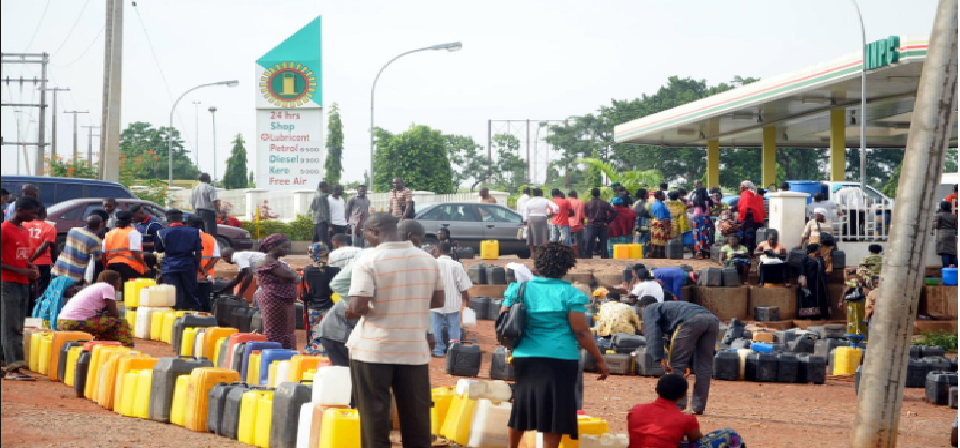
For about two weeks now, I have been queuing  up for at least an hour just to purchase fuel in petrol stations here in Abuja, and that routine is becoming tiring. Some of the petrol stations locked up their outlets, some said they don’t have petrol for sale while others said they are keeping theirs for the future.

Some of the petrol stations that are fortunately dispensing petrol to buyers are insisting that a buyer is not allowed to buy more than N3000 worth of petrol at once and that’s the order from their management. If you insist that you must buy more than N3000 worth, the fuel attendants won’t attend to you unless you are connected to one of them.

What is the reason for the fuel scarcity in Abuja?

It seems that the fuel scarcity (so to be called) is only happening in the federal capital territory, as other states and cities are going on with their regular fuel and petrol availability. Abuja residents have been asking the question; “what is the reason for the fuel scarcity currently ongoing for weeks now”. 

Many are yet to get the answer to this question. Some claim that there is no fuel scarcity; motorists are  just “panic-buying” due to the back and forth policy of the government on the fuel subsidy removal, hence, the reason for the long queue at petrol stations. 

Some also said that the reason for the fuel scarcity is that petrol stations decided to lock up their outlets to hoard fuel and save it for future sales just because of the government policy on fuel subsidy which could drive the price of fuel up in the near future.

Whatever the reason for the fuel scarcity in Abuja is, the government should step in and ameliorate the situation. These have been causing traffic gridlock as vehicles queue up from the petrol stations to the roads. Productive times are also wasted queuing up for hours just to get fuel.

The government is yet to make up its mind on the fuel subsidy policy. It seems they are not sure what they are going to do yet.

CBN Slashes Banks’ ATM, Cards and Electronic Transaction Fees

1
Central Bank Governor, Nigeria

Nigerians have got a reprieve following years of lamentations over arbitrary charges by commercial banks. The situation, which has resulted in apathy toward commercial banks in the country that are seen to be enriching themselves with money extorted from depositors, has discouraged Nigeria’s push for financial inclusion.

In response to the growing outcry, the Central Bank of Nigeria (CBN) has revisited its policy that allowed Money Deposit Banks (MDBs) to impose those charges on their customers.

The CBN has announced a downward review of charges for electronic banking transactions in its revised guidelines to charges by banks, other financial institutions and non-bank financial institutions, NAN reports.

A circular by Chibuzor Efobi, for the Director, Financial Policy and Regulation Department, stated that the review was in response to “further evolution in the financial industry in the last few years.”

The apex bank stated that the new guide included review of other bank charges to align with market developments.

It stated that it also comprised inclusion of new sections on accountability/responsibility and a sanction regime to directly address instances of excess unapproved, (arbitrary) charges.

It added that the revised guidelines took effect from January 1.

The CBN has the mandate to issue the guide to bank charges. The guide provides a basis for the application of charges on various products and services offered by banks and other regulated institutions under the purview of the apex bank.

The guide was first released in 2004 and revised in 2013 and 2017 due to market developments such as new innovations in products and channels, as well as new industry participants.

These are bank charges affected by the policy review.

The annual cost for foreign currency (FCY) denominated cards has been cut from $20 to $10.

ATM fees are decreased from N65 to N35 following the third withdrawal within a month.

The fee for hardware tokens will be based on cost recovery, with a maximum charge of N2,500, as opposed to the previous maximum charge of N3,500.

The fee for SMS obligatory alerts will be based on a cost recovery from the previous maximum price of N4.

Bill payments made through e-channels will incur a maximum fee of N500 based on 0.75 percent of the transaction amount up to a maximum of N1,200.

A pricing scale for electronic transfers to replace the present N50 flat cost. As a result, transactions below N5,000 would incur a maximum fee of N10; transfers between N5001 and N50,000 will incur a charge of N25; and transfers above N50,000 will incur a charge of N50.

It is believed that the new guide has become necessary in the face of the fintech boom and alternative banking services being widely adopted, which are threatening Nigeria’s traditional financial industry.

Nigerian banks recorded a drop in deposit rate in 2021, as bank customers increasingly seldom leave money in their accounts, mainly due to low interest yields and the incessant complaints of bank charges depreciating savings accounts. The situation forced some banks to review their deposit interest rates upward to attract deposits.