DD
MM
YYYY

PAGES

DD
MM
YYYY

spot_img

PAGES

Home Blog Page 54

$7.13M Raised: Why INVEST Network Is the 3000x Pick While Avalanche Price and Chainlink Price Rally

0

Avalanche price just had its best week in months, jumping more than 40% after the network’s Helicon upgrade went live and Aave V4 pulled in $1.2 billion in fresh deposits, though AVAX is still sitting roughly 93% below its 2021 peak. Chainlink price tells a messier story: LINK climbed toward $13 on a wave of institutional integrations, then slipped back under $12.30 this week after the market shrugged off a vague new partnership with Infosys.

INVEST Network doesn’t have that problem, because there’s no headline required to move it. The presale has now crossed $7.13 million raised, INVEST Miners are already shipping and processing real AI compute worldwide, and every task gets verified on-chain by an actual zero-knowledge proof. For anyone hunting the best crypto to buy today, that’s proof already delivered, not a rally waiting on the next announcement.

INVEST Network Keeps Proving What It Promised

Numbers don’t lie, and INVEST Network’s numbers keep getting harder to ignore. The presale has now raised $7.13 million and just moved into stage 3, where INVST is priced at $0.00048. That’s not a slow crawl; it’s a project pulling in serious capital while still early, and every stage that closes locks in a cheaper entry for whoever’s already deciding on the best crypto to buy today.

It’s backed by something concrete, too. INVEST Miners, the $249 devices that plug into a home network, are shipping worldwide right now, not on some future date. Each unit processes real AI compute tasks routed over the network, and every completed task generates a zero-knowledge proof verified automatically on-chain in roughly two milliseconds, running on a Substrate-based chain secured by a hybrid Proof of Intelligence and Proof of Space model.

The math backs the pitch. Stage 2 closed at $0.00043, and the project’s targeting a $0.04 listing price once the full 25-stage presale wraps, putting today’s stage 3 entry at roughly 83 times below where INVST is meant to land.

Weigh that against two coins still leaning on the next headline, and the case for INVEST Network gets simpler. Analysts covering the project point to potential gains as high as 3000x over the long run, and while that’s not guaranteed, a project already shipping hardware and verifying real compute beats one still waiting for its fundamentals to catch up on the best crypto to buy today.

Avalanche Price Finally Breaks Its Downtrend

Avalanche price just posted its best week in months, up more than 40% after the network activated its Helicon upgrade, the biggest change to its staking economics since launch. The update cuts the minimum validator lock-up from 14 days to 48 hours and enables Continuous Execution on the C-Chain, letting transactions process alongside consensus for better throughput. Aave V4 piled straight into the momentum too, pulling in $1.2 billion in fresh deposits on Avalanche within days of launching there.

None of that erases the bigger picture. Avalanche price is still trading roughly 93% below the $144.96 peak it hit back in 2021, and the token has lost close to 70% of its value over the past year despite genuine institutional interest, including a Hyundai stablecoin pilot and expanded CME derivatives access. Chart watchers see a real breakout attempt building, with one popular analyst eyeing $11.50, but AVAX has burned bulls with false starts before.

Chainlink Price Slips Despite Real Institutional Wins

Chainlink price has actually climbed a long way from where it sat earlier this year, trading near $13 this week as its strategic reserve topped $70.5 million and the network added 16 new integrations across seven chains, including Circle’s newly launched Arc mainnet. Wyoming’s Stable Token Commission even migrated its FRNT token’s cross-chain infrastructure to Chainlink CCIP, citing security concerns after a rival’s bridge was linked to a $292 million exploit, while JPMorgan and UBS keep running settlement pilots on the network in the background.

The gains haven’t held steady, though. Chainlink price slipped to around $12.24 this week after the market shrugged off a new partnership with Infosys that named no bank, no timeline, and no financial terms. Real usage keeps expanding underneath it all, but until the price stops flinching at thin headlines, LINK remains a network proving its fundamentals faster than the chart is willing to admit.

The Final Take

The pattern repeats across both comparisons. Avalanche price needed a major network upgrade and a $1.2 billion DeFi inflow just to break its downtrend, and chainlink price is sliding again after the market wrote off a partnership announcement that arrived light on details. Both are still waiting on catalysts to actually stick.

INVEST Network isn’t waiting on anything to stick. It’s sitting on $7.13 million raised, stage 3 open at $0.00048, Miners shipping worldwide, and zero-knowledge proofs verifying real AI compute as this is being read. When the question is the best crypto to buy today, the project already proving its numbers, at a presale price that only rises from here, is the one with the clearest case.

Find Out More about INVEST Network:

Website: https://invest.net/

Buy: https://purchase.invest.net/

X: https://x.com/Invest_Network_

Telegram: https://t.me/InvestNetworkOfficial
Elon Musk Predicts SpaceX Will Lead AI Race Over OpenAI and Anthropic Within Six Months

0

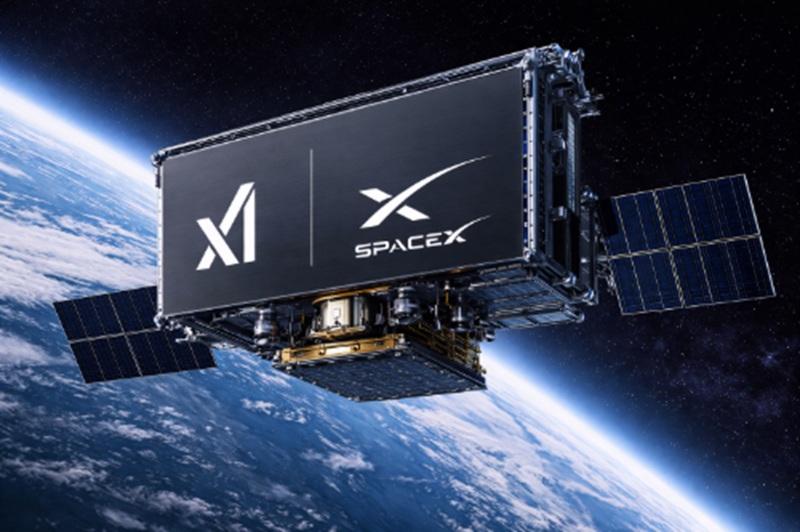
Elon Musk has made a bold claim about the future of artificial intelligence, stating that SpaceX is on track to surpass both OpenAI and Anthropic as the leading force in AI within the next six months.

His prediction underscores a rapid acceleration in SpaceX’s AI efforts and highlights the company’s unique advantages in infrastructure and engineering talent.

According to Musk, SpaceX’s AI program has been underway for roughly three years, far shorter than the timelines of established players like OpenAI and Anthropic. Despite the later start, he argues that the company’s progress is accelerating at an exceptional rate.

The key, in his view, lies less in pure model intelligence and more in the ability to rapidly scale computing power and deploy large systems. Once AI capabilities exceed what most real-world tasks require, further gains in raw intelligence deliver diminishing returns.

Musk’s prediction comes after he pushed back against claims that SpaceX’s AI efforts are already falling behind, arguing that the company’s relative youth, continued acceleration, and hardware strengths position it for rapid gains.

Responding to a post asserting that Anthropic and OpenAI would deliver superior systems within two to three months and that it was “over” for SpaceX AI, Musk outlined three key points.

First, he emphasized the short timeline of SpaceX’s AI work. The company’s efforts are only three years old, compared with six years for Anthropic and ten for OpenAI. Musk stated that SpaceX will keep accelerating. If the second derivative of progress remains strong, he predicted the company would reach pole position in about six months.

Second, Musk addressed the question of how much intelligence is actually useful. Once a system far exceeds the level of capability required for a given class of tasks, further gains in intelligence become pointless. He illustrated the idea with a vivid analogy: there is no need—and it would even be cruel—to install Newton-level intelligence in a toaster.

Third, he highlighted the practical difficulties of scaling compute. Hardware is hard, and bringing massive computing capacity online quickly is exceptionally difficult. SpaceX, he noted, has already shown exceptional ability in this area and will only improve further.

Musk’s reply frames the competition not merely as a race in model sophistication but as one shaped by time invested, the practical limits of excess capability, and the industrial challenge of deploying infrastructure at scale.

By stressing ongoing acceleration and SpaceX’s proven strength in rapid hardware deployment, he presented a case that the company remains well-positioned despite its later start.

The true competitive edge, Musk suggests, comes from hardware, data centers, and the capacity to build and operate them at massive scale areas where SpaceX has already demonstrated strength.

SpaceX has been investing heavily in AI infrastructure, including large-scale compute clusters such as Colossus. The company has also drawn talent from its Starlink and Starship teams and expanded its AI capabilities through moves like the acquisition of Cursor.

These resources are being applied to advance models under the Grok family and related systems. Musk has previously indicated that AI could become a dominant part of SpaceX’s overall value and revenue stream in the relatively near term, potentially reshaping how the company is viewed beyond rockets and satellites.

The claim arrives amid an intensely competitive AI landscape. OpenAI and Anthropic have set high benchmarks with successive generations of advanced models.

OpenAI’s latest major release is GPT-6 Astra, introduced in September as its most capable model for difficult end-to-end work. The AI company positioned Astra around reasoning, coding, computer use, research, and document creation, with the model designed to take a task from an initial instruction through to a completed result.

OpenAI then followed Astra with GPT-6 Sol and GPT-6 Luna on September 22, extending its newest generation into more cost-efficient models. Sol and Luna were rolled into ChatGPT Work and Codex, while the API versions support text and image inputs.

OpenAI said Sol substantially improves coding performance and can match certain Claude benchmarks at significantly lower cost.

Its latest products are increasingly aimed at AI agents that can perform professional work, write and modify software, operate computers, and work across applications.

Anthropic on the other hand has been making a similar push with Claude. This month, the company introduced Claude Opus 5.5, describing it as a major advance in agentic coding, computer use and knowledge work. 

Anthropic has also been expanding Claude beyond a conventional chatbot. The company recently merged Claude’s chat and Cowork experiences into one interface, allowing users to access chat, Cowork, and Artifacts from the same environment. 

Perhaps more significantly, Anthropic disclosed that Claude itself is increasingly participating in the development of Anthropic’s next-generation models. 

Musk’s prediction frames SpaceX not merely as a late entrant but as a fast-closing rival that can leverage its engineering culture and physical infrastructure to close the gap quickly.

Whether the six-month timeline holds will depend on continued execution in model development, compute deployment, and real-world application. For now, the statement signals Musk’s confidence that SpaceX’s AI trajectory is steeper than many observers expect.

McDonald’s Shares Sink as Inflation Keeps Customers Away, Putting Pressure on $8.5 Billion Turnaround

0

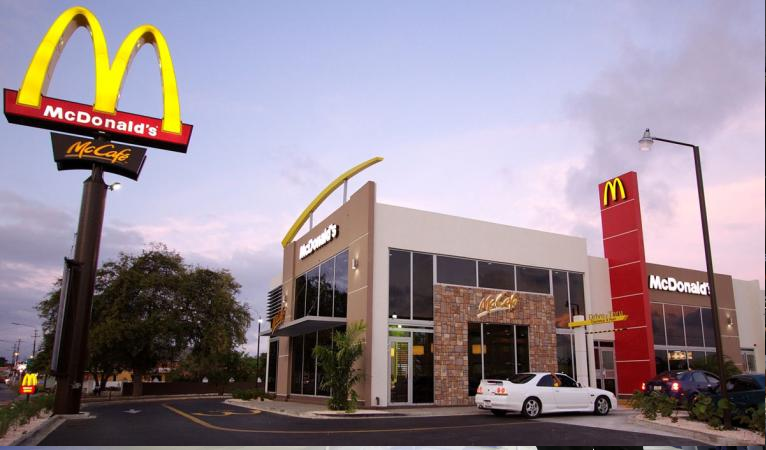
McDonald’s warned that weak customer traffic across its major markets could persist as long as inflation remains elevated, adding to concerns that the fast-food giant’s turnaround will take longer to deliver results and sending its shares down as much as 6.5% on Wednesday.

The warning came as McDonald’s unveiled an $8.5 billion, decade-long support package for franchisees and provided its first detailed roadmap for its “NEXT” strategy, a broad effort to restore sales growth by improving value, food quality, restaurant operations and customer experience.

The market reaction showed the difficulty facing Chief Executive Chris Kempczinski and newly appointed US business president Skye Anderson. McDonald’s is attempting to invest heavily in its restaurants and strengthen its value proposition at a time when consumers remain under pressure from higher prices and restaurant competition has intensified.

McDonald’s shares fell to $234.03, their lowest level in nearly four years, before recovering some ground. The stock is now down about 22% this year.

The latest warning also suggests that McDonald’s does not expect a rapid recovery in industry traffic.

“We expect industry traffic growth in our wholly owned markets will be flat while inflation remains elevated,” Kempczinski said during an investor meeting. “The winners will be the companies that create more demand and deliver it more efficiently.”

That puts greater emphasis on McDonald’s ability to take market share rather than simply wait for consumers to return as inflation moderates.

The company’s immediate problem is traffic. US visits have declined year over year in every complete month since March, according to estimates from data analytics firm Placer.ai. McDonald’s is therefore dealing with a demand problem as well as an execution problem.

Last month, the company reported weaker-than-expected US sales growth for the second quarter, with management citing execution missteps that limited its ability to win back lower-income customers who had reduced spending on dining out.

Anderson acknowledged those shortcomings on Wednesday, saying McDonald’s had fallen short on “consistent execution” and needed to improve restaurant operations.

The challenge is that many of the changes required to address those weaknesses will take time and substantial investment.

McDonald’s Asks Franchisees To Fund The Turnaround

A central component of NEXT is a major push to upgrade McDonald’s restaurants. The company has outlined new restaurant designs, operational changes, employee training, and technology investments intended to make locations more productive and improve the customer experience. But much of that transformation ultimately depends on franchisees, who operate the vast majority of McDonald’s restaurants and bear significant costs associated with remodels and other upgrades.

The company estimates that remodeling and other NEXT-related improvements could cost at least $1.2 million for an average US location. McDonald’s will provide some assistance, including rent relief, but the support package does not cover the full cost of restaurant remodels.

“It’s a big commitment for franchisees,” said Jake Dollarhide, a McDonald’s investor and CEO of Longbow Asset Management.

McDonald’s plans to deploy about $5 billion of its $8.5 billion support package by 2030 through rent relief and capital support for franchisees. The scale of the package underscores the importance of franchisee participation to the turnaround. McDonald’s has already encountered resistance over rising costs and concerns about franchisees having less control over their businesses.

Those tensions became visible in August when executives said implementation of the company’s under-$3 menu was hurt because roughly one-third of franchisees did not participate.

For McDonald’s, inconsistent participation creates a particularly difficult problem. A national strategy only works if customers encounter broadly similar pricing, promotions, restaurant standards and service across the system.

Dollarhide said he has been closely watching franchisee relations because insufficient buy-in could undermine execution of NEXT.

The company is attempting to address that risk by linking the franchisee support package to improvements in restaurant economics. McDonald’s expects the strategy to increase restaurant-level efficiency by 250 basis points and generate roughly $100,000 in additional annual cash flow for the average US restaurant. That would give franchisees a financial incentive to support the investment cycle, although the timing and scale of those returns remain important variables.

McDonald’s is targeting restaurant-level operating margins in the low- to mid-50% range by 2030 and expects restaurant expansion to contribute about 2.5% of systemwide sales growth in 2027 and approximately 2% by 2030.

McDonald’s Tries to Compete Beyond Cheap Meals

The company’s problem extends beyond pricing. McDonald’s has traditionally relied heavily on value to drive traffic, particularly when consumers are under financial pressure. But the company now faces competition from fast-food chains and other restaurants that are also using discounts and value menus to attract cost-conscious customers.

That makes permanent dependence on promotions difficult. Discounts can increase visits, but they can also pressure restaurant economics and train consumers to wait for deals.

“Consumers are making choices based on more than price, and McDonald’s needs to give them reasons to visit beyond a deal,” said eMarketer analyst Suzy Davidkhanian.

NEXT is designed around that idea. The programme focuses on food quality, hospitality, value and innovation, while seeking to simplify restaurant operations and modernize the physical locations.

McDonald’s is also adapting its menu to changing consumer preferences. Anderson said the company is exploring higher-protein offerings and greater portion flexibility for consumers using GLP-1 medications. The potential additions include bowls, grilled chicken and egg bites, giving the company more protein-focused choices across breakfast, lunch and dinner.

The menu changes are an attempt to broaden McDonald’s appeal rather than compete exclusively on burgers, fries and low prices. They also reflect a wider shift in consumer demand toward higher-protein meals and more flexible portion sizes.

Technology is another part of the effort.

McDonald’s plans to expand the use of ArchIQ, its AI-powered restaurant operating system, which can automate tasks including drive-thru ordering. The broader objective is to improve restaurant productivity while simplifying operations for employees.

The technology investment could become particularly important as McDonald’s attempts to generate better economics from existing locations. If automation can reduce friction and improve order accuracy or speed, the benefits could potentially appear in both customer satisfaction and restaurant-level costs.

But technology cannot solve the underlying demand problem on its own. McDonald’s still needs customers to choose its restaurants, and the company’s own traffic data shows that problem remains unresolved.

The Turnaround Faces A Long Road

McDonald’s is effectively asking investors and franchisees to accept a prolonged investment cycle while the company works through weaker consumer demand.

Dollarhide compared the process with Starbucks, noting that the coffee chain’s turnaround took close to a year before investments began translating into stronger sales.

“Look at Starbucks, these changes don’t happen overnight,” Dollarhide said.

The comparison captures the central issue confronting McDonald’s. The company has considerable financial resources and a globally recognized brand, but changing restaurant operations, remodeling locations, improving service and rebuilding consumer traffic cannot be accomplished through a single promotion or menu launch.

The timing is difficult because inflation is still influencing consumer behavior. McDonald’s expects industry traffic to remain flat in its wholly owned markets while inflation remains elevated, meaning the company cannot count on an expanding overall customer pool to lift sales.

Instead, NEXT is built around taking a larger share of existing demand, increasing spending per visit and improving restaurant productivity.

That makes execution critical.

If franchisees resist the required investments, the strategy could be implemented unevenly. If consumers remain focused primarily on price, investments in restaurant design and menu innovation may take longer to produce higher traffic. And if inflation continues to squeeze lower-income households, McDonald’s could face continued pressure to offer discounts even as it tries to improve margins.

The $8.5 billion commitment therefore represents more than a financial investment. It is a test of whether McDonald’s can align corporate management, franchisees, technology and menu development around a common turnaround plan while consumers remain cautious.

For investors, Wednesday’s selloff shows that the market is looking beyond the size of the investment package and toward evidence that the strategy can actually reverse declining traffic.

McDonald’s has set a 2030 horizon for the transformation. The immediate test, however, is whether the company can restore visits to its US restaurants while maintaining franchisee economics and avoiding an increasingly expensive dependence on discounts.

Until that happens, NEXT remains a long-term restructuring effort rather than a quick fix for the traffic weakness currently weighing on the world’s largest fast-food chain.

Volkswagen Launches Second Xpeng-Built EV as China Sales Crisis Deepens

0

Volkswagen has opened presales of its second electric vehicle developed jointly with Chinese EV maker Xpeng, accelerating its push to rebuild competitiveness in the world’s largest electric-car market as falling sales and shrinking margins deepen the German automaker’s China crisis.

The new ID. UNYX 09 electric fastback sedan, unveiled on Thursday, is the latest product under Volkswagen’s “in China, for China” strategy, which is designed to shorten development cycles, localize technology and respond more quickly to Chinese consumers.

Priced from 199,900 yuan ($29,785) in presales, the mid- to large-size electric coupe will officially go on sale at the end of October. Volkswagen says the vehicle was developed and brought into production in just 24 months, roughly 30% faster than its previous development cycles, using a new China-based architecture.

That speed has become important for Volkswagen in a market where domestic automakers are introducing new electric models at a pace that traditional global manufacturers have struggled to match.

Volkswagen’s deliveries in China fell 26% in the first half of 2026 to 971,000 vehicles, the lowest level in 16 years, according to company data released in July. The company acknowledged that it had been “unable to escape” the significant decline in the Chinese market.

The deterioration has transformed China’s role for Volkswagen from a major source of global sales and profits into one of its most pressing competitive challenges.

The company is facing simultaneous pressure from weaker overall demand and a structural shift in consumer preferences toward Chinese electric and plug-in hybrid brands. Companies such as BYD and Geely have expanded rapidly while competing aggressively on price, software, battery technology and intelligent-driving features.

Volkswagen’s response has been to change how it develops vehicles for China.

The partnership with Xpeng is at the center of that effort. Volkswagen acquired a 5% stake in Xpeng in 2023 and has since increasingly integrated the Chinese company’s technology into its local product strategy.

The ID. UNYX 09 follows the ID. UNYX 08 SUV, the first vehicle produced under the partnership, which launched earlier this year. The new sedan uses batteries supplied by China’s CATL and Xpeng’s VLA intelligent-driving assistance system. It will be manufactured at Volkswagen’s Hefei plant, west of Shanghai, where the ID. UNYX 08 is also produced.

The significance of the partnership extends beyond the individual vehicles. Volkswagen is effectively combining its manufacturing scale, brand recognition, and global engineering capabilities with a Chinese technology company’s development speed and understanding of the domestic EV market. That represents a substantial change for a company whose traditional competitive advantage was built around global vehicle platforms developed over long product cycles.

China’s EV market has made those cycles increasingly difficult to sustain.

Domestic manufacturers have compressed the time between product development and launch while continuously updating software and vehicle features. Consumers are also increasingly evaluating cars as technology products, putting greater emphasis on digital interfaces, assisted driving, connectivity and battery performance alongside conventional measures such as styling and driving dynamics.

Volkswagen’s decision to bring the ID. UNYX 09 from development to production in about two years is therefore as much a response to China’s changing competitive environment as it is an engineering achievement.

The company’s new China architecture is intended to make that acceleration repeatable.

Volkswagen plans to launch more than 20 battery-electric and plug-in hybrid models in China this year. The breadth of that programme reflects the scale of the market-share challenge. A single successful model is unlikely to reverse the company’s position in a market where Chinese brands now have much stronger positions across a wide range of price segments.

The pressure hits differently because China has historically been one of Volkswagen’s most important markets. The company built its position there over decades through partnerships with local manufacturers and a broad portfolio of combustion-engine vehicles.

The transition to electric vehicles has disrupted that advantage.

The current contraction in China’s automotive market has also made the environment more difficult. Volkswagen’s China chief said this week that the scale of the downturn was comparable to the impact of the COVID-19 pandemic.

But the current challenge differs from the pandemic shock because it is not simply a temporary disruption to vehicle demand. The industry is undergoing a structural shift in which domestic manufacturers have gained technology, scale, and consumer loyalty in areas where foreign automakers previously held strong positions.

That makes Volkswagen’s partnership with Xpeng particularly important.

Xpeng itself is seeking to expand beyond the Volkswagen relationship. Reuters reported this month that the Chinese EV maker plans to offer its technology to other foreign automakers, potentially turning the company from a domestic vehicle manufacturer into a broader supplier of automotive intelligence and software.

For Volkswagen, that creates both an opportunity and a potential competitive complication.

The opportunity is access to technology that can help it close the development and software gap with Chinese rivals. But if Xpeng supplies similar systems to other international automakers, the technology may become less of a unique Volkswagen advantage.

The longer-term value of the partnership will therefore depend on how effectively Volkswagen integrates Xpeng’s technology into a broader product and development system rather than simply using the Chinese company as an external technology provider.

The ID. UNYX 09 also exposes the blurred boundaries between automakers and technology companies in China’s EV market. Volkswagen brings manufacturing capacity, global procurement, and a large existing customer base, while Xpeng contributes software and intelligent-driving capabilities and CATL supplies batteries.

The result is a vehicle whose technology stack is substantially Chinese even though it carries one of Europe’s most recognizable automotive brands. That could become a common model for foreign automakers trying to remain competitive in China.

Volkswagen’s immediate objective is to stop the deterioration in a market where its sales have fallen to a 16-year low. Its longer-term objective is more difficult: to rebuild relevance among Chinese consumers who have become accustomed to faster product cycles and increasingly sophisticated domestic EVs.

The ID. UNYX 09 gives Volkswagen another product with which to make that case, but the scale of its sales decline means the company will need far more than a handful of new models. Its partnership with Xpeng is considered an ultimate bet that speed and localization can help Volkswagen recover some of the competitive ground it has lost.

Lilly Signs Up to $3.35 Billion Drug Discovery Deal With China’s InnoCare

0

Eli Lilly has struck a research collaboration and licensing agreement with China’s InnoCare Pharma worth up to about $3.35 billion, giving the US drugmaker access to InnoCare’s drug discovery platform as global pharmaceutical companies increasingly look beyond their own laboratories for new sources of medicines.

Under the agreement announced Thursday, InnoCare will receive up to $100 million in upfront and near-term payments. A further $3.25 billion is tied to development and commercial milestones, while InnoCare will also be eligible for tiered, single-digit royalties on annual net sales of products that eventually reach the market.

The structure is important because the headline $3.35 billion figure is a maximum potential value, not an upfront commitment by Lilly. Most of the consideration is contingent on scientific, clinical, and commercial progress. InnoCare itself said the payments are subject to conditions and that there remains uncertainty over the final amount it will receive.

The Beijing-based company will use its proprietary drug discovery platform and research capabilities to discover and advance compounds against as many as five targets. The targets and specific disease indications have not been disclosed. InnoCare focuses on cancer and autoimmune diseases, two areas where it says there remain significant unmet medical needs.

For Lilly, the agreement provides another route to potential medicines at the earliest stage of the pharmaceutical development process. Rather than committing the full value of the deal immediately, Lilly is effectively gaining access to several research opportunities while tying the bulk of its financial exposure to programmes that clear successive development and commercial hurdles.

That approach became necessary because drug discovery carries substantial scientific risk. A promising compound can fail during preclinical research, clinical trials or regulatory review, meaning the eventual commercial value of an early-stage platform can be far lower than the headline figure attached to a licensing agreement.

The deal therefore gives InnoCare potentially significant upside while transferring much of the later-stage development and commercial risk to Lilly if candidates successfully progress. Industry coverage of the agreement says Lilly will handle subsequent development and commercialization of resulting candidates.

For InnoCare, the partnership provides something equally important: validation of its discovery capabilities by one of the world’s largest pharmaceutical companies. The company already has three approved drugs, more than 10 innovative drug candidates in clinical development and multiple preclinical programmes, according to its announcement.

InnoCare Chief Executive Jasmine Cui said the company was “excited to leverage our R&D platform to collaborate with a global pharmaceutical leader like Lilly,” adding that it intends to expand its partnership and innovation footprint.

The agreement also illustrates a broader change in the economics of pharmaceutical research. Large drugmakers have increasingly used licensing agreements, research collaborations and acquisitions to supplement internal discovery. For smaller biotechnology companies, partnering with global pharmaceutical groups can provide capital to advance programmes while giving them access to development, regulatory and commercial capabilities that would be expensive to build independently.

The InnoCare deal is notably different because it links a major US pharmaceutical company with a Chinese biotechnology platform at a time when the two countries remain divided across technology and strategic industries. In pharmaceuticals, however, the commercial incentive to identify promising science can create partnerships that cut across those broader tensions.

The deal also adds to Lilly’s active business-development campaign. Industry reporting has described Lilly as one of the more active pharmaceutical dealmakers this year, with recent transactions spanning acquisitions and research collaborations.

For Lilly, the attraction of a multi-target discovery agreement is the portfolio effect. Five targets create several potential shots on goal, although the companies have not disclosed the probability of success or the specific biological targets. A successful candidate could ultimately generate substantial revenue, while unsuccessful programmes would not trigger the full milestone payments.

The royalty component gives InnoCare an additional long-term incentive. If one or more resulting medicines are commercialized, the Chinese company could receive recurring payments linked to annual net sales, in addition to the development and commercial milestones.

The immediate financial impact, however, should not be confused with the deal’s maximum value. Only up to $100 million is available in upfront and near-term payments, compared with approximately $3.25 billion that depends on future milestones. The bulk of the announced value therefore represents potential future payments rather than revenue that InnoCare can recognize immediately.

The absence of disclosed targets also leaves the scientific significance of the collaboration difficult to assess at this stage. The next meaningful milestones will be the identification and nomination of drug candidates, progress through preclinical development and, eventually, clinical testing. Those steps will determine whether the agreement develops into commercial products or remains primarily an early-stage research partnership.

For China’s biotechnology sector, the deal nevertheless provides another example of a domestic drug discovery company securing a large international pharmaceutical partner. For Lilly, it expands the pool of external science available to its pipeline while limiting the company’s initial financial exposure to research programmes whose commercial potential remains unproven.

The $3.35 billion headline value therefore tells only part of the story. The more consequential element is the structure of the agreement: Lilly is paying for access to potential innovation today, while most of the economic value for InnoCare is expected to depend on whether its science can survive the lengthy and expensive path from target discovery to an approved medicine.