DD
MM
YYYY

PAGES

DD
MM
YYYY

spot_img

PAGES

Home Blog Page 5402

The Governor Sanwo-Olu Experience with a Police CSP Calls for State Police in Nigeria

0

State/ regional/ provincial/ community policing system is a type of sub-national territorial police force found in nations operating the federal system of government  in practice whereby the regional or state  government are also in control of the police force and not just the federal government. This is typically what is obtained in countries in North America, South Asia etc.

This argument for state policing has lingered for decades in Nigeria and it has been a roller coaster for both the protagonists and the antagonists of the state policing systems as each side of the divide tends to have valid points to support their stand.

The state policing system is currently made impossible unless the constitution is amended to accommodate that as the Nigeria Police force is provided for on the exclusive legislative list of the Constitution of the Federal Republic of Nigeria, 1999. This implies that it is the federal government that is in charge of the police force. The force is directly under the command of the IGP who is an appointee of the President of the Federal Republic. This means that all police officers in the country directly or indirectly report to the IGP who then reports to the Mr. President who is the grand commander of the force.

This federal system of policing as provided by the constitution encores that the regional governments; the state and the local government has no control over the police and this should clear your amazement why a chief inspector of police can’t stand his ground and flaunt the orders of the governor of a state who is the chief security officer of the state; the reason is simple, the police officer is not under the state government and does not report to the state government, he takes order and reports directly to the federal.

For us to understand why the Nigeria police force is the way it is, we would cast our mind to the colonial times when it was first established by the colonial masters. Of course, the Nigeria Police Force started as a body to meet the colonial masters’ needs. History holds it that the force was established as guards to enforce colonial orders on the citizens of Nigeria, surmount insubordination from citizens, collect taxes for the colonials masters and if the citizens resists or riots, they quell riots and protect the colonial masters. 

They were empowered to use any force necessary in carrying out these duties, hence the word “force” on their name. Historians and analysts tend to link this to the current behaviors of an average police man. He thinks he’s a police man just to protect the government against the citizens and use any force necessary in discharge of that duty, little did he know that according to s.4 of the police Act which provides for the general duties of the police, he’s a police man for the protection of the citizens.

Why Nigeria really needs state/community policing system:

Everyone (even those on the other side of the argument) will rationally agree that the state/community policing system will curb the insecurity challenges currently staring Nigeria in the face. A Niger state born police man who grew up in the state knows the terrain, the environment very well and in most case knows the bad area boys who have metamorphosed into the criminals and bandits and if deployed to the state as a police man definitely knows how to employ his initiatives, knows how to work with the locals in fishing out those causing havoc in the state. 

Same also, a Nnewi man who’s an indigene of the community deployed to that community as a police man will be more useful in curbing insecurities in the community more than a Kwale man that’s deployed from the federal to the community as a security agent. A criminal will think twice before shooting a police man that speaks the same language with him and grew up in the same community together, chances are that they know themselves. A Kanuri bandit will tend to listen more to a Kanuri police man who speaks his local dialect with him due to sentimental reasons rather than an Omo Yoruba or an Iyamuri (as they call Igbo folks) who is just deployed to the state from the federal. State Police will no doubt help confine criminal activities to their areas of origin and trash it out from there.

Furthermore, state policing will solve the youth unemployment rate by at least 70%. When states employ capable youths, give them proper training and assimilate them into the state security agencies, jobs have been created and this will boost the economy of the state.

State policing system will also cut down the bureaucratic bottleneck that is currently in existence in the force. For example, during the Gov. Jide Sanwolu and the Csp Magodo face off, the Csp categorically stated that he was deployed to the estate on the order of the IGP through the AGF and can only disengage at the instructions of his boss, the IGP who he reports directly to. 

The bureaucracy of reporting directly to the federal government slows down the decision making process and has its own effect on governance and policy making. The magodo squabble between the Mr. Governor and the Csp took more time to get resolved due to the fact that the Governor does not have the power to issue order directly to the police officers to disengage, rather he has to call the federal to get clearance to instruct the men to stand down.

The above point spins over to the point of the state policing will cure the constant friction between the policemen and the state government. There are a lot of states in Nigeria where the commissioner of police doesn’t see eye to eye with the Governor of the state and this causes a lot of friction and security breaches. When there are two captains in a ship the struggle of who is in charge or ought to be incharge will cause havoc to the ship.

State policing will also whittle down the extravagant corruption going on in the agency. The corruption of roadblocks and extortion of motorists will stop. A disguised thief will not want to steal in a community where everyone knows him. A state policeman would not want to exert corruption in his community where he’s known by everyone; everybody knows the Police officer up to his family and kindred.

Also, the police officers will work more with passion with the belief that they are protecting the lives and properties of their brethren and kinsmen. The way a family member will protect and safeguard his family even without pay will definitely be different from the way a stranger who is even paid will protect the folks.

These and many more are some of the reasons why the Nigerian government should consider the state/community policing system. We are however not ignorant of the fact that the system has its demerits but putting it in the measurement scale, the merits weigh high and above the demerits hence the reason for advocating for its adoption.

Wazo Money, Welcome to Transtura 

0

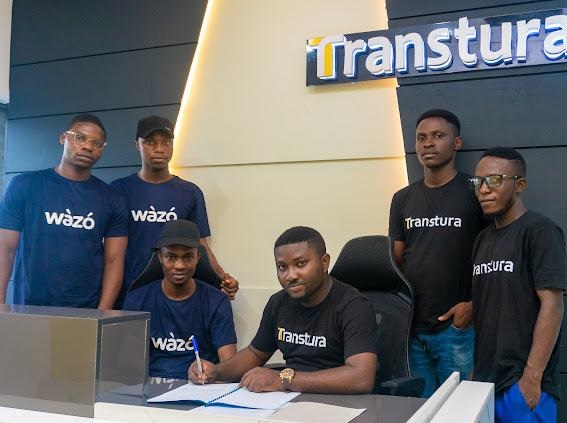
Wazo Money, welcome to Transtura . Together, we will go far. Our vision is for Transtura to become the operating system of intra- and inter-city transportation in Africa. With you coming fully in, the second layer of the playbook begins. Vincent Adeoba, keep adding the pieces. Transtura is a Tekedia Capital portfolio company.

Tekedia Capital offers a specialty investment vehicle (or investment syndicate) which makes it possible for citizens, groups and organizations to co-invest in innovative startups and young companies in Africa and around the world. Capital from these investing entities are pooled together and then invested in a specific company or companies.

Join Tekedia Capital here.

What Is Your Company’s Double Play Strategy?

0

Whenever Apple does well, Samsung does well. There is a reason for that: both are competitors on the iPhone – Galaxy series. But both are united by one critical thing: fabricating high-end microprocessors. Yes, Samsung Electronics fabs some of the most important Apple chips which help Apple convert customers to fans.

For Samsung, if Apple iPhone wins Galaxy, that is fine because what that means is that Apple will order more chips to be fabbed by Samsung. But having the Galaxy series ensures that Samsung does not have to secure external orders before innovating in the chip business. In other words,  provided the chip business has an internal customer (the mobile device unit, the oasis in my strategy), Samsung will continue to commit resources as the oasis has removed most of the risks in investing billions of dollars to build new factories in the chip business. 

Simply, the Galaxy series makes the chip business better by being a “reliable customer”, irrespective of whatever happens externally. That is the Double Play Strategy; I picked that phrase watching baseball.  Yes, most times what drives the profits of great companies may not be what most people know them for. I explained this further in Harvard Business Review. 

The Double Play Strategy

You will dream the future unborn, and create it yourself to make it predictable; Register for Tekedia Mini-MBA

0

Greetings. At Tekedia Institute, we run an amazing business school which has attracted professionals and students from 39 countries. Our Faculty members come from Microsoft, Shell, Flutterwave, Nigerian Breweries, Jobberman, Coca Cola, and other great organizations you admire.

Thrice weekly, I personally coordinate live Zoom sessions on the mechanics of business systems. We bring our Faculty and Guests on those sessions, covering industries and business domains.

Innovation. Growth. Digital operation execution. You will dream the future unborn, and create it yourself to make it predictable. The next edition of Tekedia Mini-MBA begins Feb 7; it will be the best yet with new courses. Click and REGISTER today and let’s meet in the class.

I am Ndubuisi Ekekwe, Ph.D, and I am the Lead Faculty at Tekedia Institute

Who Destroyed The Naira? (II)

0
Naira

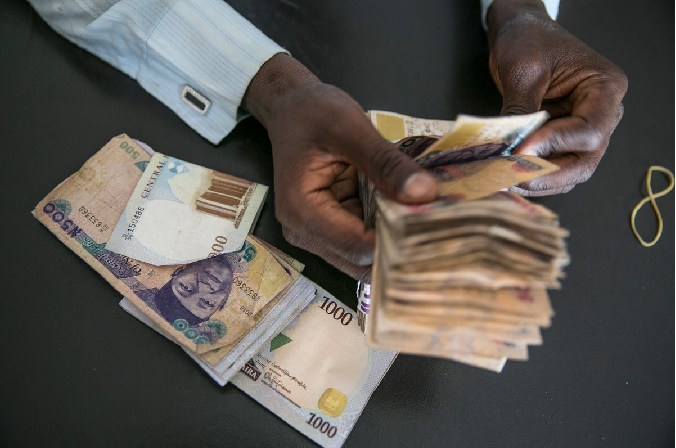
This signifies that the present pitiable physiognomy of the Naira was occasioned by the fact that it was destroyed. One of the destroyers is the inability of Nigeria to export a finished product to other nations, not even the oil and gas which are in abundance in the country.

How can a country be importing a product that is being generated from its land? Doesn’t it sound ridiculous? Undoubtedly, the relative steady rate of the foreign exchange (forex) in Nigeria during the early years, such as between 1972 and 1985 or thereabouts, might not be unconnected with the obvious fact that the various Nigeria’s refineries to include Port-Harcourt, Warri and Kaduna were functional during the said era.

It doesn’t end at the fact that we are importing virtually everything including toothpick, our education and health sectors are also fundamental plights to our forex.

It’s obvious that due to inadequacy in spite of the uncountable number of tertiary institutions situated across the federation, millions of Nigerian children are currently studying abroad even in such educationally less-privileged countries as Kenya and Niger Republic, thereby warranting the export of billions of naira on a daily basis.

Same nauseous practice is applicable to the health sector. None of Nigeria’s prominent citizens receives medical treatment in Nigeria, especially in issues relating to surgery. Every pregnant Nigerian woman wishes to deliver her unborn baby abroad, especially in the United States (US) or United Kingdom (UK).

Inter alia, the country’s science sector, that was relatively alive and viable, had abruptly become soared. All the country’s technical colleges are currently moribund, thereby posing a deterrent to our teeming young ones in regard to production of scientific gadgets contrary to what was formerly witnessed among them.

In the same vein, none of the government owned industries is functional at the moment. Frankly, everything has completely gone wrong, thus requires a total turnaround.

The demand for foreign currencies, in particular dollar, which remains a global commercial currency, is presently astronomically high in Nigeria as a result of the fact that virtually nothing is seemingly happening in the country.

Nigerians want to get everything done outside Nigeria, or by foreigners. Almost every contract is being awarded to foreign firms, as if the indigenous ones aren’t equal to the tasks, despite the recent Executive Order signed by President Muhammadu Buhari that mandates all contracts to be awarded to only Nigerian firms.

An average Nigerian would prefer embarking on a trip to England for a football match between Chelsea FC and Manchester United FC to travelling to Owerri for a match between Heartland FC and Enyimba FC. It’s ridiculous, but is true.

A two-day relaxation period or a honeymoon would be spent abroad as if our hotels and tourist centres are mere hatches. This practice has indisputably become a recurring decimal that one might wonder if the country is under a certain spell.

In a nutshell, the Nigerian citizens are currently enjoying foreign services in all their day-to-day activities. This is why the country is being hit by soaring inflation.

Without mincing words, the past leaders of Nigeria assisted in destroying the Naira, because they had the immunity to address all these anomalies but apparently never cared.

To restore normalcy, first, the citizens need to start by believing in themselves, which would enable them to at all times encourage their locally made products as well as the indigenous services.

In other words, the ban on forex against most goods and services ought to be strengthened headlong. This implies that the various borders within the country need to be holistically checkmated at all cost. In the same spirit, the ban needs to be extended to other activities to include travelling abroad for trivial issues.

Similarly, all the illicit forex dealers must be captured and thereafter brought to book without much ado. The saboteurs don’t deserve any mercy. Hence, the Money Laundering Act recently accented to by the Presidency must be thoroughly and seriously implemented.

Most importantly, The Government must revive such most of the country’s essential sectors as the aforementioned ones. The education industry needs a holistic restructure and turnaround, like the health sector.

In addition, the power sector ought not to be left out; it’s imperative to note that several countries not unlike the USA that can’t invariably boast of up to 15 degree Celsius are currently sourcing their electricity from the solar energy let alone a country like Nigeria that constantly boasts 40 degree Celsius that lasts for a long period of time. It’s time to walk the talking.

Indeed, this proposed measure is meant to be handled with an utmost political will. It’s worthy of note that most laudable policies initiated in Nigeria over the years died on arrival, owing to lack of political will.

Surely, devaluing the Naira as recently done by the CBN isn’t the required avenue towards bringing the group of monstrous destroyers that are on the run to book. The measures must therefore go beyond this.

Hence, the concerned authorities needn’t a soothsayer to notify them that they’re expected to drastically do the needful to return Naira to her initial resplendent countenance, having obviously suffered a colossal destruction.