DD
MM
YYYY

PAGES

DD
MM
YYYY

spot_img

PAGES

Home Blog Page 5420

These are the $100 million+ raises for African startups; truly remarkable numbers

0

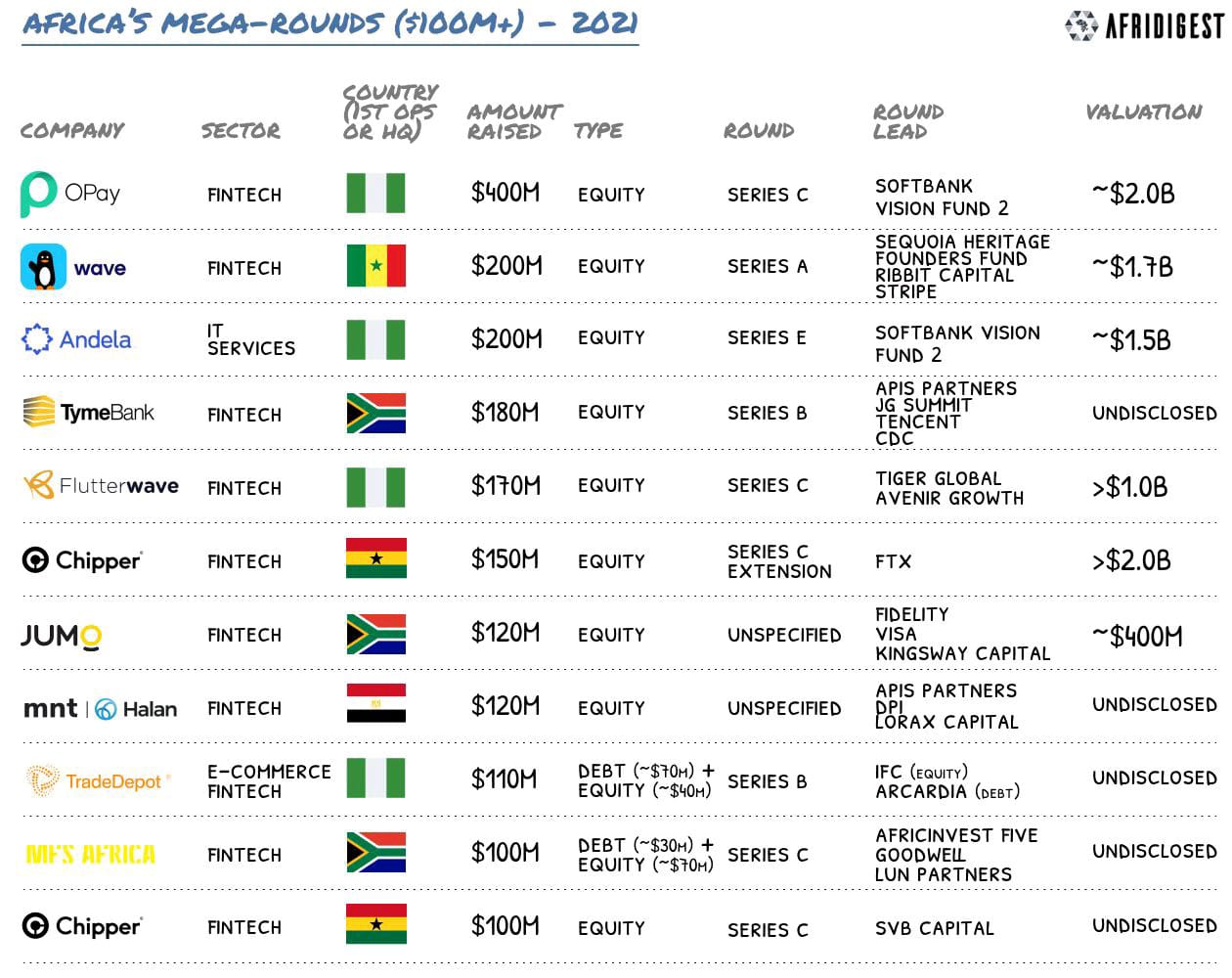
These are the $100 million+ raises for Africa; truly remarkable numbers. Tekedia Capital is providing a path for ordinary people to be part of this massive redesign. This is the time; learn more how we can help you.

From the chart, we can see that Fintech leads. There is a reason for that, I explained in a comment on LinkedIn.

This is expected. The key friction in business is how to be paid. Once that is done, other domains open. If you are in Lagos offering a service to someone in Aba, the first thing is this: how will this person pay me? It is after that is sorted out that the transaction will move ahead.

So, you need to fix fintech before you can fix other things. If not, a doctor, carpenter, etc will work and will be unable to receive their promised pays. I expect fintech to unlock values in healthcare, education, etc as an operating system over the next few years. In Kampala, in a major speech, I called it the Operating System of Africa’s Digital Future.

ByteDance Becomes the World’s Largest Unicorn – Thanks to TikTok

0

When TikTok was released in 2016, the world of social media had no idea it’s going to see the amount of disruption the short-form video app has caused so far. It came like a storm, smashing and creating records – and remarkably, making users creating contents on its platform, millionaires.

From Jan. 2018 to July 2020, TikTok has seen 1157.76% increase in global user base. During the same period, TikTok creators amassed up to 100 million followers, raking in up to $5 million a year, according to data from Backlinko.

As the social media app burgeons, its parent company ByteDance leaps at valuation. ByteDance reached a $280 billion valuation in August 2021, following TikTok’s growing popularity. Now SCMP reports below that ByteDance has smashed a new record.

ByteDance has surpassed Ant Group to become the world’s largest unicorn, with start-ups from the US and China continuing to dominate the landscape, according to the latest Hurun Global Unicorn Index. This is despite Chinese companies coming under regulatory scrutiny both at home and in the US.

Of the 1,058 unicorns – start-ups valued at more than US$1 billion – globally as of November this year, China had 301 start-ups, the most after the 487 in the US, according to this year’s index released by Shanghai-based Hurun Research Institute on Monday.

Beijing-based ByteDance, whose flagship app TikTok has 1 billion monthly active users globally and is viewed as a serious challenger to Facebook, saw its valuation surge nearly 30 per cent to US$350 billion, from US$270 billion last year.

Ant Group, an affiliate of Alibaba Group Holding and operator of online payment platform Alipay, was valued at US$150 billion. Analysts behind Ant’s US$39.5 billion initial public offering that was withdrawn at the last minute in November last year had pegged its then near-term valuation between US$350 billion and US$450 billion.

“2021 is officially the most successful year for start-ups ever,” said Rupert Hoogewerf, chairman and chief researcher of privately held Hurun Report. “The countries with the most unicorns give a picture of which countries have the world’s best start-up ecosystems.”

The top 10 largest global unicorns made up 25 per cent of the overall value of the world’s unicorns of US$3.7 trillion, according to the report. Four of them were from the US, three from China, while Australia, UK and Sweden had one each.

SpaceX, the aerospace company founded by electric vehicle giant Tesla’s CEO Elon Musk in 2002, moved up two places to rank as the third most valuable start-up in the world. The Los Angeles-based company is now valued at US$100 billion, making it the largest unicorn in the US.

While the US and China dominate the global unicorn scene with a share of 74 per cent, the rest of the world grew their share to 26 per cent this year compared with only 17 per cent two years ago, according to the Hurun report. India and the United Kingdom ranked third and fourth in the global unicorn league, with 54 and 39 unicorns, respectively.

Among global cities fostering the most unicorns, San Francisco topped the list with 151 unicorns, overtaking Beijing’s 91. New York, Shanghai and Shenzhen rounded off the top five with 85, 71 and 32 unicorns, respectively.

While half of the world’s unicorns have their origins in fintech, SaaS (software as a service), e-commerce, artificial intelligence, health tech and cybersecurity, the metaverse – the latest sector that has caught the imagination of many companies – has yet to see a related unicorn, according to Hurun Research.

“A unique feature of China’s start-up ecosystem is the ability of big tech companies to spin off unicorns, with 49 of the world’s 50 ‘spun-off’ unicorns coming from China,” said Hoogewerf, citing the example of Ant Group’s spin-off from Alibaba in 2014.

“Curiously, the ‘World’s Big 4’ on the Hurun Global 500 most valuable companies, Microsoft, Apple, Amazon and Alphabet, are not as active as their China counterparts when it comes to investing into unicorns,” he added.

China has been on a months-long regulatory crackdown targeting the country’s internet giants. Since the record 18 billion yuan (US$2.7 billion) fine on Alibaba in April, Beijing has introduced a series of regulatory policies ranging from antitrust issues to data security.

Didi Chuxing, the third-largest unicorn in last year’s Hurun list, was among the tech giants that was taken to task by Chinese regulators. Within days of the ride-hailing firm’s debut on the New York Stock Exchange (NYSE) in June, the company was investigated by China’s cyberspace regulators for potential national security violations. Earlier this month, Didi said it would delist from the NYSE and seek to relist in Hong Kong.

For months now, both TikTok and its parent, ByteDance, have been free from both U.S. and China scrutiny. With its high-flying growth rate, TikTok is expected to hit two billion monthly users at the end of 2022.

Registering a political party in Nigeria; the step by step guide

1

As the drum begins to roll for the upcoming 2023 election, many people are already warming up to join politics and participate in the electoral battle to take over a seat of governance or to join the governance of different political cadres; be it local, state or at federal level of the government.

It’s obvious that some electorate don’t believe in the ideologies of the existing political parties while other who used to be the party members of the existing political bigwigs no longer want to be identified with those parties due to political rivalries or change in political perceptions and ideologies hence the need for some people to form and create their own political parties where they will create fresh ideologies and policies and reorganize themselves, canvass and campaign for votes, go into the election field with grin teeth and battle for different seats of governance in the country.

This piece will be of immense help to aspiring political party leaders and those nurturing the ambition of forming and registering a political party as it will summarize the steps of registering a political party in Nigeria in order for the party to be accorded with legal status and ready to be identified by the electoral umpire (INEC).

Thus, any citizen of Nigeria who is of age have the right to join or form a political party as it is every citizen’s constitutional right as provided in section 40 of the constitution of the federal republic of Nigeria, 1999 (as amended) to join any interest group of his or her choice, form an interest or political  group or register a political party to field candidates and contest elections for any political seat in Nigeria starting from the seat of the councilorship which is currently the least political seat in Nigeria to the presidential seat which is zenith of the political seats in existence in governance.

It is pertinent to be pointed out that every social or interest group which tend to campaign and contest for election in Nigeria must first register with the Independent National Electoral commission (INEC) if not that group won’t be accorded with the legal status to be called a political party and won’t be legally fit and proper to field candidates to contest for electoral seats.

As businesses, companies, churches, schools, NGOs etc are expected to register with the Corporate Affairs Commission (CAC) in order to be accorded the legal status at law, social, political or interest groups that wish to field candidates and contest for election are expected to register with the electoral umpire called Independent National Electoral Commission (INEC) headed by the chairman in order to obtain the legal status to be regarded as a political party then can be legally fit and proper to be accorded with such status.

The first step in registering a political party in Nigeria is that the group wanting to be registered as a political party must first pick a name for the party; a distinct name and acronym and a distinct symbol and logo for the party. It must not be similar to a party already existing in Nigeria if not INEC will be forced not to register such a party inorder not to breed confusion.

The next step for registering a political party in Nigeria is the payment of the INEC administrative fee of One Million Naira (N1,000,000). This fee is non-refundable, even if you change your mind about carrying on with the party, INEC is not obligated to refund you this administrative fee paid by you.

After the payment of the administrative fee, you are issued with a form called FORM PAI. You are expected to fill this form and return it to the INEC within 30 working days. You are to submit 50 copies of this completed  form, 50 copies of the proposed party constitution and 50 copies of the proposed party manifestos. These documents are to be submitted fully endorsed by the chairman and secretary of the proposed party and their full contact details.

Please note that if all the necessary documents are not submitted to the INEC within 30 working days INEC will see it that you are not ready yet or no longer interested in registering the political and they will terminate the application for the registration and whenever you are ready to carry on with the application for the party registration you will be expected to pay a fresh One million naira (N1,000,000) non-refundable administrative fee.

The next step is that INEC will verify every document submitted for the application for registration. If INEC is satisfied that everything is checked out they will register the political party and a certificate of registration will be issued.

INEC also has the power to deny registering any party if they feel that all requirements have not been satisfied. When they refuse to register a party, they are obligated to notify the applicants their reason(s) for the refusal to register the party and the proposed political party may rectify the defects with INEC within 30 working days.

Caveat; this is just a summary of the steps to be taken in registering a political party in Nigeria. The writer is not ignorant of the fact that it may not be this simple but this piece is just here to guide you and you are always expected to consult a lawyer. If you don’t have any lawyer, you can always consult the writer who is a renowned lawyer and a legal consultant.

To Win Markets, Develop Authentic Persona and BE YOU

1

In this digital age, customers want authenticity and connections. While you can hire social media experts to run your company social media handles, note this: at the early stage of your business, your personal posts will deliver better outcomes than those faceless feeds from your company accounts.

Get out of your shells and share what your company does. Do not be concerned that some will receive your messages negatively; it happens. The fact remains that most real customers want to hear and read from you.

Of course, as your firm matures, it can have its own webinality to thrive independently of you. But right now, it is your show. And my message in this piece is simply JUST BE YOU.

Authenticity will win you FANS in markets. There is a reason for that: all the most successful social media entrepreneurs in YouTube, Instagram, etc are authentic, and their fans connect because they build relationships from the angle of humans, not faceless companies. JUST BE YOU.

Differentiate Yourself and Upgrade Your Webinality

Family Businesses in Africa – A Case Study of Akagera Business Group (ABG)

1

While family businesses control a significant portion of Africa’s economy, and are quite common across the continent, only a handful of them enjoy longevity. The survival rate of most African family businesses beyond the founder’s generation is extremely low.

Following in the path of a 2014 Forbes report, “The 10 Leading Family Businesses in Africa (forbes.com),” both the African Development Bank (AfDB) and Price Waterhouse Coopers (PwC) have equally provided reports in the past decade on the significance of African family businesses.

In the Forbes report, the 10 leading family businesses in Africa “cut across luxury goods to construction, agriculture, banking and retail.” These firms were also considered “the most successful African family businesses” having sustained the vision for decades and are poised to prosper for generations to come. Arranged in chronological order by country, the top-10 list included three from Kenya, two each from Nigeria, South Africa and Tanzania, and one from Uganda:

  1. Bidco Oil Refineries, Bhimji Depar Shah, Kenya.
  2. Ramco Group, Rambhai Patel, Kenya (founded by Rambhai Patel, an Indian immigrant who settled in Nairobi in the early 1940s).
  3. The Kenyatta Family Business, Mzee Jomo Kenyatta (Founder), Kenya.
  4. Dantata family, Alhassan Dantata, Nigeria.
  5. Ibru Organisation – Olorogun Michael Ibru, Nigeria.
  6. Remgro – Anton Rupert, South Africa.
  7. Pick n Pay – Raymond Ackerman, South Africa.
  8. Mohammed Enterprise Limited (METL)one of the largest industrial conglomerates in East Africa – Gulam Dewji, Tanzania.
  9. Bakhresa Group – Said Salim Bakhresa, Tanzania.
  10. Madhvani Group, Muljibhai Madhvani, Uganda.

Moving on to the AfDB report – Africa Investment Forum: Family businesses – an underestimated economic driving force, 12 November 2019, key highlights include:

Family businesses are rarely viewed as a sector which could influence economic growth, but the Africa Investment Forum is recognising them as important players on the continent. For the first time at a conference of this nature, families running business empires have been given a platform to share their views on how Africa’s unexplored wealth can benefit all who live here. The Elnefeidi Group, a family-owned business with more than 80 years of experience in various industries, is run by second and third generation members. It is one of the businesses that believes start-ups can help turn around the continent’s economies if they are supported and nurtured.

Finally, and most recently the PwC Press release on the “Africa Family Business Survey 2021,” highlights that:

African family businesses need to act now to ensure their legacy tomorrow Africa’s family business leaders are optimistic and ambitious about their growth and economic recovery for 2022. Although the overall outlook for family businesses is positive, business owners will need to address the challenges and opportunities that come with digital transformation, family governance and succession planning as well as addressing sustainable business practices.

Akagera Business Group (ABG)

 How it all started

It all started back in 1977, when two entrepreneurial minded Gorajia brothers were seeking a business opportunity in Bujumbura, Burundi. The two brothers came upon a car dealership. With a hardworking, determined, passionate and business minded personality, the Gorajia brothers (Balkrishna and Hargovind) were able to create the dealership into an automotive powerhouse, which till today stands as one of Burundi’s landmarks. As highlighted on the website of Toyota Burundi:

Toyota Burundi started back in 1977, when two entrepreneurial minded brothers Balkrishna G. Gorajia and Hargovind G. Gorajia bought small Toyota distributorship in Bujumbura, Burundi. With hard working, determined, passionate and business minded personality, the two Gorajia brothers were able to create the dealership into an automotive powerhouse, which till today stands as one of Burundi’s landmarks.

Building on the success of the dealership, manufacturing brands nominated Akagera Motors S.A.R.L as the exclusive distributor for those respective brands for the territory of Rwanda in 1997. As more business ventures were added to the business portfolio, Akagera Motors S.A.R.L was transformed to Akagera Business Group Ltd., in 2008. 
The Business History and Profile

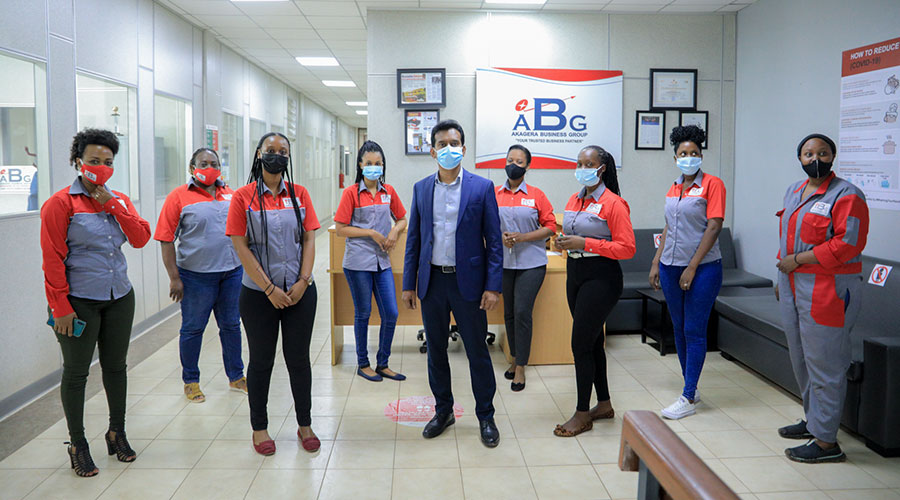
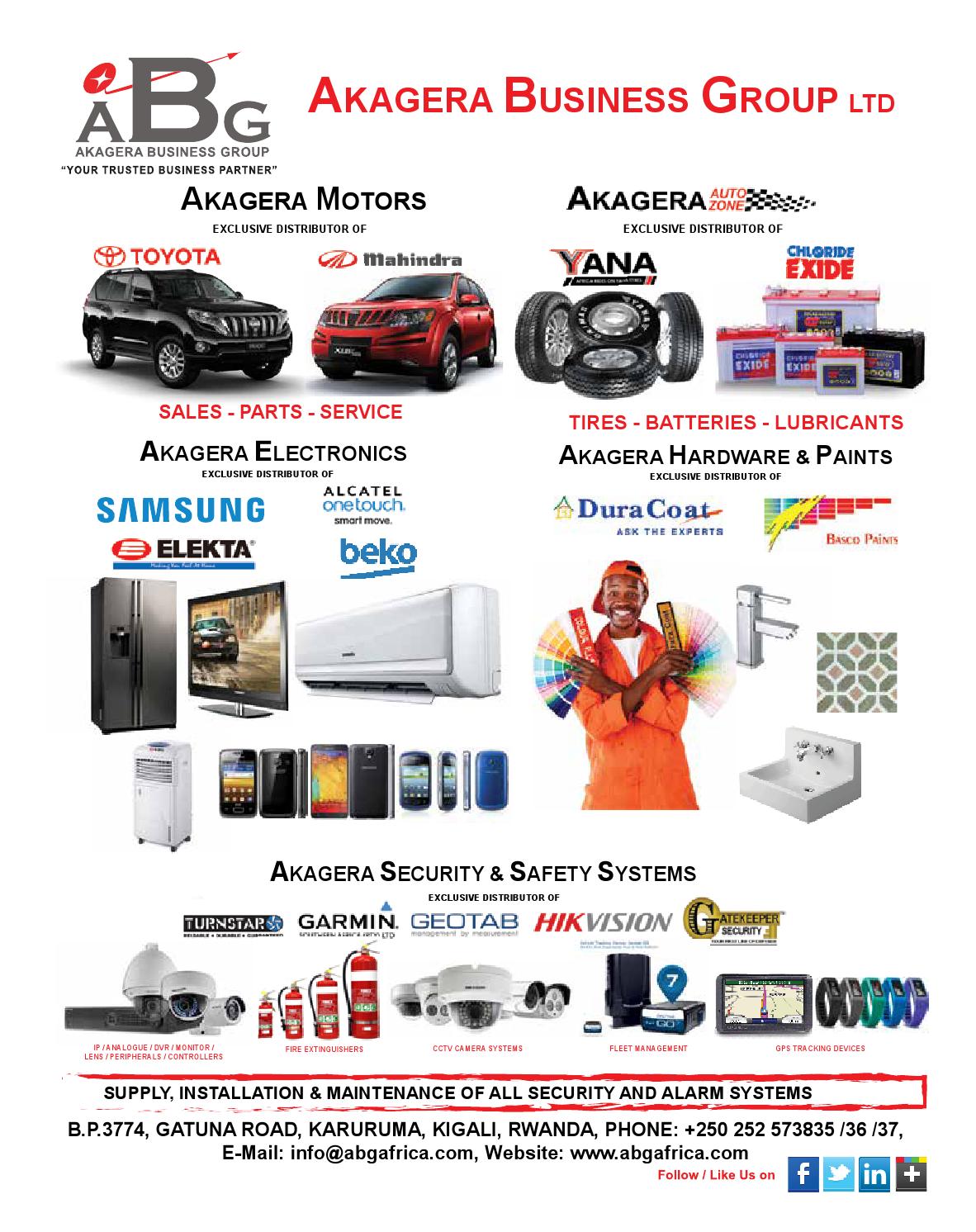
Akagera Business Group (ABG) was established in Kigali, Rwanda and diversified into nine different divisions dealing in automobiles, tires, batteries, lubricants, media, consumer goods, consumer electronics, car rentals, hardware, paints, design, construction, security and safety systems. Akagera’s nine divisions cut across Motors (since 1997); Hardware & Paints (2006); Auto Zone, Trading, and Media (all established in 2008); Car Rentals, and Electronics (both established in 2010); Design & Construction (2012); and Security & Safety Systems which was established in 2014.

Currently ABG has a presence in Burundi, Rwanda, South Sudan & Eastern Democratic Republic of Congo.

Closing Thoughts

Besides the African Conglomerates such as the Dangote Group, Mike Adenuga and Strive Masiyiwa in the Telecoms and related areas to mention just a few, there are equally other family business turned Conglomerates on the continent.

It also feeds the appetite for exploring the media Conglomerates with a view to establishing regional integration in this sector. Indeed an article in the Nigerian Guardian (10 December 2019) “Family business as influencer for economic growth,” highlighted that:

Family business, being one of the oldest forms of business organisations globally, is defined as a business in which two or more members of a family are involved, and the majority of ownership and control lies within the family.


However, some family businesses are large multinational corporations that operate in many countries such as Ford Motors, Nestle, Cadbury, and Mercedes Benz and a host of others, while indigenous family businesses that still exist that have passed through second generation also abound in Nigeria. A report by Africa Investment Forum, which recognises family businesses as important players on the continent, said the past decade had seen African family-owned companies grow quickly.
 

Overall, this piece has sought to highlight, via personal observations, the unreported world of indigenous family businesses in Africa taken from the purview of the Burundi-Rwanda nexus. The Group, ABG, which is the key feature, started out as an Auto dealership in 1997?— and two decades after the family business was conceived, it has gone on to add to its portfolio an Auto Zone in 2008 and Car rental two years later in 2010. In between these, the group had diversified its portfolio further. Hopefully, we would see another round of top-10 leading indigenous African family businesses as the 2022 approaches and as we tentatively, and cautiously emerge from the Covid-19 pandemic.