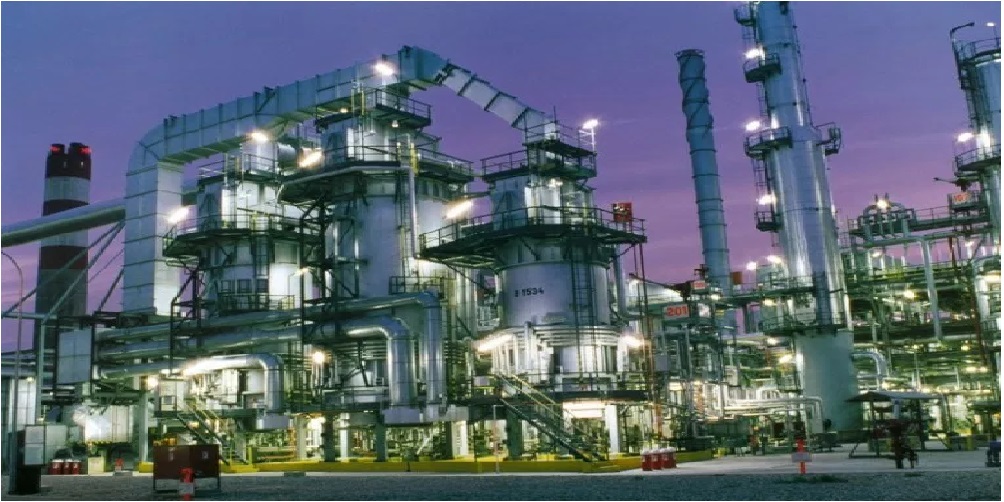
Even an imbecile in Nigeria can boldly attest to the lingering fact that the country’s major and highest revenue base – the petroleum sector – has over the decades been clamouring for rescue as its pathetic situation lingers.
This perhaps could be what informed the ongoing seeming efforts of the present administration led by President Muhammadu Buhari towards ensuring the said sector wears a new look in all ramifications, hence probably understood that only a tech-driven mechanism can fix the unending mayhem.
In his keynote address during the first-ever Nigeria Diaspora Investment Summit held in Abuja between 27-29 November, 2018, the Vice-President, Prof. Yemi Osinbajo graciously notified the participants that the first set of the privately-owned modular refineries “being developed as part of the private-sector component of the vision” were currently being completed in Delta and Rivers States.
The Nigeria’s number-two citizen said amidst the gathering, which comprised more than 300 Nigerians living outside the country, that “One of them is a Brownfield Project that is being expanded from 1,000 barrels per day (bpd) capacity to 10,000 bpd, while the other is a Greenfield Investment”, as he further disclosed “As at yesterday, another of such modular refinery was coming on stream”.
The 3-day epochal summit, which sought to mobilize the Diaspora to invest in Nigeria as part of the current government’s thrive to reposition the national economy, equally saw the vice-president informing the prospective investors that in each of the efforts, the communities were equity holders and stakeholders in the modular refineries.
According to him, such a gesture was crucial as the government was ensuring the various communities were economic stakeholders in the development and economic opportunities in the Niger Delta in its quest for a rebranded oil and gas sector.
In the conference and exhibition attended by other top government functionaries such as Ministers of Foreign Affairs – Geoffrey Onyema, Agriculture – Audu Ogbe, and Power, Works and Housing – Babatunde Fashola, among others, Prof. Osinbajo reminded that “For those who may recall some of the engagements we had with the Niger-Delta, we promised we would ensure we are able to put in place some of the modular refineries that are actively engaged with the local communities.”
It suffices to assert that the remarkable event, which ensured the diaspora investors had the opportunity to meet potential local partners as well as interact with government institutions, came to an end with wonderful notices and assurances to the people’s delight.
It’s only a dummy that’s yet to comprehend that the bane of Nigeria’s petroleum sector has conspicuously been lack of refineries and allied matters. It’s a shame, to assert the least, that the world’s six most oil producing countries cannot at the moment boast of a single refinery in any part across the federation.
In the past, Nigeria’s indigenous company, the Nigeria National Petroleum Corporation (NNPC) could proudly boast of at least four standard world-class refineries situated in different localities namely: Port-Harcourt, Warri and Kaduna in Rivers, Delta and Kaduna States, respectively. But it’s pathetic that presently the aforementioned investments are mere monuments, and nothing more.
It is ridiculous and absurd that, rather than export petroleum products to other countries, Nigeria is deeply involved in their importation. When the crude oil is extracted from the earth crust, they are transported to foreign nations, thereby refining them over there.
Having made the raw materials available for consumption, the oil marketers who had been contracted or licensed by the Federal Government (FG) would import the finished products towards distributing them among the dealers domiciled in the country. Then the dealers would ensure the commodities are sold to the final consumers. This recurring decimal is what the citizens have been experiencing in Nigeria ever since the country’s refineries went into moribund.
This unfortunate occurrence was apparently what triggered the quest for total removal of fuel subsidy in the country by the Buhari-led reign upon its emergence in 2015. Having perceived the oil subsidy as an avenue to ‘unfairly’ enriched the marketers who were seen as racketeers, the government was damn determined to completely stop the payment of subsidy on petrol otherwise known as Premium Motor Spirit (PMS), and its agitation was purportedly actualized in the long run after series of counter reactions from the teeming Nigerians.
It’s noteworthy that the government’s total removal of the fuel subsidy, as was reported, was primarily informed by its motive to ensure that the downstream sector was thoroughly revived and boosted. But till date, despite all the earlier promises to resuscitate the incapacitated refineries, none is currently wearing a new look. This seeming inaction has signalled a great worry to the concerned citizenry.
It was barely the penultimate year Nigerians realized that the subsidy, contrary to the initial report, wasn’t actually totally removed. This implies some intriguing politics had been taking place underground without the knowledge of the masses. This smacks of pranks.
Taking a painstaking study of Nigeria’s worrying situation as regards the oil and gas industry, it is only until the government addresses the unwholesome policies therein, the country can boast of a reputable tech-driven economy in respect of the sector in question.
Even as the government is frantically carrying out crusades on random establishment of modular refineries, its sustenance will definitely meet a downfall if it fails to critically consider and implement a set of strict required policies that would guarantee the healthy functionality of the initiative.
Aside from the sustenance aspect, failure to set up adequate modus operandi would pose a great threat to further establishment of such refineries in the nearest future. Suffice it to say that such practice might be hijacked by unscrupulous and unpatriotic elements.
So, as the amended Petroleum Industry Bill (PIB) had been eventually passed by the National Assembly (NASS), its onward adoption and implementation must be treated as sacrosanct by the Executive Arm if it’s really and genuinely willing to revamp the downstream sector.
Similarly, as the government ostensibly makes a move to support setting up of modular refineries across the country, particularly in the Niger Delta region, they must equally not hesitate to do the needful towards reviving the forgotten standard ones.
Summarily, a lofty tech-driven concept requires a candid political will for apt plan and implementation. And if eventually implemented, sound relevant policies are needed for its onward sustenance.
Like this:
Like Loading...