DD
MM
YYYY

PAGES

DD
MM
YYYY

spot_img

PAGES

Home Blog Page 5446

Nigeria Birthing A New Unicorn In The Fintech Sector

0

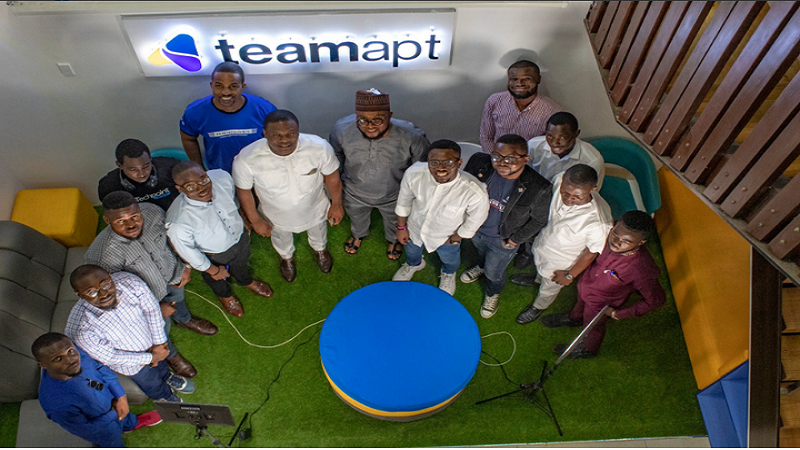
Nigeria’s fintech company, TeamApt, is evolving as a unicorn, valued at least $1 billion. People, this is indeed a cambrian moment of entrepreneurial capitalism in Nigeria. TeamApt is a fintech company which focuses on developing digital banking, business solutions and payments infrastructure.

Nigerian tech startup TeamApt Ltd. is in the market raising its third round of funding at a value of more than a $1 billion, which will result in the fintech firm joining a spate of Africa-tech companies to become so-called unicorns.

In Tekedia Capital, we see some of our portfolio companies to join this club by 2023; one in the current active cycle has a huge chance. Technology is the accelerant that will advance all industrial sectors because every business is increasingly a technology business. 

People, Africa* now has six unicorns as I write, assuming that TeamApt closes the deal: Interswitch, Andela,  Flutterwave, OPay, Wave and TeamApt.

I expect this number to hit 15 by the end of 2023 (India has minted 28 so far in 2021). Andela is another non-fintech in that list after Jumia, an ecommerce, until it exited the private club. MENA’s Careem which Uber acquired was also in that club.


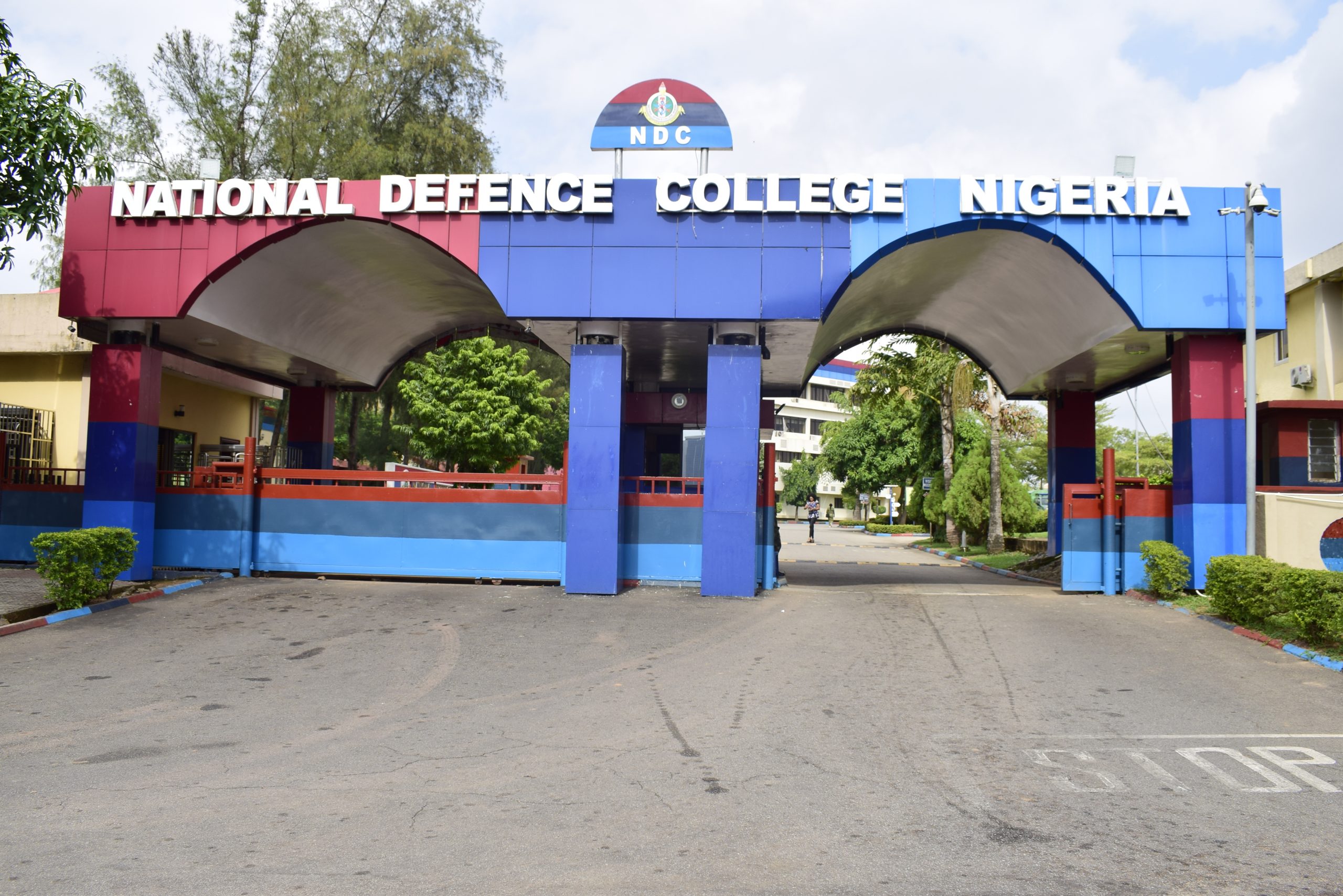
Service. Duty. Honour. At National Defence College

0

Every kid who grew up when I was growing up in Ovim, Isuikwuato LGA, Abia state, wanted to be a military officer. We continue to serve in many ways as Ovim has that tradition of military service, giving Nigeria some of its finest warriors: Admiral Kalu, General Nwachukwu, Navy Commodore Duruoha, General Ihejirika, etc.

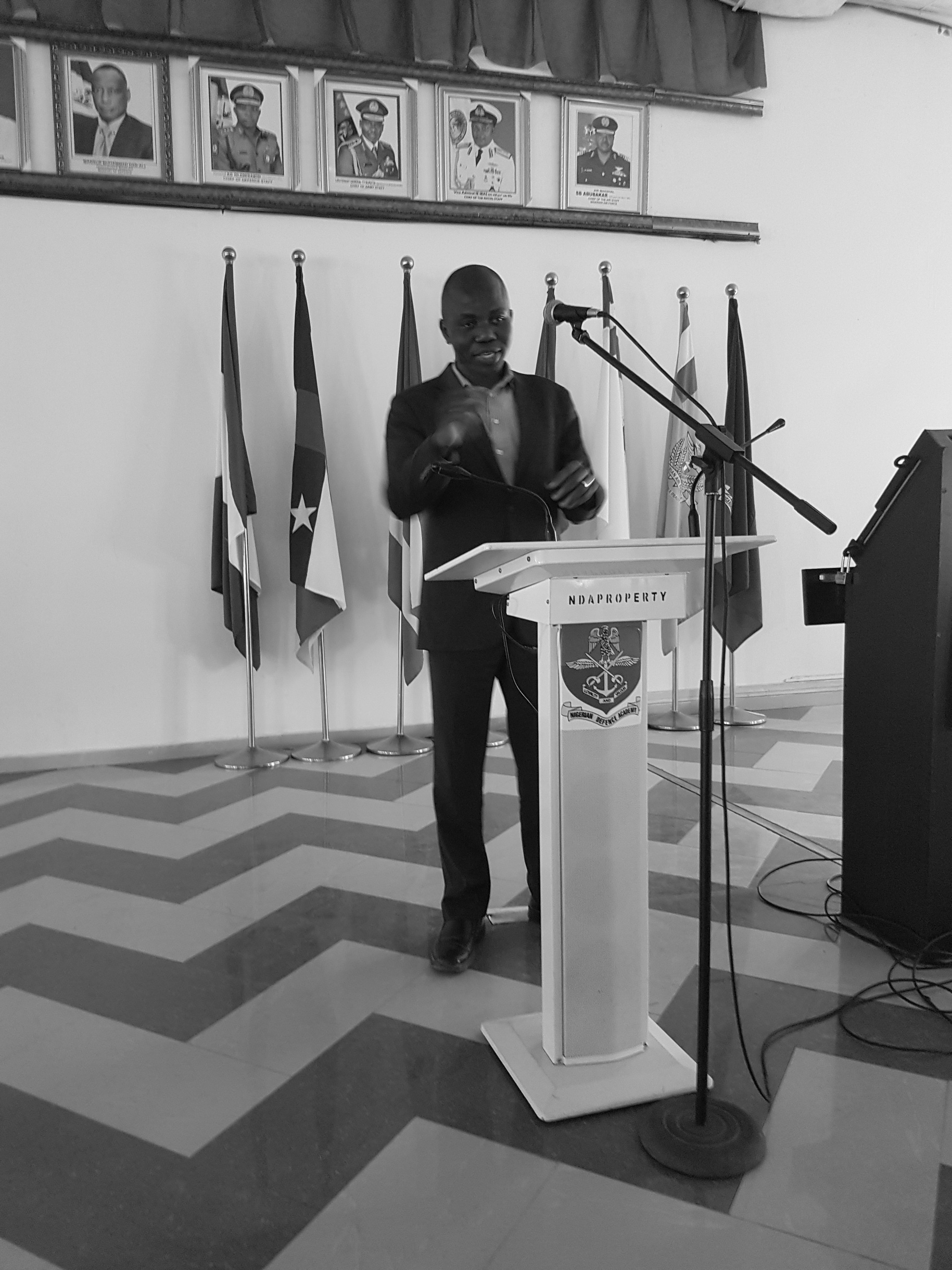
 Today, it was an honour to be one of those who led the course 30 in the National Defence College for officers from more than 20 countries. I wish PEACE to the world.

 Service. Duty. Honour.

“May Nigeria not Happen to You”: The Sad End of Itunu Babalola

2

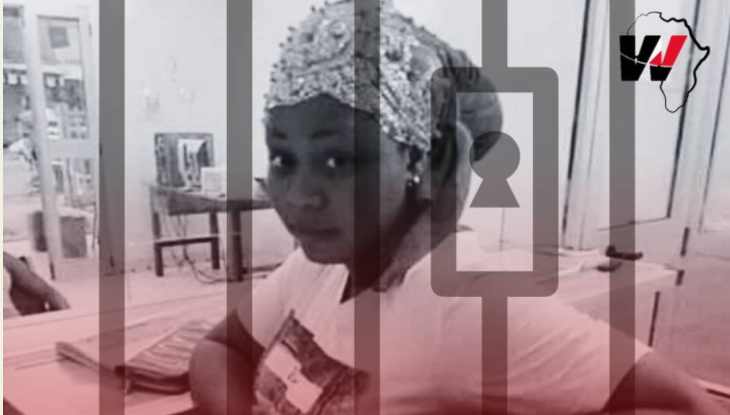
It was in March that Nigerian investigative journalist, David Hundeyin, broke the news of Oyo State-born Nigerian woman wrongfully incarcerated in Ivory Coast through a Twitter thread. Her name is Itunu Babalola, a 21-year old trader in Bondoukou, a suburb in the Francophone country.

Itunu’s journey to prison started in 2019 after her home was burgled, and items such as TV and gas cooker were stolen. She was away in Nigeria seeing her parents at the time of the burglary.

“Upon returning, she was informed by a lodger she left in her flat that the thief had been identified,” Hundeyin said in the report. “The thief turned out to be a 14-year old boy who lived nearby. His embarrassed dad apologized and admitted that his son was a habitual thief. The items had already been sold.”

What followed this incident was a sad tale of better-to-be-imagined events that would cut the young life of an innocent girl short.

“Itunu reported this to the police who told her to return on Tuesday Nov 5, 2019. The appointment held on Wednesday Nov 6,” Hundeyin explained. “There she says, the DPO informed her that the suspect was in fact his nephew. He then offered her a settlement worth roughly N100,000 to drop the case.”

In Africa, where nepotism and corruption is a way of life, it is quite common for law enforcement agents to brazenly defend the wrongs of their own, and would go extra miles, including incarcerating or killing the innocent, to achieve their dubious aim. It was the situation in play in Itunu’s case, and unfortunately, she was oblivious of it and turned down the DPO’s offer.

Itunu was arrested the next day and taken to the police station.

“On getting to the station, she was charged with theft – the theft of her own items in her own apartment,” Hundeyin said. A charge that was amended to include human trafficking. Itunu had only two choices – drop the case or rot in jail. The handwriting was boldly written on the wall. There is no sign of justice or righteousness around those who now have Itunu in their grip. She said she overheard an officer saying “Elle es une Nigeriane? Elle mourra ici!” (She is a Nigerian? She will die here!”)

That was an alarming warning Itunu should have heeded and save herself by dropping the case. But naivety, powered by the desire to recover her stolen items, got the better of her. The value of things stolen in her home was N300,000, and the DPO had offered to pay N100,000 in settlement.

“She refused the settlement, citing the disparity between the value of the stolen items and what was offered,” Hundeyin said. What followed her tenacity was a swift move by the DPO and the police to fulfill their “she will die here” promise.

She was speedily convicted and sentenced to 20 years imprisonment, then Nigeria happened to her.

In the following months of her conviction, her Nigerian friends in Ivory Coast had tried to help, reaching out to the Nigerian Embassy in Abidjan, Ivory Coast capital, to provide her consular assistance, “officials reportedly asked for N400,000 to get her a passport before anything can be done.”

When through the thread, Hundeyin had escalated the matter to the notice of Nigerians in Diaspora Commission (NIDCOM), the Chairman, ABike Dabiri-Erewa, through a statement signed by Gabriel Odu, promised that the Commission will do its job to secure Itunu’s release.

“It is now confirmed that Itunu Babalola, a Nigerian living in Abidjan, was wrongfully charged and incarcerated for a crime she did not commit… plans are underway to engage the services of a legal Luminary to prove the innocence of Itunu Babalola at the Court of Appeal after the accused had spent two years out of a ten year jail term for an offense she did not commit,” the Commission said in a statement. That was in March this year.

Itunu, now 23, died of diabetes complicated by infection.

In a statement issued by the Commission, after Hundeyin broke the sad news of Itunu’s passing, Dabiri-Erewa said “Itunu died abruptly while all hands were on deck to seek both legal and diplomatic intervention for her Nigeria.” It has been eight months since the news of Itunu’s wrongful conviction was brought to NIDCOM’s attention, which apparently by its standard, was not enough time for the Commission to act on behalf of a Nigerian citizen in trouble.

Yet another Nigerian

Why outrage is pouring in over Itunu’s ordeal isn’t only because of the sad way she ended, it is also because she has added to growing number of Nigerians who become victims of their government’s insouciance. It is now known as “when Nigeria happens to you,” describing the abandonment Nigerian citizens get when they need their country most, especially in a foreign country.

“It’s only an irresponsible government that cares little the citizens abroad. Worse still, it is only an irresponsible government that doesn’t provide consular assistance for its citizens abroad. Nigeria fails its citizens. Itunu is the latest example of that failure,” Human Rights Lawyer, Abdul Mahmud said.

In his story, “when Abuja follows you to Abidjan”, that narrated Itunu’s ordeal in full, Hundeyin reported how other ECOWAS states regularly get their citizens out of prison in Ivory Coast. A culture many other countries take pride in.

In 2016, Jason Rezaian, an American-Iranian journalist with Washington Post, who was incarcerated in Iran on espionage charges, was released through a diplomatic deal facilitated by the US government. Other such stories, including the October 2020 rescue of an American hostage in Nigeria by US troops, resonates with so many countries who will give it all to save one of their own.

It is the same solicitude care that Nigeria is expected to be offering it’s citizens, using its “giant of Africa” status.

But Nigeria’s Ivorian Embassy is collaborating with gangsters and hostile foreign authorities to extort and exploit Nigerians in a foreign land, the report said. A situation that came to play in Itunu’s case.

The report made mention of an Embassy staffer named Olateju Abdulrazak, who an audio recording exposed demanding N2 million to facilitate Itunu’s freedom. Not surprising though, as it only adds to the many reports of racketeering across Nigerian Embassies around the world, a culture not different from what is practiced in government institutions back home in Nigeria.

As the stories such as Itunu’s hit the gallery every day, the sense of belonging that a nationality offers, which has been significantly dwindling in Nigeria’s passport, fades in the mind of Nigerians. It thus has established the belief ‘no hope of getting help from the government in times of trouble’, for every Nigerian who crosses the border.

How Far With The NASS’ Probe Into CCTV Projects?

0

Over the years, concerns have been raised by the Nigeria’s Legislature to probe into most tech-driven contracts awarded in the past by the erstwhile administrations, though tangible support is ostensibly yet to be tendered by the Executive arm.

But recently, the present legislature seemed poised to tactically deploy its proboscis over the long awaited probe, as Nigerians watched with extreme vigour.

One who has hitherto been keenly observing the Nigeria’s public sphere, particularly her political system, might boldly – but not proudly – insinuate that the country is a mirage.

In Physics as a field of study, ‘mirage’ simply means an image that one sees in the distance or in the air especially in very hot weather, but which does not actually exist. On the other hand, in a real-life parlance, the term could be referred to as something in the future that one looks forward to, but that never really happens or shall never actually take place.

Overtime, either in science or our everyday lives, we advertently or unwittingly encounter experiences pertaining to the aforementioned phenomenon, which is more popular or widely used in sciences.

It ought not to be misunderstood if a concerned Nigerian asserts that most Nigerian politicians domiciled in the country could be described as movie artists. It is so, because, the persons that fall within this bracket have showcased to the citizens that they are very good and active in acting, hence should be observed by the teeming viewers.

If not, how could one graciously win a contract worth several millions of naira – expected to be completed within a given time frame – but in the long run, chooses to blatantly abandon it without minding the implications? Funnily enough, even when an onlooker bluntly voices out his feelings concerning the observed anomaly, he might be regarded as a lunatic or an insane Nigerian.

It has seemingly become a norm in this part of the world that completion of projects is not mandatory, hence ought to be treated as elective or optional. This nauseous style of life has lingered for ages till date.

This is the reason, having won a certain contract, an average Nigerian politician would never be mindful or cautious of the Memorandum of Understanding (MOU) guiding the contract award as if he/she is the beneficiary and equally the benefactor of the contract award.

Little wonder the National Assembly (NASS) – the House of Representatives in particular – has in recent times been apparently making waves to probe virtually all the abandoned projects within the shores of the Nigerian State.

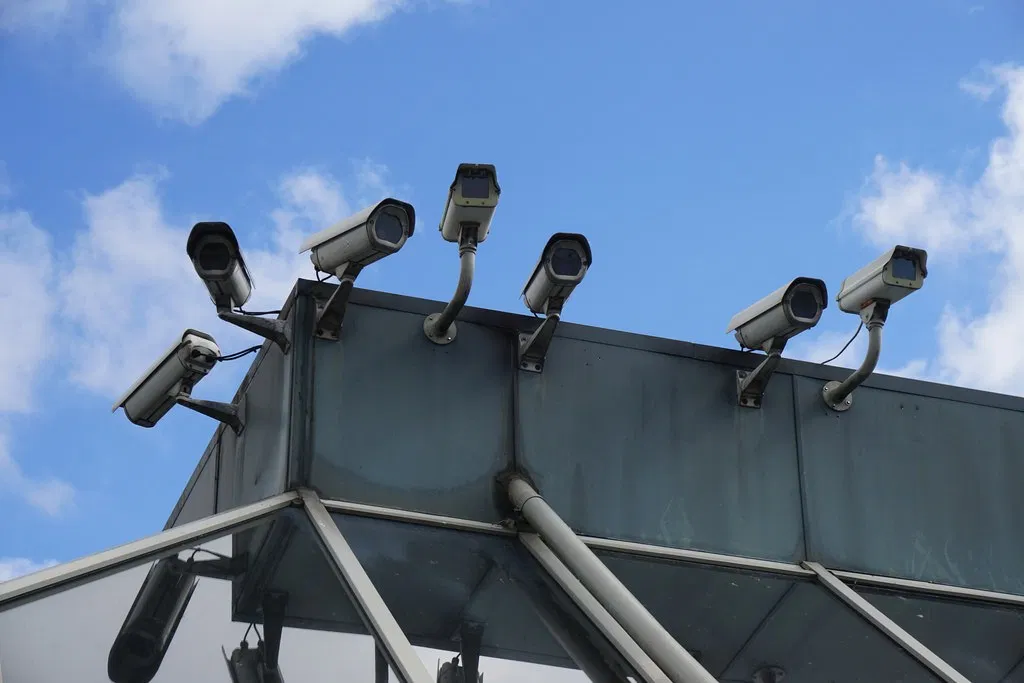
It would be recalled that the 7th Assembly of the House of Reps under the watch of Mr. Aminu Tambuwal as the Speaker, was on a move to probe into the $470 million contract for the installation of Closed Circuit Television (CCTV) in Nigerian cities, mainly Lagos and Abuja.

Under Tambuwal’s leadership, the lawmakers investigated the contract and the reason the CCTV wasn’t functional. Though as at then, a certain report based on their findings was tendered to the Federal Government (FG) led by Dr. Goodluck Jonathan, but no meaningful action was taken on the recommendations.

Subsequently, under the reign of Mr. Yakubu Dogara in the 8th Assembly, the House once again rigorously revisited the query into the CCTV contract, but its discoveries were reportedly swept under the carpet by the Executive.

In the ongoing 9th Assembly under the leadership of Mr. Femi Gbajabiamila, penultimate year precisely, the legislators vigorously commenced another round of investigations into the abandoned multi-billion naira contracts in the communications sector, starting from 1999 till date.

This time, the move appeared to be more frantic and severe as the House vowed not to only delve into the CCTV contract but all other abandoned projects across the nooks and crannies of the federation.

In his bitter words, the Chairman of the House Ad-hoc Committee on Abandoned Projects, Mr. Chukwuma Umeoji while addressing the Press during the committee’s inaugural session during the period in review, disclosed that the mandate of the team encompasses investigation of every FG’s abandoned project from the inception of the Fourth Republic to date, with a view to ascertaining the cost, period, and state of completion of the projects as well as the constraints surrounding their intended completion as enshrined in the MOU.

According to the lawmaker “Many of these projects have been abandoned even as many of them have received advanced payments of not less than fifty per cent of contract sum.” He further frowned that government had expended various billions of naira on the said contracts without the people, or the targeted beneficiaries, acquiring the value for the money spent thus far.

Going by this ugly trend relating to abandonment of ongoing projects, how can the teeming citizenry be convinced that the culture of not taking project completion seriously by the contract awardees has been shown the way out, or taken to the waste-bin where it rightly belongs?

It is obvious that if the government fails to deploy the political will targeted to aptly investigate why many projects awarded in the past were dastardly abandoned by the contractors, the present awardees would still toe the lines of their predecessors.

What the system is yearning for is holistic cleansing, and such cannot be actualized by overlooking the several ‘sins’ committed by hundreds of Nigerian politicians to the detriment of millions of citizens.

It’s simply outrageous to hear that just a single individual could pocket what rightly belongs to millions of persons. It’s equally disheartening to acknowledge that many had siphoned the common patrimony of the teeming Nigerians.

Similarly, it’s barbaric and paradoxical to comprehend that most of these ‘criminals’ are walking freely and boldly on the streets of Nigeria and beyond on a daily basis whilst those who steal peanuts, or perhaps nothing, are being burnt to ashes by angry mob. That is the kind of society we find ourselves.

This is, therefore, the ripe time to conduct this proposed cleansing, or never, if the legislators are truly committed to get it right and better. This is needless to say that the NASS is unequivocally expected to aptly utilize its proboscis over this probe.

Truth be told, there are several tech-driven projects that deserved to be probed. Aside the CCTV project, a good example of contracts that turned into wide-goose chase in Nigeria remains the Power project in which the matters arising from it have continued to raise tremendous dusts among concerned Nigerians.

The Executive arm led by President Muhammadu Buhari, on its part, must take into cognizance that excuses cannot anymore be accepted by the troubled Nigerians, hence the need not to pervert the long-awaited justice.

But it’s quite disturbing that many months after the avowal tendered by the federal lawmakers, virtually no follow-up action had been carried out or heard in that regard. Who is then deceiving who?

Lagos Judicial Panel Found Nigerian Army, Police Carried Out Lekki Massacre

0

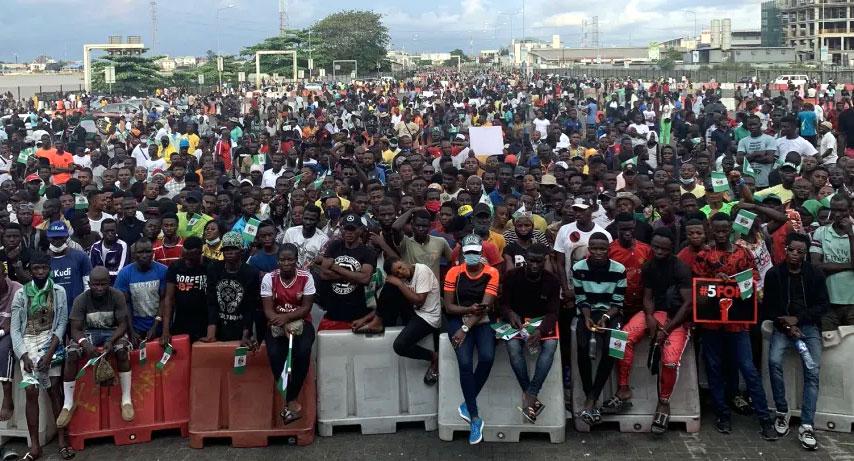
On October 20, 2020, scores of Nigerians, especially youths, protesting against police brutality were shot and killed by members of the Nigerian Army and the police. The incident, which is known as Lekki Massacre, has been the most controversial issue in Nigeria since last year.

The Nigerian Army denied there was any killing at the Lekki Toll Gate Lagos where the protest took place, claiming that soldiers deployed at the scene fired only blank ammunition.

A judicial panel set up on October 19, 2020 by Lagos State government to investigate and address allegations of police brutality, got the additional task to probe the Lekki Massacre.

A year after, the judicial panel has concluded their investigation, after interviewing many witnesses and examining available evidences. It thus found that there was killing of unarmed protesters by the Nigerian security forces at Lekki Toll Gate on October 20, 2020.

In a 309-page report, which has been submitted to the Lagos State government, the panel reported that officers of the Nigerian Army “provocatively and unjustifiably” shot live bullets and killed several #EndSARS protesters at the Lekki Tollgate, and then took their corpses away.

Key findings of the judicial panel.

“The Panel finds that the firing of live bullets by the Army at genuine protesters at the Lekki Toll Gate on October 20, 2020, resulted in grievous injuries and the loss of lives of the protesters.

“The Panel also found that the conduct of the Nigerian Army was exacerbated by its refusal to allow ambulances render medical assistance to victims who required such assistance.

“The testimony of the EndSARS protesters, especially Miss Serah Ibrahim, Mr. Onileowo Legend, Miss Dabira Ayuku, Miss Kamsichukwu (all of whom were personally present at the Lekki Toll Gate on October 20), as to the fact that the Army shot live bullets, video evidence of casualties, fatalities, etc, all lend credence to the fact that the Army shot at the protesters at the Lekki Toll Gate on October 20, 2020, which resulted into deaths and other physical injuries.”

The panel held that it found from witnesses’ testimonies that “soldiers  had  their  vans  parked  at the Lekki Toll Gate and  removed  as  many  bodies  and corpses of the  fallen protesters  which  they  took  away  with  their  vans.

“One  of  the  protesters  who was  shot  and  taken  for  dead,  Olalekan  Sanusi,  who  eventually  escaped  to narrate  his  ordeal  and  experience  stated  that  11  corpses  were  in  the  van, where  he  was  placed  in  and  presumed  dead.  Miss  Dabira  Ayuku  also corroborated  the  above  by  stating  that  she  saw  about  7  dead  bodies  placed in  one  of  the  military  trucks  at  the  Lekki  Toll  Gate  on  the  night  of  20th October, 2020.

“The Panel believes that the deliberate absence of officers of the Nigerian Army who were present at the Lekki Toll Gate and who were summoned by the Panel was a calculated attempt to conceal material evidence from the Panel and verily believes that their presence would have damaged the case of the Nigerian Army.”

John Obafunwa, a Forensic Pathologist of Lagos State University Teaching Hospital, had presented autopsy reports of 99 bodies, three of which he claimed were recovered from the Toll Gate.

But the panel “finds that the fact of lack of identity of some of the other 96 corpses on the list supplied by Professor Obafunwa would not obliterate the fact that some of them could have come from the Lekki Toll Gate Incident of October 20, 2020, or that some other unidentified corpses may have been removed by their families or the military, as claimed by the EndSARS protesters, far and beyond the list tendered by Professor Obafunwa.

“The Panel is reluctant to accept the view that a large number of the corpses tagged unknown were from the riot in Ikoyi Correctional Centre, being an institution with proper records to identify such corpses and that these may be part of the Lekki Toll Gate casualties.

“After the Nigerian Army left, the Nigeria Police Force, followed up with the killing of the protesters, shooting directly at fleeing protesters into the shanties and the Lagoon at the Lekki Phase 1 Foreshore, close to the Lekki Toll Gate, floating corpse and one-shot close to Serah Ibrahim.”

It further alleged that the LCC obstructed the panel’s investigation by refusing to provide useful evidence and an attempt to conceal the incident by cleaning up the scene.

“The panel found that LCC hampered the panel’s investigation by refusing to turn over some useful and vital information/evidence as requested by the Panel and the Forensic Expert engaged by the panel, even where such information and evidence was by the company’s admission, available. It manipulated the incomplete CCTV Video footage of the Lekki Toll Gate on the night of the 20th of October 2020, which it tendered before the Panel.

“The Panel found that there was an attempt to cover up the Incident of the 20th of October by the cleaning of the Lekki Toll Gate and the failure to preserve the scene ahead of potential investigations.”

The panel also found that the police officers also tried to cover up their actions by picking up bullets and the Army was also found not to have adhered to its own Rules of Engagement.

At the conclusion of the report, the panel lists the names of those killed at the Lekki Toll Gate and made recommendations.

“The panel recommends disciplinary actions to the following officers (Lt. Col S.O. Bello and Major General Godwin Umelo), who refused to honor the summons of the panel in order to frustrate the investigation,” part of the recommendation read.

“All officers (excluding Major General Omata) and men of the Nigerian Army that were deployed to the Lekki Toll Gate on October 20, 2020 should be made to face appropriate disciplinary action, stripped of their status, and dismissed as they are not fit and proper to serve in any public or security service of the nation.

“The panel recommends that all those arrested in the course of the protest should be granted bail, prosecuted for any offence that may be alleged against them or where no prima facie evidence of culpability is disclosed upon due investigation, they should be released forthwith.

“The panel recommends that the Nigeria Army be discouraged in intervening in internal security.”

It also added that the Divisional Police Officer of Maroko Police Station along with policemen deployed from Maroko the station on the 20th and 21st of October 2020 should be prosecuted for arbitrary and indiscriminate shooting and killing of protesters.