For the past couple of months, I’ve been trying to verify the feasibility of going a whole day in Lagos without a single Naira in cash on me. The spirit of ‘wisdom is profitable to direct’ has however hindered me from doing so. While I am personally digitally savvy, and more than 70% of my personal transaction value occurs via digital channels, there’s always the psychological safety that comes from having some amount of cash with you in case something happens and the person you need to make a transaction with ‘doesn’t accept transfer’
Either way, some weeks back through some act of providence, I moved out of my house without a single Naira in cash on me – not a single Naira. Here’s the experience.
COMPETING WITH CASH
There’s a very popular story that goes around fintech circles where an executive at VISA was asked who their biggest competitor was and he said cash.
Every payments company in Nigeria and broadly in Africa is competing with cash. According to the CBN, as of March 2021, excluding money in banks, more than N2.7trillion (US$6.5billion) was circulating in the Nigerian economy. Every year the Central Bank of Nigeria and other Central Banks in Africa print billions of dollars in local currency equivalent in cash annually. While cash transaction usage is gradually reducing and being eaten up by the plethora of digital payment channels and rails that are springing up every now and then, a Gallup, Inc. survey of 11 countries in Sub-Saharan Africa found that more than 80 percent of adults make bill payments or remittances with cash. There are many reasons for this, and why this trend may continue unabated for a while.
CASH’S VALUE PROPOSITION
Competing with cash is really about understanding the value proposition of cash and its weaknesses. The first thing we must realize is that the core strength of cash transactions is in the in-store payments space (proximity payments). Most of the growth that has come up in the payments space today has been largely focused on the long-distance payment journey – I have money in Lagos and I want to pay a merchant in Aba, Kano, Ghana, or even Beijing. These are historical areas where cash has been exceptionally weak and digital channels have found it easier to capitalize on. Today, the only reason any person would want to move cash from Lagos to Abuja in a vehicle would be either they were laundering the money, wanted to use it for something illegal, or if something was plain wrong with them.
Moving cash around has always been a weakness of cash. In the past, safety was a huge concern, people would carry cash with them on luxurious buses traveling interstate in Nigeria, these buses were magnets for armed robbers who could be right at least 4 in 10 times that the vehicle they chose to attack had at least 1 person on it who was carrying cash around for transaction purposes. All these naturally created a strong value proposition for digital payment methods that allowed people to perform these transactions without the need for cash. Nigeria and broadly Africa as a whole has witnessed a significant rise in digital payments over the last couple of years, In fact, one of the biggest spaces for venture capital money in Nigeria has been in digital payments. The other day, my guy was calling it legitimate “Yahoo Yahoo” where all you need to do is build something that works, do some unique PR, and in about 6 months to 1-year cash out on some 7 figure venture raise. But I digress.
While cash has been weaker in terms of long-distance transactions, in-store and in-person payments have been cash’s largest stronghold, and has obviously been the harder nut to crack. While payment gateways and card processors like VISA and MasterCard lead the online digital payments space and are running circles on everyone, in the in-person payments space, cash has and still is the 800-pound gorilla in the room.
Cash is exceptionally stronger in the in-payments space because cash has weak competitors. Cash payments do not need data to work, require no interaction with electricity whatsoever (POS terminals need to be recharged), do not rely on NIBSS or any other switch’s network stability, and have no security risk whatsoever attached to it (Latest NIBSS Fraud Report (2020) indicates that e-payment fraud had seen a 186% YoY increase).
Cash is also the default payments method for almost every and anyone who wants to receive payments of any kind. The truth is you can perform ALMOST ALL essential in-person payments in Nigeria today with cash, this however, cannot be said of other digital payment methods – as neither the bus conductor, Suya guy or Aboki in front of your street “collects transfer” or has a POS terminal.
UNDERSTANDING PAYMENT NODES
This is essentially where the opportunity lies. One core thing is that while the majority of Nigerians live below a certain income line and therefore perform transactions that roll around a certain spending band – say N10 – N100,000 – one of cash’s weaknesses of handling bulk amounts is actually mitigated because the kind (value) of transactions that occur amongst the largest purview of the Nigerian and broadly African market are well within its workable layer. Look at it from this angle – Only very few people will carry cash of N550,000+ to a Slot dealer to buy an iPhone 12 Pro – fortunately for cash, most people do not buy an iPhone 12 Pro.
Most transactions between N10 to N1,000 mandatorily happen in cash, considering the economic level of the majority of Nigerians, it shouldn’t surprise you to imagine what number of transactions happen between that value band. From N1,000 to even N5,000 in in-person payments may see less than 30% or even 20% occurring via digital platforms. What this proves is that beyond the clamor for financial inclusion and the likes, the more people live below certain economic bands, the more likely cash will remain king of the masses in those bands regardless of what anyone tries to do. It is unlikely you will buy a car of say N3 million with cash, however, the only acceptable way you can pay for N1000 suya from Abdullahi that stays in front of your street is through cash.
ECONOMIC LEVELS AND FINANCIAL INCLUSION
Let’s face it, there is no way we can talk about financial inclusion without economic inclusion because the reality is that below a certain economic band, digital in-person transactions make no sense and cash is the only acceptable way to make any kind of reasonable transaction.
Some years back, I needed to pay an artisan for some work he had done, and since I didn’t want to physically go to where he was, I requested for his account number to enable me to make a bank transfer. Brothers and Sisters, people of God – this man didn’t have a functioning bank account, in fact, according to him the bank had frozen his account about six months prior to when I had requested for his details, and he wasn’t the least bothered to try and get a new account because at the economic band he dwells, beyond helping you to collect money, a bank account has no true value proposition.
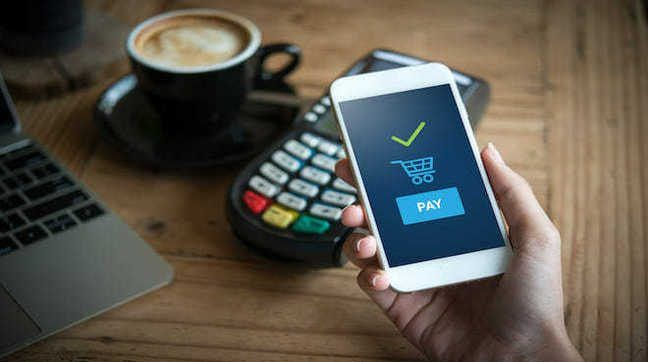
The only reason I was able to go a whole day in Lagos without a single Naira in cash on me was because at the economic band I dwell in, digital transactions are possible, and make a lot of sense. The day I went out without cash, I ordered food on JumiaFoods and paid with a debit card. Transportation to and fro was via Bolt and both payments were funded via bank transfers, I branched a Pie Xpress outlet and also paid with my card, there was no need to even interact with cash, because at the economic band I dwell in, making those transactions are possible because the payment and transaction nodes to do so exist.
PAYMENT AND TRANSACTION NODES
Cash will continue to be king because the payment and transaction nodes required to make digital in-person transactions possible do not exist at all economic bands, most people dwell in the lower economic bands, and at those bands, the nodes to facilitate digital in-person payments do not exist uniformly and are therefore largely meaningless to most people. More than 970 million ATM transactions valued at over N12 trillion (US$29.2billion) occurred between Q1-Q3 2020, representing an almost 100% rise in ATM Transaction value between the Full-year 2019 and Q1 – Q3 2020.
ATM transaction numbers should be in my opinion an accurate measure of financial inclusion because every time a person withdraws money from an ATM, it is an indicator that our digital payment nodes are not as uniform as they need to be, and people still need to revert to cash (which is accepted everywhere) for transaction purposes.
In economic bands where cash works, people just need to present the equivalent legal tender to merchants, the only existing friction could be finding change, but except for that, most transactions are as smooth as they can get.
The most ubiquitous digital transaction node in the Nigerian market today are POS terminals. POS terminals are not accessible to all merchants, need to be charged, receipt papers need to be purchased, etc., while people can still make transactions via bank transfers to merchants, the advent of fake digital receipts, means that most merchants will wait till they have gotten a credit alert before releasing the product to you “to avoid stories that touch” while there are about 976,898 registered POS terminals in Nigeria as at June 2021 with only about 638,983 deployed terminals, there are probably millions of payment node touch points that do not have, and cannot have access to these POS terminals for payment and transaction purposes.
The future of financial inclusion in Nigeria and effective payment and transaction nodes for in-person digital payments does not lie in the hands of POS terminals. Regardless of what anyone thinks, the future of digital transactions in Nigeria for the in-person payments space is largely a function of finding a node system that is cheap, easily accessible with minimum onboarding requirements, easy to use and understand and requires little or no electrical power to run. This node will also need to be accessible on feature phones as well as smartphone devices, and allow for a smooth and seamless payment interaction.
CONCLUSION
To conclude, while I do have something in mind (which I do not intend to share in an open forum like this), I think it is important we do not get carried away by cognitive bias and miss out on the true problems innovation and technology in the fintech space is trying to solve.
One of the major motivations for writing this piece was a conversation I had with a cashier at the supermarket I buy most of my things from. As I was concluding a payment with my debit card (as usual), I asked him what payment channel the majority of his customers use – and I was expecting to hear the card (considering that Is what I use the most) was surprised to hear cash.
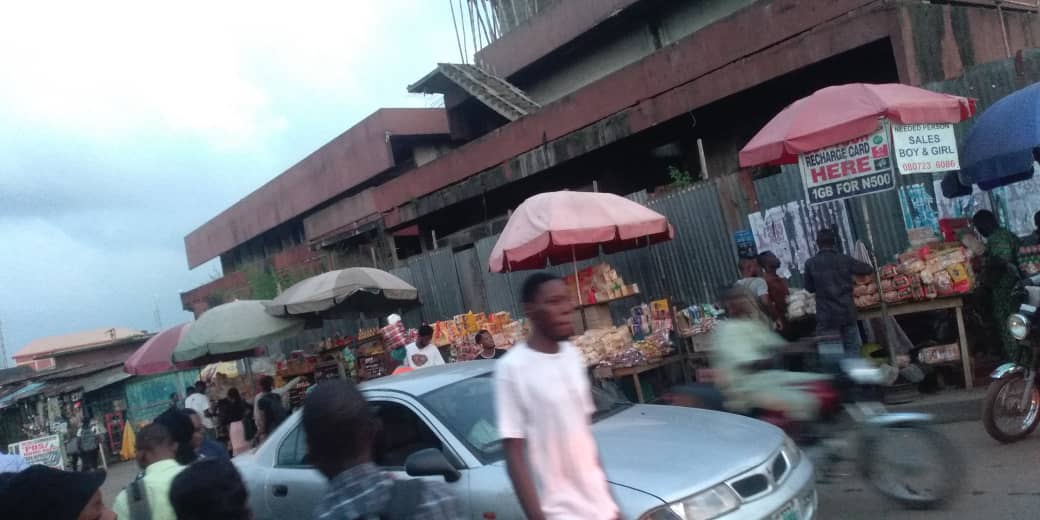
As long as an effective payment and transaction node that can seamlessly delve through and work for all (or at least most) economic bands hasn’t been developed; whether in an air-conditioned supermarket or the crowded and rough Oshodi market, cash will continue to remain king.
Inspired By The Holy Spirit
Like this:
Like Loading...