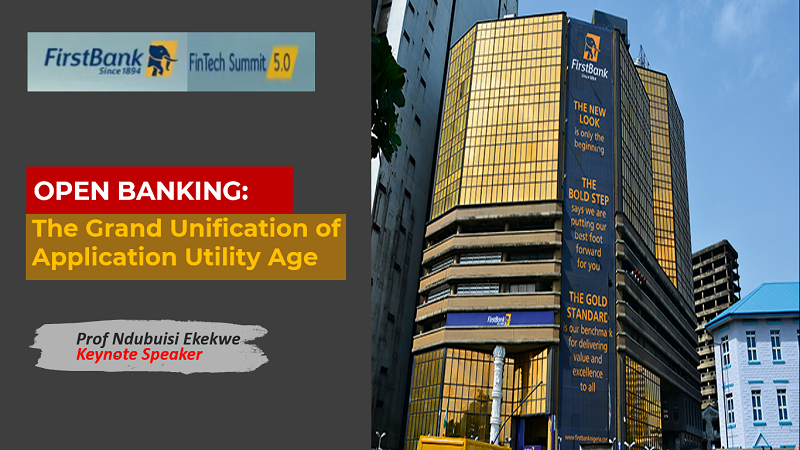
One of the finest moments in Nigeria’s entrepreneurial ecosystem happened in the decade of 1990s when new species of banks were created. What happened then was “intra-bank” evolution where the banks essentially linked their branches into a mammoth network, making it possible that once you open an account in one branch of a bank in Nigeria, you can bank from all the bank’s branches.
As we moved from voice telephony to the mobile internet age, we upgraded that “intra-bank” to “inter-bank”, through NIBBS, offering a unified quasi-banking ordinance. With Open Banking, it goes beyond banks to now include insurance, mortgage, etc to drive the new age of application utility era which I expect to be massive. This is the cambrian moment of the new age of new Africa.
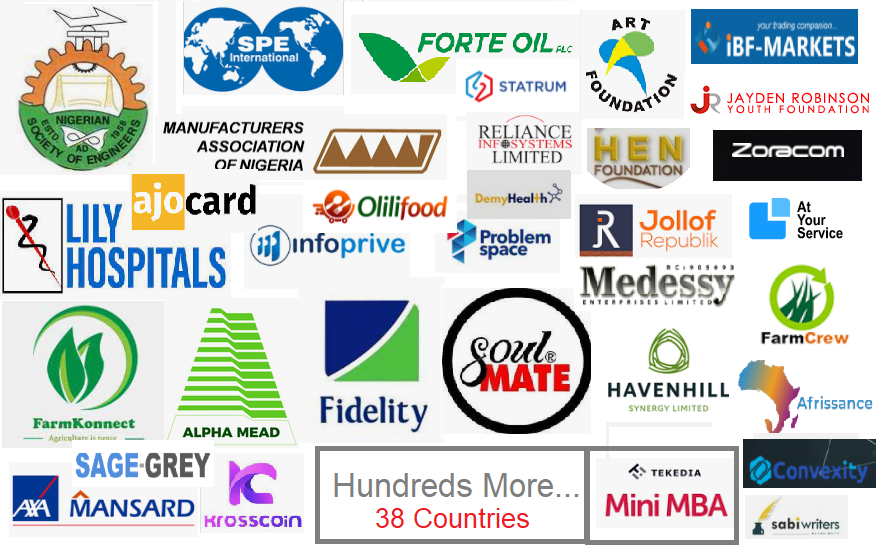
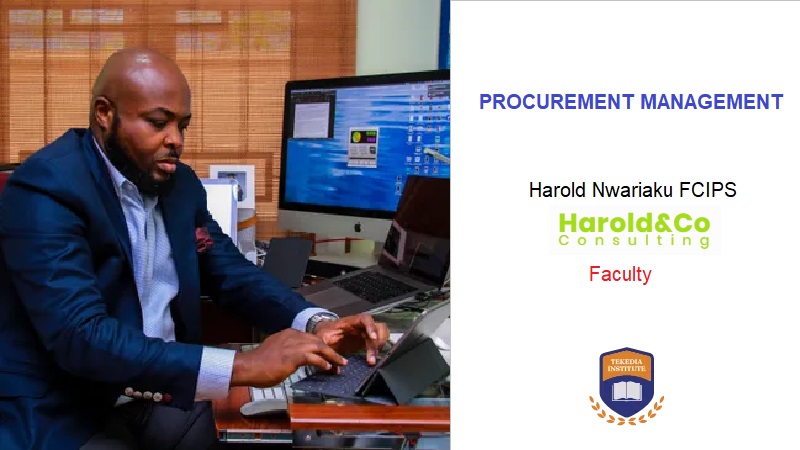
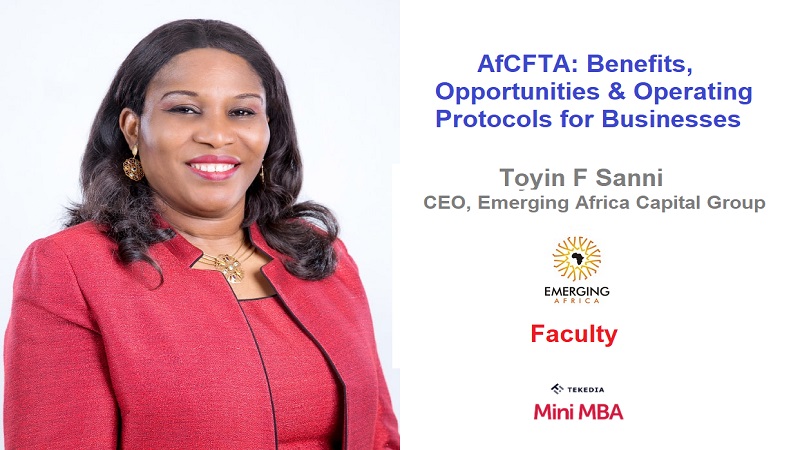
Welcome to Tekedia Institute. We run an amazing business school which has attracted professionals and students from 38 countries. Our Faculty members come from Microsoft, Shell, Flutterwave, Nigerian Breweries, Jobberman, Coca Cola, and other great organizations. Thrice weekly, I personally coordinate live Zoom sessions on the mechanics of business systems. We bring our Faculty and Guests on those sessions, covering industries and business domains. REGISTER today and join us!
– Prof Ndubuisi Ekekwe, Lead Faculty.
Invent, innovate and drive organizational transformation, performance, and growth. Capture emerging opportunities in changing markets while optimizing innovation and profitability. Digitally evolve your business or functional area, turning digital disruption into a competitive capability and advantage. Master the concepts of building category-king companies, and thrive.
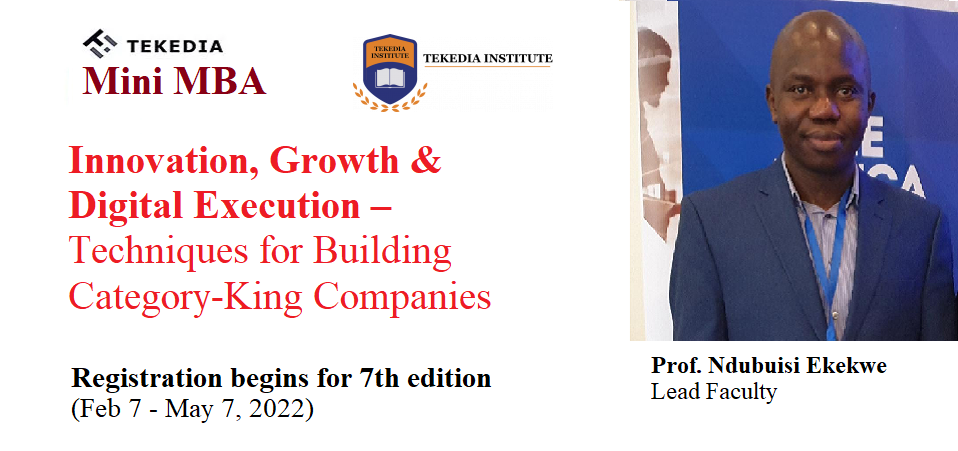
Registration for the 6th edition of Tekedia Mini-MBA (Feb 7 – May 7, 2022) opens. Tekedia Mini-MBA, from Tekedia Institute, is an innovation management 12-week program, optimized for business execution and growth, with digital operational overlay. It runs 100% online. The theme is Innovation, Growth & Digital Execution – Techniques for Building Category-King Companies. All contents are self-paced, recorded and archived which means participants do not have to be at any scheduled time to consume contents. Our programs are designed for ALL sectors, from fintech to construction, healthcare to manufacturing, agriculture to real estate, etc.
More so, the sector- and firm-agnostic management program comprises videos, flash cases, challenge assignments, labs, written materials, webinars, etc by a global faculty coordinated by Prof Ndubuisi Ekekwe. When we finish, we will issue a certificate from the Tekedia Institute, Boston USA.
Register and join us. You will emerge transformed with tools and capabilities that engineer confidence, performance and growth. Accelerate your leadership ascent with us! Here are our programs and costs.
Code
Description
Cost
MINI
Tekedia Mini-MBA. And WhatsApp School
US$170 or N120,000 naira
MINF
Annual Package: 3 consecutive MINI, and 2 optional capstones.
$340 or N180,000
MINR
(optional) Homework review; faculty will review your homework with feedback.
$30 or N10,000
CAPS
(optional) Tekedia capstone is a research paper, analogous to final college project.
$60 or N20,000 per track
Tekedia Live (Zoom) schedules for the ongoing edition is here.
Supply Chain Management, Global Partnership & Contracting – Adebayo Adeleke, ex-Chief of Contracting and Deputy Chief, Business Operations Division, US Army
Intellectual Property: Strategy, Management & Commercialization – Ifeanyi Okonkwo, University of Cape Town & Jackson, Etti & Edu
Business Relationship Management & Negotiation Skills - Charles Okeibunor, CEO IRMP
Due Diligence and Business Intelligence – Chike Obimma, Partner at NICCOM LLP (Commercial Law Firm)
Week 10: Leadership, Human Capital & Project Management
Leadership, Knowledge Management – Prof. Ayodeji Oyebola, Saint Mary’s University of Minnesota
Human Resources Management - Adora Ikwuemesi, Director Kendor Consulting
Leading and Managing Teams, Stakeholder Management with NICER Model – Dr. Chisom Ezeocha, Project Delivery Manager, Shell
Career Planning – Precious Ajoonu, Manager, Jobberman
Tax Treaties and Their Benefits - Emmanuel Eze, Manager, Federal Inland Revenue Service (FIRS)
Regional Case: Tax Law and Compliance in Lagos State - Abimbola Abdur-Rahman Lekki, Lagos Internal Revenue Service
Effective Product & Service Pricing, Accelerated Revenue, Profit Maximization - Saima Khan, Partner, Strategic Pricing Management Group, Toronto, Canada
Establishing Business Consulting & Advisory Services - Mustafa Yusuf-Adebola, Founder, Provisio Professional
Driving Profitable Growth, Marginal Cost, Scaling – Prof. Ndubuisi Ekekwe
Stimulating New Markets Through Innovation and Perception Demand – Prof Ndubuisi Ekekwe
Week 14: Startups, New Businesses, Products, Markets, Customers
The Mechanics of Minimum Viable Product and Product Development - Prof Ndubuisi Ekekwe
The NEP Framework – Discovering and Listening to Customers - - Prof Ndubuisi Ekekwe
Customer Validation and Building for What Customers Really Want. - - Prof Ndubuisi Ekekwe
Knowing and Defining Your Market - Prof Ndubuisi Ekekwe
Navigating Business Growth Phases - Prof Ndubuisi Ekekwe
ChatGPT, DALL-E 2 and Emerging AI Innovations: Business Opportunities in Africa - Zion Pibowei, Head of Data Science, Periculum Canada
How to Scale a Business/Startup - Jane Egerton-Idehen, Head of Sales Middle East & Africa at Meta (Facebook parent company)
Final Week: Execution and Closure
The Call to Business Execution, Closure – Prof Ndubuisi Ekekwe
Graduation Day – Prof Ndubuisi Ekekwe
Tekedia Live: Optional Zoom session which holds thrice per week (Tue, Thur, Sat at 7pm WAT). It is archived for those unable to make the session live. Our faculty members and invited guests rotate to anchor the sessions. Live provides a platform for members to ask questions and get live responses.
Access to any Facyber Certificate program for free. Facyber offers online cybersecurity programs on policy, technology, management, and forensics.
Capstone Program
Here are the 12 tracks:
CLSM: Certificate in Logistics and Supply Chain Management
CBIS: Certificate in Business Innovation, Growth & Sustainability
CMAB: Certificate in Media, Advertising & Branding
CSBM: Certificate in Startup and Small Business Management
CIBA: Certificate in Business Administration
CPFM: Certificate in Personal Finance & Wealth Management
CMSM: Certificate in Marketing and Sales Management
CDBG: Certificate in Digital Business Growth
CIAM: Certificate in Agribusiness Management
CHRM: Certificate in Human Resources Management
CETS: Certificate in Exponential Technologies and Singularity
CBPM: Certificate in Business Transformation & Project Management
The program is completely capstone-based. Tekedia capstone is a research paper or a case study exploring a topic, market, sector or a company. It is the project component of Tekedia Min-MBA.
Theme: Innovation, Growth & Digital Execution – Techniques for Building Category-King Companies
Introduction
Over the last few decades, digital technology has emerged as a very critical element in organizational competitiveness. It has transformed industrial sectors and anchored new business architectures, redesigning markets and facilitating efficiency in the allocation and utilization of factors of production. The impacts have been consequential: continents like Africa are moving towards knowledge-based economic structures and information societies, comprising networks of individuals, firms and states that are linked electronically and in interdependent relationships. In this program, we will examine this redesign within the context of fixing market frictions and deploying growth business frameworks in a world of perception demand where meeting needs and expectations of customers are not enough.
Program Time: Feb 7– May 7, 2022
Venue & Format: Online via videos, articles, webinars, and flash cases. Program is self-paced which means you consume the materials at your own time and pace. It is completely online. Where you live or your time zone would not be an issue as program is not live-delivered.
Cost: US$140 (N50,000 naira). We have a payment plan, i.e. installment payment plan (email us for details)
Target Audience: This program is designed for professionals and students across functional areas like sales, marketing, technology, administration, legal, strategy, finance, etc across all business sectors and domains.
Learning Objectives: To innovate is to set a new basis of competition in an economy, business sector or market. Sometimes, it results in disruption. This program is designed for private (large, SMEs, startups, sole businesses), public and government institutions, and individuals. Participants will:
Master the mechanics of growth – the reward of innovation – through frameworks, cases and evolving strategies.
Understand how to undergo transformation journey that is fully aligned with corporate objectives through measurable and realizable benchmarks.
Acquire business capability tools that do not just RUN their firms but can TRANSFORM them.
Design corporate growth experiments in Lab sessions based on One Oasis Strategy, Aggregation Construct, Double Play Strategy, Accumulation of Capability Construct, and more.
ETC
Tekedia Advanced Diploma Programs – Immediate Access Upon Payment
Each track of Tekedia Advanced Diploma programs runs for 8 weeks (2 months). A track has no Live Zoom session, and it is completely self-paced and online. Upon payment, you have immediate access to start learning. The program includes class notes, flash cases and videos, but no webinar. Each track costs $100 or N36,000 naira per participant. The tracks and curriculum are presented below.
DLSM
Advanced Diploma in Logistics & Supply Chain Management
DBIS
Advanced Diploma in Business Innovation, Growth & Sustainability
DBPM
Advanced Diploma in Project Management
DIRM
Advanced Diploma in Risk Management
DIBA
Advanced Diploma in Business Administration
DIDT
Advanced Diploma in Innovation & Design Thinking
DIAT
Advanced Diploma in Accounting, Auditing, Forensics & Taxation
Part A – General for All Tracks
In the first 4 weeks, all the tracks take the same courses.
Week
Part A – Common to All Tracks
1
Innovation & Growth:
Growth and Innovation of Firms
Digital Transformation, Innovation & Strategy
2
Business Systems & Processes:
Grand Playbook of Business & Entrepreneurial Pursuit
Process Improvement and Operations Management
3
Business Model & Transformation:
Modern Business Models and Growth Execution
Effective Organizational Change Management
4
Design and Innovation Lessons:
Innovation Lessons (5in5, Global, Africa)
Product Design and Packaging
The electives for the tracks are presented on this slider-table.
Part B.1 - Elective for Business Administration
Week
Part B – Business Administration
5
Quality & Project Management:
Quality and Asset Management
Effective Project Management
6
Finance & Fundraising:
Capital Markets, Investing and Fundraising
Accounting, Building Sustainable Enterprises
Financial Modelling
7
Delivery and Execution:
Marketing and Sales Management
Supply Chain & Logistics Management
8
Understanding Technologies and Sectors:
Technologies: Cybersecurity, Blockchain, AI & Cloud, Data Management, 5G
- Execution – Business Objectives and Technologies
7
Modelling
- Accounting, Building Sustainable Enterprises
- Financial modelling
- Internal Auditing Strategy for SMEs
8
Sustainability
· Sustainability Strategy and Social Innovation
- Sustainability Innovation for Business Growth
Part B.5 - Elective for Logistics & Supply Chain Management
Week
Part B – Logistics & Supply Chain Management
5
Supply Chain
- Outlook on Supply Chain Management
- Supply Chain Systems & Management
6
Partnership and Contracting
- Global Partnership & Contracting
- Law, Contracting & Negotiation
7
Models and Planning
- Planning Supply Chain
- Accounting, Building Sustainable Enterprises
- Financial Modeling
8
Business Cases
· Zido Logistics & Freight
- Foodlocker (Ecommerce Logistics)
Part B.6 - Elective for Innovation & Design Thinking
Week
Part B – Innovation & Design Thinking
5
Design Thinking
- Introduction to Design Thinking
- Digital + Design + Thinking
6
Innovation & Design Thinking
- Design Thinking Lab, Action Planning
- Human Productivity Innovation
7
Sustainability and Execution
- Sustainability Strategy and Social Innovation
- Execution – Business Objectives and Technologies
8
Quality & Project Management:
- Quality and Asset Management
- Effective Project Management
Part B.7 - Elective for Accounting, Auditing, Forensics & Taxation
Week
Part B – Accounting, Auditing, Forensics & Taxation
5
Accounting
- Accounting, Building Sustainable Enterprises
- Managerial Accounting, Business Decision Making and Growth
6
Auditing
- Auditing, Forensics, Policies and Controls
- Internal Auditing Strategy for SMEs
7
Taxation and Tax Law
- Tax Management for SMEs
- Tax Treaties and Their Benefits
8
Digital and Case
- Information Security and Digital Forensics
- Case Study: Tax Law & Compliance in Lagos State, Nigeria
Tekedia Live Sessions
We run optional three Live Zoom sessions (two weekdays and one Saturday). This provides a way for our members to ask our Faculty and experts live questions and get feedback.
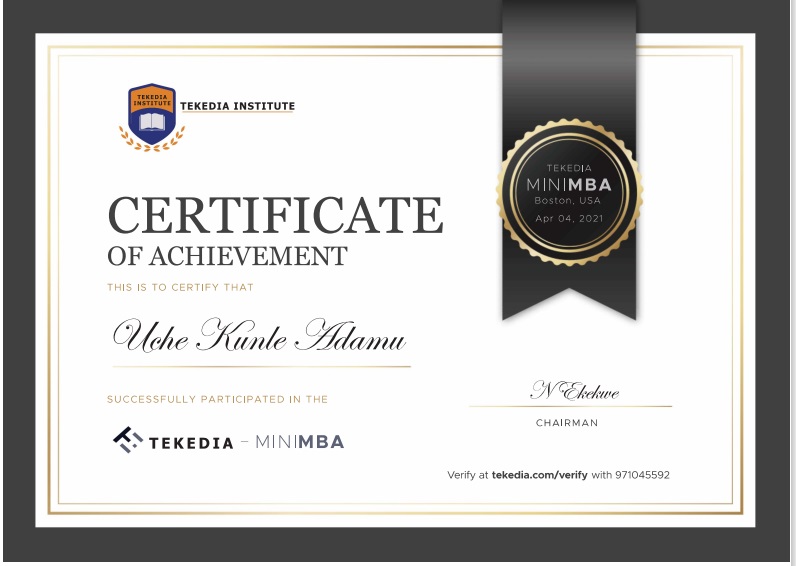
Tekedia Mini-MBA certificate sample
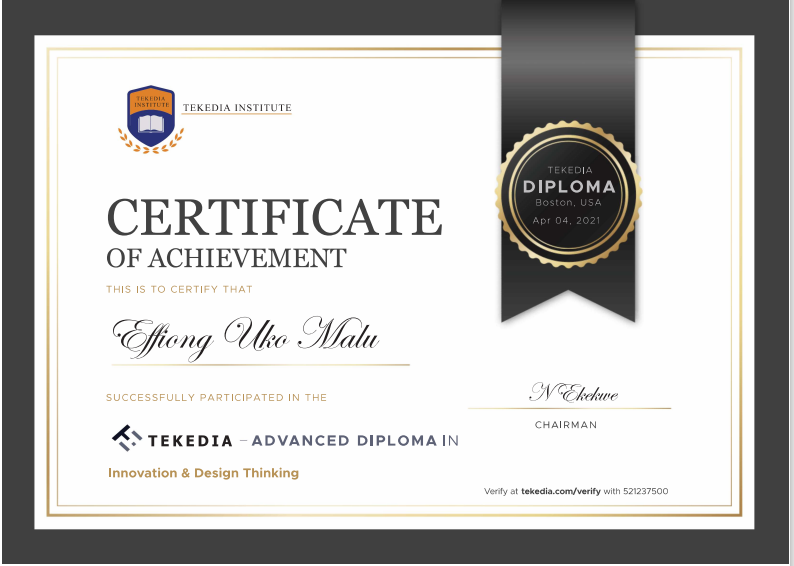
Tekedia Diploma program certificate sample
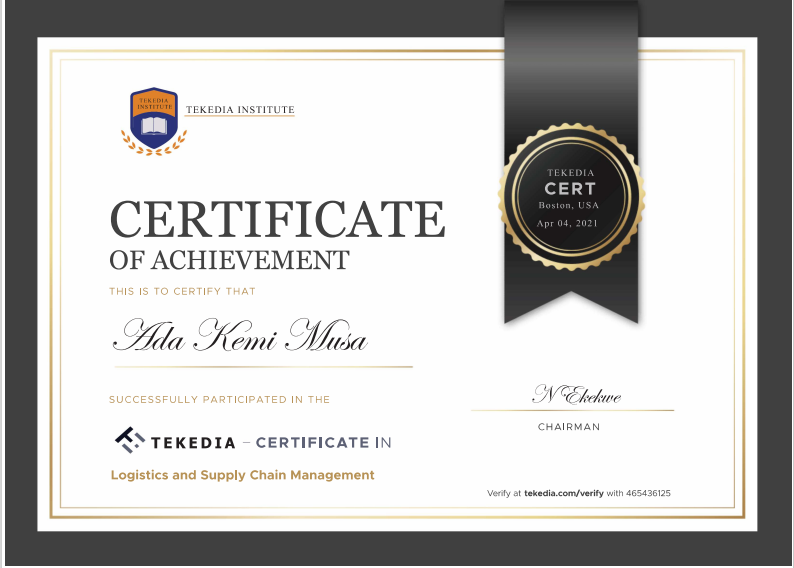
Tekedia Capstone program certificate sample
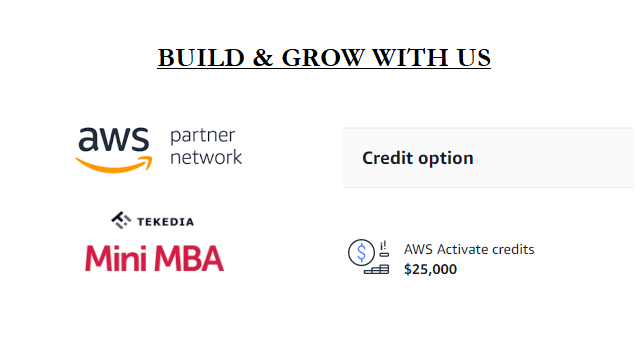
Amazon AWS Credit to Innovators
Tekedia Mini-MBA is a quasi startup accelerator, extending the school core innovate & grow mindset to support innovators. That means, innovators and companies can have access to resources which our Fund provides. If you are in our program, and need support, we will help. We have credits to support founders and companies in Tekedia Mini-MBA who are bootstrapping or have raised small money. Then, as you grow, we will offer you more credits.
Special Weeks
Tekedia runs two special annual programs – Tekedia Career Week (not designed for finding jobs but rather planning careers) and Tekedia Innovation Week for our members. Admission is that member must have attended a Tekedia Mini-MBA program in that year. The dates are announced in our program curriculum. For the last edition, click here.
Our Career Week is not designed for finding jobs. Rather, it is structured to TRANSFORM workers, founders & professionals into business leaders and champions of innovation in their companies. The sub-theme is Nurturing Innovators: Career Planning & Resilience During Disruption. It is packaged under the Tekedia Mini-MBA theme of Innovation, Execution & Growth. Our knowledge experts for the Week include human resources experts and leaders from MNCs and startups, across industries and global regions:
Tekedia CollegeBoost is a version of the Advanced Diploma in Business Administration for colleges and schools.
Tekedia Mini-MBA for Corporates is a customized version of the general Tekedia Mini-MBA for companies.
Tekedia Mini-MBA for Governments is a customized version of the general Tekedia Mini-MBA for governments, government agencies and related public institutions.
Tekedia Practice has both coursework and internship components, and it is designed to provide practical experiences to learners. Simply, a member goes through a curated domain-specific training, and follows it up with an internship in a company.
Business Growth Playbooks w/ Ndubuisi Ekekwe is a live program which takes place on Zoom. It focuses exclusively on growth strategies, mechanisms, models, frameworks, etc which businesses can deploy to win new markets and territories.
For more details about these programs, click here. For institutions, if you need a brochure, email us for one.
Prof Ndubuisi Ekekwe is the Lead Faculty of Tekedia Institute
PhD, Electrical & Computer Engineering, Johns Hopkins University, USA
MBA, University of Calabar, Nigeria
BEng Electrical & Electronics Engineering ( Federal University of Technology, Owerri, Nigeria)
Prof Ndubuisi Ekekwe invented and patented a robotic system which the United States Government acquired assignee rights. Dr Ekekwe holds two doctoral and four master’s degrees including a PhD in engineering from the Johns Hopkins University, USA. He earned undergraduate degree from FUT Owerri where he graduated as his class best student. While in Analog Devices Corp, he co-designed an accelerometer for the iPhone. A recipient of IGI Global “Book of the Year” award, a TED Fellow, IBM Global Entrepreneur and World Economic Forum Young Global Leader, Prof. Ekekwe has held professorships in Carnegie Mellon University and Babcock University, and served in the United States National Science Foundation Committee.
The South African press called him “a doctor of innovation” for helping organizations on the mechanics of business innovation, strategy, and growth. Since 2009, the Chairman of Fasmicro Group which controls many startups and entities has been writing in the Harvard Business Review. He was recognized by The Guardian as one of 60 Nigerians Making “Nigerian Live Matter” on Nigeria’s 60th Independence Day (Oct 1, 2020).
Selected Faculty & Testimonials
We have more than 85 Faculty members; see the full list here. For selected testimonials on our program, click here.
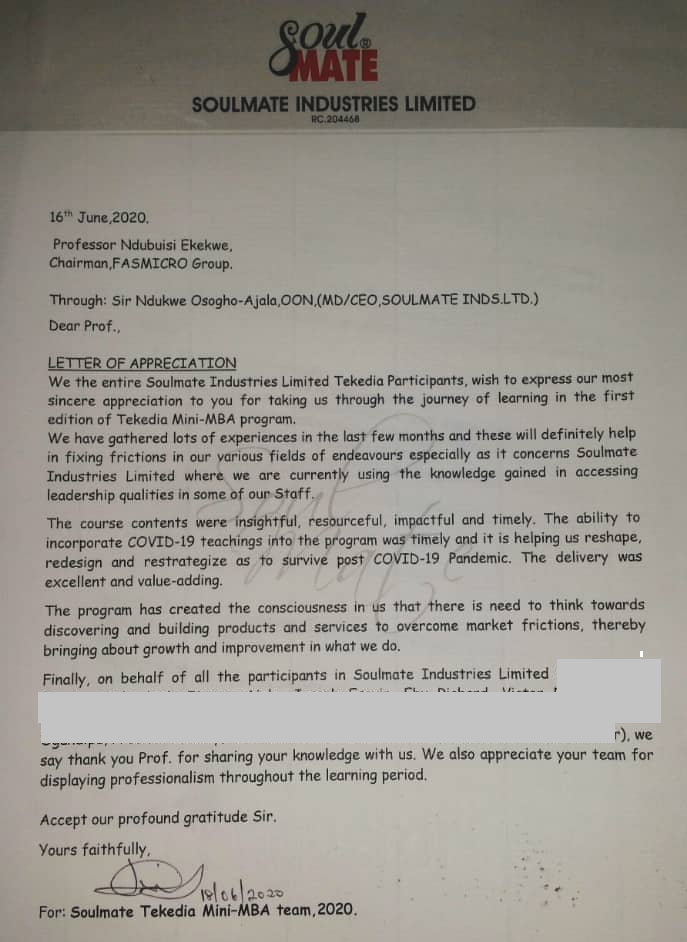
Testimonial from Soulmate Industries Ltd
ebook Free for early registrantsFree for early registrants
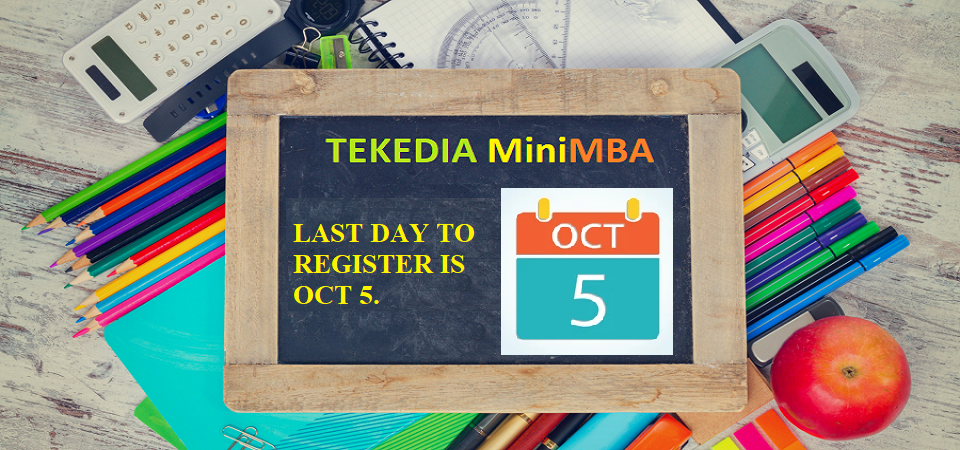
Today is the last day to join the business school. Yes, registration for the 6th edition of Tekedia Mini-MBA ends today. BEGIN here if you want to co-learn with us in 2021
It is said that “a nation with large human capital base and wealth of natural resources should be advanced in development and experience immerse civilization”. However, while it is true that Africa as a continent is in no small ways blessed in all kinds of resources, her present reality does not validate that claim. As of now, only a handful of her entity states rank’s considerably key indicators such as infrastructural development- which of the eight (8) countries above average, Seychelles leads with 96.73 per cent, and education where the country is the only African state in the top 50 on the global metric. Also, she has a collective debt running over more than 283 billion USD, with one of her member state Sudan to be precise having been sunk so deep in debt that it gained global empathy for a 14 billion USD debt relief. All this are the reality even when the continent is rich in vigour, creativity and numerous valuable materials and should have nothing to do with neck-breaking debts, rather it should sit on the giving end of aids matter.
While debts in their selves are not a thing of shame, since capitalist nations such as The United State and China have accumulated debts in excess of 20 trillion USD and 8.2 trillion USD respectively, however, productive use of debt is a way towards growth. Simply, a debt must pay debt and then foster development.
Nevertheless, like the Western- Nigeria (A western African state) adage puts it, “onakan o woja”, translated to mean “there are many routes to the market”. Simply, debts are not the only way towards development. As debts enable development, so also does trade. Trade, according to Investopedia, is a basic economic concept involving the buying and selling of goods and services with the compensation paid by a buyer to a seller or the exchange of goods or services between parties. Trade could be further categorized into Home Trade and Foreign Trade. Home Trade, also called domestic trade, is the trade that takes place within a country. Whilst foreign trade, also known as international trade, is trade between a country and others. The need for foreign trade arises because individual states are not equally endowed with resources. So, outsourcing and external trade is vital to meet internal demands.
Africa countries like every other part of the world trades. As of 2019, member states traded aggressively with a total value of transactions peaking in the range of 750 billion USD. However, with the bulk of valued traded underdevelopment lingers as her reality indicate. It has thus left questions in the heart of many, is Trade truly potent for development? Well, indeed, trade is potent, as it brings diverse opportunities to all. However, the kind of trade in which African states members have engaged for a long time cannot bring continental shared prosperity. While it’s undeniable that the nations have efficiently mastered home trade, she still lacks greatly in regional trade- a kind of international trade, which could be best put as continental trade.
Continental trade, is the trading activities between countries of a region. Continent such as Europe have European bloc which forms a collective power in which trading activities go with, so also does the Asia continent have theirs, same as America. Although intra-Africa trade is low, it is not less of continental trade. Statistically, compared to other regions of the world like Europe, Asia, and America involved in intra-regional trade which sits around 68.1 %, 59.4% and 55% respectively, the intra-Africa export crawls at 16%, which subtly indicates why the continent trades so much, yet, grows so little. This low intra-trade amongst many can be pointed to the continent poor infrastructure. It remains more expensive for an operating factory in Accra, Ghana, to import coffee from Rwanda than from a Paris-based company, for instance. All these have been made worse by the COVID pandemic.
The year 2020, would remain memorable as many would hardly forget the diverse heart-breaking incident that filled the global space. As the global supply chain was broken, crude oil prices fell into the negatives, so also did social turmoil arose and political unrest occurs, as in the case of the Black lives matter and the endsars movement respectively. Common to all these is that Africans were not prepared for it. The waves of shocks aside the cracks in Africa’s structure showed the fragility of what African states have long depended upon and the need for a new path towards development. As said, this new path is Regionalization. So, to make regional trade work which in turn would foster and strengthen Continental trade, Africa Continental Free Trade Agreement famed as AfCFTA was initiated.
Although the initiative was long thought off, well before the advent of the COVID- 19 pandemic, the pandemic increased its relevance and strengthened political attention. AfCFTA is an agreement that enables the free movement of goods and services as it seeks to unify fragmented markets into a singular entity*. It would cover Trade in Goods and Services, Investment, Intellectual Property Rights and Competition Policy*. It needs arises since most African companies are small, and thus it is hard for them to individually attract funds that have developmental potentials. Africa’s Technology boom and China’s voyage into specific countries, such as Nigeria, Kenya, South Africa and Egypt is a testament that many are scared of other parts of the continent, even when these parts have huge potentials as they have a large base of non-consumers on across a broad variety. So, in simple terms, the trade agreement would de-risk the market, and in doing this improve the overall state of the continent. This shared prosperity would have the greatest impact on a set of demography, the youth. It would provide the following to them:
Employment. To sustain trade, the manufacturing sector would rise. It would eventually make the creativity, intelligence and tenacity of productive use. By doubling the investment in manufacturing to $1 trillion, the creation of 14 million new stable jobs would be attainable.
Cultural Integration. Aside from the Nigeria and Ghana Jollof fight, there is little interaction between African. And the knowledge we have about each other is small. I must admit I just got to know about Seychelles, which is home to numerous beaches, coral reefs and nature reserves, as well as rare animals such as giant Aldabra tortoises. I would have missed out on the knowledge of this country and lived in complete ignorance that rather than search Miami beach, there are many around me.
Improved sense of worth and dignity. Nothing improves a human sense of worth than self-knowledge. Self-knowledge would be built as one incrementally and comfortably shoulder responsibilities. As the tariff and the cross-border limitations are made non-existent, Small and Medium Scale Entrepreneurs would rise. These entrepreneurs, who pioneer most jobs, would have no time to engage in anti-social activities. All this, in turn, would drastically reduce the insecurity and crime rate on the continent as no human would work so hard only to self destruct.
Advancement in Knowledge. Beyond the profits that would emerge on the continent, there would be a push in the boundaries of knowledge. As trade occurs and profits accumulated, the need for research for development would arise. It would cause the continent to have not only might that works, but minds that think. At the advent of this, the continent would be experience increased civilization tailored to her desire.
Political Involvement. If there is anything one is certain of it is that both the Nigerian government and the Ugandan government have seen that the youths are ready for their future just as they displayed in the EndSars and Bobi Wine movement. With AfCFTA, there is shared voice as by trading with my suppliers and customers I can have wedge geo-political influence through to laws of demands and supply to initiate the desired Continental change Many youth now know that wars are won by the simple laws of economics.
So, the implementation of a regional trade is beyond the words of mouths. It is a real force which has the power to shift the continent from mere global speculators to global dictators. However, this would not happen if the youth do not see themselves as crucial players in it implementation. To say that the agreement trade is a gift by other for the benefit of the youth is half truth, the trade agreement cannot work without the actions of the youth. The youths matters. So, if this lofty goal is to be realized the youth must be given their rightful place, else, the continent would remain crawling.
The best possible early career experience anyone could get is beginning a career in banking especially if you apply the principles of banking in your personal life. First, working in a bank reshapes your understanding of society. Yes, we the people go to banks but there are people banks go to them. And if you pay attention, you understand one of the most powerful weapons ever invented by humans: DEBTS.
Check the history of empires, up to 650 years BC right at the time of Nebuchadnezzar II, you will understand the power and meaning of debts.
At extremes, debt is a tool which helps extremely rich people pay less taxes even as it helps very poor people to make rich people richer! Yet, debt could be a necessary tool in commerce. But never allow it to float without being in charge.
If you can control your debts, you will be in charge of your options! Remember – you work hard to grow cash flow but debt by nature of interest does not need any help from you to keep growing if you neglect it. Plan your freedom from debt and career options could open.