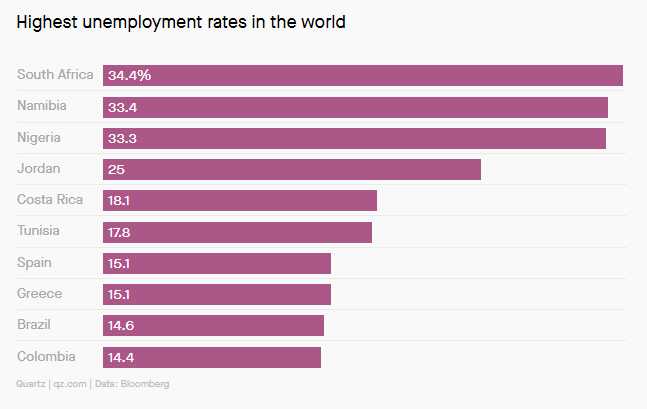
It was really a tragedy for many families: “About 20% of full-time staff at formal and informal businesses in Nigeria lost their jobs in the heat of the Covid-19 pandemic in 2020. The startling figure is from a survey conducted by the United Nations Development Program (UNDP) in conjunction with the Nigerian Bureau of Statistics (NBS), who studied 2,964 businesses in every state in the country in order to understand the effect of the pandemic between the second and fourth quarters of the year.” The nation needs to ramp up initiatives to get these citizens back to work and more.
The full report here (PDF):
It is now over a year since the coronavirus outbreak was declared a global pandemic by the World Health Organization. COVID-19 has claimed over 4 million lives and infected over 200 million people worldwide. The pandemic’s impact has touched almost every aspect of modern life, upending public health systems, the global economy, travel, supply chains, community and social ties and how we work. Unemployment has risen, and the global economy shrank by 4.4% in 2020, according to International Monetary Fund (IMF) estimates. The vast majority of nations around the world entered into recessions, having experienced negative GDP growth.
Developing countries have suffered disproportionately due to the socio-economic fallout from the pandemic. Wealthier nations can afford to institute the crippling lockdowns and restrictions necessary at times to arrest the spread of the virus, and to support their populations so they can stay at home in an effort to limit community spread. Many developing countries however were often forced to rely on a mishmash of truncated measures to limit the fallout on populations already living in poverty or who rely on daily work for subsistence.
This report detail the ramifications of the COVID-19 pandemic. Disruption in operations was evident across enterprises with at least two thirds of businesses currently operating in the country having had to close down during the pandemic. The results also shed light on resistance to lockdown directives and regulation by the government, particularly among informal enterprises where a third continued to operate throughout the pandemic. Around one in ten businesses were still closed at the time of the survey.
With that 20% paralysis, unemployment has ramped up in Nigeria.
During the Federal Executive Council (FEC) meeting that took place in Abuja, Nigeria on 8th September 2021, presided over by President Muhammadu Buhari, a National Policy on the Fifth Generation (5G) Network was approved for the country’s Digital Economy.
The said policy was approved following the presentation by the Minister of Communications and Digital Economy, Dr. Isa Pantami, and its onward implementation reportedly takes immediate effect.
In view of this development, the National Frequency Management Council (NFMC) is expected to soon release the needed spectrum to the Nigerian Communications Commission (NCC) for the Mobile Network Operators (MNOs) – domiciled in the country – that meet all the required conditions.
The Technical Assistant on Information Technology to the Communications Minister, Mr. Femi Adeluyi – who disclosed this development in Abuja immediately after the Council meeting – reminded that the National Policy had been developed over a period of 2 years, due to the need for extensive stakeholder engagement as well as ensure adequate public awareness and sensitization.
He, therefore, notified that the stakeholder engagement was “thorough and multi-sectoral in nature”. He also took into account the report of the 3-month 5G trials that commenced on the 25th November 2019, adding the report critically reviewed and studied the health and security implications of deploying the 5G network in Nigeria.
Mr. Adeluyi conclusively stated that the NCC, as the regulator of the telecommunications sector, would continue to engage stakeholders in a bid to develop the regulatory instruments required for the successful deployment of the technology in Nigeria.
It could be recalled that sometime in 2019, the Chief Executive of the Nigerian Communications Commission (NCC) Prof. Umar Danbatta disclosed that the agency had approved dedicated spectrum for trial deployment of the 5G network services in the country.
In his words, he acknowledged the evolving trends in the Information and Communication Technology (ICT) ecosystem, giving rise to such technologies as Internet of Things (IoT) applications and Smart cities and communities, among others, saying the NCC was well positioned to jump-start trial of the 5G deployment.
Prof. Danbatta further stressed that the recent licensing of seven infrastructural firms to deploy metro and inter-city fiber and broadband point of Access with a minimum capacity of 10Gbps across the 774 Local Government Areas (LGAs) of Nigeria, was in accordance with the “8-point agenda of the commission for the provision of ubiquitous broadband infrastructures” within the shores of the country in the “Next Level document”.
It’s not anymore news that a lot of misconceptions have been stuck into the mindset of an average Nigerian, hence this topic. Many have been made to believe that the 5G is nothing but a dead zone targeted to consume the entire human race within a shortest time frame. In other climes, most Nigerians are of the notion that the proposed network is just a politically-motivated missile meant to override the country’s socio-political space.
One inevitable fact we, as a people, must embrace is that technology has come to stay not just in Nigeria but across the global community, hence anyone who makes an effort to tag it a monster is really taking himself aback. Though it has done several wrongs, the rights emanating from its existence remain innumerable.
On the above note, it’s very pertinent and crucial to fully comprehend the meaning and essence of the 5G network. As the acronym implies, it’s a 5th Generation mobile network. It is dedicated to handle a much larger role than that of the already existing ones such as the 1G, 2G, 3G and 4G networks, respectively.
5G was introduced to elevate the mobile network to not only interconnect people, but equally interconnect and control machines, objects, or any form of devices. It’s meant to deliver new levels of performance and efficiency that would empower new user experiences and connect new industries.
The 5G network is meant to deliver multi-Gbps peak rates or faster speeds, ultra-low latency, massive capacity, coupled with more uniform user experience. It’s imperative to note that the 1G was designed to solely deliver analog voice, 2G for digital voice, 3G necessitated mobile data, whilst the 4G ushered in the era of mobile internet, which we are currently enjoying.
In summary, 5G is a new kind of network in the telecom sector. It’s a platform for innovations that won’t only enhance today’s mobile broadband services, but equally expand mobile networks to support a vast diversity of devices and services, as well as connect new industries with improved performance, efficiency and cost.
5G is, therefore, an advanced wireless technology that has begun wide deployment since 2019. It’s worth noting that, as at October 2019, over four million Koreans had access to the 5G network.
It’s equally amazing to comprehend that China has for long deployed over 100,000 base stations in her quest for 5G wide usage. Survey revealed that about 150 million 5G mobile subscribers were expected in the Asian country by 2020.
Leading international organisations, such as the World Health Organisation (WHO) and the International Telecommunications Union (ITU), alongside various independent medical experts, have confirmed that the deployment of 5G networks leave no adverse health effects and are safe.
It’s noteworthy that several countries have already commenced the deployment of 5G and are currently enjoying its numerous benefits. Some of these countries include the United Kingdom, United States, and Korea Republic, to mention but a few. Even on the African Continent, countries like South Africa and Lesotho have equally keyed in. This information is verifiable.
Technically speaking, reliable research indicates that the 5G network offers significant advantages over the current technologies. Some of its advantages include, but not limited to, much lower latency, higher bandwidth, greater device density, longer battery life for nodes and greater network flexibility.
On the other hand, the 5G network operates in a high-frequency band of the wireless spectrum, between 28 and 60 Gigahertz (GHz). It’s expected to add unlicensed frequencies such as the 3.5 GHz to its list of new frequencies for mobile use. This means a lot of bandwidth would be available to the teeming users.
The aforementioned factor signifies that the 5G won’t only boost ease of communication among telecom subscribers but equally expand the economic band or prospect of any country involved.
Since the 5G mobile network will soon apparently dominate the global telecom sector, Nigeria as an entity must therefore not act in abeyance than to concentrate on how best an effective and efficient 5G can be duly introduced and utilized in the Nigerian space.
As Nigeria, likewise other developing countries, is still trial-testing her technologies and securities toward creating and launching a wholesome environment for the 5G network, she must acknowledge the key parameters that require apt consideration and attention.
Like I have already pointed out in my previous analyses in various platforms and fora, at such a time like this, the authorities imbued with the powers to regulate and manage the telecom space must concentrate on the intricacies surrounding the technicalities and securities of the 5G network towards ensuring it isn’t hijacked by men of the underworlds.
They must, therefore, deploy the needed expertise and mechanism to avert any form of criminalities likely to emerge thereof. This very aspect, which is very crucial and inevitable, might require suitable legislation.
More so, it would interest – or perhaps shock you – to realize that over 70% of Nigerians are presently yet to key into the Fourth Generation (4G) Network, let alone the 5G. This is the reason the concerned bodies need to speed up action on awareness and sensitization.
5G has conspicuously come to stay, hence we must focus seriously on how to embrace and welcome it. But mind you, this cannot aptly be done if the needful isn’t duly considered.
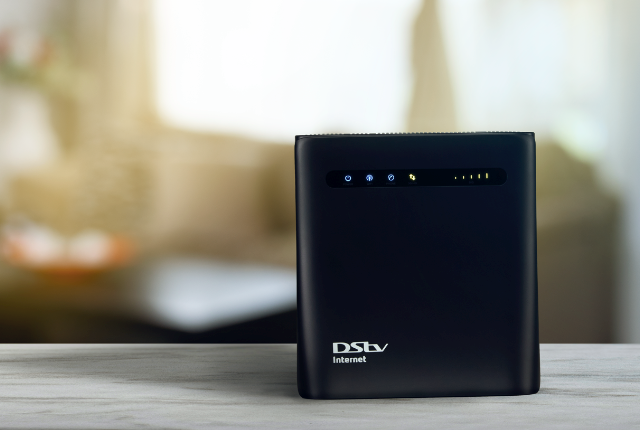
Hello DStv Internet. DStv Internet is a fixed-wireless-access service, which means that customers can now get connected to the Internet with a Sim card and Wi-Fi router – a perfect option for those who do not have fibre in their residential area but want to access the Internet regularly using various devices in their home.
Sorry, that service is only available in South Africa. But expect in the near future for MutiChoice, parent company of DStv, to be offering internet services in Africa. Today, MTN is powering that in South Africa but I can assure that if Elon Musk makes progress in the continent with SpaceX Starlink satellite broadband solution, DStv which is already in homes via those cables will be a natural partner.
As that happens, expect a double play strategy where the DStv programming will remain the one oasis while DStv internet will cover the flanks for any frontal attack from Netflix. Yes, if you do not want to go through the air (satellite/TV) and prefer the web, I (DStv) want to assure you (Netflix) that I run an ISP (internet service provider) business and can pipe my preferred shows faster.
It is a great vision: buy your home internet and TV shows from one brand. Yes, bundling things work and DStv is deepening its moat on the web: watch that football game via another content provider and pay full fees on broadband, but bundle with DStv, the meter is turned off.
MultiChoice has launched DStv Internet with MTN as its network partner to provide Internet access to those who do not have access to fibre services.
The company said that the move is to diversify its offering as part of MultiChoice’s ongoing evolution from a traditional video entertainment business.
DStv Internet is a fixed wireless access service, and the company said it will use a SIM card and Wi-Fi router.
This article for Tekedia became prompted from a poll post by a third level connection in LinkedIn that I didn’t know. I didn’t participate in the poll, but the thought about the leading question stayed with me.
I don’t generally participate in polls. It’s usually for two reasons. 1. Because the polls often serve no business function and have just been created by someone trying to create activity around themselves and 2. Because if I (reluctantly) take part in a poll, I will probably inadvertently end up inflicting it on others in my network.
This poll had a good lead-in narrative so I remembered it. It was focused on interview experience of candidates for sales roles and it posed if anybody had been asked in an interview if they had potential clients they can bring to the company. This got me thinking about ‘Black Books’ , how Technical Sales happens, and wondering to myself what do young Nigerians embarking on Technical Sales need to approach it to be successful?
What is a Black Book?
Many years ago, before internet and mobile phones, travelling salespersons kept a little address book on them everywhere they went. This contained details of their sales key accounts, contacts, and prospects. If they were on the road and an existing client or prospect was a no-show, then they would go to the book and see if there was any other potential they could explore in the immediate vicinity. If they learnt something new in their travels, they would add it as they went. Black was a common colour for the covers of these little address books – hence ‘Black Book’
Today, a ‘Black Book’ is notional. It can take many forms. It can be set up on corporate MS outlook and ported to an account holder’s phone. It can be stored in a webmail account, and productivity tools in portal systems such as Google offer enhanced ways to manage information.
As it is now the norm for anybody career driven to have a LinkedIn account, it’s becoming common to consolidate it there as well. Some even use Facebook or Whatsapp.
It’s the principle rather than the data container that is important. The ‘Black Book’ is a reservoir of data defining business relationships built over time.
Original ‘hard copy’ Black Books became disorganised and degraded quickly as a tool, due to people on the move frequently scribbling notes. Every few months, busy professionals had to get a new book, and transcribe contact details, along with the most valuable of additional information and this was very time consuming.
Many modern portals and platforms have their own CRM tools, so professionals can build a resource there, independent from any corporate CRM that may be in use. It’s always a good idea to develop a standalone resource, particularly those who are on short term contracts, or any situation that has potential for ending at fairly short notice. It avoids a ‘mad scramble’ towards the end to secure business intelligence that has value in career continuity. Zoho and Yandex are good alternatives particularly if separation from Google is valued. With apps like ‘Siri’ for iphone, the future is bright for the integration of speech AI apps with communication functions and CRM data.
Where Technical Sales sits
Technical Sales is pretty much the opposite to commoditized, consumer or mass market sales, which is generally ‘Transactional’ Selling. ‘Transactional’ sales make little or no effort to develop customer relations and the focus is generally on shifting volumes of products at pace, with low unit profit margin. There is little product understanding needed from the operative.
Technical Sales is usually a combination of Needs Oriented and Insight Selling.
Relationship Building, Intelligence led solution discovery, and Idea Partnering are essential skills in Technical Sales.
Technical Sales opportunities may only come along once in several years, or maybe more for a number of reasons. For example, a cloud services customer may not want to entertain discussing an alternative provider, not because they believe their current provider is technically the most superior or cheapest, but because migration to a new service will disrupt their day to day activities, there will be a data transfer overhead, and an unfamiliar solution will bring a new learning curve and training needs for staff. A change would have to mean profound improvement enabling the company to find a completely higher gear, in order to be worth the trade-off.
Another example would be FMCG/Light Manufacturing machinery, as current machinery in service won’t get replaced unless the prospect has major diversification or up scaling plans, or until such time as existing machinery reaches ‘end of life’ consistent with the companies term replacement policies. This means that Technical Sales opportunities are small windows, and they are far apart. So it’s necessary that a lot of hard work is put into sowing the seeds that will bear future fruit. It’s also essential to plant many fields so as effort matures, there are many potential ‘outs’.
So now that we have some understanding of Technical Sales, let’s move on to some of the things a beginner should consider.
Listening to Problems
For those of you who have done the Tekedia Mini MBA, one thing you will find Prof. Ndubuisi Ekekwe mentioning frequently is ‘fixing frictions’. Well, it is not possible to establish what frictions exist, without creating the dynamic where people will spontaneously start talking about challenges, and then listening to what those challenges are.
One of the biggest mistakes made by people that are new to Technical Sales is to be bursting with enthusiasm to launch into detailed information about the company and its products. Understand this kills the process. What is needed is to get the prospect talking. The first thing to do is to get the person talking about themselves and how they came to be in the company. Then move on to their vision, and of course, what the current obstacles are. Only then can discussion start about what possible solutions may work.
Initially, our job is to present ourselves and our employer as more ‘interested’ than ‘interesting’.
Keep the intro about ourselves initially very short and simple.
Client Capture
The client capture is the process of documenting what is learnt from a visit to client premises or site. It’s probably not a good idea to use a device to do this, and go ‘old skool’ One of the reasons is that if you are in a 1-2-1 situation with a client rep, then it’s easier to scribble notes as ‘hook’ word groups on a page and maintain some level of eye-to-eye contact with the client than it is while doing data entry on a device.
Many companies, depending on sector, and what your product/service delivery is, are very secretive about their processes. Some will not allow phones or devices to be taken out in plain view in sensitive areas such as a factory floor. Never try to take a picture of anything unless given permission first.
Larger companies in things like Food or Pharmaceuticals, will have a specific hygiene and barrier clothing station. At this station all entering the manufacturing floor will need to perform some basic hygiene actions, and don some sort of disposable overall, coverall or hazmat suit. Disposable shoe and hair coverings are also common.
Taking a picture in a restricted area of a business or factory can result in your device confiscated, the loss of opportunity, being escorted off the premises, and maybe even arrested
Some companies require visitors to leave their devices at this station before entering, and collect them on the way out.
In technical sales, if fortunate to be agreed access to a process floor, it’s really important to document everything to be seen. Always take down makes and models of any devices, machinery, equipment etc. If anything seems unfamiliar, recording make and model numbers are important. It can be searched online later.
Complete write up to CRM/Black Book Resource/Project Discovery Records without delay
There are many scenarios where people cannot successfully create detailed documentation on the fly and give full attention to what needs observing, and/or a conversation with a prospect.
Quite often, people jot down ‘hooks’ i.e. single words or phrases that will prompt a recollection of wider detail, accompanied by headings and numbers. They’ve probably got a ‘tick-box’ based capture form to establish basics but that is too minimalist to record subjective detail and ‘soft’ content.
Formally recording the visit outputs quickly is essential as the relationship between the ‘hooks’ and the full experience committed to memory degrades rapidly. The quality of this information underpins the success of relationships and the opportunity for sales that build later. We are not our prospects source of income, they are ours. Captures that are incomplete or lacking useful insights that were previously shared, can lead to proposals that are either flawed or have major omissions.
They may also prompt pre-sales technical design teams or solution authors at the back end to approach the client directly. Over engagement with a prospect in ‘piece meal’ is frustrating and annoying and may drive them away.
Some companies have standard forms to record a client visit, but they rarely encompass all that is learnt.
Knowing competitors and building partnerships
Knowing competitors and their products or solutions is a key part of being successful in Technical Sales. We need to know the full value proposition of anything we represent. In some cases this may be about equipment, machinery or devices alone. In other cases it may be about a number of resources combined together to make a unique solution.
Knowing our value proposition means knowing that of our competitors. Comparison is an art. We need to be able to emphasize the superiority of our offering while neutralizing the selling points of competitors without being derogatory.
Overly bad-mouthing competitors doesn’t stand in good stead in any industry.
In technical sales, we are selling to people who are technically knowledgeable in their industry, and they will know different vendors covering different options. Raising issues of cost, support quality, features, performance, efficiency and other variables of competitors is common.
It is important to have plausible responses but it is also important not to volunteer such comparisons unsolicited. It’s essential that the introduction of a competitors brand to the conversation only comes from our prospect or not at all. When the technical sales person introduces a competitor to the conversation, it unwittingly sets that competitor up as the Standard Bearer, and the Category King, making the sale harder.
Finally its useful to build a more symbiotic rather than combatant relationship with competitors in many areas of technical sales. Whether it is Telecoms Infrastructure, Industrial Machine Lines, or even large scale Complex Construction Projects (like the $64 billion ‘Dubailand’ scheduled for completion in 2025), the integration of efforts and/or products of competitors is frequently inevitable in client solutions. When competitors have a track record of successfully working together, the client gets a well harmonized solution delivered on time and within budget.
Moreover, technical sales professionals will probably change employers several times in a working life. As a professional individual, it’s difficult to find long term success in a technical sales segment where bridges have been burnt with prospective employers or fate brings peers with an acrimonious past to work together at the same company.
Motto: Compete when you need to, co-operate where you can!
Tribalism and its impact on Technical Sales
I’ve covered Nigerian Tribalism in a number of ways already but in different contexts. Tribalism in what became Nigeria was probably always there, though it became further complicated and exasperated through colonialism and Anglophone-francophone borders. These borders did not reflect tribal lines. ‘Assisted’ independence led to constitutional and internal territory structures which best preserved the concepts of ‘Commonwealthism’ than new nation’s unity. Multiple conflicts (including a war) followed which further heightened tribal mistrust. We will leave the history of cause and effect at this minimalist and somewhat glossy level and not enter detailed root cause analysis. The purpose of this article is not to help the youth of Nigeria on a journey to a Doctorate of Philosophy in African Studies, and in this section, we limit ourselves to the real world issues of where tribalism sits in its impact on technical sales in Nigeria today.
Tribalism in Nigeria isn’t a clear ‘black and white’ it’s more like shades of grey. Nigerians can be very astute business owners, who take maximising the benefits from a substantial investment to the nth degree. This creates a counterbalance to prejudice. While there are three so called notionally ‘main’ tribes, together they account for 40% of the population while the other 60% is made up of over 230 tribes. It’s clear mutually beneficial inter-tribal actions happen, because if they did not Nigeria would come to a complete halt. Inter-tribal marriages for instance are not the norm, but they are not rare either. When a street hawker is hailed in traffic jam for cold water, nobody wonders about which tribe the seller comes from.
Technical or value chain purchases can be high CAPEX and/or have profound impacts on a business. Decisions need to be measured and deliberate. When new and far reaching decisions need to be made, this is when all uncertainties begin to surface.
Time for a story.
There is this Ibibio factory owner named Ekaete. She has a factory in Ogun State. Ekaete does not like Yoruba and is openly vocal about it. Somebody from technical sales has been up to see Ekaete before and there are records of a few meetings on CRM. The staff member is no longer, and has moved on to another employer in a completely different field.
A senior technical sales officer of four years experience named Folake is the only resource available to fill a scheduled appointment which has somehow been overlooked. Folake is aware of the dynamic, reads all the notes thoroughly and heads off to make the standing appointment.
Ekaete isn’t very approachable so Folake instead of investing in rapport building, which does not seem possible, dives into an issue instead. ‘Maam I see you regularly purchase Sodium Propionate from us. I would suggest you try Potassium instead.’
Ekaete: ‘Why would I buy Potassium Propionate? It’s more expensive. I had idea this meeting would be a waste of time. I am a busy woman.’
Folake: ‘Maam you are right. Potassium is more expensive, but for this application, you will not need as much as the Sodium one you regularly buy. It will work out cheaper and the texture of the product will be more pleasing for the consumer….
You don’t need to take my word for it. Since you still have some Sodium Propionate, you don’t need to buy now. I will arrange for a production sample for free, and you can do a production test run. If you are not happy with the result, then you can process your usual Sodium Propionate order when it is time.’
The production test was excellent and Ekaete was impressed. Two months later, Ekaete asked Folake to discuss a stand-alone processing machinery in bakery/dry snacks. Ekaete was on the verge of a purchase and wanted impartial advice. Folake said the machinery was mostly distributed through agents who have poor support from the foreign manufacturer, which isn’t a good fit for some of the maintenance challenges common to the unit. Some moving parts are prone to premature wear, are proprietary, and difficult to source timely. She advised on an alternative which while it represented a 60% increase in cost, it had much better manufacturer support, less frequent scheduled maintenance requirement, better headroom for increasing production capacity, and much greater flexibility for integration into an automated line. All told, about 10x more reliable and future-proof.
Ekaete purchased Folake’s recommendation. Two months passed. Ekaete was due a scheduled visit but Folake was away for a medical procedure. The team decided to send a sales intern who was training under Folake, and by a twist of fate, happened to be Ibibio.
So when Ifiok arrived, she was treated well, and after a short exchange, she was handed to a production manager who gave her a tour of the plant. Ekaete explained to her that she did not need to make any purchasing decisions right away, and business can wait until Folake resumes.
Ekaete could only now call ‘Folake… Folake… Folake… Yes if Ekaete had been a leading politician, Folake world already be conferred with the ‘Freedom of Uyo’.
The lesson here is that though tribalism is real, Nigerian business owners can generally be relied upon to take the course of action that is best for that business. Sometimes a strategy or a tactic needs to be adopted so that they don’t see value proposition through tribalism’s blinkered lens.
Businesses that need a B2B Technical Sales Team should work to build one that is diverse tribally. As the business develops key clients, it will internalize intelligence on how tribally tolerant individual clients are. If a business owner of a 30+ staff business is not tribally native to a state and 60+% of the employees are from her/his tribe this signals caution. Initially, try to achieve tribal accord matching Technical Sales Officer (TSO) with prospect rep until more is known.
Ultimately it is not about adopting a Social Policy, it is about mitigating potential risk to sales conversion.
In Nigeria, it can take strong soft skills and team organizational strategies to navigate ethnic and tribal obstacles to Technical Sales
Have a broad and diversified Social Toolkit
Following on from the tribal dimension, there are also many social dimensions to achieving Technical Sales in Nigeria. Any form of sales in Nigeria is highly competitive and there is an old saying that everyone in a company needs to be a salesperson by proxy.
The TSO, however has to take point on being the force that translates social engagement into leads. While an understanding may be reached to visit a premises that eventually results in a technical sale, the seed from which that lead grows can often come from a social or other setting outside the business world.
In Nigeria there are people of different religions and with different levels of personal adherence to the one they identify with.
There are decision makers among foreign ethnic groups such as Indians, Chinese and ‘Lebanese’ (may be ethnic Syrians). There are Jews. There are smaller numbers of North Americans and Europeans.
The TSO needs to identify collective social and life habits and venues. It isn’t as simple as just hanging out in fashionable and upmarket pubs or clubs. The TSO needs to find ways of penetrating different communities. religious events and festivals, personal religious celebrations, weddings and wakes, sporting and association, and national celebration events are all important.
Sometimes it may be necessary to socially profile a single individual who is a key decision maker for a high value Technical Sales target.
A traditional wedding can be a good source of a lead in Technical Sales
In addition to this the TSO should attend as many relevant industry and trade shows, annual sector celebrations and corporate events as possible.
Never Missell
Misselling comes in many guises. ‘Misselling is the deliberate, reckless, or negligent sale of products or services in circumstances where the contract is either misrepresented, or the product or service is unsuitable for the customer’s needs.’ (Wikipedia).
In Technical Sales, Misselling rarely occurs where a client makes a purchase that are not needed at all, because there is usually a level of technical competence at both the seller and buyer side, and the technical buyer will know that some equipment or solution is not needed.
What is more likely to happen is a mismatch involving the under-provision or over-provision of capacity and/or features.
In an under-provision, the client has to spend further to plug the feature or capacity gap to meet the requirement. This adds avoidable cost, complexity and time wasting to a solution which could have been more simply fulfilled initially . In an over-provision , excess capital was spent on capacity and/or features that are not needed. This is some dead capital not working in the company’s best interests.
While some Missales happen as a result of lack of technical sales experience in the product range and segment, deliberate Misselling is more likely to occur out of desperation to make a sale, especially if a TSO is operating in an ‘Associate’ role, working at risk on commission.
The TSO is probably aware of the misalignment, and it may be that the ideal client specification is somewhere between two fixed options on the sales portfolio, one which is inadequate and the other is overkill. However there may be an option available in a competitors range which is a much closer match, and the TSO officer may be aware of this.
Misselling is absolutely NEVER the right thing to do especially in Nigeria.
A TSO who has trouble closing can be coached. Poor personal hygiene, badly appointed dress sense, poorly aligned language skills… they are problems but they can be worked upon. Technical knowledge in a particular sector or focus on a particular portfolio can be built.
These are all things that can be fixed. It is just a matter of the level of dedication and perseverance of the TSO in question as to how long some may take.
Misselling can NEVER be fixed, especially in a country like Nigeria where word-of-mouth is the fastest optic fibre.
Misselling is dropping a NUCLEAR BOMB on a TSO’s market. Those who do it can expect their career to live in the Hiroshima and Nagasaki effect for decades.
This is probably the most essential concept to grasp for a ‘Transactional’ seller who wants to graduate to Technical Sales.
Nigeria’s B2B NEVER forgives a technical Misseller.
Being willing to bring something different
Being willing to bring something different requires a mind-shift. It requires positioning oneself in the shoes of the client. It transitions the TSO to the position of Solution Partner. Instead of being overly focused on a sale, the process aims to convert the prospect to a long term fan.
With some capital purchases made many years apart, a TSO needs to look at opportunities to contribute measurably to the prospects success story.
One of the ways to do this is to offer upgrade, refit, or diversification engineering to companies who need to carry to a fiscal milestone with production resources that are no longer fully fit for purpose.
They may have process resources that are obsolete and no longer in the officers portfolio. If an engineering solution can be found for equipment that is third party, even better.
‘Bringing Something Different’ may start with Idea Discovery
Incumbent key account holders delivering ‘Big Brand’ B2B sometimes become arrogant, and always think if they push the client hard when they have challenges that are a critical failure risk, that they will capitulate before end-of-life milestones and make purchases.
They often ignore attempts to engage on ‘interim’ solutions to delay the inevitable. Sometimes there is nothing feasible, but also much of the time, key account managers can’t view the challenge from the perspective of an engineer, and have their eyes pinned to their sales targets.
Being willing to disrupt that situation by being the one to bring a temporary fix to the third party problem might not bring in a huge (or any) profit, but it is an opportunity to poach a key account and it is a way of achieving that without losing respect within the peer community.
Avoid competing on tech awareness with the in house tech ‘guru’
I’ve been in this situation myself so many times, and working for several companies, across different types of technical solutions in different sectors. I’ve been the Sales lead myself, and I’ve been there as a Management Representative or Technical Advisor supporting the Technical Sales on point.
There is often this situation where the CEO or decision maker sends for the ‘resident’ tech person (whose job titles tend to vary widely).
Then.. the awkward moment comes… the resident techie says something that isn’t exactly right.
How this is handled moving forward is very important. This can go very wrong if anybody in the visiting crew uses the opportunity to show how clever they are at the expense of the in-house techie.
A little bit of empathy and understanding is needed here. Something needs to be said to get passed this point without conflicting overtly with the tech guru, while at the same time not diminishing the appreciation of the solution being proposed, and keeping the introduction on track. Some diplomacy is needed here.
These are often the moments in-house technical leads live for – the opportunity to shine in front of the company’s big guns. Understand that if they are made look foolish, or the wind is taken out of their sails, the proposal is in for rocky times ahead.
The heart of the resident techie needs to be won as much, if not more than the final decision makers. This isn’t going to be achieved by one of the visitors showcasing themselves as the brightest light bulb in the room at his or her expense.
Understand that the resident tech guru has sustained access to all parts of the decision team while the visitors only have intermittent meeting windows. The last thing needed is an internal officer feeling slighted and on a mission for that proposal to fail.
So after exercising diplomacy to get passed the technical ‘departure’ of the resident techie’s contribution in the meeting, it is probably a good idea to phone or go on video chat with them soon after. The techie, following a detailed brief, can then give a ‘follow up’ brief internally, consolidating status as the internal expert.
The TSO now has a new internal asset in the client company.
Angering the resident techie can mean kissing the opportunity bye bye.
Be patient and don’t be intrusive.
Prospects are each in their own way unique and there is never any one size fits all. When someone resumes as a TSO they will build up prospects that require different types of solutions, have different purchasing capacities, and approach multiple issues such as ‘end of life’ differently, if at all.
This means that the communication approach will be unique for each prospect.
I will repeat a statement made earlier in the article: ‘We are not our prospects source of income, they are ours.’
We therefore need to have a strong sense of respect for their time. While it’s important to keep the relationship ‘warm’ , we also need to give them space, particularly when there is nothing active to discuss.
One of the problems with CEO’s and Group Sales Leadership in the Technical Sales space is that they don’t always get to fully appreciate all aspects of the Sales Life Cycle. They know that KPIs and metrics can’t be treated like Transactional Sales, but often, the alternative mechanisms they use to determine the quality and consistency of work and effort are too rigid and a TSO needs to use their own initiative. There is no point in scheduling meetings that reduce the enthusiasm with which the TSO is received, purely to tick a box. A TSO needs to manage their relationship with the prospect, but also manage the relationship with the employer so they are not penalized for making sensible decisions.
Don’t ‘burn’ your Black Book
What is burning your Black Book? When a TSO newly resumes in a company, they bring with them a Black Book, as per the introductory part of this article.
The Black Book grows as a professional journeys through career. At the start it is quite thin. A trainee may come in with just a few contacts through parents and other senior family members, or favours they have secured from their close friends.
Think of a Black Book a little bit like a phone or laptop battery. The charge will not last indefinitely. At some point the device needs to be plugged in and charged. Think of the device as career performance.
To manage career well, in other words, keep performing, is like ensuring the device does not run out of charge.
The thin black book a new TSO starts with is like a bad battery. It will run out quickly. This means there is more pressure on the TSO to get charging early and quickly. ‘Charging’ is the metaphor for finding new customers.
A seasoned TSO will have a stronger ‘battery’ because they have built the Black Book over time, and they can go longer between charges, but they still need to charge (hunt new prospects) before the battery runs out.
What must be avoided at all costs, is running down the battery.
The core consideration to how a Black Book is used, is managing the employer expectations. Regardless of how KPI’s and metrics are structured between the TSO and employer, a line manager is driven by human emotions in the work place as anyone else, and becomes impressed with results and disappointed with the lack of them.
It is important that a new TSO in the door does not run down this battery faster than it can be charged. Should this happen, the new TSO may have an extraordinarily good period, when ‘spending’ the ‘charge’ from the Black Book kicks in, but after, their results fall off a cliff.
Balancing this is a challenge because while it’s a good thing to control the tap from the Black Book giving results, it’s still not a good idea to stall opportunities that could go to a competitor.
Ultimately, the agility to constantly build a ‘Black Book’ moving forward, is more important than the legacy of its content.
This reaches back to the thesis of the thought of the article’s beginning, and the poll question posed, if anybody had been asked in an interview if they had potential clients they can bring to the company.
They asked the wrong question. The question is not ‘Do you have a Black Book?’ The question should be: ‘Tell us how you would build one’
‘Bad Cells’
Every battery has bad cells. A TSO with a poor reputation can’t make sales. If a TSO made a compelling argument as to why one employers solution is best, it may not be possible after moving companies, to visit the same prospect and now claim the new employer’s solution is best. Contexts vary, but in many such scenarios, this has potential to damage the professional credibility of the TSO, and will probably also fail to convince the prospect, so it would be lost credibility to no useful end. This is a ‘Bad Cell’ in the battery that is the Black Book, and can only be recovered when the dynamic of either the prospect requirement or the employers offerings change.
There are several other consideration for a TSO beginner, but these are the main ones. I hope they have given an insight into the world of Technical Sales. Suggesting others can continue in the discussion.
The prevalence of the members, privies and agents of the Economic and Financial Crimes Commission (EFCC) flaunting the law, breaking the instituted rule of law and not adhering to due process of the law is getting out of hand and they must hence be called to order and get their tail tamed for good or they risked being scrapped like their colleagues in the defunct State Anti Robbery Squad (SARS). The members of the Economic and Financial Crimes commission are currently undertaking the journey the members of the State Anti Robbery Squad undertook which turned them to not just a nightmare but torn in flesh of the people of Nigeria which led to them being scraped.
The Economic and Financial Crime Commission was created in 2004 by the Economic and Financial Crimes Commission (Establishment) Act of 2004 (herein after referred to as the EFCC Act) by the then President and Commander-in-Chief of the Armed Forces, President OlusegunObasanjowhich repealed the Financial Crimes Commission (Establishment) Act of 2002.
Since it creation, they have been charged to carry out the following functionsas conspicuously provided in S.6 of the EFCC Act;
6(a) the enforcement and the due administration of the provisions of this Act;
(b) the investigation of all financial crimes including advance fee fraud, money laundering, counterfeiting, illegal charge transfers, futures market fraud, fraudulent encashment of negotiable instruments, computer credit card fraud, contract scam, etc.;
(c) the co-ordination and enforcement of all economic and financial crimes laws and enforcement functions conferred on any other person or authority; (d) the adoption of measures to identify, trace, freeze, confiscate or seize proceeds derived from terrorist activities, economic and financial crimes related offences or the properties the value of which corresponds to such proceeds;
(e) the adoption of measures to eradicate the commission of economic and financial crimes;
(f) the adoption of measures which includes coordinated preventive and regulatory actions, introduction and maintenance of investigative and control techniques on the prevention of economic and financial related crimes;
(g) the facilitation of rapid exchange of scientific and technical information and the conduct of joint operations geared towards the eradication of economic and financial crimes;
(h) the examination and investigation of all reported cases of economic and financial crimes with a view to identifying individuals, corporate bodies or groups involved;
(i) the determination of the extent of financial loss and such other losses by government, private individuals or organizations; (j) collaborating with government bodies both within and outside Nigeria carrying on functions wholly or in part analogous with those of the Commission concerning –
(i) the identification, determination, of the whereabouts and activities of persons suspected of being involved in economic and financial crimes,
(ii) the movement of proceeds or properties derived from the commission of economic and financial and other related crimes;
(iii) the exchange of personnel or other experts;
(iv) the establishment and maintenance of a system for monitoring international economic and financial crimes in order to identify suspicious transactions and persons involved;
(v) maintaining data, statistics, records and reports on person, organizations, proceeds, properties, documents or other items or assets involved in economic and financial crimes;
(vi) undertaking research and similar works with a view to determining the manifestation, extent, magnitude, and effects of economic and financial crimes and advising government on appropriate intervention measures for combating same;
(k) dealing with matters connected with the extradition, deportation and mutual legal or other assistance between Nigeria and any other country involving Economic and Financial Crimes;
(l) The collection of all reports relating suspicious financial transactions, analyse and disseminate to all relevant Government agencies;
(m) taking charge of, supervising, controlling, coordinating all the responsibilities, functions and activities relating to the current investigation and prosecution of all offenses connected with or relating to economic and financial crimes;
(n) the coordination of all existing economic and financial crimes, investigating units inNigeria;
(o) maintaining a liaison with office of the Attorney-General of the Federation, the Nigerian Customs Service, the Immigration and Prison Service Board, the Central Bank of Nigeria, the Nigeria Deposit Insurance Corporation, the National Drug Law Enforcement Agency, all government security and law enforcement agencies and such other financial supervisory institutions in the eradication of economic and financial crimes;
(p)carrying out and sustaining rigorous public and enlightenment campaign against economic and financial crimes within and outside Nigeria and;
(q)carrying out such other activities as are necessary or expedient for the full discharge of all or any of the functions conferred on it under this Act.
They are alsomandated and granted with powers which enable them to carry out their functions and duties without hindrancesand those such such powers was provided for in S.7 of the act; 7(1)(a) cause investigations to be conducted as to whether any person, corporate body or organization has committed any offence under this Act or other law relating to economic and financial crimes;
(b) cause investigations to be conducted into the properties of any person if it appears to the commission that the person’s lifestyle and extent of the properties are not justified by his source of income;
The Commission is charged with the responsibility of enforcing the provisions of – (a) the Money Laundering Act 2004; 2003 No.7 1995 N0. 13
(b) the Advance Fee Fraud and Other Fraud Related Offences Act 1995;
(c) the Failed Banks (Recovery of Debts) and Financial Malpractices in Banks Act 1994, as amended;
(d) The Banks and other Financial Institutions Act 1991, as amended; and,
(e) Miscellaneous Offences Act
(f) Any other law or regulations relating to economic and financial crimes, including the Criminal code of penal code.
It is worthy of note the EFCC and it members has been exercising its functions and have been exhuming their statutory granted powers to the later but the big question which metamorphosed into this subtle critique is “if the EFCC, its agents, members and privies has been exercising this statutory granted powers judicially and judiciously”.
According to Lord Acton, a British historian, ‘power corrupts and absolute power corrupts absolutely’. This quote is not far from the truth taking a look on autocratic and authoritarian society and that the reason for the adoption of democratic and egalitarian society where will be checks and balances, separation of powers and regulations and regulatory machineries for those at the helm of powers.
For us to us to objectively and subjectively and the above raised question ‘if the EFCC as an agency, its agents, members and privies has been exercising their statutory granted powers, and carrying out their law provided functions having recourse to the due process of law or obeying the regulations put in place in order for the not to become power drunk and abuse their powers? We can further break down the above question by further asking ourselves this question that is heavy on people’s mind right now which is ‘whether the agency or its agents and privies has such power and function to arrest, intimidate, search and harass law abiding members of the society without warrants at dead hours of the night?’
What does the law say in this circumstance? According to the law, you can’t arrest, conduct search onindividuals, homes, private properties, places of business, hotels etc. without arrest/search warrant which must be issued by a judge, a magistrate or a justice of peace within the jurisdiction of where the suspect resides or where the suspect is to be searched or arrested.
According the law, the EFCC has the power to investigate, arrest and prosecute offenses relating to financial crimes which the cybercrime according to the cybercrime act of 2015 comes under the purview as provided by the EFCC but they must do this with recourse to law and regard to the due process of the rule of law. The question thy have been bugging people’s mind is ‘whether the Economic and Financial Crimes Commission (EFCC) has the power to search and arrest individuals, conduct search on private properties, homes, places of business etc. with search and arrest warrant’?.
The answer to the above question is succinctly provided for in the regulatory laws of the Administration of the Criminal Justice Acts of 2015 (which has been adopted by various states of Nigeria, hence, Administration of Criminal Justice Laws) which are regulatory laws regulating the enforcement of laws and orders of law enforcement agencies and stipulating the due process law enforcement agents must follow while carrying out their statutory functions and powers of enforcement of laws and orders. The Administration of the Criminal Justice Act, 2015 ubiquitously and conspicuously provided for a legal document called ‘warrant’. A warrant is a legal document or fiat issued by a judge or a magistrate to a law enforcement agent or an individual to arrest or conduct search on an individual or properties. This fiat or legal document called Fiat was first made mention by the Administration of the Criminal Justice Act of 2015 in part 3.
The law further provided in part 18 of the Acja, 2015 that a warrant must be issued by either a judge, a magistrate or a justice of peace and a law enforcement agent be it the highest ranking member of the agency or any other member of the agency has no such power whatsoever to issue a warrant of arrest, it must be issued by a judicial officer. Further in part 18 of the ACJA, specifically in S.148, it is the ambiguous provision of the law that when a law enforcement agent obtains a warrants or purportedly acting in accordance of the warrant the warrant must be executed during the day.
The law enforcement agencies like the EFCC carrying out their statutory functions and exercising their statutory powers as provided in s. 6&7 of the EFCC act, 2004 and duties of the police as provided in s.4 of the Police act, recourse must be made to the part 3 and part 18 of the ACJA of 2015. By this implication, the act of the agents of the EFCC as a commission or through its agents or privies busting and breaking into houses, private properties, hotels etc at dead hours of the night is tantamount to the commission and it members acting ultra vires. If the members of the commission are ignorant of these regulatory laws, then it will be an honour for us to educate them about the laws and bring to their attention that there’s a fiat or legal document known as a warrant which can either be an arrest warrant or a search warrant and the agent conducting the search or the arrest must be in possession of such document specifically issued against the person or property which the arrest or search is been a carried against and that arrest or search must be carried out during the day according to the provisions of S.148 of the Acja 2015. They should also take note that merely flipping out their Identity Cards to show their from the agency doesn’t amount to an arrest or search warrant, arrest must be done and search conducted with a Warrant which is properly issued by a member of the judiciary who has been empowered by law to issue such fiats within the jurisdiction such arrest or search is to be carried out.
The rascality of the officers of the EFCC agents going about busting into houses, homes and hotels with heavy arms, creating scenes, scaring innocent individuals and chasing around law abiding citizens that are going about their businesses in the excuse of they suspected that there’s a financial criminal around the corner amount to the members of the commission acting ultra vires, abuse of power and power drunk. There have been numerous cases of the members of the commission harassing, intimidating and breaking into houses and private properties heavily armed like common arm robbers whose intention is to rob, to kill and to destroy but we will mention some few. Sometime in July2021, the men of the EFCC broke into a renowned hotel in Lekki, Lagos and arrested the customers of the hotel after threatening and intimidating the hotel staffs to get out of their way. Also, in August 2021, a popular Big Brother Naijastar came to the social media to philippic how the members of the commission broke into her apartment at the wee hours of the night heavily armed which caused the mother to have a panicattack in the guise that they suspected that there was a financial criminal that lives in the apartment. In the same August, 2021, a popular movie maker also shared on her Instagram where she narrated how the members of the agency broke into her hotel room at night after having a long day at a movie location, they broke into her room at midnight while she was stack naked and having a sound sleep, she woke up from her slumber to her amazement she found some men heavily armed staring at her while she was naked alone in her room, the men of the agency having recognized her to be a popular Movie star apologized and told her that they thought their are some ‘yahoo boys’ in her room.
The most recent case is the one that happened on the 16thof September, 2021, the men of the EFCC broke into a popular hotel in Enugu which is state in the eastern part of Nigeria, harassing and intimidating the hoteliers to get out of their way and arresting and beating up the hotel customers who were in the hotel at the midnight. There are even foreign investors who came into the country the previous day and decided to check into the hotel and they experienced the ugly incident that night.
All these are some of the numerous cases of how the members of the commission have been acting without recourse to the due process of law with so much impunity and rascality clearly acting above the powers accorded to them by the EFCC act of 2004 which is the establishment act and the regulatory laws of the Administration of the Criminal Justice Act of 2015 which they derive some of the powers from to make arrest. Be it as it may, the EFCC in no doubt has the power to investigate, arrest and prosecute offenses relating to financial crimes which the cybercrime according to the cybercrime act of 2015 comes under the purview but they must do this with recourse to law and regard to the due process of the rule of law which is ‘ search and arrest must be carried out by a warrant which was issued by a judge, a magistrate or a justice of peace within the jurisdiction the search or arrest is to be carried out’.
According to the law, taking into consideration of the Administration of the Criminal Justice Act of 2015 and the Administration of the Criminal Justice law of 2015 (hereinafter referred to as ACJA/ACJL) which are regulatory laws regulating the enforcement of laws and orders of law enforcement agencies and stipulating how the due process law enforcement agents must follow while carrying out their statutory functions of enforcement of laws and orders. According to the ACJA of 2015 specifically part 3 of the act, there’s the provision for f a legal document called warrant. A warrant is a legal document or fiat issued by a judge or a magistrate to a law enforcement agent or an individual to arrest or conduct search on an individual or properties. Therefore, according to 142 of the ACJA, a warrant must be issued by either a judge, a magistrate or a justice of peace and a law enforcement agent be it the highest ranking member of the agency or any other member of the agency has no such power whatsoever to issue a warrant of arrest, it must be issued by a judicial officer. Moreover, according to 148 of the ACJA, when a law enforcement agent obtains a warrants or purportedly acting in accordance of the warrant the warrant must be executed during the day. By this implication, the act of the agents of the EFCC busting into houses at dear hours of the night is tantamount to the commission and it members acting ultra vires. If the members of the commission are ignorant of these regulatory laws, then let’s bring to their attention that there’s a fiat or legal document known as a warrant which can either be an arrest warrant or a search warrant and the agent conducting the search or the arrest must be in possession of such document specifically issued against the person or property which the arrest or search is been a carried against and that arrest or search must be carried out during the day according to the provisions of S.148 of the ACJA.
It should be also be noted that merely flipping out their ID to show their from the agency doesn’t amount to an arrest or search warrant, arrest must be done and search conducted with a Warrant which is properly issued by a member of the judiciary who has been empowers by law to issue such fiats within the jurisdiction such arrest or search is to be carried out. The members of the commission must be called to order, the senior officers must give the filed officers proper orientations and educate them to follow the due process so flaw while carrying out their functions which the EFCC act has empowered them to in order not to bring the commission to disrepute and ridicule the good works which the commission has painstakingly done and are still doing which is visible to the blind and audible to the deaf in fight against corruption, cybercrime, embezzlement of public funds by those occupying public offices, money laundering, racketeering etc, and the commission shall speedily weed out the black sheep’s amongst them that want spoil them good name which the agency is built over the years and renew the faith which the members of the public have on them.