DD
MM
YYYY

PAGES

DD
MM
YYYY

spot_img

PAGES

Home Blog Page 5544

THE INTERNECINE WAR: Reconstructing and Rehabilitating Ife-Modakeke, Erin-Ile-Offa Using SRJ Model

0
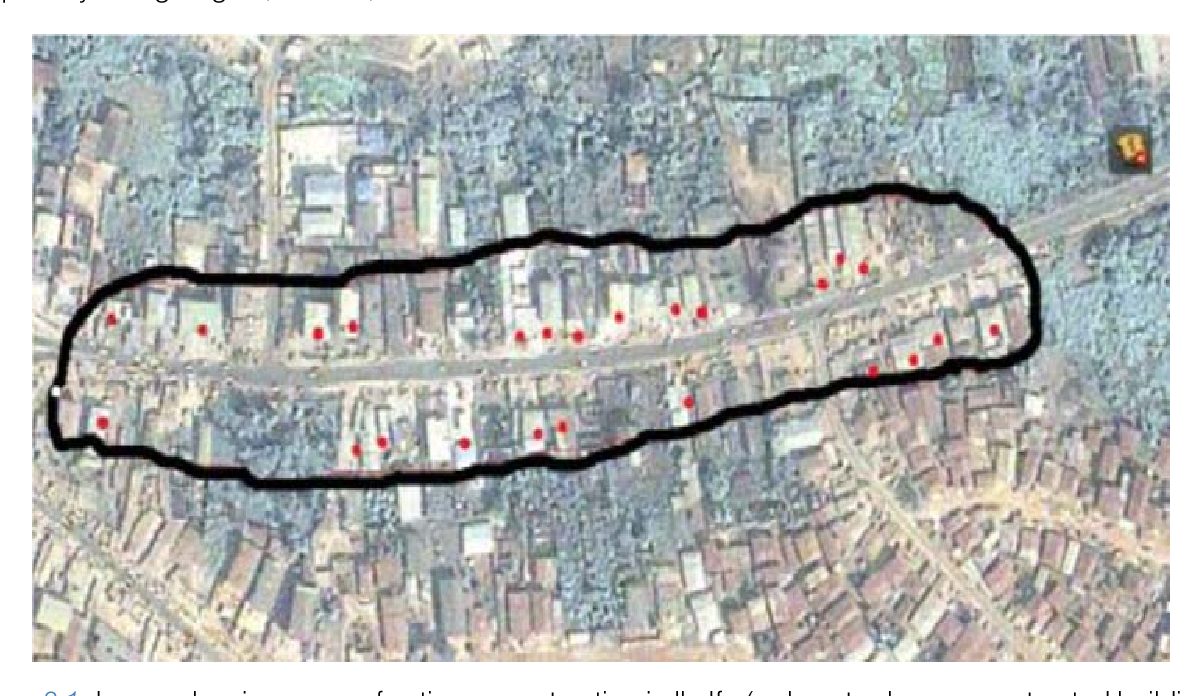
Ife and Modakeke Arial View

In language, culture, traditions and norms, Nigeria is one of the diverse countries in the world. It is a country that has hundreds of minority ethnicities within the major ethnic groups [Yoruba, Igbo and Hausa]. Each of the dominant ethnic group has over the years claimed to be the only group capable of solving socioeconomic and political challenges. However, recent activities showed that the minority ethnic groups have seen reasons for uplifting their specific traditions and norms within and beyond their domains in reference to the political and the economic domineering of the main ethnic groups.

In our experience, we have seen how it is difficult to determine the starting point of a particular town or city from another one. For example, Labaka-Ojo and Omi-Aro are two rural towns in Kwara State, a central Nigerian state. The population and number of houses in the two towns are not up to 15,000. Yet, the duo has different names and deriving solace in being independent towns, politically and economically. But in terms of culture and language they are the same. Over 1 years of staying in one of the towns by our analyst reveals that no significant differences in the land boundary. In spite of this, people and businesses always find it difficult to interact economically and politically.

Away from these towns, Ife and Modakeke are city and town in Osun State, a southern Nigerian state. Erin-Ile and Offa are city and town in Kwara State. Like the picture painted earlier, it is not really clear where a particular city boundary starts and end. This is also applicable to the town. In terms of language, culture and social activities, these towns and cities are not quite different. Despite that they have been engrossed and still being in varied wars over the years.

Information has it that the Erin Ile and Offa boundary crisis has caused over fifty years of recurring waves of violent clashes that have resulted in many human and material casualties. The first intra-community conflict between the Modakekes and the Ifes broke out in 1835. A recent research notes that “land issues, Ife East Local Government issue, debate about Modakeke’s sovereignty or staying with Ife, masquerade (Egungun) crossing into each other’s territory, boundary disagreement.”

According to our analyst, the feuds in the towns and cities remain chronic threats to sustainable peace because political, traditional and mediation institutions have not been able to find lasting solutions to the conflicts. Our analyst points out that the conflicts could be described as Abiku. In  2018, a report has it that Offa and Erin-Ile end age-long rift. Less than two years later, another report indicates violent activities of the two communities, which led to the deployment of the security operatives. In Ife, the traditional ruler of the city recently debunked news reports that the city and Modakeke are at war again.

From the reports on the conflicts analysed by our analyst it emerged that both the print and broadcast media are failing in their social responsibilities of ensuring sustainable mediation and peace in the towns and cities. It is, however, imperative that the media practitioners and owners consider solutions and restorative journalism practice more than sensationalism which has caused mayhems and impeding peace building processes and sustainability.

It is high time that the media see the need for reporting events that would foster hope, healing and resilience. The public have the right to know who among the actors making significant efforts towards peace restoration. They equally need to know categories of solutions being proffered by the actors, especially those at the communal level and political institutions. Restoring peace into the towns and cities, according our analyst, rests mostly on the media because selecting and framing certain aspects of any activity related to the conflicts have a propensity of increasing or decreasing tensions among the participants.

SmartNews Is Now A Double Unicorn – The Power of Aggregation Construct

1

This is the future of the digital economy: aggregation at different levels of operational stacks. The top five leading companies in the United States (on market caps) deploy one element of aggregation in the business. Today, you could be hard working but if your business model has expired for the digital era, you will struggle to capture value. 

Aggregation is the reason SmartNews, a news aggregator, is now worth $2 billion! (New York Times, the world’s finest journalism, is worth about $8.3 billion)

SmartNews, a Tokyo-headquartered news aggregation website and app that’s grown in popularity despite hefty competition from built-in aggregators like Apple News, today announced it has closed on $230 million in Series F funding. The round brings SmartNews’ total raise to date to over $400 million and values the business at $2 billion — or as the company touts in its press release, a “double unicorn.” (Ha!).

[…]

The aggregator’s business model is largely focused on advertising, as the company has said before that 85-90% of Americans aren’t paying to subscribe to news. But SmartNews’ belief is that these news consumers still have a right to access quality information.

Last week, during the Tekedia Business Growth Playbook, I explained the power of Aggregation Construct in the new economy. Your business model is the most important thing you must spend time to understand and update where necessary. Your newspaper must be a technology company which offers news instead of a news organization that uses tech.

Our world is changing: an aggregator of news is now bigger than most banks.

From Press Release

SmartNews Inc., the global leader in redefining information and news discovery, announced today it has raised $230 million in its Series F round of funding. This brings the company’s total capital raised to date to more than $400 million and secures its status as a “double unicorn” with a valuation of $2 billion, the highest for a standalone news app. The oversubscribed round includes existing investors as well as significant new ones who are aligned with SmartNews’s vision and growth strategy.

“Since the company’s inception in 2012, our vision has been to redefine the way we discover and engage with information by supporting diverse, quality journalistic sources, and serving our users a wide variety of timely and relevant content that helps improve their daily lives,” said Ken Suzuki, CEO and co-founder of SmartNews. “This latest round of funding further affirms the strength of our mission, and fuels our drive to expand our presence and launch features that specifically appeal to users and publishers in the United States. Our investors both in the U.S. and globally acknowledge the tremendous growth potential and value of SmartNews’s efforts to democratize access to information and create an ecosystem that benefits consumers, publishers, and advertisers.”

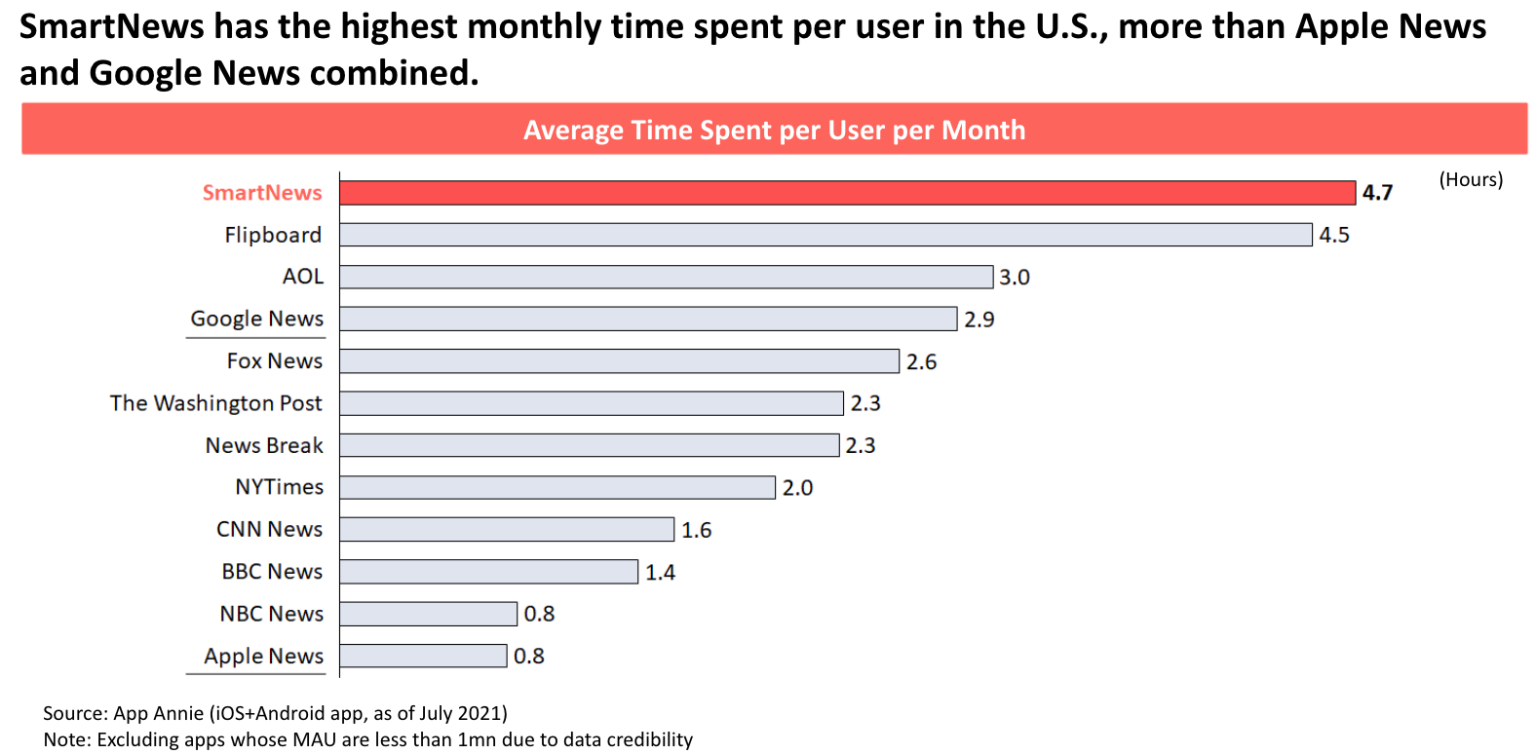
The Series F funding round represents another significant milestone for SmartNews, which has been the number one news app in Japan for multiple years running. In the U.S. market, SmartNews achieved the highest monthly user time spent among all news apps and saw its monthly active users (MAU) double in 2020. Since its last funding round in 2019, SmartNews has more than doubled its headcount to approximately 500 globally.

China Missing in Global Top 10 As Regulatory Crackdown Continues

1

Why is China doing this to its companies? As we write, there is no single Chinese company anymore in the global 10. You may ask why is this Nigerian villager worried about China when his country has none in the top 100! Yet, understanding what is happening in China is extremely vital for us to understand the future of commerce in Africa because if China pauses their firms at home, I expect most of them to make Africa a growth destination. As I write, the largest financial institution in Nigeria, on market cap, at a valuation of $2 billion, is OPay which is controlled from Asia.

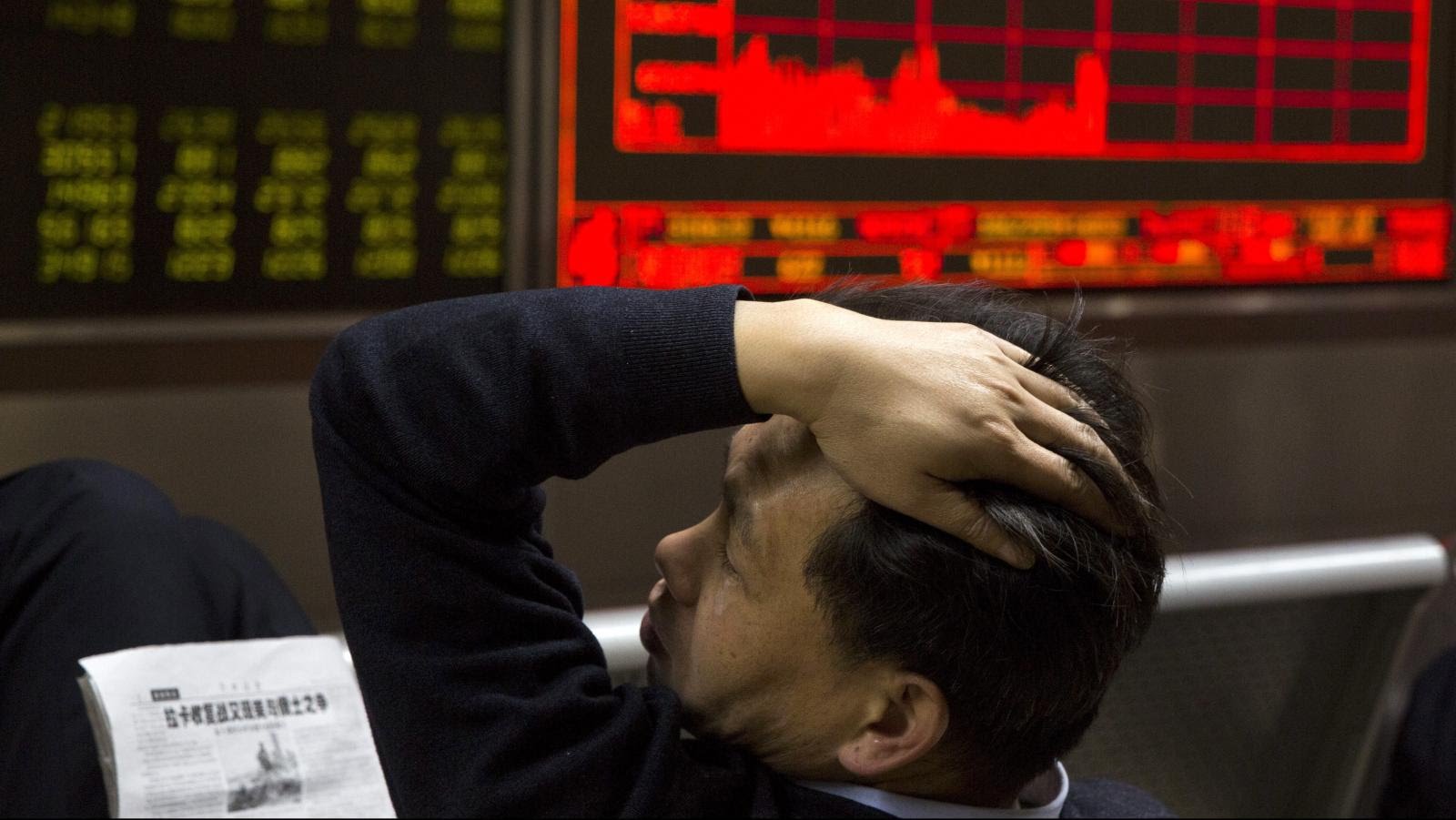
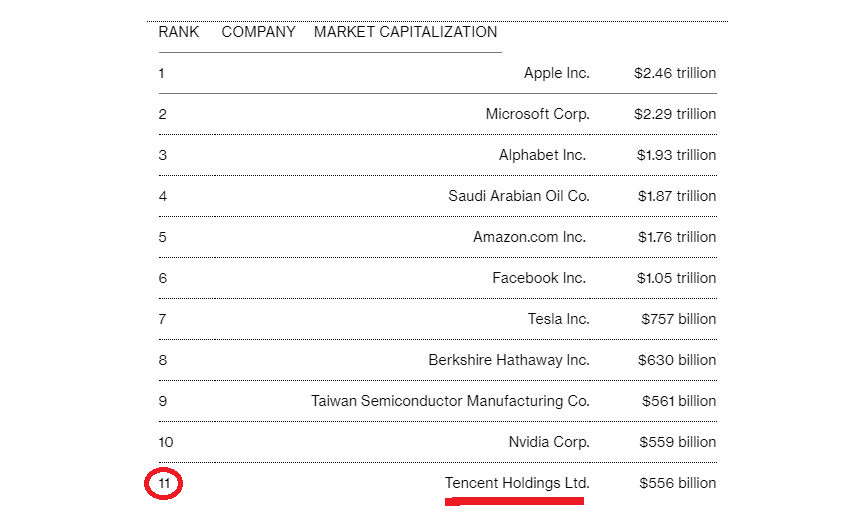
Tencent Holdings Ltd. has lost its place among the world’s 10 largest companies by market value, leaving no Chinese company in the list as Bejing’s regulatory crackdown continues to wreak havoc on the stock market.

Hong Kong-listed shares of the gaming and social media company fell 0.5% Thursday, valuing it at $556 billion. That’s just below U.S. chipmaker Nvidia Corp., data compiled by Bloomberg shows.

This is the first time that a Chinese company isn’t among the world’s ten largest since 2017, the data show. Tencent’s unseating follows that of Alibaba Group Holding Ltd. earlier this year, as China’s tech behemoths face tougher rules on everything from monopolistic practices to data security and kids’ gaming hours. 

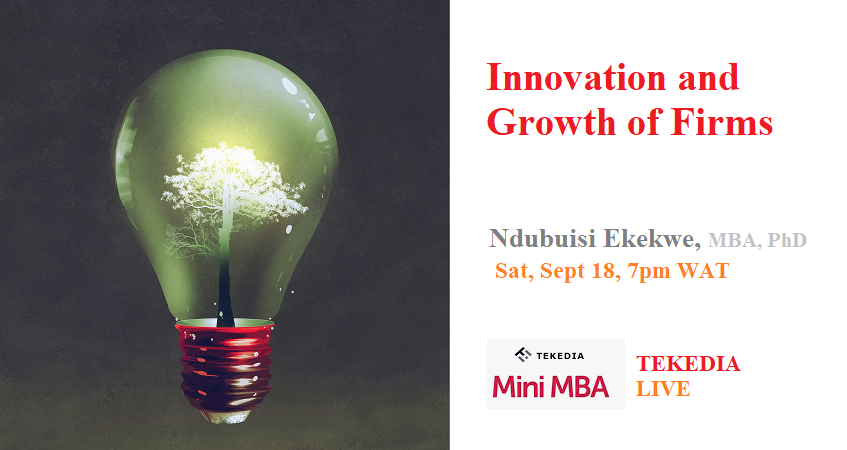
Tekedia Live Begins With “Innovation and Growth of Firms”, Ndubuisi Ekekwe, Sep 18

0

The academic festival begins. And on Saturday at 7pm WAT, I will begin the live session with “Innovation and Growth of Firms”. Zoom link in the Board. Next week Tuesday, from Redmond Seattle United States, a Microsoft strategist will lead another session on Business Strategy. On the Thursday which follows, a scrum master from Canada will explain agile methodology. Welcome to Tekedia Mini-MBA.

Registration continues here.

Tekedia Institute offers Tekedia Mini-MBA, an innovation management 12-week program, optimized for business execution and growth, with digital operational overlay. It runs 100% online. The theme is Innovation, Growth & Digital Execution – Techniques for Building Category-King Companies. All contents are self-paced, recorded and archived which means participants do not have to be at any scheduled time to consume contents. Besides, programs are designed for ALL sectors, from fintech to construction, healthcare to manufacturing, agriculture to real estate, etc.

Amidst Nigeria’s Rising Debt Profile, Buhari Seeks Senate Approval for A Fresh $5.2bn Loan

0
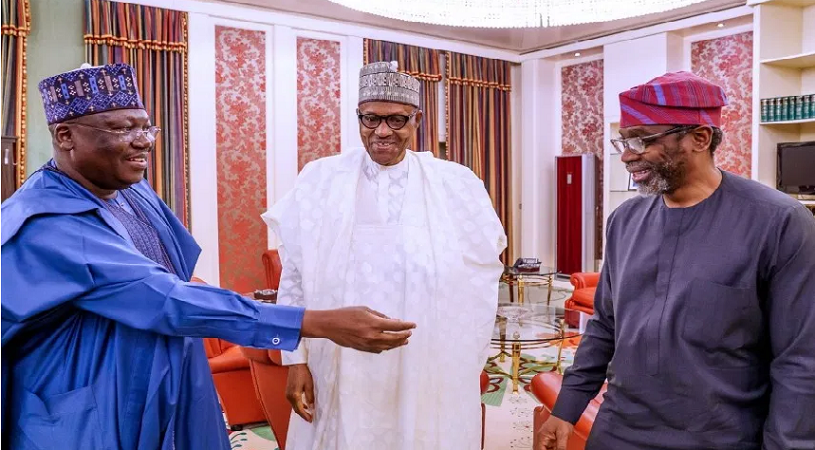
Nigeria leaders

The Nigerian government is making a move into the loan market again despite calls to minimize the rate of borrowing that is spiking Nigeria’s debt profile.

On Tuesday, President Muhammadu Buhari’s letter to the Senate seeking approval of $4.179 billion ($4.054 billion and $125 million) as well as £710 million external loans to fund projects captured under the 2018-2021 borrowing plan, was read at the plenary by president of the Senate Dr. Ahmad Lawan.

It was one of the series of Buhari administration’s loan approval requests and the second one in 2021. The president said the external loan will be used to fund critical infrastructural projects in the country.

Per ThisDay, Buhari in the letter explained that the projects listed in the 2018-2021 Federal Government Borrowing Plan are to be financed through sovereign loans from the World Bank, French Development Agency (AFD), China-Exim Bank, International Fund for Agricultural Development (IFAD), Credit Suisse Group and Standard Chartered/China Export and Credit (SINOSURE) in the total sum of $4,054,476,863.00; €710,000,000.00 and Grant Component of $125,000,000.00.

The fund would be used to fund federal and state projects cut across key sectors such as infrastructure, health, agriculture and food security, energy, education and human capital development and COVID-19 Response efforts, the president said.

The letter reads in part: “I write in respect of the above subject and to submit the attached addendum to the proposed 2018-2021 Federal Government External Borrowing (Rolling) Plan for the consideration and concurrent approval of the Senate for same to become effective.

“The Senate President may wish to recall that I earlier transmitted a request on the proposed 2018-2020 Federal Government External Borrowing Plan for the concurrent approval of the Senate in May, 2021.

“However, in view of other emerging needs and to ensure that all critical projects approved by FEC as at June 2021 are incorporated, I hereby forward and addendum to the proposed Borrowing Plan.

“The projects listed in the addendum to the 2018-2021 Federal Government External Borrowing Plan are to be financed through sovereign loans from the World Bank, French Development Agency (AFD), China-Exim Bank, International Fund for Agricultural Development (IFAD), Credit Suisse Group and Standard Chartered/China Export and Credit (SINOSURE) in the total sum of $4,054,476,863.00; €710,000,000.00 and Grant Component of $125,000,000.00.”

The letter continues: “The Senate is kindly invited to note that the projects and programmes in the Borrowing Plan were selected based on positive, technical and economic evaluations and the contribution they would make to the socio-economic development of the country including employment generation and poverty reduction as well as protection of the most vulnerable and very poor segments of the Nigerian society.

“The Senate may also wish to note that all the listed projects in the addendum form part of the 2018-2021 External Borrowing Plan and cover both the federal and states government projects and are geared towards the realization of the Nigeria Economic Sustainability Plan that cut across key sectors such as infrastructure, health, agriculture and food security, energy, education and human capital development and COVID-19 response efforts.

“A summary of some key projects in each of the six geo-political zones and a summary on the expected impacts on the socio-economic development of each of the six geo-political zones are attached herewith as Annex II and III.

“Given the importance attached to the timely delivery of the projects listed in the proposed Borrowing Plan and the benefits both the federal and state governments stand to gain from the implementation of same, I hereby wish to request for the kind consideration and concurrent approval of the Senate for projects listed in the addendum to the 2018-2021 Federal Government External Borrowing Plan to enable the projects become effective.”

Nigeria’s Total Public Debt Stock stood at N33.107 trillion ($87.239 billion) as of March 2021, according to Debt Management Office (DMO), creating a financial burden that is already affecting the country’s economic and infrastructural development.

The budget implementation report presented by Minister of Finance, Budget & National Planning, Mrs Zainab Ahmed in July, noted that the federal government spent 98% (N1.8 trillion) of the total revenue generated in the first five months of 2021 on debt servicing.

With oil still losing its steam and non-oil revenue falling short of Nigeria’s financial needs, Nigeria is increasingly depending on loans to function and may be forced to spend more than it’s generating to service the loans soon if the trend is sustained.